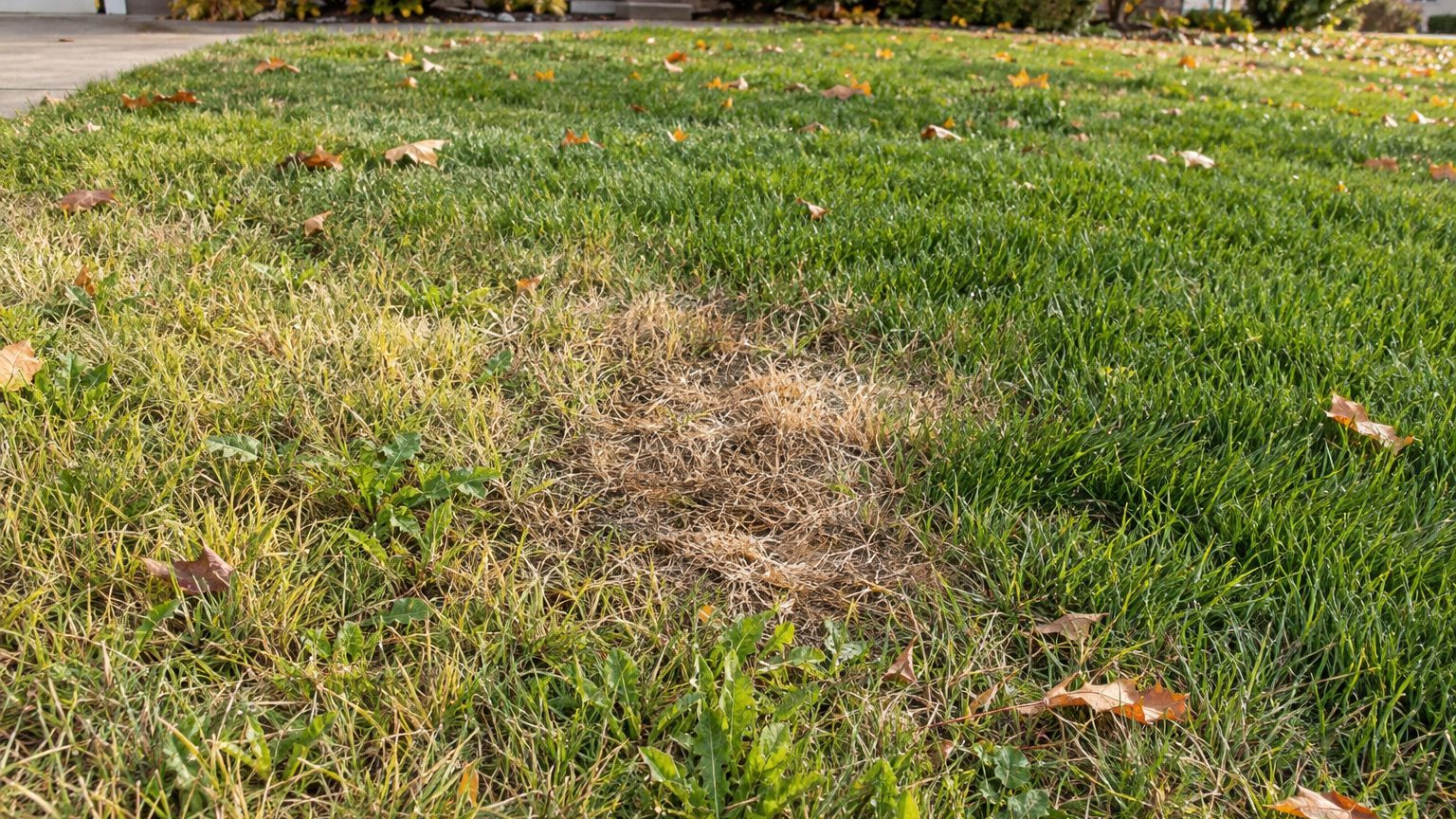
Crabgrass in the thin spots, tan patches in July heat, and a spongy feel underfoot are the Kansas lawn complaints that come back year after year. Most trace to a few causes: weeds that find gaps, fungus in humid heat, grubs in late summer, and care habits that don’t suit the grass. Each one has a fix with a season attached.
Lawn Pests and Diseases in Kansas
Crabgrass in Thin Turf

Crabgrass is a summer annual that sprouts in bare or thinning soil as spring warms, then spreads into pale, sprawling clumps with flat stems. Pre-emergence preventer works best in March, and it also works in February, April or May.
In Wichita, the last freeze lands between April 4 and April 18, and suburban or rural yards often see it later, so check your own county.
Dandelions and Clover
These broadleaf weeds show up in spring wherever the turf is open. Dandelions leave a rosette of toothed leaves on a deep taproot, and clover forms low mats of rounded leaflets.
Pull them when the soil is damp so the root comes out whole. Thick grass, fed in the right months, is what keeps them from returning.
Brown Patch in Midsummer
Tall fescue, the common cool-season lawn grass across much of Kansas, can develop circular tan patches when warm, muggy weather settles in. Look for a darker, smoky ring at the edge on humid mornings.
Water in the early morning so blades dry quickly, and hold off on nitrogen all summer, because lush growth feeds the fungus.
White Grubs and Chewed Roots
Grubs are fat, C-shaped, creamy larvae that feed on grass roots in late summer. The turf turns drought-looking even after a watering, and the sod lifts like a loose carpet.
Peel back a section of the dead area and inspect the soil just beneath the turf. Confirm that grubs are causing the damage before choosing a treatment.
Thatch Buildup
Thatch is the tan, springy layer of stems and roots between green blades and soil. A layer up to 1/2 inch thick is healthy. Beyond that, water and air struggle to get through, and disease settles in.
For fescue and bluegrass, dethatch or core aerate in August or September. Bermuda and zoysia lawns do better with dethatching in May or June.
Kansas — the year and the numbers
- State
- Kansas
- USDA zones
- 5b-7a
- Last spring frost
- April 4 to April 18
- First fall frost
- October 23 to November 2
- Annual rain
- 34 in
- Lawn type
- cool- and warm-season
- Source
- NOAA NCEI 1991-2020 Climate Normals, 32F freeze probabilities · Wichita
How to Tell Which Lawn Problem You Have
Appearance alone rarely settles it, so consider where and when the patch appears as well. Give the grass a gentle tug and look at the roots. Together, those checks help distinguish common Kansas lawn problems.
Shade versus full sun matters too, since a sunny strip beside the driveway and a damp corner under a maple rarely share the same trouble.
| What you see | Where and when | Likely problem |
|---|---|---|
| Coarse, pale clumps spreading outward | Thin sunny spots, summer | Crabgrass |
| Circular tan patches, dark ring at dawn | Tall fescue, humid midsummer | Brown patch |
| Turf lifts like a rug, no roots | Late summer, even after watering | White grubs |
| Spongy feel, thin and weak grass | Whole lawn, worse after heavy feeding | Thatch buildup |
| Rosettes or low mats of leaves | Open spots, spring | Dandelions or clover |
Dry, crunchy grass that still has solid roots and springs back after a deep soaking points to drought stress rather than any of the above. Mowing with a dull blade leaves frayed, whitish tips, which can look like disease from a distance.
Where Lawn Problems Are Worst in Kansas
The state stretches from humid hills in the east to dry high plains in the west, and USDA hardiness zones run from 5b to 7a. Problems shift accordingly.
- Kansas City area and the Flint Hills: Wetter air and heavier soils make brown patch and other fungal trouble more likely on tall fescue. Good drainage and morning watering matter more here.
- Wichita and south-central Kansas: Long, hot summers stress cool-season grass and open the door to crabgrass and grubs. Bermuda and zoysia handle the heat better but need warm-season timing.
- Western Kansas and the High Plains: Drier air and colder winters make drought stress a frequent problem. Buffalograss and other tough, low-water turf suit the region, and cool-season lawns need more irrigation to stay green.
A yard in the cooler northwest may still be waking up while the southeast is already mowing.
Lawn Care Mistakes That Invite Problems in Kansas
Mowing Too Short
Scalped grass has shallow roots and leaves bare soil for crabgrass seed to germinate. Cutting low in summer heat also bakes the crowns.
Raise the mower deck and mow regularly, removing only a modest amount of leaf blade each time. Mowing season runs from March through November for cool-season turf, and April through October for bermuda and zoysia.
Watering Lightly and Often
Frequent sprinkles keep the surface wet, which fuels brown patch and keeps roots shallow. Summer is when the lawn truly needs help, with June, July and August the months to water.
Soak the soil deeply and then let it dry between sessions. Do it early in the morning, never at night.
Feeding Tall Fescue in Summer
A summer dose of fertilizer pushes tender growth that disease loves and the heat then punishes. Tall fescue does best fed in early spring and again in fall, with March, September and October as the core months.
Bermuda and zoysia are the opposite. Feed them in May, June and July, when they are actively growing.
Where to Get Lawn Advice in Kansas
K-State Research and Extension is the state’s extension service, with lawn guidance written for Kansas soils and weather. Your county office can look at a sample and tell you what you are really dealing with.
- Search the state extension site for turf publications on your grass type before you buy any treatment.
- Call your county extension office when a patch spreads, and bring a clipping with roots and soil attached.
- Ask about a soil test in late summer, so results are in hand before the fall feeding.
Common Questions
When Should You Seed a Lawn in Kansas?
For tall fescue, August is the best month to aerate and overseed, and September still works. Bermuda and zoysia are best seeded in May, with June as a fallback.
When Should You Aerate a Kansas Lawn?
August suits cool-season lawns, and September also works if you miss it. Aerating just ahead of overseeding gives new seed good contact with soil.
Can You Lay Sod in Summer in Kansas?
Warm-season sod such as bermuda or zoysia goes down best in May, and it also works in June and July. Keep new sod watered through hot weather so the roots can knit into the soil.