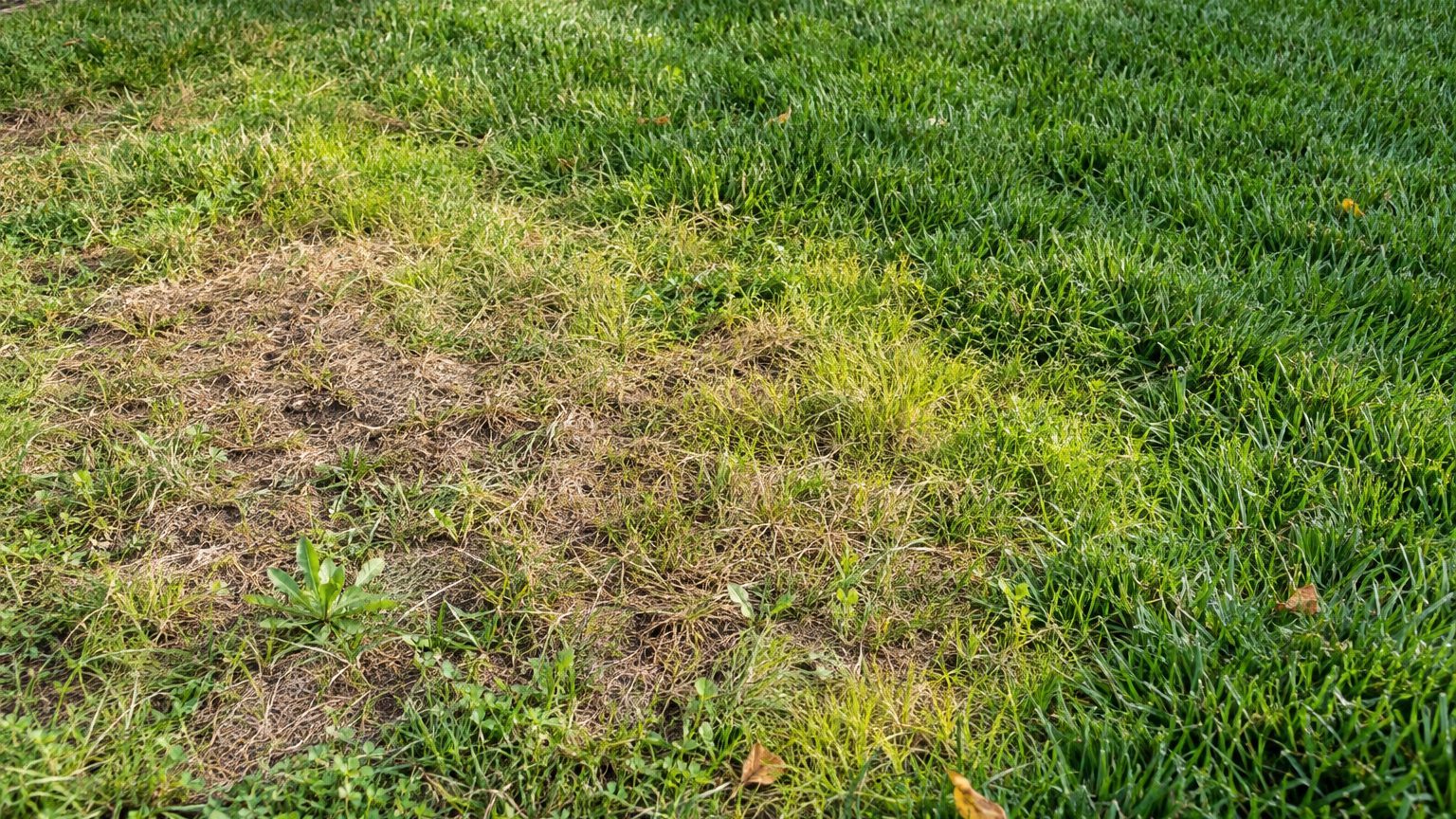
Yellow patches, ragged blades and sponge-like turf show up in Hawaii lawns in every month, because the islands have no frost season to reset anything. Lawn problems here come from rain, heat, shade and a mild climate that never shuts pests or weeds down. Recognizing the pattern helps narrow down the cause and choose a sensible next step.
Lawn Pests and Diseases in Hawaii
Fungal Spots in Wet Weather
Tan or gray spots on the blades, sometimes growing into thin, discolored patches, tend to follow long wet spells and humid, still air. Windward slopes are especially vulnerable because the grass stays damp. Mow regularly so air moves through the turf, and water in the morning so the blades dry quickly.
Shaded corners tend to stay wet, so check them carefully.
Chewed Blades and Ragged Patches
Caterpillars such as armyworms chew leaves down, leaving ragged, thinned areas that can resemble drought damage. Part the grass at the edge of a damaged spot and look for green or brown larvae near the soil surface, especially at dusk. Catching them early keeps a small patch from spreading across the yard.
Grass That Pulls Up Like a Carpet
When brown turf lifts easily and the roots are gone, grubs feeding underneath are a likely cause. Birds or other animals digging at the lawn point the same way. Test the grass across the damaged area with a gentle tug. If it rolls back, look for pale, curled larvae in the soil, then water the area well and recover it with new plugs or sod once the damage is treated.
Nutsedge Among the Grass
Nutsedge stands out as lighter green, faster-growing shoots with a triangular stem, poking above the rest of the lawn soon after mowing. It thrives where water collects, so poor drainage invites it. Hand-pulling can help only if the underground nutlets come out too; improving drainage makes the site less favorable.
Broadleaf Weeds in Thin Turf
Weeds move into any gap in the turf, and warm weather all year gives them plenty of chances. A thick, regularly mown lawn leaves them little room. Where bare spots keep appearing, the underlying cause is usually shade, compaction or a grass that is stressed, so deal with that before pulling weeds again.
Thatch Building Up
Thatch is the spongy mat of stems and roots between the green blades and the soil. A layer up to 1/2 inch thick is healthy; beyond that, dethatch or core aerate. A thick layer sheds water and shelters pests, so it often sits behind the other problems.
Hawaii — the year and the numbers
- State
- Hawaii
- USDA zones
- 9a-13a
- Frost
- none in an average year
- Annual rain
- 16 in
- Lawn type
- warm-season
- Source
- NOAA NCEI 1991-2020 Climate Normals: not-computable flag for every freeze percentile at 32F and 36F, zero days per year at or below 32F, station USW00022521 — https://www.ncei.noaa.gov/access/services/data/v1?dataset=normals-annualseasonal&stations=USW00022521 · Honolulu
How to Tell Which Lawn Problem You Have
A clue rarely tells the whole story, so combine what you see. Note what the damage looks like, then where it sits, whether the grass pulls up, and how wet or shaded the spot is. Together, those signs usually point to a likely cause.
A walk across the yard with a trowel, looking at the soil and the grass edge, can reveal useful clues.
| What you see | Where it shows up | Likely problem |
|---|---|---|
| Tan spots on blades, damp turf | Windward or shaded areas | Fungal disease |
| Ragged, chewed patch with larvae at the edge | Sunny areas, often near evening | Caterpillars |
| Turf lifts like carpet, roots missing | Irregular dead patches | Grubs |
| Spongy, springy feel underfoot | Whole lawn, mature turf | Thatch |
| Pale, fast shoots with triangular stems | Soggy low spots | Nutsedge |
Thin grass under trees is usually a light problem, not a pest problem. Once you know the cause, repairs go in any month: plugs, sprigs or sod root with regular water, and zoysia and St. Augustine are planted this way. Only common bermudagrass is sold as seed.
Where Lawn Problems Are Worst in Hawaii
Lawns here are shaped by rainfall, elevation and which side of an island they sit on, not by frost, since none reaches the places where people live.
- Hilo side of Hawaii Island: Frequent rain and humidity keep turf wet, so fungal disease, nutsedge and thatch can build up.
- Kona and other leeward coasts: Sun and dry spells stress the grass, so drought damage and weeds in thinned turf matter more than disease, and irrigation carries more of the load.
- Upcountry Maui: Higher ground is cooler and often misty, which slows growth a little and favors damp-loving fungus in shaded spots.
Conditions can change quickly within the same island, shifting the problems a lawn faces.
Lawn Care Mistakes That Invite Problems in Hawaii
Scalping the Grass
Cutting too low strips the leaf the grass needs to feed itself and lets weeds in. Mowing is a task for every month here, so skipping weeks and then cutting hard is a common trap. Mow regularly, never remove too much at once, and keep blades sharp for clean cuts.
Watering by Habit
Watering is a year-round task, but the same schedule does not fit every yard. Daily light sprinkling keeps the surface wet, feeds fungus and encourages shallow roots. Water deeply when the grass needs it, in the morning, and in rainy windward spots let the weather do the work.
Feeding on Autopilot
Fertilizing works well from March through October. In January, February, November and December it is a lighter job, and in windward locations you should reduce it or skip it in the winter months. Too much nitrogen gives soft growth that disease and caterpillars favor, so feed regularly but modestly.
Where to Get Lawn Advice in Hawaii
Local help matters here because conditions change from valley to valley and coast to coast. The state’s land-grant university runs extension offices across the islands, and they know your area’s soils and pests.
- The University of Hawaii CTAHR extension publishes lawn grass guides, so check it before choosing a grass or a fix.
- The extension office serving your island can identify a pest or disease, so bring a sample of damaged turf with roots and soil.
- Visit as soon as patches spread, since quick identification keeps small problems small.
Common Questions
Can You Seed a Lawn in Hawaii?
Seed is an option only for common bermudagrass, the only lawn grass sold that way. Zoysia and St. Augustine are planted as plugs, sprigs or sod, and those go in at any time of year as long as you keep them watered.
Does a Hawaii Lawn Go Dormant in Winter?
Lowland lawns do not go dormant from cold because freezing never occurs where people live. Growth slows somewhat in cooler, cloudier months, but mowing and watering continue all year, with less feeding in wet windward areas.
Why Does Grass Thin Out Under Trees?
Thin grass under trees usually means too little light, often with roots competing for water. Check whether the patch stays shaded and whether the soil is dry or compacted. If so, trim branches for more light or switch that area to a shade-tolerant groundcover.