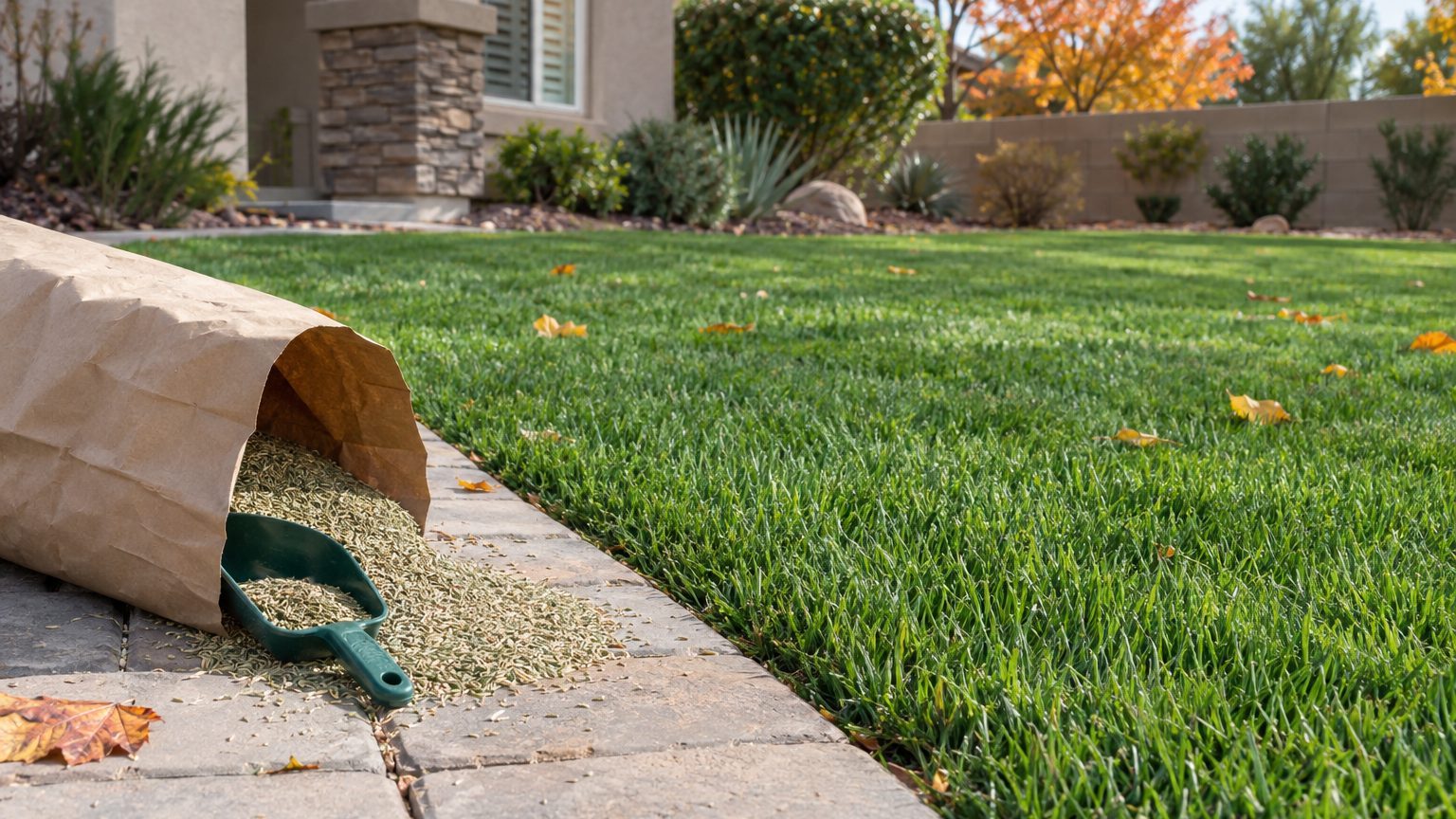
Walk a Phoenix lawn in July and the bermudagrass is the green one, while the ryegrass that looked so lush in February is long gone. Arizona yards run on two grasses, and they take turns. Bermudagrass carries the lawn through the hot months, and perennial ryegrass fills in during winter overseeding.
Which Grass Grows Best in Arizona?
A warm-season grass fits the low desert, because summer heat is what limits a lawn here, not winter cold. Phoenix stays above 32F in most years, so choose grass for the long, brutal summers rather than for winter cold. Seeding is best in April and May, when soil is warm enough for germination.
Bermudagrass
Bermudagrass is the dependable choice across the low desert. It thrives in full sun, tolerates heat that would flatten cool-season turf, and recovers well from traffic. It does go tan and dormant when winter turns cool.
Seed it in April or May so it has the warm months ahead to fill in. Sow on loosened soil and cover the seed with no more than 0.25 inch of soil, then press it down for good contact.
Perennial Ryegrass

Perennial ryegrass is a winter guest, not a permanent lawn. Sown over dormant bermudagrass, it keeps the yard green through the cool season, then fades as summer heat arrives.
Treat it as an annual job. Expect to reseed whenever you want winter color, and skip it if a tan winter lawn does not bother you.
Cool-Season Grasses in the High Country
Tall fescue and Kentucky bluegrass are cool-season grasses, and they struggle in the low desert, where summer heat stresses them for months. They belong in colder places like Flagstaff, where hard freezes are normal. In the low desert, leave them off the shopping list.
Arizona — the year and the numbers
- State
- Arizona
- USDA zones
- 4b-10b
- Frost
- none in an average year
- Annual rain
- 7 in
- Lawn type
- warm-season
- Source
- NOAA NCEI 1991-2020 Climate Normals + NOAA RCC ACIS daily records, station USW00023183 — https://www.ncei.noaa.gov/access/services/data/v1?dataset=normals-annualseasonal&stations=USW00023183 · Phoenix
How to Choose Grass Seed for a Arizona Yard
Start with what your yard actually does. Sun, foot traffic, and how much water you can spare matter more than any label on the bag.
Mowing habits count too. Bermudagrass grows fast in the hot months, so plan on regular mowing from March through November.
| Grass | Season | How it does here |
|---|---|---|
| Bermudagrass | Warm | Full sun, heavy traffic, and summer heat. Seed in April or May. Tan in winter. |
| Perennial ryegrass | Cool | Winter overseeding only. Green through the cool months, then fades in summer. |
Shady yards are the hard case, since bermudagrass wants full sun and thins out under trees or beside tall walls. If shade covers most of the lawn, consider groundcover or mulch in those spots instead of forcing turf. Regular watering from April through October helps a bermudagrass lawn stay in good shape. If water is limited, keep the lawn area small.
Which Grasses Grow Where in Arizona
Arizona spans desert floors and mountain towns, so the right seed changes with elevation.
- Phoenix and the Salt River Valley: Bermudagrass is the standard summer lawn, with ryegrass overseeded for winter color. In Phoenix, frost is rare, so heat is the planning problem.
- Tucson and the southern desert: The same pairing applies. Bermudagrass handles the long hot season, and winter overseeding is optional.
- Flagstaff and the high country: This is a different climate, with hard freezes and cool summers. Cool-season grasses suit it far better than bermudagrass, which struggles in the cold.
Before you buy, check which of these climates your yard really lives in, because a town at middle elevation may sit between the two.
Grass Seed Mistakes to Avoid in Arizona
Planting Cool-Season Grass in the Low Desert
Tall fescue or bluegrass may look fine in cool weather, then brown out once the heat settles in. Match the grass to the summer, not the spring. Choose bermudagrass for a permanent lawn.
Seeding at the Wrong Time
Bermudagrass seed sown in cold soil sits and rots or germinates unevenly. Wait for April or May, when the ground is warm and the grass has a full growing season ahead.
Fertilizing fits May, June, September, and October, so do not feed a new lawn in the dead of winter.
Burying the Seed Too Deep
Tiny grass seed has little energy to push through heavy cover. Rake lightly, keep the covering shallow, and water regularly so the surface never fully dries while seedlings emerge. Too thin a spread leaves bare patches where weeds move in, so sow evenly across the whole area.
Where to Get Lawn Advice in Arizona
Local help is close by. University of Arizona Cooperative Extension publishes lawn guidance for desert conditions, and your county office can speak to your own soil and elevation.
- The state extension site covers grass selection, overseeding, and watering for desert yards, and it is worth reading before you buy seed in spring.
- Your county extension office can answer questions about local soil and pests, so call it when a patch looks wrong.
Common Questions
Can You Grow a Green Lawn in Arizona All Year?
Yes, with overseeding. Bermudagrass goes tan in winter, and perennial ryegrass sown over it keeps the yard green until summer heat returns.
Is St. Augustinegrass Available as Seed?
No. St. Augustinegrass is never sold as seed, so it is installed from sod or plugs instead. For a seeded lawn, bermudagrass is the practical option.
When Should You Dethatch a Bermudagrass Lawn in Arizona?
May and June suit it, while the grass is growing strongly and recovers quickly. Dethatching in cool weather leaves the lawn open and slow to fill back in.