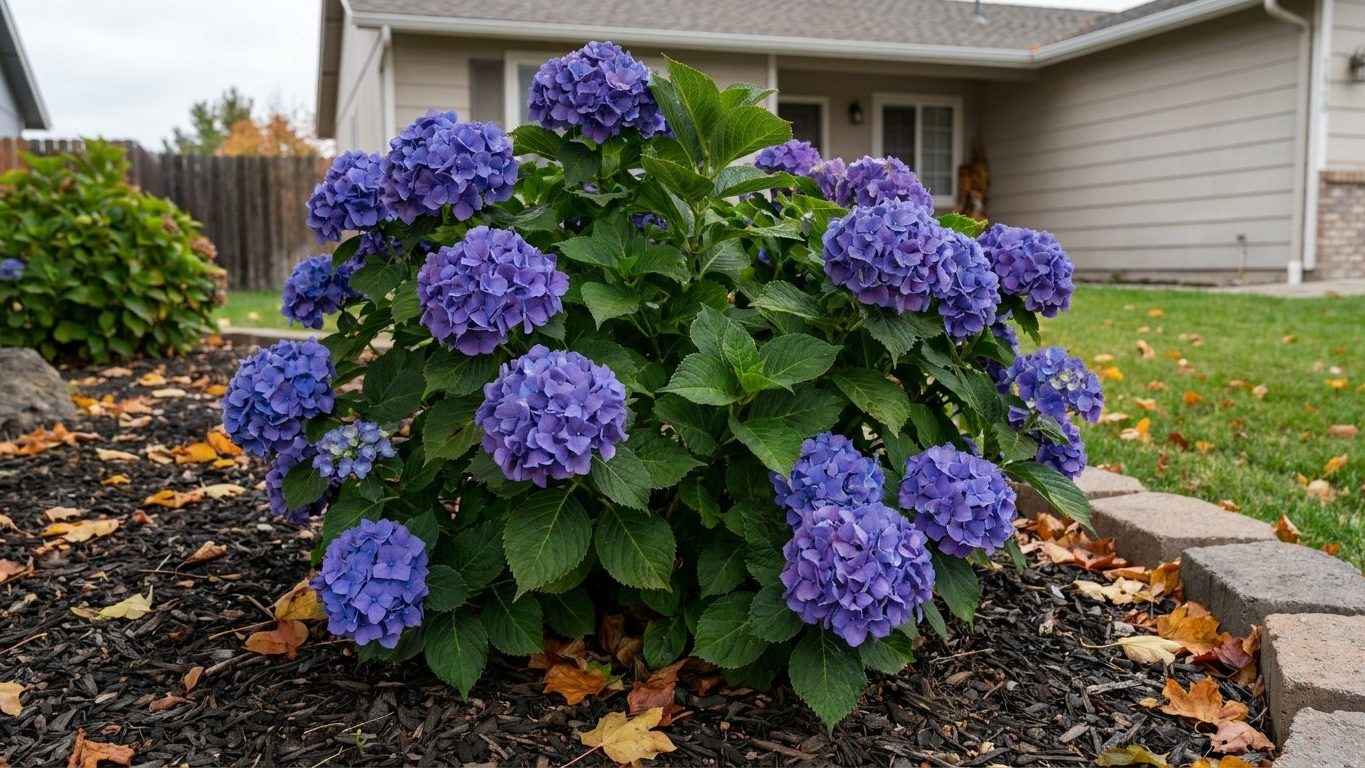
Nevada’s own calendar puts planting in January, February, October and November, with bigleaf pruning reserved for June and July. That’s the short answer, but this high, dry state runs from desert floor to mountain pass, and the right week for your yard depends on how far you sit above the Las Vegas valley or how close you live to a cold mountain bottom.
When to prune hydrangeas in Nevada: The Short Answer
NOAA NCEI U.S. Climate Normals 1991-2020 puts the Las Vegas area’s last spring frost between January 7 and February 1, with the first fall freeze arriving December 8 to December 23, but the statewide planting window falls in January, February, October and November, with bigleaf pruning reserved for June and July.
- January: This opens the statewide planting window, so a container-grown shrub can go in the ground if your local soil has thawed. Check with your county extension office before digging, since Nevada’s frost calendar swings hard by elevation.
- February: Still inside the planting window, and often the calmer month in the valleys before spring growth pushes hard. Water deeply right after planting instead of relying on rain.
- March: This is the first fertilizing month of the year, feeding a shrub that’s already established as new leaves emerge. Skip the feed on anything planted in the past few weeks.
- April: No task is scheduled this month, but mulch deserves a top-up as days warm and wind picks up. New growth is where wind scorch shows first on exposed sites.
- May: The second fertilizing month, applied again as buds set for summer bloom. Watering frequency needs to climb as desert heat builds through the month.
- June: Pruning season opens for bigleaf hydrangeas, cutting spent flower heads back to the first strong bud below the bloom. Leave any stem that hasn’t flowered alone.
- July: The last month for both fertilizing and bigleaf pruning, so finish shaping before peak summer stress sets in. Afternoon shade matters more than feeding from here forward.
- August: Nothing is scheduled here, so hold off on pruning or feeding and focus on steady water through the hottest stretch. Leaf scorch tends to show up now.
- September: Still a quiet month on the calendar, useful for planning where fall planting will go. Cooling nights start easing heat stress on established shrubs.
- October: The planting window reopens, and cooler soil makes this one of the two best months of the year to set new shrubs. Roots get weeks to settle before winter dormancy.
- November: The last planting month before the calendar closes for winter, so get any remaining shrubs in early. Mulch heavily right after planting.
- December: Dormancy sets in as the first fall freeze moves through, arriving December 8 to December 23 near Las Vegas and earlier at elevation. No planting or pruning this month, just protect the root zone.
Every one of these gestures shifts by weeks depending on how high above the valley floor you garden, which is exactly what the next section walks through.
Nevada — the year and the numbers
- State
- Nevada
- USDA zones
- 4a-10a
- Last spring frost
- January 7 to February 1
- First fall frost
- December 8 to December 23
- Annual rain
- 4 in
- Lawn zone
- warm-season
- Source
- NOAA NCEI U.S. Climate Normals 1991-2020, 32F freeze probabilities · Las Vegas
How to Work Out the Dates for Your Own Yard
Your own last frost date does the real math, not the state average.
- Call your county extension office: ask for the frost dates specific to your address, since a foothill lot can run weeks behind the valley floor.
- Weigh your elevation against the state’s hardiness range: the USDA Plant Hardiness Zone Map puts Nevada’s span at 4a to 10a, so a lot near the low end needs a hardier hydrangea and a later spring planting date than one near the top.
- Check the soil, not the calendar: cold, wet ground around the root ball slows a new hydrangea more than a light frost in the air ever will.
- Pick a variety rated for your end of the range: a shrub bred to survive zone 4a conditions holds up where one rated only to 7a would not.
- Recheck before the fall window: the same office that confirmed your spring numbers can tell you whether October or November suits your ground better.
None of this replaces a phone call to whoever tracks frost in your own valley, since the state’s range is simply too wide for one date to cover it.
Nevada North to South: How the Dates Shift
Elevation does more to move these dates around than latitude does in a state this vertical.
- Southern desert lowlands (Las Vegas Valley, Laughlin): the warmest ground in the state, with the earliest safe planting and the latest fall frost anywhere in Nevada.
- Western slope and Sierra foothills (Reno, Carson City): frost lingers weeks longer than the desert floor, pushing spring planting later and tightening the pruning window.
- Northern high desert and rural counties (Elko, Ely): the coldest ground on the calendar, sitting near the bottom of the state’s hardiness range and calling for the hardiest varieties available.
- Lake Tahoe basin: cold air pools around the lake shore, so a short walk downhill from a ridge can change the safe planting week entirely.
Your own state guide breaks these differences down county by county, worth a look before you commit to a date.
Mistakes Nevada Punishes
No flowers on a healthy shrub

Bigleaf varieties set next year’s buds on this year’s wood, so cutting outside the June to July window removes the flowers before they ever show. Prune right after bloom, inside that window, and leave unbloomed stems alone through fall and winter.
Leaves scorched on the sunny side
Desert sun and low humidity burn hydrangea leaves fast, especially where afternoon light lands directly on the west side of the plant. Site new shrubs for morning sun and afternoon shade, and keep the root zone mulched through the hottest stretch of summer.
Roots sitting in alkaline caliche
Much of Nevada’s soil runs shallow over caliche or straight desert clay, both of which trap water and push pH too high for a hydrangea’s taste. Dig a wider hole than seems necessary, work in organic matter, and check drainage before committing a shrub to that spot.
Nevada Extension Offices and County Contacts
The state’s own range is a starting point, and University of Nevada, Reno Extension carries the county-level detail that decides your actual date.
- Your state page: the frost dates and the pruning window where you live.
- University of Nevada, Reno Extension: county office contacts and local frost guidance for your address.
- Your county office: the fastest way to confirm whether this month is safe to plant.
Common questions
Can I plant hydrangeas in Nevada in summer?
Summer sits outside the state’s planting window, which runs January, February, October and November. Desert heat stresses new roots before they’ve had time to spread, so fall planting is the safer bet in most parts of the state.
Do all Nevada hydrangeas need the same hardiness zone?
No. The state spans USDA zones 4a to 10a, so a variety that thrives near Las Vegas may not survive a winter in Elko or the Sierra foothills. Match the plant to your own zone rather than to the state average.
When should I prune bigleaf hydrangeas in Nevada?
June and July, right after the blooms fade and before next year’s buds set on the new wood. Pruning outside that window is the most common reason a healthy bigleaf hydrangea stops flowering.