Skip to content
  1. Jan
  2. Feb
  3. Mar
  4. Apr
  5. May
  6. Jun
  7. Jul
  8. Aug
  9. Sep
  10. Oct
  11. Nov
  12. Dec
State
West Virginia
USDA zones
5a-7a
Last spring frost
April 9 to April 23
First fall frost
October 18 to November 1
Annual rain
46 in
Lawn zone
cool-season
Source
NOAA NCEI 1991-2020 Climate Normals, 32F freeze probabilities · Charleston

The year in West Virginia, from the calendar

  1. Jan—
  2. FebPrune fruit trees
  3. MarSpring bulbs bloom · Feed hydrangeas · Renew an overgrown lilac · Plant roses · Prune roses
  4. AprSpring bulbs bloom · Plant hydrangeas · Lilacs bloom · Renew an overgrown lilac · Feed roses
  5. MaySpring bulbs bloom · Feed hydrangeas · Plant hydrangeas · Lilacs bloom · Prune lilacs
  6. JunPrune bigleaf hydrangeas · Prune lilacs · Feed roses · Mow · Water
  7. JulFeed hydrangeas · Prune bigleaf hydrangeas · Feed roses · Mow · Water
  8. AugPlant hydrangeas · Seed the lawn · Feed roses · Aerate · Dethatch
  9. SepPlant hydrangeas · Seed the lawn · Plant peonies · Aerate · Dethatch
  10. OctPlant spring bulbs · Plant peonies · Plant trees · Mow
  11. NovCut back peonies · Plant trees · Mow
  12. DecCut back peonies

From the state frost facts and extension calendars: University of Maryland Extension · Rutgers Cooperative Extension (NJAES) ; University of Kentucky Cooperative Extension · Clemson HGIC factsheet — Hydrangea · Penn State Extension — Lawn Management through the Seasons; Lawn Establishment.

Best Spring Bulbs for West Virginia

Best Spring Bulbs for West Virginia

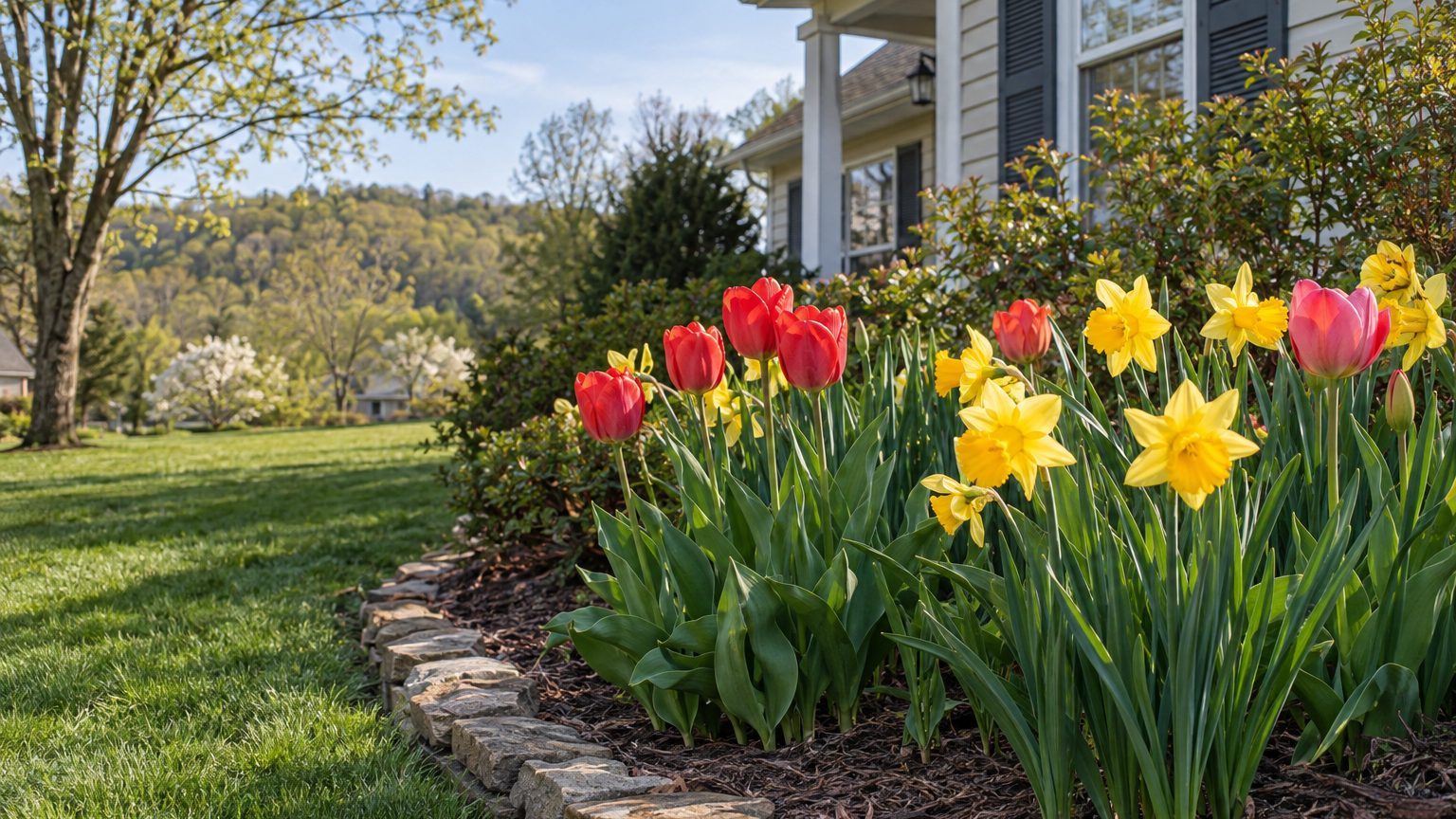
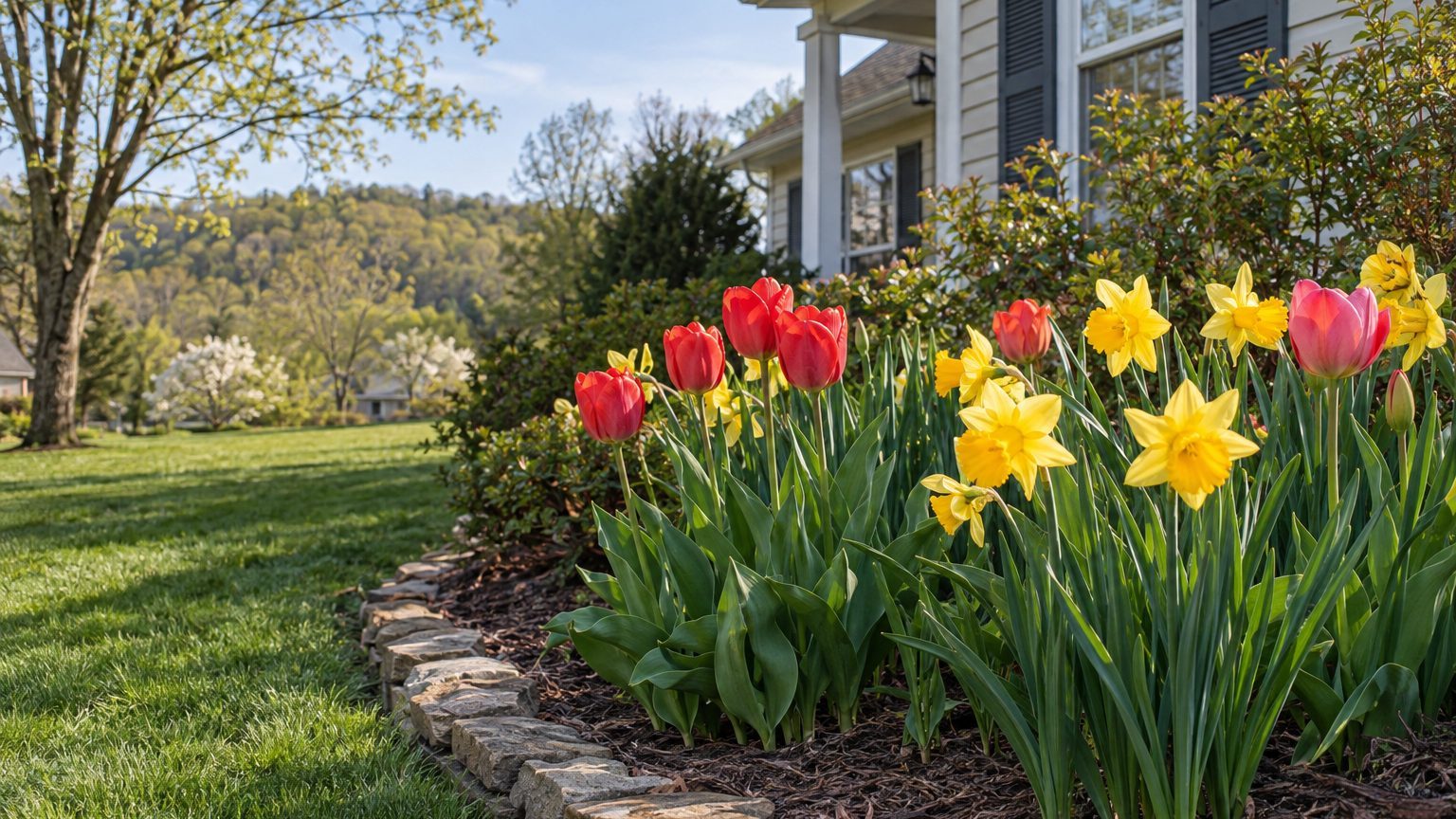
Daffodils pushing up through cold, damp soil are one of the first signs of spring in West Virginia hollows and front yards alike. They are also the bulb that holds up best in the Mountain State, followed by hyacinths, alliums and a few other bulbs that deer and squirrels tend to leave alone.

Best Spring Bulbs to Grow in West Virginia

Healthy spring bulbs in bloom

Daffodils

Daffodils are the dependable choice here. They are hardy perennial bulbs that overwinter in USDA zones 3 through 8, which covers West Virginia’s 5a to 7a range, and they should return year after year.

Plant them in fall and leave the foliage alone after bloom until it turns brown. Remove only the faded flowers.

Daffodils for Naturalizing

Scatter clumps of daffodils across a bank, an orchard edge or the lower end of a lawn and they will settle in. They never have to be dug and divided, which suits a busy homeowner.

Rabbits and deer pass them by, a real help on the wooded edges where both are common.

Hyacinths

Hyacinths are on the list of bulbs that gardeners with deer or squirrels can plant with confidence. Their scented spikes work well near a front door or walkway.

Since most spring bulbs need about 12 to 16 weeks of cold to flower, West Virginia’s winters usually do the chilling for you, and no refrigerator step is needed for hyacinths planted in the ground.

Alliums

Alliums, the ornamental onions, are another bulb animals ignore. They need no chill period to bloom, so they are forgiving if the winter turns out milder than usual.

They also come late in the long succession of spring bulbs, which keeps color going after the early flowers fade.

Fritillaria and Scilla

Fritillaria and scilla round out the deer-resistant group. They are good picks for a bed that borders the woods, where hungry visitors can wipe out a planting of tulips overnight.

Tuck them in beside daffodils for a mix that stays mostly untouched.

Tulips and Crocus

Tulips and crocus are lovely but come with a catch. Voles, squirrels, rabbits and deer eat them, and tulips are often short-lived in the garden even when left alone.

Plant them where animals are less of a problem, such as close to the house, and treat tulips as a seasonal treat rather than a permanent fixture.

How to Choose Spring Bulbs for Your West Virginia Garden

Your yard’s conditions and your free time narrow the choice quickly. Most spring bulbs go in the ground in October, though September and November also work depending on how fast the soil cools. The goal is soil below about 60°F, so roots form before the ground freezes but the bulbs do not sprout early.

Your situation What suits it in West Virginia Why
Very cold winters at higher elevations Daffodils They overwinter in USDA zones 3 through 8, well past the cold end of the state’s range
Deer, rabbits or squirrels visiting Daffodils, hyacinths, alliums, fritillaria, scilla Animals tend to leave these alone, while tulips and crocus get eaten
Little time for upkeep Daffodils scattered in drifts They never have to be dug and return year after year
Need for winter cold Most spring bulbs planted in the ground They need about 12 to 16 weeks of cold to flower

If you are set on tulips, plant them knowing they may fade after a few seasons, and replace them as needed. Bloom across the whole group runs from February to May, with tulips and daffodils mostly opening from March through May, so a mixed planting gives you color across most of spring.

Which Spring Bulbs Suit Different Parts of West Virginia

West Virginia stretches from warm river valleys to cold mountain ridges, and that shifts how much risk you take with the choice of bulbs.

  • Charleston and the Kanawha Valley: River valley sites run warmer, so frost comes later in fall. Daffodils, hyacinths and even a few tulips do well here, especially close to the house.
  • The Allegheny Highlands: Higher ground freezes noticeably earlier in fall, so favor hardy daffodils and let them naturalize. Plant on the early side of the fall window so roots have time to settle.
  • The Eastern Panhandle: Winters bring plenty of cold for bulbs to flower, so hyacinths, alliums and daffodils all get the chill they need.

Wherever you garden, daffodils remain the safest starting point, with other bulbs added around them.

Spring Bulb Buying Mistakes to Avoid in West Virginia

Planting Only Tulips and Crocus

A bed made up of tulips and crocus is a buffet for voles, squirrels, rabbits and deer. The cost is a spring with half-eaten stems or nothing at all.

Mix in daffodils, alliums and hyacinths, which animals leave alone, and keep the tastiest bulbs near the house.

Cutting Back Leaves Too Soon

Tidy gardeners often tempt themselves to remove the fading foliage. The leaves feed the bulb for next year, so cutting them while green means weak or missing bloom.

Wait until they turn brown and remove only the faded flowers.

Leaving Bulbs Unplanted

A bag of bulbs left in the garage rarely improves. If you missed the fall window, plant them as long as the ground can be dug.

Late planting beats storing them over the winter, so get them in the soil even if it is already November.

Where to Get Spring Bulb Advice in West Virginia

Local help can sort out questions about your soil, slope and wildlife. West Virginia University Extension publishes gardening guidance for the state, and your county office can answer questions about your own yard.

  • West Virginia University Extension offers planting guidance, best used before you order bulbs.
  • Your county extension office can talk through site and wildlife questions, ideally before fall planting begins.

Common Questions

Do Daffodils Come Back Every Year in West Virginia?

Yes. They are hardy perennial bulbs that should return year after year, and they spread slowly into larger clumps.

Can You Plant Spring Bulbs in November in West Virginia?

Yes, it can also be done in November, and September works too. If a bag is still unplanted, it is better in the ground than stored.

What Bulbs Will Deer Leave Alone?

Daffodils, hyacinth, allium, fritillaria and scilla are the usual picks where deer or squirrels visit.
When Do Tulips and Daffodils Bloom in West Virginia?

When Do Tulips and Daffodils Bloom in West Virginia?

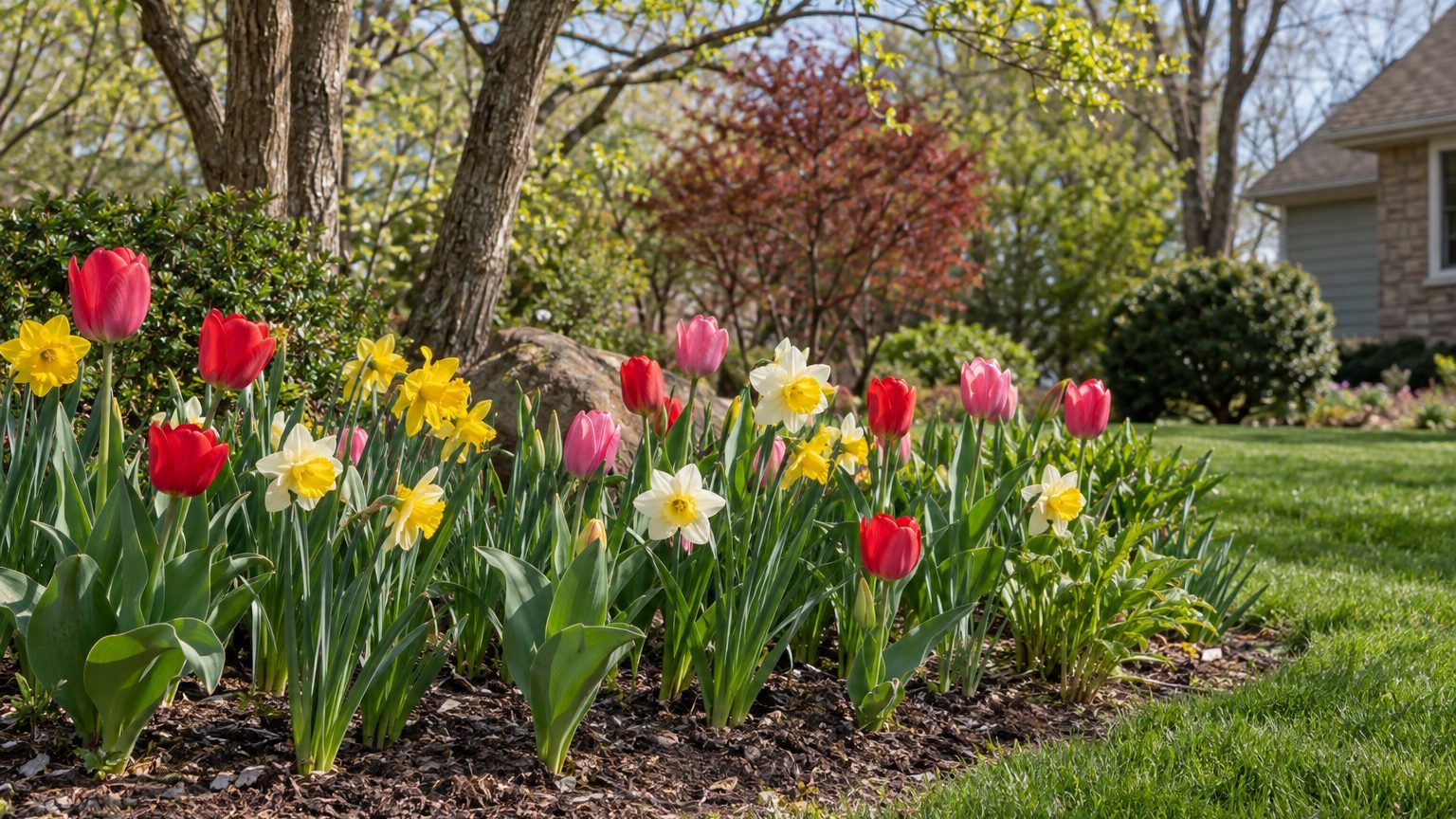
Green spears push through the leaf litter in late winter, and by spring the front beds fill with yellow trumpets and cups of every color. In West Virginia, tulips and daffodils follow the spring warm-up through the hills and hollows. Timing shifts a little with elevation and with how the winter went.

When Do Tulips and Daffodils Bloom in West Virginia?

When Do Tulips and Daffodils Bloom in West Virginia?

Tulips and daffodils bloom in West Virginia in March, April and May, and a mild late winter can bring the first flowers in February. The exact week moves with the spring warm-up, so a warm March opens blooms sooner and a cold one holds them back.

Bulb When it blooms in West Virginia What sets the timing
Snowdrops and winter aconites The start of the season, from February The first mild spells of late winter
Tulips and daffodils March, April and May Spring warming after a full winter chill
Alliums The end of the bulb season, in late spring Warming spring days, chill period needed

Crocus and hyacinths also belong to this spring parade and flower within the same stretch of months. Most of these bulbs need about 12 to 16 weeks of cold to flower. That cold is why they go into the ground in fall, usually in October, though September or November also works, once the soil has cooled down and the warmth of summer has left it.

Cooling soil gives roots time to form before the ground freezes, yet keeps the bulbs from sprouting too early. For orientation, the USDA hardiness zone system places West Virginia between 5a and 7a, so the cold-hardy bulbs in this article are at home across the state.

How to Tell Your Bulbs Are About to Bloom

The plants announce themselves well before the first petal opens, and a walk along the beds on a mild day tells you where each clump stands.

  • Green tips breaking the soil surface mean the bulb has woken up and roots are working, so it is time to rake away heavy leaf litter.
  • Leaves that stretch taller and wider show the bulb is drawing on its stored energy, and they should be left alone from here on.
  • A fat bud rising from the center of the leaves means a flower is on its way, usually only a short time before color appears.
  • A bud tip that shows color means the bloom is close, and daffodils and tulips will open as soon as the days warm.
  • Flower stems standing straight and firm in tulips tell you the plant came through the winter cold well.
  • Chewed or missing tips, especially on tulips and crocus, point to voles, squirrels, rabbits or deer feeding on the bed.

A bed that stays bare long after its neighbors have sprouted is worth a gentle dig to check the bulbs.

What to Do After Tulips and Daffodils Bloom in West Virginia

Once the petals fade, snip off the spent flowers and leave everything else standing. Tulips and daffodils flower on energy their leaves stored the season before, so the leaves are working for next year even when they look untidy.

Leave the foliage in place until it turns yellow and then brown, and never tie it in knots or braid it. Cutting green leaves starves the bulb and costs you flowers the following spring. Planting perennials or summer annuals nearby lets their growth hide the fading leaves.

Expect the two bulbs to age differently. Tulips are often short-lived in the garden, so beds tend to thin out and need fresh bulbs in fall. Daffodils last longer and are the more reliable perennial bulb. Daffodils overwinter across every growing zone found in West Virginia.

How Bloom Time Shifts Across West Virginia

Elevation matters more than latitude here, since the state climbs from river bottoms to mountain ridges.

  • Kanawha Valley around Charleston: As a river valley, this area warms sooner, so bulbs generally open earlier here than on the hills above.
  • Allegheny Highlands: Higher ground freezes earlier in fall and stays cold longer in spring, so tulips and daffodils usually flower later than in the lower valleys.

A garden sitting on a hillside above a valley town may bloom a little later than a neighbor’s down by the river.

Where to Get Bulb Advice in West Virginia

Local questions about varieties, soil and timing are best answered close to home. West Virginia University Extension covers the state, and each county has its own office with people who know the local ground.

  • West Virginia University Extension has gardening information you can read at any season, and fall is a good time to look before ordering bulbs.
  • Your county extension office can speak to your elevation and soil, so call before you buy a large order of bulbs.

Common Questions

Will Deer and Voles Eat My Tulips and Daffodils?

Voles, squirrels, rabbits and deer eat tulips and crocus, while daffodils are left alone. Where deer are common, daffodils, hyacinths and alliums make safer choices.

Do Alliums Need Cold Weather to Bloom?

Yes. According to Iowa State University Extension, alliums need a chill period to bloom, like other spring bulbs. They still go in the ground in fall with the rest.

What If Bulbs Are Still in the Bag After November?

Plant them. A bulb still in the bag is better planted late than stored over the winter, so keep planting for as long as the ground can be dug.

When to Plant Tulips and Daffodils in West Virginia

When to Plant Tulips and Daffodils in West Virginia

Green shoots pushing up through cold leaf litter in late winter are the payoff for a job done months earlier, when the soil was cooling and the garden looked finished. In West Virginia that job belongs to fall. The right weeks depend on how quickly the ground in your yard loses its summer heat.

When to Plant Tulips and Daffodils in West Virginia

When to Plant Tulips and Daffodils in West Virginia

October is the month to plant tulips and daffodils here, and the job can also be done in September or November when the weather or your schedule pushes you off that month. A bulb’s fall runs through a few clear moments.

  • In September, buy bulbs while the selection is full and keep them in a cool, dry spot until the soil is ready for them.
  • In October, plant once the soil has cooled down from its summer warmth, which gives roots time to form before the ground freezes without tempting the bulbs to sprout in fall. A soil thermometer settles any doubt.
  • Through November, keep planting for as long as the ground can be dug, because a bulb still in the bag does better in the soil late than stored over the winter.
  • Right after planting, water the bed and lay mulch over it to keep the soil temperature steadier through winter.
  • In late winter and spring, shoots break the surface, and tulips and daffodils bloom from March through May, with a few starting in February.

In Charleston, a river valley, the first fall frost usually arrives between October 18 and November 1. Hardiness zones across West Virginia run from 5a to 7a in the USDA system, and higher ground freezes noticeably earlier in fall than the valley does.

Which Spring Bulbs Do Best in West Virginia?

Daffodils are the dependable choice, hardy bulbs that return year after year and that animals leave alone. Hyacinths and alliums also hold up well. Tulips and crocus will bloom, but tulips are often short-lived and both are favorite foods for hungry wildlife.

Daffodils overwinter in USDA zones 3 through 8, so every West Virginia zone sits comfortably inside their range. Gardeners with deer or squirrels in West Virginia pick daffodils, hyacinth, allium, fritillaria and scilla, a list that suits yards with these visitors.

Bulb type How it does in West Virginia Why
Daffodils Return year after year Hardy perennial bulb that deer and rabbits leave alone
Tulips Bloom well but often fade after a few years Short-lived in the garden, and voles, squirrels, rabbits and deer eat them
Crocus Pretty but at risk where animals roam Voles, squirrels, rabbits and deer eat the bulbs
Hyacinths Dependable where deer and squirrels visit Animals tend to pass them by
Alliums Good late-season color They need winter chill to bloom and animals avoid them

Fritillaria and scilla are worth a look if animals keep raiding the bed. Daffodils also naturalize well, meaning clumps scattered through a lawn edge or a woodland corner settle in and spread without any digging.

When to Plant, Chill and Care for Spring Bulbs in West Virginia

Fall carries the heaviest work, and spring asks mostly for patience. The jobs and their timing here are short.

Task Best timing in West Virginia Why then
Plant spring bulbs October, or September or November if needed Bulbs settle in as the ground cools
Chill tulips and hyacinths Not needed in West Virginia Most spring bulbs need about 12 to 16 weeks of cold to flower, and winters here supply it
Leave the leaves after bloom As long as the leaves are green, until they turn yellow and then brown The leaves feed the bulb for next year’s flowers

Refrigerator chilling is a habit for places with mild winters, so bulbs here go straight from the bag to the ground. After bloom, remove only the faded flowers and let the foliage do its work.

How Bulb Planting Time Changes Across West Virginia

Elevation does most of the sorting in a state this hilly, and the difference shows up in how soon fall cold settles into the soil.

  • Charleston and the Kanawha Valley: River valley ground cools more slowly, so planting sits comfortably in October and can slide toward November without trouble.
  • Allegheny Highlands: Higher ground freezes noticeably earlier in fall, so aim for the early side of the planting window and take a soil reading before the first hard freeze closes in.

Between those two, watch your own yard. A sheltered, low spot and an exposed ridge can sit in the same county and still cool on different schedules.

Where to Get Bulb Advice in West Virginia

West Virginia University Extension is the state’s land-grant resource for home gardeners, and its county offices can look at a problem bed in person.

  • The county extension office can help with a soil test, best requested in late summer so results arrive before planting.
  • Staff and master gardeners can help diagnose a bed where bulbs failed to return, and a visit with a photo or a sample works well in fall or spring.

Common Questions

Do Daffodils Need to Be Dug Up Every Year?

No. Daffodils never have to be dug, and they return year after year, which is why they suit planting in clumps that stay put.

Which Bulbs Will Deer Leave Alone?

The usual picks for deer country in West Virginia are daffodils, hyacinth, allium, fritillaria and scilla. Tulips and crocus are the ones that disappear.

Will Late Snow Hurt Early Spring Bulbs?

Early bulbs are built for it. In West Virginia, snowdrops push their blossoms up through snow, and crocus are often dusted with it.

Best Grass Seed for West Virginia

Best Grass Seed for West Virginia

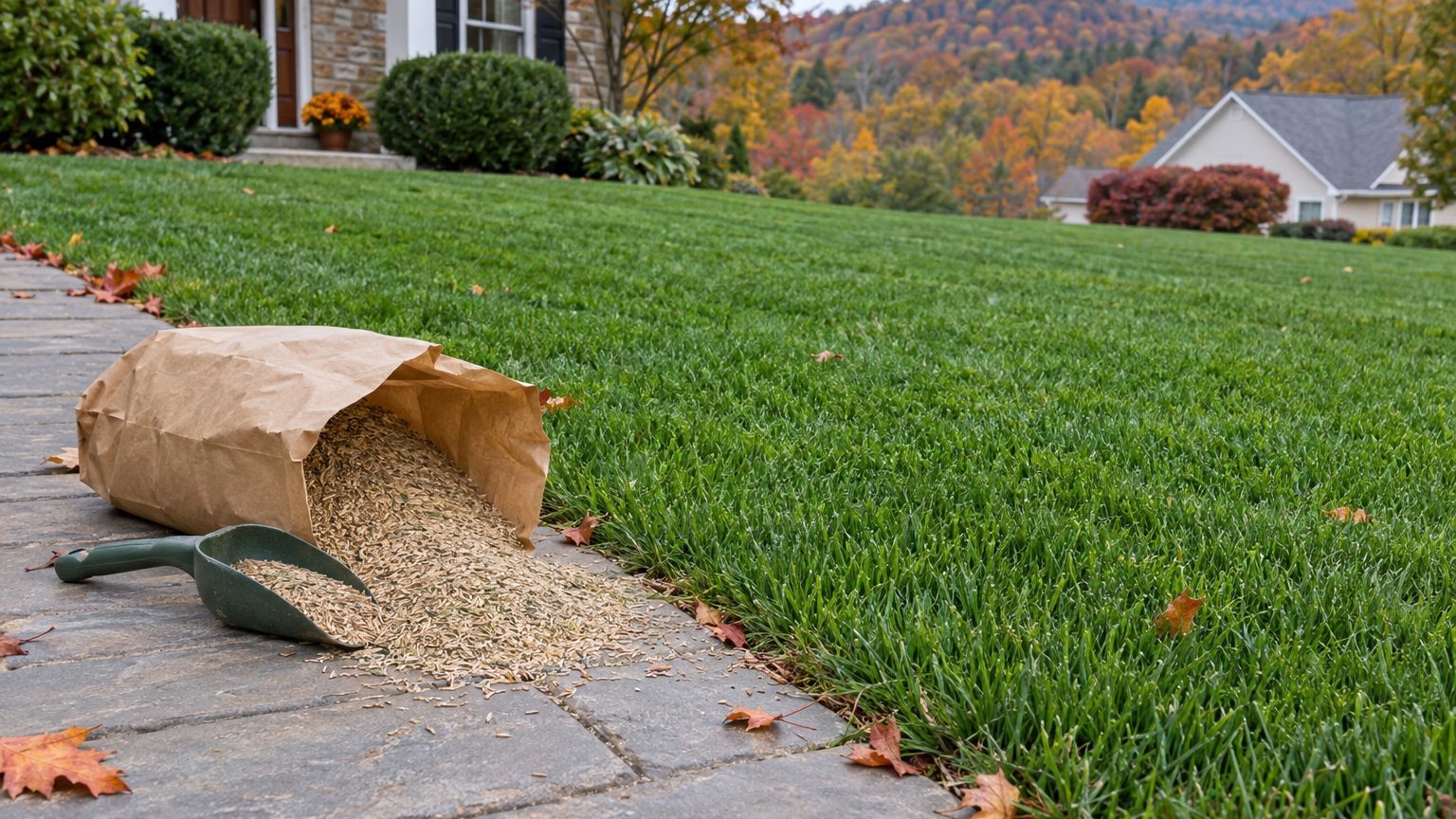
A thin, patchy lawn in West Virginia usually traces back to a seed that did not suit the slope, the shade or the summer. Cool-season grasses are the right family for the state, and tall fescue, Kentucky bluegrass, fine fescues and perennial ryegrass are the ones worth shopping for. Which one fits depends on your yard.

Which Grass Grows Best in West Virginia?

Cool-season grasses grow best here, and the USDA hardiness zone system places West Virginia in zones 5a-7a based on average annual extreme minimum temperature. Warm-season grasses struggle on the cold ridges. The grasses below suit different lawn conditions in this region.

Tall Fescue

Tall fescue is a dependable option in West Virginia. Its deep roots carry it through dry spells in July and August, and it tolerates foot traffic and partial shade better than bluegrass does.

It grows in clumps rather than spreading, so overseed thin spots in the seeding months rather than waiting for it to fill in on its own.

Fine Fescues

Creeping red, chewings and hard fescue are the ones to reach for under trees and on shaded banks. They get by on less light, less water and less fertilizer than the other grasses here.

They look soft and fine-bladed, but they dislike heavy traffic and soggy soil.

Perennial Ryegrass

Perennial ryegrass sprouts fast, which makes it useful for quick cover on bare ground or a slope that washes. It is usually blended with other grasses rather than sown alone.

Cold snaps on higher ground can thin it, so treat it as a helper and not the backbone of a mountain lawn.

Kentucky Bluegrass

Kentucky bluegrass makes a dense, dark green lawn that repairs itself by spreading. It needs full sun and steady moisture.

In a dry summer it goes dormant and browns, then recovers. That is fine if you accept a straw-colored lawn for a while, and frustrating if you do not.

How to Choose Grass Seed for a West Virginia Yard

Start with the light your yard gets, then think about how much foot traffic it takes and how much you are willing to water and mow. Those answers narrow the field quickly.

Yards often mix conditions, so choose a blend whose grasses suit those different areas. Match each patch of ground to what it actually gets.

Your yard Grass Why it fits
Full sun, kids and pets Tall fescue Tough, deep-rooted, handles traffic
Shade under trees Fine fescues Tolerate low light and thin soil
Little watering Tall fescue or fine fescues Cope with dry spells better than bluegrass
Dense, polished look in sun Kentucky bluegrass Spreads to fill gaps, needs more care
Bare slope needing quick cover Perennial ryegrass in a blend Sprouts fast to hold soil

If you would rather mow less, the fine fescues grow slowly and can be left a bit longer. Seeding is best in August and September, and April and May also work if fall slips away.

Which Grasses Grow Where in West Virginia

Elevation shifts which cool-season grass is dependable in different parts of the state. The frost dates are a Charleston reference point, and other parts of the state differ.

  • Charleston and the Kanawha Valley: Warm river-valley conditions favor tall fescue, and bluegrass blends do well where there is full sun and water.
  • Eastern Panhandle: Hot, dry summer stretches reward tall fescue, with fine fescues where trees cast shade.
  • Allegheny Highlands (Snowshoe and Canaan Valley): Fall frost arrives earlier on the high ground, so seed sooner in the season and lean on fine fescues and bluegrass for cold tolerance.

Wherever you live, count on the first fall freeze coming ahead of the valley dates once you gain elevation.

Grass Seed Mistakes to Avoid in West Virginia

Choosing the Wrong Species

Sun-loving bluegrass sown under a maple thins out over time, and fertilizer does not fix the lack of light. Look at the light first, then buy the species that suits it.

Seeding at the Wrong Time

Spring seedlings must race summer heat, while fall seed gets warm soil and cooling air. August and September give roots time to settle before winter, with April and May as the backup if you miss them.

Crabgrass preventer applied in April will also stop new grass seed from sprouting, so choose one task or the other for the same patch.

Too Much or Too Little Seed

Heavy sowing crowds seedlings and invites disease, while a sparse hand leaves room for weeds. Follow the rate on the bag for the species you chose.

Cover the seed with no more than 0.25 inch of soil and press it down so it touches the ground. Buried deeper, it often never emerges.

Where to Get Lawn Advice in West Virginia

West Virginia University Extension publishes lawn guidance written for the state’s soils and weather, and your county office can answer questions about your own yard.

  • Visit the extension website before buying seed to compare grass choices for your part of the state.
  • Call your county extension office in late summer to ask about a soil test before the seeding months begin.
  • Bring a soil sample and a photo of any problem patch for a more specific answer.

Common Questions

Can You Grow Bermuda or Zoysia in West Virginia?

Warm-season grasses are a gamble here. Cold winters on higher ground can kill them or leave them brown for much of the year, so cool-season grasses are the safer bet.

Is a Shade Mix Different from a Sun Mix?

Yes. Shade mixes lean on fine fescues, while sun mixes lean on tall fescue or Kentucky bluegrass. Check the species on the label and match them to the light in your yard.

Should You Dethatch Before Overseeding?

Only when thatch is thicker than about an inch. Thinner thatch lets seed reach the soil, and aeration in August or September can help it make contact.

Lawn Problems and Solutions in West Virginia

Lawn Problems and Solutions in West Virginia

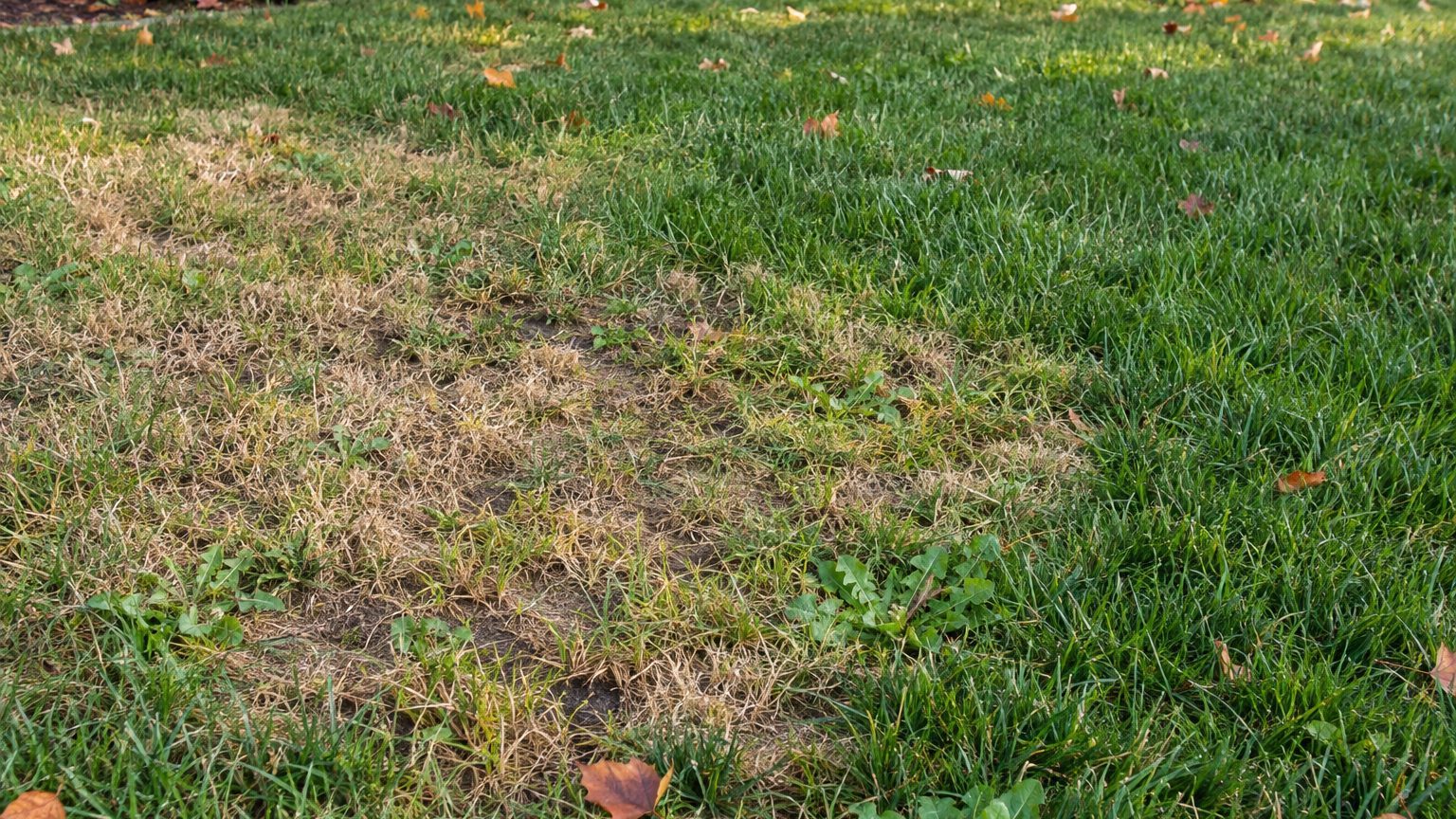
Brown patches that spread in July, a spongy feel underfoot, and crabgrass crowding the edge of the driveway are the usual complaints on West Virginia lawns. Humid summers, shaded hollows and clay soil can set them up. The fixes come down to timing, simple checks, and mowing, watering and feeding habits that suit cool-season grass.

Lawn Pests and Diseases in West Virginia

Crabgrass in Thin Spots

Crabgrass in Thin Spots — Lawn Problems and Solutions in West Virginia

Crabgrass shows up as coarse, light green clumps that sprawl flat along bare or thin ground, usually where the lawn was stressed the summer before. A preventer put down in April, before crabgrass seeds sprout, keeps them from emerging. If April slips by, March or May still works.

Thick grass is the lasting fix, since crabgrass needs light to start.

Dollar Spot Patches

Dollar spot leaves small, straw-colored spots about the size of a silver dollar, often joining into larger blotches in warm, damp weather. Grass blades may show tan bands with darker edges. It favors lawns that are short of nitrogen, so a feeding in May and another in September helps keep it in check.

Brown Patch in Humid Heat

Brown patch makes roughly circular tan or brown areas and often appears in tall fescue during sticky summer stretches. Water in the early morning so blades dry quickly, and run the sprinkler less often. Watering matters most from June through August, when the lawn needs a deep soak without staying wet overnight.

Grubs Under Browning Turf

Grubs are C-shaped, creamy white larvae that chew grass roots, so damaged turf lifts like loose carpet. Pull back a square of sod and look at the root zone, since healthy grass resists tugging. Digging by birds, skunks or raccoons also suggests that something is feeding underneath.

Thatch and Spongy Turf

Thatch is the brown, woody layer of stems and roots between the green blades and the soil. Up to 1/2 inch is healthy, and thicker than that blocks water and invites disease. Core aerate or dethatch in August or September, with April or May as a fallback.

Moss in Shady Hollows

Moss forms soft green mats where grass struggles, typically in shade, on compacted clay, or in spots that stay wet. Raking it out only helps for a while. Open the canopy where you can, aerate, and overseed in August or September so grass fills the space.

How to Tell Which Lawn Problem You Have

Start with the shape of the damage and the time of year, then check whether the grass pulls up easily. Clues work better together, so pair what you see with where it happens, such as sun or shade, wet or dry ground.

What you see Where and when Likely problem
Coarse, sprawling clumps Thin sunny spots, summer Crabgrass
Small straw-colored spots Humid weather, hungry lawn Dollar spot
Large tan circles Tall fescue, hot muggy stretches Brown patch
Turf that rolls up like carpet Patches with no roots to hold Grubs
Spongy feel underfoot Whole lawn, thick brown layer Thatch
Soft green mat Shade, clay, damp ground Moss

If the grass tugs out with damaged roots, inspect the root zone for grubs. If it stays firmly rooted and the patch has a ring or spots, fungus may be involved. Bare ground in shade with moss points to the site, not a pest.

Where Lawn Problems Are Worst in West Virginia

Elevation and terrain change which problems you meet, because the state runs from low river valleys to cool mountain ridges.

  • Kanawha Valley around Charleston: Warm, humid air settles in the valley, so brown patch and dollar spot show up readily in summer. Grass here is also slower to see a hard freeze than it is on the ridges.
  • Allegheny Highlands: Higher ground freezes noticeably earlier in fall, which shortens the window for seeding and feeding. Cooler summers ease fungus pressure, though shade and wet soil keep moss going.
  • Eastern Panhandle: Martinsburg and Charles Town sit in a drier, more open valley, so dry spells stress turf and open the door for crabgrass.

Wherever you live, steep, shaded or clay-heavy yards often have more trouble.

Lawn Care Mistakes That Invite Problems in West Virginia

Mowing Too Short

Cutting low weakens roots and lets sunlight reach crabgrass seed. Mow regularly from April through November, and keep the blade higher in summer heat. Taking off only a little at a time keeps the grass dense enough to crowd out weeds.

Watering Lightly and Often

Frequent shallow sprinkling keeps the surface damp, which fungus loves, and it trains roots to stay near the top. Water deeply in June, July and August, early in the day. Skip a session after a soaking rain.

Feeding at the Wrong Time

Heavy nitrogen in midsummer pushes soft growth that brown patch attacks. Fertilize in May and September instead, with April or November as a fallback. A feeding in September also builds root strength going into winter.

Where to Get Lawn Advice in West Virginia

Local conditions vary from one hollow to the next, so a nearby expert can confirm what you see. West Virginia University Extension offers lawn guidance written for the state.

  • Visit the extension site for turf guides, and check it before choosing seed or a treatment.
  • Call your county extension office with a photo or a sample of damaged turf when a patch spreads fast.
  • Ask about soil testing before fall feeding, so the visit comes ahead of August and September work.

Common Questions

Does West Virginia Grass Go Dormant in Summer?

Cool-season lawns can turn tan in prolonged heat and dry weather. Dormant grass usually greens again when cooler, wetter weather returns, but patches that stay brown and tug out easily may be damaged instead.

Can You Fix a Lawn in a Shady Yard?

Shade limits what grass can do, so combine thinner tree cover, aeration and overseeding in August or September. Where trees are dense, a groundcover or mulch may suit the spot better than turf.

What Does USDA Zone Mean for a West Virginia Lawn?

The USDA hardiness zone system runs from 5a to 7a across the state, based on average annual extreme minimum temperature. Mountain yards sit at the colder end and Charleston’s valley is milder, so grass choice and timing can differ across the state.

West Virginia Lawn Care Schedule, Month by Month

West Virginia Lawn Care Schedule, Month by Month

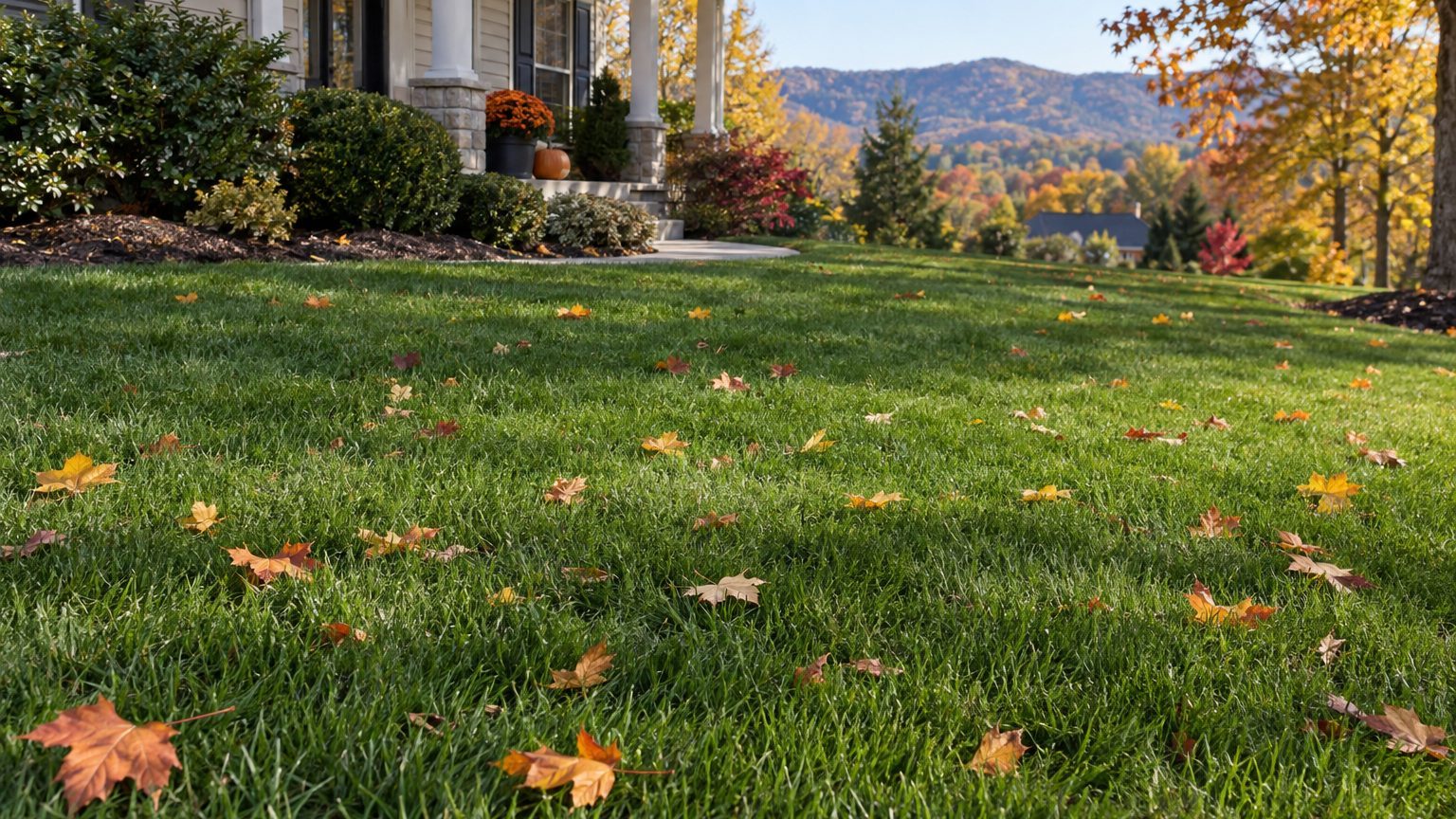
Crabgrass seedlings show up in the thin spots of a West Virginia lawn just as the redbuds fade, and the grass you seeded the previous fall is already thick enough to crowd out weeds. That rhythm of quiet winters, spring prevention, summer restraint and a busy late summer shapes the whole year for a cool-season lawn here.

What to Do Each Month in a West Virginia Lawn

Cool-season grasses such as Kentucky bluegrass, tall fescue and perennial ryegrass do their heavy lifting in cool weather. Each month below matches the job to the grass’s growth.

Month In the lawn
January Rest. The grass is dormant. Keep heavy foot traffic off frozen turf, which snaps the crowns.
February Rest. The grass is still dormant. Clear fallen limbs and plan your seed and fertilizer purchases.
March Growth has not really started. If spring runs warm, you can put down crabgrass preventer now, and it also works in April.
April Apply crabgrass preventer early in the month so it is down before weed seed sprouts. Begin mowing as the grass greens up. Bare patches can be seeded now, and core aeration also works this month.
May Fertilize, since the grass is growing hard and can use the food. Mowing continues regularly. If you missed April, seeding, aeration and dethatching still work now.
June Mow, and start watering when rain falls short. Deep, infrequent soaking pushes roots down before the heat arrives.
July Keep mowing and watering. Cool-season grass slows in the heat, so skip fertilizer and heavy work.
August Core aerate, dethatch if thatch is thicker than about an inch, seed and lay sod. Keep watering new work. Warm soil makes seed sprout fast.
September Seed, aerate, dethatch and lay sod while the soil is still warm. Fertilize now as well, because roots build for winter.
October Mow as long as the grass grows. Sod can still go down early in the month if you missed September.
November Mow until growth stops, and rake leaves so they do not smother the turf. A last fertilizer feeding also works now.
December Rest. The grass is dormant. Keep leaves off the lawn and stay off frozen grass.

Late summer carries more weight than spring here. Good work in August and September does more for the lawn than fussing through the rest of the year.

When Does the Lawn Season Start and End in West Virginia?

Growth starts when the soil warms, not when the last frost passes. Seed wakes up once the soil sits at 50 to 65 °F, which is why April and May work for spring seeding and why August and September work even better, when the ground holds summer’s warmth.

Frost dates matter mostly to young grass. In Charleston, the last spring freeze usually lands between April 9 and April 23, so spring seedlings can still get nipped before then. The first fall freeze usually arrives between October 18 and November 1, which gives fall seed a good stretch to root first.

The lawn season in practice runs from April mowing through November mowing, with the grass dormant for the winter months in between.

How the Lawn Calendar Shifts Across West Virginia

West Virginia runs from river valleys to mountain ridges, and the hardiness zones range from 5a to 7a under the USDA system. Charleston’s dates are a reference point for the Kanawha Valley, while elevation shifts the calendar elsewhere.

  • Kanawha Valley: Near Charleston, sheltered river-valley ground tends to wake earlier in spring and freeze later in fall, so use the city’s dates as a starting point.
  • Potomac Highlands and Canaan Valley: Higher, colder ground greens up later and freezes noticeably earlier in fall. Seed at the early end of the late-summer window so the grass can root first.
  • Eastern Panhandle around Martinsburg: Lower ground along the Potomac tends to run milder than the mountains, so spring work can begin a bit sooner than in the highlands.

If you live on a ridge, treat the valley dates as a starting point and watch your own lawn for green-up.

Lawn Care Timing Mistakes to Avoid in West Virginia

Preventer Applied Too Late

Crabgrass preventer works only before the weed seed sprouts. Spread it after the plants are up and you have paid for a product that does nothing. Put it down in April, and March or May can work in a pinch.

Fall Seeding Left Until Too Late

Fall Seeding Left Until Too Late — West Virginia Lawn Care Schedule, Month by Month

Seed that goes down after September has less warm soil to root in, and a freeze can catch the seedlings thin. Aim for August and September. If you slip, April and May still give young grass a chance, though summer heat will test it.

Feeding in Midsummer

Fertilizer in July pushes soft growth on cool-season grass that is already stressed by heat, and it invites disease. Feed in May and September, when the grass is ready to use it.

Where to Get Lawn Advice in West Virginia

Local help fits the odd mix of valleys and mountains here, since soil and weather change from county to county.

  • West Virginia University Extension offers lawn guidance written for the state, so check it before you choose seed or a fertilizer.
  • Your county extension office can answer questions about your own soil and your own grass, and the visit is most useful in late summer before seeding.

Common Questions

Can You Seed a West Virginia Lawn in Spring Instead of Fall?

Yes, April and May both work. Spring seedlings face weeds and summer heat, so they need more watering and attention than seed sown in late summer.

Should You Dethatch Every Year?

No. Dethatch only when the thatch layer is thicker than about an inch. A thin layer helps the lawn.

When Should You Stop Mowing in West Virginia?

Keep mowing through November while the grass is growing. Once it goes dormant, put the mower away and keep leaves raked off the turf.

West Virginia Lawn Care: What to Do and When

West Virginia Lawn Care: What to Do and When

Cool-season turf in West Virginia greens up in spring, struggles through humid midsummer, and does its best rooting work in early fall. Most lawns here are bluegrass, fescue and ryegrass mixes, and the year runs on a simple rhythm: feed and prevent crabgrass in spring, water in summer, then seed, aerate and feed again once the nights cool.

Frost Dates and Growing Season in West Virginia

Charleston, a river valley, sees its last spring freeze between April 9 and April 23, and its first fall freeze between October 18 and November 1. Hardiness zones in the state run from 5a to 7a on the USDA system, so ridgetops and valleys differ. Frost matters most to a young seedling, but growth itself follows soil warmth.

  • In early spring, the soil is still cold and grass grows slowly, so this is the time to rake off debris and put down crabgrass preventer in April before weed seed germinates.
  • Once the soil warms in May, cool-season grass grows fast, mowing becomes a regular job, and a spring feeding fits well.
  • In June through August, growth slows in the heat, and watering matters most from June to August when rain falls short.
  • In late summer, August and September give seed and sod the warm soil and cooling air they need to root before winter, and this is also the time for core aeration and dethatching.
  • In fall, mowing continues into November, while September is the main feeding month and November can still work if needed.

A seedling sown too late has little time to root before freezing weather, especially on higher ground where fall arrives earlier.

Cool-Season or Warm-Season Grass in West Virginia?

Cool-season grass is the right choice here. West Virginia winters are cold enough to injure warm-season turf, and the state’s humid summers suit the grasses that thrive in spring and fall and rest a little in July heat.

The main lawn grasses for this region are listed below.

Grass How it does in West Virginia Why
Kentucky bluegrass Makes a dense, fine lawn in sun Spreads to fill gaps, though it is slow to establish
Tall fescue Handles summer heat and dry spells well Deep roots reach moisture lower in the soil
Perennial ryegrass Sprouts quickly and gives fast cover Often blended with bluegrass to speed up establishment
Fine fescues Suits shadier, lower-care spots Creeping red, chewings and hard fescue tolerate lower light

Warm-season grasses stay out of this list on purpose. St. Augustinegrass, for one, is never sold as seed, and none of that group is a safe bet through a West Virginia winter.

When to Seed, Fertilize and Aerate a Lawn in West Virginia

Late summer into early fall is the busiest stretch for lawn work, because warm soil and cooler air favor new roots. Spring still works for most tasks if fall gets away from you.

Dethatch only when thatch is thicker than about an inch, since a thin layer actually helps the lawn.

Task Best months in West Virginia Why then
Seeding August, September (April, May also work) Warm soil and mild air help seed root before winter
Laying sod August, September (April, May, October also work) Roots knit into the soil in moderate weather
Core aeration August, September (April, May also work) Grass recovers quickly while it is actively growing
Fertilizing May, September (April, November also work) Feeds growth in spring and root storage in fall
Crabgrass preventer April (March, May also work) Goes down before crabgrass seed germinates
Dethatching August, September (April, May also work) Turf fills in again during strong growth

Mowing runs from April through November, and watering matters most from June to August. If you miss September for seeding, a spring sowing in April or May still gives a decent result.

Lawn Problems to Watch for in West Virginia

Crabgrass in Thin Spots

Crabgrass in Thin Spots — West Virginia Lawn Care: What to Do and When

Pale green, sprawling clumps that appear in summer along driveways and in thin turf are often crabgrass. Seed germinates in warm spring soil, so preventer applied in April stops it before it starts. Thick grass is the long-term fix, because crabgrass needs bare ground and sunlight to take hold.

Brown Patches in Midsummer

Tan or straw-colored areas in July and August, especially in sunny spots where the soil dries out, usually point to heat and drought stress. Cool-season grass often goes dormant rather than dying. When the soil is dry from June through August, water deeply; the turf typically greens up again when the weather eases.

Thin Grass Under Trees

Sparse, mossy turf in shade, often with hard, compacted soil, reflects too little light and root competition. Fine fescues cope better than bluegrass in these spots. Core aeration in August or September opens the soil, and overseeding then gives new grass a chance to root.

How Lawn Care Dates Change Across West Virginia

The state’s terrain is mountainous, so the calendar shifts a good deal from one place to the next, and Charleston dates are only a starting point.

  • Charleston and the Kanawha Valley: The valley floor warms earlier in spring and holds frost off a little longer in fall, so seeding and spring work can start here ahead of the hills.
  • The Allegheny Highlands: Higher elevations thaw later and freeze noticeably earlier in fall, so aim for the early end of the seeding window and skip late sowing.
  • The Eastern Panhandle and Potomac Valley: Lower ground in this part of the state generally allows a somewhat earlier spring start than the mountains, though cold nights can still linger in sheltered hollows.

Within a single county, a ridgetop yard can lag a valley yard noticeably, so let soil warmth and your own frost experience adjust the dates.

Where to Get Lawn Advice in West Virginia

Local help is close at hand. West Virginia University Extension offers research-based lawn guidance, and your county office can help with soil tests and diagnosing problems on your particular property.

  • Contact your county extension office for a soil test before you fertilize or seed, so you know what the soil actually needs.
  • Bring a sample of a troubled patch to the county office when grass turns brown or thin and the cause is unclear.
  • Check the extension site for seeding and fertilizing guidance in late summer, before the September window opens.

Common Questions

Can You Plant Grass in West Virginia in Spring?

Yes. April and May work for seeding, though young grass then has to face summer heat and will need regular watering. Fall sowing generally gives better results because roots develop before the stress of summer.

What Mowing Height Is Right for Lawns in West Virginia?

Mow on the higher side of your grass’s range, especially in summer. Taller blades shade the soil, hold moisture and crowd out weeds. Avoid mowing so low that the lawn looks scalped.

Should You Rake or Leave Leaves on the Lawn in November?

Remove thick layers, since a heavy mat smothers grass over winter. A light scattering can be mowed into small pieces, which return nutrients to the soil, and mowing continues through November.

Hydrangeas That Grow Well in West Virginia

Hydrangeas That Grow Well in West Virginia

Panicle, smooth and oakleaf hydrangeas are the safest bets in West Virginia, with climbing and mountain types close behind. Bigleaf can work, but it is the gamble of the group. Most of the difference comes down to when each one sets its flower buds, and how hard a spring freeze or a ridge-top winter hits them. The ranking below runs from most dependable to riskiest.

Hydrangeas that grow well in West Virginia: The Short Answer

NOAA NCEI Climate Normals put Charleston’s last spring freeze between April 9 and April 23, and its first fall freeze between October 18 and November 1. USDA hardiness zones run from 5a to 7a statewide, and ridge tops freeze earlier than Charleston’s river valley, so favor hydrangeas that flower on new wood.

Panicle hydrangea

Large upright shrub with cone-shaped flower clusters 15–30 cm long, made of many four-petaled florets; blooms open creamy white to lime-tinged, then a

Hydrangea paniculata blooms on the current season’s growth, so a late freeze inside Charleston’s April 9 to April 23 window cannot erase the summer show. It also handles the cold end of the state’s zone range. Give it full sun, and thin crowded stems instead of shearing the whole shrub into a ball.

Smooth hydrangea ‘Annabelle’

Hydrangea arborescens also flowers on new wood, so even a winter that kills stems back to the ground still leaves the plant blooming. The catch is weak stems, and big flower heads flop after a summer storm. Choose a sturdier cultivar or stake the clumps, and shade it from harsh afternoon sun.

Oakleaf hydrangea

Hydrangea quercifolia flowers on old wood, but its buds are usually tougher than a bigleaf’s. The peeling bark and burgundy fall leaves earn the spot even in a poor bloom year. Plant it in well-drained soil and part shade, and skip hard pruning. On a cold ridge, tuck it against a wall.

Climbing hydrangea

Hydrangea petiolaris is a self-clinging vine that shrugs off cold, but it blooms on old wood and spends its first years building roots and stems. Patience is the price. Give it a sturdy wall, fence or tree trunk in part shade, and leave the pruners alone until it has covered its support.

Mountain hydrangea

Hydrangea serrata is smaller than bigleaf and usually handles cold better, but it also forms buds on old wood, so a hard winter still costs flowers. Plant it on the sheltered side of the house and mulch the roots. Common problems are covered in Hydrangea Pests and Diseases in West Virginia.

Bigleaf hydrangea

Hydrangea macrophylla forms flower buds the summer before, so a late freeze around Charleston’s April 9 to April 23 window can wipe out a year of bloom. Plant it in a sheltered spot and prune only in June and July, right after flowering. See When to Plant and Prune Hydrangeas in West Virginia.

How to Work Out the Dates for Your Own Yard

Every date starts from the frost window, counted forward for spring and backward for fall.

  1. Find the frost window: NOAA NCEI Climate Normals put Charleston’s last spring freeze between April 9 and April 23 and its first fall freeze between October 18 and November 1, and ridges and hollows shift those ranges, so treat them as the middle of the picture.
  2. Count forward from spring: the calendar’s spring planting months are April and May, but I would lean toward May, once the April 9 to April 23 window has passed.
  3. Count back from fall: subtract the weeks a new root system needs from October 18 to November 1 and the answer is a range too, which is why August and September are the fall planting months.
  4. Match the name to the winter: panicle flowers on new wood, so it comes through a cold snap and still blooms, while bigleaf carries last summer’s buds through the winter and loses them after a hard freeze.
  5. Set the feeding and pruning months: fertilize in March, May and July, and prune bigleaf only in June and July.
  6. Diagnose before you treat: a healthy shrub with no flowers points to frozen buds or mistimed pruning, while marked leaves belong on the Hydrangea Pests and Diseases in West Virginia page.

Higher ground freezes earlier in fall, so a yard above the valley should treat August as safer than September. Mark your two ranges on a calendar once, and every other task falls into place around them.

West Virginia North to South: How the Dates Shift

Elevation moves West Virginia’s dates more than latitude does, and Charleston’s river valley sits toward the mild end.

  • Allegheny Highlands (Canaan Valley, Snowshoe, Pocahontas County): the highest ground freezes earliest in fall and thaws latest in spring, so panicle and smooth types are the sound choices and bigleaf is a real gamble.
  • Southern Mountains (Beckley, Bluefield, Princeton): elevation outweighs the southern latitude here, so plant early in the fall window and expect a cooler season than Charleston’s.
  • Kanawha and Ohio River Valleys (Charleston, Huntington, Parkersburg): valley sites tend to freeze later in fall, so these yards follow the Charleston ranges most closely and give bigleaf its best odds.
  • Eastern Panhandle (Martinsburg, Berkeley Springs, Harpers Ferry): the lower valleys tend to run milder than the mountains, though nearby ridges bring the cold back, so match dates to the exact site rather than the county.

The statewide picture, zones included, sits on the Hydrangeas in West Virginia page.

Mistakes West Virginia Punishes

Bigleaf on an exposed ridge

Higher ground freezes earlier than the October 18 to November 1 window NOAA NCEI Climate Normals give Charleston, and wind and cold punish exposed buds. Move bigleaf to a sheltered spot near the house, or switch to a panicle, which blooms on new wood and shrugs off the cold.

Pruning bigleaf at the wrong time

Cutting a bigleaf back outside its window removes buds that formed the summer before, and the shrub answers with leaves and no flowers. Prune only in June and July, straight after bloom, and cut just the spent heads. The dates are in When to Plant and Prune Hydrangeas in West Virginia.

Feeding too late in the season

Fertilizer after July pushes soft new growth that the first fall freeze, October 18 to November 1 in Charleston, can burn. Stay with the fertilizing months of March, May and July, and water the plants in when you feed. For spotted leaves, start with Hydrangea Pests and Diseases in West Virginia.

West Virginia Extension Offices and County Contacts

The state figures here are a starting point. The USDA NIFA Land-Grant University Extension directory lists West Virginia University Extension at extension.wvu.edu, and your county office knows how local elevation shifts the frost window.

  • Hydrangeas in West Virginia: the frost dates and the zone range for the whole state.
  • When to Plant and Prune Hydrangeas in West Virginia: the planting, feeding and pruning months in order.
  • Hydrangea Pests and Diseases in West Virginia: what to look for on leaves and stems, so you can describe it clearly when you call your county extension office.

Common questions

Can bigleaf hydrangeas grow in West Virginia?

Yes, in sheltered spots, but they carry the most risk of any type here because their buds form the summer before and can freeze. Panicle and smooth types bloom on new wood and are the safer picks if you want flowers every year.

When is the best time to plant hydrangeas in West Virginia?

The state calendar lists April, May, August and September as planting months. Either season works, and fall planting gives roots time to settle before the first freeze. Yards on higher ground should lean toward August.

What is the easiest hydrangea to grow in West Virginia?

A panicle hydrangea. It flowers on new wood, copes with the cold end of the USDA Plant Hardiness Zone Map range of 5a to 7a, and does not depend on its buds surviving the winter. Smooth hydrangeas are a close second.

Hydrangea Pests and Diseases in West Virginia

Hydrangea Pests and Diseases in West Virginia

Hydrangea trouble in West Virginia announces itself through the leaves: spots, powder, holes, stickiness, wilting. Each clue points to a cause, and each cause has a fix tied to a particular month.

Humid valleys and cold ridges shift the timing. The dates below start from Charleston and work outward, with the county extension office as the next stop.

Hydrangea pests and diseases West Virginia: The Short Answer

NOAA NCEI 1991-2020 Climate Normals puts Charleston’s last spring freeze at April 9 to April 23 and its first fall freeze at October 18 to November 1, so the pest and disease season runs between them. Scout the whole span, because Charleston sits in a river valley and higher ground freezes earlier.

Brown spots after rainy weeks

Round to irregular lesions 2–10 mm across, tan to dark brown with a darker brown or purplish margin and sometimes a yellow halo; may show faint concen

Fungal leaf spots spread on splashing water and thrive when foliage stays wet. Water at the soil line in the morning, pick off the worst leaves, and bag them. Space new plants so air moves through, and time planting with When to Plant and Prune Hydrangeas in West Virginia.

White powder on leaf surfaces

A dusty white film points to fungus that favors crowded, shaded stems. Thin congested growth so air can pass, and prune bigleaf in June or July, the window the calendar lists. Remove affected leaves as they appear. Cutting bigleaf outside that window can cost next year’s flowers.

Ragged holes in leaves

Many chewing insects feed after dark, so damage appears overnight with no culprit in sight. Check leaf undersides and stem bases with a flashlight in the evening. Hand-pick what you find and drop it in soapy water. Healthy plants tolerate light chewing, so skip sprays until damage spreads.

Sticky leaves and curled tips

Sap-feeding insects leave a sugary residue and distort new growth. Rinse plants with a firm spray of water, working on the undersides, and repeat weekly while you still see them. Avoid heavy feeding, since lush growth attracts them. Fertilize only in March, May, or July, the months on the state calendar.

Wilting in wet soil

Roots sitting in saturated soil suffocate, and rot can follow. Wilting while the ground is wet is the tell. Ease off watering, improve drainage, and never bury the crown. Plant in April, May, August, or September, and check Hydrangeas That Grow Well in West Virginia for sturdy choices.

Blackened shoots after a late freeze

Tender new shoots die back when a freeze arrives after leaf-out, and the dead tissue invites disease. Wait until growth resumes, then cut back to live wood. Keep frost cloth ready until the last spring freeze window has passed. Details sit on Hydrangeas in West Virginia.

How to Work Out the Dates for Your Own Yard

Every date starts from two anchors, the freeze windows and the calendar months, and you add or subtract weeks from there.

  1. Mark the spring anchor: NOAA NCEI 1991-2020 Climate Normals puts Charleston’s last spring freeze at April 9 to April 23, so weekly leaf checks begin as buds open just after that range ends, not before.
  2. Count back from the fall anchor: Charleston’s first fall freeze falls October 18 to November 1, and subtracting six weeks gives September 6 to September 20, a working deadline for fall planting so roots settle before the ground hardens.
  3. Shift for your elevation: Charleston is a river valley, so a ridge-top yard freezes earlier in fall, and the sensible move is to start checks a little later in spring and wrap up fall jobs a little sooner than those ranges say.
  4. Match the symptom to the cause: to learn which problem you actually have, turn over a leaf and compare it with the clues above, since spots, white film, holes, stickiness and wilting each point in a different direction.
  5. Feed on the calendar: fertilizing belongs in March, May, or July, so mark those three months and skip any other feeding, because soft new growth is what sap-feeders and late freezes hit first.
  6. Prune bigleaf in June or July: that is the window the calendar gives, and it doubles as your airflow job, so thin the crowded stems then and skip fall haircuts.

Write both ranges on a garage calendar and jot the weather beside them each week. A wet spell landing in June or July, right when you are pruning, is your cue to inspect leaves more often.

West Virginia North to South: How the Dates Shift

Elevation does most of the moving here, and the direction is simple: cooler ground pushes spring later and fall earlier, which shortens the scouting season.

  • Ohio River and Kanawha valleys (Charleston, Huntington, Parkersburg): the lowest, warmest ground, where the Charleston dates fit best and humid, still air keeps wet-leaf problems in play.
  • Eastern and Northern Panhandles (Martinsburg, Berkeley Springs, Wheeling): farther north, so winters bite a little harder than in Charleston, and the dates lean later in spring and earlier in fall.
  • Allegheny Highlands (Canaan Valley, Davis, Marlinton): high, cold country where fall freezes arrive noticeably earlier, so finish planting and cleanup well ahead of the Charleston dates.
  • Southern ridges and plateau towns (Beckley, Bluefield, Princeton): hilltop towns run cooler than the valley floors around them, so treat the Charleston range as the warm end.

The state guide, Hydrangeas in West Virginia, sets out the frost dates and pruning window for the whole state.

Mistakes West Virginia Punishes

Trusting one zone statewide

USDA Plant Hardiness Zone Map 2023 runs West Virginia from 5a to 7a, and that USDA system tracks only the average annual extreme minimum. Charleston is a river valley, so ridge yards freeze earlier in fall. Judge your own site, then see Hydrangeas That Grow Well in West Virginia.

Watering leaves in the evening

Wet foliage overnight is an open door for fungal spots, and humid valley air slows drying. Water at the base in the morning so leaves dry by afternoon, using a soaker hose or a hand-held wand. Keep overhead sprinklers off your hydrangeas.

Leaving spotted leaves on the ground

Fallen diseased leaves carry fungus into next season. Rake them once leaves drop after the first fall freeze, and bag them rather than composting. Wash pruners between cuts on any spotted stems. Then schedule next year’s work with When to Plant and Prune Hydrangeas in West Virginia.

West Virginia Extension Offices and County Contacts

The Charleston dates are a starting point. Your county office and West Virginia University Extension, at extension.wvu.edu, hold the local detail and can help identify a leaf or stem you cannot place.

  • Your state page: Hydrangeas in West Virginia gives the frost dates and the pruning window for the state.
  • Which ones hold up here: Hydrangeas That Grow Well in West Virginia sorts varieties by how well they cope with the climate.
  • The month-by-month calendar: When to Plant and Prune Hydrangeas in West Virginia lists each task in order, so open it before your next cut.

Common questions

When should I start checking hydrangeas for problems in Charleston?

NOAA NCEI 1991-2020 Climate Normals puts Charleston’s last spring freeze at April 9 to April 23. Start weekly checks once leaves open after that window, and keep going until the first fall freeze, October 18 to November 1.

Does pruning time affect disease?

Pruning bigleaf in June or July, the calendar window, opens crowded stems to airflow, which gives fungus less to work with. Pruning outside that window gives up the airflow benefit and can cost you next year’s flower buds.

Will my USDA zone tell me which pests I will get?

No. The USDA system rates only the average annual extreme minimum temperature, so it says nothing about summer humidity, wet leaves or insects. Scout weekly and read the symptoms instead.

When to Prune Hydrangeas in West Virginia

When to Prune Hydrangeas in West Virginia

In Charleston, plant hydrangeas in April or May, or hold off until August and September. Those two windows are the ones that work on West Virginia’s calendar. Bigleaf pruning has its own slot, June and July. Get the timing right and the shrub roots, blooms and overwinters without drama. Get it wrong and you pay for it in flowers.

When to prune hydrangeas in West Virginia: The Short Answer

NOAA NCEI 1991-2020 Climate Normals puts Charleston’s last spring frost at April 9 to April 23 and its first fall frost at October 18 to November 1, and the year’s work hangs off those two windows.

  • January: Leave the shrubs alone, because frozen ground is no place for a new root ball. Save the pruners for June.
  • February: Order plants and note where afternoon sun lands in the yard. Planting is still weeks off, well ahead of the April 9 to April 23 last-frost window.
  • March: Fertilize for the first time, before the last-frost window opens. Keep it to one light feeding, since soft new growth is what a late freeze hurts most.
  • April: Plant once the April 9 to April 23 window has passed. Keep an old bedsheet handy for any late cold snap.
  • May: Plant and fertilize, since both are on the calendar this month. Water the root ball before it goes in, and mulch afterward.
  • June: Prune bigleaf just after the blooms fade. Take off spent flowers and dead stems, and leave healthy wood alone.
  • July: Finish bigleaf pruning early in the month and fertilize one last time. A cut made much later risks taking next year’s flower buds.
  • August: Planting reopens as summer heat eases. Water deeply through the first weeks, because new roots dry out fast.
  • September: Finish planting so roots settle before frost arrives, due October 18 to November 1. The real cutoff falls weeks earlier, and the method is below.
  • October: Stop planting. Mulch established shrubs as the first-frost window approaches.
  • November: Leave the spent flower heads in place, since they give the buds some cover. Nothing else is needed once frost has come.
  • December: Rest. Check that the mulch hasn’t blown off, and hold the pruners.

Charleston sits in a river valley. Yards on higher ground freeze noticeably earlier in fall, so pull the September and October steps forward if that describes yours.

How to Work Out the Dates for Your Own Yard

NOAA NCEI 1991-2020 Climate Normals gives Charleston a last spring frost of April 9 to April 23 and a first fall frost of October 18 to November 1, so everything below counts from those two windows.

  1. Add two weeks to the last frost: April 9 to April 23 plus two weeks gives April 23 to May 7, the range when a spring planting is safest from a late freeze.
  2. Subtract six weeks from the first fall frost: October 18 to November 1 minus six weeks gives September 6 to September 20. That is a common rule of thumb for giving roots time to settle before the ground cools.
  3. Move the fall date earlier if you live above the valley floor: Charleston is a river valley, so a hillside yard should treat September 6 to September 20 as a ceiling, not a target.
  4. Check which hydrangea you own before pruning: the June and July window is for bigleaf. Compare your plant with Hydrangeas That Grow Well in West Virginia first.
  5. Tie feeding to the same calendar: March, May and July, and no later.

Two subtractions turn a Charleston calendar into a yard calendar. Write both ranges where you will see them, then check them against your county office.

West Virginia North to South: How the Dates Shift

USDA Plant Hardiness Zone Map 2023 places West Virginia across zones 5a-7a, a USDA system built on one variable, the average annual extreme minimum temperature, so no single calendar fits the whole state.

  • Ohio and Kanawha river valleys (Charleston, Huntington, Parkersburg): the dates in this article fit best here, since they come from a Charleston station.
  • Eastern Panhandle (Martinsburg, Charles Town, Harpers Ferry): sheltered valley country that tends toward the milder end of the state, so spring planting can start a little sooner.
  • Allegheny Highlands (Davis, Marlinton, Snowshoe): high elevation brings fall freezes earlier and spring warmth later, so the fall cutoff moves up and spring planting moves back.
  • Southern plateau (Beckley, Bluefield, Princeton): ridgetop towns sit above the river valleys and behave like a gentler version of the highlands, with fall frost arriving ahead of Charleston.

Pin down your own ridge or hollow with the county office, then take the full-year picture to Hydrangeas in West Virginia.

Mistakes West Virginia Punishes

Pruning bigleaf at the wrong time

A leafy bigleaf hydrangea shrub about 1–1.5 m tall, with broad, glossy, deep-green, toothed oval leaves 10–20 cm long on stiff tan-to-grey-brown woody

Cutting bigleaf in winter or early spring removes the buds that would have become flowers. Hold the pruners until June or July, after the blooms fade. If a shrub still refuses to flower, check it against Hydrangeas That Grow Well in West Virginia.

Planting too late in fall

A shrub set in the ground in October gets little time to root before the first fall frost. Plant in August or September instead, and if the window has slipped past, wait for April. If a young shrub struggles anyway, Hydrangea Pests and Diseases in West Virginia helps you sort out the cause.

Feeding after July

Fertilizer applied in late summer or fall pushes soft new growth just before the first frost, and frost burns it. Feed in March, May and July only. Hydrangeas in West Virginia lays out the rest of the yearly routine.

West Virginia Extension Offices and County Contacts

The USDA NIFA Land-Grant University Extension directory lists West Virginia University Extension at extension.wvu.edu. Charleston’s frost dates are a starting point, and your county office knows your elevation and soil. Call before the April planting window opens.

  • Your state page: Hydrangeas in West Virginia holds the frost dates and the pruning window where you live.
  • Which ones hold up here: Hydrangeas That Grow Well in West Virginia helps you choose before you dig.
  • What goes wrong here: Hydrangea Pests and Diseases in West Virginia shows what to bring, a leaf or a photo, when you call your county office.

Common questions

Can I plant hydrangeas in West Virginia in July?

July is not on the planting calendar, which lists April, May, August and September. If a shrub arrives in July anyway, keep it in its pot in light shade and set it out in August.

When do I prune bigleaf hydrangeas in West Virginia?

June and July, right after the flowers fade. The calendar covers bigleaf only, so identify your variety before you cut.

Do these dates work in the mountains?

Treat them as a Charleston baseline. Higher elevations freeze noticeably earlier in fall, so move fall planting earlier and confirm the dates with your county Extension office.

The almanac, state by state. Every date on this site comes from a state’s own frost facts and its extension service’s calendar — and says where it comes from.