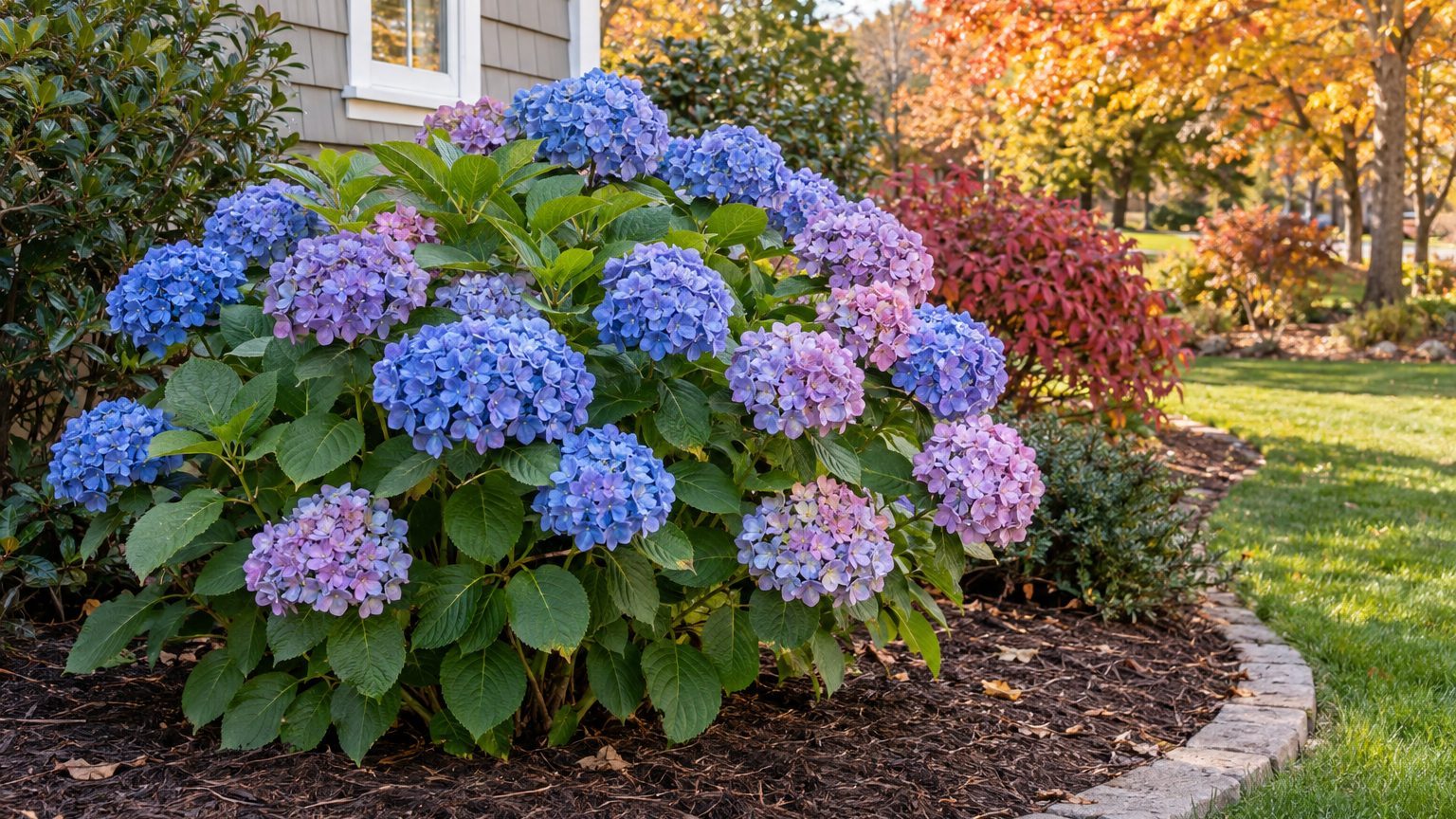
Nashville gardeners get two real planting windows: March and April before the heat builds, then August and September once it breaks. Frost still lingers into early April here, so timing decides whether roots establish before summer stress hits. Pruning runs on its own calendar entirely, and getting it wrong costs a full season of bloom.
When to prune hydrangeas in Tennessee: The Short Answer
The twelve months break into distinct jobs, and confusing one for another is the most common way to lose a year of flowers.
- January: shrubs sit fully dormant, well ahead of any spring frost risk. Leave dead flower heads on for winter insulation and do nothing else.
- February: buds stay tucked against cold snaps this early. Resist any urge to prune bigleaf types now, since next year’s flowers are already set on old wood.
- March: NOAA NCEI 1991-2020 Climate Normals puts Nashville’s last spring frost between March 31 and April 12, so early-month planting still risks a freeze. This is also a fertilize month, but wait for new roots to settle before feeding.
- April: planting continues through the tail of frost risk, and by mid month the ground has usually cleared. New shrubs need weekly water through their first summer once in.
- May: a second fertilize pass, timed to feed roots before summer heat arrives. Skip pruning entirely, since buds are swelling toward this season’s bloom.
- June: bigleaf pruning opens here, right as spring flowers fade. Cut spent stems back to a strong bud pair within a few weeks of bloom drop.
- July: the bigleaf pruning window closes this month, alongside a third fertilize pass. Cuts made later risk removing next year’s buds before they set.
- August: fall planting opens, with soil still warm enough for roots to spread before cold arrives. Water new plantings deeply twice a week in the heat.
- September: the second fall planting month, and often the easier one, as heat backs off. Roots get roughly six to eight weeks to settle before frost returns.
- October: the first fall frost lands between October 28 and November 8, so finish any planting by the first week. Add mulch around the base once nights turn cold.
- November: frost is essentially certain across the state now, and shrubs slide into dormancy. Mound extra mulch over the crown of young or marginal varieties.
- December: nothing to do above ground, but a good month to plan next year’s planting sites. Order any new stock so it ships in time for the spring window.
The pattern holds all year: plant in the shoulder months, feed three times, and prune bigleaf types only in the narrow gap right after bloom. Miss that gap and next year’s flowers disappear along with the cut wood.
Tennessee — the year and the numbers
- State
- Tennessee
- USDA zones
- 5b-8a
- Last spring frost
- March 31 to April 12
- First fall frost
- October 28 to November 8
- Annual rain
- 51 in
- Lawn zone
- transition-season
- Source
- NOAA NCEI 1991-2020 Climate Normals, 32F freeze probabilities · Nashville
How to Work Out the Dates for Your Own Yard
Work backward from Nashville’s frost dates and the rest of the calendar falls into place on its own.
- Start from the last spring frost: NOAA NCEI 1991-2020 Climate Normals sets that window at March 31 to April 12 for Nashville, so treat early March as soil prep only, not planting.
- Count forward for planting: add two to four weeks once the freeze risk passes, which lands most safe planting in mid to late April.
- Mark the bloom drop for pruning: bigleaf hydrangeas set next year’s buds within weeks of losing this year’s flowers, which is why June and July are the only safe cuts.
- Count back from the first fall frost: with that window running October 28 to November 8, subtract six to eight weeks to find the last safe fall planting date, in early to mid September.
- Check your hardiness zone against the state range: USDA Plant Hardiness Zone Map places Tennessee at 5b to 8a, and a yard on the cold end needs extra mulch a warmer valley yard can skip.
None of these dates are fixed points. They mark the middle of a range, and a late cold snap or an early heat wave shifts them by a week in either direction.
Tennessee North to South: How the Dates Shift
Three geographic bands split the state, and elevation matters more here than raw distance north or south.
- West Tennessee (Memphis, the Mississippi River bottomlands): the lowest, flattest ground in the state, generally first to clear frost in spring and last to see it return in fall.
- East Tennessee and the Cumberland Plateau (Knoxville, Chattanooga’s higher ground, the plateau counties): cooler and slower to warm, which pushes both planting and the pruning window a bit later than the rest of the state.
None of that changes the order of the calendar, only how far to nudge it. The state guide sets the baseline, and a plateau yard should read it with a week or two of built-in caution.
Mistakes Tennessee Punishes
Pruning cuts off next year’s blooms

Bigleaf hydrangeas set their flower buds within weeks of finishing this year’s show, so any cut made in fall or early spring removes wood that was about to flower. Prune only in June and July, right after bloom, and skip every other month entirely.
Leaves scorched by August sun
Tennessee summers push afternoon temperatures well past what many hydrangea leaves tolerate in full exposure, and scorched brown edges are the result. Plant on the east or north side of the house, where morning sun reaches but the harshest afternoon light doesn’t.
Fall planting too close to frost
A shrub planted after the first week of October has little time to root before the first fall frost, which NOAA NCEI 1991-2020 Climate Normals puts between October 28 and November 8, and a shallow root system rarely survives winter. Finish fall planting in September instead.
Tennessee Extension Offices and County Contacts
The county office fills in what a statewide range can’t, since soil, drainage, and exposure vary block to block even within Nashville.
- University of Tennessee Extension: local county agents answer specific soil and drainage questions a statewide guide can’t cover.
- Your state page: the frost dates and the pruning window gathered in one place for Tennessee.
- Request a soil test: ask the county office for one before the next planting window opens, since Tennessee’s clay soils often need amending first.
Common Questions
Can I plant hydrangeas in Tennessee in the fall?
Yes, August and September both work, as long as planting finishes with enough time before the first fall frost between October 28 and November 8 for roots to settle in.
What happens if I prune bigleaf hydrangeas outside of June and July?
The shrub typically survives, but next year’s flowers disappear, since bigleaf varieties set their buds on old wood within weeks of finishing this year’s bloom.
Does Tennessee’s hardiness zone range change when I should plant?
Not the calendar itself, but it changes how much winter protection a shrub needs, since a 5b yard on the Cumberland Plateau carries more cold risk than an 8a yard in the Nashville basin.