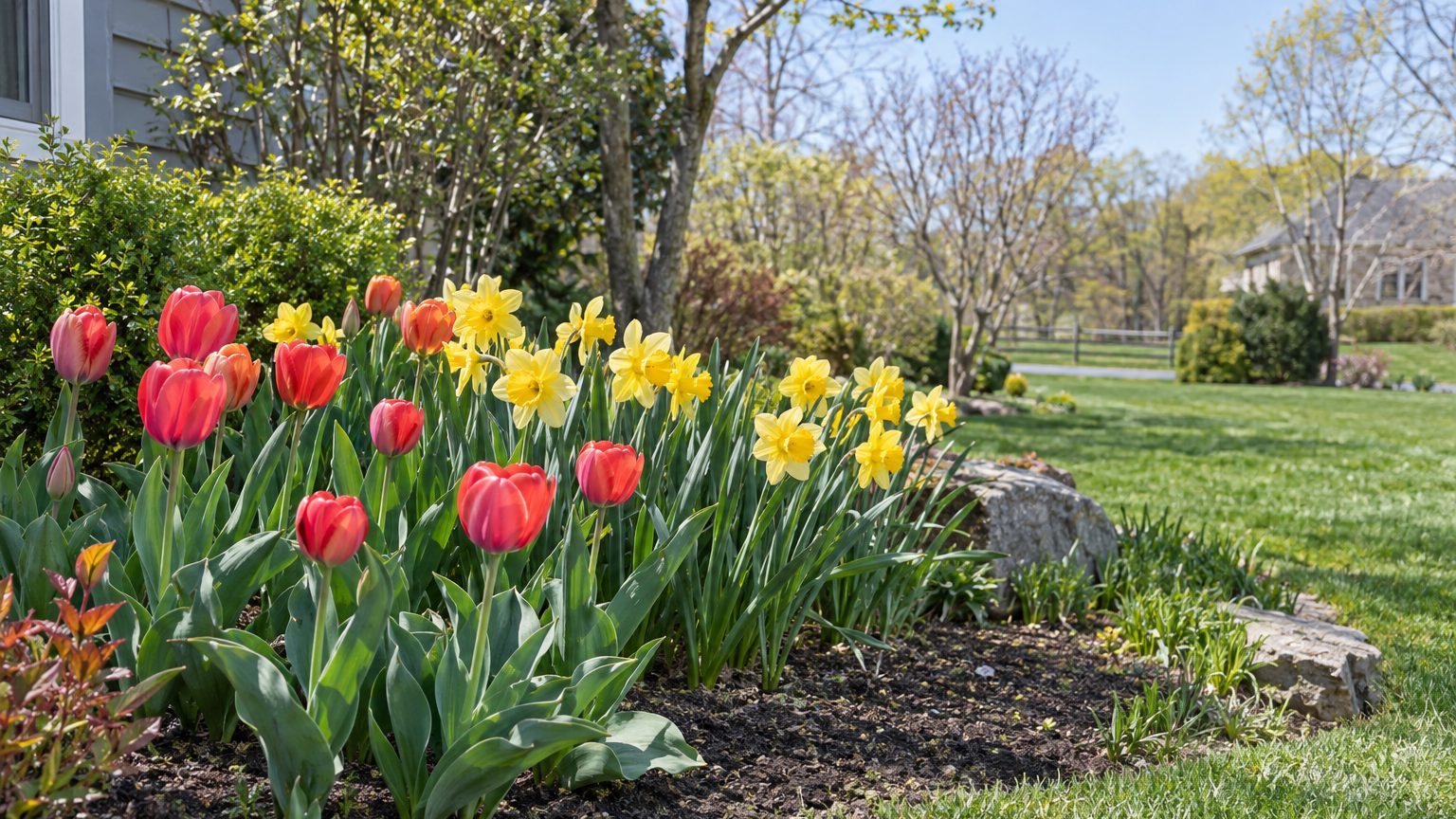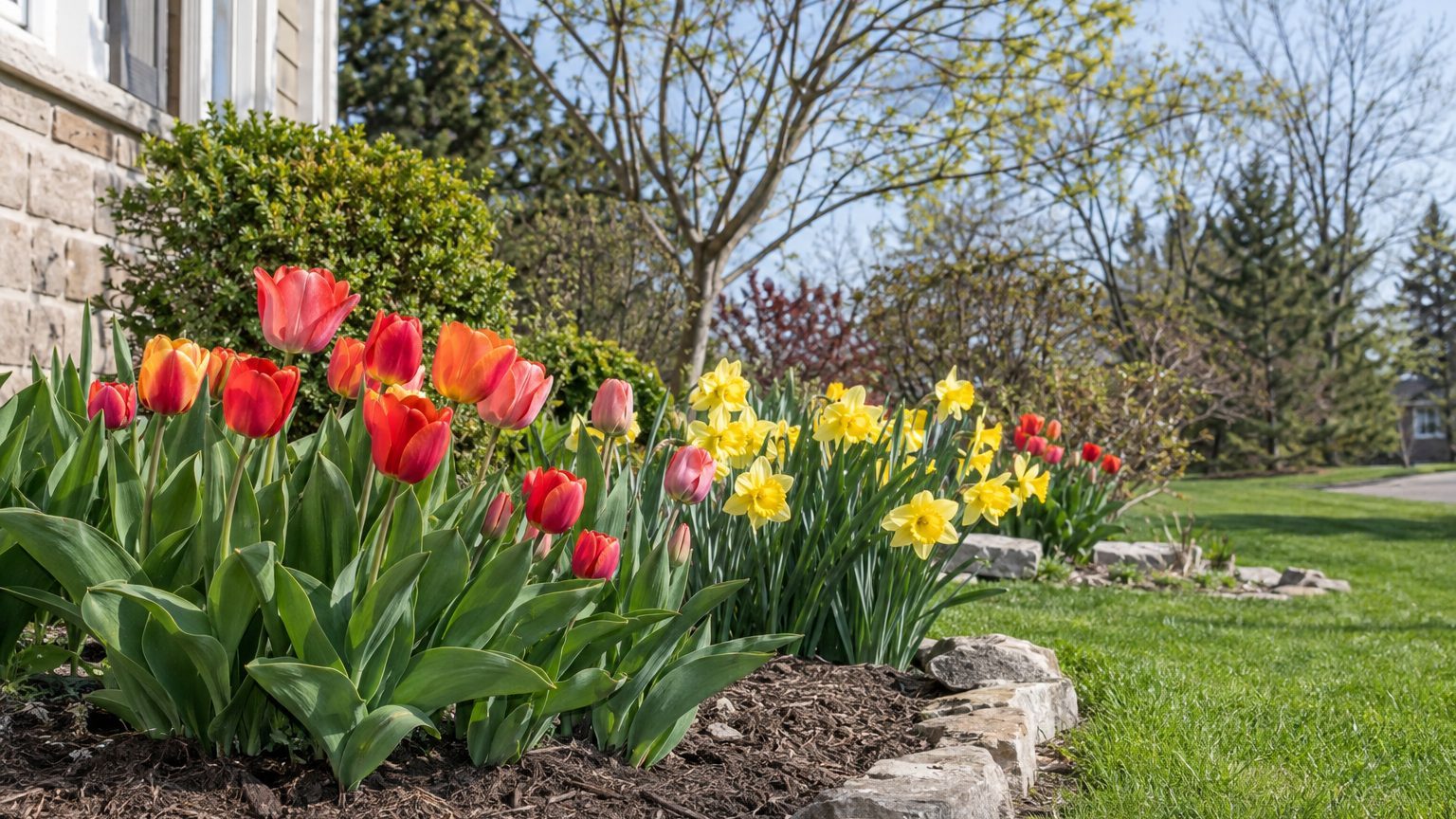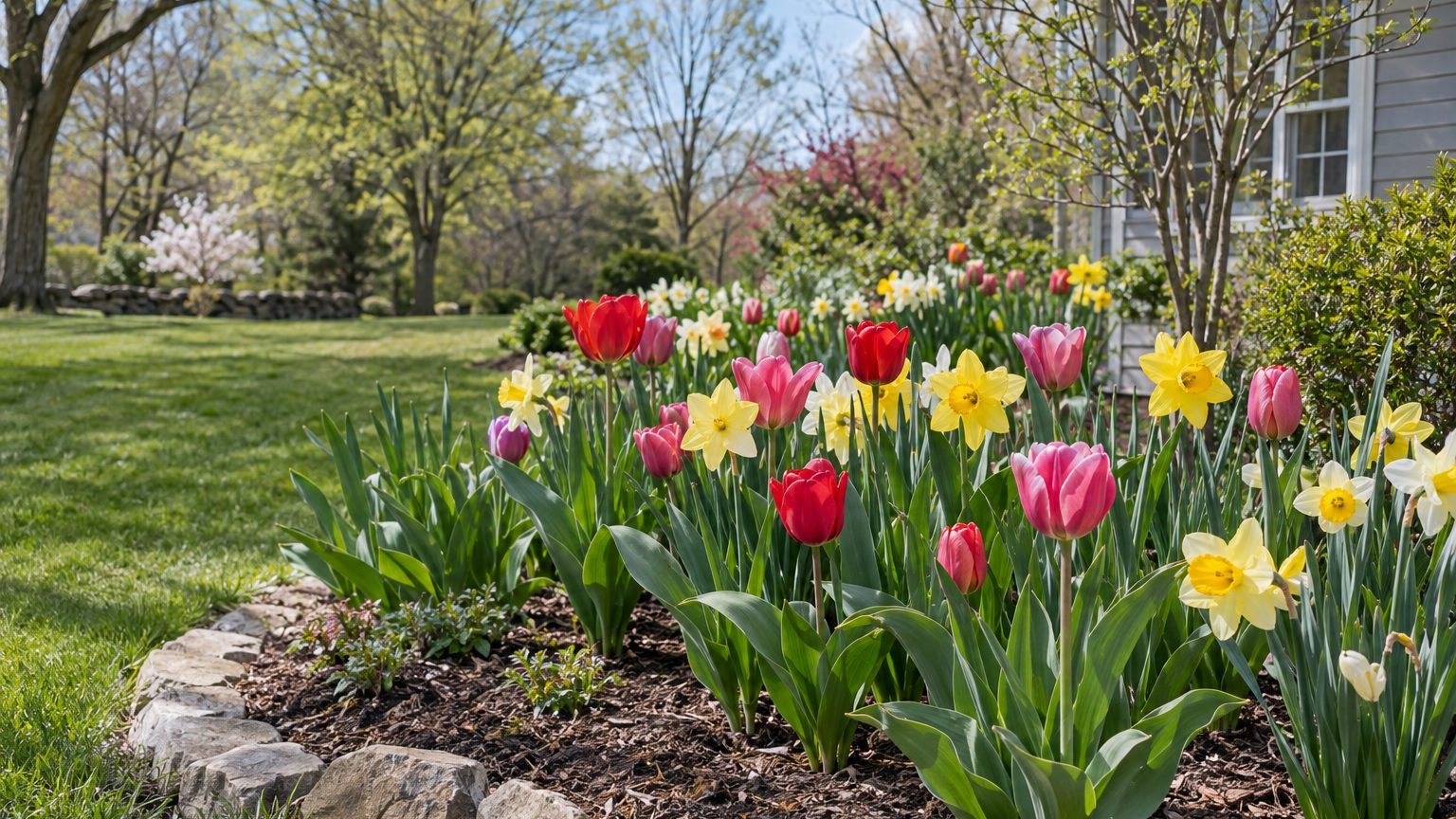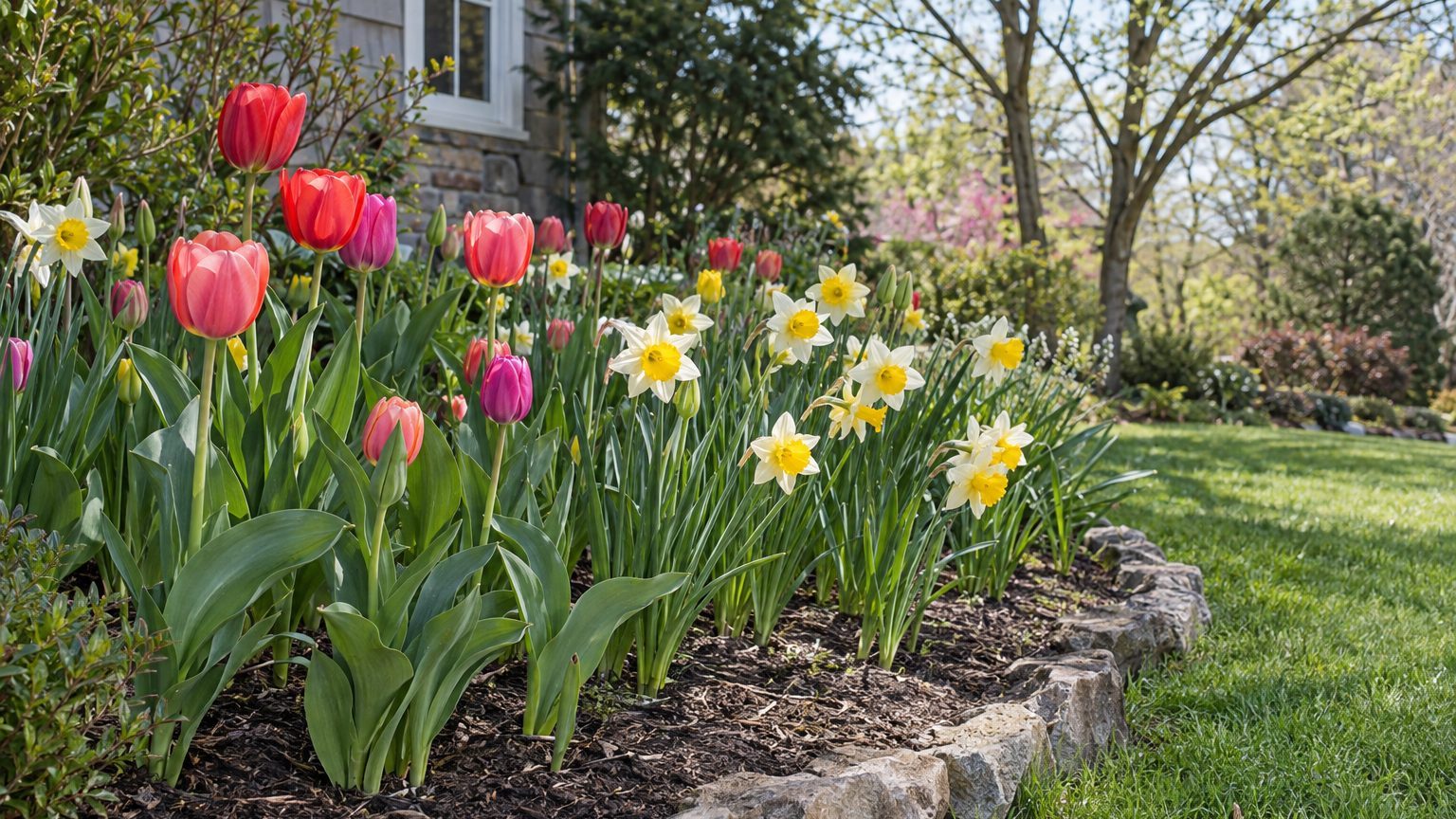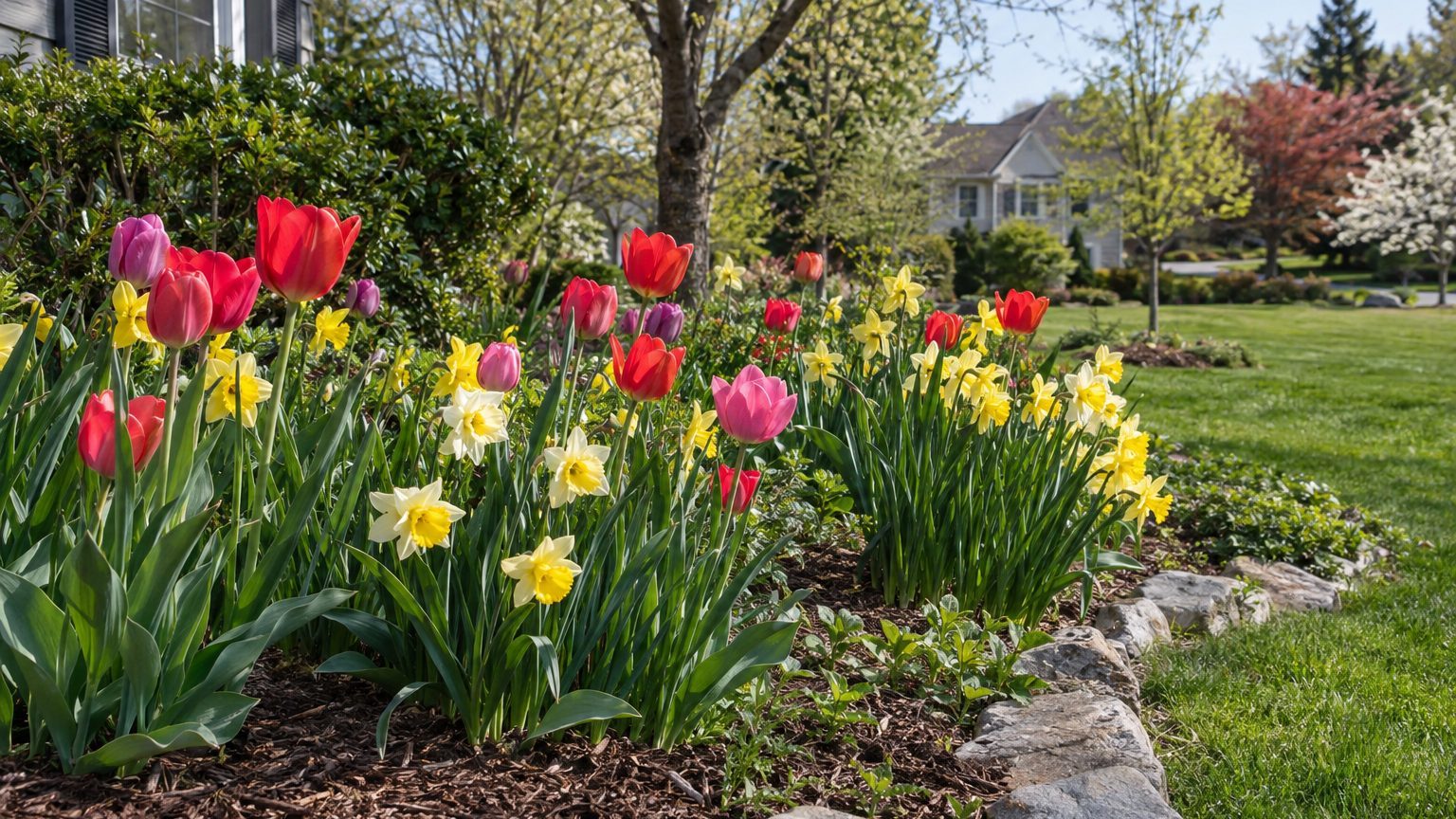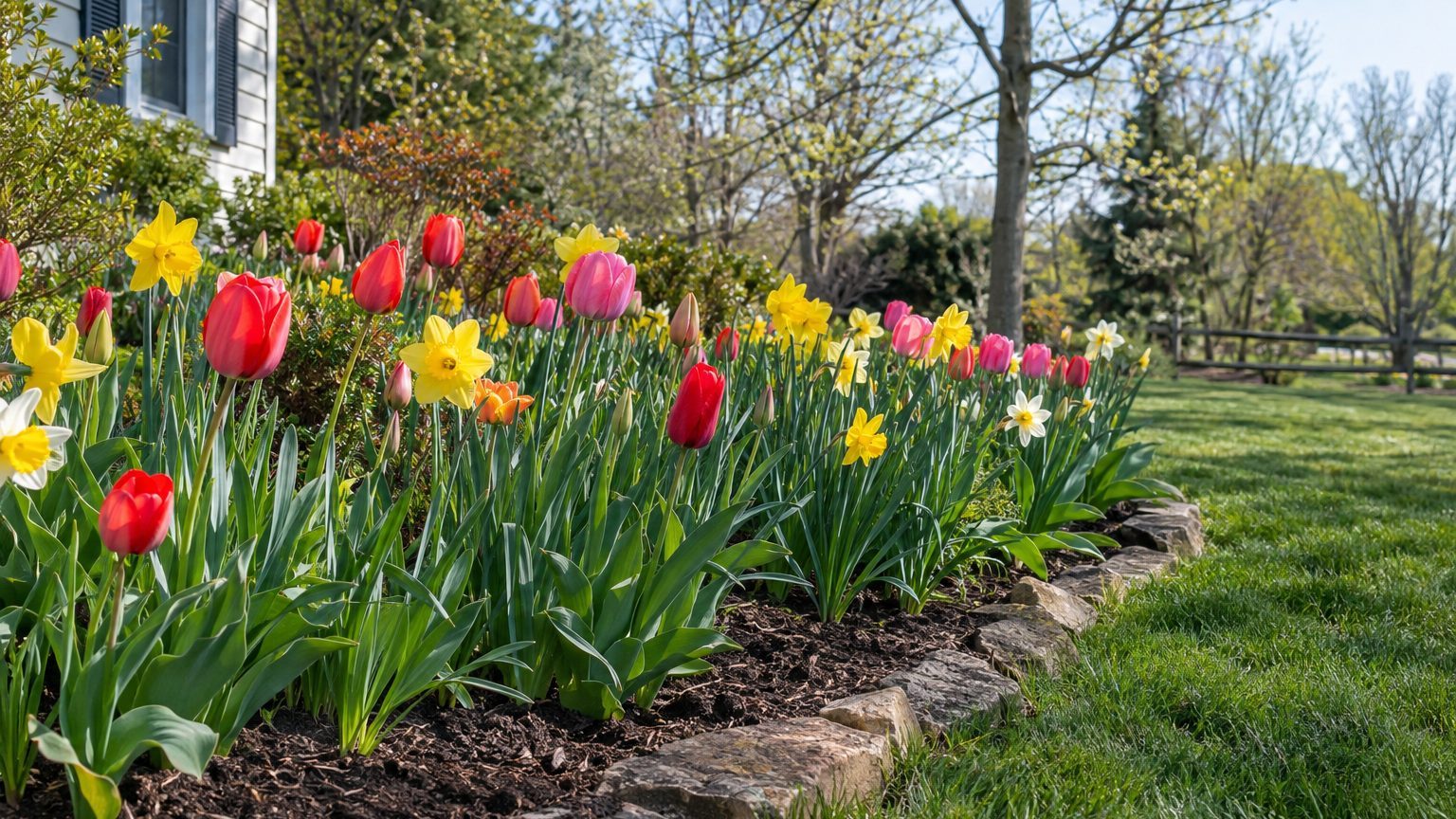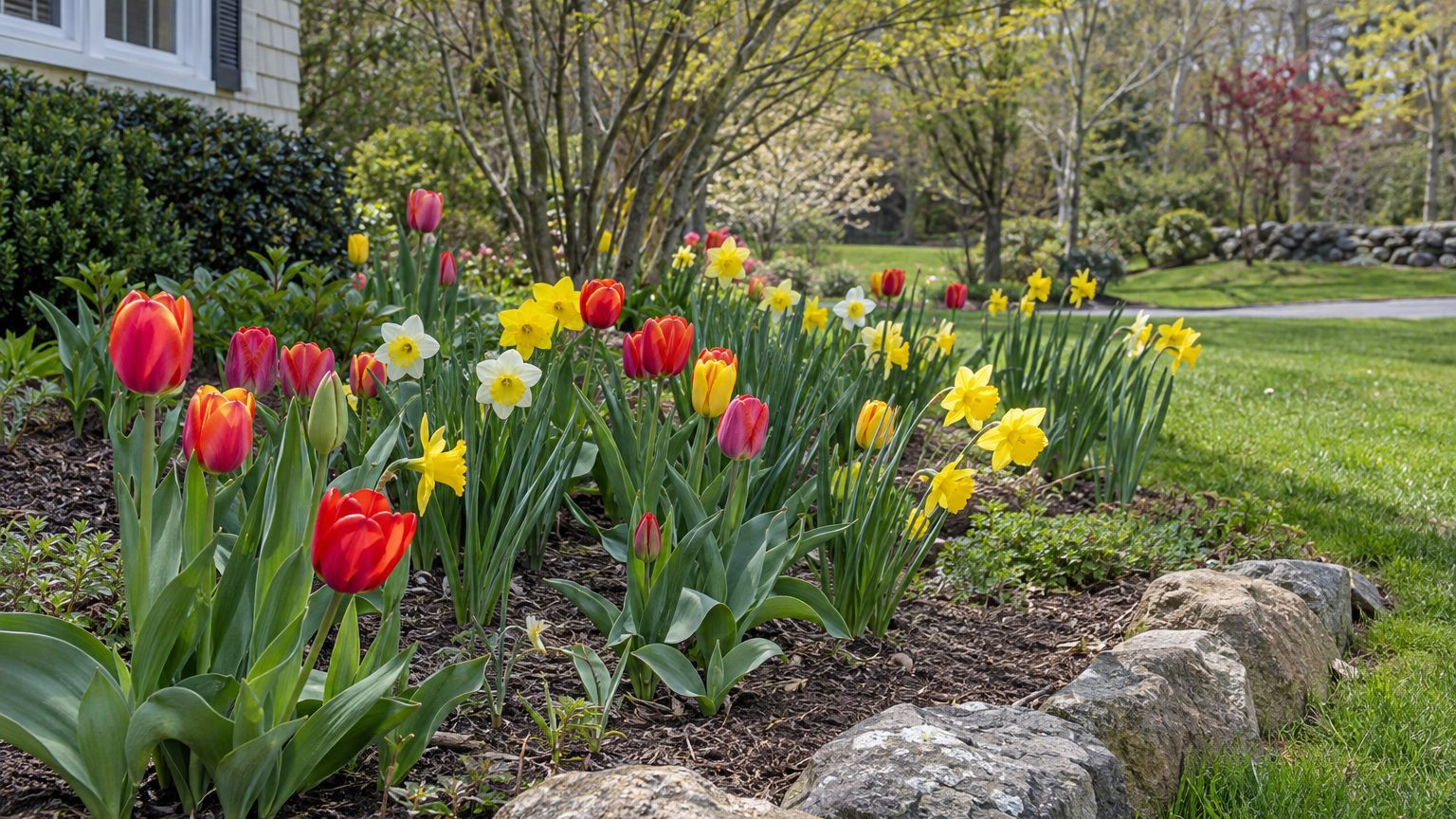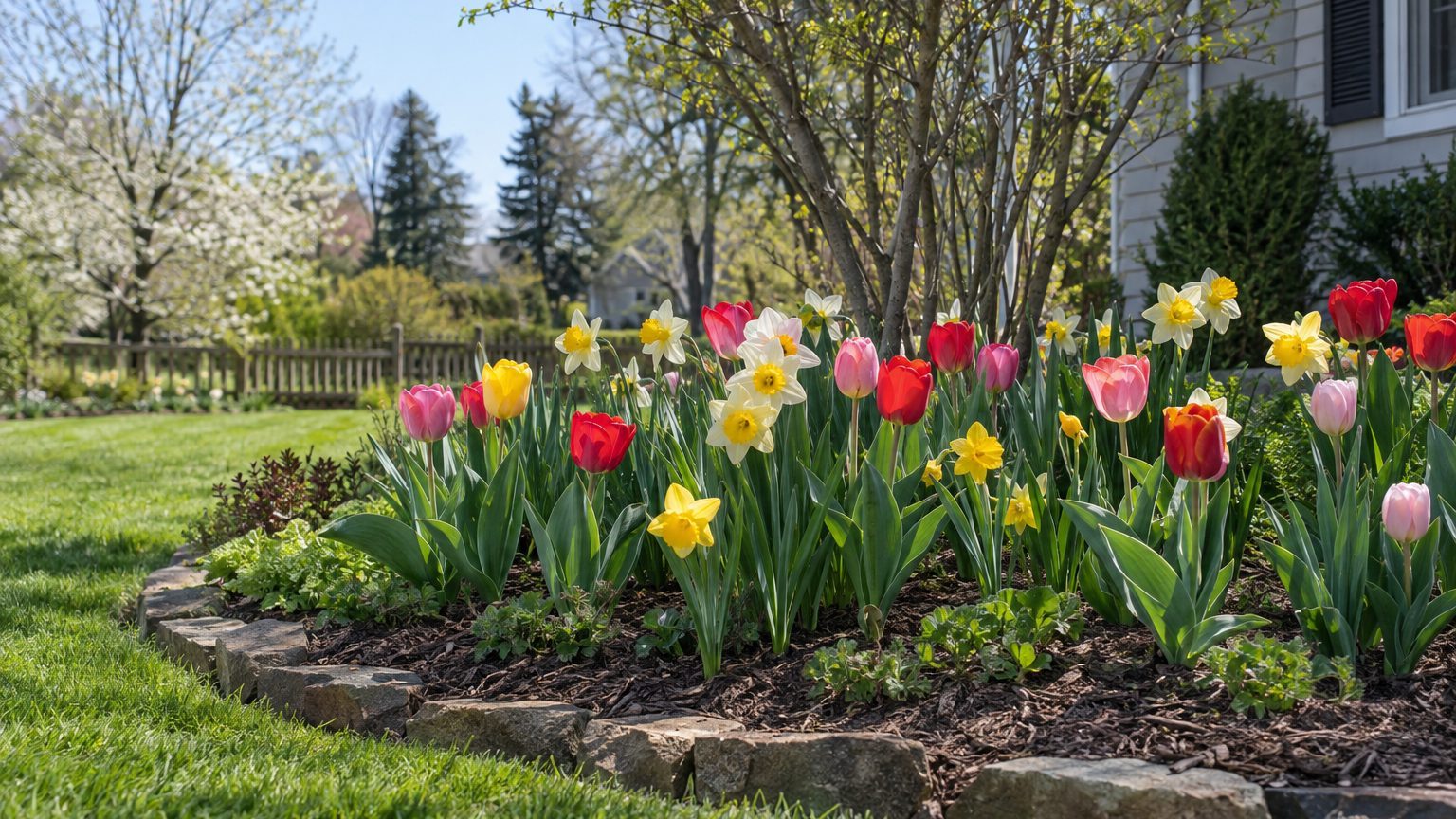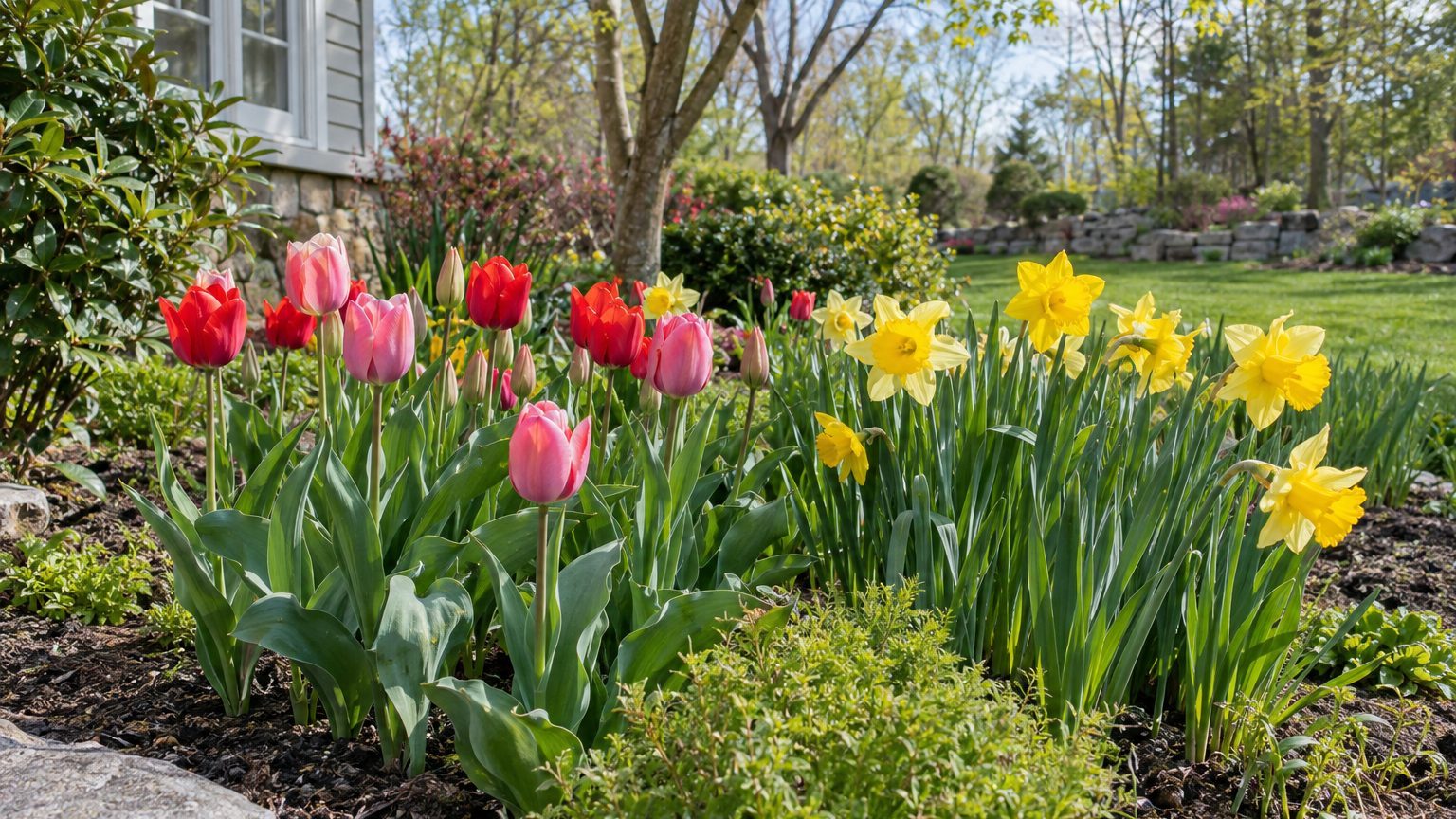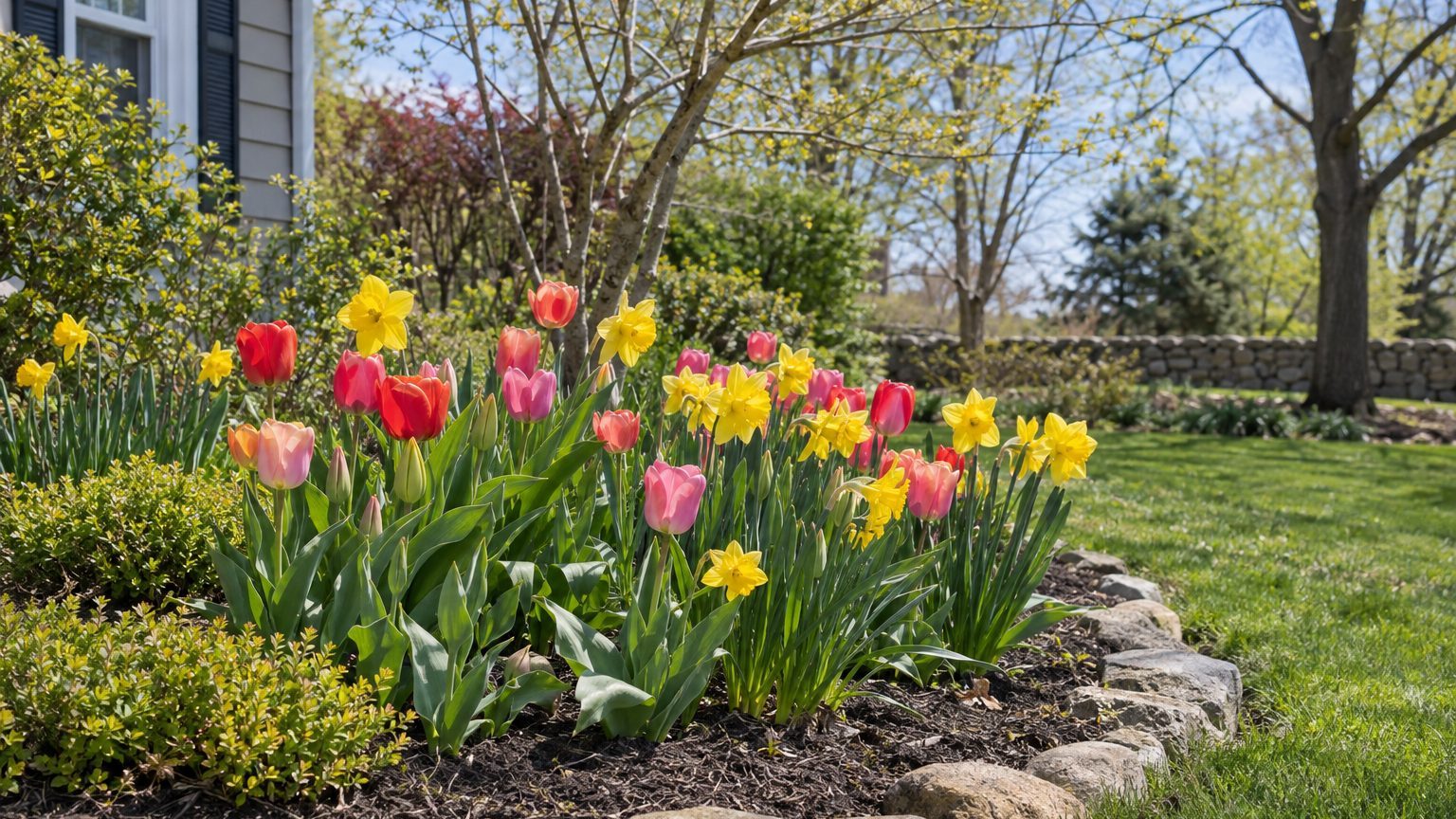
Yellow daffodil trumpets nodding along a mailbox post, then rows of tulips opening along a front walk: spring in a Massachusetts yard arrives in waves rather than all at once. Here is when those two bulbs flower across the state, what to look for before the first color, and what to do once the petals drop.
When Do Tulips and Daffodils Bloom in Massachusetts?

Tulips and daffodils bloom in Massachusetts mostly in April and May, and the earliest hardy bulbs open as soon as March. The flowers follow the warming of spring, so a mild stretch pulls them forward and a cold snap holds them back.
Winter does the groundwork. Most spring bulbs need about 12 to 16 weeks of cold to flower, and Massachusetts winters supply it without any help from you.
| Bulb | When it blooms in Massachusetts | What sets the timing |
|---|---|---|
| Snowdrops and winter aconites | March, at the start of the season | How soon the soil warms after winter |
| Daffodils | April to May | Spring warmth, once the winter chill is done |
| Tulips | April to May, later types in late April and May | Spring warmth and the type you planted |
| Alliums | The end of the spring succession | Warmth after winter cold, since they need that chill to bloom |
Crocus and hyacinths join the same long succession, and their dates also move with the weather from year to year. Under the USDA hardiness zone system, Massachusetts runs from zone 5a to 7b, so a yard on the Cape and a yard in the hills can sit weeks apart in the same spring.
How to Tell Your Bulbs Are About to Bloom
Bulbs announce themselves well before the first petal opens, and each stage tells you something about the weeks ahead.
- Green tips poking through the mulch or soil mean the bulb has woken up and is working, so leave the bed alone and keep heavy debris off it.
- Leaves that open into a clump tell you the plant is feeding itself for the flower, which is why they should never be disturbed.
- A fat bud rising on a stalk means bloom is close, and a few warm days will push it to open.
- A bud that begins to show color at its tip means the flower is a short step from opening, so it is the moment to watch for a late frost warning.
- Nibbled or missing tips on tulips and crocus point to voles, squirrels, rabbits or deer, which eat those two bulbs and leave daffodils alone.
Alliums behave the same way, sending up strappy leaves first and a round flower head later in the succession.
What to Do After Tulips and Daffodils Bloom in Massachusetts
Once the petals fade, snip off only the spent flowers. Removing them keeps the plant from putting energy into seed, and it tidies the bed without touching the part that matters.
Leave the leaves exactly where they are until they turn brown. Tulips and daffodils flower on the energy their foliage stores in the bulb, so cutting green leaves or tying them into neat knots shortchanges next year’s bloom. Plant perennials or annuals beside the bulbs to hide the fading foliage.
Expect the two bulbs to behave differently over the years. Tulips are often short-lived in the garden, while daffodils last longer and are the more reliable perennial bulb. Fosteriana tulips are the exception worth knowing, since they perennialize well.
How Bloom Time Shifts Across Massachusetts
Boston is milder than most of the state, with a last spring frost around April 1 to April 8, so bloom elsewhere tends to run later than what you see along the harbor.
- Boston and the coast: The water softens the cold, so bulbs here are the first to wake up and the flowers open earlier than inland.
- Inland suburbs: Frost lingers into spring, so the same bulbs open a little later than they do on the coast.
- The Berkshires: Cold hangs on longest in the hills, which pushes tulips and daffodils later into April and May than anywhere farther east.
Within one yard, a south-facing wall can bring bulbs up ahead of a shady bed on the other side of the house.
Where to Get Bulb Advice in Massachusetts
Local growers know which varieties handle your town’s soil and spring swings. Two kinds of help are close at hand and cost little to use.
- UMass Extension publishes home garden guidance on spring bulbs, and its pages are worth a look before you order or plant.
- A local extension office or master gardener group can answer questions about your own bed, so call in spring while the bulbs are in bloom and you can describe what you see.
Common Questions
Can You Still Plant Bulbs in November or December in Massachusetts?
Yes, as long as the ground can be dug. October is the ideal time, once the soil has cooled below about 60°F, which gives roots time to form without sending up leaves in fall. Late November or early December works as a fallback if the ground is not frozen. A bulb still unplanted goes in as soon as you can dig.
Which Spring Bulbs Do Animals Leave Alone?
Daffodils. Voles, squirrels, rabbits and deer eat tulips and crocus, but they pass over daffodils. Daffodils are even used as deer training plants to protect tender plants that deer love to browse.
Which Bulbs Come Back Year After Year?
Daffodils are the most dependable for returning every spring. They also naturalize well in partly shady areas, spreading into larger clumps over time.