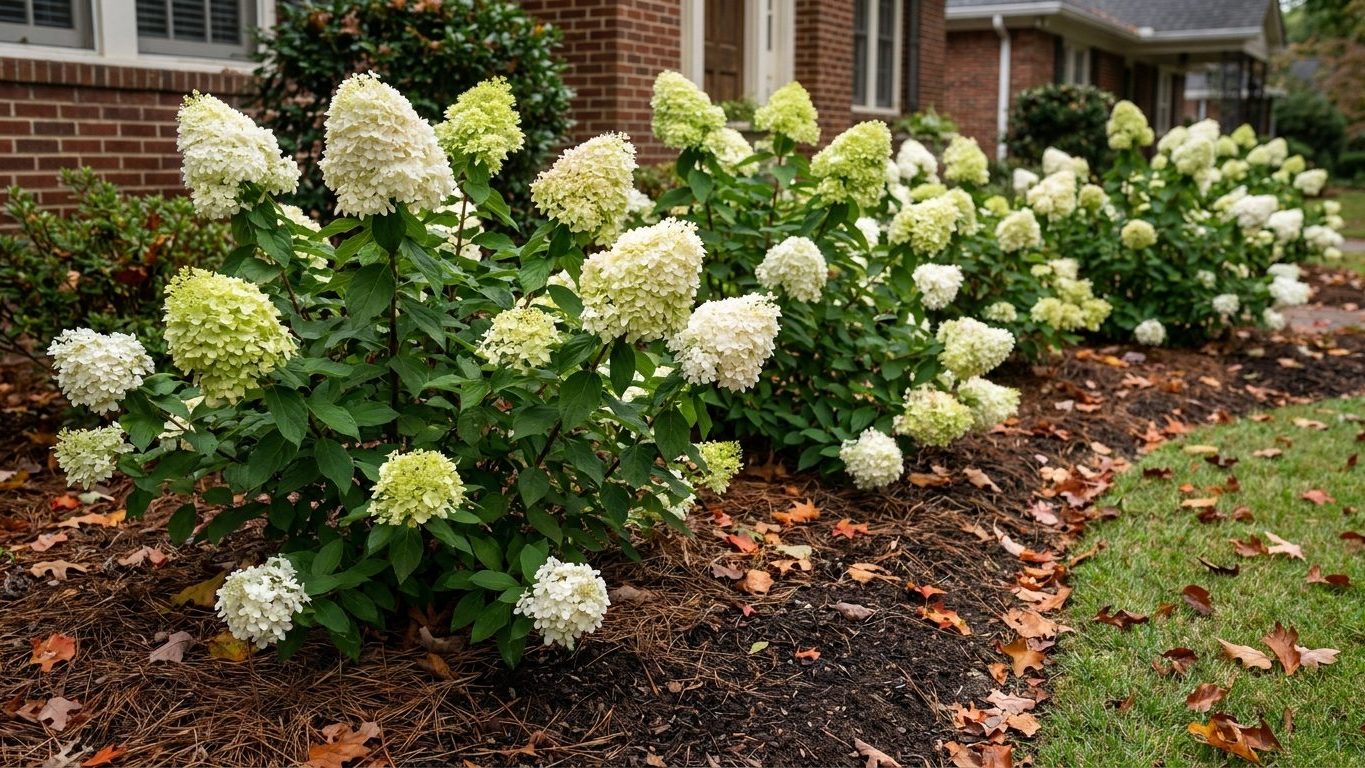
Hydrangeas in South Dakota seldom fall to a single villain. The usual pattern is a hard freeze or a wet stretch that weakens the shrub, then chewing insects or leaf fungus move in on the damage.
Reading the calendar first tells you which problem you actually have, and whether it calls for a spray, a pair of pruners, or just patience.
Hydrangea pests and diseases South Dakota: The Short Answer
Most trouble on South Dakota hydrangeas starts as weather injury, then invites insects and fungus into stressed tissue. NOAA NCEI 1991-2020 Climate Normals puts Sioux Falls between a last spring frost of April 29 to May 9 and a first fall frost of September 24 to October 4, so look there first.
Blackened buds after a late frost

A freeze after leaves open kills tender shoots and flower buds, and the dead tissue invites fungus. Cover shrubs with a sheet whenever the forecast shows 32°F in late April or May, then wait for new growth before cutting. Bigleaf pruning months are on When to Plant and Prune Hydrangeas in South Dakota.
Stems dead to the ground
Winter kills stems on shrubs rated for milder zones. The USDA Plant Hardiness Zone Map, built on average extreme winter lows, puts South Dakota at 3b to 5b, so the north runs colder. Choose names proven cold-hardy, listed on Hydrangeas That Grow Well in South Dakota.
Brown spots after wet weather
Leaves that stay wet, from evening sprinklers or crowded stems, favor fungal spots that spread by splashing water. Water at the base in the morning, thin crowded stems, and rake fallen leaves in autumn. Spots can also mean sun or frost, so confirm with your county office before spraying.
Ragged holes chewed in leaves
Holes along the leaf edge or through the blade point to chewing insects, often feeding after dark. Look under leaves at dusk, pick off what you find, and hold the spray until someone has named the insect. Damage on a few leaves rarely threatens a healthy, well-watered shrub.
Sticky leaves and curled tips
A tacky film on leaves and puckered new growth usually mean sap-feeding insects on the undersides. Knock them off with a firm stream of water every few days, then check again in a week. Persistent colonies deserve a sample for your extension office, which can name the insect and the right control.
Wilting in soggy soil
Wilting that water does not fix often means roots sitting in saturated clay. Ease off the hose, mulch to steady moisture, and move the shrub in the April, May, July or August planting months if the spot never drains. Start with Hydrangeas in South Dakota.
South Dakota — the year and the numbers
- State
- South Dakota
- USDA zones
- 3b-5b
- Last spring frost
- April 29 to May 9
- First fall frost
- September 24 to October 4
- Annual rain
- 28 in
- Lawn zone
- cool-season
- Source
- NOAA NCEI 1991-2020 Climate Normals, 32F freeze probabilities · Sioux Falls
How to Work Out the Dates for Your Own Yard
NOAA NCEI 1991-2020 Climate Normals gives Sioux Falls a last spring frost of April 29 to May 9 and a first fall frost of September 24 to October 4, both measured at the airport, so both need shifting for a yard outside town.
- Shift the spring range: add one to two weeks to April 29 to May 9, and a yard outside town lands near May 6 to May 23.
- Pull the fall range earlier: take one to two weeks off September 24 to October 4, which gives roughly September 10 to September 27.
- Match the symptom to a window: black shoots in the days after the spring range point to frost, while holes or spots weeks later point to insects or fungus.
- Retrace your own last two weeks: bigleaf pruning belongs to June and July and feeding to March, May and July, so a decline right after a cut or a feeding has a different cause than one that appears unprompted.
- Bag a sample for the county office: cut a stem holding both damaged and healthy leaves, seal it in a bag, and let the extension staff name the culprit.
Late September sits at the tail of the shifted fall range, so an outlying yard may already have met its first frost. Pruning and planting details live on When to Plant and Prune Hydrangeas in South Dakota.
Two habits help most: keep a dated note of the first symptom, and photograph the underside of an affected leaf. A county agent can do far more with “first seen the week after the spring range ended” than with “it looks sick.”
South Dakota North to South: How the Dates Shift
The Sioux Falls figures anchor the state, and every other part of South Dakota moves them earlier or later.
- The east (Sioux Falls, Brookings, Watertown): the airport dates apply best here, and wetter springs make leaf fungus a likelier trouble than winter loss.
- The north (Aberdeen, Webster, Sisseton): colder winters push the last spring frost later and the first fall frost earlier, so dieback outranks insects.
- The southeast corner (Yankton, Vermillion, Elk Point): typically a little milder than Sioux Falls, with frost dates that lean kinder.
- The central prairie and river (Pierre, Chamberlain, Mobridge): dry wind and hot spells stress leaves, and stressed shrubs draw insects sooner.
- The Black Hills and the west (Rapid City, Spearfish, Custer): elevation delays the last spring frost and hastens the first fall frost, and the higher the yard, the bigger the shift.
The rest of the picture, from soil to hardiness zone, sits on Hydrangeas in South Dakota.
Mistakes South Dakota Punishes
Three habits turn a manageable winter into a sick shrub.
Feeding after the July window
Soft growth from a late feeding meets the first fall frost, which NOAA NCEI 1991-2020 Climate Normals places at September 24 to October 4 in Sioux Falls. Fertilize in March, May and July, then stop. Months are on When to Plant and Prune Hydrangeas in South Dakota.
Pruning bigleaf at the wrong time
Cuts outside June and July can strip the flower buds bigleaf carries on old wood and leave open wounds before frost. Prune in those two months, and take out only dead or diseased stems before then. The overview is on Hydrangeas in South Dakota.
Buying by the tag alone
A tag written for milder regions ignores a South Dakota winter. Check the hardiness rating against your county, not the nursery’s home region, and buy names with a cold-country record. The list of suited names is on Hydrangeas That Grow Well in South Dakota.
South Dakota Extension Offices and County Contacts
The USDA NIFA Land-Grant University Extension directory points South Dakota to extension.sdstate.edu. Treat the Sioux Falls dates as a starting point, and let your county office, which knows local frost pockets and what is circulating that season, settle the rest.
- Hydrangeas in South Dakota: the frost dates and growing basics where you live.
- Hydrangeas That Grow Well in South Dakota: the names that hold up through a cold winter.
- When to Plant and Prune Hydrangeas in South Dakota: the months for feeding, planting and cutting.
Before you spray anything, bag one affected stem and call your county office.
Common questions
When should I cover hydrangeas for frost?
Cover on any night forecast to reach 32°F. NOAA NCEI 1991-2020 Climate Normals puts the last spring frost in Sioux Falls at April 29 to May 9, and a yard outside town can run one to two weeks later. In fall the range is September 24 to October 4, earlier in a yard.
Should I spray as soon as I see spots?
No. Spots can come from frost, sun scorch, wet leaves or fungus, and a spray fits only one of those. Bag a stem with affected and healthy leaves and take it to your county office, reached through extension.sdstate.edu, before buying anything.
Do the Sioux Falls dates apply across the state?
Only as a starting point. The airport station reads kinder than most gardens, and elevation in the Black Hills and the colder north shift the dates further. Check with your county office for local frost timing before you schedule feeding or cutting.