Skip to content

When to Prune Roses in Colorado

When to Prune Roses in Colorado

In Colorado, repeat-blooming roses are pruned in April, once the buds swell on the canes. A little patience protects new growth from a late hard frost.

When to Prune Roses in Colorado

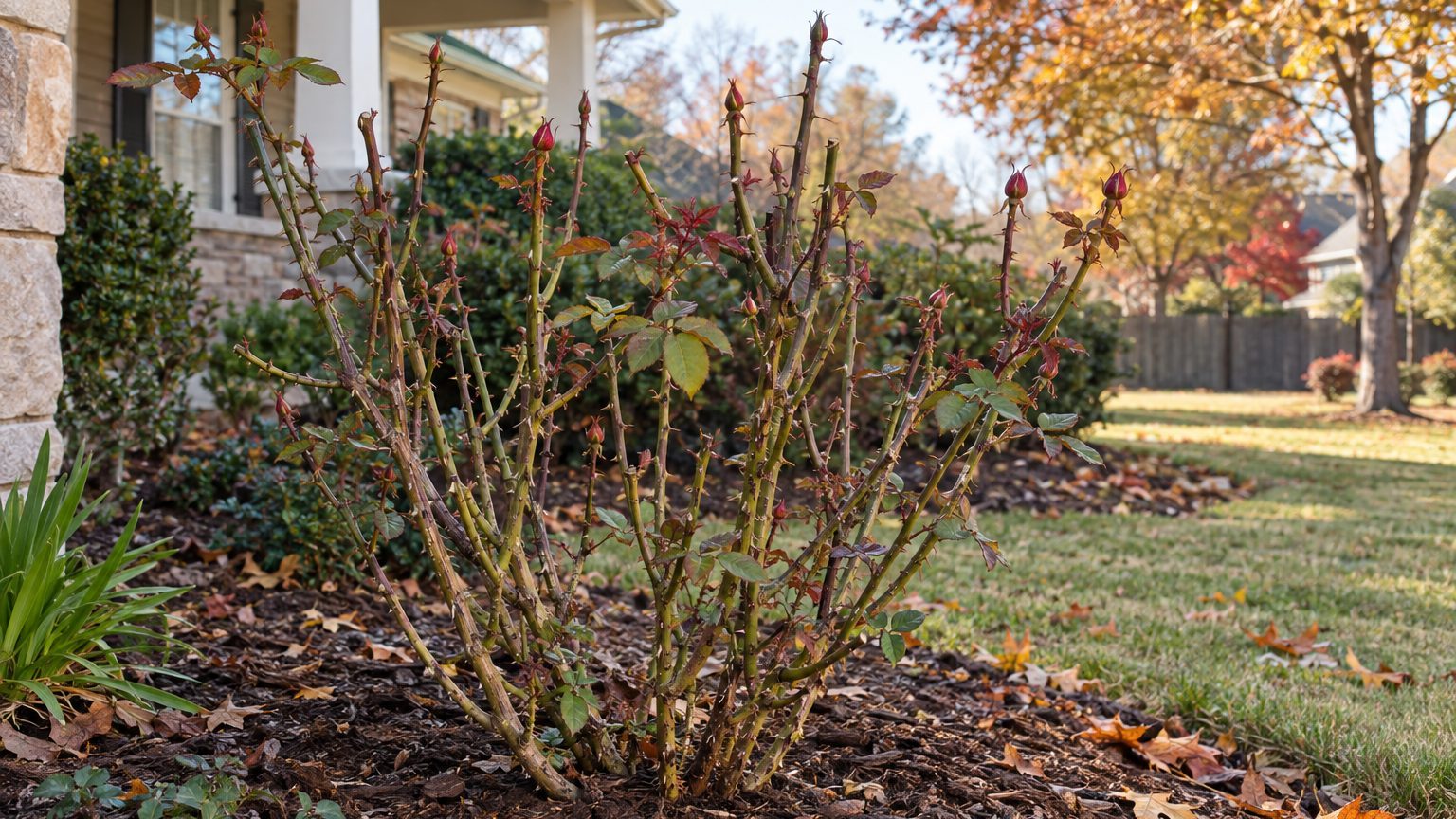
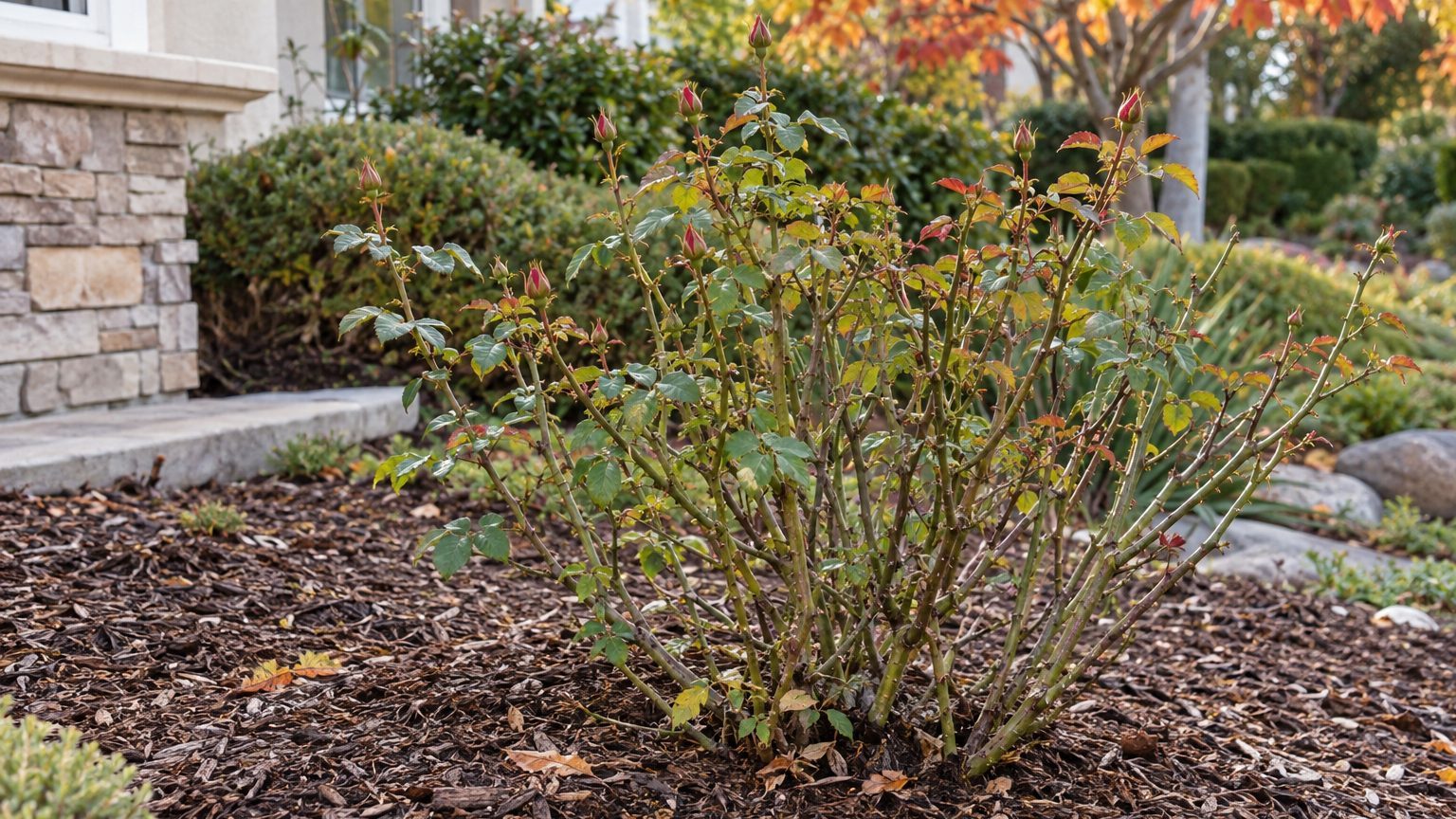
Rose canes at pruning time

Prune repeat-blooming roses in April, and mid-April is the sweet spot. May also works if spring runs cold.

Once-blooming roses follow a different rule. They flower on last year’s wood, so an early-spring haircut removes the season’s flowers before they open.

Rose type When to prune in Colorado Why
Hybrid teas, floribundas, modern shrub roses April, mid-April ideally, or May in a cold spring They bloom on new wood, and pruning just before growth starts keeps shoots from meeting a hard frost
Old garden roses, ramblers, once-blooming climbers Right after they bloom, never in early spring They flower once a year on last year’s wood, so early-spring cuts remove the flower buds

Grandifloras behave like hybrid teas and get the same spring timing. Repeat-blooming climbers are not covered by a dated recommendation here, so ask for local advice before making heavy cuts. Denver sits at 5,280 feet on the plains, so gardeners in the mountains should wait longer than the April window suggests.

How to Tell When Your Roses Are Ready to Prune

The plant gives better signals than the calendar page on the wall, and a few of them are easy to read from the porch.

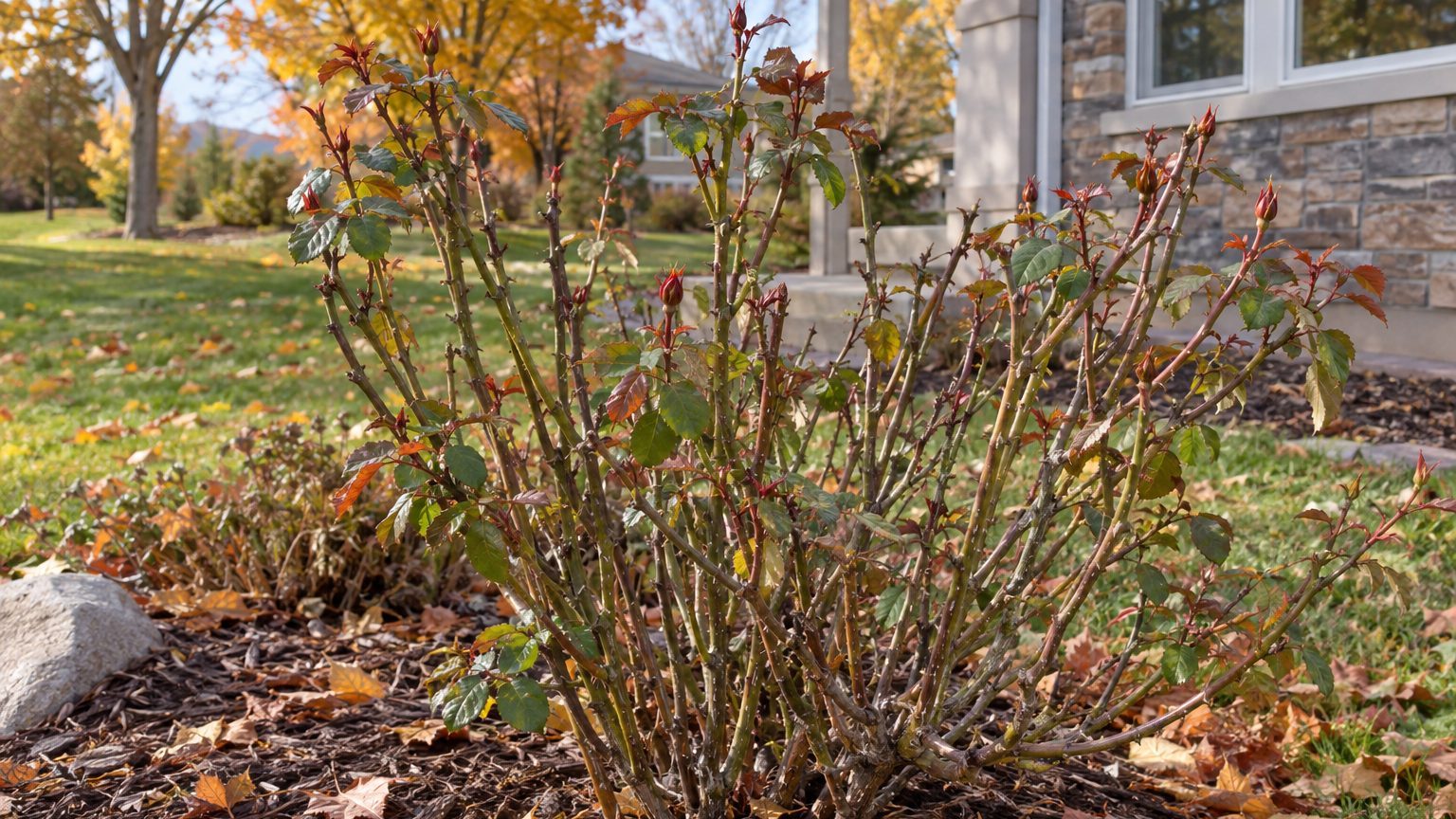
  • Buds swelling along the canes mean the rose is waking up, and that is the moment to cut back to healthy wood.
  • Forsythia in full yellow bloom is a reliable neighborhood cue that the season has turned and pruning can begin.
  • Canes that stay green and plump inside tell you the wood is alive, while brown, shriveled stems should be cut until you reach white or light green pith.
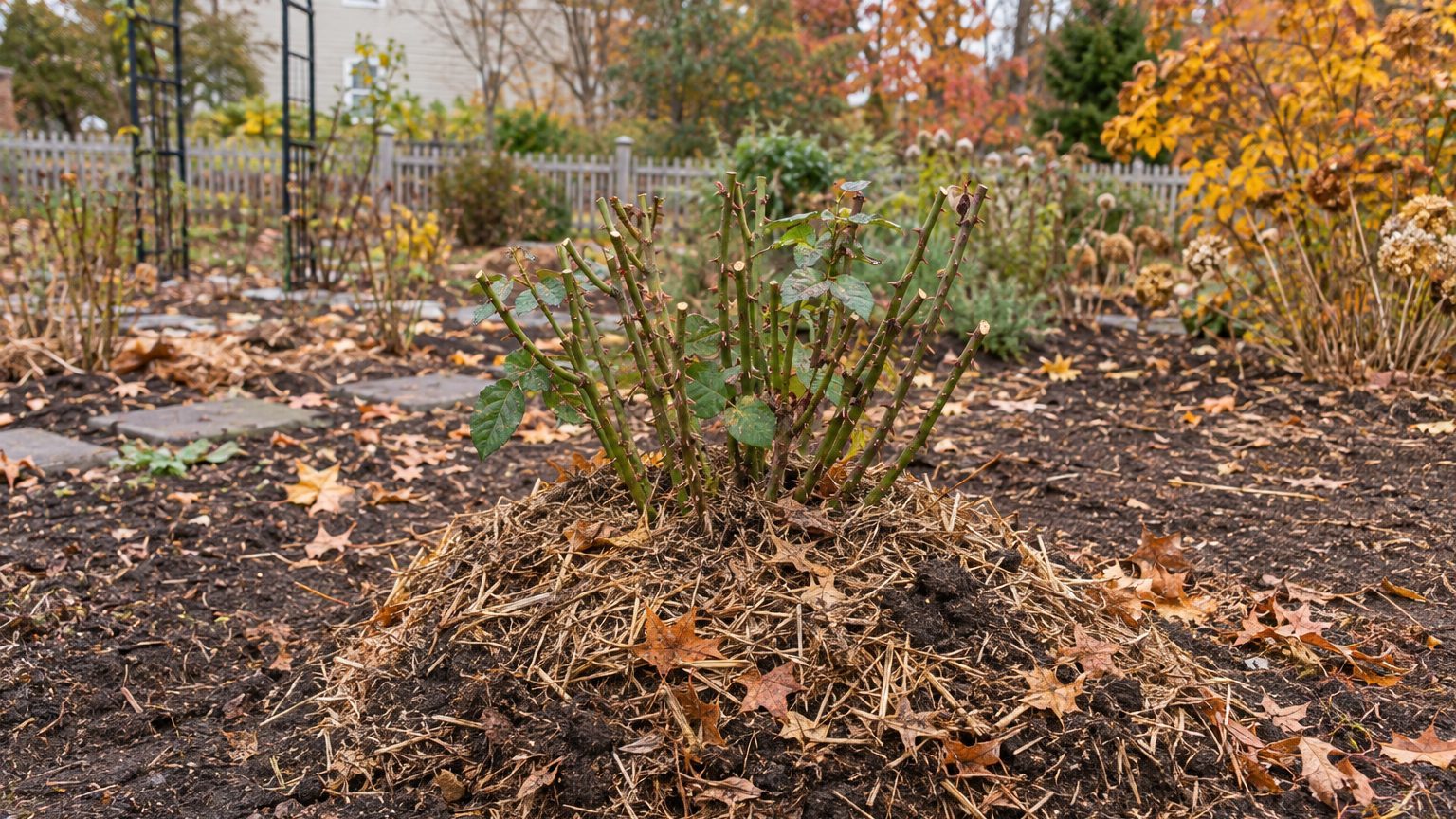
  • Winter protection should come off gradually, and only after the danger of hard frost has passed, so pruning usually follows the mound coming down.
  • Cold nights that still dip hard mean it is too soon, because a flush of tender growth after cutting is exactly what a late freeze kills.

Roses that were mounded with soil in November are best uncovered a little at a time, since sudden exposure to wind and sun can scorch canes that spent months in the dark.

Should You Prune Roses in Fall or Winter in Colorado?

Mostly no. In fall, shorten tall, overgrown canes by about one-third of their height in November, because long stems catch snow and whip in the wind. That is all the pruning needed during the cold months in Colorado.

Save the real shaping for spring. Heavy cuts in autumn push the plant to wake up when it should be going to sleep, and winter dieback is easier to judge once the buds swell and show you which canes survived.

Hybrid teas, floribundas and grandifloras need extra protection in cold winters, usually soil mounded over the crown once nights drop to 20°F for several days. Eight to ten inches of soil is the depth recommended in Colorado, and the best timing is November, around Thanksgiving. Hardy shrub roses such as Knock Out or the Explorer series do well without that extra step.

How Rose Pruning Dates Shift Across Colorado

Elevation strongly shapes the season, and the April window fits the Front Range plains. Elsewhere, shift your timing by what the buds and the weather are doing.

  • Denver and the Front Range plains: April works well here, with mid-April the target and May a fallback after a cold, late spring.
  • Mountain towns: Seasons run far shorter and frost can return even in July, so wait until buds swell and hard freezes are truly behind you, which often means later than the plains.
  • The western slope: Conditions differ again from the Front Range, so watch the buds on your own roses rather than copying a Denver date.

When in doubt, let the plant set the pace, since waiting can spare a flush of new growth from freezing.

Where to Get Rose Advice in Colorado

Rose problems vary by elevation, soil and exposure, so local help pays off. The state extension service publishes pruning and winter-care guidance written for Colorado conditions, and your county office can answer questions about your own yard.

  • Browse Colorado State University Extension for pruning and winter-care guidance before the buds swell.
  • Call your county extension office if canes look dead and you cannot tell whether to cut or wait.

Common Questions

Can You Prune Roses in May in Colorado?

Yes, May is a workable fallback when spring stays cold and the buds have not moved. Waiting protects the new growth from a late hard frost.

How Much Should You Cut Off Hybrid Teas?

Cut back to healthy wood, removing anything brown, shriveled or dead, until the center of the cane is white or light green. Let the live wood decide how far you cut.

When Should You Take Winter Protection Off Roses in Colorado?

April is the usual time, and May works after a cold spring. Remove the mulch or soil mound gradually once the danger of hard frost has passed.
When to Prune Roses in California

When to Prune Roses in California

When the winter rains soften the garden and the first buds on your roses start to redden, the pruning shears come out. In California, that happens in winter, well before the spring flush.

When to Prune Roses in California

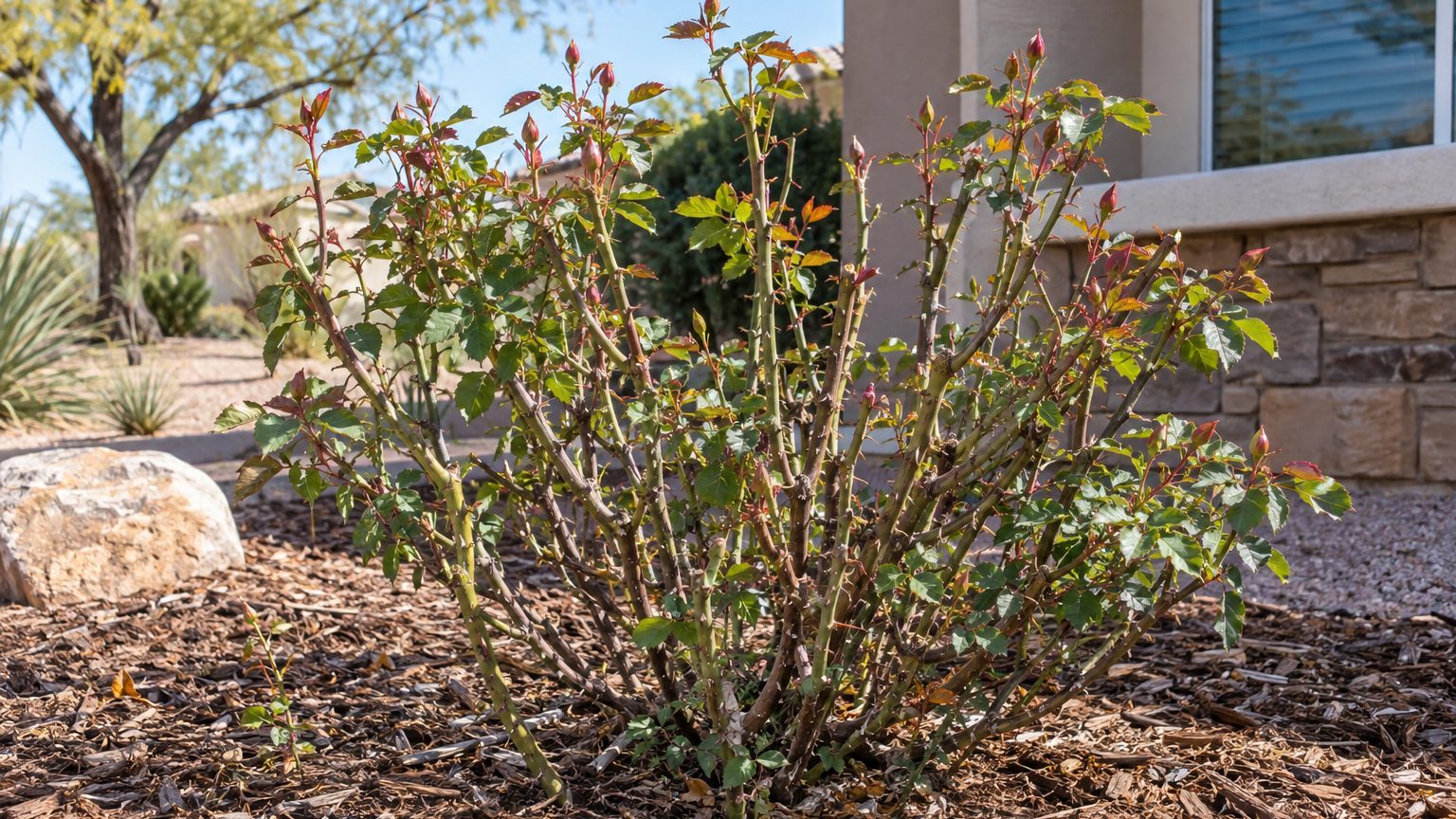
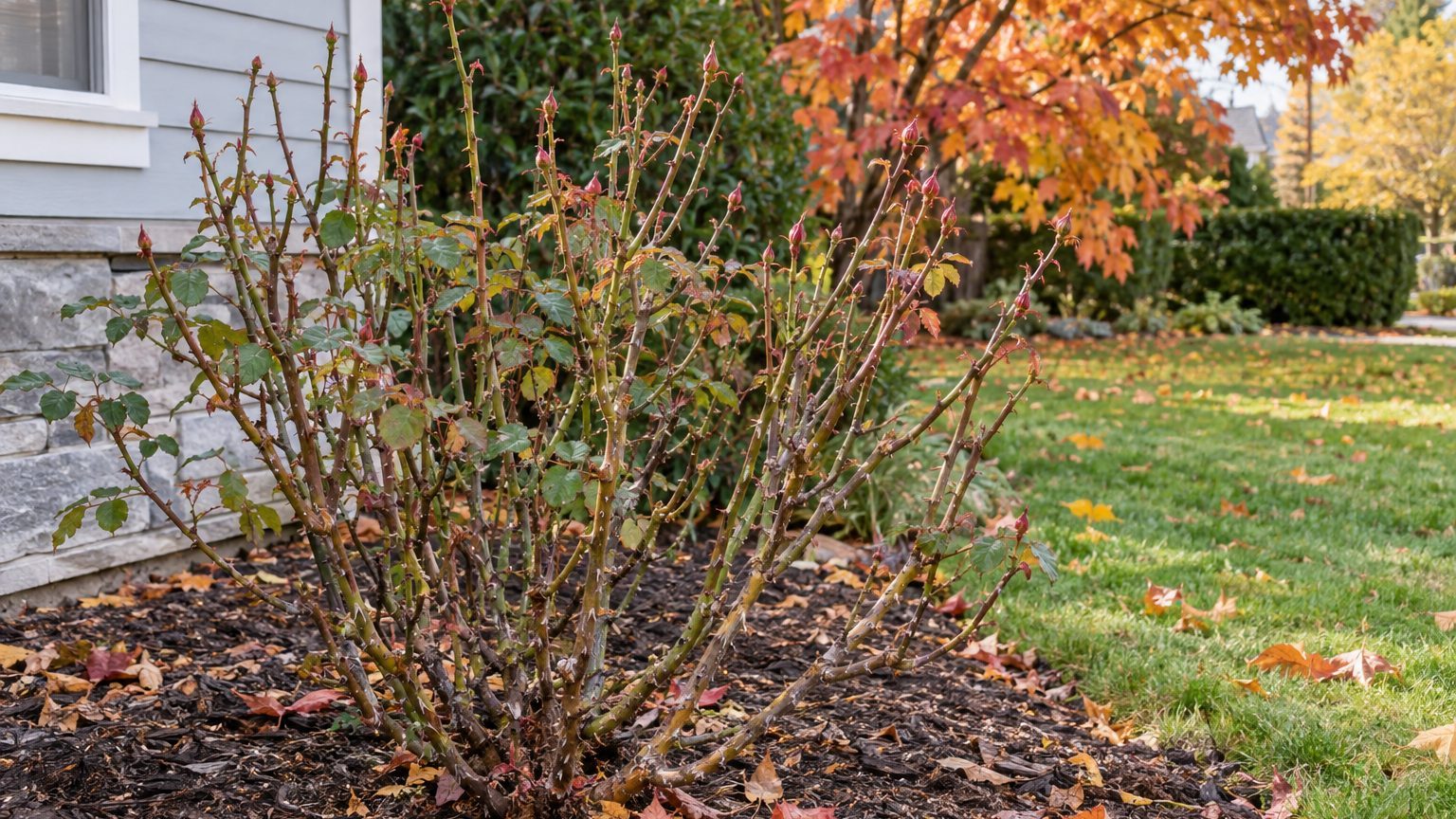
Rose canes at pruning time

Prune repeat-blooming roses in January and February. March and December also work, as long as the buds have not yet swollen. Gardens where late spring frosts are common can wait a little longer.

Once-blooming roses follow a different rule. They flower on last year’s wood, so a winter cut removes the coming bloom.

Rose type When to prune in California Why
Hybrid teas January and February, or March and December They bloom on new growth, so a winter cut before the buds swell sets up the flush
Floribundas January and February, or March and December New canes carry the clusters of flowers, and pruning ahead of growth keeps the shape tidy
Modern shrub roses January and February, or March and December They repeat bloom on new wood, so they follow the same winter window
Old garden roses and once-blooming climbers Right after the spring bloom, never in early spring They flower once a year on last year’s wood, and an early cut removes the flowers

Repeat-blooming climbers follow a different pattern. They are generally pruned in the same winter window as other repeat bloomers, while ramblers and climbers that bloom once a year wait until their flowers fade. If you are unsure which kind you have, watch it through spring. A rose that blooms once and stops is a once-bloomer, and next year it gets pruned right after the flowers drop.

How to Tell When Your Roses Are Ready to Prune

The calendar gives the window, but the plant tells you when inside it, and a quick look at the canes settles the question.

  • Buds that are still tight and dormant mean you are in good time, because pruning should be finished before the buds swell.
  • Red, swelling buds along the canes mean the window is closing, so prune soon and keep the cuts light.
  • Leaves that have mostly dropped or turned tired and spotted tell you the rose has slowed down and can take the shears.
  • A cold snap in a frosty garden is a reason to hold off, since late spring frosts can nip new shoots that start growing after an early cut.
  • Fresh green growth already pushing from the base means pruning has slipped late, so remove only dead or crossing wood.

In mild coastal gardens, an average year brings no hard freeze, so swelling buds are the main signal, not the weather.

Should You Prune Roses in Fall or Winter in California?

Winter is the season for the real pruning. Fall is for light work only, such as shortening very long stems that would whip in the wind and loosen the roots. Leave the hard cuts alone until the rose is ready to restart.

A severe cut in autumn pushes tender new growth just as the garden heads into its cool season. That growth is easily damaged where frost reaches, and it takes energy the plant would rather bank for spring. Wait for January and February, then shape the bush properly.

Fall does have its own job in the rose garden, which is feeding. Nitrogen goes on in September and October, and again in March and April. In California, the suggested rate is 1 pound of nitrogen per 1,000 square feet, scaled down for a smaller bed.

How Rose Pruning Dates Shift Across California

California is large enough that winter means different things in different gardens, so the window stretches or tightens with the local climate.

  • Coastal and Southern California: no freeze occurs in an average year, so roses are pruned in the winter window without any frost worry. Heat, drought and water restrictions matter more here than cold.
  • Central Valley: winter freezes do happen, so lean toward the later part of the window and watch for cold snaps after you cut.
  • Northern California: frosts reach some gardens into spring, which is when delaying the pruning makes sense.
  • Sierra foothills and mountains: freezes are a regular part of winter, so wait until the hardest cold has passed and the buds are about to wake.

Los Angeles is frost-free, but it does not speak for the whole state, so judge your own garden by its winters. The USDA hardiness zones across California run from 5a to 11a, which shows how different the yards are.

Where to Get Rose Advice in California

Local conditions vary enough that a nearby expert is worth a call. University of California Agriculture and Natural Resources runs the state’s extension network, and your county office can speak to your own microclimate.

  • The extension site carries rose guides on pruning, feeding and common problems, and it is a good first stop in late fall before the pruning window opens.
  • Your county office can answer questions about your area’s frost risk and which varieties suit it, so call before you buy bare-root roses in February or March.

Common Questions

When Should You Plant Bare-Root Roses in California?

February and March suit bare-root roses best. They can also go in from April through August, and container roses can be planted through the summer.

Which Roses Are Easiest to Grow in California Gardens?

In California, floribundas and polyanthas are more suitable for landscape use than hybrid teas and grandifloras, thanks to their profuse bloom and disease resistance. Landscape shrub roses are also among the more resistant to powdery mildew.

Are Rose Diseases a Problem in California?

Diseases are less common in California’s dry interior valleys than in areas with more humid climates. Even so, varieties differ greatly in how well they resist powdery mildew, so choose resistant types.

When to Prune Roses in British Columbia

When to Prune Roses in British Columbia

Rose canes look bare and a little stiff by late winter, and the urge to grab the pruners arrives well before the plants are ready. In British Columbia, the cut for repeat-blooming garden roses comes in late winter to early spring, and the timing depends on the type of rose. Once-blooming roses follow a different rule entirely.

When to Prune Roses in British Columbia

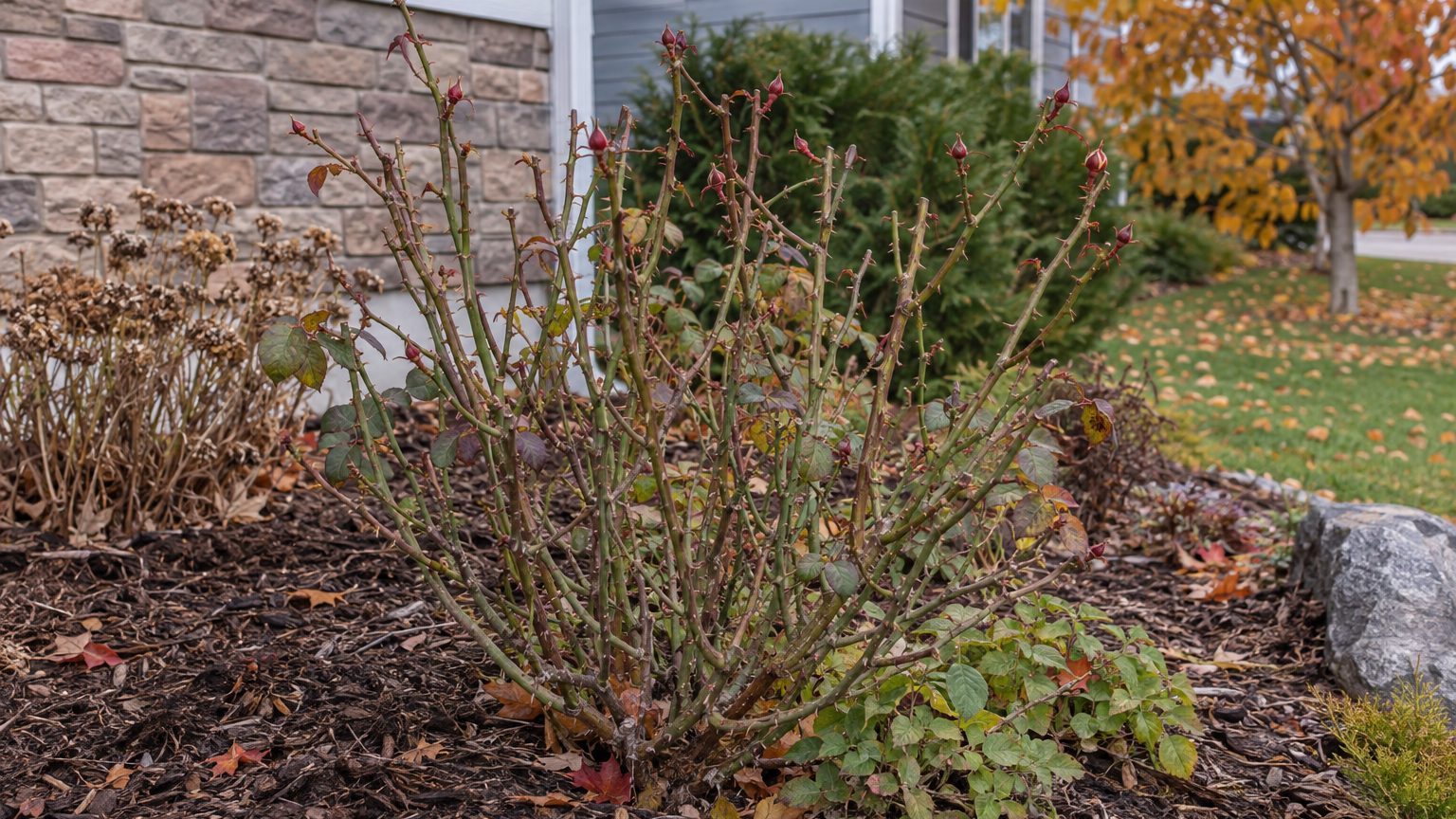
Rose canes at pruning time

Prune repeat-blooming roses (hybrid teas, floribundas and modern shrub roses) in February and March. April works too, especially when the forsythia is in bloom. British Columbia has no local extension page on rose timing, so these dates follow the nearest comparable climate to the south. Confirm local timing with a garden centre, a rose society or a provincial gardening group.

Type of rose When to prune in British Columbia Why
Hybrid teas, floribundas, modern shrub roses February and March, with April as a later option when the forsythia blooms They flower on new growth, so a spring cut sets up the season’s blooms
Old garden roses, ramblers, many climbers that bloom once Right after they finish flowering, never in early spring They flower on last year’s wood, and a spring cut removes the buds

Climbers that repeat-bloom are not covered by a separate window here, so ask a local rose society how they handle yours. Pruning later also pushes back the first flush of flowers, which is a fair trade if a late cold snap is in the forecast.

How to Tell When Your Roses Are Ready to Prune

Months give the range, and the plant gives the green light, so watch for these signs before the first cut.

  • Buds along the canes swell and turn plump, which tells you the plant has woken up and you can see exactly where to cut.
  • Forsythia comes into yellow bloom, a reliable cue that the rose pruning window has opened.
  • In Vancouver, the last spring frost falls on average on March 18, but in one year out of two it arrives later, so treat that date as a midpoint and wait until hard frost has passed.
  • Any winter mulch mounded over the base is pulled back once the weather warms, so you can see the crown and the lowest buds.
  • Mild days become the norm rather than the exception, because pruning stimulates new growth and a cold night can nip it.

When the signs and the calendar disagree, let the buds decide when to prune.

Should You Prune Roses in Fall or Winter in British Columbia?

Not much, and not hard. In fall and winter, shorten only the long whippy stems that could catch the wind and rock the plant loose at the roots. Leave the real shaping of repeat-blooming roses for late winter and early spring, when the buds show where the live wood is.

A severe cut before the plant has settled invites new growth that cold weather can damage. The same goes for once-blooming roses, whose flowering wood you would be removing.

In colder parts of the province, the fall job is protection rather than pruning. Mound loose mulch over the base of tender roses in November or December, once the plant is dormant. Vancouver sits in zone 9a on the Canadian hardiness system, which is not the USDA scale, and mild coastal gardens often skip the mound.

How Rose Pruning Dates Shift Across British Columbia

British Columbia is not one climate, so the months above are a starting point that slides with where you garden.

  • Vancouver and the Lower Mainland: the February and March window fits well, and gardeners here can start toward the early end once the buds swell.
  • Vancouver Island and the Gulf Islands: the maritime air keeps winters gentle, so pruning follows the coast pattern, with buds swelling early and the cut coming in February or March.
  • The Okanagan: winters are colder than on the coast, so lean toward March and April, and watch the forsythia and the buds before you cut.
  • Northern BC, around Prince George: spring arrives well behind the coast, so wait until the buds swell and the hard frosts have passed, and mound mulch in November or December.

Moving inland or uphill pushes the pruning later, and the buds will tell you when.

Where to Get Rose Advice in British Columbia

Rose advice in British Columbia comes from the province and from local growers. The Government of British Columbia agriculture and seafood pages cover plant care and farming basics for the province.

  • A local garden centre can tell you in late winter when roses in your town are breaking bud, and what bare-root stock is arriving.
  • A local rose society or master gardener group can show you how to cut a cane, ideally in a pruning demonstration held in late winter.
  • Bring a photo of your rose, the type if you know it, and ask whether it blooms once or repeats, then mark the pruning month on the calendar.

Common Questions

Can You Plant Bare-Root Roses in British Columbia?

Yes, February and March suit them, with the plant going in while still dormant so roots can establish before growth begins. Potted roses are more flexible and can go in later, up until early summer, before the heat of midsummer arrives.

When Should You Feed Roses After Pruning?

Feed from bud break in March through July. Repeat the feeding every four to six weeks during the growing season. Stop in late summer, since the plant is heading toward dormancy and soft new growth would be at risk.

What Happens If You Prune Roses Too Early?

Early cuts wake the plant up, and the soft new shoots can be damaged by a late cold spell, leaving you to cut back again. A rose pruned early in a frosty year can also bloom later than one left until the buds swell.

When to Prune Roses in Arkansas

When to Prune Roses in Arkansas

Pruning shears come out of the shed when the rose canes still look bare and the first buds begin to swell. In Arkansas that moment arrives in late winter, well before the garden looks awake. The timing depends on the type of rose you grow, and choosing the wrong moment can remove flower buds.

When to Prune Roses in Arkansas

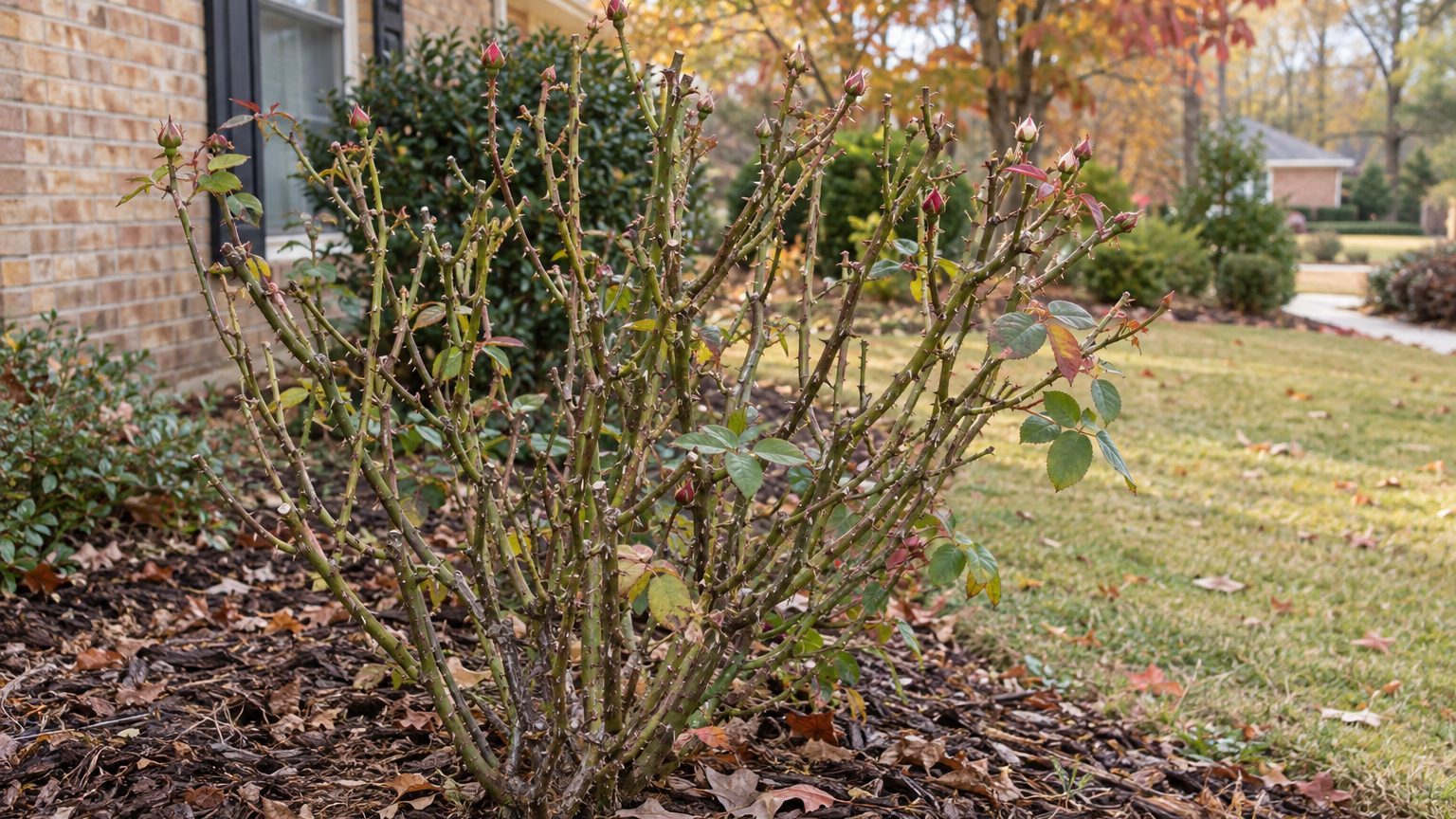
Rose canes at pruning time

Prune repeat-blooming roses in February and March, from mid-February to early March, as dormancy breaks. Hybrid teas, floribundas and modern shrub roses flower on new growth, so a hard cut before the buds push suits them well.

Weather decides the exact day. In Arkansas, extension advice is to cut hard before new growth is well under way, and to wait for late March after a winter of snow and ice.

Type of rose When to prune in Arkansas Why
Repeat-blooming roses (hybrid teas, floribundas, modern shrub roses) February and March, mid-February to early March as dormancy breaks They bloom on new growth, so the cut should come before the buds start to push
Once-blooming roses (old garden roses, ramblers, many climbers) Right after they finish flowering, never in early spring They flower once a year on last year’s wood, and a spring cut removes the buds

Check a climber’s flowering habit first. A climber that flowers only once follows the old-garden-rose row, while a repeat-blooming climber follows the main pruning window. Shrub roses bred for disease resistance ask for less. Some can simply be shaped as needed instead of cut back hard every year.

How to Tell When Your Roses Are Ready to Prune

Late winter weather swings widely in Arkansas, so the rose itself is a better guide than the date on the wall.

  • Swelling buds along the canes mean dormancy is breaking, which is the cue to cut before the growth gets going.
  • Bare canes with no new shoots yet tell you there is still time, since the hard prune should come before new growth is well under way.
  • A stretch of mild days after the winter cold suggests the plant is waking up, and Arkansas roses often wake in February.
  • Snow or ice on the ground means holding off, because a cold snap after pruning can damage the fresh cuts and the tender buds below them.
  • Once the hard freezes have passed, late March is a perfectly good time to prune in a winter that stayed cold.

If shoots are already growing, prune anyway and expect the plant to recover, though earlier cuts are cleaner.

Should You Prune Roses in Fall or Winter in Arkansas?

Not much, and not hard. In fall and early winter the only job is shortening very long canes so the wind does not whip them around. Take off the tips, nothing more, and leave the real shaping for later.

Roses are quite hardy in all parts of Arkansas, and they often stay semi-evergreen through most winters. That leafy growth is still working, and a severe cut before the plant has gone through its dormant period invites tender new shoots that a freeze can burn.

Wait for February and March, when dormancy breaks. Once-blooming roses are the exception to the calendar. They get their cut right after flowering, whatever the season, and a fall or winter cut takes away next year’s flowers.

How Rose Pruning Dates Shift Across Arkansas

Winters differ across the state, so the month you favor within the calendar window shifts a little.

  • The Ozarks: Winters run colder in the northwest highlands, so lean toward March and watch the buds before reaching for the shears.
  • Little Rock and central Arkansas: February into March fits well, with the buds telling you which side of the window your yard is on.
  • Where winters are milder, roses wake sooner, so prune before the rose starts new growth.

Across the state, the swelling buds outrank the calendar when the plant and the calendar disagree.

Where to Get Rose Advice in Arkansas

The University of Arkansas Cooperative Extension Service publishes rose pruning guidance written for Arkansas yards, and every county has an office with local staff who know your soil and weather.

  • The extension website has pruning pages and plant health notes, worth reading in January before the shears come out.
  • Your county extension office can look at a cane you are unsure about, so bring a cutting once the buds begin to swell.

Common Questions

Do Shrub Roses Need Pruning Every Year?

Not always. Compact shrub roses with good black spot resistance do not need the yearly hard pruning that hybrid teas get, and they can be shaped as needed. Hybrid teas also want a rigorous spray program to keep black spot away, which is why many Arkansas gardeners choose tougher types.

When Should You Feed Roses After Pruning?

Start when the first leaves open, in March, and feed again after each bloom flush through the summer. Feeding can run into September, but stop about six weeks before the first frost so new growth is not pushed too late.

Can You Plant Bare-Root Roses in Arkansas?

Yes, and February and March are the months to aim for, while the plants are still dormant. January, April, November and December also work, and potted roses can go in later in the year.

When to Prune Roses in Arizona

When to Prune Roses in Arizona

A rose cut at the wrong moment sulks. In Arizona the right moment comes in winter, not spring, and it depends on whether your yard sits in the low desert or up at Prescott altitude. Once-blooming roses follow a different rule from repeat bloomers.

When to Prune Roses in Arizona

Rose canes at pruning time

Prune repeat-blooming roses in January or February. In the low desert January and February are the target. Around Prescott, where winters are colder, March is the month to cut.

Hybrid teas, floribundas and modern shrub roses all flower on the new canes they send up after pruning. Cutting them back in midwinter sets up that fresh growth. Roses that flower only once a year need different pruning timing, so prune them at a different point in the season than repeat bloomers.

Type of rose When to prune in Arizona Why
Repeat-blooming roses (hybrid teas, floribundas, modern shrub roses) January or February in the low desert, March at Prescott altitude. They bloom on new growth, so a winter cut shapes the canes that will carry the next flowers.
Once-blooming roses (old garden roses, once-blooming climbers) Right after they finish flowering, never in early spring. They flower once a year on last year’s wood, so a spring cut removes the buds.

Climbers vary, so check how yours behaves. A climber that blooms once follows the old garden rose rule and waits until the flowers fade. Cutting it in winter along with the hybrid teas would trade a season of bloom for a tidier cane.

How to Tell When Your Roses Are Ready to Prune

The calendar gives the month, and the plant confirms it. A few signs on the canes and in the weather tell you the shears can come out.

  • Buds along the canes begin to swell and show a reddish tint, which means the rose is waking up and you can see which canes are alive.
  • The month matches your area, so January or February in the low desert and March around Prescott, Prescott Valley and Chino Valley.
  • In the Prescott area, the hard freezes have passed, because new growth triggered by pruning is tender and a late cold night can burn it.
  • A scratch on the bark shows green underneath, and a cane that is brown and dry inside is dead wood to cut back until the center looks pale and healthy.
  • The rose is a repeat bloomer, because a once-blooming rose that shows swelling buds should still wait until its flowers are finished.

Swelling buds in the low desert are an invitation, not a signal to wait for more warmth, since the winter months are already the window.

Should You Prune Roses in Fall or Winter in Arizona?

Winter, yes. For repeat bloomers, fall, no. In the low desert, January and February are the pruning months, so winter pruning is the main job. On repeat bloomers, leave long, whippy stems alone until the winter pruning window. Leave the rest of the shape alone.

A hard cut in autumn pushes new growth just as the plant should be settling. That growth also costs the rose energy it would otherwise carry into winter. Wait for the winter window, then prune to shape and remove dead wood.

September and October are feeding months. Slow-release fertilizer goes on again in September, with the last application around mid-October. That feeding supports the plant through the cooler months and has nothing to do with cutting.

How Rose Pruning Dates Shift Across Arizona

Arizona covers desert basins and high plateaus, and the pruning month moves with elevation and winter cold. Roses at lower elevations get the earlier window, and colder places get a later one.

  • Phoenix and the low desert: Prune repeat bloomers in January or February.
  • Prescott, Prescott Valley and Chino Valley: Wait until March. At this altitude winters are colder, and an earlier cut risks tender new shoots meeting a hard freeze.
  • Flagstaff and the high country: This is a different climate that freezes hard, so the low desert months do not carry over. Ask the local county office for the timing that suits your elevation.

Within these areas, a warm south-facing wall or a cold hollow can nudge the timing a little earlier or later, so watch the buds on your own plants.

Where to Get Rose Advice in Arizona

Rose care varies from one Arizona valley to the next, and the local extension network knows the differences. University of Arizona Cooperative Extension publishes guidance for the low desert and for the Prescott area, and every county has an office.

  • The extension website carries rose care guides for the low desert and the Yavapai region, so look there before you buy shears or fertilizer.
  • Your county extension office can answer questions about your elevation and your specific roses, so call or visit before the pruning month arrives.

Common Questions

When Should You Plant Bare-Root Roses in Arizona?

January or February is the preferred window, and March also works. Container roses can go in from January, while bare-root roses fit best in February. Potted roses can be planted later than bare-root ones.

When Should You Fertilize Roses After Pruning in Arizona?

Start after pruning and feed regularly through spring, about every six weeks until June. Skip midsummer, then resume in September and finish around mid-October. Feeding months run February through June and again in September and October.

Should You Feed Old Garden Roses Before You Prune Them?

Yes. Old garden roses are pruned only after they bloom, but in Arizona they still benefit from fertilizer starting in January or February. That early feeding supports the flowers they are about to produce, even though the shears stay put until the blooms fade.

When to Prune Roses in Alberta

When to Prune Roses in Alberta

Pruning roses in Alberta starts with a look at the buds and a check of the forecast, because a cane cut too early can be hit by a late freeze. The task belongs to spring, once the winter mound is off and the worst cold has passed. What changes the timing is the type of rose you grow.

When to Prune Roses in Alberta

Rose canes at pruning time

Prune repeat-blooming roses in April or May, after the winter mound comes off and the chance of a hard freeze has passed. Alberta has no local extension page on rose timing, so these dates follow the nearest comparable climate. Confirm local timing with a garden centre or a rose society.

Type of rose When to prune in Alberta Why
Repeat-blooming roses (hybrid teas, floribundas, modern shrub roses) April to May, once the mound is off They flower on new wood, so spring cutting removes winter damage and shapes the season’s growth
Once-blooming roses (old garden roses, ramblers, many climbers) Right after they finish flowering, never in early spring They flower on last year’s wood, so a spring cut removes the buds

For repeat-blooming climbers, ask a local garden centre or rose society before making hard cuts; prune once-blooming climbers right after they finish flowering. Spring frost is a gamble in Alberta. At Calgary, the last frost falls on average around May 21, which means that in one year out of two it comes later. Treat that date as the middle of a window, never as a safe day. That uncertainty makes the buds and the April to May window more useful than a date on the calendar.

Cold-hardiness matters too. Calgary sits in Canadian hardiness zone 4a, which is a different system from the USDA map and does not convert to it. Winter damage can still leave dead canes to remove after the mound comes off in spring.

How to Tell When Your Roses Are Ready to Prune

The plant gives better signals than the date, and they matter more in a province where spring can stall for weeks.

  • The winter mound has come off, which in Alberta happens in stages starting in April and sometimes finishing in May, and pruning follows that job.
  • The buds along the canes have swollen and show a little green, which tells you where living wood ends and where to make each cut.
  • A hard freeze no longer looks likely in the forecast, because a late freeze can damage tender new growth stimulated by pruning.
  • Dead wood has turned dark and discolored, which makes it easy to tell from healthy green or white-centered canes, and it should be removed.
  • Small, weak stems stand out against the sturdy ones as growth begins, and those thin stems are the ones to remove at the base.

If the buds are still tight and the mound is on, wait. Waiting for those signs avoids guessing while a hard freeze may still be possible.

Should You Prune Roses in Fall or Winter in Alberta?

No, not in any serious way. Fall and winter are for protecting roses, not pruning them. Cut only the long stems that would whip in the wind and loosen the plant at its roots, and leave the real pruning for spring, when you can see what survived.

Winter protection goes on in November, after several hard freezes and once the rose is fully dormant. Hybrid teas, floribundas and grandifloras need that cover in cold winters, while hardy shrub roses such as Knock Out or the Explorer series do well without it.

A severe fall cut is not part of the Alberta calendar. Wait for April or May, and prune after the mound is off.

How Rose Pruning Dates Shift Across Alberta

Alberta covers a wide range of climates, so the April to May window slides later in colder or higher places.

  • Calgary: The city is the point of reference, so the April to May window applies as written, with buds and the forecast as the final check. Treat the local frost date as the middle of a range.
  • Edmonton and the Peace River country: Northern districts run behind Calgary, so aim for the later part of the window and keep the mound on until the soil is clearly thawing.
  • The foothills and mountain towns such as Canmore: Upland gardens warm slowly, and frost can return late, so May is the safer month to prune.

Within any of these places, a sheltered south wall wakes up sooner than an open lawn corner, so the same yard can have roses at different stages.

Where to Get Rose Advice in Alberta

Rose questions in Alberta go to the province and to local growers. Local sources can help with variety choice and the timing of the mound.

  • The provincial ministry, Alberta Agriculture and Irrigation, is the place to start for general gardening information, so look there before planning a new bed.
  • A local garden centre can tell you which roses are hardy for your district, and spring is the time to ask, before you buy.
  • A rose society or a master gardener group can confirm local pruning timing, so check with them in April, before the mound comes off.

Common Questions

When Can You Plant Bare-Root Roses in Alberta?

Plant bare-root roses in April or May, and early in that window, by early May, while they are still dormant. June also works for potted roses, once severe frost is past, which means late May or early June.

When Should You Feed Roses in Alberta?

Feed in late April, again when the plants reach peak bloom, and stop after July. Late feeding pushes soft growth that has little time to mature before winter.

Which Roses Need the Least Winter Work in Alberta?

Hardy shrub roses ask for the least fuss, since they do not need winter protection. The Canadian Artist Series is recommended as bred to be winter hardy and disease-resistant, which makes it a useful lead for a cold garden here too.

When to Prune Roses in Alabama

When to Prune Roses in Alabama

Roses in Alabama wake up early, and the cane tips start to swell while winter still lingers in the forecast. That swelling tells you when the pruners come out. For repeat-blooming roses the window runs through late winter and into early spring, while once-blooming types wait until their flowers fade.

When to Prune Roses in Alabama

Rose canes at pruning time

Prune repeat-blooming roses in February and March, as the buds swell. Alabama’s own rule of thumb is mid-February, with timing shifting by where you live in the state. Once-blooming roses follow a different clock, because they set flowers on last year’s wood.

Type of rose When to prune in Alabama Why
Repeat-blooming roses (hybrid teas, floribundas, modern shrub roses) February to March, as the buds swell They bloom on new growth, so spring pruning sets up the season’s flowers
Once-blooming roses (old garden roses, once-blooming climbers) Right after they bloom, never in early spring Flower buds are already formed on last year’s wood, and a spring cut removes them

Old garden roses need less cutting than modern ones. Hard pruning can ruin their graceful shape and sharply reduce flowering, so prune once-blooming old garden roses lightly after they bloom.

How to Tell When Your Roses Are Ready to Prune

Buds and weather tell you more than a calendar square does, and a few signs at the canes are easy to read.

  • Swelling buds along the canes mean the plant is breaking dormancy, which is the signal to start cutting repeat-blooming roses.
  • In the southern part of the state the buds swell around mid-February, so a rose on the Gulf side is ready before one farther north.
  • In the northern part of the state the same swelling comes around mid-March, and cutting before it risks a late cold snap on tender new shoots.
  • A hard freeze left behind you is a good sign, since Alabama advice is to prune after the last frost, and gardens away from town often get that frost later than the airport records suggest.
  • Plump buds in your own yard outrank any neighbor’s schedule, so check your own canes before you commit.

At the Huntsville reference location, frost risk usually ends between March 19 and April 3, so check the forecast before pruning in a colder pocket.

Should You Prune Roses in Fall or Winter in Alabama?

Leave heavy pruning for later. The months for cutting back repeat-blooming roses are February and March, and nothing in the calendar for this state points to a fall or midwinter cut.

Once-blooming roses are the other reason to hold back, since a fall or winter cut would take the wood that carries next season’s flowers.

Late fall and winter are for planting instead. Bare-root roses can go in during November and December, which keeps the pruners in the shed while the plants settle.

How Rose Pruning Dates Shift Across Alabama

Alabama spans USDA hardiness zones 7a to 9a, so the swelling of buds does not arrive on the same day everywhere. The pattern runs from south to north and from low ground to high.

  • Gulf Coast: Roses around Mobile and Baldwin County break dormancy first, so pruning leans toward the early part of the February to March window.
  • Central Alabama: Around Montgomery and Birmingham the buds follow a little later, so pruning falls in the middle of the window.
  • Tennessee Valley and the northeast hills: Around Huntsville and on higher ground the buds swell later and frost lingers longer, so pruning leans toward March.

Elevation and open ground can also delay the date, so let the buds decide.

Where to Get Rose Advice in Alabama

The Alabama Cooperative Extension System publishes rose guidance written for this state’s soils and seasons, and every county has an office with local staff.

  • The state extension website has rose growing articles to read before the buds start to swell in late winter.
  • Your county extension office can speak to your local frost pattern and rose diseases, so call or stop by before pruning season.

Common Questions

Can You Plant Bare-Root Roses in Alabama?

Yes, February and March are the main months for it. It can also be done in January, April, November or December, and potted roses can go in later than bare-root ones.

How Often Should You Feed Roses in Alabama?

Feed roses monthly from March through September. That schedule supports growth and repeat bloom through the growing season.

Which Roses Need Less Spraying?

Shrub roses bloom well with few chemical controls. Hybrid teas are more susceptible to disease and need a spray program in place before the growing season begins, so shrub types are an easier choice if you would rather spray less.

How to Protect Roses in Winter, Zone by Zone

How to Protect Roses in Winter, Zone by Zone

A rose bed after the leaves drop looks half asleep, and that is the plant doing what it should. What decides how it wakes in spring is how the base was covered and when. Where winter protection is needed, it often means mounding the crown after dormancy and removing the cover as spring settles in, with details that shift by climate and rose type.

Do Roses Need Winter Protection?

In cold-winter climates, yes. In mild ones, roses need little or none. A mound of soil or compost shields the stem and bud union, the part of the plant you most want alive in spring.

Type changes the job. Grafted roses carry a bud union that needs covering, while in Oklahoma certain cold-sensitive climbing hybrid tea roses are taken off their supports and laid down. Repeat bloomers flower on new wood and are pruned in spring, while once-bloomers flower on last year’s wood and are pruned just after flowering.

Climate sets the depth. Colder winters call for deeper mounds, and milder ones for a lighter hand. Your local county or provincial extension office can advise on winter protection for your area.

How to Protect Roses in Winter

How to Protect Roses in Winter, Zone by Zone

Winter protection works in a set order, and each step prepares the plant for the next.

  1. Cut tall canes back to a height of 3 feet in the fall (the advice in Oregon), so that winter weather does not snap them.
  2. In Nebraska, wait until 2-3 hard freezes have passed and the leaves have fallen before applying winter mulch.
  3. Mound soil or compost over the stem and bud union, so that the crown sits in a buffer against the coldest swings.
  4. Remove the mound gradually in early spring once lows are no longer forecast below 20°F (the guide in Pennsylvania), so that new growth is not smothered or caught by a hard freeze.

How deep to mound depends on where you garden. Kansas advice is 8-10 inches. In Missouri the suggestion is a mound 10 to 12 inches high. Colder parts of Pennsylvania call for a 12-inch-deep mound. At the other end of winter, Oklahoma gardeners should have canes completely uncovered by March 1 in most of the state.

Winter Protection by Rose Type

The basic approach varies with rose type and local winter conditions. Rose type and local conditions shape the extra protection a plant may need.

Repeat bloomers and once-bloomers differ in what winter cutting costs them. Once-bloomers carry next summer’s flowers on last year’s wood, so shorten them only as needed and save real pruning for after bloom.

Rose Type What changes Why it matters
Cold-sensitive climbing hybrid tea In Oklahoma, canes come off the trellis, are laid down and are covered eight to 10 inches deep Canes left standing on a trellis take the full cold
Grafted rose In Washington’s Chelan and Douglas area, the graft is planted two inches below the surface. It is mulched 2 – 3 inches deep in fall Burying and mulching the graft helps the plant survive cold

The right protection for shrub, old garden and rugosa roses depends on the plant and local winter conditions. If you grow a mix, check each rose’s graft and growth habit before deciding what protection it needs.

Winter Protection Mistakes to Avoid

Late Feeding and Deadheading

Late feeding and deadheading can keep a rose growing when it should be slowing down. In Illinois, the advice is no fertilizer after August 15.

In Illinois, stop deadheading or cutting flowers after October 1 and let the plant form hips to encourage dormancy.

Relying on a Cone Alone

Relying on a Cone Alone — How to Protect Roses in Winter, Zone by Zone

A cone alone does not provide adequate winter protection. Nebraska advice is to mound 6-8 inches of soil around each plant first, since the cone by itself will not give adequate protection.

Pile the soil or compost up over the base, then add a cone if you like.

Covering Too Early

Mulch laid over a plant that is still active keeps it from settling into dormancy. In Nebraska, winter mulch goes on after 2-3 hard freezes, once all the leaves have fallen.

Let the weather make the call. Follow local hard-freeze timing and wait until the plant is dormant before covering it.

When to Protect Roses in Your State

The sign to act is the plant itself. Local weather and dormancy determine when winter protection should go on. In spring the cue runs the other way: buds begin to swell and the coldest nights ease.

  • Apply winter protection after a few hard freezes, once the leaves have fallen.
  • Remove the protection gradually as new growth emerges.

Common Questions

Can You Use Compost Instead of Soil to Mound Roses?

Yes. Kansas advice allows soil or compost, and in Pennsylvania the mound can be well-draining compost, potting mix, clean soil or aged manure. In Kentucky, a compost mound runs 12 to 18 inches high.

Can a Mulch Collar Replace a Mound?

In Central Oregon, a collar wrapped around the base and filled with mulch can protect the plant. It is filled approximately 6 to 8 inches deep. Choose a method that fits your rose and local winter conditions.

How Do You Protect a Newly Planted Bare Root Rose?

In Oregon, a temporary soil mound 4–6 inches high protects the emerging buds of a newly planted bare root rose from drying out; this is planting care, not winter protection. Remove it gradually as new growth emerges, typically within 2–3 weeks of planting.

How Much Water Do Roses Need, and How Often

How Much Water Do Roses Need, and How Often

A quick pass with the sprinkler makes a rose bed look watered, but the soil under the surface can stay bone dry. Roses drink deeply and in quantity, and the roots do their work where you cannot see them. Watering roses well comes down to how far the water travels and how long the soil gets to dry before the next soak.

How Much Water Do Roses Need?

Roses need a generous, deep soak rather than frequent light sprinkles. In Ohio, roses enjoy about 1-2” of water per week.

Soil texture, summer heat, wind, rainfall and the age of the plant all push the amount up or down. A rose in full leaf and bloom uses far more than one resting in winter, and a sandy bed empties faster than a clay one.

The state selector just below this section leads to the page for your state, where the local timing is laid out.

How to Water Roses

How Much Water Do Roses Need, and How Often

The gestures below follow the order you would naturally do them in, from checking the weather to letting the soil dry down a little.

  1. Check the rainfall first, so that you do not add water the sky already supplied. In Maryland, the advice is to water roses when less than 1” of rain falls in a week.
  2. Press a finger into the soil before you reach for the hose, so that you water because the rose is dry and not because the calendar says so. In Kentucky, gardeners add water when the upper 1 to 2 inches of soil is dry, while in Florida the cue is a dry top inch over soil that still holds some moisture lower down.
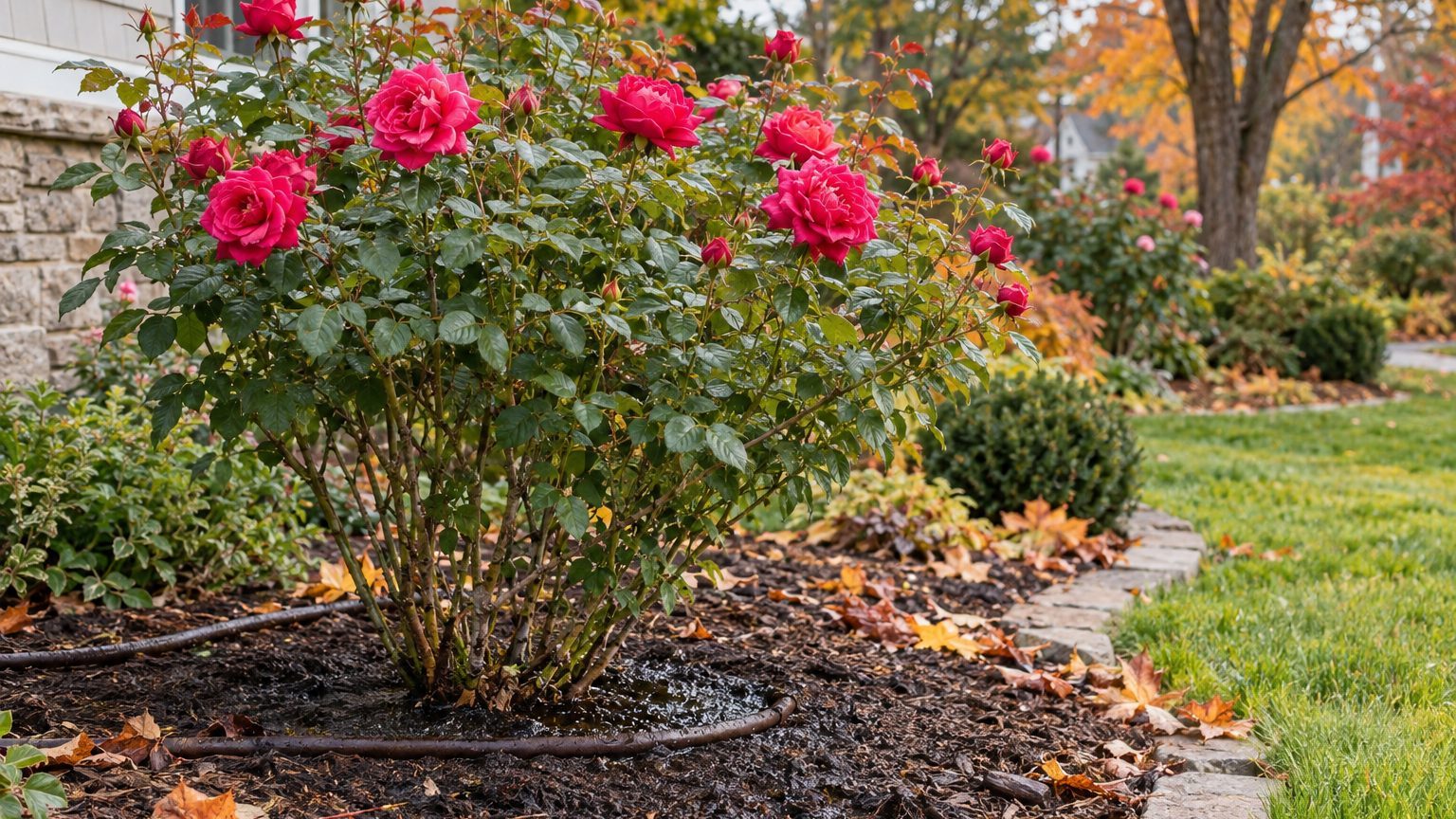
  3. Lay a drip line or soaker hose along the base of the plant, so that water goes straight to the roots and the leaves stay dry. In Georgia, the aim is moisture that penetrates 5 to 6 inches.
  4. Let the water run long enough to travel down, so that the roots follow it and anchor deeper. In Arizona, water should reach 1½ to 2 feet into the soil.
  5. Spread mulch over the root zone, so that the soil holds its moisture between soakings. In Florida, deep watering encourages root development, while mulch helps conserve soil moisture.
  6. Let the soil dry down a little before the next soak, so that roots get air as well as water. In California, roses do best when 50% of the available water is used up between irrigations.

A long screwdriver or a narrow trowel makes a handy gauge. Push it in after watering and feel where the soil turns from damp to dry. That tells you more about your bed than any schedule.

Watering Needs by Rose Type

Watering needs vary more with a rose’s age and growing season than with its class. Hybrid teas, climbers, old garden roses and rugosas are not given their own watering rules, so the differences that show up are about how established the plant is and whether it is growing.

Rose Type What changes Why it matters
Shrub roses In Montana, a deep soak to about 10 inches once each week, not sprinklers Big plants need a large amount of water that sprinklers rarely deliver
Newly planted roses In Oregon, careful monitoring for 2–3 weeks Young roots have not spread, so the soil around them dries out fast
Dormant roses In Nebraska, watering drops to once a month With growth stopped, the plant uses far less, but the roots still should not sit dry

Winter watering follows the weather more than the calendar. In Oregon, the guidance is to water every 4 to 6 weeks when there is no snow cover and the ground is not frozen. Where growing season soaks run at a steady rhythm, as in Nebraska while plants are still growing, the winter ease-off is a clear change of pace.

Rose Watering Mistakes to Avoid

Treating Every Soil the Same

Soil texture sets how long a soak lasts. In New Mexico, sandy soils must be irrigated every 4 to 10 days during the growing season because they do not hold moisture long. Loam holds more, and may need irrigating every 8 to 15 days.

A rose on a sandy bed that gets a loam schedule wilts between waterings. Test the bed you actually have, and shorten the gap if the soil dries out too quickly.

Watering Only the Surface

Watering Only the Surface — How Much Water Do Roses Need, and How Often

A short sprinkle wets the top and stops. In Kansas, the soil should be moist at least 8 inches below the surface after watering, and shallow watering teaches roots to stay near the top, where heat and drought reach them first.

Dig a small test hole a little while after you water. If the damp layer is thin, run the water longer, slowly, and let it sink in rather than run off.

Soaking Until Soggy

Soaking Until Soggy — How Much Water Do Roses Need, and How Often

Deep does not mean drowned. In Washington, keep the soil moist, not wet, to a depth of 8–12 inches. Constantly saturated soil pushes out the air roots need, and the plant struggles even though the bed looks generous.

In Washington, gardeners irrigate as needed when the top 2 inches of soil become dry. Wait for that sign, then give a full soak rather than frequent light watering.

How Often to Water Roses in Your State

The rose gives the signal. Local weather, soil moisture, and active growth determine how often a rose needs water.

  • The page for your state gives the months when watering starts, runs at full pace and tapers, so check it as the buds begin to swell.
  • Return to the same page as the leaves drop, to see how winter watering fits your local weather.

Common Questions

How Much Water Do Roses Need in Clay Soil?

Clay holds water longest but takes it slowly. In New Mexico, an inch of water wets clay only 4 to 5 inches deep, so deep soaks need patience and a slow trickle rather than a fast flood.

How Long Should You Run the Hose or Drip Line on Roses?

In Oregon, a rule of thumb is 30 minutes each time. That is paired with a schedule of 2 to 4 times a week, so adjust it to your soil and weather, since sandy beds drink faster than loam or clay.

How Dry Can the Soil Get Between Waterings?

In California, roses do best when 50% of the available water has been used up before the next irrigation. In practice that means the soil is drying down but has not gone dusty, and a finger pushed in still finds moisture below the surface.

Rose Types Compared: Hybrid Tea, Shrub, Climbing and More

Rose Types Compared: Hybrid Tea, Shrub, Climbing and More

Walk past a few front yards when roses are in bloom and the plants look nothing alike. You may see a tidy bush with large blooms held on separate stems, a sprawling mound covered in clusters, and a climber winding up a porch post. Those are different types of roses, and the type decides how tall the plant gets, how often it flowers and how you prune it.

What Are the Main Types of Roses?

Roses sort into types by habit and by how they flower: hybrid teas, floribundas, grandifloras, shrub roses, miniatures, climbers, old garden roses and rugosas. Size swings widely, and in South Carolina roses range from miniatures of 8 inches tall to tree-climbing giants that reach 50 feet or more.

The bigger split is bloom habit. Repeat-blooming roses flower on new wood through the season, while once-blooming roses flower on last year’s wood in a single show. Climate then decides which type stays healthy and how much winter protection it needs.

The state selector just below this section leads to the page for your state.

How to Tell Rose Types Apart

Rose Types Compared: Hybrid Tea, Shrub, Climbing and More

A rose tag or a nursery listing usually says enough, but you can read most plants yourself if you check a few things in a sensible order.

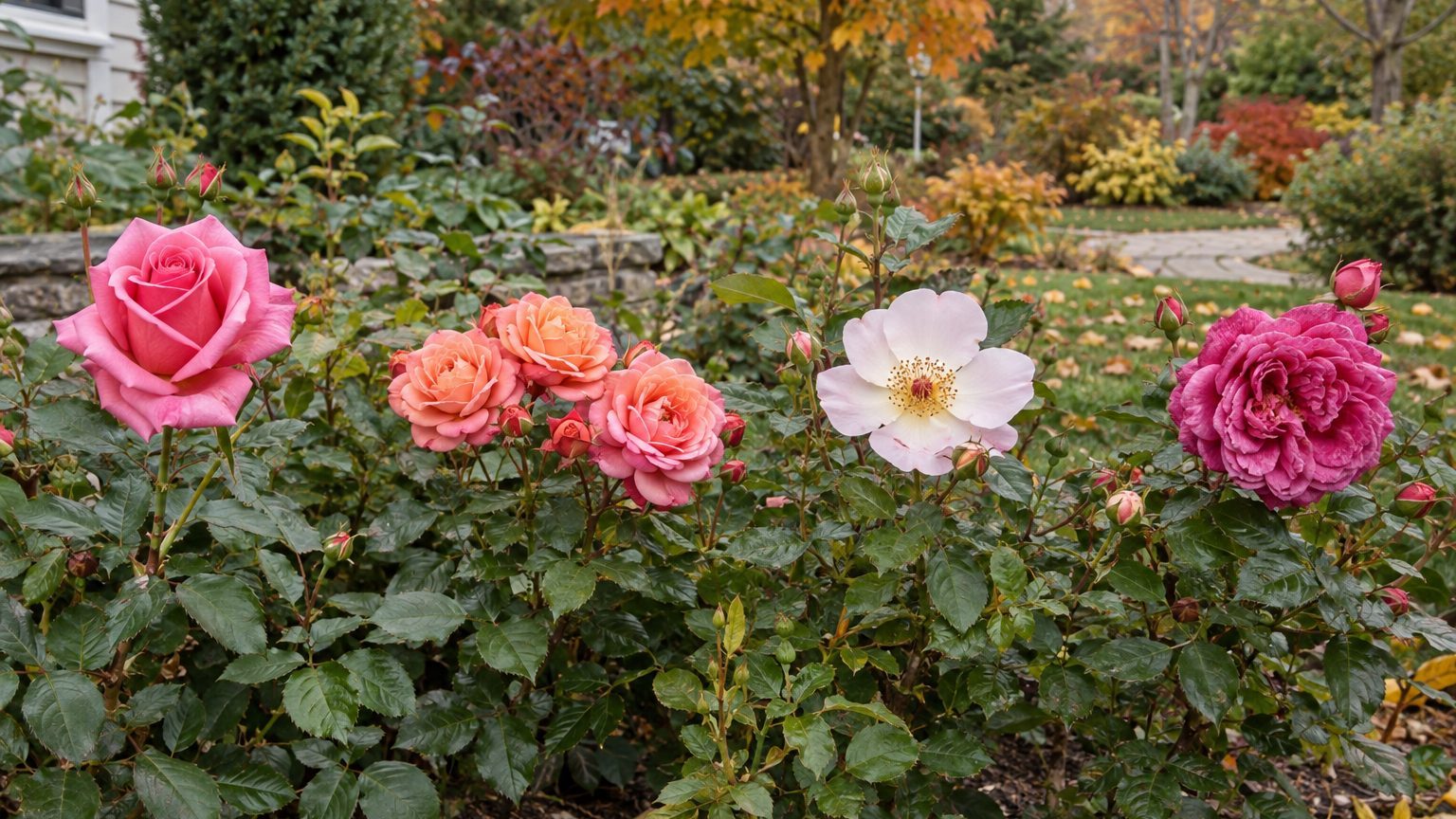
  1. Look at how the flowers sit on the stem, so that you can distinguish hybrid tea blooms on long stems from the clusters found on floribunda, shrub and climbing roses.
  2. Find out whether the plant blooms once or repeatedly, because that tells you when pruning is safe and whether you will have color after the first flush.
  3. Check the mature size on the tag and picture it in your bed, since in Florida the smallest micro-minis stay at 6 inches or less while other types fill a corner of the yard.
  4. Match the use to the plant. Landscape roses left untrimmed reach about 4 feet in Maryland and work as hedges or in mass plantings, while a climber needs a wall, fence or pillar to hold its canes.
  5. Confirm the winter hardiness rating for your area, so that you are not replacing a rose that could not handle your coldest nights.

In Florida, several hundred cultivars are on the market, which is why the tag matters more than flower color. Roses with the same pink blooms can still have very different habits, from a compact bush to a rangy climber.

Rose Types Compared

Height is the first difference you notice, but habit matters just as much. A hybrid tea stands upright and carries large blooms on single stems, while a shrub rose spreads and flowers in clusters.

Floribunda flowers are generally smaller than those on grandiflora and hybrid tea roses, which suits them to mass color rather than cutting.

Rose Type What changes Why it matters
Hybrid tea Typically 4 to 6 feet tall in South Carolina Upright shape with large blooms suits a bed with room behind it
Floribunda Generally 3 to 4 feet tall in South Carolina Smaller flowers in groups give steady color at a moderate height
Grandiflora Can grow 5 to 6 feet tall in Georgia Needs more space than a floribunda, so it belongs toward the back
Shrub rose About 3 feet tall and wide in Georgia Spreads sideways, so it fits borders and mixed plantings
Miniature Up to 24 inches tall in Florida Works as a small feature near the front of a bed
Climbing Popular climbers reach 8 to 15 feet in South Carolina Canes can grow 20 feet in one season in Georgia, so give them a strong support
Old garden One vigorous Florida selection reaches 6 feet if pruned yearly The same plant can be trained as a climber, which changes how much room it takes

For rugosa roses, check the tag for mature size before choosing a planting spot. Match the row to your space first, then to your climate. A rose that is too big for its spot creates avoidable pruning and crowding.

Rose Selection Mistakes to Avoid

Planting a Giant in a Small Bed

Planting a Giant in a Small Bed — Rose Types Compared: Hybrid Tea, Shrub, Climbing and More

Tags list a mature size, and it often surprises people. In Florida, one medium pink rose with 3- to 5-inch double blooms grew to between 8 and 10 feet tall and wide.

Crowded roses shade each other and get hard to prune. Read the mature size before you buy, and put large types where they can spread.

Hiding Small Roses at the Back

Hiding Small Roses at the Back — Rose Types Compared: Hybrid Tea, Shrub, Climbing and More

Short roses disappear behind taller plants. In Florida, place small roses near the front, since they will grow only 8 to 24 inches tall.

Behind a perennial border they get shaded out and nobody sees the blooms. Set them along the edge of the bed or in a pot by the walk.

Pruning Once-Bloomers in Early Spring

Once-blooming roses set their flowers on last year’s wood. Cutting them back in early spring removes the buds and leaves a green plant with no flowers that year.

Prune them right after they finish blooming. Repeat-bloomers flower on new wood, so they take pruning as the buds swell in late winter or early spring.

Best Rose Types for Your State

Your best choice depends on your winters and your space. The months for each state are on that state’s page.

  • Go to your state’s page for planting and pruning months, and use them before you shop for a new rose.
  • Check it again before winter, when dormancy and the first hard freezes decide when to protect the canes.

Common Questions

Which Rose Types Make a Good Low Hedge?

Landscape and shrub roses are the usual choice, since they are bred for hedges and mass plantings. In Maryland, landscape roses that go untrimmed reach about 4 feet, so plan the hedge height around that and prune to keep it where you want it.

Can You Grow Roses in Pots?

Miniatures suit containers because they stay small. Use a pot with drainage holes, and keep an eye on watering, since a container dries out faster than a bed. Larger roses need a larger container and more attentive care.

Are There Roses for Cold Winters?

Yes. Winter-hardy roses bred in Canada are hardy down to -35 degrees Celsius with only snow as winter protection. They also flower repeatedly through summer and need only minimal pruning, so they are worth a look if your winters are harsh.

The almanac, state by state. Every date on this site comes from a state’s own frost facts and its extension service’s calendar — and says where it comes from.