Skip to content
  1. Jan
  2. Feb
  3. Mar
  4. Apr
  5. May
  6. Jun
  7. Jul
  8. Aug
  9. Sep
  10. Oct
  11. Nov
  12. Dec
State
Northwest Territories
Hardiness zones
1b
Last spring frost
May 25
First fall frost
September 18
Annual rain
11 in
Lawn zone
cool-season
Source
Environment and Climate Change Canada — Canadian Climate Normals 1981-2010, station YELLOWKNIFE A · Yellowknife

The year in Northwest Territories, from the calendar

  1. Jan—
  2. Feb—
  3. MarPrune fruit trees
  4. AprPrune fruit trees
  5. MayFeed hydrangeas · Plant hydrangeas · Feed roses · Prune roses
  6. JunPlant hydrangeas · Prune bigleaf hydrangeas · Seed the lawn · Lilacs bloom · Prune lilacs
  7. JulFeed hydrangeas · Plant hydrangeas · Prune bigleaf hydrangeas · Prune lilacs · Peonies bloom
  8. AugPlant spring bulbs · Plant hydrangeas · Peonies bloom · Mow · Plant trees
  9. SepPlant spring bulbs · Plant peonies · Plant trees · Mow
  10. Oct—
  11. Nov—
  12. Dec—

From the state frost facts and extension calendars: University of Alaska Fairbanks · Clemson HGIC factsheet — Hydrangea · NDSU Extension — Dakota Gardener (lawns) · University of Alaska Fairbanks Cooperative Extension.

Best Spring Bulbs for Northwest Territories

Best Spring Bulbs for Northwest Territories

Snowbanks shrink slowly in the Northwest Territories, and the first color in the garden often comes from bulbs that went into the ground the previous fall. Bulbs that handle deep winter cold are the ones to look for, and a short list of them does very well here. Planting them is a late-summer job.

Best Spring Bulbs to Grow in Northwest Territories

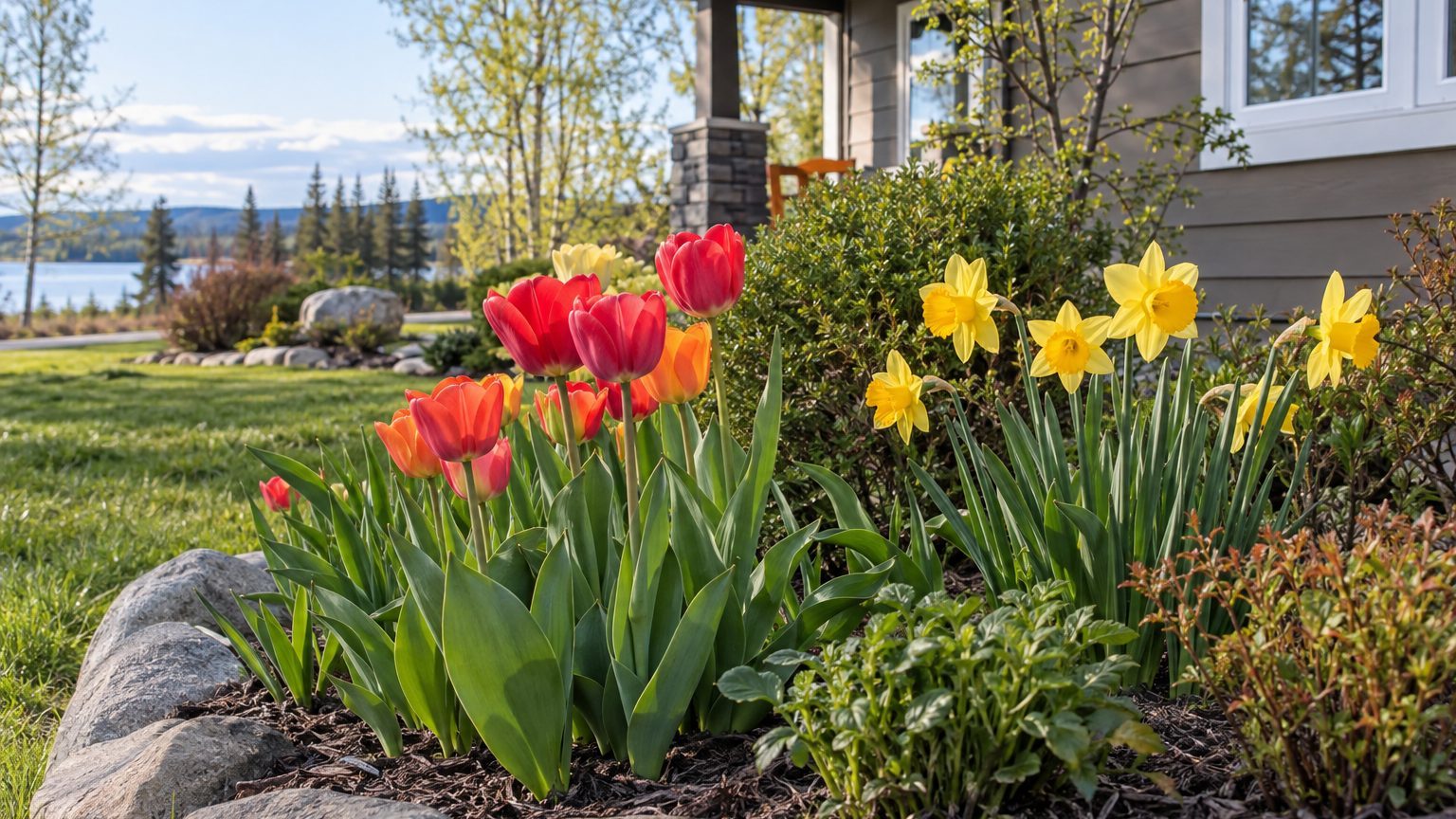
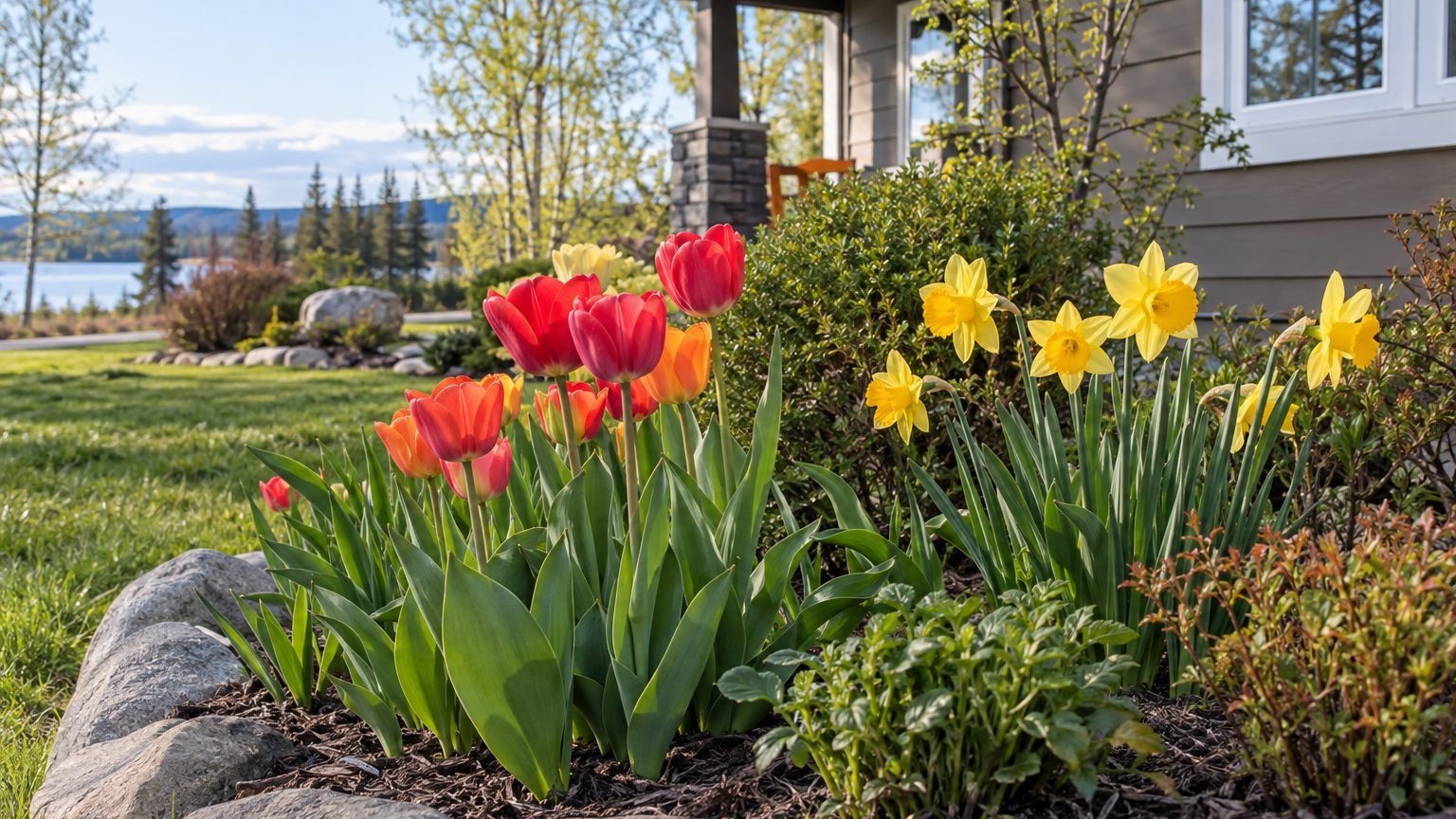
Healthy spring bulbs in bloom

Winter cold is not the problem in the territory, because most spring bulbs need a long cold spell to flower and Yellowknife sits in Canadian hardiness zone 1b (a Canadian rating that does not convert to a USDA zone). The real test is whether a bulb survives that cold year after year. Allium, scilla, snowdrops and grape hyacinth have the best record, and Greigii tulips are worth a try.

Purple Sensation Allium

This showy allium is a fall-planted bulb that extension growers in cold northern climates recommend. It does not need a chill period to bloom, so it flowers even when winter conditions are uneven.

Plant it with the other bulbs in late summer and give it a spot with room to stand tall.

Greigii Tulips

Greigii tulips are a short, sturdy group that has come up the first spring after a mild winter in cold northern gardens. Tulips are often short-lived, so treat them as a bonus rather than a permanent fixture.

Plant a few each fall and let the rest of the border carry the show.

Scilla

Scilla tends to winter over well in cold interior climates like this one. The small blue flowers return on their own and spread slowly into a carpet.

Tuck them under shrubs or along a walkway, where nothing will disturb the bulbs.

Snowdrops

Snowdrops are hardy, which is the point in a territory where winter lasts so long. They are a good first planting for anyone who wants a bulb that asks for little after the first fall.

Grape Hyacinth

Grape hyacinth sometimes winters over in cold interior gardens, so it earns a place as a try-it bulb rather than a sure thing. Plant a small drift and see how it does in your own yard before you buy more.

How to Choose Spring Bulbs for Your Northwest Territories Garden

The right bulb depends on how much risk you want to take and how much attention you plan to give. Timing is the same for every type: August and September, when the soil has cooled to about 10 to 13°C (the low to mid 50s °F) so roots form before the ground freezes.

No local page covers bulb timing in the territory, so these dates follow the nearest comparable climate. Confirm them with a local garden centre, a garden society or a territorial gardening group.

Your situation What suits it in Northwest Territories Why
Very cold winters Snowdrops and scilla Both are hardy and tend to winter over well
Little time to fuss Purple Sensation allium Alliums need the cold of winter to bloom.
You want tulips anyway Greigii tulips They have come up after a mild winter, though tulips are often short-lived
Animals visit the yard Daffodils Voles, squirrels, rabbits and deer leave them alone

Grape hyacinth fits the try-it column: it sometimes winters over, so plant a few and watch. Daffodils are the more reliable perennial bulb, which makes them a safe choice when you want something to come back.

Which Spring Bulbs Suit Different Parts of Northwest Territories

The territory covers a huge area, and the same bulb behaves differently from one town to the next. Spring arrives later the farther north you go, and the figures here describe only one city.

  • Yellowknife: the average last spring frost is May 25, and in one year out of two frost comes later than that, so treat it as the middle of a window rather than a safe date.
  • Hay River and Fort Smith: in the southern part of the territory, spring usually eases sooner, which gives a little more room to try borderline bulbs such as grape hyacinth.
  • Inuvik: gardens in the far north run well behind Yellowknife, so stick to the hardiest choices, such as snowdrops and scilla.

Wherever you garden, a sheltered spot beside a wall or fence gives any bulb a better chance than an open lawn edge.

Spring Bulb Buying Mistakes to Avoid in Northwest Territories

Buying Bulbs by Looks Alone

A bag of whatever looks pretty on the shelf is a gamble in a climate this cold. Some types come up once after a mild winter and then give out.

Choose from the hardy group first, and add one or two experiments each year so you learn what your own yard supports.

Expecting Tulips to Last

Tulips are often short-lived in the garden, and a hard northern winter makes that more likely. Planting a large block and counting on it year after year usually ends in empty patches.

Plant tulips in small numbers, and lean on daffodils for bulbs that return reliably.

Keeping Bulbs in the Bag

A bulb that is still in the bag is better planted late than stored over the winter. A bulb that is still in the bag is better planted late than stored over the winter: plant as long as the ground can be dug.

Plant them as long as the ground can be dug, even if the best window has passed.

Where to Get Spring Bulb Advice in Northwest Territories

The territory has no county extension offices. Start with the agriculture services of the Government of the Northwest Territories, then lean on local gardeners who have already tested what lives through your winters.

  • The territorial agriculture services give general growing guidance, so check in before you order bulbs for late summer planting.
  • A local garden centre can tell you which varieties came through recent winters, and it is worth asking in late summer when fall stock arrives.
  • A garden society or territorial gardening group shares what has worked in your town, and most meet through the growing season.

Common Questions

Do You Need to Chill Bulbs in the Refrigerator Before Planting in Northwest Territories?

No. Most spring-flowering bulbs need about 12 to 16 weeks of cold to flower, and a northern winter supplies far more than that. Fridge chilling is for places where winters are too mild.

When Can You Cut Back Bulb Leaves After Bloom?

Leave the leaves on the plant until they turn brown, and remove only the faded flowers. Leave the leaves on the plant after bloom until they turn brown; remove only the faded flowers.

Which Bulbs Do Deer and Voles Leave Alone?

Daffodils are left alone by voles, squirrels, rabbits and deer. Tulips and crocus are the ones those animals eat, so plant daffodils where wildlife visits most.
When Do Tulips and Daffodils Bloom in Northwest Territories?

When Do Tulips and Daffodils Bloom in Northwest Territories?

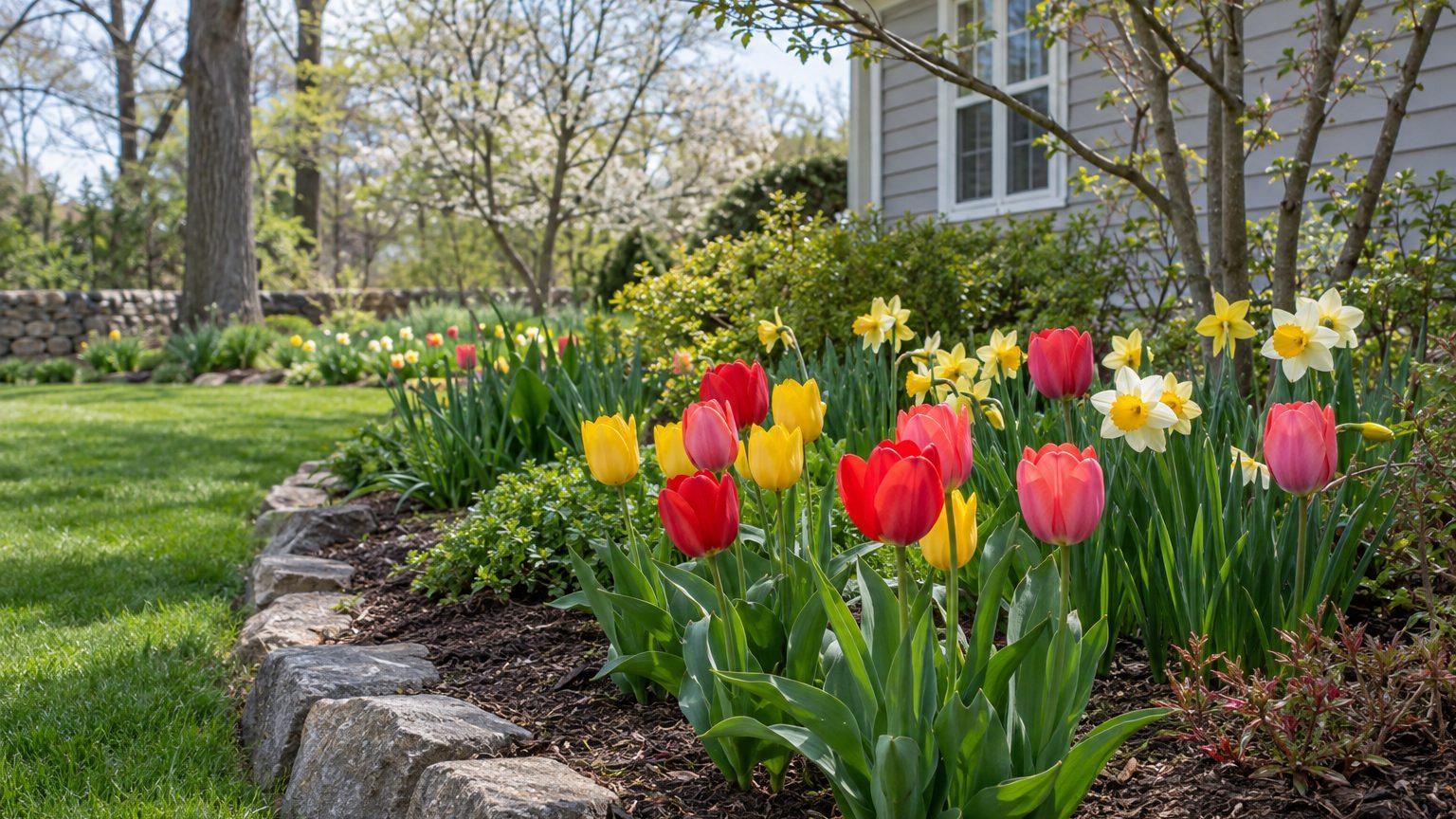
Snow still lingers in the shade when the first green spears of spring bulbs push through the soil in a Northwest Territories yard. Tulips and daffodils flower once the ground and air warm in spring, so their bloom follows the thaw rather than a fixed date.

When Do Tulips and Daffodils Bloom in Northwest Territories?

When Do Tulips and Daffodils Bloom in Northwest Territories?

Tulips and daffodils bloom when spring warmth reaches the bulbs, and no month can be promised for the territory. The bulbs wait out the cold under snow, then open as the soil thaws and the days lengthen. A late melt means later flowers, and a quick thaw brings them sooner.

Bulb When it blooms in Northwest Territories What sets the timing
Snowdrops Among the first flowers of the season, as the snow melts Hardy bulbs that wake with the first thaw
Daffodils In spring, once the ground warms Spring warming after a full winter of cold
Tulips In spring, once the ground warms Spring warming, and a mild winter helps them come up
Alliums Near the end of the bulb season Spring warming, with the cold of winter needed to bloom

Spring bulbs flower in a long succession, with snowdrops at the start and ornamental onions (alliums) at the close. Crocus and hyacinths slot in between. Because the territory has no local bulb page of its own, its planting months follow the nearest comparable climate, so confirm local timing with a garden centre, a garden society or a territorial gardening group.

Frost matters here too. At Yellowknife the last spring frost falls on average around May 25, which means in one year out of two it comes later. Treat that as the middle of a window, never as a safe date. The Canadian hardiness zone for Yellowknife is 1b, a rating from a different system than USDA zones, so it cannot be converted to one.

Bulbs bloom in spring only if they went in the previous fall. August and September are the planting months, when the soil has cooled below about 15°C (60°F). That gives roots time to form before the ground freezes without pushing the bulbs to sprout early.

How to Tell Your Bulbs Are About to Bloom

Since no calendar date is reliable this far north, the bulbs themselves are the better clock, and a walk along the bed after the snow retreats tells you plenty.

  • Green tips poking through the soil mean the bulb has woken, and the flower is still on its way.
  • Leaves that rise and widen show the plant is gathering energy, so keep mulch and foot traffic off the bed.
  • A tight bud visible among the leaves means flowering is near, and daffodils and tulips usually show it before opening.
  • A bud taking on colour at the tip is the sign that petals will open soon.
  • Alliums send up leaves first, and those leaves may yellow before the round flower head opens, which is normal.

If a hard frost threatens after buds appear, a light covering of dry leaves or fabric overnight can protect the flowers.

What to Do After Tulips and Daffodils Bloom in Northwest Territories

Once the petals fade, cut off only the spent flowers. Leave the stems and leaves alone. The leaves feed the bulb for next year’s flowers, so they stay on the plant until they turn yellow and then brown. Do not tie them in knots or fold them down, because that blocks the light they need.

Tulips are often short-lived in the garden, and many beds need fresh bulbs after a few seasons. Daffodils last longer and are the more reliable perennial bulb, which is why they anchor a northern bed. Plant a few new tulips each fall to keep the color coming.

Planting is the other half of the cycle. A bulb still sitting in the bag goes in as soon as the ground can be dug, since planting late beats storing it over the winter. Where winters are too mild to give bulbs the cold they need, tulips and hyacinths are chilled in the refrigerator before planting.

How Bloom Time Shifts Across Northwest Territories

The territory covers a huge area, and a bed in one town can wake well before a bed in another.

  • Yellowknife: This is the reference point for frost, on the north shore of Great Slave Lake. Beds here follow the spring pattern above.
  • Hay River and Fort Smith: These southern communities lie closer to the milder south, so bulbs there tend to wake earlier than at Yellowknife. Lake ice near Hay River can hold shoreline beds back in spring.
  • Inuvik: In the Mackenzie Delta far north, spring arrives later, so bulbs bloom well behind Yellowknife and need the hardiest choices.

A bed against a sunny south wall also thaws sooner than an open, shaded one, even within one yard.

Where to Get Bulb Advice in Northwest Territories

Canada has no county extension offices. The territorial government’s agriculture services are the official starting point, and local growers fill in the details of your own town.

  • The territorial agriculture pages explain what grows in northern conditions, and they are worth checking before you order bulbs in summer.
  • A local garden society can tell you what has survived in your neighbourhood.
  • A garden centre can confirm when to plant locally, so ask there before buying in August.

Common Questions

Which Spring Bulbs Are Hardy Enough for Far Northern Yards?

Snowdrops are hardy, and Scilla tends to winter over well in cold gardens. Grape hyacinth sometimes does too. Daffodils are the dependable perennial choice, and a showy allium such as ‘Purple Sensation’ makes a good late addition.

Do Animals Eat Tulips and Daffodils?

Voles, squirrels, rabbits and deer eat tulips and crocus, while daffodils are left alone. Planting daffodils around more tempting bulbs can help protect a bed.

How Much Winter Cold Do Spring Bulbs Need?

Most spring-flowering bulbs need about 12 to 16 weeks of cold to flower. Northwest Territories winters supply that easily. According to Iowa State University Extension, alliums are not the exception, since they need the cold of winter to bloom.

When to Plant Tulips and Daffodils in Northwest Territories

When to Plant Tulips and Daffodils in Northwest Territories

A bag of tulip and daffodil bulbs on a garden-centre shelf in late summer is the signal to start in the territory, because the planting window is short and closes as the ground cools. In Northwest Territories, bulbs go in during late summer, well before the soil freezes. Timing, bulb choice and local differences all shape how a spring display turns out.

When to Plant Tulips and Daffodils in Northwest Territories

When to Plant Tulips and Daffodils in Northwest Territories

Plant tulips and daffodils in August and September, with late August to early September the target. The bulb’s year here runs in a few clear steps.

  • In August, buy bulbs while the garden centre stock is fresh and firm, and keep them somewhere cool and dry until the soil is ready.
  • Winters in the territory supply all the cold that spring bulbs need, so tulips and hyacinths skip the refrigerator chilling that mild regions require.
  • From late August to early September, plant the bulbs, or wait until the soil sits in the low to mid 50s °F (roughly 11 to 13°C).
  • As autumn turns cold, spread a layer of mulch over the bed once the surface begins to stiffen, so the soil stays evenly frozen through winter.
  • In spring, after the snow melts and the soil thaws, the first green tips push up through the mulch, which you can pull back gently.

The first fall frost arrives around September 18 at Yellowknife, so a planting made earlier gives roots time to settle. Yellowknife sits in Canadian hardiness zone 1b, which is a different system from the USDA zones. No local bulb-timing guide exists for the far north, so these dates follow the nearest comparable climate. Confirm local timing with a garden centre, a garden society or a territorial gardening group.

Which Spring Bulbs Do Best in Northwest Territories?

Daffodils are the safest bet, since voles, squirrels, rabbits and deer leave them alone. Alliums, scilla, snowdrops and sometimes grape hyacinth also winter over well in a climate like this one. Tulips can work, but they are less certain.

Planting spring bulbs here means choosing plants that shrug off a hard winter and hungry wildlife. The choice matters more than any other decision you make.

Bulb type How it does in Northwest Territories Why
Daffodils Reliable, lasts for years More dependable as a perennial, and animals leave them alone
Tulips Worth a try, less certain Voles, squirrels, rabbits and deer eat them
Alliums Good choice, such as ‘Purple Sensation’ They need the cold of winter to bloom
Scilla Tends to winter over well Hardy in a cold climate like this
Snowdrops Hardy They handle a long, cold winter
Grape hyacinth Sometimes comes back Hardiness is borderline in the far north

Crocus bring the same trouble as tulips, since voles and rabbits eat them, so protect the bed or accept some losses. Hyacinths need winter cold, which the territory provides, though they are less proven in zone 1b. Start with daffodils and alliums for the surest results.

When to Plant, Chill and Care for Spring Bulbs in Northwest Territories

The year is simple here. Planting happens in late summer, chilling is handled by the winter itself, and the only aftercare is patience with the leaves. These gestures keep the bulb strong from one spring to the next.

Task Best timing in Northwest Territories Why then
Plant August to September, ideally late August to early September Roots form before the ground freezes, and bulbs do not sprout in fall
Chill Not needed, the winter does it Spring bulbs need about 12 to 16 weeks of cold, and the territory gives that outdoors
Leave the foliage After bloom, until the leaves turn brown The leaves feed the bulb for next year

After flowering, remove only the faded blooms and leave the leaves alone, even if they flop and look untidy. Cutting or tying green leaves robs the bulb of the energy it stores for next spring.

How Bulb Planting Time Changes Across Northwest Territories

The territory is huge, and one planting date does not fit every community. Reference dates come from Yellowknife, so gardeners elsewhere should lean earlier or later depending on where they live.

  • Inuvik: Cold arrives sooner this far north, so aim for the early end of the planting window and get bulbs in the ground as soon as they arrive.
  • Yellowknife: The reference city for these dates, where late August to early September suits most beds, and the big lake nearby softens the edges of the season.
  • Fort Smith: Farther south, the ground stays workable longer, so planting can slide toward the later part of the window.

Northern and upland districts run weeks behind the reference city in spring and ahead of it in fall, so watch your own soil rather than the calendar alone.

Where to Get Bulb Advice in Northwest Territories

Canada has no county extension offices, so advice comes from the territorial government’s agriculture program, local garden societies and garden centres. They know which bulbs survive locally and can help with a soil question.

  • The Northwest Territories Department of Industry, Tourism and Investment agriculture services can point you to growing resources, and spring or summer is a good time to ask before ordering bulbs.
  • A local garden centre can tell you what stock is arriving and when, which helps you plan the late-summer planting.
  • A garden society or territorial gardening group shares what has worked in nearby yards, so check in before the soil cools and the planting window opens.

Common Questions

Can You Plant Bulbs That Are Still in the Bag Late?

Yes. A bulb left in the bag is better planted late than stored over the winter, so plant as long as the ground can still be dug.

Why Do Tulips Fade After a Few Years?

Tulips are often short-lived in the garden. Daffodils last longer and are the more reliable perennial bulb, so treat tulips as a bonus rather than a permanent planting.

Can You Mix Bulbs for a Longer Season of Color?

Yes. Spring bulbs bloom in a long succession, from snowdrops and winter aconites at the start of the season to alliums at the end. Mixing types in one bed stretches the show.

Best Grass Seed for Northwest Territories

Best Grass Seed for Northwest Territories

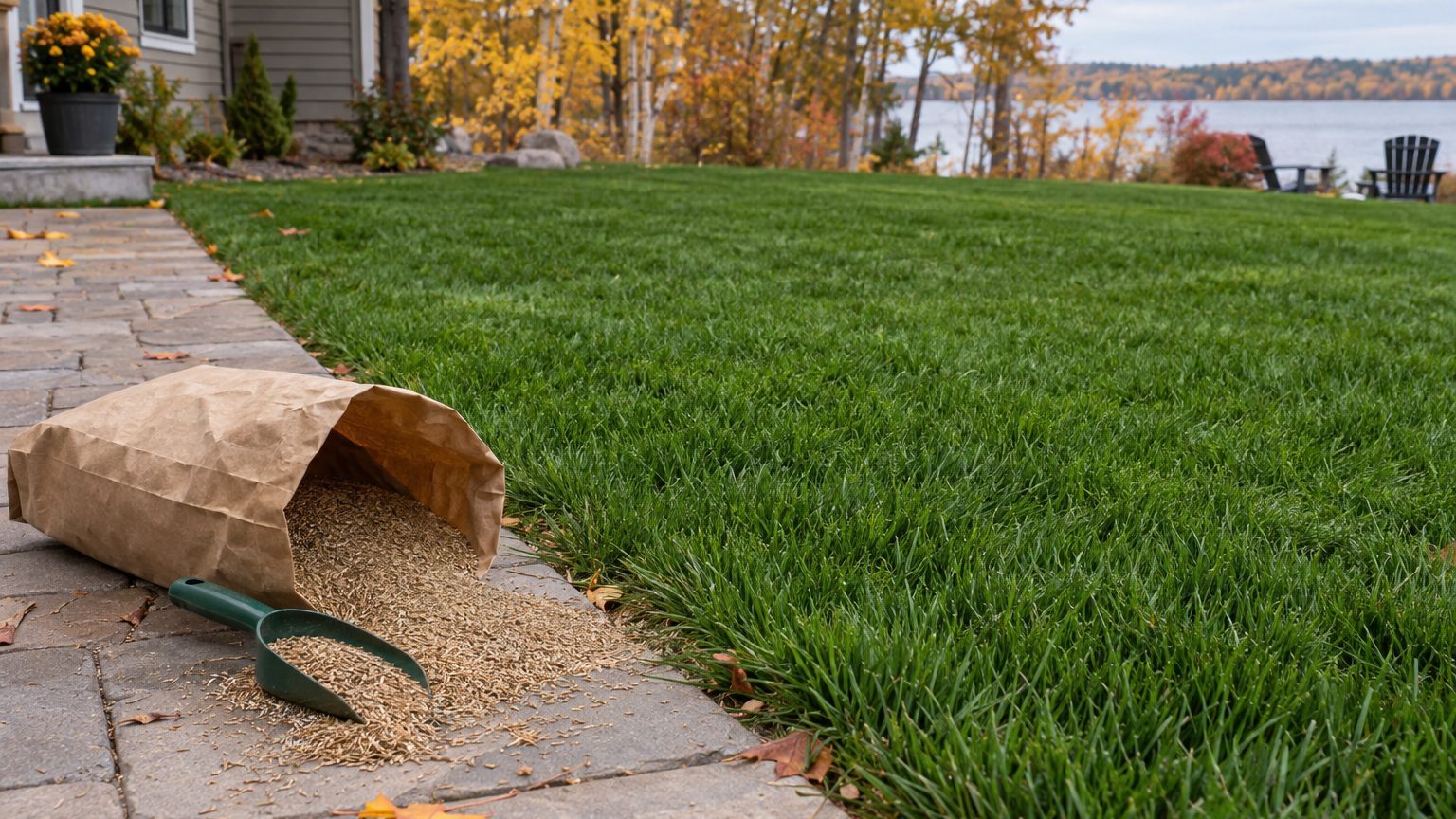
A lawn in the Northwest Territories starts greening only after the ground thaws, and it stops again before most gardeners feel the summer is done. The grasses that earn their place here are the cool-season types bred for cold: Kentucky bluegrass, fine fescues and, with caution, perennial ryegrass.

Which Grass Grows Best in Northwest Territories?

Cool-season grasses are the only sensible choice here, because the short growing season gives warm-season grasses no time to establish. In Yellowknife, the hardiness zone is 1b on the Canadian system (not a USDA zone), and winters that cold decide which species survive.

Kentucky Bluegrass

Bluegrass is the dependable base for a sunny territorial lawn. It spreads by underground runners, so it knits together and repairs small bare spots over time. Seed is slow to germinate, which suits the patient gardener more than the one wanting quick cover.

Fine Fescues

Creeping red, chewings and hard fescue can cope with lean soil and part shade. They stay fine-bladed and need less mowing and feeding than bluegrass. Many northern lawns lean on them for exactly that reason.

Perennial Ryegrass

Ryegrass sprouts fast, which makes it handy for quick cover, but it is short-lived in the coldest winters. Treat it as a small share of a mix, never the whole lawn. Expect to patch it back in after a hard winter.

How to Choose Grass Seed for a Northwest Territories Yard

Match the seed to what the yard actually offers: how much sun reaches it, how many feet cross it and how much you want to mow. A blend of bluegrass and fine fescue lets you adjust the balance to suit the yard.

Seeding is a spring job once the ground has thawed. Sow no deeper than 6 mm (0.25 inch), since the seed needs light and warmth near the surface to sprout.

Yard situation Grass to favor Why
Full sun, regular use Kentucky bluegrass Spreads and recovers from wear
Shade or under trees Fine fescues Tolerate low light better than bluegrass
Poor, dry soil, low mowing Fine fescues Thrive lean and need little feeding
Quick cover on bare ground Bluegrass with a little ryegrass Ryegrass sprouts first and shelters slower seed
Frequent watering not possible Fine fescues Handle drier spells more gracefully

If you enjoy a close, carpet-like lawn and will mow and water it, lean on bluegrass. If you would rather mow less, put fescue in front. Ryegrass stays a minor partner either way.

Which Grasses Grow Where in Northwest Territories

The territory is huge, and conditions shift a lot from one community to the next, so treat the Yellowknife picture as a starting point rather than a rule everywhere.

  • Yellowknife: Frost is typically gone around May 25, but in one year out of two it lingers later, so wait for the soil to warm before sowing. Bluegrass and fescue blends both suit it.
  • Inuvik and the Mackenzie Delta: Seasons run shorter and colder than in Yellowknife, so favor hardy fine fescues and give seed extra time to establish.
  • Fort Smith and the south: Springs open earlier, which gives bluegrass a little more room to root before the cold returns.

Whatever the town, the farther north you go, the shorter the window, and the more you should lean on cold-hardy fine fescues.

Grass Seed Mistakes to Avoid in Northwest Territories

Planting a Warm-Season Grass

Warm-season grasses need long, hot summers, which the territory does not offer. Stick to bluegrass, fine fescues and a little ryegrass, and ignore any bag promising a lawn for hot climates.

Seeding in Fall

Fall seeding fails here because the season is too short for seedlings to root before winter. Sow in June, and if that slips, July still works. The average first frost falls around September 18 in Yellowknife, but treat that as the midpoint of a window, never a safe date.

Burying or Overspreading Seed

Seed buried too deep may fail to reach the surface, and seed spread too thickly can crowd itself out. Rake lightly, press the seed into the soil, and follow the rate on the bag. Keep the surface evenly damp until the grass is up.

Where to Get Lawn Advice in Northwest Territories

The territory has no county extension offices, so local help comes from a few other places. Start with the territorial agriculture program, then lean on people who garden in your own community.

  • The Government of the Northwest Territories agriculture services can answer questions about growing conditions, so reach out before you buy seed in spring.
  • A local garden club or master gardener group knows what has worked in your own town, and is worth asking before the June sowing.
  • A garden centre can confirm which seed blends it stocks for cold climates, so visit before you start.

Common Questions

Can You Grow a Lawn in the Northwest Territories?

Yes, in communities with enough soil and a frost-free stretch of summer. Cool-season grasses like bluegrass and fine fescue handle the cold, though the lawn greens up later and rests earlier than lawns farther south. Expect a shorter mowing season, running roughly June through September.

Does Grass Seed Need to Be Covered with Soil?

Only lightly. A gentle raking and a firm press are enough, because the seed sprouts best close to the surface where light and warmth reach it.

When Should You Water a New Lawn in the Northwest Territories?

Watering matters most from June through August, when the seed is sprouting and the grass is growing. Keep new seed evenly moist rather than soaked, and ease off once the lawn has filled in.

Lawn Problems and Solutions in Northwest Territories

Lawn Problems and Solutions in Northwest Territories

A lawn in the Northwest Territories wakes up late, grows fast through the bright summer, and goes dormant again within a few months. Most problems here come from that short season and the long winter, not from the pests that trouble southern yards.

Lawn Pests and Diseases in Northwest Territories

Around Yellowknife, the average last spring frost falls in late May. The average first fall frost arrives in mid-September. The ground stays cold and wet for much of that time, so the troubles below are mostly about cold, moisture and compaction. Northern and upland districts run weeks behind Yellowknife.

Snow Mold Patches

Snow Mold Patches — Lawn Problems and Solutions in Northwest Territories

As the snow melts you may find circular, matted patches of gray or pinkish grass, sometimes with a web-like crust. It develops under long snow cover on unfrozen ground. Rake the patches gently to lift the mats and let air in, and the grass usually grows back from the crowns.

Winter Kill and Bare Spots

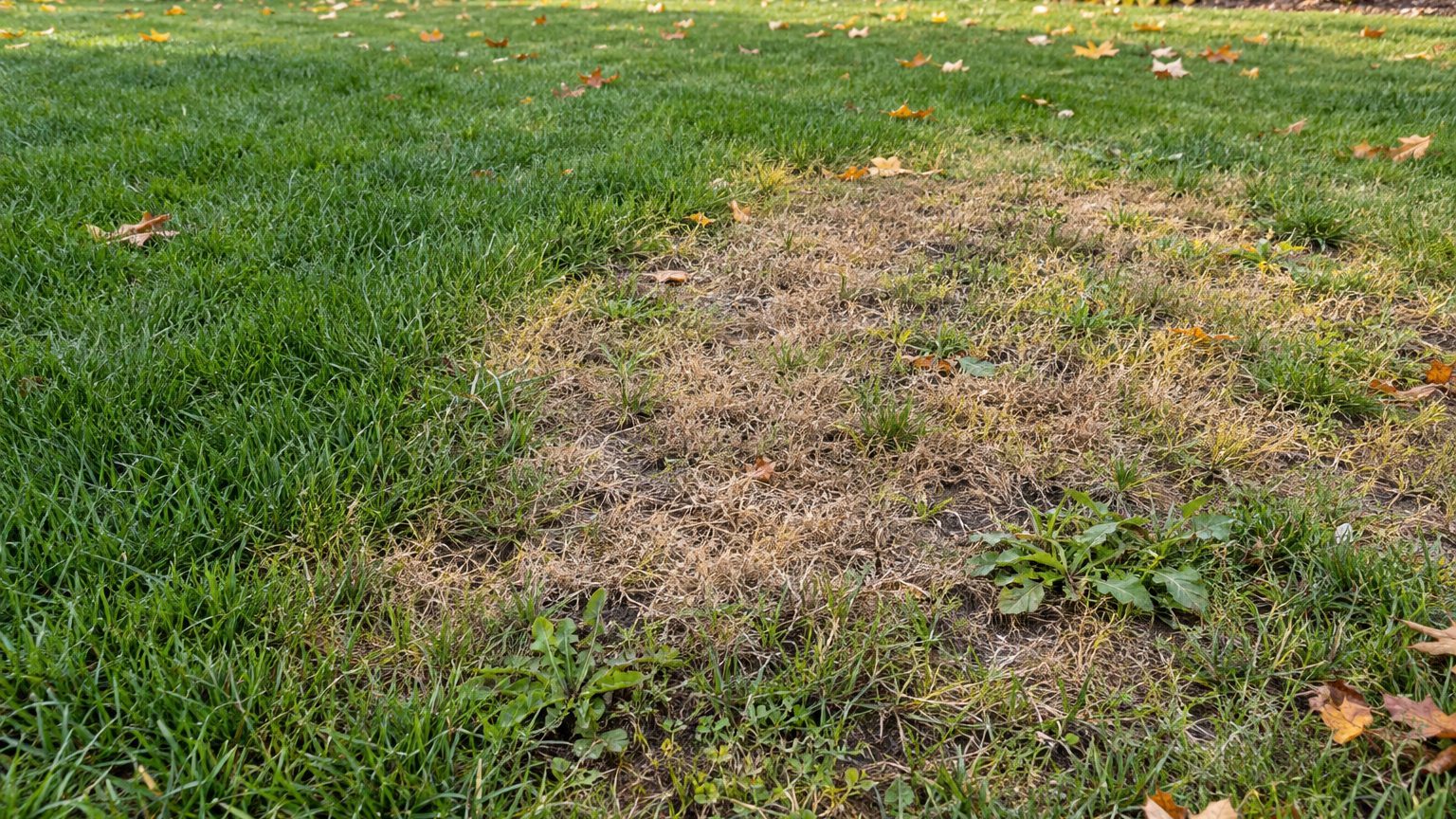
Tan, dead-looking areas in spring often come from ice sheets, drying winds or exposed ground without snow cover. Yellowknife sits in Canadian hardiness zone 1b, so winter hardiness matters when choosing turf. Scratch the soil, rake out dead blades, and reseed in June once the ground has thawed. July also works.

Thick Thatch

Cold soil slows the breakdown of clippings and old stems, so a spongy layer can build at the base of the grass. A layer up to 1.3 cm (1/2 inch) is healthy. Above that, dethatch or core aerate, which lets water and air reach the roots.

Dandelions and Other Broadleaf Weeds

Dandelions and similar weeds move into thin turf and bare patches once the soil warms in June. Their taproots and flat rosettes crowd out grass. Dig them out while the soil is moist, then thicken the lawn with seed so fewer gaps stay open.

Compacted, Mossy Ground

Low, damp or shaded spots often show a green carpet of moss with weak grass beneath. It often accompanies compacted or wet soil and heavy shade. Aerate, open up the shade where you can, and overseed the area so grass outcompetes the moss.

How to Tell Which Lawn Problem You Have

The shape of a patch, the time of year and the light on it narrow things down quickly. Compare the patch’s appearance with when it showed up before you decide.

Then try a simple test: tug on the grass. Use that result to guide your next step: loose turf points to root damage, while anchored turf calls for a closer look at the blades and soil.

Sign When you see it Likely problem
Round, matted gray or pink patches Right after snowmelt Snow mold
Large tan areas, roots dead and dry Spring, after exposed winters Winter kill
Spongy turf, hard to push a finger into Summer Thick thatch
Green mat over thin grass in shade Through the growing season Moss from wet, compacted soil
Rosettes with deep taproots in thin turf June through August Broadleaf weeds

A patch that sits in full sun and stays brown through summer points toward dry soil or compaction. A patch that stays soggy points toward drainage or moss.

Where Lawn Problems Are Worst in Northwest Territories

Conditions shift across the territory, mostly with latitude and drainage.

  • Yellowknife: Rocky ground and thin soil over bedrock dry out fast in summer, and bare spots are common where soil is shallow.
  • Hay River and the Great Slave Lake shore: The lake keeps spring cooler and slower, so snow mold and late greening show up more often.
  • Inuvik and the Mackenzie Delta: Permafrost and a shorter season leave lawns patchy, and seeding has even less time to establish.

Wherever you live, low spots that hold meltwater can be prone to damage.

Lawn Care Mistakes That Invite Problems in Northwest Territories

Mowing Too Short

Scalped grass has fewer leaves to feed roots, and weeds fill the gaps quickly. Mow from June through September, and keep the blades tall enough to shade the soil. Cut a little at a time so the grass is never stressed.

Watering Too Often

Frequent light sprinkling keeps roots shallow and the surface damp, which favors moss and disease. Water from June through August, and soak deeply when the soil feels dry. Let the top layer dry between waterings.

Feeding at the Wrong Time

Fertilizer put down before the grass is growing runs off or feeds weeds. June is when the first feeding works, once growth is underway, and August also works. Late feeding pushes soft growth that winter can damage.

Where to Get Lawn Advice in Northwest Territories

The territory has no county extension offices. Help comes from the territorial agriculture program, local gardening groups and garden centers that know northern soils.

  • The Government of the Northwest Territories agriculture services can point you to northern growing guidance, best checked in spring before seeding.
  • A local garden club or master gardener group can tell you how your own neighborhood’s soil behaves, so ask before you buy seed.
  • A garden center can help match seed to your yard and recommend a soil test when bare patches keep coming back.

Common Questions

Can You Seed a Lawn in the Fall in the Northwest Territories?

The season is too short for fall seeding. Seed in June once the ground has thawed, with July as a fallback.

Why Does My Lawn Stay Brown After the Snow Melts?

Grass that stays tan with dry, dead crowns usually suffered winter kill, while matted gray patches suggest snow mold. Scratch the soil and look for green at the base of the plants before reseeding.

Is the Frost Date a Safe Time to Plant?

No. In Yellowknife, the average last spring frost is May 25, which means frost comes later than that in one year out of two. Treat it as the middle of a window, and wait for warm soil.

Northwest Territories Lawn Care Schedule, Month by Month

Northwest Territories Lawn Care Schedule, Month by Month

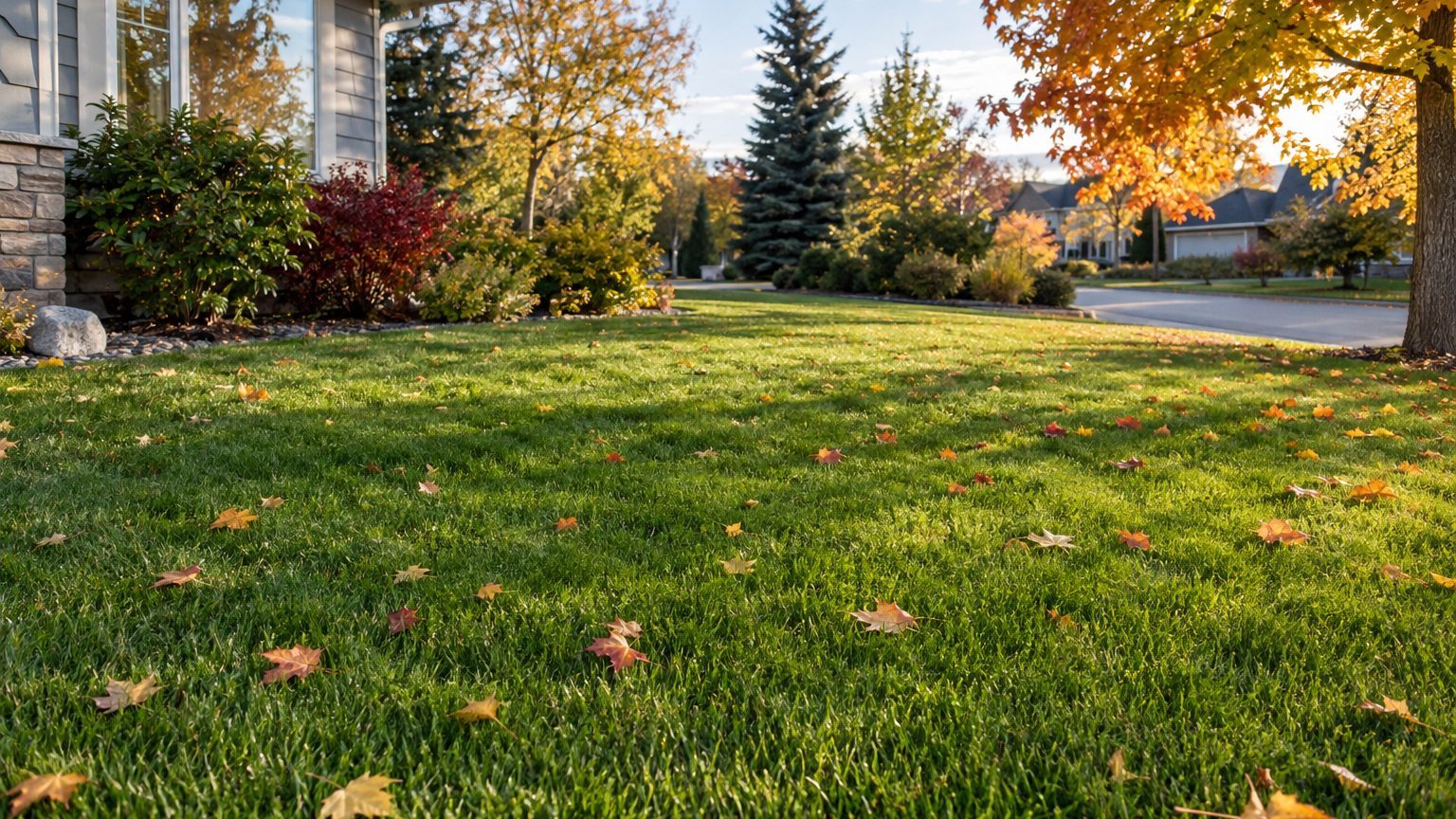
Snow lingers on a Northwest Territories lawn long after yards farther south have turned green, and then the grass gets a short summer to do everything. Lawn care here packs into June through September, with a long quiet stretch on either side. Matching each task to its month keeps that brief season working for you.

What to Do Each Month in a Northwest Territories Lawn

Lawn in Northwest Territories

Most of the year the lawn rests under snow, so the work bunches into the short summer. Here is what each month asks of you.

Month In the lawn
January Rest. The grass is dormant under snow, and the snow cover protects it, so leave it alone.
February Rest. Keep foot traffic off the frozen turf, because dormant crowns bruise easily.
March Rest. The grass is still dormant, and the thing to watch is where meltwater starts to collect.
April Rest. The thaw makes the ground soggy, so stay off it and note any spots that stay wet.
May Wait for the soil to firm up, then rake matted patches gently. Frost can still return, so hold off on seed and fertilizer.
June The busiest month. Seed bare areas as soon as the ground has thawed, because the season is too short for fall seeding. Give the first feeding once the grass is growing, start mowing, and water regularly.
July Mow and water. If June slipped past you, seeding in July still works.
August Keep mowing and watering. A feeding in August works too, and it helps the grass go into autumn with some reserves.
September Keep mowing while the grass still grows. Regular watering is finished; the days are cooling and growth is slowing.
October Rest. Growth stops and the lawn heads into dormancy before the snow arrives.
November Rest. The grass is dormant and the ground is freezing, so there is nothing to do.
December Rest. Snow cover does the work now.

Because the growing season is so compressed, a missed month leaves little time to catch up. Plan your seed, fertilizer and mower tune-up during the dormant months so you can start the day the ground allows.

When Does the Lawn Season Start and End in Northwest Territories?

Grass wakes up when the soil warms, and it stops when the soil cools again. Seed needs soil of 10 to 18 °C (50 to 65 °F) to germinate, which in the territory means early summer rather than spring. Cold-hardy grasses start growing at lower temperatures than most, but they still wait for the thaw.

Frost dates tell you about risk to young grass, not about when growth begins. In Yellowknife, the last spring frost falls on May 25 on average, which means that in one year out of two frost comes later. A seedling that sprouts before the last frost can be knocked back, so treat that date as the middle of a window, never as a safe date.

In fall in Yellowknife, the first frost arrives on September 18 on average, again with half of years running later. By then growth is already slowing, which is why seeding is a spring job here and why mowing tapers off through September.

How the Lawn Calendar Shifts Across Northwest Territories

The territory is huge, and the lawn months slide depending on how far north you live and how close you are to big water.

  • Yellowknife: This is the reference climate for the calendar. The lake cools the shoreline in spring and softens the first fall chill a little, so lawns right at the water can thaw later and hold green slightly longer.
  • Fort Smith and the South Slave: Closer to the Alberta border, spring comes earlier and the growing season stretches a bit longer, so the June tasks can start at the front of the window.
  • Inuvik and the Mackenzie Delta: Thaw arrives later and cold returns sooner. Lawns here have a short season, so seeding belongs in the later part of June and mowing stops early.

Whichever town you live in, let the thaw in your own yard set the start date, not the calendar on the wall.

Lawn Care Timing Mistakes to Avoid in Northwest Territories

Seeding in Fall

Seed that goes down in late summer or fall has too little time to root before the cold arrives. Young seedlings freeze, and the bare patch you meant to fix is still bare in spring. Seed in June, or in July if you must, so roots form while the soil is warm.

Feeding Before Growth Starts

Fertilizer spread on cold or half-thawed ground just sits there, and meltwater or rain can carry it off the lawn. Dormant grass cannot use it. Wait until June, once the grass is visibly growing, then feed. August also works for a late feeding.

Watering After Growth Slows

Summer watering matters because the season is short and the grass is working hard from June through August. Keep soaking lawns into the cool days of autumn and you raise the chance of soggy turf going into freeze-up. After August, stop regular watering and let the grass slow down on its own.

Where to Get Lawn Advice in Northwest Territories

The territory has no county extension offices, so advice comes from the government’s agriculture staff and from local growers who garden in the same climate as you.

  • The Government of the Northwest Territories agriculture services are the place to ask about grasses and soils that suit the territory, ideally in winter, before you buy seed.
  • A local garden club or master gardener group in your community can tell you when the ground actually thaws where you live, so ask in May.
  • A garden center in Yellowknife or your nearest town can point you to seed mixes sold for cold climates before June.

Common Questions

What Hardiness Zone Is Yellowknife?

Yellowknife sits in Canadian hardiness zone 1b. That is the Canadian system, which uses seven climate variables, so it does not convert to a USDA zone. Use it to judge how cold-hardy a grass or plant needs to be, not to compare with US numbers.

Why Is the Lawn Brown or Patchy After the Snow Melts?

Look at the pattern. A uniform straw color across the whole yard usually means the grass is still dormant and will green as the soil warms. Gray or pinkish, matted patches where snow lay deepest point to snow mold; once the soil is firm, light raking can help the turf dry and recover.

What Kind of Grass Seed Suits a Northwest Territories Lawn?

Choose a mix sold for cold climates and made of hardy cool-season grasses, and check the label for winter hardiness. Avoid warm-season grasses, which cannot survive the winters. Your garden center or the territorial agriculture office can confirm which mixes have done well locally.

Northwest Territories Lawn Care: What to Do and When

Northwest Territories Lawn Care: What to Do and When

A lawn in the Northwest Territories is a short, bright summer job: thaw, a flush of growth under long daylight, then frost again before most people have settled into a routine. Lawns here are small projects in Yellowknife and a few other communities, and the plan is built around a brief season and a hard winter.

Frost Dates and Growing Season in Northwest Territories

In Yellowknife, the last spring frost falls on average around May 25 and the first fall frost around September 18, and because those are midpoints, frost arrives later than that in one year out of two. Treat them as the middle of a window, never a safe date. Communities farther north run weeks behind. Yellowknife sits in Canadian hardiness zone 1b (a Canadian rating that does not convert to a USDA zone). Grass grows with soil warmth, not the calendar, so a young seedling needs the ground thawed and the nights past the worst frost risk. The year runs like this:

  • In winter, the lawn sits under snow and frozen ground, and nothing you do helps it, so keep traffic and heavy piles of shoveled snow off it where you can.
  • In spring, as the ground thaws, you rake off debris and wait for the soil to drain before walking on it, since soggy turf tears easily.
  • In June, seeding is at its best, and the first feeding goes down once the grass is actually growing.
  • From June through August, the lawn gets regular water and mowing, with the watering window running through the same three months.
  • In September, mowing continues until growth stops, while returning frost signals the close of the season and leaves no room for fall seeding.

That short runway is why spring seeding wins here: seed sown in June has the whole summer to root before frost returns.

Cool-Season or Warm-Season Grass in Northwest Territories?

Cool-season grass is the only kind that makes sense here. Warm-season species need long, hot summers and would never survive the winters, so the question is really which cool-season grasses handle extreme cold.

Cold hardiness matters far more than heat or drought tolerance, since summers are short and the real test is surviving months of frozen ground.

Grass How it does in Northwest Territories Why
Kentucky bluegrass Dependable base for a lawn Tough in cold winters and spreads to fill gaps
Creeping red fescue Good, especially in lighter soil Fine fescues cope with cold and lean ground
Chewings fescue Good in mixes Fine texture that blends well with bluegrass
Hard fescue Good for low-care lawns Needs little feeding and handles poor soil
Perennial ryegrass Short-lived Often fails in the coldest winters

Most seed blends mix Kentucky bluegrass with fine fescues, so you get cold hardiness and some flexibility in soil. Perennial ryegrass can help a blend establish quickly, but expect it to thin out after hard winters.

When to Seed, Fertilize and Aerate a Lawn in Northwest Territories

Spring seeding once the ground has thawed is the rule, because the season is too short for fall seeding. If June slips by, July still works as a fallback.

Feeding waits until the grass is growing, which in this climate means late spring, and aeration has no window in the regional guidance, so skip it unless the soil is badly compacted.

Task Best months in Northwest Territories Why then
Seeding June (July also works) Thawed ground and a full summer to root
Fertilizing June, or August The first feeding comes once the grass is growing
Mowing June to September Growth runs from early summer until frost
Watering June to August Warm, active growth calls for regular water

A late summer feeding in August helps the lawn store energy before winter, as long as it happens well ahead of the first frost.

Lawn Problems to Watch for in Northwest Territories

Winter-Killed Patches

Winter-Killed Patches — Northwest Territories Lawn Care: What to Do and When

Straw-colored or bare areas that appear as the snow melts can reflect winter damage, especially where wind strips snow cover or ice lingers. Rake the patches lightly once the soil dries, then reseed in June.

Thin Grass in Poor Soil

Pale, sparse turf over sandy or rocky ground can point to soil that holds little moisture or nutrients. Here, a first feeding in June and regular watering through summer help, and choosing fine fescues makes the lawn more forgiving.

Soggy Spring Turf

Soft, muddy lawn after thaw, especially in low spots, can mean water is temporarily trapped above frozen ground. Stay off it until it firms up, since walking on saturated turf compacts it and leaves ruts behind.

How Lawn Care Dates Change Across Northwest Territories

The territory is huge, and the same task lands at different times depending on how far north and how close to big water you are.

  • Yellowknife: Dates here follow the Great Slave Lake shoreline climate, where the lake slows spring warming a little but softens early fall chill.
  • Inuvik and the Mackenzie Delta: Thaw comes later and frost returns sooner, so the lawn season is shorter and seeding sits at the tail end of the June window.
  • Fort Smith and the south: Spring arrives earlier, giving a bit more room before the first frost.

Watch your own soil rather than the calendar, and start when the ground has thawed and drained.

Where to Get Lawn Advice in Northwest Territories

The territory has no county extension offices, so advice comes from the government’s agriculture staff and from local growers who know your soil.

Common Questions

Can You Grow a Lawn in the Northwest Territories at All?

Yes, in communities with enough soil and a frost-free stretch of summer. Cold-hardy blends of Kentucky bluegrass and fine fescues are the ones that survive.

Is Fall Too Late to Seed a Lawn There?

Yes. The season is too short for fall seeding, so wait for spring once the ground has thawed.

Should You Use Warm-Season Grass for a Sunny Yard?

No. Warm-season grasses cannot handle the winters, and sun alone does not change that. Stick with cool-season species and plan on watering during the dry stretches of June through August.

Hydrangeas That Grow Well in Northwest Territories

Hydrangeas That Grow Well in Northwest Territories

Yellowknife, the reference city for this territory’s climate data, sits at zone 1b on the Canadian hardiness scale, cold enough that few nursery hydrangeas are built to survive planted in open ground. Smooth and panicle hydrangeas, the two types that rebuild their flowers from the roots each spring, come closest to working here, usually with heavy mulch or a container that comes indoors before the first hard freeze.

Hydrangeas that grow well in Northwest Territories: The Short Answer

Natural Resources Canada’s Plant Hardiness Site rates Yellowknife, the reference city for the territory’s climate data, at zone 1b in the Canadian system. That system runs on seven weather variables rather than the single minimum-temperature figure USDA zones use, so there’s no clean conversion to hand you, and a plant tag reading “zone 3” at a big-box store tells you nothing reliable about a Yellowknife winter.

What that number means in practice is this: hydrangeas that bloom on wood grown the previous year are gambling on wood this climate reliably kills. The types that rebuild their flower buds on new wood each spring are the only realistic candidates for open ground, and even those do better with a thick mulch blanket or a pot that spends winter somewhere above freezing.

Smooth hydrangea (Hydrangea arborescens)

Smooth hydrangea (Hydrangea arborescens) — Hydrangeas That Grow Well in Northwest Territories

This native North American species dies back to the ground most winters here and simply regrows from the root each spring, flowering on that new wood by midsummer. It’s the closest thing to a dependable in-ground hydrangea for this territory, provided the roots get a heavy mulch layer before freeze-up.

Panicle hydrangea (Hydrangea paniculata)

Panicle hydrangea (Hydrangea paniculata) — Hydrangeas That Grow Well in Northwest Territories

Like smooth hydrangea, panicle types bloom on new wood, so a hard winter that kills the top growth still leaves a flowering plant the next summer. Cultivars bred for shorter, cooler seasons handle the swing between Yellowknife’s brief summer and long winter better than most other hydrangeas sold locally.

Mountain hydrangea (Hydrangea serrata)

Mountain hydrangea (Hydrangea serrata) — Hydrangeas That Grow Well in Northwest Territories

Mountain hydrangea blooms on a mix of old and new wood, which makes it a step down in reliability from the two above. In this climate expect it to flower only on the new growth in most years, and treat any bloom on old wood as a bonus rather than the plan.

Oakleaf hydrangea (Hydrangea quercifolia)

Oakleaf hydrangea (Hydrangea quercifolia) — Hydrangeas That Grow Well in Northwest Territories

Oakleaf hydrangea is grown mainly for its lobed foliage and peeling bark, because its flower buds form on old wood that a Yellowknife winter typically erases. Gardeners here who plant it are usually buying the leaf and stem interest, not a reliable flower show.

Bigleaf hydrangea (Hydrangea macrophylla)

Bigleaf hydrangea (Hydrangea macrophylla) — Hydrangeas That Grow Well in Northwest Territories

Bigleaf is the florist-shop hydrangea most people picture, and it’s also the least suited to this territory, since its flower buds set on old wood that rarely survives the winter intact. Treated as a container plant that comes indoors, it can work, but left outdoors it’s essentially a foliage plant.

Climbing hydrangea (Hydrangea anomala subsp. petiolaris)

Climbing hydrangea (Hydrangea anomala subsp. petiolaris) — Hydrangeas That Grow Well in Northwest Territories

Climbing hydrangea needs several years of undisturbed woody growth before it flowers at all, and this climate resets that clock by killing back stems on a regular basis. It’s the riskiest name on this list for open ground in the territory, and most gardeners here don’t get to the flowering stage.

How to Work Out the Dates for Your Own Yard

The mean dates are a midpoint, not a guarantee, so the real work is deciding how much room to leave on each side of them for your own yard.

  1. Start from the mean frost dates: Environment and Climate Change Canada’s Canadian Climate Normals list Yellowknife’s average last spring frost as May 25 and its average first fall frost as September 18, and because it’s a mean, the frost falls later than that date about half the time.
  2. Push your planting date back from May 25: treat that date as the earliest edge of the window rather than the safe day, and hold off setting hydrangeas outside until new leaves are actually pushing on nearby trees and shrubs.
  3. Match your work to the site’s plant window: the calendar for this territory lists May, June, July, and August as plant months, which gives room to wait out a late spring without missing the season entirely.
  4. Fertilize on the two months the calendar sets: May and July are the only fertilize months listed here, so feeding outside that window mostly feeds growth that won’t harden off before the September frost arrives.
  5. Prune bigleaf hydrangea only in June or July: pruning earlier risks cutting into wood that hasn’t fully woken up, and pruning later leaves fresh cuts with no time to callus before fall cold sets in.
  6. Pick new-wood bloomers over old-wood ones: a panicle or smooth hydrangea that loses its top growth to winter still flowers the following summer from the root, while a bigleaf hydrangea that loses its old wood usually skips flowering entirely that year.

Run through that list before buying anything, and the choice between a plant that blooms most years and one that mostly doesn’t gets a lot easier to see.

Northwest Territories North to South: How the Dates Shift

Yellowknife’s numbers are the reference point for this whole territory, but a place this size holds more than one climate, and elevation, big lakes, and distance from the treeline all push the practical planting and frost dates in different directions.

  • The North Slave and the Great Slave Lake shore (Yellowknife, Behchoko, Fort Resolution): the lake holds heat late into fall and slows the spring warm-up, so yards right on the shoreline often see a later start to the growing season but also a later first frost than spots just a short drive inland.
  • The South Slave (Fort Smith, Hay River): sitting farther south and at lower elevation than Yellowknife, this pocket of the territory is usually the first place the ground firms up enough to plant.
  • The Dehcho and the Sahtu river valleys (Fort Simpson, Norman Wells, Tulita): cold air pools in these low valleys on calm, clear nights, so frost can settle here before it reaches higher ground only a short distance away.
  • Communities near and above the treeline (Inuvik, Tuktoyaktuk, Sachs Harbour): the growing season compresses further the farther north you go, and a hydrangea grown this far north is realistically a container plant that never sees a real outdoor winter.

None of that changes what the territory-level guide says about your own frost dates and hardiness zone, so start there before adjusting for your specific spot.

Mistakes Northwest Territories Punishes

Planting before the ground softens

Setting hydrangeas out as soon as garden centers stock them means fighting frozen or barely-thawed soil, since Environment and Climate Change Canada lists May 25 as only the average last spring frost for Yellowknife, and the real date often runs later. Wait for real leaf growth on nearby shrubs, and stick to the plant months this calendar lists.

Choosing an old-wood bloomer for open ground

Buying a bigleaf or oakleaf hydrangea and expecting the flower show shown on the plant tag ignores that their buds form on wood this climate typically kills over winter. Choose a smooth or panicle hydrangea instead, or keep the old-wood type in a container that spends winter somewhere it won’t freeze solid.

Skipping mulch before freeze-up

Leaving the root zone bare into the first hard frost after September 18 exposes the crown to cold that can kill the whole plant, not just the top growth. Cover the base with a thick mulch layer before the ground locks up, and pull it back once new growth starts in spring.

Northwest Territories Extension Offices and County Contacts

The territorial number for Yellowknife is a starting point, not the full picture, since a community garden in Hay River or Inuvik faces its own microclimate that no single station fully captures.

  • Government of the Northwest Territories, Agriculture: the territorial agriculture services page lists the community garden and greenhouse support that stands in for a county extension office here.
  • Your territory page: the frost dates and the hardiness zone for where you live.
  • What goes wrong here: the pests and problems this climate causes, hydrangea by hydrangea.

Common questions

Can hydrangeas survive winter outdoors in the Northwest Territories?

Some can, if they bloom on new wood. Smooth and panicle hydrangeas routinely die back to the ground here and still flower the following summer, provided the roots are protected with mulch through the winter.

Which hydrangea is most likely to bloom in Yellowknife?

Panicle hydrangea has the best track record for actually flowering in this climate, since its buds form on the current season’s growth rather than on wood that has to survive the winter intact.

Should I grow hydrangeas in containers in the Northwest Territories?

For bigleaf, oakleaf, or climbing hydrangea, a container that moves somewhere above freezing for winter is usually the only realistic way to see them bloom at all in this territory.

Hydrangea Pests and Diseases in Northwest Territories

Hydrangea Pests and Diseases in Northwest Territories

Hydrangeas in the Northwest Territories face one dominant problem, and it isn’t a bug or a fungus. Cold arrives early enough and stays hard enough that dieback and failed flower buds outnumber every insect or disease complaint combined. That single fact shapes when you plant, when you prune, and how much bloom you can reasonably expect from a shrub pushed to the far edge of its range in a zone this cold.

Hydrangea pests and diseases Northwest Territories: The Short Answer

Natural Resources Canada’s Canada’s Plant Hardiness Site rates Yellowknife at zone 1b in the Canadian system, a rating cold enough that most of what gardeners here call a hydrangea problem turns out to be winter injury rather than a pest or a pathogen.

Environment and Climate Change Canada’s mean dates for station YELLOWKNIFE A put a last spring frost near May 25 and a first fall frost near September 18, a frost-free stretch of roughly 116 days too short for many hydrangea insects and fungi to build up any real presence.

No blooms after a hard winter

Bigleaf hydrangeas set next year’s flowers on stems grown the previous summer, and zone 1b cold kills those buds most winters. A shrub can leaf out fully and still skip flowering entirely. Check the which-ones-hold-up guide before choosing a variety that blooms only on old wood.

Blackened stems after the last frost

Blackened stems after the last frost — Hydrangea Pests and Diseases in Northwest Territories

New growth pushed out before the mean frost date often blackens within days if a late frost follows, since May 25 is a midpoint and half of all years run later. Cut stems back to live green tissue during the June pruning window, and hold new plantings until the calendar’s window opens.

Leaves scorched along the edges

Leaves scorched along the edges — Hydrangea Pests and Diseases in Northwest Territories

Constant wind across open yards dries leaf margins faster than roots in cool ground can resupply, leaving a brown, papery edge by midsummer. Site the shrub out of prevailing wind and mulch heavily to hold soil moisture, since there is little room to lose leaf area in such a short season.

Stunted growth in a short season

Stunted growth in a short season — Hydrangea Pests and Diseases in Northwest Territories

A frost-free stretch of roughly 116 days limits how much a hydrangea can put on before it has to start hardening for fall. Fertilize only in the May and July windows the calendar allows, since a late feeding pushes soft growth the plant has no time left to ripen.

Roots sitting in cold, wet soil

Thin soils over rock or permafrost drain slowly in low spots, and roots left sitting in cold water through a wet spring weaken before top growth even starts. Plant in a raised bed or amended, well-drained spot rather than the lowest corner of the yard.

How to Work Out the Dates for Your Own Yard

Work outward from the two mean dates instead of trusting a single square on a calendar, since neither one is a promise.

  1. Mark May 25 as a midpoint, not a deadline: Environment and Climate Change Canada’s Canadian Climate Normals for station YELLOWKNIFE A set the mean last spring frost at May 25, and in half of all years the real frost lands later than that.
  2. Wait for the site’s planting window to open: the calendar above only lists May, June, July, and August for planting, so treat early May as too soon even with the mean frost already past.
  3. Fertilize only in the two months allowed: May and July are the sole feeding windows listed here, so a June feeding wastes fertilizer on roots still waking from cold soil.
  4. Prune bigleaf stems in June or July: cutting in May risks removing wood that survived winter, so wait until new growth shows which stems actually made it through.
  5. Count back from September 18: that is the mean first fall frost at the same station, so treat late August as the point to stop pushing new growth and start letting stems harden.

Once those dates are marked, matching a symptom to its cause gets easier. A shrub with blackened stems in early June is showing frost damage, not disease, if the timing lines up with a cold snap after May 25.

A shrub with no blackening but no flowers either is more likely carrying bud kill from winter, the more common of this territory’s two main complaints.

Northwest Territories North to South: How the Dates Shift

Yellowknife sits near the middle of the territory’s settled corridor, and every other community shifts those mean dates in one direction or another.

  • The southern Mackenzie Valley (Hay River, Fort Smith, Fort Providence): lower latitude and the moderating pull of Great Slave Lake stretch the frost-free window a little longer than Yellowknife sees, though still far short of a long growing season.
  • The central corridor (Yellowknife, Behchokǫ̀, Dettah): this is the reference band the dates above describe, and it sets the calendar the rest of this guide uses.
  • The Arctic communities (Inuvik, Tuktoyaktuk, Sachs Harbour): higher latitude and permafrost close in the frost-free window further still, so a planting date drawn from Yellowknife should be read as generous, not exact, that far north.

Whichever community you garden in, use the territory guide as the starting point and shift toward a shorter season the farther north you sit.

Mistakes Northwest Territories Punishes

Planting on the first warm day

Nursery stock often appears in early May, well before the mean last frost near May 25 has any chance to pass, and gardeners plant the same week it arrives. Wait for the site’s May-through-August window to genuinely open, and check the ground itself rather than the store shelf.

Pruning before new growth shows

Cutting bigleaf stems back in May, before the June pruning window, often removes wood that actually survived winter and still holds live buds. Wait until new leaves appear so you can see which stems made it, then prune only in June or July.

Skipping stem protection before fall

Leaving stems bare past the mean first fall frost near September 18 lets an early cold snap kill more wood than a season this short can afford to lose. Wrap or mulch stems before that date arrives, not after the first hard freeze already hit.

Northwest Territories Extension Offices and County Contacts

The zone 1b rating above is a starting point, not the whole story for your particular yard. The territorial agriculture office fills in the rest, from soil questions to what’s actually surviving nearby.

  • Your territory guide: the frost dates and the pruning window for the Northwest Territories as a whole.
  • Which ones hold up here: the hydrangea types worth the space in a zone 1b yard.
  • GNWT Agriculture and Agrifoods: the territorial office to call before committing a hydrangea to open ground.

Common questions

Can a hydrangea survive winter in Yellowknife without protection?

Most types struggle at zone 1b without help, and even hardy stems often lose their flower buds to cold that lands after the mean May 25 frost date. Wrapping or mulching before the mean first fall frost near September 18 improves the odds but doesn’t guarantee bloom the following summer.

What’s the earliest safe date to plant a hydrangea here?

The calendar for this territory opens planting in May, but the mean last frost sits near May 25 and runs later in half of all years. Waiting until closer to June, once the planting window is fully open, avoids losing a new shrub to a late cold snap.

Why won’t my hydrangea bloom even though it looks healthy?

Healthy leaves don’t mean healthy flower buds. Bigleaf types set next year’s blooms on old wood, and zone 1b winters often kill that wood even when the roots and lower stems survive fine. Check the which-ones-hold-up guide for types that bloom on new growth instead.

When to Prune Hydrangeas in Northwest Territories

When to Prune Hydrangeas in Northwest Territories

In Yellowknife, the safest stretch to set new hydrangeas in the ground runs from June through July, well after the mean May 25 spring frost has passed and with enough weeks left before the season turns. Pruning bigleaf types waits until that same June or July window, once live wood is obvious against whatever winter took.

When to prune hydrangeas in Northwest Territories: The Short Answer

Yellowknife’s climate sits in Canadian hardiness zone 1b according to Natural Resources Canada’s Plant Hardiness Site, and every hydrangea task below answers to that cold rather than to a calendar built for an easier corner of the country.

  • January: The ground stays locked and plants rest fully dormant under snow cover. Skip any pruning or feeding, since nothing above ground needs attention yet.
  • February: Cold holds steady well below any planting range. Check that mulch or snow still covers the crown, and leave the plant alone otherwise.
  • March: Frost still grips the soil weeks ahead of the mean spring thaw. Use the month to order stock rather than dig, since the ground won’t cooperate yet.
  • April: Soil starts to soften as the mean frost date approaches, but a hard freeze can still return. Prep beds and amend soil, holding off on actual planting.
  • May: Environment and Climate Change Canada’s Canadian Climate Normals put the mean spring frost at May 25 for the Yellowknife A station, and the plant window opens this month. Wait for the back half of May before setting root balls in the ground.
  • June: The plant window continues, and this is also when pruning bigleaf hydrangeas becomes safe. Cut only what shows clear winter damage, since live buds still carry this year’s bloom.
  • July: Both planting and a fertilize pass line up this month. Feed once now, and finish any remaining bigleaf pruning before growth hardens off for the season.
  • August: The plant window closes at month’s end, so a new hydrangea needs enough weeks left to root before cold returns. Stop fertilizing to avoid pushing soft growth into fall.
  • September: The mean first fall frost lands September 18, a date that arrives faster here than in most of the country. Mulch heavily and wrap exposed crowns before that week.
  • October: Dormancy sets in fast, and snow cover often becomes the best insulation available. Leave winter protection in place and resist the urge to open it back up.
  • November: Deep cold settles in for good, with no planting, pruning, or feeding task left to do. Confirm mulch hasn’t blown clear and move on.
  • December: Full dormancy holds through the darkest month, with snowpack doing the protective work. Wait for the calendar to turn back toward spring before touching anything.

That May 25 figure is a mean, not a guarantee, so treat late May as the earliest safe start rather than a fixed date on the wall.

How to Work Out the Dates for Your Own Yard

Your own yard rarely matches the Yellowknife A weather station exactly, so the territory’s mean dates are a starting point you adjust, not a schedule you copy.

  1. Start from the mean frost dates: Environment and Climate Change Canada’s Canadian Climate Normals place the mean spring frost at May 25 and the mean fall frost at September 18 for Yellowknife A, and both mark the middle of a spread, not a hard line.
  2. Match your site to the plant window: Keep new plantings inside May, June, July, and August, the four months the territory’s calendar times as safe, leaning toward the back half if your yard sits low or shaded.
  3. Watch the ground, not the date: Wait for soil that gives easily under a shovel, since frozen subsoil can persist well past the mean thaw in a zone 1b climate.
  4. Time bigleaf pruning to new growth: Hold pruning cuts for June or July, when live wood is obvious, rather than guessing in spring before buds show.
  5. Build in a frost buffer for exposed spots: Open clearings and low ground cool faster than the Yellowknife A station records, so treat September 18 as a deadline to finish work, not a date to work up to.

None of this replaces a look at your own thermometer. The territory-wide numbers describe Yellowknife, and a site a few miles off can run a full week either side of them.

Northwest Territories North to South: How the Dates Shift

Northwest Territories covers a stretch of latitude wide enough that the Yellowknife A numbers describe only the North Slave basin around the capital.

  • North Slave and Great Slave Lake (Yellowknife, Behchoko, Dettah): the lake itself moderates the worst cold, and this stays the mildest hydrangea window in the territory.
  • Dehcho and the southern river valleys (Fort Simpson, Fort Providence, Fort Liard): river country runs a touch milder again, though the same short season still applies.
  • Sahtu and the central Mackenzie Valley (Norman Wells, Tulita, Fort Good Hope): expect the frost season to close in earlier and reopen later than the Yellowknife mean suggests.
  • Beaufort Delta and the Arctic coast (Inuvik, Tuktoyaktuk, Sachs Harbour): the highest latitude and the closest ocean exposure push hydrangea culture to its practical limit.

The territory-wide page carries the Yellowknife A reference dates, and a community far from that station should plan on its own window running later, not earlier.

Mistakes Northwest Territories Punishes

Planting Before the Ground Actually Thaws

Calendar pages tempt an early start, but frozen subsoil can outlast the May 25 mean well into June some years. Wait for soil that crumbles under a trowel, and hold new stock in a sheltered spot until then.

Pruning Bigleaf Outside June or July

Pruning Bigleaf Outside June or July — When to Plant and Prune Hydrangeas in Northwest Territories

Cutting back in fall or early spring removes buds that already carry next year’s bloom on bigleaf types. Keep cuts inside June or July, once live wood is obvious against winter damage.

Skipping Mulch Before the September Frost

Treating a zone 1b yard like a milder province skips the one step that matters most here. Pile mulch and wrap crowns before the September 18 mean fall frost, not after the first hard freeze arrives.

Northwest Territories Extension Offices and County Contacts

The Yellowknife A figures are a territory-wide starting point, and the rest of the answer sits with local offices and the territorial agriculture program.

  • Your territory page: the frost dates and the pruning window for the reference station, in one place.
  • Which ones hold up here: the hydrangea types worth trying against a Canadian zone 1b winter.
  • Northwest Territories agriculture services: the territorial program at iti.gov.nt.ca for local advice before you plant.

Common questions

Can hydrangeas survive winter in Northwest Territories without protection?

Most types struggle unprotected in Canadian zone 1b. Mulch and crown protection before the mean September 18 fall frost make the difference between a plant that returns and one that doesn’t.

Is late May too early to plant hydrangeas in Yellowknife?

The mean spring frost lands May 25, and that’s a midpoint, not a safe cutoff. Waiting into the back half of the plant window, June rather than early May, gives more room for a late frost.

Why does the pruning window fall in June and July here?

By June, live wood is easy to tell from winter-killed growth, and cuts made then don’t remove next year’s buds. Pruning earlier, before growth resumes, risks cutting into wood that was only dormant.

The almanac, state by state. Every date on this site comes from a state’s own frost facts and its extension service’s calendar — and says where it comes from.