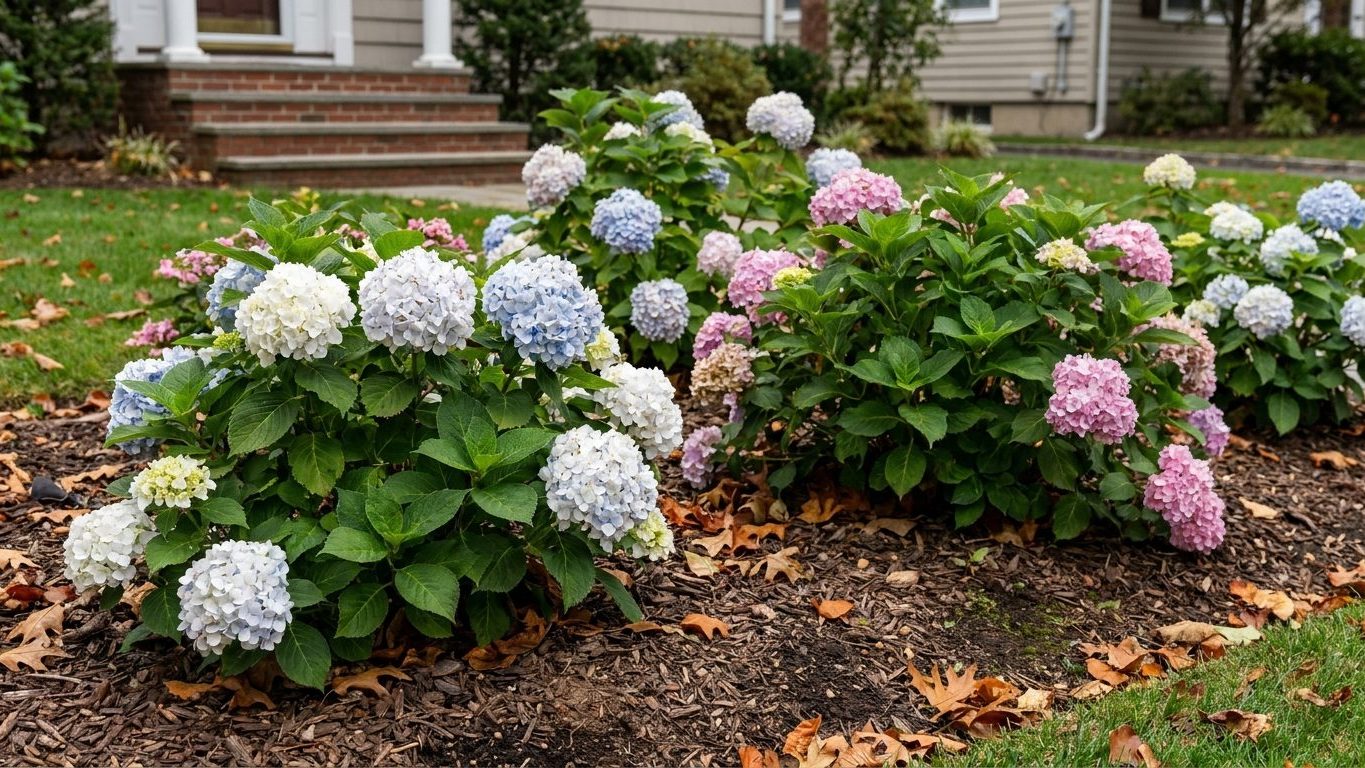
In New York City, the safe window to plant hydrangeas runs March through April and again in September through October, set between the last spring frost (March 23 to April 3) and the first fall frost (November 14 to November 27). Upstate and in the Adirondacks, push both ends of that window out by weeks, not days.
When to prune hydrangeas in New York: The Short Answer
New York’s hydrangea calendar runs on three overlapping windows, plant, fertilize, and prune bigleaf, each one tied to how close the season sits to a frost date.
- March: NOAA NCEI U.S. Climate Normals 1991-2020 puts New York City’s last spring frost at March 23 to April 3, so early fertilizing is fine but planting still carries risk this early.
- April: Once the frost window has fully passed, the plant window is open. This is the safer of the two spring months for setting a hydrangea into the ground.
- May: A second fertilizing round supports the flush of new growth. No planting or pruning is due this month.
- June: The prune bigleaf window opens. Cut only spent blooms, since bigleaf sets next year’s flower buds on this year’s old wood.
- July: Pruning bigleaf continues alongside a third and final fertilizing round for the year.
- August: No task is due. Water deeply through heat instead of fertilizing or cutting anything back.
- September: The second plant window opens. Roots need time to settle before the ground cools for winter.
- October: The last month on the plant calendar. Mulch heavily around anything set in now.
- November: The first fall frost arrives, November 14 to November 27 in New York City. Protect any recent planting with a thick mulch layer before that date.
- December: Dormant season. Leave the roots undisturbed under their mulch.
- January: Still dormant. Check for winter dieback on exposed stems after a hard freeze.
- February: Order new plants and plan bed changes before the March window opens again.
One date decides most of this calendar: the last spring frost. Wait until that window has fully closed before setting roots in the ground, and count backward from the November frost before making the last fall planting.
New York — the year and the numbers
- State
- New York
- USDA zones
- 3b-7b
- Last spring frost
- March 23 to April 3
- First fall frost
- November 14 to November 27
- Annual rain
- 50 in
- Lawn zone
- cool-season
- Source
- NOAA NCEI U.S. Climate Normals 1991-2020, 32F freeze probabilities · New York City
How to Work Out the Dates for Your Own Yard
Working out your own dates starts with the frost window for your area, then bends around whatever your particular yard adds to it.
- Find your closest frost reference: compare your address to New York City’s range of March 23 to April 3, and push both ends out by two to four weeks if you’re upstate or near the Adirondacks.
- Check the pot before the ground: a hydrangea can go into loosened soil once the top few inches have thawed, roughly a week ahead of the last frost date on paper.
- Hold for the full window: don’t transplant until the entire frost range has passed, since a late freeze on new roots does more damage than a delayed planting date ever will.
- Work backward from fall frost: the September and October plant window needs six to eight weeks of root growth before the first fall frost, November 14 to November 27 in the city, earlier upstate.
- Match pruning to bloom type: the June and July prune bigleaf window only works right after flowering, since bigleaf hydrangea sets next year’s buds on old wood by late summer.
Every step above bends around one number, the day the ground can be trusted not to freeze again. Get that date right for your address, and the rest of the calendar falls into place.
New York North to South: How the Dates Shift
USDA Plant Hardiness Zone Map 2023 places New York across zones 3b to 7b, the widest spread of any of the regions below, and that spread is what pushes these dates around.
- New York City and Long Island (the coast, the boroughs, the Island’s south shore): mild ocean air keeps this corner closest to the frost dates named above, and the fall plant window often runs a little longer here than anywhere else in the state.
- The Hudson Valley and the Catskills (Dutchess, Ulster, Greene counties): elevation nudges the last spring frost later and the first fall frost earlier, squeezing the plant window from both ends.
- Western New York and the Great Lakes shore (Buffalo, Rochester, the Niagara frontier): lake effect keeps air milder into fall right along Erie and Ontario, but turns colder just a few miles inland.
- The Adirondacks and the North Country (Lake Placid, the St. Lawrence Valley, the high peaks): the shortest frost-free stretch in the state, where bigleaf hydrangea struggles to survive most winters.
None of these regional shifts replace the actual frost dates for your own county, which is what the state page above tracks region by region.
Mistakes New York Punishes
No blooms after a hard prune

Cutting bigleaf hydrangea back in fall or early spring removes the old wood carrying next year’s buds. Keep pruning inside the June and July window, right after flowering, so new buds have a full season to set.
Frost-bitten new growth in spring
Planting before the last frost window has closed leaves tender roots exposed to a freeze they can’t yet handle. Wait until the full range, March 23 to April 3 in New York City, has passed before digging.
Roots heaved out of the ground
Freeze-thaw cycles common across upstate New York push shallow roots upward over winter. A heavy mulch layer laid down before the November frost keeps soil temperature steady enough to prevent it.
New York Extension Offices and County Contacts
The statewide zone range is only a starting point. Cornell Cooperative Extension keeps county-level advice that adjusts for local soil, snow load, and lake effect closer than any statewide figure can.
- Cornell Cooperative Extension: county-by-county offices that can confirm frost dates and soil conditions for your address.
- Which ones hold up here: a rundown of hydrangea varieties matched to New York’s frost and soil conditions.
- What goes wrong here: the pests and problems that show up most often on New York hydrangeas, season by season.
Check with your county office before the ground freezes, and the calendar above will do the rest.
Common questions
Can I plant hydrangeas in New York in the fall?
Yes, the September and October window works well, as long as there’s enough time for roots to settle before the first fall frost, which lands November 14 to November 27 in New York City and earlier upstate.
Do hydrangeas survive New York winters?
Panicle and smooth hydrangeas handle the state’s 3b to 7b range without much trouble, but bigleaf varieties struggle outside the mildest pockets near the coast and often lose their flower buds to a hard freeze.
When should I stop fertilizing hydrangeas in New York?
July is the last round on the calendar. Fertilizing later pushes soft new growth that won’t harden off before the first fall frost arrives.