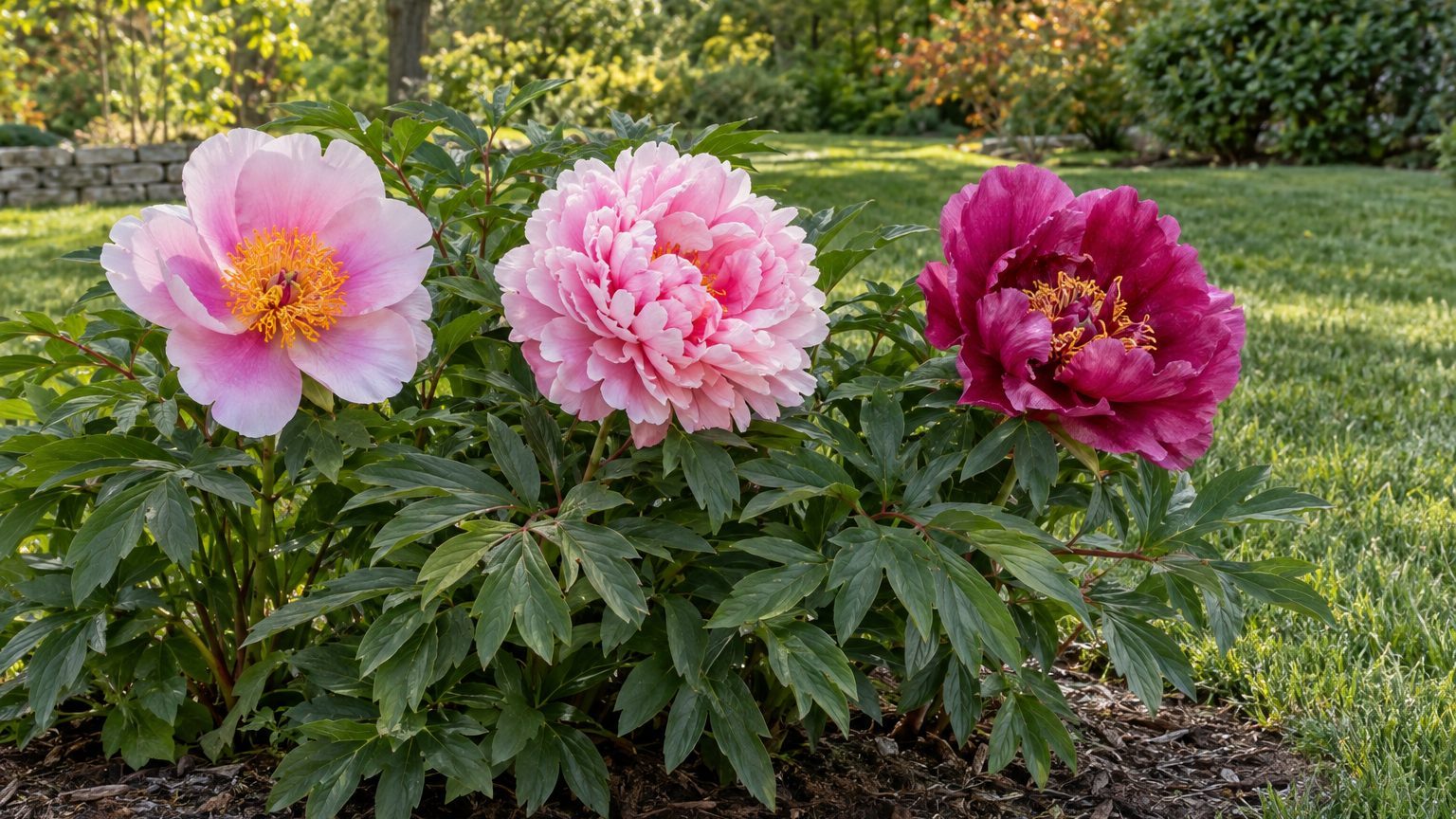
Herbaceous peonies pushing red shoots through cold spring soil are a familiar sight in New Jersey yards, and established plants return each spring. Herbaceous, intersectional and tree peonies all have a place in the state, which sits in zones 6a to 7b on the USDA system, cold enough to give peonies the winter rest they need.
Best Peonies to Grow in New Jersey

Garden peonies, the herbaceous kind, are the dependable choice here, because peonies need a cold winter rest to flower and New Jersey winters supply it. Intersectional and tree peonies also fit, and woodland types suit shade. Planting or dividing is a September or October job, with October as the latest.
Common Garden Peony

The common garden peony (Paeonia lactiflora) is the standard herbaceous form found in most home gardens, and it comes in many flower forms and colors. It dies back each fall and returns in spring, so it is cut back after frost, in October or November, or in March or April instead.
Sarah Bernhardt

Sarah Bernhardt is a popular cut-flower cultivar. It is worth considering for a New Jersey cutting bed, with blooms arriving from May into June.
Karl Rosenfeld
Karl Rosenfeld, Festiva Maxima and Dr. Alexander Fleming are popular landscape cultivars worth considering. Look for a named cultivar if you prefer a labeled plant to an unnamed division.
Intersectional Peony
Also called the Itoh, this is a hybrid of the garden and tree peonies. Herbaceous and intersectional types are the easiest to grow and share the same culture: each fall they die back to the ground, and new growth emerges in spring.
Tree Peony
Tree peonies are woody shrubs that go dormant over winter and renew growth each spring on woody stems. Never cut one back to the ground the way you would a herbaceous peony.
Woodland Peony
The woodland peonies (Paeonia japonica and P. obovata) are best suited to shade gardeners. Give them the corner under a tree where a sun-hungry garden peony would sulk.
Fernleaf Peony
The fernleaf peony (P. tenuifolia) is noted for finely cut, fern-like foliage and crimson red flowers. It is a good pick if you want texture in the bed after the blooms fade.
New Jersey — the year and the numbers
- State
- New Jersey
- USDA zones
- 6a-7b
- Last spring frost
- March 29 to April 6
- First fall frost
- November 4 to November 16
- Annual rain
- 47 in
- Lawn zone
- transition-season
- Source
- NOAA NCEI U.S. Climate Normals 1991-2020, 32F freeze probabilities · Newark
How to Choose a Peony for a New Jersey Garden
Start with the spot and the time you have. Peonies are long-lived perennials that grow reliably year after year, so the right match at planting pays off for a very long time.
Herbaceous and intersectional peonies are easy to grow; woodland peonies suit shade, while tree peonies suit gardeners who want a woody shrub.
| Your situation | What suits it in New Jersey | Why |
|---|---|---|
| Very cold winter in the north | Herbaceous garden peony | It dies back to the ground each fall, and the cold winter rest helps it flower |
| A plant with distinctive foliage | Fernleaf peony | Its finely cut foliage and crimson flowers give a lighter look in the bed |
| Little time for upkeep | Herbaceous or intersectional peony | Both are the easiest to grow and share the same simple routine |
| Shady space | Woodland peony | It is best suited to shade gardeners |
| Need for winter cold | Herbaceous garden peony | Peonies do best where winters are cold and may flower poorly in mild-winter climates |
Tree peonies suit a gardener who wants a woody shrub with permanent stems. Expect a newly planted or transplanted peony to skip blooming its first spring.
Which Peonies Suit Different Parts of New Jersey
Zones 6a to 7b cover the whole state, so the choice shifts a little from one region to the next.
- The Skylands and the Highlands: Winters run colder here, so herbaceous and intersectional peonies fit well, and the cold rest supports flowering.
- Central New Jersey: Garden peonies and intersectional types do well, and woodland peonies fit the shaded corners of older lots.
- The Jersey Shore and the Pinelands: Winters are milder, so peonies get less cold rest and may flower less freely. Lean on herbaceous types and give them a spot that stays cooler than the rest of your garden.
Check your own county, since suburban and rural gardens often see the last spring frost later than Newark, where it falls between March 29 and April 6.
Peony Buying Mistakes to Avoid in New Jersey
Choosing a Type Too Mild for Winter
Peonies need a cold winter rest to flower and may bloom poorly in mild-winter climates. Herbaceous and intersectional peonies are the easiest types to grow.
Planting Too Deep
A peony planted too deep may bloom poorly or not come up at all. Keep the eyes near the soil surface when you plant in September or October, so the roots have time to settle before the cold.
Buying a Pot Without Knowing Its Size
A small potted peony hides its adult spread, and crowding later forces a move. Read the tag for mature size before buying, and leave room. A moved peony may not bloom the first spring, so planting right once saves a season of flowers.
Where to Get Peony Advice in New Jersey
Local help fits the question you have, whether it is a variety, a soil problem or a plant that refuses to bloom.
- Rutgers New Jersey Agricultural Experiment Station publishes gardening guidance for the state, useful before you order plants for fall.
- Your county extension office can answer questions about local conditions, and a visit in late summer leaves time to plan a September planting.
Common Questions
When Do Peonies Bloom in New Jersey?
Peonies bloom from May into June, depending on the variety.
Can You Plant Peonies in Spring?
September or October is the time for planting or dividing, which gives roots time to settle before winter. Planting in early fall gives roots time to settle before winter.
When Should You Cut Back Peonies in New Jersey?
Cut herbaceous peonies back after frost in October or November, or in March or April. Tree peonies keep their woody stems.