Skip to content

Bermudagrass: Zones, Mowing Height and Care

Bermudagrass: Zones, Mowing Height and Care

A bermudagrass lawn goes tan and stops growing when cold weather settles in, then greens up again once the soil warms. It is a warm-season turf that does well across the South and struggles in the northern states. Where it grows, how short to mow it and how to handle each season are covered here.

What Is Bermudagrass?

Bermudagrass is a warm-season grass, so it grows hard in summer heat and rests in cold weather. It is grown throughout the southern United States, and its cold hardiness is rated good, which is why it reaches into the milder edge of the transition zone.

Wear and drought are where it stands apart. Both are rated excellent, so it recovers from foot traffic and carries on through dry spells. Shade is its weak point, rated very poor, and most cultivars will not tolerate it.

It also asks for work. Maintenance is high, and the mowing is very frequent. A new lawn can be started in several different ways:

  • Sod
  • Sprigs
  • Plugs
  • Seed

Where Does Bermudagrass Grow Best?

It does best where summers are long and hot and winters stay mild, and it fades as the cold deepens. A state is not a single zone, so the far ends of a large state can fall on the other side of the line.

  • Sonoran and Mojave deserts: Arizona and Nevada have the heat bermudagrass wants, though conditions still vary within both states. The length of winter dormancy depends on local conditions.
  • Gulf Coast: Texas, Louisiana, Mississippi and Florida are first-choice country. Mild Gulf Coast winters generally favor bermudagrass, though conditions vary across the region.
  • Southern Plains and the Ohio Valley: Oklahoma, Kansas and Kentucky are a compromise, where no grass excels. Cold winters can test bermudagrass in this transition region.
  • Corn Belt and Great Lakes: Nebraska, Iowa, Ohio and Indiana will not hold it. Cold winters make a cool-season grass such as tall fescue or Kentucky bluegrass the better planting in this region.

The state selector just below this section leads to the page for your state, with the months that apply where you live.

How to Care for Bermudagrass Through the Year

Spring Wake-Up

Bermudagrass wakes with soil warmth, not with the last frost, so warm air alone does not mean it is ready. Wait until the lawn is visibly greening across the whole yard before you push it with fertilizer or start a new planting.

Mowing Height

Keep the mower low. The range that covers the extension guidance is 0.75 to 2 inches, much shorter than most cool-season lawns take. Mow often, because this grass grows fast in warm weather and a long gap between cuts means scalping when you finally cut it back.

Summer Heat

Summer Heat — Bermudagrass: Zones, Mowing Height and Care

Heat is when bermudagrass earns its place. Drought tolerance is rated excellent, so a lawn that browns a little in a dry stretch usually comes back without drama. Water deeply when it does look stressed, and keep mowing at the same low height.

Fall

As days shorten and nights cool, growth slows and the color starts to fade. Keep mowing while the grass is still growing, and clear fallen leaves promptly, since a bermudagrass lawn handles shade so poorly that a thick leaf layer can thin it.

Winter Dormancy

A tan lawn in winter is normal dormancy, not death. Cold hardiness is rated good, so the roots usually come through. Keep heavy traffic and piled debris off it where you can, and wait for spring warmth to judge how the lawn came through.

Bermudagrass Diseases, Pests and Weak Points

What is documented is how the grass copes with stress from weather, shade and use.

That already tells you where to focus your attention.

Threat How Bermudagrass handles it
Drought Excellent tolerance
Heavy wear Excellent tolerance
Cold Good hardiness
Shade Very poor tolerance
Upkeep High maintenance, very frequent mowing

Shade is the weak point you can see for yourself. Thin, bare turf under a tree is not a problem a fertilizer will fix. If part of your yard gets little sun, that area is better planted with something else.

Is Bermudagrass Right for Your Yard?

It suits a sunny yard in the South where kids, pets and foot traffic wear down lesser grasses. It fits less well in a shaded yard, a cold northern state, or a household that dislikes frequent mowing.

  • Choose it for full sun, hard use and dry summers, and expect to mow often.
  • Look at a cool-season grass instead if trees shade most of the lawn or winters run cold.
  • Open the page for your state through the selector to see which months fit your local planting and care.

Common Questions

How Much Seed Does a New Bermudagrass Lawn Need?

The extension guidance runs from 1 to 4 lb per 1000 square feet for a new lawn. Sod, sprigs and plugs are the other ways to start it.

Why Do Mowing Heights Differ Between Guides?

Local advice varies. In South Carolina, the suggested height is 0.75 to 1.5 inches, while Illinois, Kansas and Georgia guidance runs 1 to 2 inches. Pick the range that matches your area and your mower.

Will Bermudagrass Grow in a Lawn with Partial Shade?

Poorly. Shade tolerance is rated very poor, and most cultivars will not tolerate it. Plant it only where the lawn gets strong sun for most of the day.
Bahiagrass: Zones, Mowing Height and Care

Bahiagrass: Zones, Mowing Height and Care

Bahiagrass is the coarse, tough turf you see along southern roadsides and on big rural lots, mowed with a rotary mower and left to fend for itself through summer dry spells. It belongs to the lower South, handles heat and drought well, and gives up quickly in cold or shade.

What Is Bahiagrass?

Bahiagrass is a warm-season grass, so it grows hard in summer heat and turns tan when cool weather arrives. It is grown mainly in the lower South and can be started from seed or sod, which keeps the cost of a new lawn down.

What sets it apart is its job. Extension turf specialists treat it as a utility grass for sites where appearance is not a concern and low maintenance is the rule. Expect a coarser, more open look than a dense bermudagrass or zoysia lawn.

Its drought tolerance is rated excellent, and wear tolerance is good. Shade tolerance and cold hardiness are both rated poor, which sets the limits of where it belongs.

Where Does Bahiagrass Grow Best?

Bahiagrass does best where summers are long and hot and winters stay mild, especially in the lower South. The state selector just below this section leads to the page for your own state.

  • Gulf Coast and Florida: Florida, Louisiana and Mississippi are first-choice territory for warm-season grass. Mild Gulf Coast winters generally suit bahiagrass, though conditions vary within each state.
  • Deep South interior: Alabama, South Carolina and Arkansas also favor warm-season turf. Bahiagrass is more exposed to winter injury in colder inland areas than along the Gulf Coast.
  • Southern Plains and the upper South: Oklahoma, Kansas and Tennessee sit in the transition belt, where bahiagrass is a compromise and no grass excels. Colder parts of the transition belt are hard on a grass with poor cold hardiness.
  • Corn Belt and Ohio Valley: Nebraska, Iowa, Ohio and Indiana will not hold bahiagrass. Cool-season grasses such as tall fescue or Kentucky bluegrass are more sensible choices in this region.

A state is not a zone, so a southern corner of a large state can behave like the next region over. Treat the state list as a starting point and check local conditions before you buy seed.

How to Care for Bahiagrass Through the Year

Spring Green-Up

Bahiagrass wakes up late and slowly, following soil warmth rather than the calendar. Hold off on seeding until the ground has warmed for good. For a new lawn from seed, spread 5 to 10 lb per 1000 square feet so the stand fills in before summer.

Mowing Height

Keep the mower at 3 to 4 inches. The taller cut helps shade the soil and supports the roots that carry it through dry spells. Bahiagrass sends up tall seedheads that a dull blade tends to tear, so sharpen the blade before the season starts.

Summer Heat

Summer Heat — Bahiagrass: Zones, Mowing Height and Care

Summer is where bahiagrass earns its place. With excellent drought tolerance, it usually needs far less watering than other southern turf. Water when the lawn shows persistent wilting, and resist the urge to feed it heavily, since bahiagrass is valued for low maintenance.

Fall Slowdown

Growth slows as nights cool, so mowing eases off. Skip late feeding that would push tender growth just before cold weather. The poor cold hardiness means a soft, rushed stand heading into winter is the most exposed.

Winter Dormancy

Dormant bahiagrass turns tan, and that is normal. Keep heavy traffic off the lawn during the coldest stretch, because dormant turf recovers slowly. In colder fringe areas, a patchy spring is the usual sign that winter lows went beyond what it tolerates.

Bahiagrass Diseases, Pests and Weak Points

The documented weak points of bahiagrass are about climate and light rather than any named disease or insect.

The ratings that are documented give a clear picture. Heat and dry spells barely bother it, while shade and cold are where it fails.

Threat How Bahiagrass handles it
Drought Excellent tolerance
Foot traffic Good wear tolerance
Shade Poor tolerance
Cold winters Poor hardiness

Thin grass under trees and winter dieback in cold years are the problems you are most likely to see. Neither is cured with fertilizer or extra water. Use a shade-suited plant under trees and a cold-hardy grass where winters are too severe.

Is Bahiagrass Right for Your Yard?

It suits a sunny, open yard in the lower South where you want a grass that survives dry summers with little fuss. It fits poorly under trees, in cold-winter states, or on a showpiece front lawn.

  • Choose it for full sun, light to moderate foot traffic and minimal watering and mowing effort.
  • Skip it for shady lots or northern states, and plant tall fescue or Kentucky bluegrass where winters bite.
  • Open the state selector below this section before you buy seed or sod, so your planting dates and grass choice match your state.

Common Questions

Can You Grow Bahiagrass from Seed?

Yes. Bahiagrass is established by seed or sod, and for a new lawn from seed the rate is 5 to 10 lb per 1000 square feet.

Does Bahiagrass Need Much Water?

Not usually. Its drought tolerance is rated excellent, so it often stays alive through dry stretches that stress other southern grasses.

Will Bahiagrass Grow in Shade?

Poorly. Shade tolerance is rated poor, so grass under dense trees will thin out. Choose a different plant for those spots.

Take-all Patch in Lawns: Signs, Treatment and Prevention

Take-all Patch in Lawns: Signs, Treatment and Prevention

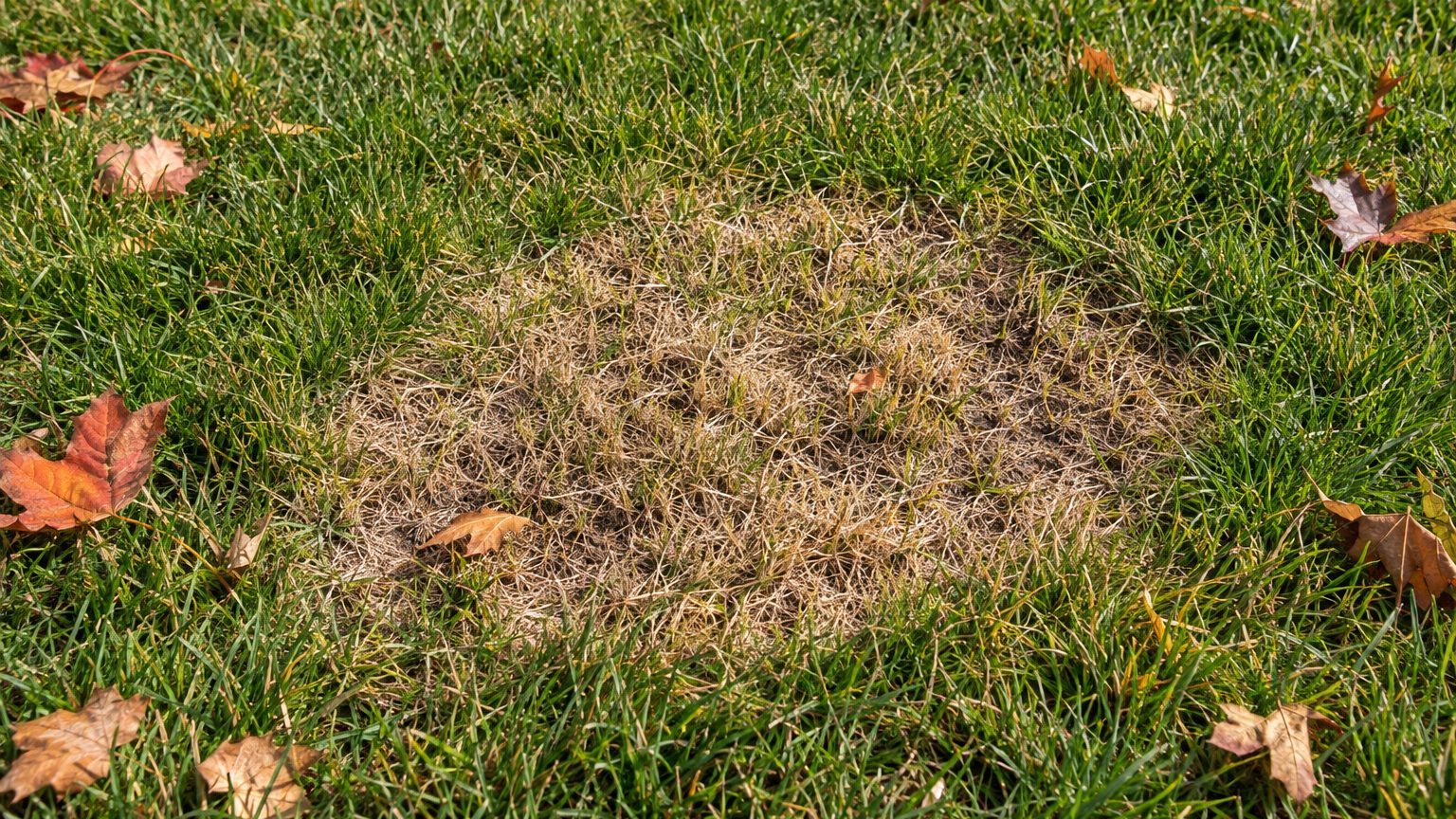
Circular brown patches may be take-all patch, a root disease caused by a fungus; in Pennsylvania, infection occurs in cool, moist weather and symptoms become most conspicuous after hot, dry stress. It attacks the roots rather than the leaves, so the grass above simply runs out of water and dies in rings. Treatment is mostly about soil and stress, not a quick spray.

Take-all Patch Symptoms

Take-all Patch on a lawn

Look for circular damage because the shape helps distinguish this disease from other turf problems.

  • Circular or ring-shaped dead areas, from a few inches up to 3 feet or more across, are a key sign.
  • Young patches start small and light brown or reddish brown before they spread outward.
  • Older patches are often slightly sunken, so the lawn dips where the grass has died.
  • A patch can grow to over 3 feet in diameter if it goes unchecked.
  • Roots pulled from the edge of a patch look dark and rotted, which fits a disease that works below the surface.

Because the damage shows up on top only after the roots have already suffered, the patches often seem to appear overnight.

Lawn Problems Mistaken for Take-all Patch

Necrotic ring spot is a close lookalike because both diseases leave rings and patches in the turf. Each disease calls for its own management, so a careful look is worthwhile.

Take-all patch can also produce a frog-eye pattern, with green grass left alive at the center of a dead ring. That is the same signature necrotic ring spot is known for, which is why the center alone settles nothing.

Looks like How to tell them apart
Necrotic ring spot Dead rings with green centers, much like a frog-eye. Check the roots and the grass type, and note whether the patches are sunken.
Drought or heat stress Brown, irregular areas that follow dry ground. Check for round shape and rotted roots, which stress alone does not produce.

Kentucky bluegrass and creeping red fescue are highly resistant to take-all patch, so rings in those grasses point toward necrotic ring spot or another cause. When the diagnosis stays unclear, your state extension office can examine a sample.

What Causes Take-all Patch

A soil fungus causes the disease. In Pennsylvania, its runner hyphae colonize and infect root systems under cool, moist conditions in fall and spring. By the time the lawn shows color loss, much of the root system is already damaged.

Timing varies by region. According to UC IPM, University of California, the disease principally occurs in late fall and winter, when air temperatures are 50° to 60°F and soils are wet or moist. In Utah, symptoms typically appear in late spring or early summer, and in severe infections they may show in fall as well as in spring.

Stress makes the damage worse. In Pennsylvania, symptoms are most conspicuous after turf has been stressed during periods of hot, dry weather. Soil acidity matters too, because high pH soils favor the fungus, which is why the treatment below starts with the soil rather than the grass.

How to Treat Take-all Patch

No single quick fix clears the disease, so treatment works on the soil and the conditions around the roots.

  1. Test the soil pH, so you know whether acidity is part of the problem.
  2. Lower a high pH gradually if needed. According to Penn State Extension, use an acidifying fertilizer on soils above pH 6.5, aiming for 5.5 to 6.0.
  3. According to Penn State Extension, apply that fertilizer at low rates and water it in during spring and fall, since high rates can burn turf in hot weather above 80°F.
  4. Keep the lawn evenly watered through dry spells, so stressed roots are not pushed further.
  5. Reseed or overseed damaged patches with a resistant grass once conditions are right, because sunken dead areas will not refill alone.

According to Utah State University Extension, maintaining soil pH around 5.5 to 6.0 reduces disease severity. For fungicide choices that are approved where you live, ask your state extension service.

How to Prevent Take-all Patch

Prevention follows local conditions, with soil work timed to the season in your region.

  • In Pennsylvania, check soil pH in spring and plan any acidifying fertilizer at a low rate, watered in.
  • In Utah, watch for new rings in late spring and early summer, when symptoms typically appear.
  • During hot, dry weather in Pennsylvania, water deeply and avoid extra stress, since symptoms are most conspicuous after turf has been stressed.
  • In Pennsylvania, repeat a light, watered-in acidifying application in fall if your soil pH tests high.
  • In late fall and winter in California, watch wet lawns closely, because that is when the disease principally occurs.

Choosing resistant grasses such as Kentucky bluegrass or creeping red fescue when you reseed lowers the risk further.

Common Questions

Can Take-All Patch Kill an Entire Lawn?

It usually damages the lawn in rings that widen over time, so a large area can be affected if the disease is left alone. Patches can grow to over 3 feet across, and older patches are often slightly sunken.

Does Take-All Patch Come Back Every Year?

It can return when the same wet, cool or stressed conditions come back, because the fungus stays in the soil. Managing soil pH and stress is the way to lower the odds.

Should You Reseed Right Away?

Reseed after you have corrected the soil conditions, not before. Seed placed into the same high pH, stressed soil can be infected again.

Summer Patch in Lawns: Signs, Treatment and Prevention

Summer Patch in Lawns: Signs, Treatment and Prevention

A ring of straw-colored grass opening up in the heat of midsummer, with green turf still standing in the middle and all around it, is the classic look of summer patch. In North Carolina, the fungus begins attacking the roots in spring, before symptoms appear above ground. Because the damage is done underground, the calendar and the soil temperature matter more than any single glance at the lawn.

Summer Patch Symptoms

Summer Patch on a lawn

Summer patch shows up in hot weather as patches and rings, and a few details separate it from ordinary heat stress.

  • The outer edge of an active patch is usually orange or bronze, which sets it apart from the plain tan of dried-out turf.
  • Circular patches or rings run from 6 inches to 3 feet across, and some have green grass left in the center.
  • Blades in the affected area turn from dull green to straw as the roots below stop delivering water.
  • In North Carolina, symptoms typically appear in early to mid-July, and the lawn can show them anywhere from June to September.
  • The patches come back in the same spot year after year, often wider than before.

Pull up a handful of turf from the edge of a patch and look at the roots, which should be dark and brittle rather than white and firm.

Lawn Problems Mistaken for Summer Patch

One disease is close enough to fool nearly everyone, and it shares the same rings and the same bluegrass lawns. The difference is mostly a matter of timing, so note when the damage first appeared.

Looks like How to tell them apart
Necrotic ring spot: rings and patches of dying turf, often in Kentucky bluegrass Symptoms are virtually indistinguishable by eye, but necrotic ring spot occurs at cooler temperatures, so rings that appear in spring or fall point toward it and rings in midsummer heat point toward summer patch

Years ago, both diseases were lumped together under the name Fusarium blight, and you may still see that label on older lawn advice. Plain drought stress and pet urine can also leave tan spots in hot weather. Those tend to lack the orange or bronze rim and the repeating ring shape, and a patch that does not return in the same place the next summer was probably not this disease.

What Causes Summer Patch

A soil fungus causes it, one that lives on and in the roots, stolons and rhizomes of the grass. It starts the infection in spring, when the soil warms and stays warm. According to University of Illinois Extension, the first root infections occur once soil temperatures settle at 65 to 70 F at the 2-inch depth. According to NC State Extension, the fungus begins to attack when soil temperatures reach 65°F.

Nebraska uses a similar mark as its trigger for preventive work: soil at a 2-inch depth in mid afternoon reaching 65°F for 5 consecutive days. That gives you a practical signal, since a cheap soil thermometer tells you more than the date on the calendar.

The grasses at risk are annual bluegrass, Kentucky bluegrass and fine fescues. That makes it mainly a problem for cool-season lawns, which is why it turns up in the Upper Midwest, the Mid-Atlantic and the transition zone, where a bluegrass lawn meets hot summers. Symptoms appear after the infection, when summer heat and dry spells ask more of roots that are already damaged.

How to Treat Summer Patch

Treatment combines practices that protect the roots you still have. Your state’s extension service can tell you which fungicides are approved where you live, so ask there before buying anything.

  1. Confirm the diagnosis by checking the patch edge for orange or bronze color and the roots for dark, brittle tissue, so you do not treat a different problem.
  2. Mow at 2-3 inches, which is the range Utah recommends, so the grass keeps enough leaf to shade the soil and feed the roots.
  3. Cut often enough that only 30-40% of the leaf length is removed per mowing, because heavy scalping stresses turf that is already struggling.
  4. Water deeply when the lawn needs it, rather than in light daily sprinklings, so roots follow the moisture downward instead of staying shallow.
  5. Feed with restraint, since in California the advice is a total of 4 to 6 pounds of actual nitrogen per 1,000 square feet per year, which keeps growth steady without pushing soft, weak blades.
  6. According to UC IPM, University of California, avoid applying more than 1 pound of actual nitrogen per application, so the lawn does not get a surge that its damaged roots cannot support.

Where a fungicide is warranted, timing matters more than quantity. It works as a preventive measure applied in spring as the soil warms, not as a rescue once the rings have turned tan. Both summer patch and necrotic ring spot are difficult to control, so expect gradual improvement rather than a quick fix.

How to Prevent Summer Patch

Prevention follows the soil more than the calendar, because the fungus wakes up when the ground warms. Care through the year should keep roots deep and the lawn lightly stressed.

  • In Illinois, monitor soil temperature at the 2-inch depth in spring so you know when infection season begins.
  • Where preventive fungicide treatment is warranted in Nebraska, time it to the local soil-temperature guidance.
  • Through late spring and early summer, mow high and water deeply but infrequently, so roots grow down before the hot weather arrives.
  • In midsummer, when symptoms appear, avoid scalping and heavy fertilizer, which can push growth the roots cannot support.
  • In early fall, when temperatures ease, seed or overseed thin spots with a blend that fits your region so the turf thickens before winter.

Choosing grass types carefully also helps over time. Because annual bluegrass, Kentucky bluegrass and fine fescues are susceptible, choose a grass blend suited to your area.

Common Questions

How Fast Do Summer Patch Rings Grow?

Slowly. The rings expand about 2 to 4 inches per year, so a small patch can gradually become a noticeable circle.

Is Summer Patch the Same as Fusarium Blight?

Not anymore. Fusarium blight was once an unexplained disease complex, and it was later split into summer patch and necrotic ring spot, which is why older advice often blends the two.

How Much Water Should Follow a Fungicide Application?

According to University of Illinois Extension, drench the product into the soil right after applying it, using 0.5 to 1.0 inches of water per 1,000 square feet. That carries it down to the roots where the fungus is working.

Spring Dead Spot in Lawns: Signs, Treatment and Prevention

Spring Dead Spot in Lawns: Signs, Treatment and Prevention

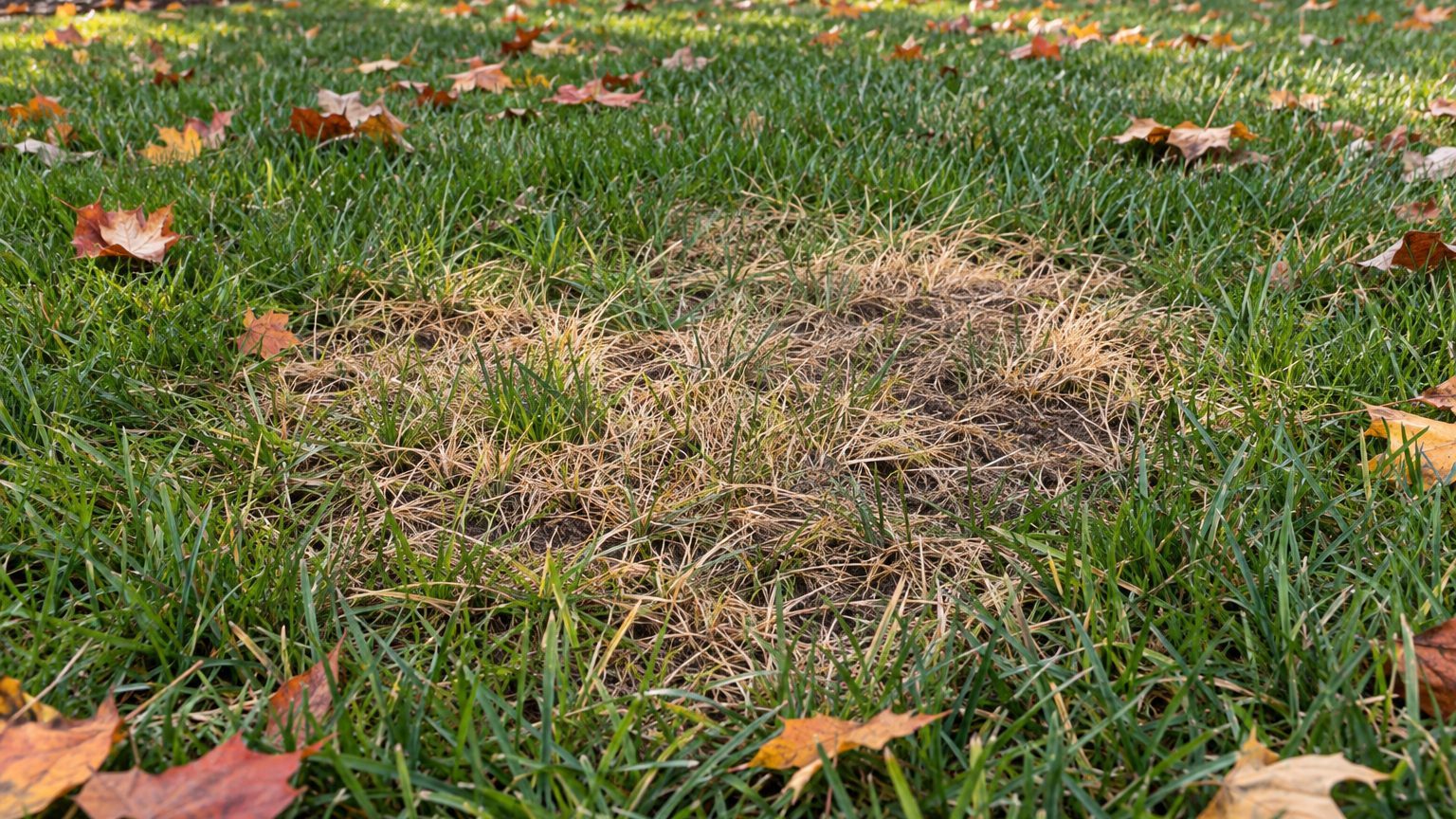
When bermudagrass wakes up in spring, some lawns show bleached, straw-colored circles in the middle of otherwise green turf. Those dead circles are spring dead spot, a root disease that harms the grass beneath the soil surface well before any symptoms show up in spring. Recognizing the patches and knowing when to act can help keep the damage from returning.

Spring Dead Spot Symptoms

Spring Dead Spot on a lawn

The clearest clue is a circle of dead grass that shows up just as the rest of the lawn greens up.

  • Well-defined, round patches of bleached, straw-colored grass appear in spring, with healthy turf right up to the edge.
  • Patches may be 6–12 inches in diameter, and some are more than 3 feet across.
  • Neighboring spots can run together, leaving large irregular dead areas instead of tidy circles.
  • The damage becomes visible when growth resumes after winter dormancy and the surrounding grass greens up.
  • Bermudagrass is the usual victim, though zoysiagrass and buffalograss can show the same circles.

Pull on the dead grass and you will find the roots, runners and crowns beneath it are damaged, which is why the patch stays bare while the grass around it fills in.

Lawn Problems Mistaken for Spring Dead Spot

Two other problems leave dead grass in spring, and they are easy to mix up with this disease. You can begin to sort them out by looking at the shape of the damage and checking the soil.

Looks like How to tell them apart
Winter-kill: dead, brown grass as the lawn greens up The damage forms broad, uneven areas, often in exposed or poorly drained ground, instead of sharp-edged circles
White grub injury: thinning, dying turf in patches The sod lifts like a loose carpet with few roots holding it, and curled grubs turn up when you dig a small square of soil

If the patches are round, sharply edged, in warm-season grass, and the roots are damaged but no grubs are present, spring dead spot is the likelier cause. Digging at a patch edge to check the roots and soil is more useful than guessing from above.

What Causes Spring Dead Spot

Fungi that live in the soil attack the roots, stolons, rhizomes and crowns of warm-season grass. In Arkansas, that colonizing starts in late summer or fall and picks up again in spring when soil temperatures range from 55º-70ºF.

Winter weather changes how bad the patches look. In South Carolina, symptoms are worse after cold, wet winters, while a warm and dry winter causes less damage to the lawn.

The grass matters as much as the weather. Spring dead spot is considered one of the primary diseases of bermudagrass, and common bermudagrass and its hybrids are affected. Zoysiagrass and buffalograss can also get it. In South Carolina, infections resume the following spring as the soil warms again, so a lawn that has had patches once can have them again.

How to Treat Spring Dead Spot

Treatment is mostly about helping the surviving grass fill in the dead circles once it is actively growing.

  1. Confirm the diagnosis by digging at the edge of a patch, so you know you are treating a root disease and not grubs or winter injury.
  2. Wait for the lawn to start growing, because warm-season grass cannot recover while the soil is still cool and the plants are dormant.
  3. Apply a quick-release nitrogen fertilizer at 1 lb N/1000 sq.ft. in late spring, which in Arkansas has been shown to hasten recovery from spring dead spot damage.
  4. Water the patches through dry spells, so the runners growing in from the edges have moisture to root into new ground.
  5. Rake out dead thatch and loose debris from bare areas, so new runners can reach the soil.
  6. Ask your state extension office whether any fungicide is labeled for home lawns in your state, since registrations differ from place to place.

Surviving grass can fill in dead areas once it is actively growing, and plugs or sod can repair areas that remain bare after the soil warms.

How to Prevent Spring Dead Spot

Prevention works best when it follows the lawn’s year, because the disease builds in fall and shows in spring.

  • In early spring, test the soil and check its pH. According to University of Arkansas Extension, ammonium sulfate is used when the pH is higher than 7.0, and it can bring the soil down to a range of 6.0 to 6.8.
  • Through the summer months, feed the lawn on schedule. According to Clemson Cooperative Extension, fertilize the lawn 3 times during the summer months, but do not apply more than 1 pound of actual nitrogen per 1000 square feet per application.
  • In Arkansas, keep the grass from being stressed in late summer and fall by mowing at the usual height and watering during dry spells.
  • In South Carolina, keep leaves raked and low spots draining before winter, since symptoms are worse after cold, wet winters.
  • In South Carolina, check the lawn closely as it greens up after a cold, wet winter.

In South Carolina, lawns that have had patches deserve close attention the following spring.

Common Questions

Why Do the Patches Show Up in Spring If the Infection Began Months Earlier?

In Arkansas, the fungi start colonizing the roots in fall, before the damage becomes visible in spring. The dead circles become visible only when the rest of the lawn begins growing again.

Is Spring Dead Spot Milder After a Mild Winter?

Usually, yes. In South Carolina, a warm, dry winter tends to cause less damage than a cold, wet one, though the fungi may still be present in the soil.

Should You Reseed or Resod the Dead Circles Right Away?

Give the lawn time to resume active growth before deciding. Warm-season grasses spread by runners, which can help patches close from the edges once the soil warms and the lawn is fed. Plugs or sod can help with bare areas that stay open after that.

Red Thread in Lawns: Signs, Treatment and Prevention

Red Thread in Lawns: Signs, Treatment and Prevention

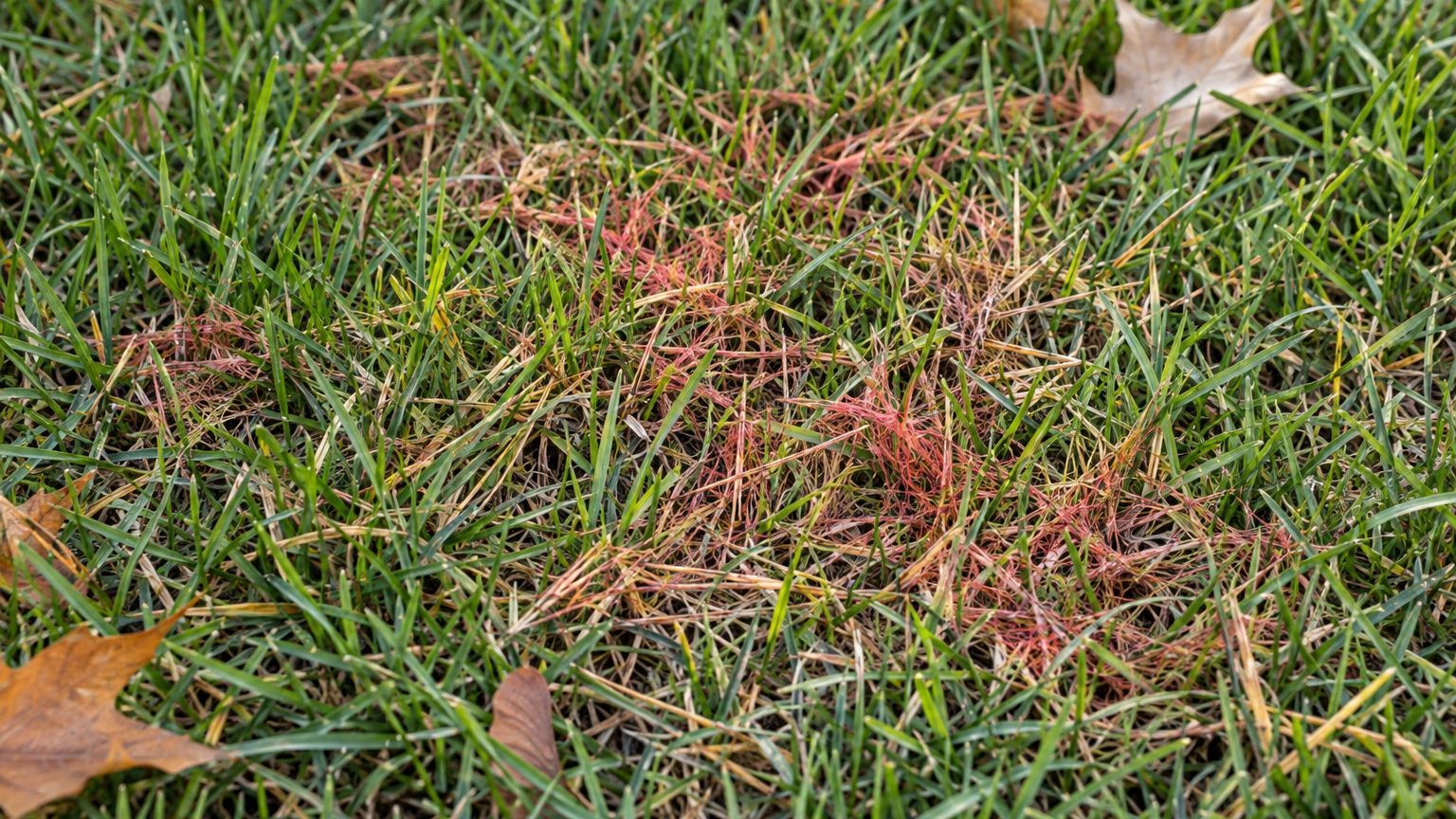
Pinkish-red threads poking out of the grass tips point to red thread in a lawn; timing varies by region. The fungus rarely kills grass, and it fades as the weather dries and the soil gets proper feeding. Spotting it correctly helps you adjust lawn care.

Red Thread Symptoms

Red Thread on a lawn

Look closely at the leaf tips, because that is where the disease gives itself away.

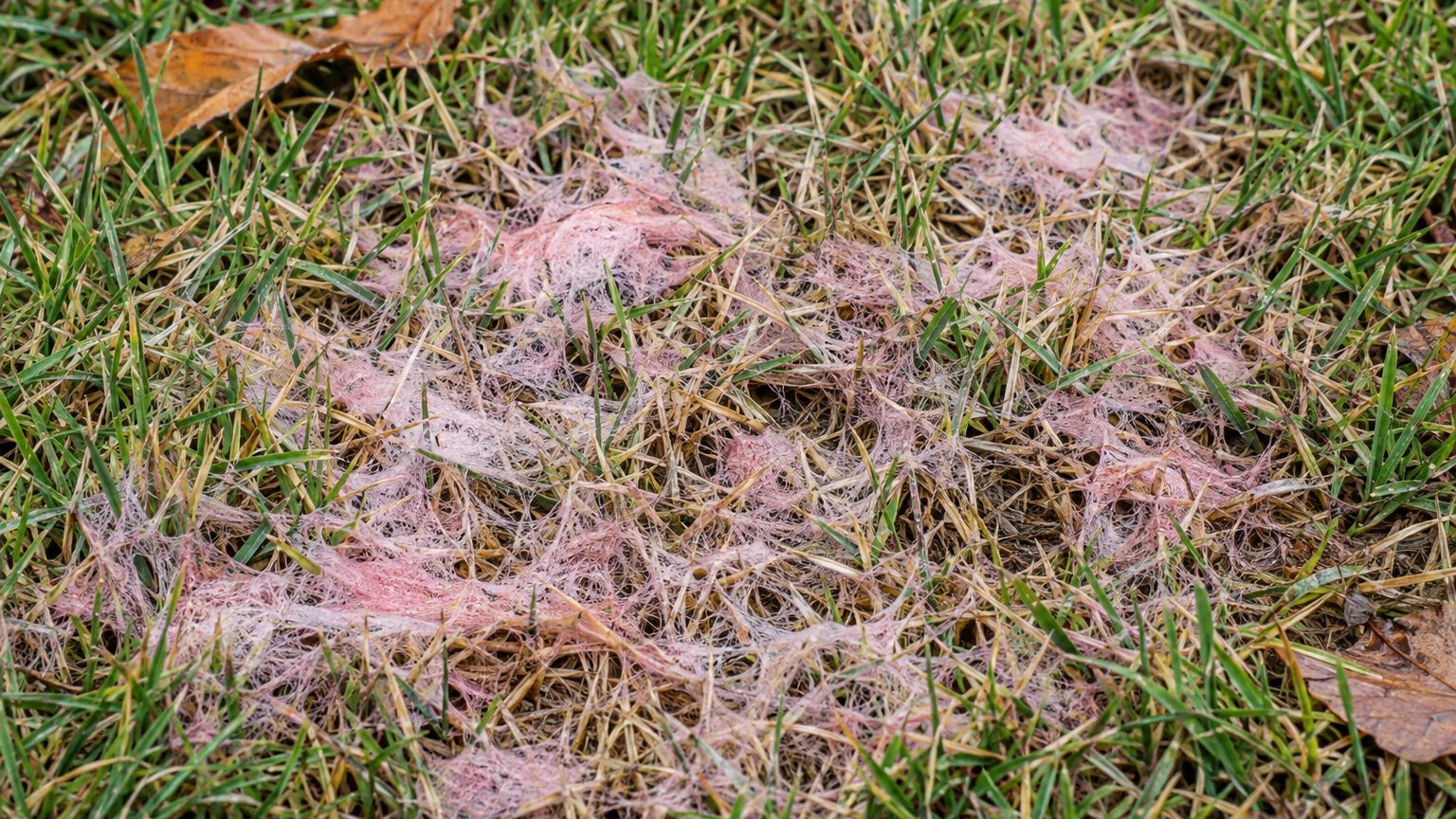
  • Bright red, thread-like strands stick out from the tips of affected leaves, each 1/16 to 1/4 inch long.
  • The strands are fungal growth, so they look like fine needles or antlers rather than a stain on the blade.
  • The lawn shows spots, circles or patches, often 4 to 12 inches across at first.
  • Patches can be circular or irregular, and some grow to 2 feet in diameter.
  • From a distance, the turf looks bleached or tan with a pink-red cast, as if scorched.

Look closely at the leaf tips for bright red, thread-like strands.

Lawn Problems Mistaken for Red Thread

Two other lawn diseases pass for red thread from standing height. Both leave straw-colored patches, so the leaf tips and the lawn’s recent weather history matter more than patch color.

Pink patch is a close relative in symptoms, and it often shows up in the same patches as red thread, so you may be looking at both at once.

Looks like How to tell them apart
Pink patch Pink patch has similar symptoms and often occurs alongside red thread. It often grows alongside red thread.
Dollar spot Small tan spots that run together in the lawn, but the leaf tips carry no bright red strands. Red thread shows those strands on damp blades.

When the strands are present, red thread is in the mix, whatever else is going on. When they are missing, think pink patch or dollar spot before reaching for any treatment.

What Causes Red Thread

A fungus causes it, and it takes hold when cool, wet weather meets hungry turf. According to NC State Extension, the fungus can cause disease anywhere from 40 to 80°F and develops most rapidly at approximately 70°F. In Pennsylvania, it tends to appear at 65° to 75°F during long rainy or humid spells in late spring and early summer.

Season matters by region. In North Carolina, symptoms show up from March to June and again from September to December, so both spring and fall are fair game. Illinois sees patches during prolonged warm, very humid weather at 65-75 F.

Grass type and feeding decide how badly a lawn is hit. Perennial ryegrass, fine fescue and Kentucky bluegrass are the usual hosts, especially when they do not get enough nitrogen fertilizer. Tall fescue is a host too, though it is less susceptible, as are hard fescue, sheep fescue, bermudagrass and zoysiagrass. Fine-leaved fescue and perennial ryegrass are very susceptible.

How to Treat Red Thread

Most lawns recover with a change in care, so start with the gentlest steps and add anything stronger only if the patches keep spreading.

  1. Confirm the diagnosis by checking leaf tips for red strands on damp grass, so you do not treat dollar spot or pink patch by mistake.
  2. If the lawn is underfed, correct the nitrogen deficiency according to local guidance.
  3. In North Carolina, irrigate between midnight and 6 AM to prevent prolonged leaf wetness.
  4. In North Carolina, never irrigate in the late afternoon or early evening.
  5. Mow regularly with a sharp blade.
  6. Call your state extension office if the disease keeps returning, to learn whether a fungicide is approved in your state and when to use it.

In Illinois, where necessary, fungicide applications made at 7- to 21-day intervals during moist spring and fall weather are effective, but the label and local rules come first.

How to Prevent Red Thread

Prevention should follow the seasons when red thread is active in your region.

  • Where the lawn is underfed, correct the nitrogen deficiency according to local guidance.
  • In North Carolina, irrigate between midnight and 6 AM to prevent prolonged leaf wetness.
  • Keep the grass upright and airy, and do not leave wet clippings in clumps.
  • Perennial ryegrass and fine fescue are especially susceptible, so watch them closely when favorable weather returns.
  • In North Carolina, never irrigate in the late afternoon or early evening.

When reseeding or renovating, choosing tall fescue, hard fescue or zoysiagrass over perennial ryegrass and fine fescue cuts the odds of a repeat outbreak.

Common Questions

Does Red Thread Kill Grass?

Rarely. It thins and bleaches leaves, but the crowns and roots usually survive, and the lawn fills back in once growth picks up with feeding and drier weather.

Can Red Thread Come Back Every Year?

Yes, especially on ryegrass, fine fescue or bluegrass lawns that go hungry. Red thread can return when susceptible grass is underfed and favorable weather returns.

Which Grasses Resist Red Thread Best?

Bermudagrass, sheep fescue, tall fescue, hard fescue and zoysiagrass are less susceptible than perennial ryegrass or fine-leaved fescue. Pick from that group when you overseed a patchy lawn, and match the grass to your climate.

Pythium Blight in Lawns: Signs, Treatment and Prevention

Pythium Blight in Lawns: Signs, Treatment and Prevention

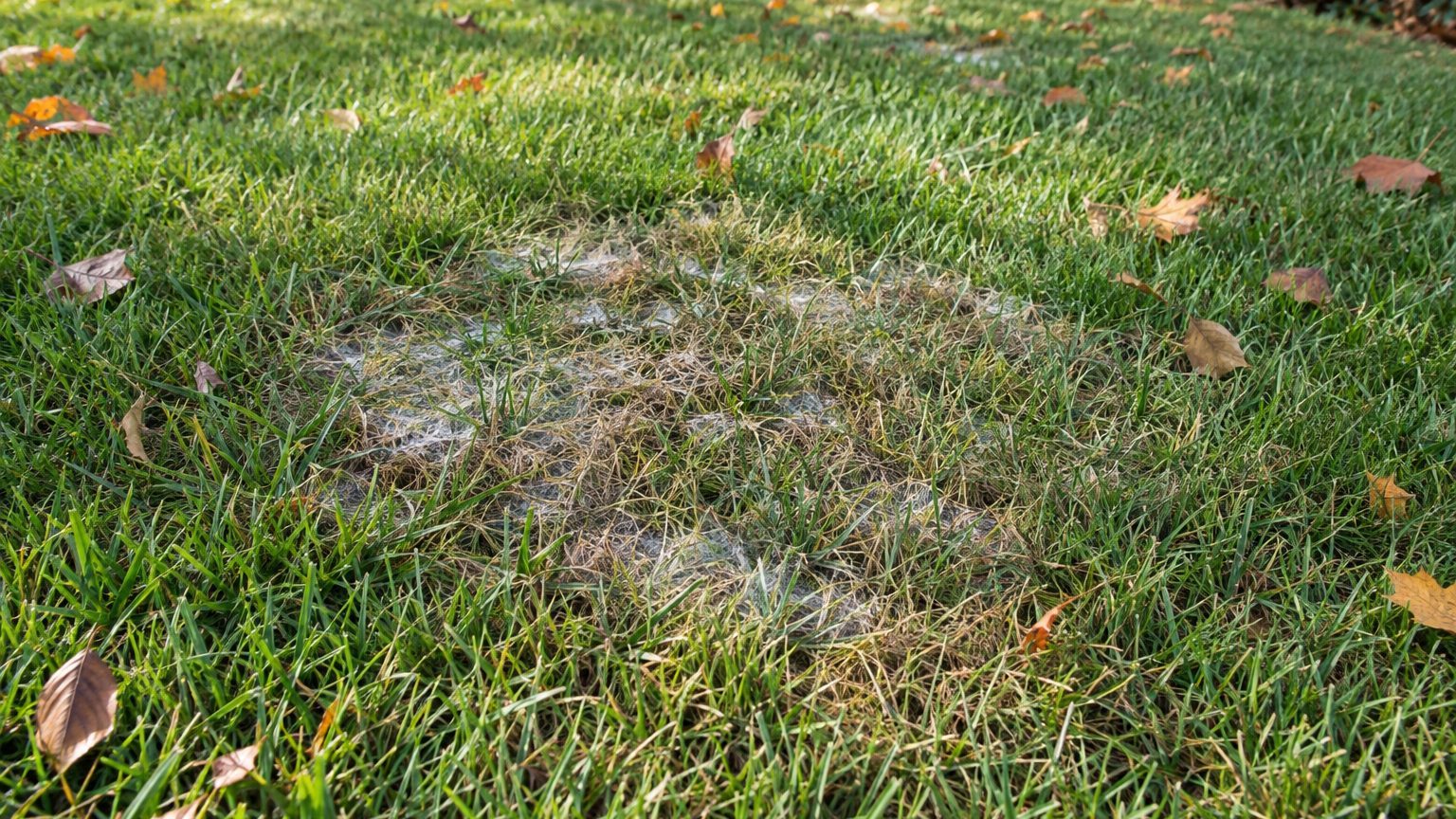
A patch of turf that looks wilted and greasy after a hot, sticky night, then collapses quickly, is the classic picture of Pythium blight. It is a fungus-like disease that attacks grass when heat, humidity and wet leaves stack up in summer. Catching it early and changing how you water, mow and feed are what protect the lawn.

Pythium Blight Symptoms

Pythium Blight on a lawn

The sign that sets this disease apart is the speed and the setting: small sunken patches that appear in hot, humid weather and spread fast.

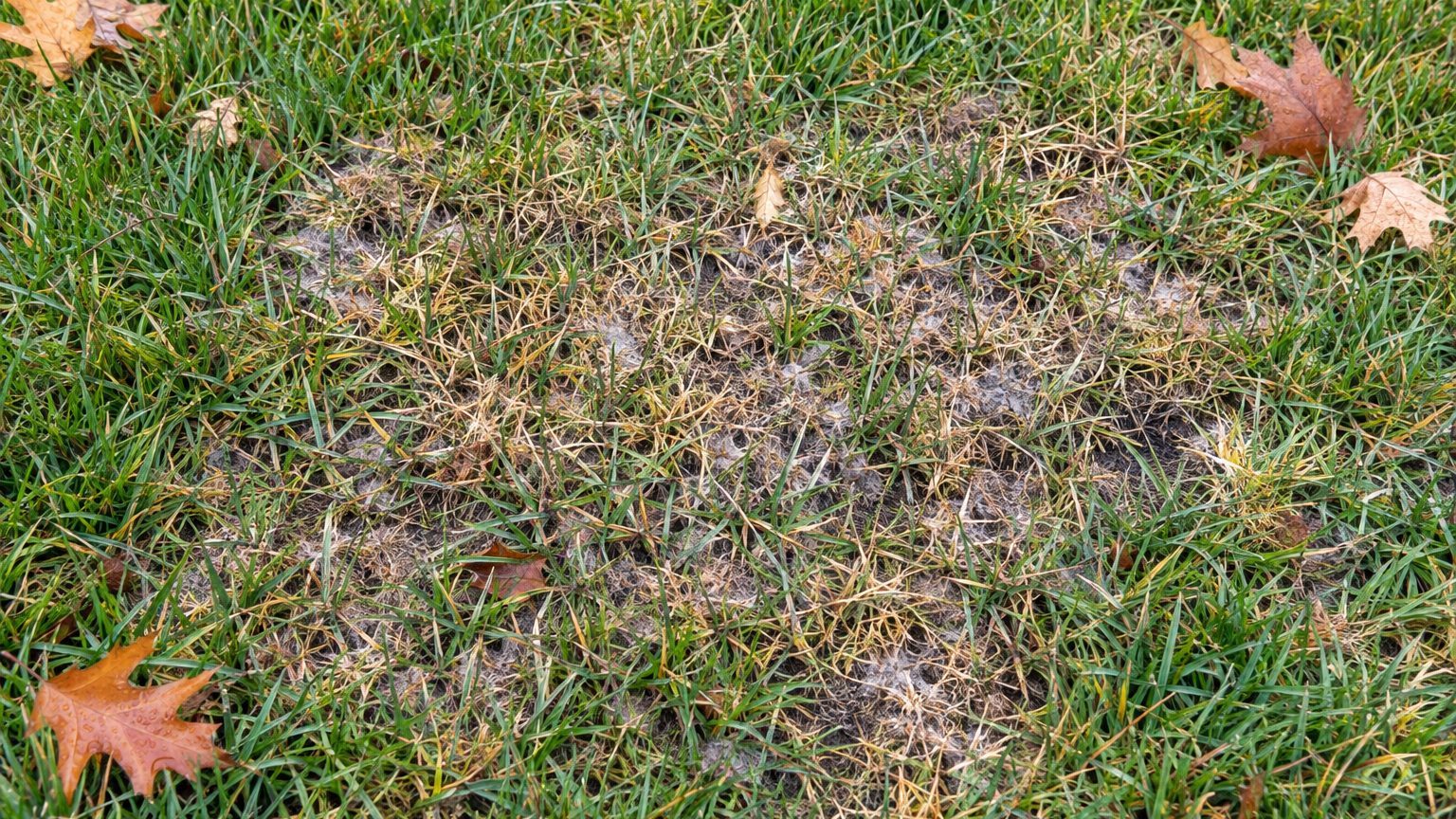
  • In cool-season turf, the first patches are small, sunken and circular, reaching up to 1 foot across.
  • Across the lawn the damage is irregular, with patches of 4 to 12 inches scattered through the stand.
  • Gray, cottony threads may show on the affected grass when the leaves are wet or the air is very humid.
  • Perennial ryegrass and annual bluegrass can be badly damaged in 2 to 3 days when conditions are right.
  • Severe outbreaks in cool-season lawns are often found the morning after a late afternoon or early evening summer thunderstorm.

Look for the cottony growth early in the morning, while dew is still on the blades, because it fades as the grass dries.

Lawn Problems Mistaken for Pythium Blight

Dead or thinning grass in summer can have other causes, so a patch alone proves nothing. Pair what you see with where and when it shows up.

Leaf spot can resemble Pythium blight, so an accurate diagnosis matters before you change anything.

Looks like How to tell them apart
Leaf spot Spotted blades and thinning turf, but no gray cottony growth on wet mornings and no sunken circular patches spreading after a hot, humid night.
Pythium blight Sunken circular patches up to 1 foot across, with gray cottony threads in wet or very humid conditions and fast collapse in hot, muggy weather.

If the patches keep growing after a storm and the grass looks soaked and collapsed, Pythium is the likelier suspect. For a firm answer, your state extension office can confirm the cause from a sample.

What Causes Pythium Blight

Pythium blight is caused by Pythium fungus-like organisms that live in the lawn and strike when the weather turns hot and wet. In cool-season grasses it is most severe in hot, humid or rainy weather with warm nights, typically when temperatures run from 86 to 95°F.

Warm nights matter as much as hot days. In the Mid-Atlantic, the disease thrives at 86 to 95°F with nights staying above 68°F, and humidity above 90% for 14 hours or longer with a minimum of 68°F sets the stage for an outbreak.

Every turfgrass can be attacked, and both cool-season and warm-season lawns can be hit, though cool-season grasses suffer more. Warm-season lawns are at risk through long humid, rainy or cloudy stretches whenever temperatures stay above 50°F. In North Carolina, symptoms show up from June to August.

How to Treat Pythium Blight

Once patches appear, the goal is to dry the grass out and stop feeding the disease while the weather breaks.

  1. Confirm the diagnosis before taking action, since leaf spot looks similar and needs a different approach.
  2. Hold off on fertilizer, because cool-season lawns should get no more than 0.25 lb N per 1,000 square ft when conditions favor the disease.
  3. In North Carolina, water in the early morning hours, before sunrise, to reduce prolonged leaf wetness.
  4. Keep mowing at the recommended height for your grass, such as 3 inches for a tall fescue home lawn, so the turf is not stressed further.
  5. If the damage keeps spreading, check local rules before considering a fungicide.

How to Prevent Pythium Blight

Prevention follows the season, with most of the work done before the first hot, muggy stretch.

  • For a tall fescue home lawn, maintain the recommended 3-inch mowing height.
  • In North Carolina, water in the early morning hours, before sunrise, to reduce prolonged leaf wetness.
  • When hot, humid weather arrives, hold nitrogen to 0.25 lb N per 1,000 square ft or less on cool-season grass.
  • In cool-season turf, check for sunken patches or gray cottony growth the morning after a late afternoon or early evening summer thunderstorm.
  • During warm, wet, cloudy spells in the warm-season range, keep watching, because those lawns stay at risk whenever temperatures hold above 50°F.

Avoid putting extra water on a lawn that already stays damp, and be cautious with ryegrass and annual bluegrass, which suffer most.

Common Questions

Can Pythium Blight Kill a Whole Lawn?

It can do heavy damage quickly in perennial ryegrass and annual bluegrass, which can be hurt in 2 to 3 days.

Does Pythium Blight Only Hit Cool-Season Grass?

No. All turfgrasses can be attacked, though cool-season species take more damage than warm-season ones.

What Weather Brings Pythium Blight On?

In cool-season grasses, hot, humid or rainy weather with warm nights favors the disease, especially after a summer thunderstorm. Wet leaves and high humidity make it worse.

Powdery Mildew on Lawns: Signs, Treatment and Prevention

Powdery Mildew on Lawns: Signs, Treatment and Prevention

A gray-white dusting on the blades, easiest to spot in a shady corner of a bluegrass lawn, usually means powdery mildew. It is a surface fungus; in Pennsylvania, it is commonly observed during cool, humid, cloudy weather in spring and autumn.

Powdery Mildew Symptoms

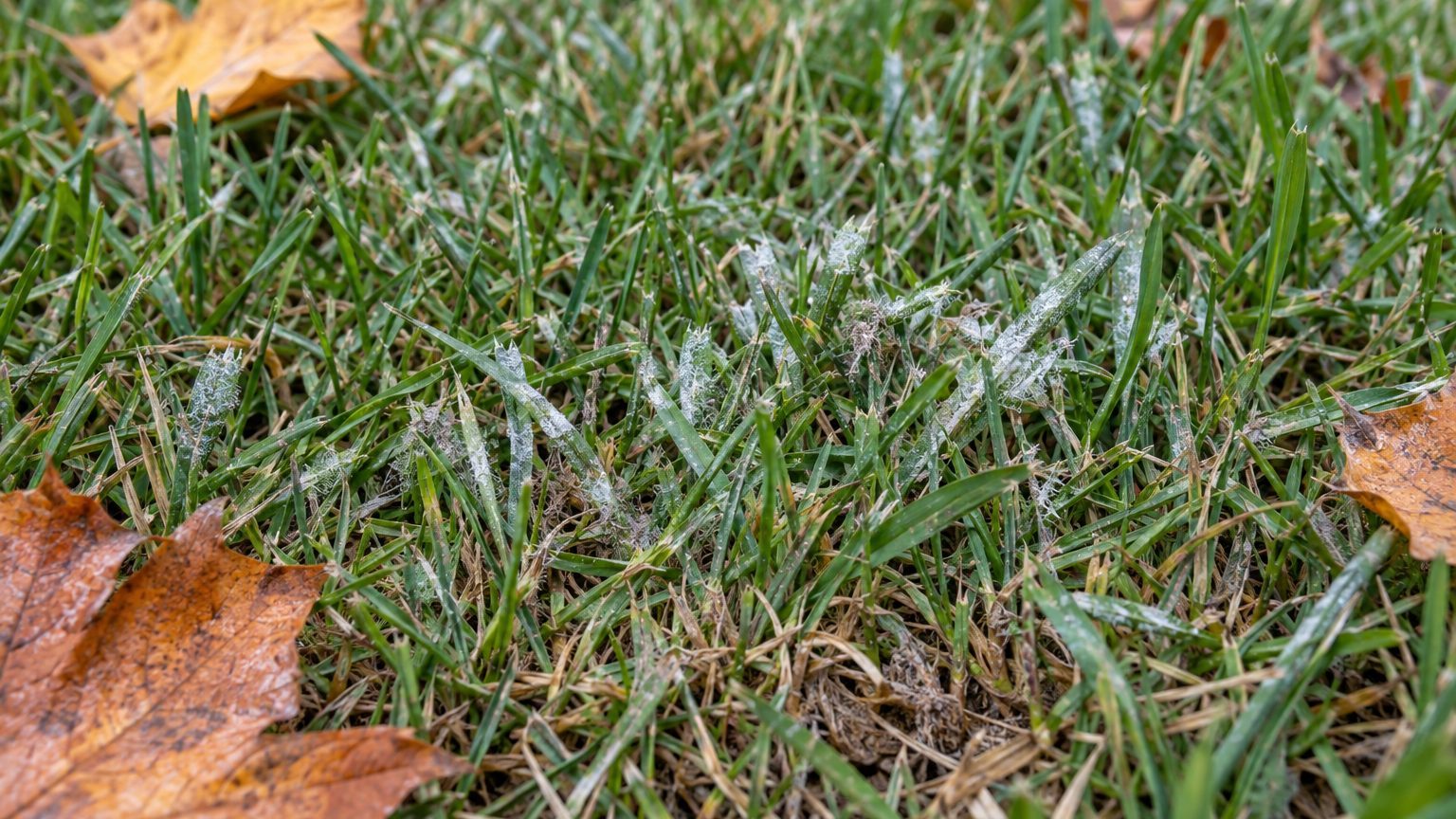
Powdery Mildew on Lawns on a lawn

Look at the upper surface of the blades first, because that is where the fungus shows itself.

  • Fine, gray-white, cobwebby tufts appear on single blades, usually confined to the upper surface of the leaf.
  • The growth thickens quickly and can cover the whole blade, as if someone dusted the lawn with talc or flour.
  • Older leaves are usually hit harder than new growth.
  • Heavily infected blades turn yellow, then develop tan or brown patches as they die.
  • Affected areas can look scorched or ragged, with dead patches mixed in among healthy green blades.

Lawn Problems Mistaken for Powdery Mildew

A few other things leave a pale or dusty look on grass. The trick is to pair what you see with where it sits and what happens when you touch it.

Powdery mildew starts as isolated wefts of cobwebby growth, then spreads across the blade surface until it looks floury.

Looks like How to tell them apart
Dust, pollen or fine soil splash Rinses off with a hose and does not return in the same shady patch. Mildew wipes smear but come back on the same blades.
Dried, bleached grass from drought or heat Blades are crisp and straw-colored across sunny, dry areas, with no gray-white coating on the leaf surface.
Lawn clippings or lime left on the grass Clumps sit on top in uneven patches right after mowing or spreading, and they brush away without any cobwebby growth underneath.

If the coating is thin, cobwebby and sits in the shade on bluegrass, mildew is the likelier answer. If it washes away or lies in clumps, look elsewhere.

What Causes Powdery Mildew

The cause is a fungus that grows on the surface of grass leaves. Kentucky bluegrass is the usual host, and it is quite susceptible, especially when planted in shade. Fine fescues and tall fescue are quite resistant, so a lawn of those grasses rarely gets it badly.

Weather sets the stage. In Pennsylvania, outbreaks are commonly seen during cool, humid, cloudy weather, which prevails in spring and autumn. In Indiana, the fungus is favored by those same cool, cloudy conditions in spring and fall. Ohio sees severe outbreaks on shaded bluegrass from spring to fall when moderate temperatures and high humidity prevail.

Unlike many lawn diseases, it does not need long wet spells. In Indiana, prolonged dew or wet weather is not needed for the disease to establish and spread, though high humidity helps it along. Shaded spots with poor air movement, such as the north side of a house or under dense trees, are the most exposed. Those are the places where outbreaks tend to start.

How to Treat Powdery Mildew

Most cases ease once the grass gets more light, air and steady care, so start with the yard itself.

  1. Raise the mowing height, because taller blades hold up better. According to NC State Extension, the suggested height is approximately 3 inches.
  2. Trim back low branches and shrubs that shade the affected patch, so more sun and moving air reach the grass.
  3. Hold off on heavy feeding, since lush growth is more tender. According to NC State Extension, apply no more than 1 pound of nitrogen per 1,000 square feet at any one time.
  4. Changing irrigation alone will not stop the disease, because prolonged dew or wet weather is not needed for it to establish and spread.
  5. Overseed persistent shady spots with a more resistant grass, such as a fine fescue or tall fescue, when the season for seeding comes around.

Fungicides are rarely needed for a lawn, and what is approved varies by state. If the problem keeps coming back after these changes, your state extension office can tell you what is legal and sensible where you live.

How to Prevent Powdery Mildew

Prevention follows the same rhythm as the disease, which flares in the cool, cloudy months and fades in between.

  • In Pennsylvania, check shady corners in spring and thin out branches that block light before damp, cloudy weather settles in.
  • Through spring, keep the mower set higher, since a relatively higher cut is a practice that helps manage the disease in Pennsylvania.
  • Match watering and fertilizer to the grass and local conditions rather than treating summer as a universal schedule.
  • In Pennsylvania, watch shaded bluegrass in autumn for the first gray-white wefts so you can adjust early.
  • In the season for seeding, work resistant fine fescue or tall fescue into the shadiest patches instead of more bluegrass.

A lawn that gets sun, air and a steady cut seldom needs more than that.

Common Questions

Does Powdery Mildew Kill Grass?

Seldom outright. Heavily infected blades yellow and die back in tan or brown patches, which thins the lawn, but the crowns usually survive once light and airflow improve.

Can You Mow a Lawn That Has Powdery Mildew?

Yes. Keeping the mower at a relatively higher setting can help manage the disease.

Why Does Powdery Mildew Show Up in Shade and Not in Full Sun?

Shade holds humidity near the blades and slows drying, and that suits the fungus. Bluegrass in those spots is also more vulnerable, which is why the same corner can flare again.

Pink Snow Mold (Microdochium patch): Signs, Treatment and Prevention

Pink Snow Mold (Microdochium patch): Signs, Treatment and Prevention

In North Carolina, pinkish patches can appear as snow melts; in northern California, they can appear after a cool, damp stretch without snow. It leaves rough circles of damaged grass in the turf. Knowing what the patches look like, what feeds them and which habits keep them away makes a big difference to how the lawn greets spring.

Pink Snow Mold Symptoms

Pink Snow Mold (Microdochium patch) on a lawn

A useful clue is a pink tint on the grass blades themselves, so look closely at the edges of any damaged circle.

  • Leaf blades carry a pink coloration from fungal threads and tiny spore-bearing structures, which sets this disease apart from other snow molds.
  • Patches are roughly round and usually run from 2 inches to 10 inches across.
  • Neighboring patches sometimes merge and damage a large area of turf.
  • Leaves go through a color change, first watersoaked, then reddish brown, and finally bleached.
  • Symptoms show from November to March in North Carolina, and they become obvious as snow melts where a snow blanket sat on the lawn.

Because the color fades as the grass dries, check on a damp morning or just after the snow goes while the pink is still visible.

Lawn Problems Mistaken for Pink Snow Mold

Several winter lawn problems leave tan or bleached circles, and color alone does not settle the question. Pair what you see with where and when it appears.

Pink on the blades, together with the conditions around the patch, is what separates this disease from its relatives.

Looks like How to tell them apart
Other snow mold diseases, with bleached patches after snow melts Pink snow mold shows pink on the leaf blades from fungal threads and tiny spore-bearing structures, and the other snow molds do not.
Similar patches after a cool, wet winter with no snow cover The same fungus can cause a disease with similar symptoms without any snow cover. Look for the same pink on the blades and the same cool, damp weather.

Winter dryness, pet spots and other leaf diseases can also leave pale circles. If the blades show no pink and the patch sits in an odd spot, such as along a walk or fence, suspect something other than this fungus.

What Causes Pink Snow Mold

A fungus that stays in the turf is behind the disease, and it wakes up when conditions turn cool and wet. It does not need deep cold. According to Purdue Extension, the pathogen can be active from 30°F to 60°F, so infection can happen in fall and spring as well as winter.

Snow is not required. According to UC IPM, University of California, the pathogen stays active across cooler temperatures from 32° to 65°F, and consistently cool, wet weather of 40°–65°F favors the disease. In northern California, it appears in cool, wet spells where no snow falls at all.

Where snow does fall, as in North Carolina, the disease develops under the snow cover and shows as the snow melts. All cool-season turfgrass species can be infected.

Mowing and feeding habits matter too. On Kentucky bluegrass and perennial ryegrass, the disease is most common on turf kept at 3 inches or greater. Tall grass mats down under wet leaves or snow, creating a damp pocket the fungus likes. In California, excess nitrogen in fall adds to the risk.

How to Treat Pink Snow Mold

Treatment focuses on gentle cleanup and patience rather than aggressive intervention.

  1. Rake the patches lightly to break up the matted, damp blades, so air and light reach the crown of the plant.
  2. Remove leaves, thatch scraps and debris sitting on the patches, because they hold moisture against the turf.
  3. Mow when the grass is dry and growing, and bag the clippings from the infected areas so you do not carry the fungus across the yard.
  4. Water only when the lawn is dry, and do it in the morning, so the blades are not wet through the cold nights.
  5. Overseed bare spots with a cool-season grass once the soil warms and the grass begins to grow, since seed needs warmth to sprout.
  6. Ask your state’s extension office which fungicides, if any, are approved for home lawns where you live, since labels and rules differ from state to state.

Many lawns knit back together as spring growth picks up, so give the grass time before deciding that a patch is dead.

How to Prevent Pink Snow Mold

Prevention focuses on preparing the lawn before winter.

  • In California, avoid excess nitrogen in fall, because lush growth is more prone to the disease.
  • On sports turf and professional landscapes, keep taller mown turf at 2 1/2 to 3 inches to prevent matting.
  • Before snow or a cold, wet stretch, clear fallen leaves from the lawn so they cannot pack down into a damp mat.
  • According to UC IPM, University of California, maintain soil pH between 6.5 and 6.7.
  • Once snow melts or the cold, wet weather eases, rake out any matted grass so the lawn dries quickly and can start growing.

Piling plowed snow onto the same corner of the lawn each winter is worth avoiding, since deep, packed snow keeps that spot wet and cold longer.

Common Questions

Will Pink Snow Mold Come Back on the Same Lawn?

It can return whenever cool, wet weather returns, because the fungus survives in the turf. Matted grass and heavy fall feeding make a repeat more likely, so the same habits matter each year.

Should You Rake the Lawn When the Snow Melts?

A light rake over matted or pinkish areas helps them dry and lets new growth come through. Wait until the ground is no longer soggy, since raking soft turf can pull up weak grass.

Does Pink Snow Mold Affect Warm-Season Grasses?

It is a problem of cool-season turfgrasses such as Kentucky bluegrass and perennial ryegrass. If your lawn is a warm-season grass and shows winter patches, a local garden center can help you work out what else may be behind them.

Large Patch in Lawns: Signs, Treatment and Prevention

Large Patch in Lawns: Signs, Treatment and Prevention

In South Carolina, circular tan or smoky patches often become evident as warm-season grass greens up in spring. A brown or smoky-gray outer edge helps distinguish large patch from other lawn problems.

Large Patch Symptoms

Large Patch on a lawn

Look for rings and arcs in the turf, and start with the shape because it is a useful clue.

  • Circular patches with brown or smoky-gray outer edges are the sign that sets large patch apart, and they may grow to 20 feet or more in diameter.
  • Stand symptoms are patches from 1 foot to greater than 3 feet across, so a lawn often shows several sizes at once.
  • Damaged areas range from a few inches to several feet and may coalesce or merge, leaving odd, wavy outlines instead of tidy circles.
  • In South Carolina, symptoms show up mostly in spring as the lawn greens up, because the green grass around the patch makes the dead zone stand out.
  • Centipedegrass, zoysiagrass and St. Augustinegrass are the warm-season grasses most commonly affected.

Bermudagrass tends to come through with less harm, since its rapid growth and spread let it recover more quickly.

Lawn Problems Mistaken for Large Patch

Several other lawn troubles leave dead patches in warm-season turf. Use the shape together with a simple pull test, and note where and when the patch appeared.

Brown patch deserves a mention too. Large patch was formerly called brown patch, but the two differ in timing, symptoms, the strains of fungus behind them and the control strategies they call for.

Looks like How to tell them apart
Take-all root rot Dead, thinning patch where leaves and stolons come up together when you tug the turf
Anthracnose Dead, thinning patch where the plant and roots come up without stolons when you tug the turf
Brown patch Browning that appears at a different time of year than spring green-up, with distinct symptoms from the smoky-edged rings of large patch

If a pull test gives a mixed result or the timing does not fit spring, have the sample checked before treating the lawn.

What Causes Large Patch

A soilborne fungus, a strain of Rhizoctonia solani, causes large patch. It lives in the thatch and soil and attacks grass when conditions suit it, which is why the same spots can flare up again. In South Carolina, the fungus is most active during the late fall and again during the spring, which matches the way symptoms appear at green-up.

Weather sets the pace. According to Mississippi State University Extension, free moisture in any form and relatively cool temperatures (60 to 75°F) favor the disease, while cool nights and warm days prolong it. According to Texas A&M AgriLife Extension, the disease occurs when temperature is below 70 degrees Fahrenheit, so a mild, damp stretch is enough to start it.

Wet leaves speed things along. According to Clemson Cooperative Extension, the disease can spread fast when free moisture is present, especially greater than 10 hours of continuous leaf wetness. Evening watering, heavy dew and poor drainage all keep blades wet longer. Among warm-season grasses, large patch is the most common disease affecting centipedegrass, although all of them are susceptible.

How to Treat Large Patch

Treatment starts with the conditions around the grass, then moves to a fungicide only if the lawn needs more help.

  1. Confirm the diagnosis with a pull test and a look at the patch edge, so you are not treating anthracnose or take-all root rot with the wrong plan.
  2. Water only when the lawn needs it, since wet blades feed the fungus. According to Clemson Cooperative Extension, irrigate to a depth of 4 to 6 inches, generally 1 inch of irrigation water per week.
  3. Mow at the proper height for your grass, because stressed, scalped turf recovers slowly. In Texas, that means 2–3 inches for St. Augustinegrass and 1–2 inches for zoysiagrass.
  4. Mow centipede at 1½ to 2 inches in South Carolina, and clean the mower deck before moving to healthy turf.
  5. Contact your state extension office about fungicide, since only they know which products are approved where you live and when to apply them.
  6. Give the lawn time to fill in as it warms, because the grass grows over the patch once the fungus slows.

Bermudagrass fills in faster than the other warm-season grasses, while centipedegrass and zoysiagrass may need longer to cover bare circles.

How to Prevent Large Patch

Prevention focuses on keeping the lawn from staying damp as cool weather arrives.

  • In South Carolina, water only when the lawn needs it as cool weather approaches.
  • In South Carolina, when the fungus becomes active in late fall, water only if the lawn is truly dry and keep leaves off the turf so blades dry quickly.
  • Avoid scalping the lawn while it is dormant.
  • In early spring, check drainage and thatch, and water in the morning so leaves are dry for most of the day.
  • At spring green-up, walk the lawn and look for rings, since early detection makes it easier to limit the damage.

Keep a note of where patches appeared this year, because large patch tends to return to the same spots.

Common Questions

Does Large Patch Kill the Grass Roots?

The fungus attacks at the base of the blades and the stolons, so a patch can look dead while the lawn still has life in it. Warm-season grasses often fill back in as temperatures rise, though weakened turf recovers slowly.

Can Large Patch Show Up in a Lawn That Is Not St. Augustinegrass?

Yes. All warm-season turfgrasses are susceptible, including centipedegrass and zoysiagrass, and bermudagrass can also be affected, though it usually recovers faster.

Is Large Patch the Same as Brown Patch?

Not any longer. The two differ in timing, symptoms, the fungus strains involved and the control strategies they require, so treat them as separate problems.

The almanac, state by state. Every date on this site comes from a state’s own frost facts and its extension service’s calendar — and says where it comes from.