Skip to content

Lawn Problems: Brown Patches, Yellowing and Thin Grass

Lawn Problems: Brown Patches, Yellowing and Thin Grass

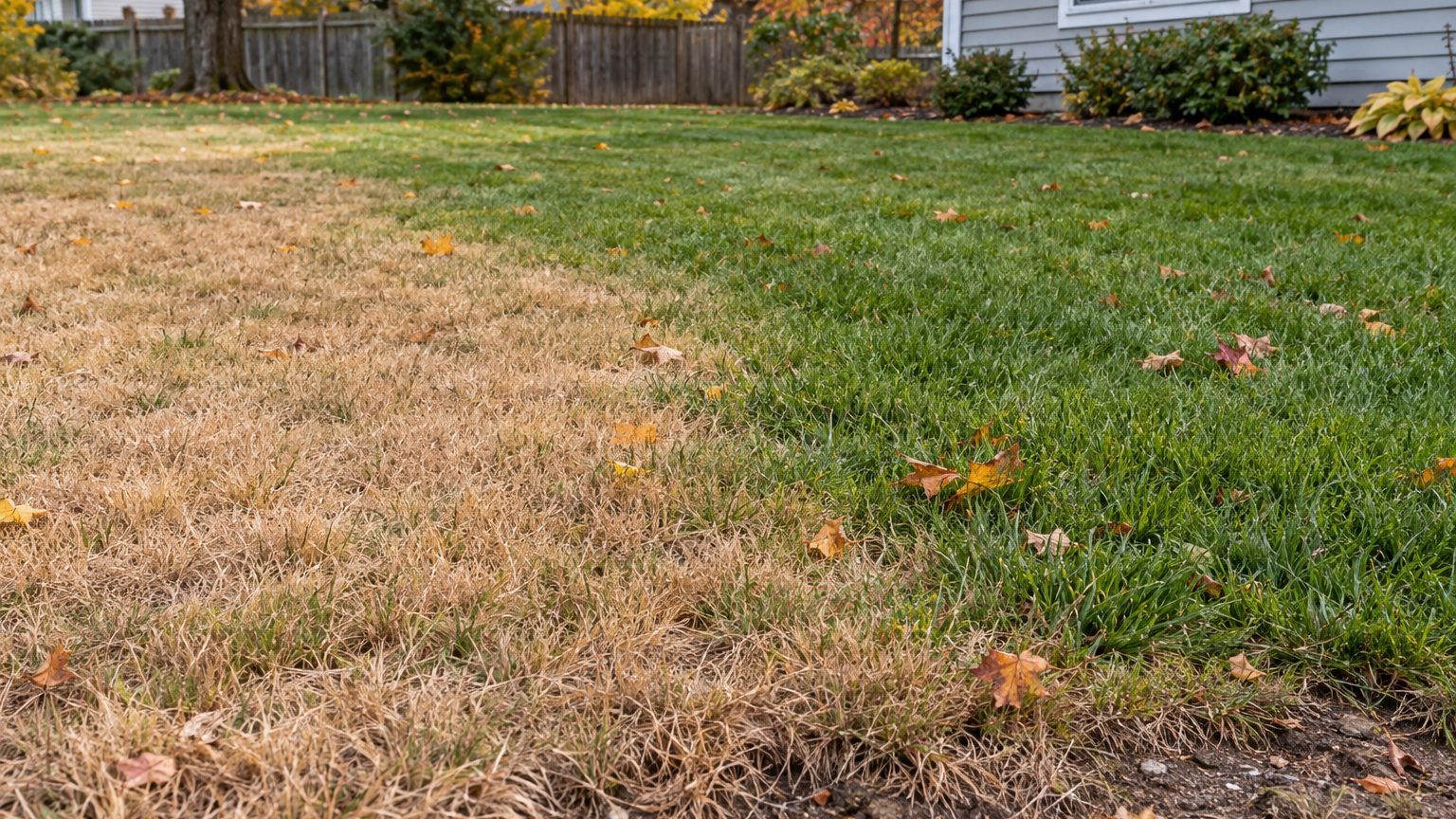
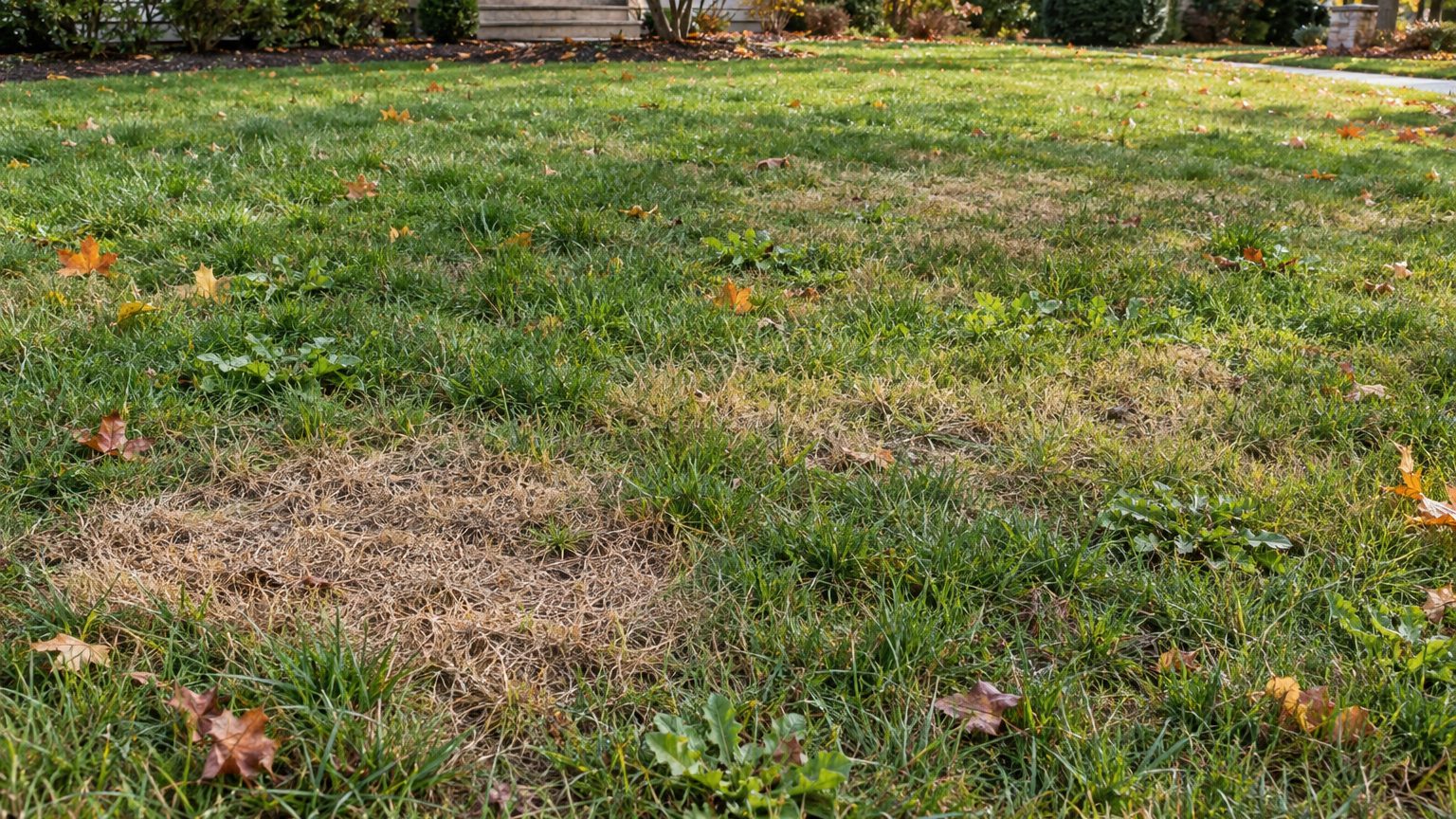
A round tan patch after a muggy stretch of summer, or a lawn that turns pale and sparse in spots, usually leaves clues you can read from the yard itself. Brown patches, yellowing and thin grass each point to a short list of causes, and the shape, the timing and the grass type narrow that list quickly.

What Causes Brown Patches and Thin Grass?

Most lawn problems come from stress meeting a weak spot: heat, too much or too little water, disease, insects, packed soil, or mowing at the wrong height. Which one wins depends on the grass type, the season and the region, so the same tan circle can mean different things in Georgia and in Michigan.

Warm, wet weather is the classic setup for fungal trouble. According to Penn State Extension, brown patch is a midsummer disease, often showing up when night temperatures stay above 68°F.

Yellowing tends to come from a different set of causes, including poor drainage, low soil fertility and compacted roots. The state selector just under this section leads to the page for your state.

How to Diagnose a Lawn Problem

Lawn: Lawn Problems: Brown Patches, Yellowing and Thin Grass

Work from what you see to what you can test, because a quick look at the grass and the soil rules out more causes than guessing does.

  1. Measure the damaged area and note its shape, since size and outline separate a disease from a spill or a pet spot. According to Clemson Cooperative Extension, damaged areas range from a few inches to several feet and may merge.
  2. Check the grass early in the morning while it is still wet, because long wet spells let disease spread. According to Clemson Cooperative Extension, free moisture lasting more than 10 hours of continuous leaf wetness lets it move fast.
  3. Tug a handful of the affected grass, since blades that pull away while the roots hold firm suggest a leaf disease, and turf that lifts like a loose mat suggests root damage from insects or stress.
  4. Push a screwdriver into the soil and look at the thatch layer, because hard, dry ground and a thick spongy mat both keep water and air from the roots.
  5. Send in a soil sample, because pH and nutrient levels explain yellowing that no amount of watering fixes. According to Clemson Cooperative Extension, disease may be more severe when soil pH is less than 6.0, except in centipedegrass.
  6. Write down the weather and the date the problem started, because timing separates heat stress from disease. On high-cut turf in Pennsylvania, brown patch usually appears as light brown circular patches.

No single clue settles it. Diagnosing lawn problems can be challenging because symptoms from environmental stress, pests, diseases or physical damage overlap. Compare clues before you treat anything, such as a circular shape plus a stretch of humid nights.

Lawn Problems by Grass Type

Cool-season grasses such as tall fescue can struggle in the heat of midsummer, when disease and drought stress arrive together. Warm-season grasses face their own problems, but they often show them at other times of year.

Cool-season lawns can develop brown patches, yellowing and thin grass, and each of these problems has its own common causes and fixes.

Grass Season What to watch
Tall fescue Cool In Pennsylvania, watch for brown patch in humid midsummer; in South Carolina, avoid mowing too short
Other cool-season grasses Cool In South Carolina, heavy nitrogen in late spring and summer invites trouble

Centipedegrass, a warm-season lawn grass, stands apart in one respect. According to Clemson Cooperative Extension, low soil pH can make disease worse, except in centipedegrass. If your lawn is warm-season, check your state page for its timing rather than borrowing a cool-season schedule.

Lawn Care Mistakes That Cause Problems

Mowing Too Short

Scalped grass has less leaf to feed its roots and leaves bare soil open to heat and weeds. According to Clemson Cooperative Extension, do not mow fescue lawns shorter than 2½ inches high.

Cutting too tall is no better, since a shaggy lawn holds moisture around the blades. According to Clemson Cooperative Extension, the upper limit is 3½ inches.

Watering Shallow and Often

Frequent light sprinkling keeps the surface wet, which favors disease, while the roots stay shallow and weak. In South Carolina, the advice is to water only when needed and to a depth of 4 to 6 inches.

That generally works out to 1 inch of irrigation water per week there. Check how your soil drains before setting a schedule.

Ignoring Compaction and Thatch

Packed soil and a thick thatch mat keep water sitting on top and roots starved of air, which shows up as thin, yellowing grass. Core aeration corrects soil compaction, and good surface and subsurface drainage keeps water moving.

In South Carolina, prevent excessive thatch buildup before it becomes a spongy layer you have to remove.

Lawn Problems in Your State

The signal that starts the work is what the lawn is doing: new growth, warming soil, or a stretch of hot, humid nights. Grass type decides which of those matters most, and each state’s months are on that state’s page.

  • Open your state’s page to see when your grass is growing and when it is stressed.
  • Go there in the season your symptoms appear, so you can match what you see to the right gesture.

Common Questions

Does Rainy Weather Make Brown Patch Worse?

Yes. According to Penn State Extension, rainy weather and a saturated atmosphere at 100% relative humidity greatly speed disease development. Water the lawn in the morning so the blades dry during the day.

Will a Brown Patch Grow Back on Its Own?

It depends on whether the crowns and roots are still alive. Tug the grass and look at the base of the blades. Green, firm tissue at the base often recovers once the stress passes, while a mat that lifts away easily needs reseeding or patching.

Should You Test the Soil Before Fertilizing a Thin Lawn?

Yes, because fertilizer and lime should follow soil test recommendations, not guesswork. According to Clemson Cooperative Extension, keep soil potassium and calcium at the upper end of the sufficient ratings. Your state’s extension office can explain how to collect a sample.
Lawn Pests, Season by Season: How to Spot and Stop Them

Lawn Pests, Season by Season: How to Spot and Stop Them

Lawn pests follow the seasons, and each one has a window when it is easy to find and easy to stop. Knowing the order they arrive in makes the work simple.

Which Insects Damage Lawns, and When?

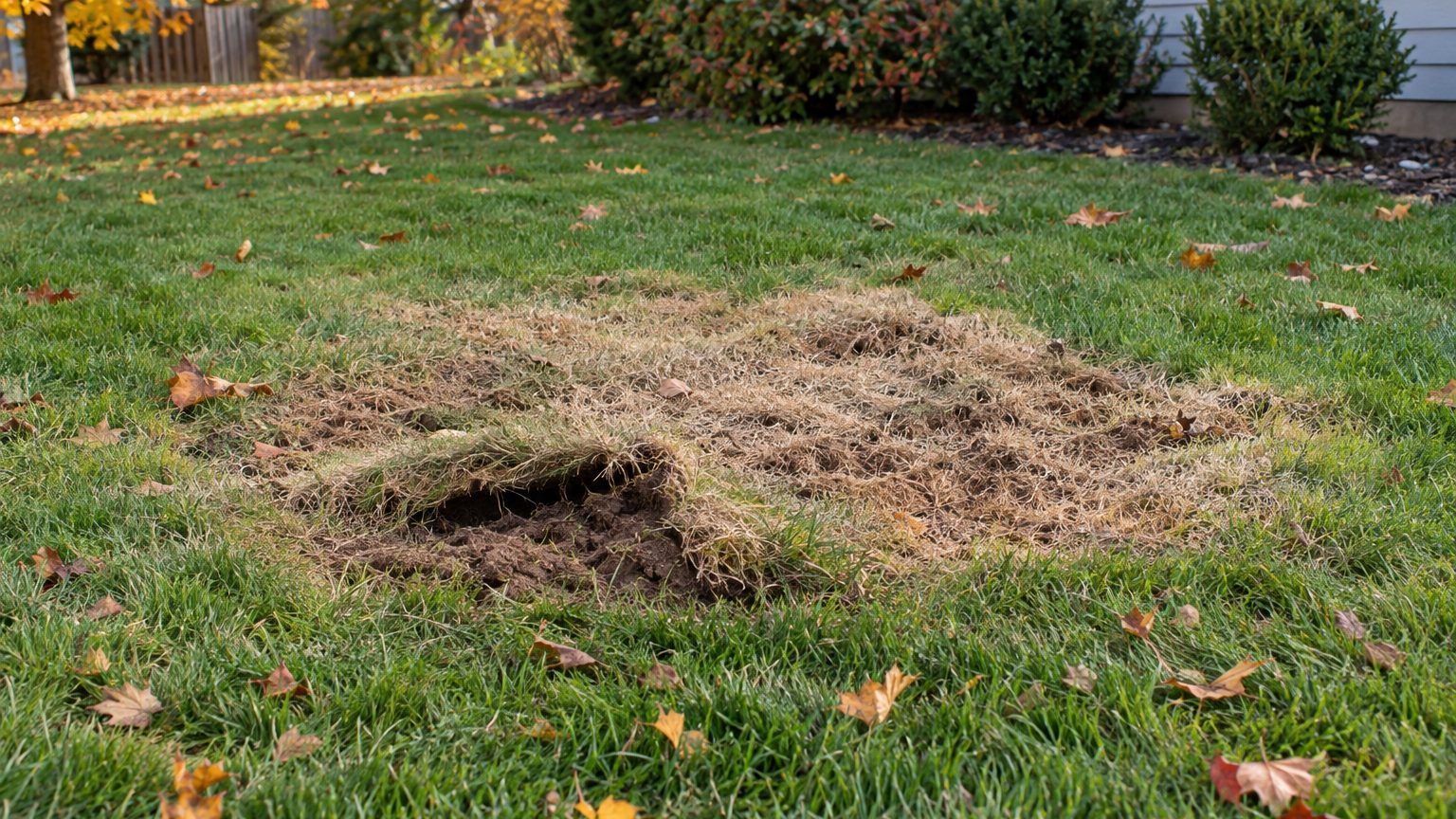
Across the country, the damaging insects come in waves that follow the warmth. Soil dwellers such as grubs and mole crickets feed on roots and show up as weak, loose turf. Surface feeders such as chinch bugs and armyworms chew or drain the blades.

What shifts the timing is grass type, region, and the weather in a given year. The pests that appear vary with grass type, region, and weather. In Mississippi, fire ants turn up in practically every home lawn, and fall armyworms are most common in late summer and early fall.

The state selector just below this section leads to the page for your state, where the pest months are set out for your climate.

How to Find and Control Lawn Pests

Lawn: Lawn Pests, Season by Season: How to Spot and Stop Them

Scouting comes before any treatment, because each pest has a simple test and a point at which damage is worth stopping. Follow this sequence and you will know what is in the turf before you reach for anything.

  1. Look for the signs first, such as thinning grass, patches that lift easily, or mounds, so you know which pest to test for.
  2. Mix 1 fluid ounce of lemon-scented dish detergent into 2 gallons of water. Pour it over 2-3 square feet of turf, as New York advises, because the soap irritates surface insects and drives them up where you can count them.
  3. For chinch bugs, take a gallon-size can with both ends removed and press one end 2 to 3 inches into the turf. Fill it half-full with water and watch for bugs floating to the top, a method used in Mississippi that shows whether they are really present.
  4. In Mississippi, pour 1 to 2 fluid ounces of dishwashing liquid per gallon of water over a small area early in the morning, when the method works best.
  5. Sample for grubs in late summer, which in New York means early August in the southeast and mid-August upstate, so you count them while they are small and before the roots are cut.
  6. In New York, apply beneficial nematodes while grubs are still young and most susceptible, before they have caused significant damage.

Fire ant mounds call for a different habit. In Mississippi, the advice is to treat after dark when most of the insects are on the nest, which puts the treatment where the colony is.

Lawn Pests by Grass Type

Grass type can help narrow the possibilities, but region and local conditions matter too. Root-feeding grubs can damage roots and leave turf weak or loose. Mole crickets, chinch bugs, and fire ants require different scouting methods from root-feeding grubs.

An isolated sighting does not show whether treatment is needed. The thresholds below come from New York and Mississippi, and they are a guide for deciding when treatment pays off, not a national rule.

Pest Grass setting Treatment threshold
Japanese beetle grubs Cool-season, New York 8-10 grubs per sq. ft.
European chafer grubs Cool-season, New York 5-8 grubs per sq. ft.
Chinch bugs Warm-season, Mississippi Approximately 20 bugs per square foot

For you, this means counting before deciding. Before you treat, check whether the pest count in your lawn is high enough, for that type of pest and that part of the yard, to cause real damage; if it falls below that level, treatment usually isn’t warranted. For pests without a threshold in this table, treat visible damage as a reason to investigate rather than an automatic signal to treat.

Lawn Pest Control Mistakes to Avoid

Treating Without Counting

Spraying at the first sight of an insect wastes effort and can harm helpful species. A lawn that looks rough during dry weather may be stressed by drought rather than pests.

Run the soapy flush or the can test, count what you find, and compare it with the threshold for your pest before you treat anything.

Waiting Until Damage Shows

By the time brown patches appear, grubs are older and harder to control, and the roots are already cut. In New York, nematodes work best on young grubs, before they have caused significant damage.

Sample at the start of the pest’s season, using your state’s timing, so the treatment lands while the insects are small.

Ignoring Helpful Insects

In Mississippi, wasps, hornets, and yellowjackets collect caterpillar larvae and other insects to feed their young, and bumble bees pollinate as they gather pollen and nectar. Broad treatments across the whole lawn take them out along with the pests.

Treat only the area where you found a problem, and keep nests and flowering edges untouched where you can.

Lawn Pests in Your State

Use your lawn’s growth and your state calendar to decide when to scout. Insects follow that warmth. The months for each state are on that state’s page, so you can match your scouting to your climate.

  • Your state page gives the months when the main pests of your region appear, so you know when to start scouting.
  • The state extension office can confirm local thresholds, and a call before treating saves needless work.

Common Questions

Can a Healthy Lawn Tolerate Some Grubs?

Yes. In New York, actively growing turf with a good root system may tolerate populations up to 50% higher than treatment thresholds without showing injury. Water and root health make the difference, so a well-watered lawn can carry more than a stressed one.

Does Mowing Damage a Lawn That Has Insects?

In Mississippi, turf grasses can tolerate repeated foliage loss, such as mowing, without serious long-term injury. Regular mowing at a normal height is not what turns a pest problem into dead grass.

Are Wasps and Bumble Bees in the Lawn a Problem?

Mostly they help. In Mississippi, wasps and hornets carry off caterpillars and other insects, and bumble bees pollinate while collecting for their brood. Leave them alone unless a nest sits where people walk or play, and if you must treat it, do so after dark when most of them are on the nest.

When to Overseed Your Lawn, and How Much Seed

When to Overseed Your Lawn, and How Much Seed

Thin spots in a lawn show up after a hot summer or a season of heavy foot traffic, and a handful of seed tossed on them at the wrong moment rarely sprouts into anything. Overseeding works when the timing matches the grass and the seed meets bare soil. Timing and seeding rate are what decide whether a thin lawn fills in.

When Should You Overseed Your Lawn?

Cool-season grasses such as fescue, ryegrass, and bluegrass tend to do best when overseeded in fall. Warm-season lawns follow a different rhythm, since they grow when the soil is warm. The window shifts with grass type, the season, and your region.

In the Kansas City area, fall brings soil that is still warm, cooler nights, and usually more rainfall. In Pennsylvania, late summer is the optimum time for cool-season grasses. Seed sown later runs into cold soil and stalls.

The state-by-state table right under this section gives the overseeding window and the zone for each state.

How to Overseed a Lawn

Overseeding thickens a lawn and fills bare spots, and the steps below go in this order because each one prepares the soil for the next.

  1. In Iowa, mow the lawn to 1½ to 2 inches to reduce competition from the established grass.
  2. In Iowa, use a core aerator to leave 20 to 40 holes per square foot, giving seed better contact with the soil.
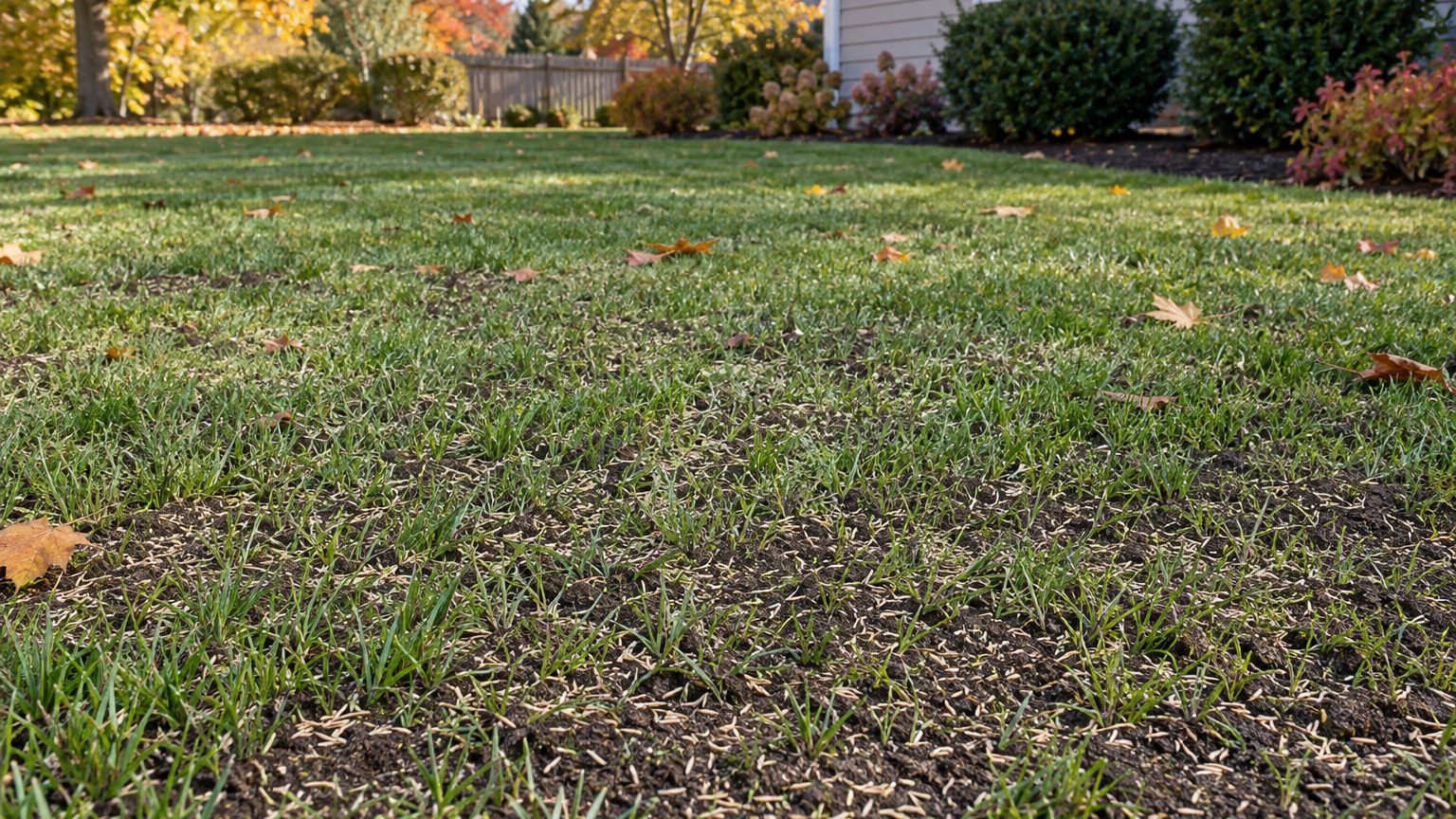
  3. Spread seed at the overseeding rate for your grass, which is well below the new-lawn rate, so the seedlings do not crowd each other out.
  4. Drag a rake lightly across the lawn to settle the seed into the holes and the loosened surface, which keeps birds and runoff from carrying it away.
  5. Water regularly, because in Illinois the seed needs steady moisture for about two weeks while it germinates.

A vertical mower can stand in for the aerator. In Iowa its blades cut into the upper 1/4 to ½ inch of soil, and one or two passes are enough. Watering may need to happen at least once or twice a day in Illinois, since a seedbed that dries out even briefly can lose the new sprouts.

Overseeding by Grass Type

Cool-season grasses are often overseeded in fall, and each has its own seeding rate. Rates for overseeding sit well below the amount used to start a new lawn, because an existing lawn already fills part of the space.

Bluegrass is slow to sprout, which changes how long you keep the seedbed moist. Tall fescue and the fescue and ryegrass mixes come up faster.

Grass Season Overseeding rate and timing
Tall fescue Cool 3 to 4 pounds per 1000 square feet; early to mid-September in the Kansas City area
Kentucky bluegrass Cool Around 2 pounds per 1,000 square feet in the Kansas City area; two to four weeks to germinate
Fescue and ryegrass Cool 3-5 lbs. per 1000 sq. ft

The longer germination of bluegrass means you keep watering for more weeks than you would for a faster grass. Your state’s page spells out the window for yours.

Overseeding Mistakes to Avoid

Seeding Too Late in Fall

Seeding Too Late in Fall — When to Overseed Your Lawn, and How Much Seed

Seed will not germinate when the soil becomes too cold in late fall, as Pennsylvania guidance warns.

In the Kansas City area, sow while the soil is still warm and nights begin to cool.

Using the New-Lawn Rate

More seed does not mean more grass. For tall fescue in the Kansas City area, the normal rate is 6 to 8 pounds per 1000 square feet, and using it on an existing lawn crowds the seedlings so they thin out and weaken.

Cut the amount to the overseeding rate for your grass and spread it evenly.

Letting the Seedbed Dry Out

Bluegrass can take a while to come up, and a dry spell in the middle of that wait ends the process. A seed that has begun to sprout and then dries out often dies.

Keep watering through the whole germination period. Whether the lawn comes from seed or from sod, Pennsylvania guidance says it will probably need regular, sometimes daily, irrigation.

When to Overseed a Lawn in Your State

Watch the season of your grass and the warmth of the soil. In the Kansas City area, soil is still warm when nights begin to cool and rainfall usually increases.

  • Open the page for your state to find its overseeding months and its zone.
  • Check the months there before you buy seed or rent an aerator, so the work lands inside the window.

Common Questions

Can You Overseed in Spring?

Yes, with limits. In Pennsylvania, cool-season seeding can be done from mid-spring to early fall, but seedlings planted in spring face summer heat and weeds before they root deeply. Fall gives them an easier start.

Can Overseeding Change the Type of Grass in Your Lawn?

It can. In Illinois, overseeding is described as a way to introduce a new grass species when your current one is not what you want. Match the new seed to your region and sun, and expect the change to happen gradually.

Does Overseeding Help with Weeds and Drainage?

When overseeding follows aeration, it builds a denser lawn that competes with weeds, according to Illinois guidance. Aeration also relieves compaction and improves drainage, which can make the lawn less prone to disease.

How High to Mow, by Grass Type and by Season

How High to Mow, by Grass Type and by Season

Walk across a lawn left too long between cuts and you can see the problem: seed heads, uneven blades, a bit of yellow at the base. Mowing height plays an important part in lawn health through the year, and the right setting depends on the grass you grow, the season and where you live.

How High Should You Mow Your Lawn?

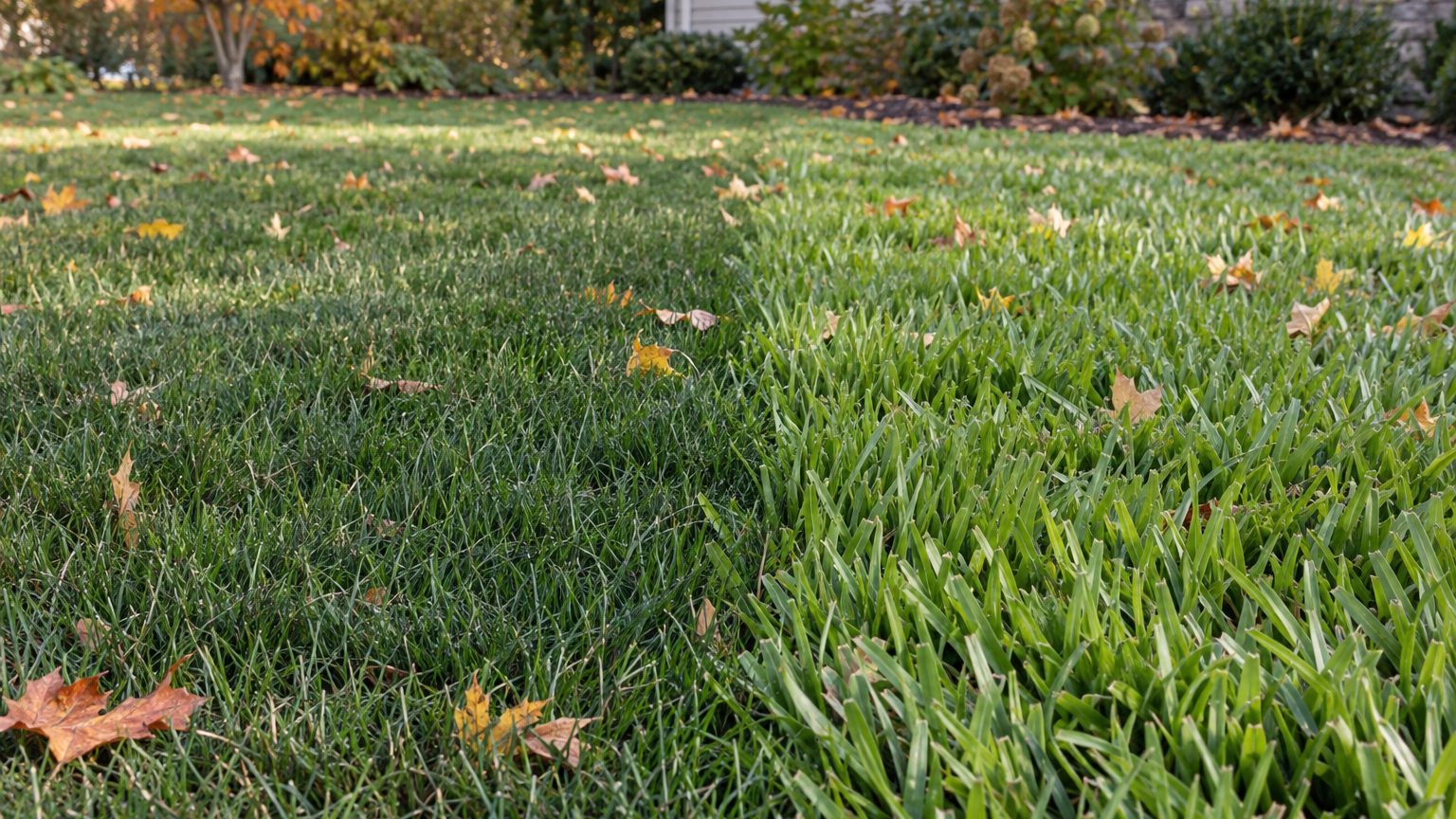
Mowing height should stay within the range for the grass you grow, and that range can be wide. Cool-season grasses such as tall fescue and Kentucky bluegrass like more height than warm-season grasses such as bermudagrass or zoysiagrass.

Season and weather move the setting too. Heat, drought and shade all call for the higher end of the range, because longer blades shade the soil and feed deeper roots.

Where you live decides which grass you grow and when it is actively growing. The by-state table just under this section gives each state’s window, with its months and zone.

How to Mow a Lawn the Right Way

How High to Mow, by Grass Type and by Season

Good mowing is a short routine, and the order matters because each step protects the one after it.

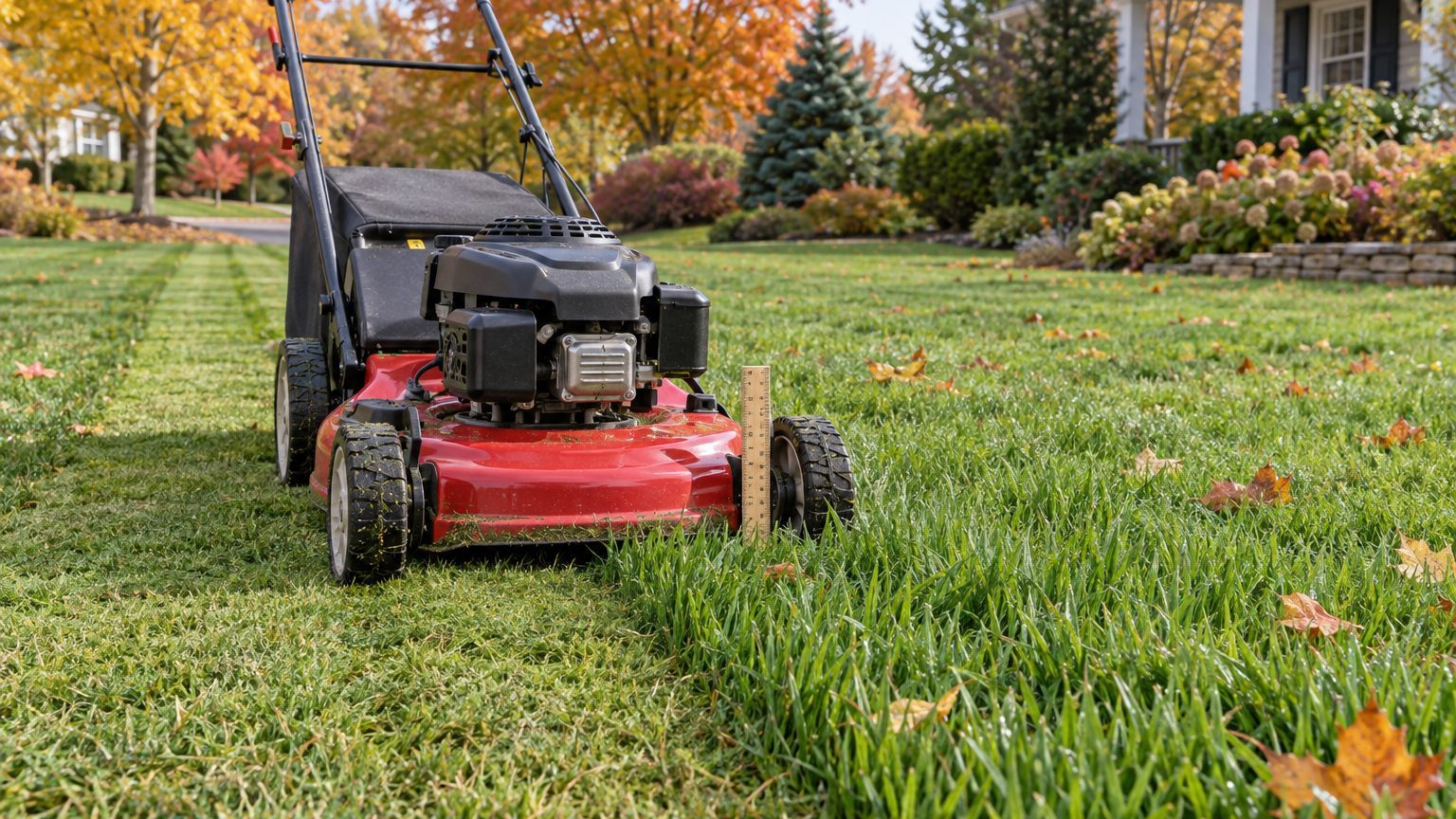
  1. Set the deck to the height for your grass before you start, so you cut the lawn at the setting that suits its roots and not at whatever the mower was left on.
  2. Mow when the grass is dry, because wet blades bend away from the cutter and leave a ragged edge that browns and invites disease.
  3. Cut before the lawn gets far above your target, removing no more than one-third of the blade height in a single pass; to mow at 3 inches, cut just before it reaches 4 inches, so the grass is not shocked and the roots keep their supply of food.
  4. Check that the blade is sharp, since a dull blade tears the tips and the whole lawn can soon take on a grayish cast.
  5. Leave the clippings on the lawn when they are short, so they break down and return nitrogen to the soil.
  6. Change your mowing direction from cut to cut, which keeps the blades standing upright and stops the mower from wearing ruts into the turf.

When growth is vigorous and the weather is mild, keep the deck within your grass’s recommended range. If the lawn got ahead of you after a rainy stretch, bring it down gradually rather than scalping it.

Mowing Height by Grass Type

The ranges below are wide because lawns grow in very different climates and mixes. Your state extension office gives the local figure, and it is worth a quick look before you settle on a setting.

Cool-season grasses are active in spring and fall and slow down in summer heat. Warm-season grasses do the opposite, and many of them tolerate a much shorter cut.

Grass Season Mowing height (inches)
Fine fescues Cool 1.5 to 4
Kentucky bluegrass Cool 1.5 to 3.5
Perennial ryegrass Cool 1 to 3
Rough bluegrass Cool 1 to 3
Tall fescue Cool 2 to 4
Bahiagrass Warm 3 to 4
Bermudagrass Warm 0.75 to 2
Carpetgrass Warm 1 to 2
Centipedegrass Warm 1 to 2
Seashore paspalum Warm 1 to 2
St. Augustinegrass Warm 2 to 4
Zoysiagrass Warm 0.75 to 3

Start by identifying what is growing in your yard, because the recommended ranges for bermudagrass and tall fescue differ even though they overlap. Bahiagrass and St. Augustinegrass sit at the tall end among the warm-season grasses, while bermudagrass and zoysiagrass can be kept low. If your lawn is a mix, mow to the needs of the dominant grass and lean toward the higher end.

Mowing Mistakes to Avoid

Scalping the Lawn

Scalping the Lawn — How High to Mow, by Grass Type and by Season

Cutting far below the recommended height strips the leaf surface the grass uses to make food. The roots shrink, the soil bakes, and weeds find bare ground to sprout in. Raise the deck and keep the stressed lawn at the upper end of its range while it recovers.

Mowing a Dull Blade

Mowing a Dull Blade — How High to Mow, by Grass Type and by Season

A dull blade shreds grass instead of slicing it, and the torn tips lose moisture and turn pale or brown. The lawn also becomes easier for disease to enter. Sharpen or replace the blade at the start of each season, and again if you hit a stump or rock.

Bagging Every Clipping

Hauling off clippings every time takes nutrients out of the yard and adds work you do not need. Short clippings break down quickly and feed the soil. Bag only when the grass has grown tall and wet enough to leave clumps, and spread those clumps thinly or add them to a compost pile.

When to Start and Stop Mowing

Start when the grass visibly begins to grow in spring, and stop when growth fades in fall. Soil warmth and grass type drive this, not the calendar or the last frost date, so cool-season lawns wake earlier than warm-season ones.

  • Your state’s page gives the months when mowing typically begins and ends, so check it before seasonal mowing starts.
  • Watch the lawn itself for the signal: when blades have grown noticeably above your setting, it is time to mow.
  • Mow when growth stops, keeping the deck within your grass’s usual range.

Common Questions

Should You Cut the Grass Shorter Before Winter?

Rake fallen leaves off before winter rather than cutting low, and never drop to a scalping height. Keep it within your grass’s normal range.

Can You Mow a Lawn That Is Wet?

You can, but you should not if you can wait. Wet grass clumps, clogs the deck and cuts unevenly, and wet soil is easily rutted by the mower wheels.

Does a Mulching Mower Change the Right Height?

No. The setting for your grass stays the same. A mulching mower chops clippings finer so they settle into the lawn and break down faster.

Leveling a Bumpy Lawn

Leveling a Bumpy Lawn

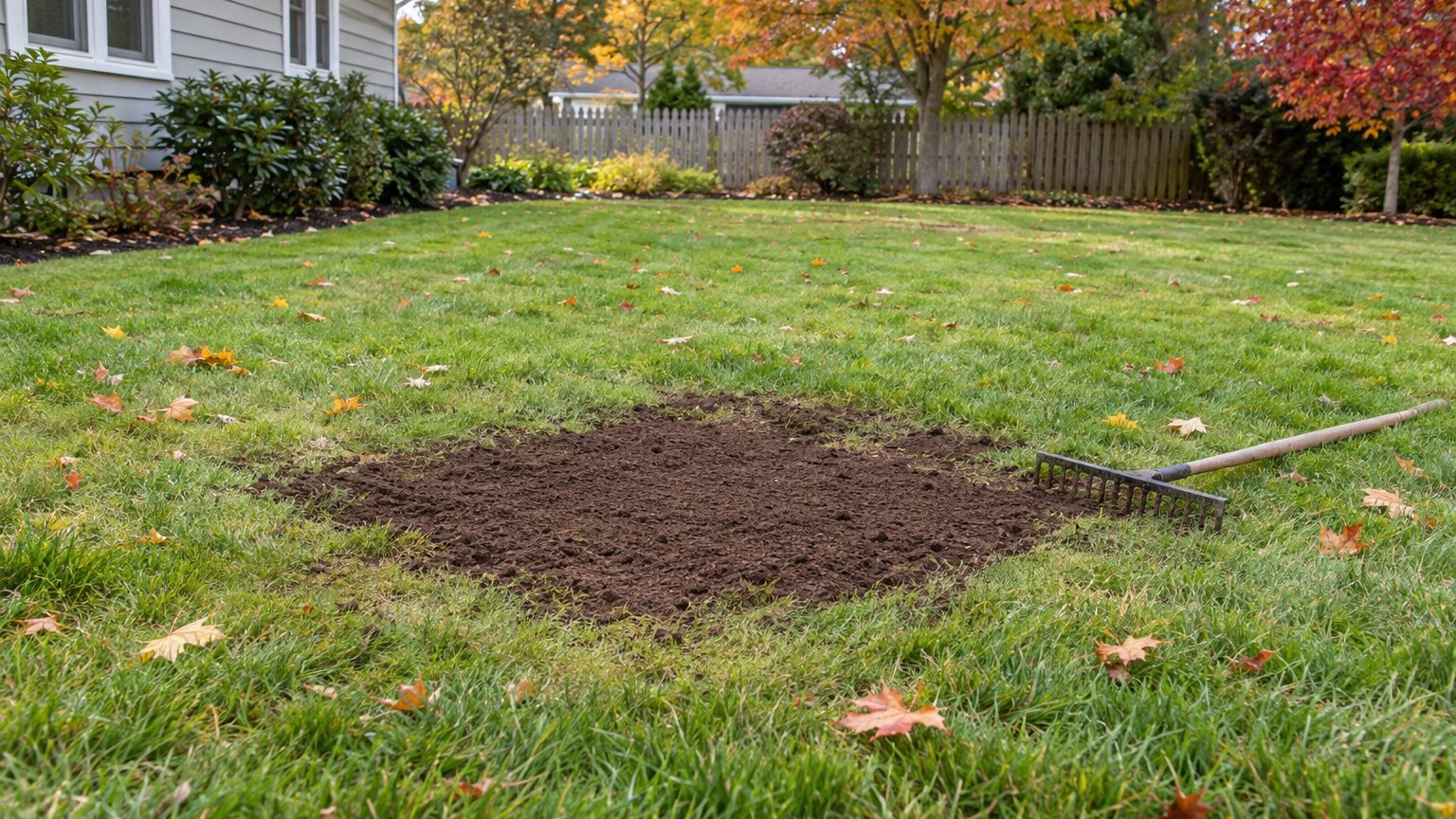
Bumps and dips usually show up as the mower scalps a high spot or a wheel drops into a hollow. A bumpy lawn is leveled by filling low areas with a thin layer of soil or compost and letting the grass grow up through it. The details depend on what caused the roughness and what grass you have.

How Do You Level a Bumpy Lawn?

Level it by topdressing: spread a thin layer of compost or soil over the low spots, work it down between the grass blades, and let the turf grow through. Timing follows the grass. It should be actively growing so it can climb out of the fill, which means different seasons for cool-season and warm-season lawns, and different months from region to region.

Knowing why the surface got rough helps you choose the fix. Thinning turf, soil that heaves as it freezes and thaws, and earthworm castings all cause bumps, and each calls for a slightly different response.

The state selector just below this section leads to the page for your state, where the local timing is laid out.

How to Level a Lawn

Lawn: Leveling a Bumpy Lawn

Work in this order and each step sets up the next, so the fill settles into living turf instead of sitting on top of it.

  1. Mow near the lower end of your grass’s normal range without scalping, then rake out the clippings and thatch so the new material reaches the soil rather than a mat of dead stems.
  2. If the soil is compacted, aerate the lawn; in Colorado, aeration in spring and fall is recommended to loosen compacted ground and help the surface smooth out.
  3. Spread a thin layer of topdressing over the low spots, because in Maryland about ¼- to ¾-inch of material can go on without smothering the crown of the grass.
  4. Rake the material level and work it down between the blades with the back of a rake, so the leaf tips stay exposed and can keep making food from sunlight.
  5. In Maryland, the advice for ruts and deep hollows is to strip the sod, amend the soil and regrade it, then replant.
  6. Water the filled areas so the material settles into the gaps, then check again later for spots that sank and need a touch more.

Apply light layers over time if a hollow is deep, and avoid a thick application. Each thin layer lets the grass grow through before the next goes on, and the surface firms up evenly as the roots knit the fill together.

Leveling by Grass Type

Grass type decides when the lawn can recover from a layer of fill. A grass that is growing hard pushes through topdressing quickly, while a dormant or struggling one can stay buried and thin out.

Cool-season lawns are common in northern regions, while warm-season lawns dominate the South. These grass groups follow the same steps, but the calendar differs.

Grass Season How it does with leveling
Kentucky bluegrass, tall fescue, fine fescue, perennial ryegrass Cool Actively grows in spring and fall, so topdressing in those seasons can fill in quickly.
Bermudagrass, zoysiagrass, centipedegrass, St. Augustinegrass Warm Actively grows in the heat of late spring and summer, once the lawn is fully green.

For a cool-season lawn, a shaded or worn patch may still need seed along with the fill, since thinning turf can make older lawns rough. Warm-season grasses that spread by runners can often fill a thin layer on their own. Match the job to your grass’s active growing season so the turf can recover.

Lawn Leveling Mistakes to Avoid

Spreading Fill Too Thick

A heavy pile of soil over a dip buries the grass, and the covered patch turns yellow and thins out, leaving a bare spot that sits lower than before. In Maryland, about ¼- to ¾-inch is considered a safe depth for the crown. Add thin layers over time instead.

Topdressing a Deep Rut

Ruts and deep low areas swallow topdressing and keep sinking, because the soil underneath is usually compacted. In Maryland, the recommended fix is to remove the sod, amend the soil to regrade it and reduce compaction, and then replant turf. Lift the grass, fix the ground, and put the turf back.

Mowing Low and Chasing Worms

Scalping a freshly leveled lawn cuts off the leaf tips just as they need to feed new growth, and it exposes every ridge to the blade. In Colorado, the advice after leveling is to mow as high as the mower can be set and to leave the worms alone; their castings contribute to roughness along with other causes. Raise the deck and let them work.

When to Level a Lawn in Your State

Start when the grass is growing strongly and the soil is warm enough to support it, which for a cool-season lawn means spring or early fall, and for a warm-season lawn means after full green-up. Dormant grass cannot climb out of fill. The months for each state are on that state’s page.

  • Open your state’s page to see which months suit leveling for the grass types grown there.
  • Check the same page before aerating or topdressing, so the work lands while growth is strong.
  • Walk the lawn, mark the low spots with flags, and fill them as the grass reaches its growing season.

Common Questions

Can You Use a Roller to Level a Lawn?

A light roller can help, though it will not fix real dips. In Colorado, aeration in spring and fall paired with light rolling is recommended to smooth the surface. A heavy roller compacts the soil and works against the roots.

Can You Use Soil from the Garden to Level a Lawn?

Yes, in moderation. In Colorado, a light layering of compost or soil taken from an adjacent flowerbed or vegetable garden is described as helpful. Screen out clumps and sticks first so the layer spreads evenly.

Does Fertilizer Help Smooth a Bumpy Lawn?

In Iowa, a spring application is expected to thicken the grass and make the bumps less noticeable, with the strongest results in late summer, from late August to mid-September. It evens out a rough lawn but will not fill a real hollow.

Grass Types Explained: Cool, Warm and Transition Zones

Grass Types Explained: Cool, Warm and Transition Zones

A lawn that greens up early in spring and sulks in August is telling you something about its grass type. Every turfgrass belongs to a cool-season or a warm-season group, and each group has its own weather where it thrives. Knowing which grass group you have, or should have, helps explain how your lawn behaves through the year.

What Are the Main Types of Lawn Grass?

Lawn grasses split into cool-season and warm-season groups, and the group matters more than the species. In Virginia, cool-season grasses are active in mild weather, in spring and again as summer cools. Warm-season grasses wait for real heat, then grow thick and turn tan once cold sets in.

Across the broad middle of the country, cool-season and warm-season groups overlap in what turf managers call the transition zone. Cold winters and hot, dry summers make every choice a compromise there, and your region, your sun and the species all shift the answer. The state selector just below this section takes you to your own state’s page.

How to Choose a Grass Type for Your Yard

Start with climate and light, then narrow down to a species.

  1. Place your yard in cool-season country, warm-season country or the transition zone, because that shapes whether the grass can stay healthy in your climate.
  2. Track how much direct sun each part of the yard gets, since tall fescue in South Carolina is said to grow well with as little as 5 hours of sunlight per day.
  3. Match the species to your local region, because the answer can change within a state, as in Virginia where centipedegrass and St. Augustinegrass are adapted only to the Tidewater region.
  4. Decide between seed and sod based on how soon you want a finished lawn, because species differ a lot in how quickly seed sprouts and fills in.
  5. Ask your state extension office which varieties it recommends, because named varieties within a species can differ in heat, drought and disease tolerance.

Expect some compromise if you live in the middle band. In Virginia, turfgrass specialists put it bluntly: the state can grow eight different turfgrasses, but not very well. Picking a grass that can handle the tougher season is more practical than chasing a grass that only looks good under favorable conditions.

Lawn Grass Types by Region

Each grass has a home climate, and the table uses Virginia as a worked example of how a transition-zone state sorts them out.

Cool-season turfgrasses suit the hill and valley regions of the southwest, the Shenandoah Valley and northern Virginia. Warm-season types fit the hotter, lower ground.

Grass Season How it does in Virginia
Tall fescue Cool Grown in all regions, but struggles in summer extremes in the southern Piedmont and Tidewater. Seed germinates in 10-14 days.
Kentucky bluegrass Cool Seed is easy to find but slow to germinate, 14-21 days, and full establishment usually takes months.
Perennial ryegrass Cool Germinates in 7-10 days and builds a dense canopy quickly.
Bermudagrass Warm Needs full sun, with very poor shade tolerance. Tolerates mowing heights from 0.5 to 2.5 inches.

Centipedegrass and St. Augustinegrass are the warm-season options that stay close to the coast, since they are adapted only to the Tidewater region. For you, the lesson reaches beyond Virginia. A grass that thrives nearby may fail in your yard, so match the species to your own corner of the state, not to the state as a whole.

Grass Selection Mistakes to Avoid

Warm-Season Grass in Shade

In Virginia, bermudagrass is a full-sun grass with very poor shade tolerance, so planting it under trees can leave thin, weak turf that weeds move into. Match shady areas to a cool-season type such as tall fescue, or accept mulch or groundcover where little light reaches.

Slow Seed for a Fast Fix

In Virginia, Kentucky bluegrass is slow to start, and complete establishment can take months. If bare soil is washing out or you need green soon, choose a faster starter such as perennial ryegrass or tall fescue, or lay sod. Save the bluegrass for a yard where you can wait.

Southern Grass Outside Its Region

Centipedegrass and St. Augustinegrass are adapted only to the Tidewater region in Virginia, which shows how narrow a warm-season grass’s range can be. Outside their adapted region in Virginia, these grasses may struggle. Ask a local garden center what holds up through your local winters and summers before you buy.

Best Grass Types for Your State

The grass in your yard sets the timing. Watch for its growth surge, for warming soil and for whether your turf belongs to the cool or warm season. Each state’s page turns those signs into months.

  • Open your state’s page to find the months for seeding, feeding and mowing your grass type.
  • Check it again when your lawn speeds up in spring and when summer heat begins to ease.

Common Questions

Which Grass Types Handle Frost and Low Light Better?

For Illinois lawns, cool-season grasses tolerate frost, low light and lower temperatures better than warm-season grasses do. That helps explain why northern lawns often use cool-season grasses, while shade choices in warmer regions need local advice.

Do Warm-Season Grasses Use Less Water?

They generally need less water than cool-season grasses, according to Illinois guidance, though they also have lower frost tolerance. If you live where summers are dry, that trade can be worth considering, as long as your winters are mild enough for the grass to survive.

Can You Grow More than One Grass Type in the Same Yard?

You can, and in the transition zone many yards do. A sunny front slope may suit a warm-season grass while a shaded backyard does better with a cool-season one. Keep each type in its own area so the mowing height and care you give one doesn’t harm the other.

When to Fertilize Your Lawn

When to Fertilize Your Lawn

Grass can pale or slow for many reasons, so its appearance alone does not tell you whether it needs fertilizer. Feeding at the wrong moment wastes fertilizer and can wash it into the nearest storm drain. The right moment depends on whether your lawn is a cool-season or warm-season type, and on how your region’s weather moves through the year.

When Should You Fertilize Your Lawn?

Feed cool-season lawns mostly in fall and warm-season lawns during their summer growing season. Bluegrass, fescue and ryegrass are cool-season grasses common across the North and the Upper Midwest. Bermudagrass and zoysia are warm-season grasses common across the South.

Fall feeding suits cool-season grass because the roots keep working in cool soil after the top growth slows. Warm-season grass runs the other way. In California, time the last feeding well before the likely first frost. Region shifts the picture too, since a Gulf Coast lawn wakes up well before one in the Upper Midwest.

The state-by-state table just below gives each state’s window, with its months and its zone.

How to Fertilize a Lawn

Lawn: When to Fertilize Your Lawn

The basic workflow is similar, but timing, rate and fertilizer choice change with the grass and local rules.

  1. Use the timing on your state page and confirm that the lawn is actively growing before you spread fertilizer.
  2. Choose a fertilizer that meets your soil-test needs and your state’s slow-release requirements.
  3. Set the spreader for the recommended rate. According to Rutgers Cooperative Extension, a typical recommendation for a soluble form is one pound of nitrogen per 1,000 square feet, which keeps the grass from getting more than it can use.
  4. Walk at a steady pace and overlap the wheel tracks slightly, so you do not leave stripes of dark and pale grass.
  5. Follow the label’s watering directions after spreading the fertilizer.
  6. Sweep stray granules off the driveway and sidewalk, so a rainstorm does not carry them into the street.

For a cool-season lawn in New York, the cue is unfrozen soil and slowing top growth, which arrives once air temperatures stay under 50°. Use a 10-day stretch as the signal. Over a full year, Virginia allows cool-season lawns up to 3.5 pounds of nitrogen per 1,000 square feet. According to University of New Hampshire Extension, the annual total should not exceed 3.25 lbs, as long as at least 20% of the nitrogen is slow-release. Use the annual limit for your own state rather than borrowing Virginia’s or New Hampshire’s.

Fertilizer Timing by Grass Type

Cool-season and warm-season grasses run on opposite clocks. Cool-season turf does much of its feeding in fall, while warm-season turf feeds during active summer growth. The figures below apply to New York and South Georgia, so use your state page for local timing.

Grass Season Start signal Pace
Cool-season lawn (New York) Cool Soil unfrozen, growth slowing in fall 60% of the year’s feeding goes on in fall
Bermudagrass (South Georgia) Warm Soil at 65°F at 4″ depth, typically late April Every 6-8 weeks until mid-August
Zoysiagrass (South Georgia) Warm Fully greened up, usually late April/early May Every 7-8 weeks until mid-August

Bermuda and zoysia need 2-3 applications over the growing season, so the intervals above add up to a few feedings, not a monthly routine. Stopping in mid-August in South Georgia lets the grass harden off before cold weather. Tall fescue, Kentucky bluegrass and ryegrass are cool-season grasses, but local timing and rates still apply. If you are unsure which group your lawn belongs to, ask your state extension office to identify it.

Lawn Fertilizing Mistakes to Avoid

Too Much at Once

A heavy dose gives a short flush of growth and sends the extra nitrogen toward streams and groundwater. According to University of New Hampshire Extension, applying more than 0.9 lbs of actual nitrogen per 1,000 square feet per application may contribute to water degradation.

Measure the lawn, follow local per-application and annual limits, and do not exceed the bag rate.

Feeding Too Late in Fall

Fertilizer put down just before frost feeds tender growth that the cold cuts back. In California, the last application should go on 6 to 8 weeks before the likely first frost. Many places also set a legal last date, and in New York it may be November 1 or November 15 depending on your area.

Mark your last feeding date on the calendar and check local rules before the final bag goes on.

Feeding a Dry Summer Lawn

In New York, an unirrigated lawn in dry weather may need little or no fertilizer in summer. Grass that has slowed down for lack of water cannot use the food, so the nitrogen sits on the surface and can burn the blades.

Hold off until rain or irrigation returns, and save the main feeding of a cool-season lawn for fall.

When to Fertilize a Lawn in Your State

Watch the grass and the soil more than the date on the wall. Cool-season lawns want food as top growth slows in fall, and warm-season lawns want it once they have fully greened up and the soil has warmed.

  • Each state’s lawn page lists the months that fit its grass types, so read it before you buy fertilizer.
  • The zone on that page is only a clue; the grass itself and local guidance determine whether it is cool-season or warm-season.
  • Match those months to what the grass is doing, and spread only when the timing agrees.

Common Questions

How Often Should You Test Lawn Soil?

According to Virginia Cooperative Extension, soil tests taken every three or four years give useful information about lawn fertility. A level of at least medium for phosphorus and potassium is desirable for existing turf, so a low reading is the signal to add them.

Can You Fertilize a Lawn in Early Spring?

In New York, fertilizer should not go on before April 1st. If no fall application was made and spring sports are planned, a light nitrogen feeding can follow after that date.

How Much Slow-Release Nitrogen Should a Fertilizer Have?

According to Virginia Cooperative Extension, a slowly available nitrogen source contains at least 15% slow-release nitrogen. In New York, sandy soils call for at least 60% when establishing turf. Non-sandy soils there call for at least 30%.

Fall and Winter Lawn Care, Month by Month

Fall and Winter Lawn Care, Month by Month

Leaves settle on the grass, the mower sounds different as growth slows, and frost silvers the lawn in the morning. Fall and winter lawn care is the work that happens between those signs: feeding, seeding, late-season mowing, leaf cleanup, and staying off the turf once it freezes. Timing shifts with your grass and your region.

What Should You Do to Your Lawn in Fall and Winter?

The work may include feeding, seeding, aerating, mowing, and clearing leaves, with timing set by grass type and region. For cool-season lawns, local fall timing depends on soil warmth and the arrival of winter. Warm-season lawns slow down sooner and mostly need a tidy finish and a rest.

What varies is the grass type, how fast your soil cools, and how early winter arrives where you live. The state-by-state calendar just below gives each state’s window, with its months and zone.

How to Prepare a Lawn for Winter

Lawn: Fall and Winter Lawn Care, Month by Month

Use the lawn’s growth and local frost timing to schedule the work below.

  1. Core-aerate compacted areas so water drains and any seed you sow afterward has better contact with the soil.
  2. Sow seed or lay sod while the ground is still warm. In Maryland, that means no later than mid-October, since killing frosts in November can damage young seedlings.
  3. Feed with nitrogen in early fall, when the grass is still putting energy into roots. According to University of Wisconsin Extension, about 1 pound per 1,000 square feet in early fall suits all lawns.
  4. In Wisconsin, keep mowing until the lawn goes dormant, and do not let the grass enter winter excessively tall.
  5. Make the last cut ½ inch shorter than usual, which improves air circulation and makes snow mold less likely. In Maryland, that final mow may fall in late November.
  6. In Wisconsin, clear leaves before snow arrives. If leaves cover the grass thickly, move them onto planting beds or shred them in place with the mower so the pieces filter down into the lawn.

Fertilizer has a legal edge in some places. Maryland’s lawn fertilizer law sets a cutoff of November 15, so the last feeding has to go down before then. The legal cutoff still applies if the lawn remains green and growing.

Fall Lawn Care by Grass Type

Cool-season grasses grow actively in the mild, moist weather of fall, which is why seeding and feeding cluster there. Warm-season grasses run on soil warmth, so they fade as the ground cools and sit out winter as a brown, resting lawn.

Brown does not always mean dead. Each grass has its own way of shutting down, and knowing yours keeps you from panicking or overworking it.

Grass Season How it does in cold or stress
Tall fescue Cool Goes dormant in hot, dry weather and turns brown, then greens up when it cools and rain returns (Maryland)
Kentucky bluegrass Cool Survives several weeks of drought in a completely brown state by going dormant (Wisconsin)
Zoysia Warm Generally dormant from mid-October to mid-May (Maryland)

Dormant grass is alive but not repairing itself, so it handles foot traffic poorly. In Wisconsin, irrigation to prevent dormancy is a good practice if you use your yard actively all summer. With zoysia, a long brown winter is normal, so judge it by spring recovery rather than by winter color.

Fall Lawn Care Mistakes to Avoid

Feeding in Mid-Fall

A nitrogen application in mid-fall can trigger a late surge of growth. In Wisconsin, that soft, lush growth can promote snow mold and vole damage over winter. Feed earlier in the season, while the grass can still use the nitrogen, and skip the mid-fall round.

Walking on Frozen Turf

Frozen or snow-covered grass is brittle, and steps can injure the crowns, the main growth points. The damage often shows as thin or dead patches in spring. In Maryland, the advice is to stay off it, so route shortcuts and dog runs onto paths or mulch.

Melting Ice with Fertilizer

Fertilizer is not a deicer, and it can burn grass along walks and driveways. In Maryland, using fertilizer to melt ice also violates the lawn fertilizer law. Use sand or a product made for ice instead, and shovel early so less treatment is needed.

Fall Lawn Care in Your State

Let the lawn tell you when to act. Cool-season grass is ready to seed and feed while it is still growing and the soil holds warmth. Warm-season grass is ready to rest once growth stops and color fades.

  • Your state’s own page gives its months for seeding, feeding, and the last mow, so check it before you buy seed or fertilizer.
  • Go back to it in late fall to time your leaf cleanup and your final cut before the ground freezes.

Common Questions

What Does Snow Mold Look Like?

In Wisconsin, look for circular, sometimes irregular patches of matted grass that show up as the snow melts. That pattern points to snow mold diseases such as Typhula blight or Microdochium patch. Rake the patches gently once the lawn dries, and the grass often recovers.

Should You Rake Leaves in Spring as Well?

Yes, if leaves and winter debris are left on the lawn. In Wisconsin, the advice is to rake them up carefully as the snow melts and conditions dry out. Raking too early, while the soil is soggy, can tear up the grass.

Does the Lawn Need Lime Every Year?

No. In Maryland, fertilizer and lime are applied as needed based on soil test results, and lime is not needed every year. Your state extension office can tell you how to send in a soil sample.

Lawn Edges and Bed Lines

Lawn Edges and Bed Lines

A fresh edge along the driveway or around a shrub bed makes a lawn look cared for, and it takes only a flat spade and a little patience. Lawn edging is the practice of cutting a clean boundary where grass meets beds, walks and pavement so the turf stays where you want it.

How Do You Edge a Lawn?

In Illinois, cut a clean vertical line with a sharp spade wherever grass meets a bed or hard surface, then lift out the loose soil and grass. The general rule is simple, but timing shifts with grass type, season and region, because edging follows active growth rather than a fixed date.

Spreading grasses push into beds steadily. In Illinois, grass grows toward and into beds about 3 to 4 inches a year, so a yearly cut keeps the line from drifting. Warm-season lawns in the South tend to need attention through summer, while cool-season lawns in the North reward a cut in spring and a touch-up later.

The state selector just below this section leads to the page for your state.

How to Edge a Lawn and Cut Bed Lines

Lawn: Lawn Edges and Bed Lines

Work in this order and the line stays crisp, with the soil and mulch doing their jobs.

  1. Mark the line with a garden hose or string, so the curve looks natural and you avoid recutting it.
  2. In Illinois, push a sharp spade straight down along the mark, because a sharp blade slices roots cleanly instead of tearing them.
  3. Cut the trench deep enough to hold back roots. In Utah, a 6 inch deep line between the bed and grass is a cost-free option, and in Illinois a channel 4 inches deep and wide can easily contain bluegrass.
  4. In Illinois, remove the soil and grass on the bed side to form a small cliff, so the grass has a visible gap to cross before it reaches the bed.
  5. Spread mulch in the bed up to the cliff, about 2 to 3 inches in shrub and evergreen beds, which smothers weeds without burying the edge.
  6. Leave a strip of open dirt at the lawn side when you mulch, so touch-up cuts are easy and grass does not creep into the mulch (this is advice from Illinois).

In Illinois, you can leave the bed hand-edged like this or fill the trench with something solid. In Illinois, steel, wood, brick, stone and plastic are used; in Utah, the options also include cement, redwood binder board, vinyl and rubber. In Illinois, stone has to be at least 3 inches thick and at least 4 inches wide to stop the grass.

Edging by Grass Type

Lawn grasses spread in different ways, and some barely creep at all. Cool-season grasses such as bluegrass and tall fescue are active in spring and fall. Warm-season grasses are active in summer heat.

The type decides how stubborn the edge is, and how deep a barrier needs to go.

Grass Season What it means for edging
Kentucky bluegrass Cool Spreads underground, so a trench 4 inches deep and wide can easily contain it (Illinois)
Spreading turf grasses Cool or warm Move 3 to 4 inches a year toward beds, so a yearly cut keeps up (Illinois)

Bunch-type grasses such as tall fescue stay more in place and rarely run into beds, so their edges hold longer between cuts. Bermudagrass and zoysiagrass are aggressive spreaders in warm regions, and a solid barrier tends to serve them better than a cut line alone. If you are not sure which grass you have, your state extension office can help you identify it.

Lawn Edging Mistakes to Avoid

Cutting Too Shallow

A scratch of a cut lets roots hop straight across, and the line disappears in a season. The cost is a repeat job and grass growing into the mulch.

Dig the trench deep enough to hold roots. Where bluegrass is the lawn, 4 inches deep and wide is the Illinois guide.

Mulching Right Up to the Grass

Piling mulch against the lawn bridges the gap, and grass starts moving into the bed. The edge then needs more frequent cuts.

Leave some open dirt at the lawn edge, as Illinois advice suggests, so touch-ups stay easy. Keep mulch at about an inch deep in flowerbeds once settled, and 2 to 3 inches in shrub and evergreen beds.

Using Thin Stone

Narrow stones or thin pavers may look tidy, but grass roots slip under or between them. You end up pulling grass out of the joints.

Choose stone at least 3 inches thick and at least 4 inches wide, the size Illinois guidance gives to stop the grass.

Lawn Edging in Your State

The sign to edge is growth: when grass starts reaching into the bed, or the old line has softened, it is time to recut. Cool-season lawns and warm-season lawns reach that point at different times.

  • Each state page gives the months when grass in that state is actively growing, so you can pick the cutting window.
  • Go to your state page in spring, before growth peaks, and again when you plan a touch-up.

Common Questions

Should You Edge Before or After Mowing?

Edge before mowing, so the mower picks up the loose clippings and soil bits the edger throws onto the turf. The lawn looks finished when mowing is done.

Is a Hand-Cut Edge Enough, or Do You Need a Border?

A hand-cut edge works well if you are willing to touch it up regularly. In Illinois, it needs a touch-up once or twice a year. A solid border of brick, stone, steel or plastic cuts down on that work, though it costs more to install.

What Tool Works Best for Cutting a New Bed Line?

A sharp spade or shovel handles a new line well, and in Utah it is the cost-free option. Once the line exists, a half-moon edger or a powered edger can keep it sharp.

Lawns in Drought: Dormancy, Watering and Recovery

Lawns in Drought: Dormancy, Watering and Recovery

Straw-colored grass after a long dry stretch can signal dormancy rather than a lost lawn. Turf shuts down above ground to protect the crown, the growing point at the base of the plant, and wakes when water returns. What matters is how you treat it while it rests and how it comes back.

What Happens to a Lawn in a Drought?

A lawn in drought stops growing, fades to tan, and goes dormant to protect its crown and roots. In a typical Illinois summer, lawns go dormant and resume active growth when conditions improve. How hard the drought hits depends on the grass type, the season and your region.

Survival can be long. In one North Carolina experiment, all the tall fescue cultivars tested recovered after 40 days without any water. Good soil structure helps a lawn return to active growth quickly, which is one reason loose, healthy soil pays off before a dry spell.

The state selector below takes you to the page for your state, where you can find local timing.

How to Care for a Lawn During a Drought

Lawn: Lawns in Drought: Dormancy, Watering and Recovery

Drought care is mostly restraint, and the gestures below go in the order you meet them as a dry season deepens and then breaks.

  1. Accept dormancy instead of forcing green growth, because a resting lawn spends nothing on new leaves and keeps its energy in the crown.
  2. Water dormant turf lightly, because a small drink keeps the crown and roots moist without waking the grass into growth it cannot sustain. In Illinois and South Dakota, apply one-quarter to one-half of an inch of water every two to four weeks.
  3. Follow the local pattern if your state differs, because in North Carolina the suggestion is a minimum of 0.5 inches every three to four weeks to keep the crowns hydrated.
  4. Mow less often as stress deepens, since severely stressed turf grows slowly and each cut is another injury. When you do mow, never remove more than one-third of the leaf blade at once.
  5. Return to regular watering once conditions improve, because the grass grows back from the crown when water resumes, and a steady supply lets it rebuild.

Watch the weather rather than the lawn’s color. Brown grass tells you little about whether the crowns are alive, while the moisture reaching them tells you a great deal.

Drought Tolerance by Grass Type

Grasses do not share the same toughness. Cool-season types such as tall fescue grow mostly in spring and fall and slow down in summer heat. Warm-season types such as zoysiagrass and bermudagrass thrive in heat and enter dormancy in cool weather.

North Carolina observations ranked three common lawn grasses as a dry spell dragged on.

Grass Season How it does in a long drought
Tall fescue Cool Suffered the most of the three, yet cultivars recovered after 40 days without water
Zoysiagrass Warm Suffered less than tall fescue but more than bermudagrass
Bermudagrass Warm Suffered least of the three

For you, this means a tall fescue lawn is not doomed by its ranking. In the same North Carolina work, most tall fescue cultivars survived 48 days without water. Warm-season grasses showed more drought tolerance in the North Carolina observations, but their crowns still need enough moisture to survive. Either way, survival depends on keeping the crown moist.

Drought Lawn Care Mistakes to Avoid

Fertilizing in Summer Heat

Feeding a stressed lawn pushes leaf growth the roots cannot support, and the grass burns through its reserves. In Illinois, the advice is to wait for the early September period to fertilize most lawns rather than feeding in summer. According to NC State Extension, light nitrogen rates of no more than 0.5 pounds N per 1000 square feet are suggested.

Heavy Foot Traffic

Dormant blades snap and crush easily, and worn paths are slow to fill in afterward. In Illinois, limit traffic of any type on a drought-stressed lawn whenever possible. Route kids, pets and mowers along other paths, and put play equipment on a patio or driveway for a while.

Letting Crowns Dry Out

Dormancy is not permission to ignore the lawn entirely. A long dry stretch with no water at all eventually reaches the crown, and then the grass cannot regrow from it. The fix is the small, spaced watering described above, which costs far less than reseeding bare patches.

Drought Lawn Care in Your State

The cue to act is the lawn itself: growth slowing, soil heating and drying, and your grass type entering its resting season. Cool-season lawns usually stall in summer heat, while warm-season lawns stall in cooler weather.

  • Your state’s page gives the months for lawn care where you live, so check it when the grass starts to fade.
  • Watering restrictions vary by town, so confirm local rules before you set a light dormant watering.

Common Questions

How Can You Tell Dormant Grass from Dead Grass?

Dormant grass browns evenly across a wide area, and the crowns at the soil line stay firm and slightly green when you scrape the surface. Dead grass often shows in irregular patches, with crowns that are dry, mushy, or easy to pull away from the soil.

Do You Have to Reseed After a Drought?

Often not. Dormant grass can regrow from the crown when watering resumes, so reseeding may be unnecessary. Patches that stay bare after the lawn greens up are the ones to reseed, once the season suits your grass type.

Does Watering a Dormant Lawn Wake It Up?

A light watering is meant to keep the crowns alive, not to bring the lawn back to full growth. The small amounts that suit dormant turf are too modest to trigger lush growth, so the lawn stays tan until real conditions improve and regular watering resumes.

The almanac, state by state. Every date on this site comes from a state’s own frost facts and its extension service’s calendar — and says where it comes from.