Skip to content

Best Grass Seed for Virginia

Best Grass Seed for Virginia

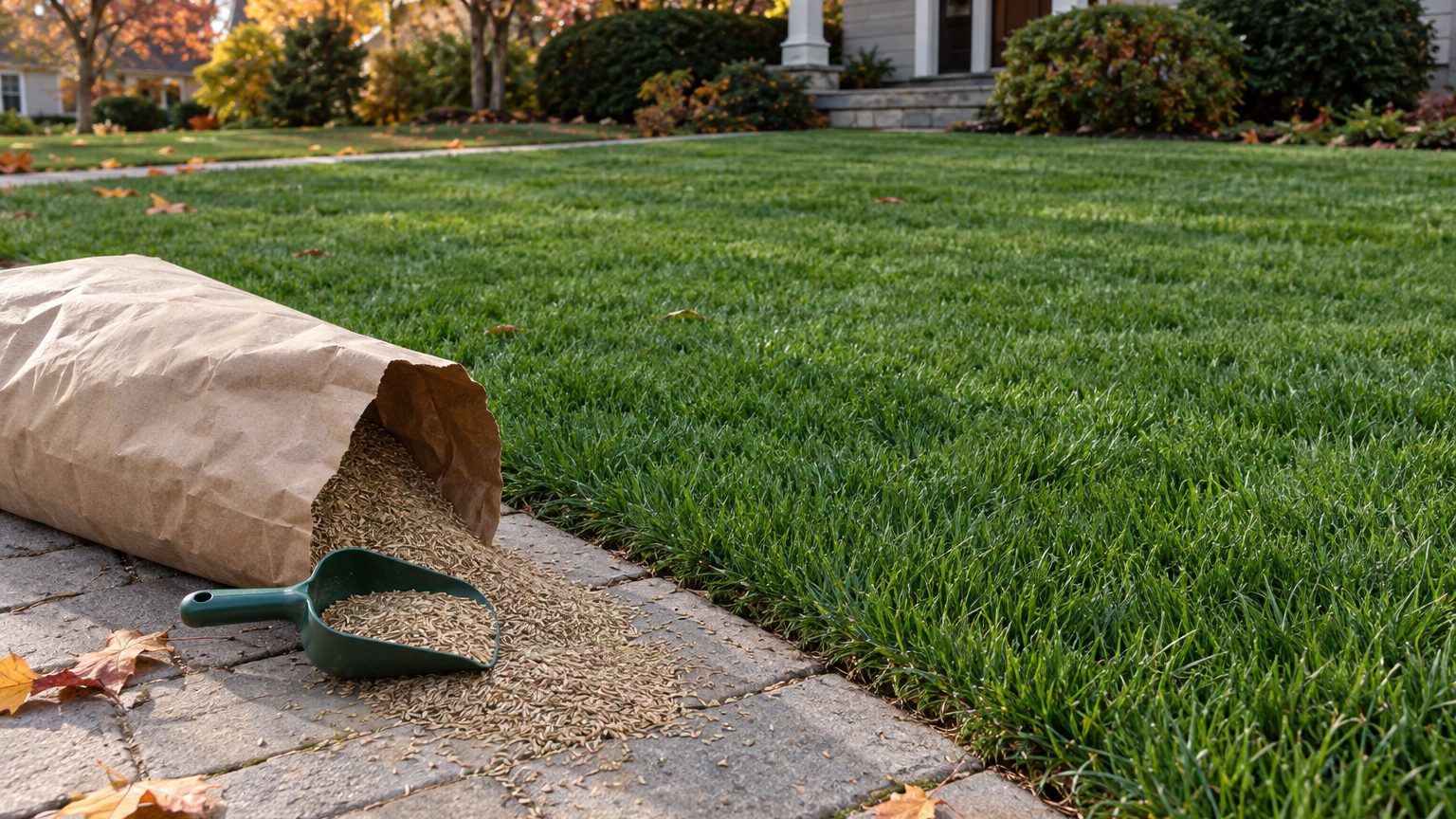
Thin, patchy turf in late summer sends many Virginia homeowners shopping for seed, and the aisle offers more choices than the climate allows. Virginia sits where cool-season and warm-season lawn grasses both struggle a little, so the right seed depends on your part of the state and how much work you want to do. Tall fescue suits most yards.

Which Grass Grows Best in Virginia?

Virginia is transition-zone country, so cool-season grasses carry most lawns, with warm-season grasses filling in on hot, sunny, low ground. Across the state, USDA hardiness zones run from 5a to 8b, but that winter-minimum range alone does not decide which lawn grass will thrive. The main choices are tall fescue, Kentucky bluegrass, bermudagrass and zoysiagrass.

Tall Fescue

Tall fescue is the workhorse for Virginia yards. It is a cool-season grass with deep roots, so it rides out summer heat better than other cool-season turf, and it stays green through most of the year.

Seed it in August, and if you miss that, September still works. Feed it in early spring and fall, never in summer, when the grass is stressed and fertilizer only pushes weak growth.

Kentucky Bluegrass

Kentucky bluegrass belongs on cooler, higher ground, where summers ease off and the grass spreads to repair itself. In the heat of the Piedmont and the coast it browns and thins, and it asks for more water to hold its color.

Many homeowners get a good result by blending a little bluegrass into a tall fescue lawn in the higher country, rather than planting it alone.

Bermudagrass

Bermudagrass loves heat and full sun, and it can be started from seed or sod. It turns tan after the first hard frosts and stays dormant through winter, which some neighbors enjoy and others find frustrating.

Seed it in May, with June as a fallback. It crowds out weeds well, but it will creep into flower beds and needs plenty of sun to stay dense.

Zoysiagrass

Zoysiagrass makes a thick, soft carpet that handles heat and foot traffic, but it grows slowly and is mostly sold as sod or plugs rather than seed. That slow growth means it fills in gradually.

Like bermudagrass, it goes dormant and brown in winter, so expect a straw-colored lawn from late fall into spring.

How to Choose Grass Seed for a Virginia Yard

Start with sunlight, since it narrows the field fastest. Yards with at least part shade lean toward tall fescue, while open, baking lawns with little shade give bermudagrass or zoysiagrass a real shot at success.

Then think about how you live in the yard. Kids and dogs wear on turf, so a dense grass that recovers quickly helps. A willingness to water in June, July and August also widens your options.

Grass Season Seeding or planting Suits
Tall fescue Cool Seed in August, September as a fallback Sun to part shade, busy yards, most of the state
Kentucky bluegrass Cool Seed in August, September as a fallback Cooler, higher ground with regular watering
Bermudagrass Warm Seed in May, June as a fallback, or lay sod in May through July Full sun, heavy wear, owners who mow often
Zoysiagrass Warm Sod or plugs, laid in May through July Sunny yards where a dense, slow-growing lawn appeals

If winter color matters, tall fescue is the better fit. Warm-season lawns reward you with heat tolerance in summer, but they ask for sun, patience and a lawn mower that sees regular use from April through October.

Which Grasses Grow Where in Virginia

Virginia’s lawn map changes with elevation and distance from the water, and seed choices shift along with it.

  • Blue Ridge and southwest Virginia: Spring arrives weeks later and fall comes earlier, so cool-season grasses do the job. Tall fescue is the main choice, with Kentucky bluegrass doing well on the cooler, higher ground.
  • Shenandoah Valley and the Piedmont: This is the heart of the transition zone. Tall fescue carries most lawns, and warm-season grasses work in the sunniest, hottest spots near cities like Richmond.
  • Virginia Beach and Hampton Roads: The mild coast stretches the growing season, so bermudagrass and zoysiagrass feel at home, though tall fescue still works in shadier yards.

When in doubt, tilt toward tall fescue inland and consider warm-season grasses as you near the water.

Grass Seed Mistakes to Avoid in Virginia

Planting the Wrong Grass for the Spot

Bermudagrass thins in a shaded yard, and tall fescue struggles in a baking, treeless lot by midsummer. Match the grass to the light your yard actually gets, not to what looks good on the bag.

Seeding at the Wrong Time

Cool-season seed does best in August, when warm soil sprouts it quickly and cooler weather follows as the seedlings root. Spring seeding runs into crabgrass season, and a preventer applied in March can also stop your new grass from sprouting. Warm-season seed belongs in May.

Burying Seed or Skipping Contact

Seed needs light and firm contact with soil. Cover it with no more than 0.25 inch of soil or compost, then press it down with a roller or your feet. Thick piles of seed crowd one another and fail, so spread evenly and follow the rate on the bag.

Where to Get Lawn Advice in Virginia

Local soil, shade and elevation vary widely across Virginia, and a little local guidance saves a lot of reseeding.

  • Virginia Cooperative Extension publishes lawn guides for the state, and they are worth reading before you buy seed.
  • Your county extension office can test your soil and answer questions about your yard, and a visit in summer leaves time to plan for August seeding.
  • Take a soil sample to the office before you buy seed, so you know what the lawn needs.

Common Questions

When Should You Put Down Crabgrass Preventer in Virginia?

March is the target. February also works, as do April and May if March passes. Skip it on any spot you plan to seed.

When Should You Aerate and Dethatch a Virginia Lawn?

For cool-season lawns, core aeration works best in August, with September as a fallback, and dethatching in August or September. Warm-season lawns are dethatched in May and June, with April as a fallback.

When Should You Stop Mowing a Virginia Lawn?

Tall fescue and other cool-season grasses keep growing, so mowing continues through November. Bermudagrass and zoysiagrass slow down earlier, and mowing for them wraps up in October.
Lawn Problems and Solutions in Virginia

Lawn Problems and Solutions in Virginia

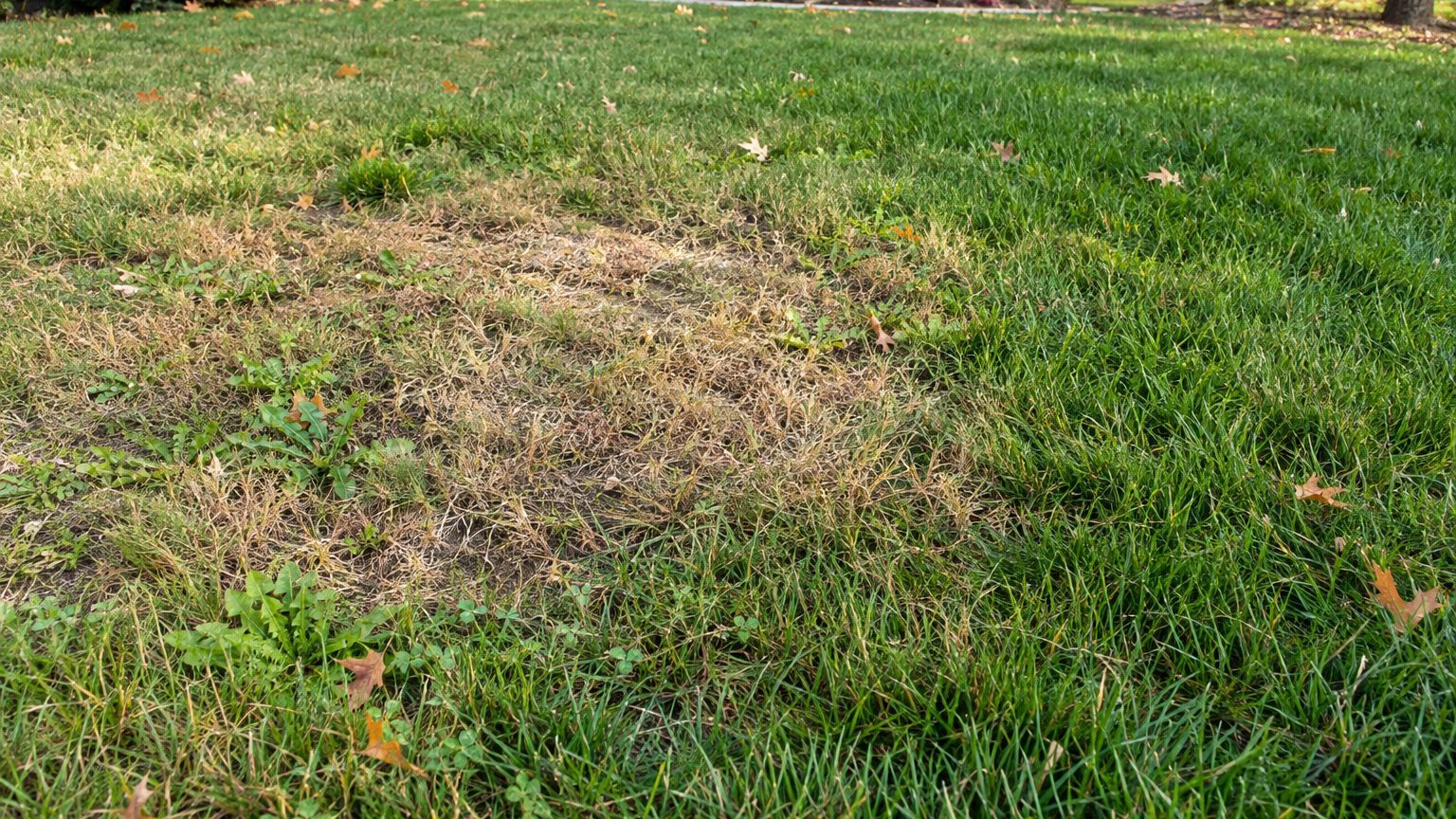
Tan rings spreading across the grass on a humid July morning, crabgrass sprawling along the driveway, a spongy lawn that sheds water: Virginia lawns show trouble in familiar ways. The state grows cool-season tall fescue alongside warm-season bermuda and zoysia, and each has its own weak spots. Once you know the sign, the season and the fix, most problems stay small.

Lawn Pests and Diseases in Virginia

Crabgrass

Crabgrass — Lawn Problems and Solutions in Virginia

Coarse, pale green blades fan out flat from a central point, usually along pavement and in thin spots. It dies with the first hard frost and leaves bare soil that invites more seedlings the next year.

A pre-emergence preventer goes down in March, and it also works in February, April or May if spring runs odd. Dense turf is the lasting fix, since seedlings struggle without light.

Brown Patch

Roundish tan or brown patches, sometimes ringed with a dark, smoky edge on dewy mornings, appear on tall fescue in hot, muggy weather. The blades die, but the crowns often survive and recover.

Water early in the day during June, July and August so the blades dry out by afternoon. Wet grass overnight is what feeds the fungus.

White Grubs

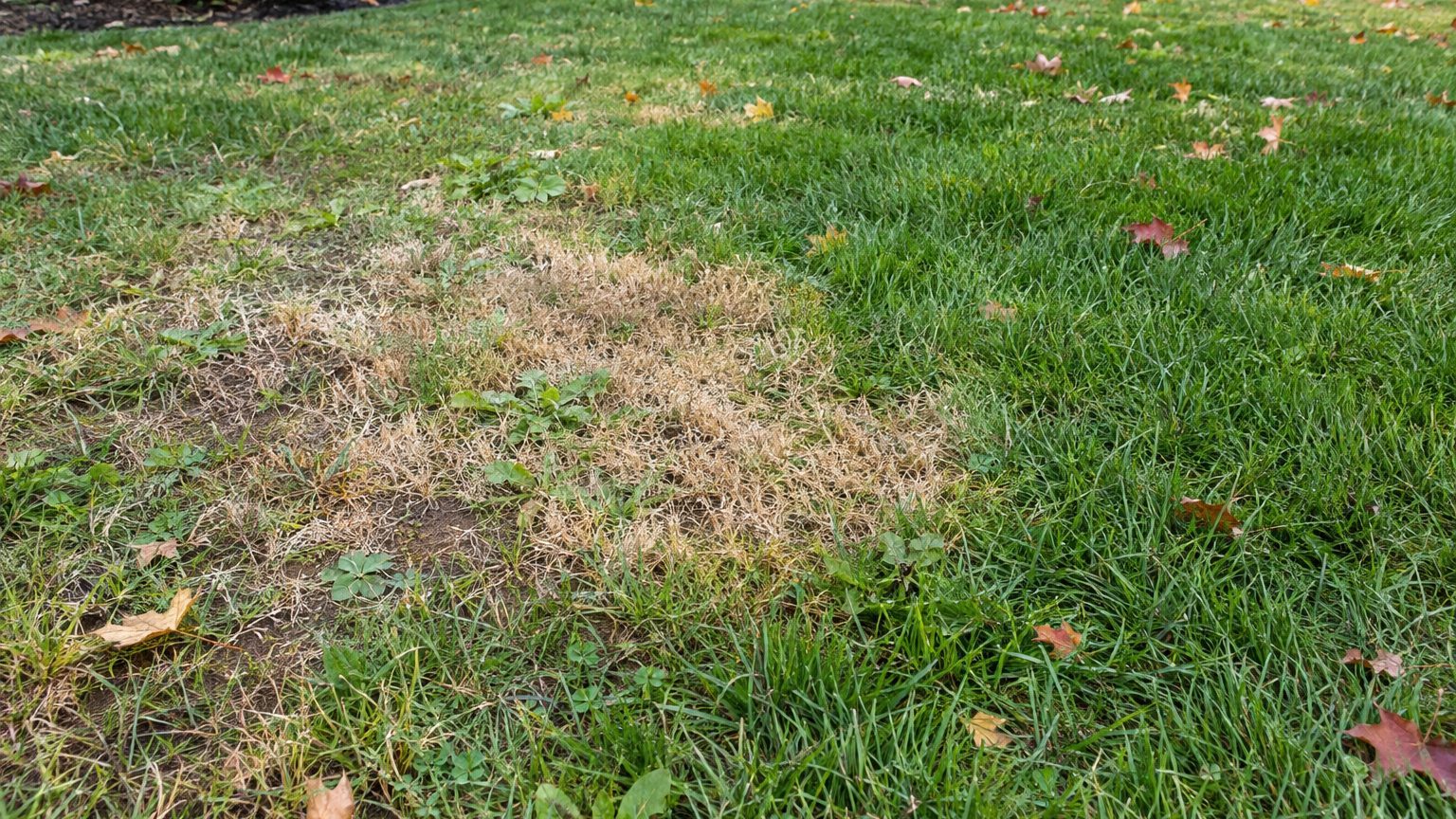
Irregular patches turn brown in late summer and feel loose underfoot. Tug the turf and it peels back like a carpet, with white, C-shaped grubs curled in the soil. Crows, raccoons and skunks tearing at the lawn can point to grubs as well.

Treatment depends on how many grubs you find, so ask your county extension office before treating.

Thick Thatch Layer

Thatch is the tight, spongy mat of stems and roots between the green blades and the soil. A layer up to 1/2 inch is healthy. Above that, dethatch or core aerate.

On tall fescue, dethatching works in August and September. Bermuda and zoysia want it in May and June, and April also works.

How to Tell Which Lawn Problem You Have

Start with the shape of the damage, then check the season and whether the grass pulls up. Diagnosis rarely rests on a clue in isolation; consider the clues together.

Get down on your knees, tug a handful of blades, and look at the soil underneath. That quick check can narrow the diagnosis.

Sign Likely cause When to act
Coarse, pale clumps spreading flat in summer sun Crabgrass Preventer in March
Spongy turf, water beading and running off Heavy thatch August or September on fescue
Thin, bare grass in open sun after summer Stressed tall fescue Aerate and overseed in August

Tan rings in muggy weather that stay put when you tug the blades point to brown patch. Loose turf that rolls back like a rug, plus animals digging at it, points to grubs.

Where Lawn Problems Are Worst in Virginia

Virginia stretches from ocean to mountains, and the problems shift with it.

  • Virginia Beach and Hampton Roads: The mildest part of the state, so crabgrass and warm-weather fungus get a long run. Warm-season grasses such as zoysia and bermuda do well here.
  • Blue Ridge: Spring comes weeks later and fall arrives sooner, so preventer and seeding timing slide with it. Tall fescue is more at home, with less summer disease stress.
  • Southwest Virginia: Cold arrives early, which gives late-summer seed less time to root. Plan on seeding toward the front of the window.

The Piedmont, including Richmond, sits between these extremes, so use the middle of each timing window.

Lawn Care Mistakes That Invite Problems in Virginia

Mowing Too Short

Scalped grass has less leaf to feed itself, and bare soil between blades gives crabgrass its opening. Mow regularly through the growing season, which runs March to November for tall fescue and April to October for bermuda and zoysia. Raise the deck, keep the blade sharp, and avoid removing too much height at once.

Sprinkling Lightly

A quick daily splash keeps roots shallow and the surface damp, which is just what brown patch likes. Soak the lawn deeply and less often during June, July and August, and let the top of the soil dry between waterings.

Feeding Fescue in Summer

Nitrogen in hot weather pushes soft growth that disease attacks first. Never fertilize tall fescue in summer. Feed it in March, September and October instead, and April works as a fallback.

Bermuda and zoysia are the reverse, and they eat best in May, June and July.

Where to Get Lawn Advice in Virginia

Lawn trouble is easier to name with someone who has seen the soil and the weather you deal with. Virginia Cooperative Extension is the state’s land-grant service, with offices serving local communities.

  • The extension website has lawn care publications you can read before a problem gets worse, such as when patches first appear.
  • Your county extension office can answer questions about your own yard, including soil testing, and is worth calling before you buy a treatment.

Common Questions

Can You Grow Bermuda or Zoysia in Virginia?

Yes, both are grown in the state, mostly in the warmer east and south. Seed warm-season grass in May, with June as a fallback. Sod goes down in May, and June and July also work.

Is Virginia One Hardiness Zone?

No. In the USDA system, Virginia spans zones 5a to 8b, based on average annual extreme minimum temperature. Mountain areas sit at the colder end and the coast at the warmer end, so check your own location.

Does the Last Frost Date Tell You When to Seed?

Not by itself. Frost date marks the risk of a freeze, and grass growth follows soil warmth and the grass type. For tall fescue, late summer is the seeding time, with August best and September as a fallback.

Virginia Lawn Care Schedule, Month by Month

Virginia Lawn Care Schedule, Month by Month

Tall fescue greens up in early spring while the bermudagrass next door stays straw-brown into May. That gap drives the whole Virginia lawn schedule.

What to Do Each Month in a Virginia Lawn

Lawn in Virginia

Most Virginia lawns are cool-season grass, usually tall fescue, with bermuda and zoysia more common in the warmer parts of the state. Tasks below apply to cool-season turf unless a line names warm-season grass.

Month In the lawn
January Rest. The grass is dormant, so stay off it when it is frozen and let it sleep.
February Still quiet. In a mild spell, crabgrass preventer also works now, before the soil wakes up.
March Put down crabgrass preventer and feed tall fescue as it starts growing again. Virginia law says lawn maintenance fertilizer sold in the state contains no phosphorus, which is reserved for new lawns and repairs. Start mowing as growth picks up.
April Keep mowing. If March slipped by, preventer and fertilizer still work now. Warm-season lawns begin growing, so start mowing them and dethatch them if the thatch is thick.
May Warm-season month. Seed or lay sod bermuda and zoysia, dethatch them, and start feeding them. Preventer still works if you are late.
June Water deeply as heat builds. Keep feeding and dethatching warm-season grass, and if you missed May, you can still seed or sod it.
July Water through dry spells and keep mowing. Warm-season lawns take their last feeding of the season now, while fescue gets no fertilizer in summer. Sod still works for warm-season grass.
August Core aerate, dethatch and seed tall fescue, since late summer gives new seed warm soil and falling heat. Keep watering the new seed.
September Feed the fescue and keep mowing. If August got away from you, aerating, dethatching and overseeding still work now.
October Feed again for root growth before dormancy and keep mowing. Warm-season grass slows down and heads toward its tan winter color.
November Make the final mows of the year for cool-season grass while it still grows, and keep fallen leaves from smothering it.
December Rest. The lawn is dormant, and there is nothing to do but watch for matted leaves.

Water only when rain falls short, and aim for deep soakings rather than daily sprinkles. Roots follow the water, so shallow watering leaves summer grass weak.

When Does the Lawn Season Start and End in Virginia?

Growth follows soil warmth and grass type, not the calendar. Cool-season seed germinates when soil sits at 50 to 65 °F, but Virginia fescue is seeded in late summer so young roots are not exposed to the next summer’s heat. Warm-season seed needs soil at 65 to 70 °F, so bermuda and zoysia start later and stop sooner.

Frost dates matter mainly for young seedlings. In Virginia Beach, the last spring freeze usually falls between March 20 and April 3, and a seedling that sprouts before then can be nipped.

The first fall freeze in Virginia Beach usually comes between November 10 and November 24. Fall-seeded fescue has the weeks before that to root in. Inland and in the mountains, both dates shift, so treat these as the mild end of the state.

How the Lawn Calendar Shifts Across Virginia

Elevation and distance from the Atlantic help move the calendar, and each part of the state runs a little differently.

  • Hampton Roads and Virginia Beach: The mildest spring and fall in the state. Fescue wakes up early here, and bermuda and zoysia do well, so you can start tasks at the early end of each window.
  • Shenandoah Valley and the Blue Ridge: Spring comes weeks later and fall frost arrives sooner. Lean toward the later end of spring tasks and seed fescue promptly in late summer.
  • Southwest Virginia: Cooler and higher, with the same pattern as the Blue Ridge. Warm-season grasses are a harder sell here, and fescue is the safer bet.

Northern Virginia and the Richmond area fall between these, so use the middle of each window.

Lawn Care Timing Mistakes to Avoid in Virginia

Seeding Fescue in Spring

Spring seed sprouts, then meets summer heat before roots are deep. Weak seedlings burn out, and crabgrass moves into the gaps. Seed tall fescue in August instead, and if you miss it, September still works.

Feeding Fescue in Summer

Fertilizer in July pushes soft growth on a stressed lawn and feeds disease. Tall fescue wants fertilizer in early spring and fall. Keep summer feeding for bermuda and zoysia, which grow hardest then.

Dethatching at the Wrong Time

Tearing out thatch from bermuda or zoysia in late summer leaves the grass too little time to recover before dormancy. Do it in May or June, when it is growing fast. Cool-season lawns are the opposite, and August and September are their windows.

Where to Get Lawn Advice in Virginia

Virginia Cooperative Extension publishes lawn guidance written for the state’s soils and grasses, and every county has an office staffed by local agents.

  • The extension website covers grass choice, weed control and seeding, so check it before you buy seed or fertilizer.
  • Your county extension office can explain a soil test, which tells you what the lawn needs before feeding in spring or fall.
  • A call to the county office works best when you describe the problem and where on the lawn it shows.

Common Questions

How Can You Tell If Your Lawn Is Tall Fescue or Bermuda?

Look at the color in winter and the blades in summer. Fescue stays green or dull green through winter and has wide, coarse blades. Bermuda turns tan after frost and has fine blades and creeping runners.

Is a Soil Test Worth Doing Before Fertilizing?

Yes, especially if the lawn is thin even though you feed it. A test shows acidity and nutrient levels, so you add what the soil lacks instead of guessing, and you can take a sample any time the ground is workable.

What Should You Do with Fallen Leaves on a Lawn?

Mow light layers into small pieces so they break down in the turf. A thick, matted layer blocks light and holds moisture, which invites disease, so rake or mulch it off before it covers the grass.

Best Grass Seed for Vermont

Best Grass Seed for Vermont

A Vermont lawn that greens up thick in May and still looks good after a cold winter is usually made of cool-season grasses, not a single species. Kentucky bluegrass, fine fescues, perennial ryegrass and tall fescue all grow here, and which one leads depends on your sun, your soil and how much work you want to do.

Which Grass Grows Best in Vermont?

Vermont spans USDA hardiness zones 3b to 5b, and cool-season grasses handle its cold winters and grow actively in spring and fall. Warm-season grasses stall in the short, cool summers and rarely come back dependably. These grasses offer different balances of winter hardiness, maintenance, traffic tolerance, and establishment speed.

Fine Fescues

Creeping red, chewings and hard fescue handle cold, shade and thin soil better than bluegrass does. They need less fertilizer and less mowing, which suits a yard under maples or on a rocky slope.

The trade-off is traffic. Fine fescue wears down under kids and dogs, so keep it for the quieter parts of the yard.

Kentucky Bluegrass

Bluegrass is the classic Vermont lawn. It tolerates winters in every zone of the state, and it spreads by underground stems to fill in thin spots on its own.

It wants full sun and regular feeding, and it germinates slowly. Plan on patience after seeding, since the seedlings take their time showing up.

Tall Fescue

Tall fescue sends down deep roots, so it copes well with dry spells and heavy use. It makes a coarser, bunchier lawn than bluegrass.

Hard winters can thin it in colder hills, while milder lower valleys and high-traffic yards suit it well.

Perennial Ryegrass

Ryegrass sprouts fast, which makes it useful for quick cover on bare spots and as a partner in a mix. Ryegrass can suffer winter injury in Vermont.

Use it as a minor part of a blend rather than on its own, especially in the colder parts of the state where winter injury is a real risk.

How to Choose Grass Seed for a Vermont Yard

Start with the conditions you can see: how many hours of sun reach the lawn, how much the yard gets walked on, and whether you can water. Then decide how much mowing you are willing to do.

Vermont yards can be patchwork, so a blend of suitable grasses often works better than a single species.

Your yard Grass that fits Why
Full sun, tidy lawn Kentucky bluegrass Dense turf that repairs itself
Shade under trees Fine fescues Tolerate low light and poor soil
Heavy foot traffic Tall fescue Deep roots, tough blades
No watering planned Fine fescues or tall fescue Handle dry spells well
Low mowing, low feeding Fine fescues Grow slowly and need little
Quick cover on bare soil Perennial ryegrass in a blend Sprouts fast

Sunny and shady spots in the same yard can take different seed. Sow bluegrass-heavy mixes where the sun is strong, and fescue-heavy mixes under the trees.

Which Grasses Grow Where in Vermont

Vermont is small, but elevation and the lake shape the growing season, and that shifts which grass is the safer bet.

  • Burlington and the Lake Champlain Valley: this is the mildest corner of the state, with a spring last frost between April 30 and May 10. Bluegrass and tall fescue both do well here.
  • The Green Mountains: shorter seasons and colder winters favor fine fescues and hardy bluegrass over ryegrass and tall fescue.
  • The Northeast Kingdom: this is the coldest, shortest-season part of the state, so lean on fine fescues and bluegrass and seed early in the window.

Outside Burlington, elevation and local exposure can shorten the time new seed has to root.

Grass Seed Mistakes to Avoid in Vermont

Seeding at the Wrong Time

Seed does best in August and September, when soil is warm and cold has not arrived yet. If you miss that window, May also works. In Burlington, the first fall frost lands between October 3 and October 13, so young grass needs those earlier weeks to root.

Burying the Seed

Cover seed with no more than 0.25 inch of soil, and press it down so it touches the ground firmly. Deep seed may never sprout. A light raking and a roll or a walk-over with a flat board does the job.

Choosing the Wrong Species

Planting ryegrass alone in a cold hollow, or bluegrass in deep shade, sets you up for thin turf. Match the seed to the spot, and use a blend when conditions vary across the yard.

Fertilizing new grass has a legal limit too. Vermont law bars lawn fertilizer before April 1 or after October 15, and on frozen ground.

Where to Get Lawn Advice in Vermont

Local help can settle questions about soil, shade and the right mix for your own yard.

  • University of Vermont Extension offers turf guidance and soil testing information, so check in before you buy seed.
  • Your county extension office can speak to conditions in your town, and it is a good call in late summer, before the seeding window opens.

Common Questions

Can You Plant Warm-Season Grass in Vermont?

Warm-season grasses are a poor fit here. Summers are short and winters are cold, so they struggle to establish and rarely survive. Stick with cool-season species.

Is a Seed Blend Better than a Single Grass?

Yes, when conditions vary across the property. Sun, shade and slopes mix together on one property, and a blend lets each grass fill the spot it likes best.

Can You Overseed an Existing Lawn in Spring?

You can, and May is the spring fallback. August and September give better results, because the soil is warm and weeds are less aggressive.

Lawn Problems and Solutions in Vermont

Lawn Problems and Solutions in Vermont

Gray, matted patches show up where the last snowbank melted, and thin spots turn crabgrass-green by summer. Vermont lawns deal with a short growing season, long snow cover, and cool, damp stretches that favor fungus. Most problems here trace back to a handful of causes, and each has a season and a fix.

Lawn Pests and Diseases in Vermont

Snow Mold After Melt

Snow Mold After Melt — Lawn Problems and Solutions in Vermont

As snow recedes, you may find circular patches of gray or pinkish matted grass, often crusty on top. Long snow cover over unfrozen ground sets it up, and Vermont delivers that often. Rake the patches gently to fluff the blades and let air in, then give the grass time to recover before deciding whether to reseed.

Crabgrass in Thin Spots

Crabgrass appears as coarse, light green clumps that spread flat in bare or thin turf once the soil warms. A pre-emergence preventer works best in April, and it also works in May. After that window, thicker grass is your main defense, so fill bare spots rather than leaving soil open.

Dollar Spot in Summer

Look for small, straw-colored spots, sometimes with thin tan bands across individual blades in the morning dew. It shows up in warm, humid weather, especially on lawns short on nitrogen. Mow at a healthy height, water deeply in the morning, and feed on schedule so the turf stays dense enough to outgrow it.

Red Thread in Cool, Wet Weather

Pink to red threads stick out from grass blades, and the lawn looks scorched in irregular patches. It favors cool, damp weather and underfed turf, which describes plenty of Vermont springs and autumns. The grass usually survives it. A fertilizer application in the right window typically helps the lawn grow out of it.

White Grubs in Late Summer

Grubs are plump, white, C-shaped larvae that chew roots, so damaged turf lifts like a loose carpet. Brown patches that peel back with no resistance, especially in late summer and early fall, point to them. Skunks and crows digging up the lawn are another giveaway. Reseed damaged areas in August or September.

Moss and Thin Grass in Shade

Moss takes over where trees block sun, soil stays wet, or the ground is compacted. Spongy turf that squishes underfoot may also hold a thatch layer, and a layer up to 1/2 inch thick is healthy. Beyond that, dethatch or core aerate. Open up the canopy where you can and use a shade-tolerant seed mix.

How to Tell Which Lawn Problem You Have

Start with the shape of the patch and the time of year, then pull on the grass. Whether the turf lifts, whether it is wet or dry, and whether the spot sits in sun or shade narrow things down quickly.

Symptoms can mislead you, so compare the patch, timing, and turf condition before you act. A brown patch could be a disease, a pest, or simple drought stress.

What you see When Where Points to
Gray or pink matted circles Right after snowmelt Where snow piled up Snow mold
Coarse light green clumps Summer Thin or bare turf Crabgrass
Small straw-colored spots Warm, humid spells Dry, underfed lawns Dollar spot
Pink threads on blades Cool, wet weather Lawns low on nitrogen Red thread
Turf peels up like carpet Late summer to early fall Sunny, irrigated areas White grubs
Soft green mat, thin grass Any season Shade, wet or packed soil Moss

If the grass resists a gentle tug, suspect a fungus or a stress problem. If it comes away with no roots, grubs are the likelier culprit.

Where Lawn Problems Are Worst in Vermont

Vermont’s lawns face different pressure depending on elevation and distance from Lake Champlain.

  • Champlain Valley: The lake moderates temperatures, so Burlington and nearby towns have the mildest conditions. Crabgrass and summer fungi can remain active longer here, and spring work can start earlier.
  • Green Mountains: Snow lingers on the slopes and the season runs substantially shorter. Snow mold is more persistent, and seed needs earlier timing to root before cold returns.
  • Northeast Kingdom: Cold settles in early and stays late, so snow mold and winter injury are the common troubles. Choose hardy grass blends and give new seed a full late-summer start.

Wherever you live, microclimates matter, since a shaded north-facing yard acts like a higher elevation.

Lawn Care Mistakes That Invite Problems in Vermont

Mowing Too Short

Scalped grass lets sunlight reach the soil and invites crabgrass and weak roots. Mowing runs from April through November here, so there are many chances to get it wrong. Set the mower high, keep the blade sharp, and leave clippings to feed the lawn.

Watering Lightly and Often

Frequent light sprinkling keeps the surface damp, which helps dollar spot and red thread take hold and keeps roots shallow. Water matters most in June, July and August. Soak the lawn deeply in the morning, then let the top layer dry before watering again.

Fertilizing at the Wrong Time

Vermont law bars lawn fertilizer before April 1 or after October 15, and on frozen ground. Within that window, feed in May and September, and October also works. Applying nitrogen in midsummer pushes soft growth that disease likes, so skip it.

Where to Get Lawn Advice in Vermont

For problems that do not match a clear description, local expertise saves guessing. A sample of the damaged turf, plus a photo of the whole area, gives an advisor much more to work with.

  • University of Vermont Extension offers lawn guides and a way to ask questions, so go there when a patch resists a quick diagnosis.
  • Your county extension office can help identify pests and diseases, so contact it as soon as you spot unusual damage.
  • A soil test before September seeding or feeding tells you what the lawn needs, so collect samples ahead of that window.

Common Questions

When Should You Seed a Lawn in Vermont?

August and September give new grass warm soil and cooler air to root before winter. If you miss that window, May also works, though summer heat and weeds compete harder with spring seedlings.

When Should You Core Aerate or Dethatch in Vermont?

September suits both jobs, because the grass recovers quickly and seed can go down right after. If you miss it, May is the fallback.

How Long Can You Keep Mowing in Vermont?

Mowing continues from April through November, as long as the grass is growing. Keep cutting at a steady height into late fall so the lawn does not go into winter long and matted, which makes snow mold worse.

Vermont Lawn Care Schedule, Month by Month

Vermont Lawn Care Schedule, Month by Month

Vermont lawns spend a long stretch under snow, then green up fast once the soil thaws and drains. The work comes in a spring push, a quieter summer, and an early-fall rush.

What to Do Each Month in a Vermont Lawn

Cool-season grasses carry the Vermont lawn, so the big jobs cluster in spring and early fall, when roots and shoots can recover. Summer is for mowing and watering, and winter is for staying off the turf.

Month In the lawn
January Rest. The grass is dormant under snow, so keep foot traffic and plow piles off the turf.
February Rest. Nothing is growing, and frozen or soggy ground is easily damaged by walking.
March Still dormant. Watch for matted, gray patches as the snow melts, and rake lightly only once the ground is firm.
April Start mowing as growth picks up, and put down crabgrass preventer before the weed seed sprouts.
May Feed the lawn as it grows hardest. If you missed April, crabgrass preventer still works now, and so do seeding, aeration and dethatching for a spring fix.
June Mow regularly and start watering when rain falls short. Deep soaking beats frequent sprinkling.
July Keep mowing and watering through the heat. Brown, crisp turf in dry spells is often dormancy, not death.
August Begin seeding bare or thin areas, and keep the seedbed moist. Mow and water as in July.
September The big month. Core aerate, dethatch, seed and feed while warm soil and cool nights help roots take hold.
October Keep mowing. If you missed September, feeding still works now. Vermont law bars lawn fertilizer on frozen ground and after October 15. It also bars it before April 1.
November Mow until growth stops, and clear fallen leaves so they do not smother the grass.
December Rest. The grass is dormant, and the lawn needs nothing from you.

Seeding is easy to push into the wrong season. August and September give seedlings warm soil and the whole fall to root, while spring seeding has to race summer heat and weeds.

When Does the Lawn Season Start and End in Vermont?

Grass wakes up when the soil warms, not when the calendar says spring. Seed germinates once the soil reaches 50 to 65 °F, which is why April mowing starts slowly and why seed tossed on cold ground just sits there. Cool-season lawns slow as soil cools in late fall, and mowing carries on into November until growth stops.

Frost dates matter mainly for young grass. In Burlington, the last spring frost usually falls between April 30 and May 10, so seedlings sown in spring can still get nipped. Other parts of the state run later.

The first fall frost arrives between October 3 and October 13 in Burlington. Seed sown in late summer needs time to establish before then, which is the reason August and September are the seeding months. Higher ground sees frost sooner.

How the Lawn Calendar Shifts Across Vermont

USDA hardiness zones run from 3b to 5b across the state. Elevation and Lake Champlain both shape local lawn conditions.

  • Champlain Valley: The lake keeps the Burlington area mildest. Spring work starts here first and fall work can stretch a little longer.
  • Green Mountains: Cold air and a shorter season push spring jobs later. Do your fall seeding toward the early part of the August to September window.
  • Northeast Kingdom: This area has a substantially shorter season than Burlington, so fall work may need to start sooner. Seed in August, and wait for the soil to warm before spring work.

At higher elevations, use local soil and growth conditions to adjust the statewide windows.

Lawn Care Timing Mistakes to Avoid in Vermont

Fertilizing Too Late in Fall

Fertilizing Too Late in Fall — Vermont Lawn Care Schedule, Month by Month

Feeding after the grass has slowed pushes soft top growth right before hard cold, and frozen ground sheds the fertilizer into runoff instead of the roots.

Feed in September, when roots are active. If you miss it, early October is the fallback.

Crabgrass Preventer Applied Late

Preventer works only before crabgrass seed sprouts. Spread it after the weeds are up and you have paid for a product that does nothing.

Apply it in April. May still works if spring got away from you, but treat it as a last window.

Seeding After the Season Cools

Seed that goes down in October has little time to root before the first hard frost, and winter heaves thin seedlings out of the ground. A late sowing often looks fine in fall and then vanishes in spring.

Seed in August or September while soil is warm. Spring seeding in May is the fallback, but expect more weed competition.

Where to Get Lawn Advice in Vermont

Vermont’s soils and microclimates vary a lot from one town to the next, so local advice is worth the call. University of Vermont Extension and your county office can sort out a problem patch in your own yard.

  • University of Vermont Extension offers lawn guidance and soil testing information, and a test before fall feeding tells you what the grass truly needs.
  • Your county extension office can help with specific problems like thin turf or weeds, so go before the September seeding window opens.

Common Questions

Is October Too Late to Seed a Lawn in Vermont?

Usually, yes. Seed goes in during August and September, so seedlings can root before cold. If you miss that window, try again in May rather than sowing in late fall.

When Should You Stop Mowing in Vermont?

Keep mowing through November, until the grass stops growing. After that the lawn is dormant, and there is nothing to cut until April.

Do You Need to Water a Vermont Lawn in Spring and Fall?

Not routinely. Regular watering matters most in June, July and August. In other months, water only new seed, which needs to stay moist while it sprouts and roots.

Best Grass Seed for Utah

Best Grass Seed for Utah

Grass that greens up in the cool of spring and turns thick again in September is the kind that lasts in a Utah lawn. Winters here freeze hard and summers run dry and hot, so cool-season grasses carry the state. Most yards do well with Kentucky bluegrass or tall fescue, and the shade and sun in your yard decide the rest.

Which Grass Grows Best in Utah?

Cool-season grasses suit Utah, because they handle the cold winters across a state that spans USDA hardiness zones 4a to 9a. They grow actively in spring and fall, then slow down in summer heat. Warm-season grasses are a poor fit for most of the state, and the lawn grasses recommended for this region are all cool-season types.

Kentucky Bluegrass

Bluegrass is a familiar Utah lawn grass, and for good reason. It shrugs off hard winters and spreads by underground stems, so it fills in thin spots and recovers from wear on its own.

The tradeoff is thirst. It wants regular water through the summer months, and it goes straw-colored if you let it dry out. It also germinates slowly, so be patient after seeding.

Tall Fescue

Tall fescue puts down deep roots, which helps it ride out dry spells better than bluegrass. That makes it a smart pick for sunny yards where you would rather water less.

It grows in clumps instead of spreading, so bare patches fill in slowly. Overseed thin areas now and then to keep the turf dense.

Fine Fescues

Creeping red, chewings and hard fescue form a soft, fine-bladed lawn that tolerates shade and poor soil. They are the usual answer under mature trees, where bluegrass thins out.

They do not like heavy foot traffic or soggy ground. Plan on them for quiet corners, not for a backyard where kids and dogs run daily.

Perennial Ryegrass

Perennial ryegrass sprouts fast, which is handy for patching a worn spot or getting quick green. It holds up to traffic well.

Perennial ryegrass can thin during severe cold snaps without snow cover. Many Utah homeowners use it as a minor part of a mix instead of the whole lawn.

How to Choose Grass Seed for a Utah Yard

Start with what your yard actually does: how much sun it gets, how much foot traffic it sees, and how much water you are willing to apply. Those answers narrow the field quickly.

Mixing compatible grasses is common and sensible, such as bluegrass with a little ryegrass. Read the seed tag and look for the species names rather than a marketing label.

Grass Season Best yard fit
Kentucky bluegrass Cool Full sun, heavy use, and a willingness to water and mow regularly
Tall fescue Cool Sunny yards where you want deep roots and less watering
Fine fescues Cool Shade under trees, low traffic, and less frequent mowing
Perennial ryegrass Cool Quick patches and wear, ideally blended with another grass

If you want a lawn you rarely mow, fine fescues grow slowly and stay short. For a play area that must recover fast, bluegrass with some ryegrass is the sturdier pairing.

Which Grasses Grow Where in Utah

Elevation and latitude shape what thrives, and the state’s lawn areas differ enough that the same seed bag will not suit Utah uniformly.

  • Wasatch Front and Salt Lake Valley: This is the mild core of the state. Bluegrass and tall fescue both do well, and fine fescue earns its place in shaded lots.
  • Cache Valley and Park City: Colder winters and a shorter growing season favor bluegrass and fine fescues. Ryegrass is a weaker bet here.
  • St. George and the Dixie area: Summers are hotter and longer, so deep-rooted tall fescue gets the nod. Tall fescue still needs regular irrigation through St. George summers.

Check your own street’s conditions, because a shady cul-de-sac in the same town can call for a different mix than a sunny slope.

Grass Seed Mistakes to Avoid in Utah

Choosing the Wrong Grass

Planting bluegrass in deep shade or relying on ryegrass alone at high elevation can leave a thin lawn. Match the species to the spot first, then buy.

When a yard has both sun and shade, a blend that includes a fine fescue lets each part of the lawn find its grass.

Seeding at the Wrong Time

August and September give new seed warm soil and cooling air, so roots grow before winter. Spring also works, in April or May, but young grass then has to face summer heat before it matures.

Seeding in midsummer wastes seed, because it dries out quickly and weeds compete.

Too Much, Too Little, or Buried

Heavy seeding crowds seedlings, and a thin scatter leaves room for weeds. Follow the rate on the bag for the species you chose.

Cover seed with no more than 0.25 inch of soil, and press it down so it touches the ground firmly. Seed buried deeper often never surfaces.

Where to Get Lawn Advice in Utah

Local help is close by, and it is tuned to Utah soil and water.

  • Utah State University Extension publishes lawn guides for the state’s climate, and it is a good first stop before buying seed.
  • Your county extension office can answer questions about your soil and your town’s conditions, so call before you start a big renovation.

Bring a soil sample or a photo of the thin spot, and ask which grass has held up on your street.

Common Questions

Should You Put Down Crabgrass Preventer When Seeding?

Not usually: many crabgrass preventers also stop lawn seed from sprouting, so check the product label before use at seeding. If you seed in spring, skip any preventer that the label says is incompatible with seeding. Seeding in August or September avoids the clash, and preventer goes down in April, with May as a fallback.

When Should You Fertilize a New Lawn in Utah?

September and November are the usual times for feeding, and May works as a fallback. A September feeding also helps a lawn seeded that same season fill in before winter.

Should You Aerate or Dethatch Before Overseeding?

Core aeration can improve seed-to-soil contact, while dethatching helps only when thatch blocks the soil. Core aeration fits September, with April and May as spring options, while dethatching suits August or September, with April as a fallback. Choose the treatment your lawn needs before you spread seed.

Lawn Problems and Solutions in Utah

Lawn Problems and Solutions in Utah

Straw-colored patches in July or dandelions spreading through April grass can send Utah homeowners looking for answers. Common lawn problems here often trace back to weeds, insects, fungi, or maintenance habits. Once you identify the problem, the next step is usually clear.

Lawn Pests and Diseases in Utah

Lawn in Utah

Dandelions in Spring

Bright yellow heads over a rosette of jagged leaves mean a taproot is anchored underneath. Dandelions move into thin turf, where sunlight reaches the soil. Pull them after a rain, when the root slides out whole, and thicken the grass around the gap so seedlings have no bare ground.

Crabgrass in Summer

Crabgrass looks like pale green, flat-lying clumps with stems spreading outward from the center like spokes. It sprouts in bare, warm soil and thrives where the lawn is scalped or thin. Stopping it before it sprouts works far better than fighting a mature plant, because the plant dies at frost but leaves seed behind.

Billbug Damage

Billbug damage shows up as irregular tan patches, often along sunny driveways and sidewalks, where the grass tugs loose with almost no resistance. Look at the crown and you will find sawdust-like debris. Bluegrass lawns are the usual target. Regular watering and a healthy root zone help the lawn outgrow light feeding.

Dollar Spot

Small, straw-colored spots about the size of a silver dollar appear on grass that is lightly fed and dry at the root, often with cobweb-like threads in the morning dew. The fungus favors warm days and cool, damp nights. Feeding the lawn at the right time and watering deeply in the morning usually brings it back.

White Grubs

Grubs are fat, C-shaped, creamy larvae that chew roots in late summer. The sign is a patch that feels spongy and rolls back like a carpet, with no roots holding it down. Digging by birds or skunks also points toward grubs. Lift the edge of the sod and check the soil beneath.

How to Tell Which Lawn Problem You Have

Do not rely on a clue in isolation. Pair what the patch looks like with where it sits and when it appeared, then tug the grass as a simple test. Grass that lifts like a mat points to root feeders, while grass that stays firmly rooted points to disease, drought or weeds.

What you see Where and when Points to
Tan patches that lift easily Late summer, often in full sun White grubs
Tan patches that stay rooted Beside pavement, early summer Billbugs or heat stress
Silver-dollar straw spots Warm days, dewy mornings Dollar spot
Pale, sprawling clumps Bare or thin spots, summer Crabgrass
Yellow flowers on a taproot Spring, thin turf Dandelions
Thin grass, mossy or bare Under trees, shaded sides Too little light

Spongy turf that feels like a mattress underfoot is a separate case. A thatch layer up to 1/2 inch thick is healthy, and anything thicker calls for dethatching or core aeration. Dethatch in August or September, or in April if you missed the late-summer window.

Where Lawn Problems Are Worst in Utah

Utah stretches across USDA hardiness zones 4a to 9a, so the same lawn symptom can have different roots depending on where you live.

  • Wasatch Front: Salt Lake City, Provo and Ogden see heat-stressed bluegrass along pavement and billbug trouble on sunny strips. Deeper watering and a taller mowing height help.
  • St. George: The long, hot summers favor weeds and drought stress, so lawns here thin out fast if watering falls behind. Warm-season grass handles the heat better than bluegrass.
  • Cache Valley and Park City: Cold winters and short seasons slow recovery. Snow mold and slow spring green-up are the common complaints, and seeding has less time to establish.

If your property sits on a bench or near a canyon mouth, expect conditions to differ from the nearby valley floor.

Lawn Care Mistakes That Invite Problems in Utah

Mowing Too Short

Scalped grass exposes soil, and sun-baked soil is where crabgrass and dandelions germinate. Mowing runs from April through November here, so there is plenty of opportunity to get it right. Raise the deck, mow with a sharp blade, and leave the clippings to feed the soil.

Watering Lightly and Often

Short, frequent sprinkling keeps roots near the surface, which leaves the lawn vulnerable to summer heat. The main watering season runs June through August. Water deeply and less often, early in the morning, so roots follow the moisture down and the blades dry before evening.

Feeding at the Wrong Time

Heavy feeding in midsummer pushes soft growth that disease and heat both punish. Utah lawns do best when fed in September and November, with May as a fallback. A well-fed lawn in fall builds roots and thickens the turf before winter, which crowds out weeds the next spring.

Where to Get Lawn Advice in Utah

Local soil, elevation and water vary enough that local advice pays off. Local extension resources can answer questions about your specific yard.

  • Utah State University Extension publishes lawn guides written for the state’s climate. Check it before buying treatments for an unknown patch.
  • Your county extension office can look at a sample of turf or a grub you dug up. Bring it in as soon as you spot the problem.

Common Questions

When Should You Put Down Crabgrass Preventer in Utah?

April is the target, before crabgrass sprouts in warming soil. If you miss it, May still works. After May, focus on crabgrass that has already emerged instead of applying a preventer.

When Is the Best Time to Seed a Lawn in Utah?

August and September give new grass warm soil and cooler nights to root before winter. April and May also work if fall slips by.

When Should You Core Aerate a Utah Lawn?

September is the right month for core aeration in Utah, because the grass recovers quickly and fills in the holes. April and May also work if you missed the fall window.

Utah Lawn Care Schedule, Month by Month

Utah Lawn Care Schedule, Month by Month

Utah lawns spend a long winter asleep, wake slowly in spring, and reward the work done in late summer more than anything done in May. Most of the yard’s year falls into a spring tune-up and a late-summer rebuild, with watering carrying the heat in between.

What to Do Each Month in a Utah Lawn

Lawn in Utah

The calendar below highlights the work that fits each part of the year, and the order matters more than squeezing in every task. Mowing runs from April through November, while the seed, aeration and feeding all cluster around late summer and fall.

Month In the lawn
January Rest. The grass is dormant, so keep foot traffic off frozen turf and let the snow sit.
February Rest. The grass is still dormant. Sharpen the mower blade now so it cuts cleanly come spring.
March Rest, mostly. The lawn is only stirring, so watch for matted patches under old snow and hold off on seed and fertilizer.
April Apply crabgrass preventer before the weed sprouts, and begin mowing as growth picks up. Core aeration, dethatching and seeding also work this month if the soil is workable.
May Mow regularly as growth speeds up. If April slipped by, preventer, aeration and seeding still work now, and a light feeding can go down.
June Mow and begin deeper watering as heat builds. Water is what keeps cool-season turf green now.
July Keep mowing and watering through the hottest stretch. Brown patches are a cue to check moisture, not to feed.
August Dethatch and start seeding as the heat eases. Keep watering and mowing, and new seed gets a head start on the cool months.
September The busiest month: core aerate, dethatch, seed and fertilize. Seed placed now has time to root before winter.
October Keep mowing until growth stops, and clear fallen leaves so they do not smother the grass.
November Fertilize to feed the roots through winter, and make the final mow before dormancy.
December Rest. The grass is dormant, so clean and store the mower and leave the lawn alone.

If a task gets missed, the fallback months in spring and fall are real options, but September is the month that forgives the most.

When Does the Lawn Season Start and End in Utah?

Grass starts growing when the soil warms, not when the last frost passes. Cool-season seed wakes with soil at 50 to 65 °F, while warm-season grasses wait for 65 to 70 °F. Most Utah lawns are cool-season, so they green up first and slow down once autumn cools the ground.

Frost dates matter mainly for young seedlings, which are tender. In Salt Lake City, the last spring freeze usually falls between April 12 and April 29, so seed sown early in spring can still be nipped.

Fall works the other way. The first freeze in Salt Lake City tends to arrive between October 18 and October 29, and seed sown in August or September has time to toughen up before that. Salt Lake sits in a mild valley, so higher towns often see their last spring freeze later and their first fall freeze earlier, while southern Utah runs warmer.

How the Lawn Calendar Shifts Across Utah

Utah’s elevation swings are large, and the hardiness zones run from 4a to 9a in the USDA system, so the same month means different things in different places.

  • Wasatch Front: Salt Lake City and its neighbors set the pace for the schedule above, with a milder valley floor than the mountains around it.
  • Park City and the high benches: Spring arrives later and frost returns sooner, so shift seeding and feeding earlier in late summer and expect a shorter mowing season.
  • St. George: Southern Utah wakes earlier and stays active longer, with heat that makes summer watering the main task.
  • Logan and Cache Valley: Colder winters hold the lawn dormant longer, so spring jobs start a little later than in Salt Lake.

When in doubt, let how the grass looks and how warm the ground feels decide, and treat the calendar months as a guide.

Lawn Care Timing Mistakes to Avoid in Utah

Seeding Too Early in Spring

Sowing in March or very early April risks a late freeze killing tender seedlings and cold soil leaving the seed sitting. Spring seeding works in April and May, but August and September give far better results.

Fertilizing in Summer Heat

A heavy feeding in July pushes soft growth just when the lawn is stressed and thirsty. Hold nitrogen for September and November, when roots can use it. A light feeding in May is acceptable.

Waiting Too Long to Aerate

Compacted soil starves roots, and aerating after the ground freezes does little. Core aerate in September, or in April or May if the fall passed. Doing it right before seeding lets the seed settle into the holes.

Where to Get Lawn Advice in Utah

Utah’s land-grant university runs a statewide program with guidance built for dry, high-elevation soils. Utah State University Extension is the place to start, and its county offices know your local conditions.

  • The extension website covers watering, soil and weed questions, so check it before spring and late summer jobs.
  • Your county extension office can answer questions about your own elevation and grass type, and it is worth a call before you seed in August.

Common Questions

Can You Fertilize a Utah Lawn in Winter?

Not while the ground is frozen or the grass is dormant. The November feeding goes down while the lawn can still take it up. The other listed feeding windows are May and September.

Is It Too Late to Seed in October?

Seed sown in October has less time to root, so results are weaker than in August or September. Wait for the next seeding window instead.

How Do You Tell Dormant Grass from Dead Grass?

Dormant turf turns tan in winter or dry heat, yet the crowns stay firm and the grass greens up when water or warmth returns. Dead grass pulls out easily and stays brown even after steady watering.

Best Grass Seed for Texas

Best Grass Seed for Texas

A Texas lawn in July tells you quickly which grass was the right call: the green stays thick where the species loves heat and fades where it does not. Warm-season grasses win in this state, and the best grass seed for Texas depends on which of them can actually be sown as seed.

Which Grass Grows Best in Texas?

Warm-season grasses grow best in Texas, because summers run long and hot while cool-season grasses stall and thin out under that stress. The lawn grasses covered here are bermudagrass, St. Augustinegrass, zoysiagrass and buffalograss.

Bermudagrass

Bermudagrass can be started from seed, and it thrives in full sun and summer heat. It spreads fast and recovers from wear. Sow it in May, when the soil has warmed enough for quick germination.

Zoysiagrass

Zoysiagrass forms a dense, soft turf that crowds out weeds and tolerates some shade, though it fills in slowly. It suits yards where you want a tidy look and will wait for it. Sod or plugs are the quicker route in most yards.

St. Augustinegrass

St. Augustinegrass is the classic shade-tolerant lawn across much of Texas, with wide blades and a lush look. It is never sold as seed, so you plant sod or plugs. Laying sod works best in May, and April or June also works.

Buffalograss

Buffalograss is a native that fits west and central Texas, where water is scarce and rainfall is thin. It needs little mowing and little irrigation once established. It struggles in heavy shade and in wetter, more humid parts of the state, so match it to dry, sunny ground.

How to Choose Grass Seed for a Texas Yard

Start with how much sun the yard gets, then think about foot traffic and how much water you can spare. Mowing habits matter too, since some grasses need frequent trimming to look their best and others are happy with less.

Keep in mind that only some of these species come as seed. If your best match is St. Augustinegrass, plan on sod or plugs rather than a seed bag.

Your yard Grass Why it fits
Full sun, heavy play Bermudagrass Grows from seed, tolerates heat and wear, recovers quickly
Partial shade St. Augustinegrass Handles shade better than bermudagrass, sod or plugs only
Sun to light shade, tidy look Zoysiagrass Dense turf that crowds weeds, slower to fill in
Dry west or central yard, low upkeep Buffalograss Native, needs little water and little mowing

If you want to water sparingly and mow less often, buffalograss is a good match in a dry region. If you want the lawn to bounce back from kids and dogs, bermudagrass earns its place. Seed in May, and if that month slips by, June still works.

Which Grasses Grow Where in Texas

Texas covers four USDA hardiness zones within the range of 6a-10a, so the right grass shifts as you travel across the state.

  • Panhandle: Winters are the coldest in the state, so bermudagrass and buffalograss are the dependable picks, and St. Augustinegrass is the weaker choice here.
  • Hill Country and central Texas: Dry, sunny ground suits buffalograss and bermudagrass, while zoysiagrass fits spots where you can water a little more.
  • North Texas: Winters bite harder than along the coast, which favors bermudagrass and zoysiagrass over St. Augustinegrass.
  • Houston and the Gulf Coast: Mild winters and humid air make St. Augustinegrass and bermudagrass the common lawns, and buffalograss is a poor fit in this wet climate.

Timing follows the same pattern, so a spring or fall frost date from one region says little about another. Check with your local office before copying a neighbor’s calendar from a different part of the state.

Grass Seed Mistakes to Avoid in Texas

Buying Cool-Season Seed

Fescue and ryegrass blends look appealing on the shelf, but they struggle through Texas summers and thin out in the heat. Choose a warm-season species instead, and look at the label to confirm the species before you buy.

Sowing at the Wrong Time

Warm-season seed needs warm soil to germinate, so sowing in cold weather wastes the bag. Seed in May, with June as the fallback, so the young grass can establish during the growing season. Water the new seedbed regularly, since watering matters most in June, July and August.

Burying or Smothering the Seed

Seed that is buried too deep never reaches the surface, and seed left on bare, hard soil never roots. Cover it with no more than 0.25 inch of soil and press it down firmly for good seed-to-soil contact. Spread the seed evenly rather than piling it on, since a heavy dose crowds seedlings and a thin one leaves gaps for weeds.

Where to Get Lawn Advice in Texas

Local conditions vary so much across Texas that a nearby expert saves guesswork. Local resources cover most questions about species, timing and problems.

  • Texas A&M AgriLife Extension publishes lawn care guides and a bermudagrass management calendar, so check it before you buy seed in spring.
  • Your county extension office can answer questions about your soil and local grass choices, so call before planting.

Common Questions

Can You Grow a Lawn from Seed in Texas?

Yes, with bermudagrass, which is the common seeded option. St. Augustinegrass is never sold as seed, and zoysiagrass and buffalograss are often started other ways, so check what a given product actually contains.

When Should You Fertilize a New Texas Lawn?

Fertilize in May or June, after the lawn has fully greened up. April and September also work, but avoid hot, dry late summer and late fall.

When Should You Put Down Crabgrass Preventer in Texas?

Apply it in February or March, before the weed seeds sprout. Skip it on areas you plan to seed, since a preventer can stop your new grass from coming up too.

The almanac, state by state. Every date on this site comes from a state’s own frost facts and its extension service’s calendar — and says where it comes from.