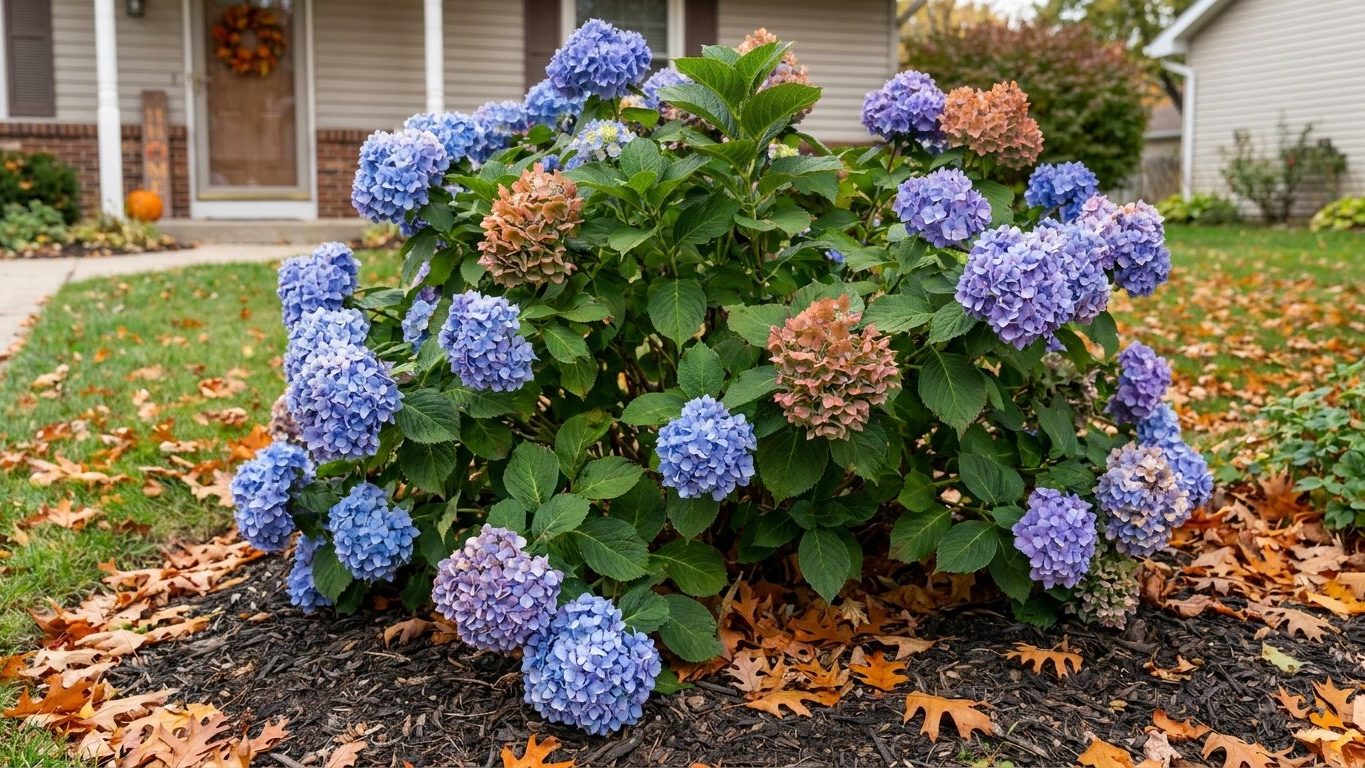
Illinois hydrangeas face a short, repeatable list of problems each year: aphids and bud blast in spring, powdery mildew and leaf spot through humid summer weeks, Japanese beetles in July, and botrytis blight once fall turns cool and damp. Deer browsing rounds out the list heading into winter. None of it is mysterious once a gardener knows which problem shows up in which week.
Hydrangea pests and diseases Illinois: The Short Answer
Chicago area gardeners work through a fairly predictable list of hydrangea problems, tied more to summer humidity and Illinois’s wide winter swing than to any single culprit.
USDA Plant Hardiness Zone Map puts the state anywhere from 5a in the north to 7b in the south, and that spread decides which of these six problems shows up first and how hard it hits.
Aphids
Aphids cluster on new growth as soon as buds break, curling leaves and leaving sticky residue that draws ants and sooty mold. A strong water spray knocks most colonies loose within a week, and ladybugs usually finish the job before bloom.
Powdery mildew
Powdery mildew shows up as a gray-white film on top leaves once June humidity settles in, though it rarely kills a bigleaf shrub outright. Space plants for airflow, water at the base rather than overhead, and strip the worst leaves once bloom finishes.
Cercospora leaf spot
Cercospora leaf spot appears as small purple-rimmed brown circles on lower leaves during the wettest weeks of midsummer, spreading fastest when foliage stays wet overnight. Raking up fallen leaves each fall breaks the cycle better than any spray applied in July.
Japanese beetles

Japanese beetles chew ragged holes through leaves and flower petals in July, skeletonizing whole clusters within days when populations peak. Handpicking beetles into soapy water each morning controls small infestations, and panicle types generally shrug off the damage better than bigleaf ones.
Botrytis blight
Botrytis blight turns flower heads and stem tips mushy and gray-brown during the cool, damp stretches of September and October. Cutting out infected blooms as soon as they turn and avoiding late-season overhead watering keeps it from traveling down into the wood.
Deer and rabbit browsing

Deer and rabbits strip buds and bark once other food thins out heading into winter, and a browsed shrub can lose a whole season of bloom from one overnight visit. Fencing or repellent applied before the first hard freeze protects the wood that carries next year’s flowers.
Bud blast from late frost
Bud blast leaves flower buds brown and papery after a late cold snap catches a shrub already pushing growth. Chicago’s last spring frost can land anywhere from April 11 to April 22, so an early-pruned shrub or one in a frost pocket loses that year’s blooms. Wrapping buds during a forecast freeze protects them.
Illinois — the year and the numbers
- State
- Illinois
- USDA zones
- 5a-7b
- Last spring frost
- April 11 to April 22
- First fall frost
- October 24 to November 3
- Annual rain
- 38 in
- Lawn zone
- cool-season
- Source
- NOAA NCEI 1991-2020 Climate Normals, 32F freeze probabilities · Chicago
How to Work Out the Dates for Your Own Yard
Matching a symptom to the right fix starts with when it shows up and what part of the plant it hits, not with guessing from a single photo online.
- Note the calendar week: NOAA NCEI 1991-2020 Climate Normals puts Chicago’s last spring frost window at April 11 to April 22, and aphids or bud blast tend to show up right around it, while leaf spot and blight wait for midsummer’s wettest weeks.
- Check which leaf surface is affected: powdery mildew coats the top of the leaf in a gray film, while Cercospora leaf spot starts as brown-purple circles on the lower, older leaves first.
- Look at the damage pattern: ragged, skeletonized leaves point to Japanese beetles, while intact leaves with sticky residue point to aphids feeding on new growth instead.
- Test for spread by touch: botrytis blight turns tissue soft and gray-brown under light pressure, a texture no insect damage produces.
- Rule out frost before anything else: if buds turn brown and papery right after a cold night near the last frost window, the cause is weather, not disease.
- Match the fix to the zone: a shrub in the milder 7b pocket of southern Illinois tolerates a wider spray or pruning window than one sitting in zone 5a farther north.
Working through that order takes less time than it sounds, and it keeps a healthy but unopened bud from getting treated like a disease.
Illinois North to South: How the Dates Shift
Illinois runs a long way north to south, and that distance changes which of these six problems hits hardest as much as any single week on the calendar.
- Northern Illinois (Chicago, Rockford, the Lake Michigan shore): stays at the cooler end of the state’s zone range, so bud blast from a late frost and aphid flare-ups on tender new growth run the biggest risk each spring.
- Central Illinois (Springfield, Peoria, Bloomington): sits in the middle of the range, with humid, still air over summer fields feeding powdery mildew and leaf spot more than either edge of the state does.
- Southern Illinois (Carbondale, Cairo, the Shawnee Hills): falls at the milder end of the range, where a longer, wetter fall keeps botrytis blight active later into the season and lets Japanese beetles linger a few extra weeks.
Whichever part of the state a yard sits in, the county extension office is the fastest way to confirm which of these problems is actually active in a given week.
Mistakes Illinois Punishes
Pruning bigleaf hydrangeas in fall
Cutting back bigleaf stems after summer removes the very buds that were set to open next year, since this variety blooms on old wood. The safe window for that cut falls in June or July, not October, and a shrub pruned outside it skips a whole season of flowers.
Watering the foliage late in the day
Overhead watering in the evening leaves foliage wet all night through Illinois’s humid summers, and that damp window is exactly what powdery mildew and leaf spot need to spread. Watering the base in the morning instead keeps leaves dry well before dusk.
Ignoring a known frost pocket
Planting a bigleaf hydrangea in a low spot where cold air settles guarantees bud blast most springs, even when the rest of the yard escapes the last frost untouched. Moving the shrub uphill or switching to a panicle type there solves the problem for good.
Illinois Extension Offices and County Contacts
The zone range and frost window above are a starting point, not a guarantee for a specific yard. Illinois Extension tracks pest and disease pressure by county and can confirm which of these problems is active in a given week.
- Your state page: the Illinois hydrangea guide covers the frost dates and pruning window where you live.
- Which ones hold up here: the variety guide lists the types that tolerate this humidity and this zone range.
- The month-by-month plan: the planting and pruning calendar lines up every gesture against the frost windows above.
Common questions
Do all Illinois hydrangeas get the same problems?
No. Bigleaf types run into bud blast and blight more often, since they bloom on old wood and hold flower buds through winter, while panicle and smooth types shrug off most of the list above and mainly deal with aphids and beetles.
Can I spray for everything at once in spring?
A single spring spray usually treats the wrong problem, since aphids, mildew, and leaf spot peak in different weeks. Matching the fix to the symptom, as in the checklist above, wastes less time and product than a blanket spray.
Is deer fencing worth it for one shrub?
In a yard with regular deer traffic, yes. A single browsing pass in fall or winter can strip a season’s worth of flower buds off a bigleaf hydrangea, and a simple cage or repellent applied before the first hard freeze costs far less than losing that year’s bloom.