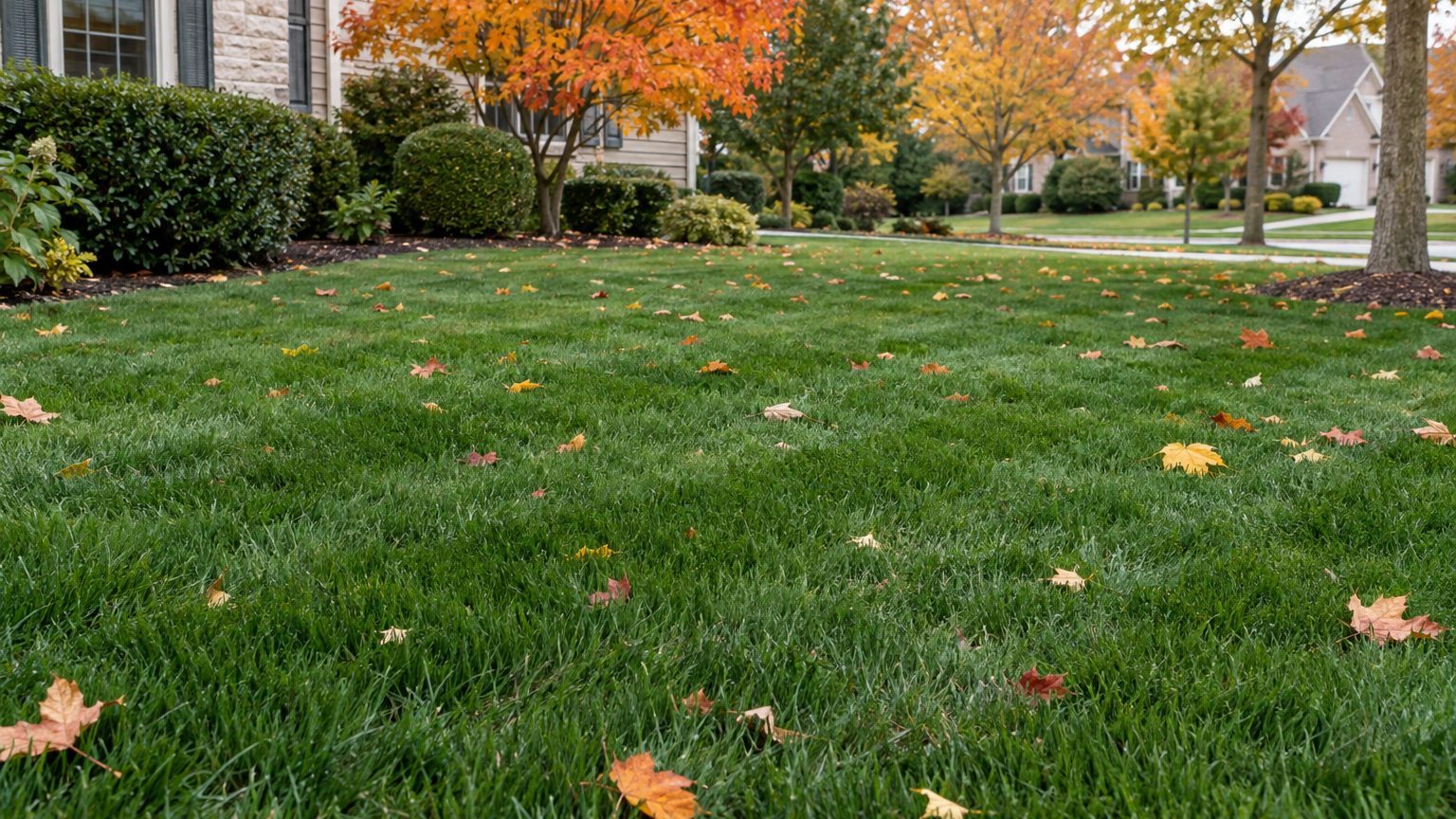
Cool-season grass in Illinois does its best work in fall and spring, then rests through summer heat and winter cold. A good schedule puts seeding, feeding and core aeration in the cooler months, and keeps the mower and the hose for the warm ones.
What to Do Each Month in an Illinois Lawn

Lawn work picks up in spring and fall: April and May, then August through November. Summer is mostly mowing and watering, and winter is rest. Illinois spans USDA hardiness zones 5a to 7b, and local lawn timing varies across the state.
| Month | In the lawn |
|---|---|
| January | Rest. The grass is dormant, so keep foot traffic and salt off frozen turf. |
| February | Rest. Plan your purchases and check the mower, but leave the lawn alone. |
| March | Still mostly rest. Pick up winter debris once the ground firms up, and watch for matted, snow-molded patches. |
| April | Put down crabgrass preventer now, before the weed seeds sprout. Start mowing as growth picks up. Aeration, seeding and dethatching also work this month if fall slipped by. |
| May | Mow regularly. If you missed April, preventer still works now, and so do a light feeding, aeration and seeding of bare spots. |
| June | Mow and begin watering as the heat builds. Deep, infrequent soaking pushes roots down. |
| July | Water through dry spells and keep mowing. Skip heavy feeding, since stressed cool-season grass may slow down. |
| August | Dethatch and start seeding as the heat eases. Keep watering and mowing. |
| September | The big month. Core aerate, seed, feed and dethatch, then keep new seed damp so it roots before cold. |
| October | Keep mowing and rake leaves off the grass. |
| November | Give a final feeding and make the last mows as growth slows. Clear fallen leaves. |
| December | Rest. The grass is dormant, so store the mower and keep traffic off frosted turf. |
Some tasks have a fallback month, but the timing varies by task. Crabgrass preventer has to go down before the weed seed germinates, so apply it in April or, if needed, May.
Illinois — the year and the numbers
- State
- Illinois
- USDA zones
- 5a-7b
- Last spring frost
- April 11 to April 22
- First fall frost
- October 24 to November 3
- Annual rain
- 38 in
- Lawn type
- cool-season
- Source
- NOAA NCEI 1991-2020 Climate Normals, 32F freeze probabilities · Chicago
When Does the Lawn Season Start and End in Illinois?
Growth follows soil warmth and grass type, not the calendar. Cool-season grasses such as Kentucky bluegrass, fescue and perennial ryegrass wake up as the soil climbs into the 50 to 65 °F range, which is also when seed germinates well. That usually lines up with April, and it slows again as soil cools in late fall.
Frost dates only tell you the risk to young seedlings. In Chicago, the last spring freeze tends to fall between April 11 and April 22, and the first fall freeze between October 24 and November 3. Suburban and rural yards often freeze later in spring and earlier in fall, commonly by a week or two, so check your own county before you count on those dates.
Mowing runs from April through November, which makes for a long season. Watering is the short one, concentrated in June through August, when rainfall alone rarely keeps up with the heat.
How the Lawn Calendar Shifts Across Illinois
Illinois is long from north to south, and the lawn calendar slides with it. Lake Michigan adds a local twist along the northeast edge.
- Chicago and the northern counties: Spring arrives later and fall cold comes sooner, so aim for the early end of the seeding window in August and treat late September as the limit.
- Central Illinois around Peoria and Springfield: This is the middle of the pattern, and the monthly schedule above fits it closely.
- Southern Illinois around Carbondale and Cairo: Warmth comes earlier in spring and lingers in fall, so crabgrass preventer goes on sooner and fall seeding can run a bit later. Heat stress on cool-season grass is also harder here in summer.
- Lakefront Chicago: Cool lake air can hold spring back slightly near the shore, so soil there may warm a little behind inland suburbs.
Watch your own soil and local frost instead of copying advice from another county.
Lawn Care Timing Mistakes to Avoid in Illinois
Preventer Applied Too Late
Crabgrass preventer works by stopping weed seed as it sprouts. Put it down after the seedlings are up and it does very little. In Illinois, April is the target, and May is the backup.
Seeding After the Cold Arrives
Seed sown late has too little time to root before winter, and young plants heave out of frozen ground or die. Seed in August or September while the soil is still warm. Spring seeding works too, but summer heat tends to punish it.
Feeding in Midsummer Heat
Heavy nitrogen in July pushes soft growth that cool-season grass cannot support in hot weather, and it invites disease. Save feeding for September and November, with a light May application as the alternative.
Where to Get Lawn Advice in Illinois
Local conditions vary enough that local advice pays off. University of Illinois Extension publishes turf guidance written for the state, and your county office can speak to soils and weather in your area.
- Use the state extension site for grass selection and seasonal care when you plan the year.
- Call your county extension office before fall seeding to ask about local frost timing and soil conditions.
- Take a soil sample to the county office in late summer, so results arrive before the September feeding.
Common Questions
Is October Too Late to Seed a Lawn in Illinois?
October is outside the fall seeding window. August and September are the main fall seeding months. If you miss fall seeding, April and May are the fallback months.
Should You Dethatch Every Year?
Only when the thatch layer is thick enough to block water and air. A thin layer is normal and even helpful. Dethatch in August or September, with April as the fallback, and skip it if the grass is in summer stress.
When Should You Stop Mowing in Illinois?
Mow as long as the grass keeps growing, which typically runs through November. When growth stops and the lawn goes dormant, put the mower away and keep the blade settings steady through the final cuts.