Skip to content

Hydrangeas That Grow Well in Arizona

Hydrangeas That Grow Well in Arizona

Panicle hydrangea and oakleaf hydrangea are the two safest bets for an Arizona yard, tolerating the reflected heat and alkaline soil that define the low desert around Phoenix. Bigleaf hydrangea, the variety most people picture, struggles here without heavy shade and constant water. The right pick depends less on frost, which barely touches Phoenix, and more on how much afternoon sun your bed actually gets.

The Short Answer

The USDA Plant Hardiness Zone Map puts Arizona’s growing range at 4b to 10b, and Phoenix, the state’s low-desert reference city, sits at the hot end of that scale with a frost-free season that stretches through nearly the entire year. That combination of intense heat and alkaline soil, more than cold, decides which hydrangea makes it through summer here.

Panicle Hydrangea

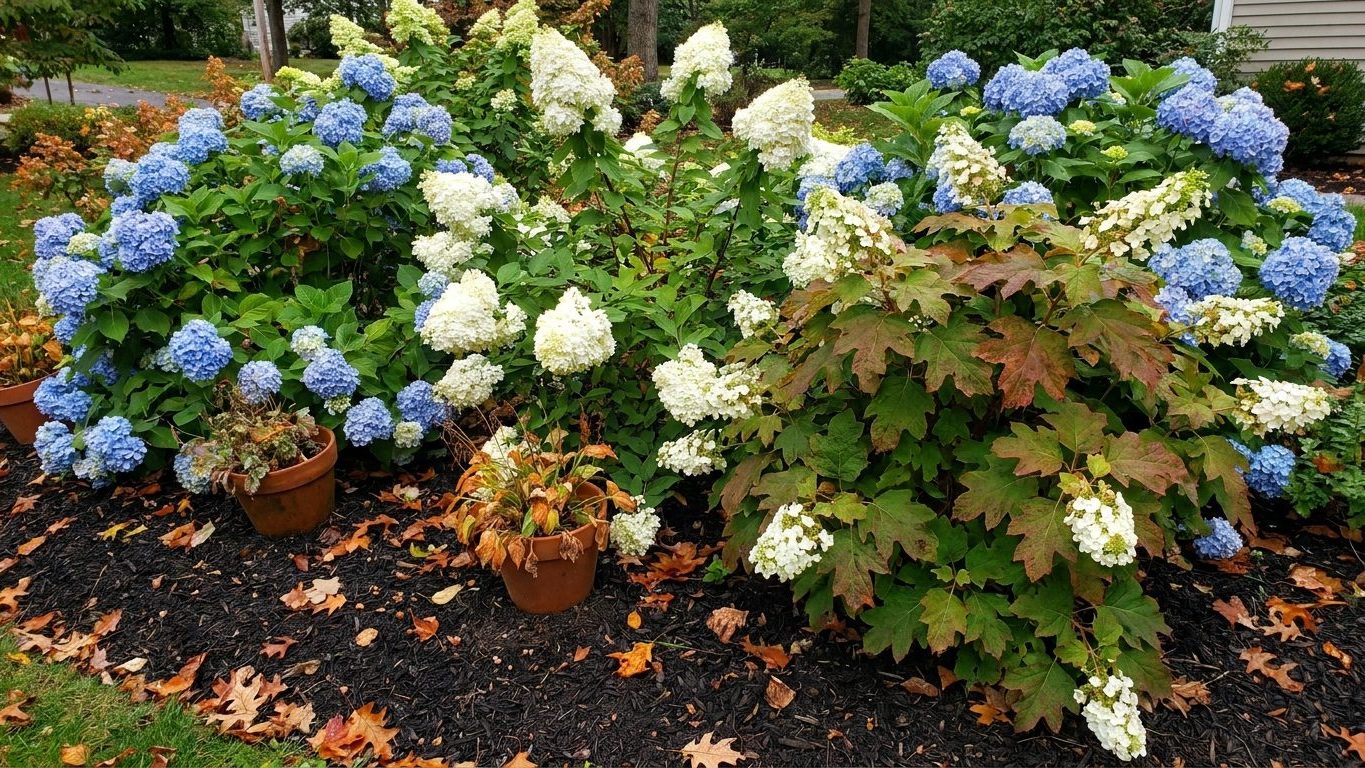
Panicle Hydrangea — Hydrangeas That Grow Well in Arizona

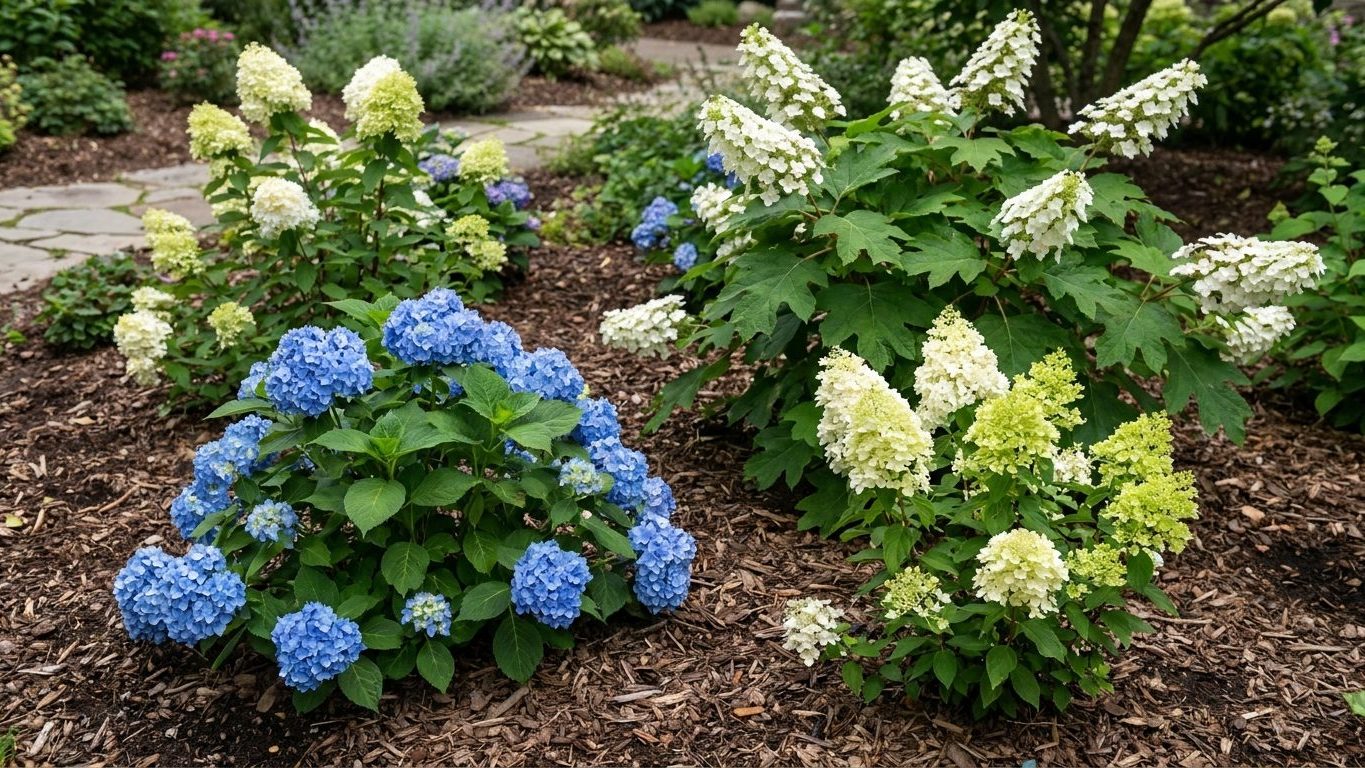
Panicle hydrangea is the safest choice for Arizona because it blooms on new wood and tolerates full sun better than any other type, even in alkaline soil that yellows other hydrangeas. It handles low-desert heat with deep, regular watering and holds up at higher elevation too.

Oakleaf Hydrangea

Oakleaf Hydrangea — Hydrangeas That Grow Well in Arizona

Oakleaf hydrangea comes from the humid Southeast, but it copes with Arizona’s dry heat once its roots are established. It wants morning sun and afternoon shade in the low desert, and rewards that placement with fall color few other hydrangeas offer here.

Smooth Hydrangea

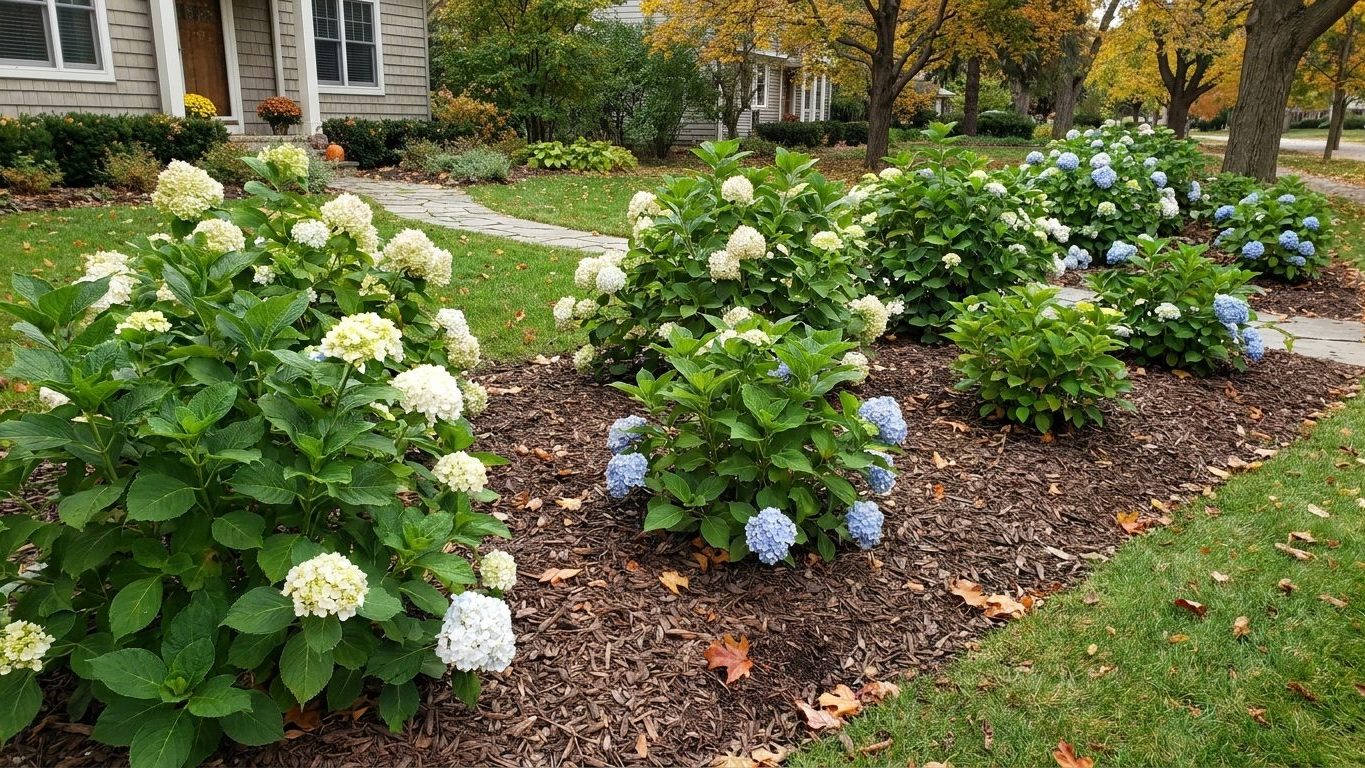
Smooth Hydrangea — Hydrangeas That Grow Well in Arizona

Smooth hydrangea, the type behind old-fashioned ‘Annabelle’, tolerates more cold than heat, which makes it a better fit for Flagstaff and the high country than for Phoenix. In the low desert it needs a shaded courtyard and steady moisture to avoid wilting by early afternoon.

Mountain Hydrangea

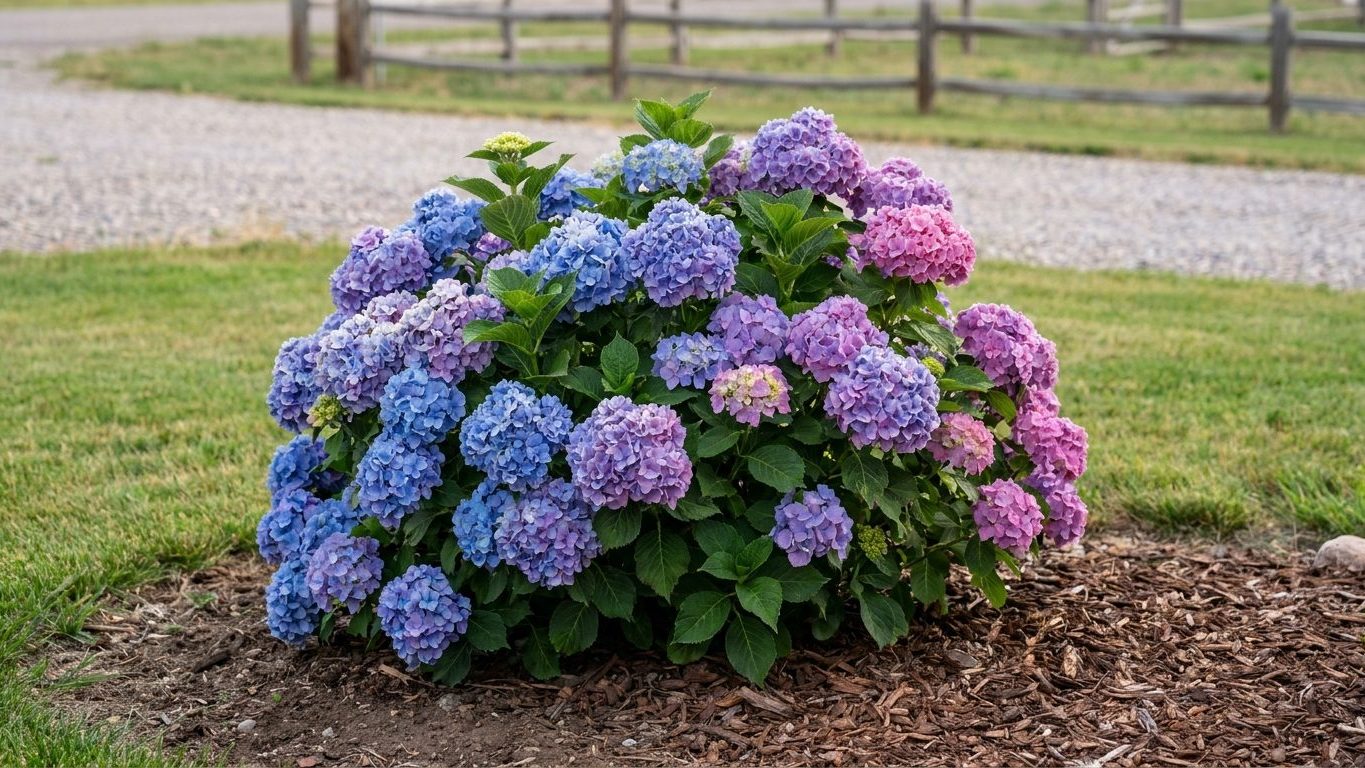
Mountain Hydrangea — Hydrangeas That Grow Well in Arizona

Mountain hydrangea is a smaller relative of bigleaf hydrangea and shares its dislike of reflected heat and alkaline soil. It can work in a shaded, irrigated bed at higher elevation, but the low desert around Phoenix pushes it past its limit most summers.

Bigleaf Hydrangea

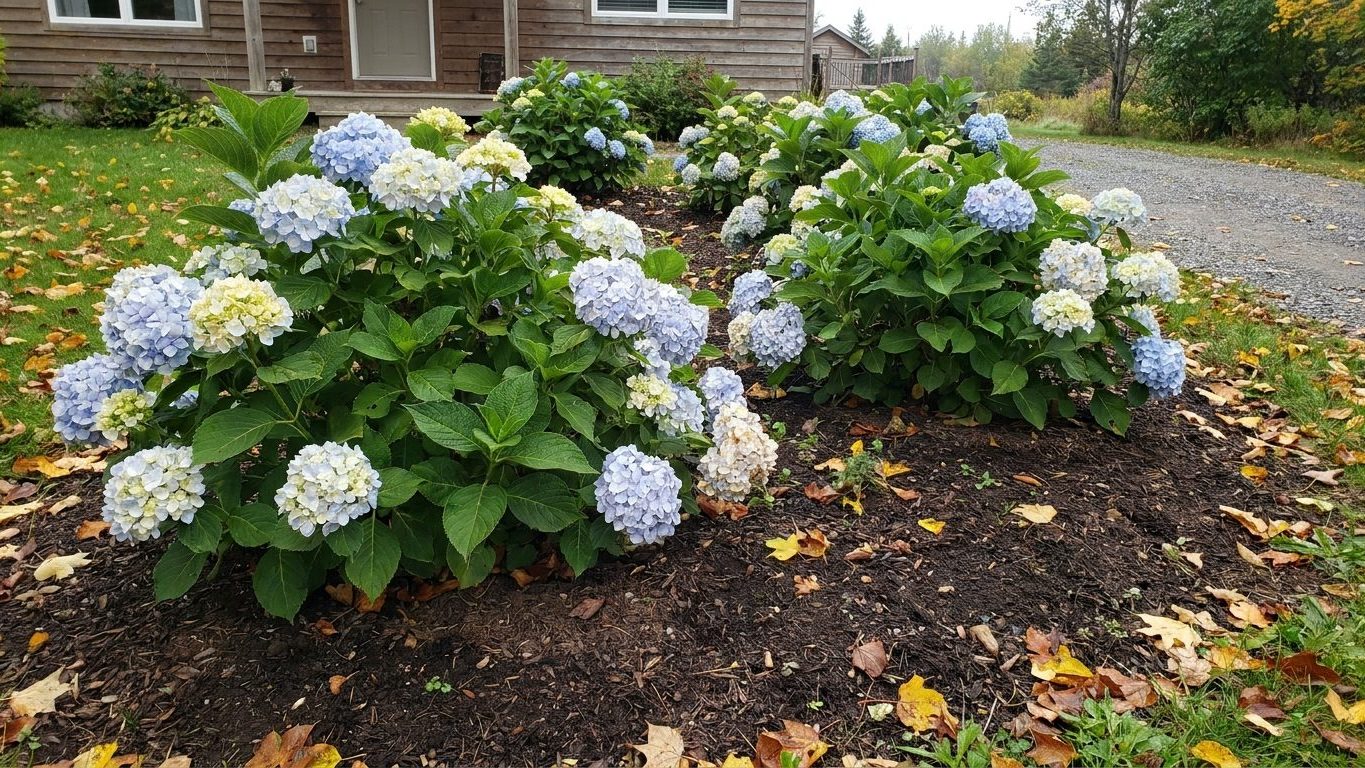
Bigleaf Hydrangea — Hydrangeas That Grow Well in Arizona

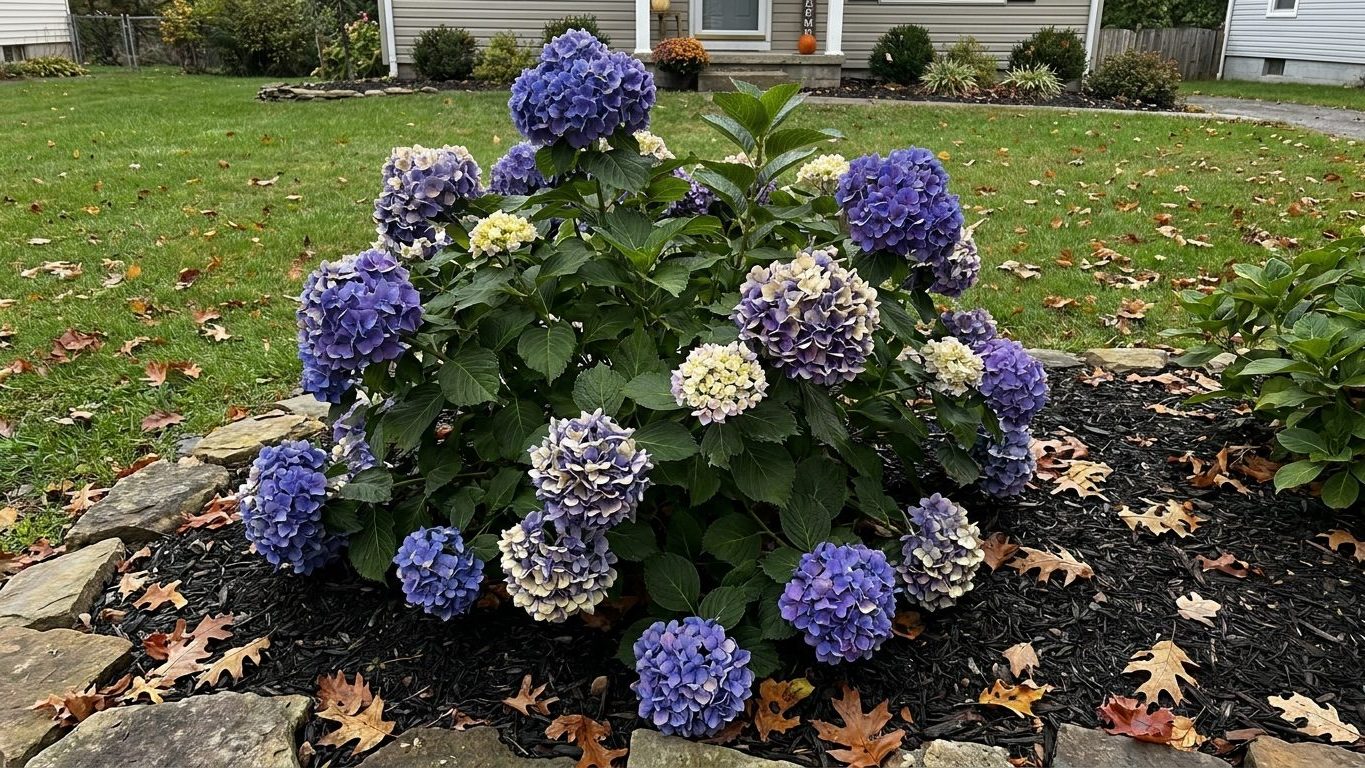
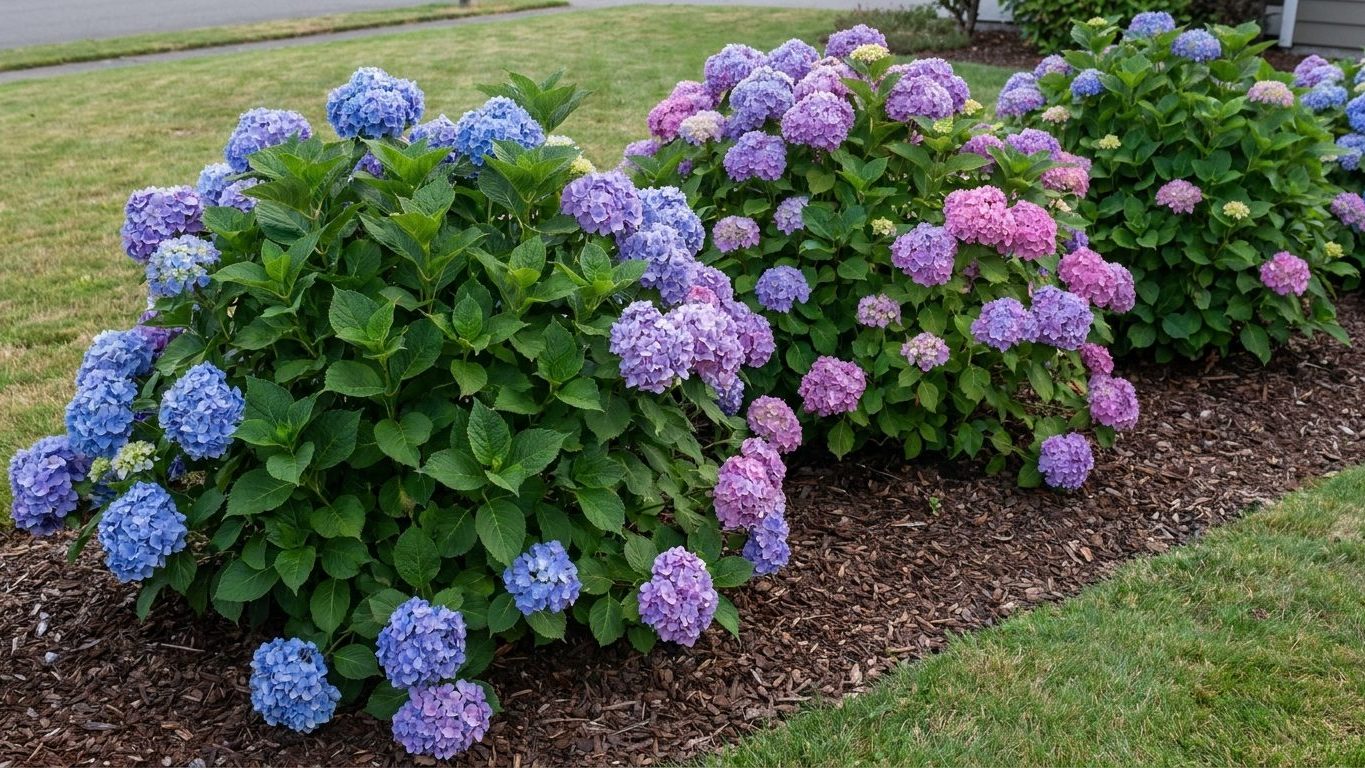
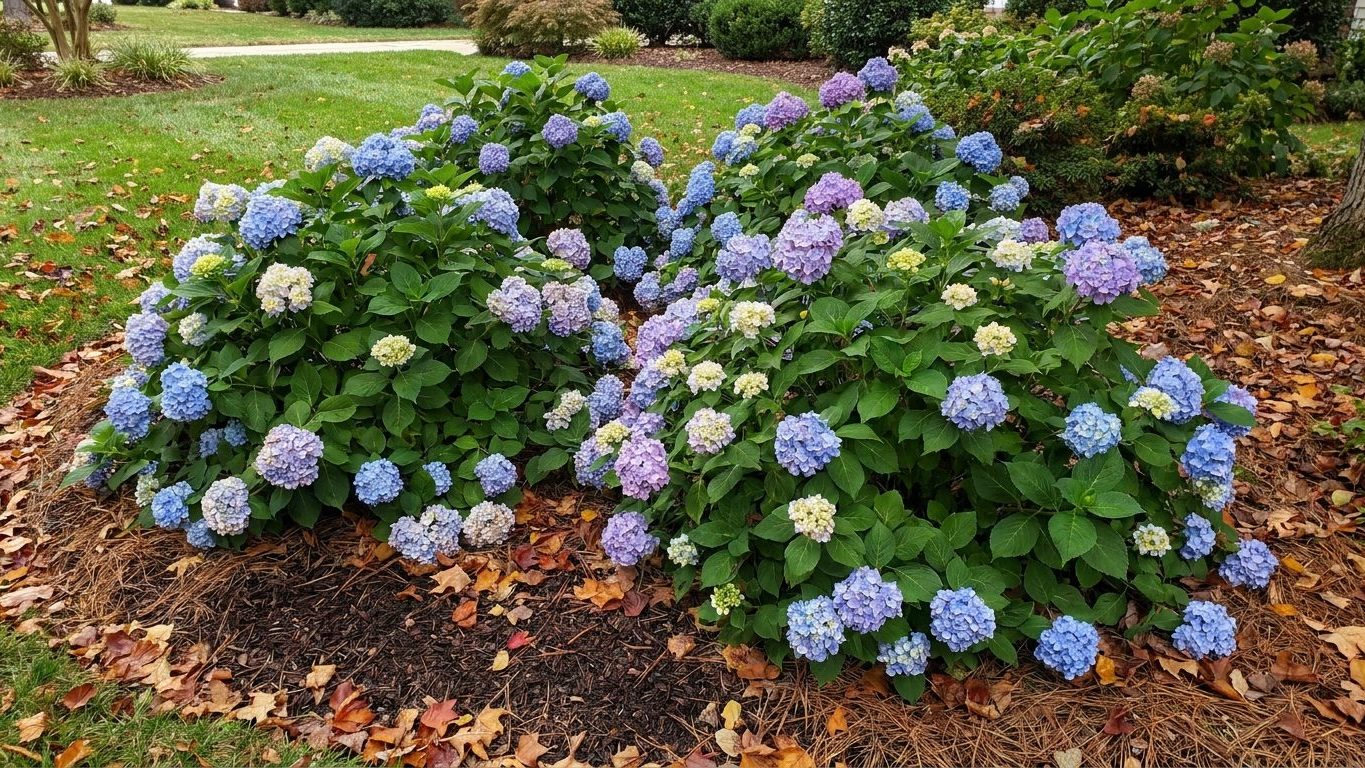
Bigleaf hydrangea is the variety most people picture when they hear the word hydrangea, and it’s the hardest to keep alive in Arizona. Its shallow roots and broad, thin leaves scorch in reflected heat, and alkaline desert soil locks up the iron it needs, turning leaves yellow between the veins.

Climbing Hydrangea

Climbing Hydrangea — Hydrangeas That Grow Well in Arizona

Climbing hydrangea needs steady moisture and a cool root run to establish, conditions that are hard to offer anywhere below the high country. It’s the riskiest of the six for Arizona, and it usually fails before it ever climbs anything.

How to Work Out the Dates for Your Own Yard

Matching a hydrangea to an Arizona yard starts with three questions, not one date on a calendar.

  1. Find your zone on the map: the USDA Plant Hardiness Zone Map puts Arizona anywhere from 4b in the high country to 10b in the low desert around Phoenix.
  2. Count your hours of afternoon sun: past four hours of direct west sun in the low desert pushes bigleaf and mountain hydrangea past what they can handle.
  3. Test your soil pH: desert soil runs alkaline, and a hydrangea that needs acid soil to hold iron will yellow between the veins within a season.
  4. Plan the water: panicle and oakleaf tolerate a missed watering, smooth and bigleaf wilt by afternoon and rarely bounce back the same day.
  5. Pick the exposure: north or east-facing beds, or afternoon shade from a wall or tree, are where any hydrangea has a real chance below the high country.

Panicle hydrangea survives an Arizona summer because it flowers on new wood and shrugs off heat once its roots are established. Bigleaf hydrangea rarely survives the same yard, since its shallow roots and thin leaves scorch before the first bloom opens.

Arizona North to South: How the Dates Shift

Elevation changes the entire hydrangea conversation in Arizona, shifting the limiting factor from heat back toward real cold the higher you go.

  • High Country (Flagstaff, the Mogollon Rim, the White Mountains): far above the desert floor, elevation brings genuine winter freezes back into play, which favors panicle and smooth hydrangea over anything more heat-adapted but cold-tender.
  • Central Highlands (Prescott, Payson, Sedona): mid-elevation towns split the difference, cooler than Phoenix through summer without the hard freeze of the high country, which widens the choice to oakleaf and panicle both.
  • Low Desert (Phoenix, Tucson, Yuma): the reference part of the state for the hardiness range, where summer heat rather than any frost date decides which hydrangea makes it through July.

The state guide breaks down exactly where a given yard falls between these three, and how that shifts the pruning and watering routine.

Mistakes Arizona Punishes

Bigleaf hydrangea in full afternoon sun

Bigleaf hydrangea’s broad, thin leaves scorch fast under reflected desert heat, especially against a west-facing wall or fence. The fix is exposure, not variety loyalty: move it to morning sun with afternoon shade, or replace it with panicle hydrangea, which tolerates the same spot without scorching.

Yellow leaves with green veins

Desert soil runs alkaline, and alkaline soil locks up the iron a hydrangea needs, showing up as yellow leaves with the veins still green. Sulfur or chelated iron treats the symptom for a season, but choosing panicle or oakleaf hydrangea, both far more tolerant of alkaline soil, solves it for good.

Wilting every afternoon on autopilot

An irrigation timer set once in spring rarely keeps up with July heat, and a hydrangea that wilts every afternoon on the same schedule is asking for more water, not a different spot. Check the timer monthly through summer, and add a second cycle before assuming the plant itself is failing.

Arizona Extension Offices and County Contacts

The USDA Plant Hardiness Zone Map’s 4b to 10b range for Arizona is a starting point, not a yard-specific plan. County offices of the University of Arizona Cooperative Extension fill in the rest, from soil test results to local pest alerts.

  • Your state page: the frost dates and the full growing guide for Arizona hydrangeas.
  • What goes wrong here: the pests and disorders that show up on Arizona hydrangeas, in season order, and what actually works.
  • University of Arizona Cooperative Extension: county-by-county contacts, soil testing, and local planting advice.

Common questions

Do hydrangeas need afternoon shade in Arizona?

In the low desert around Phoenix, yes, for most types. Panicle hydrangea is the exception that tolerates more direct sun, but even it appreciates relief once temperatures peak in summer.

Can hydrangeas grow in Phoenix without a real frost?

Phoenix rarely freezes, so frost isn’t the obstacle it is for most of the country. The obstacle is a frost-free season so long and so hot that summer heat, not winter cold, sets the limit on which hydrangea survives.

Which hydrangea handles Arizona’s dry heat best?

Panicle hydrangea and oakleaf hydrangea both tolerate the low desert with less fuss than bigleaf, mountain, smooth, or climbing hydrangea, especially once their roots are established and they’re given some relief from the most intense afternoon sun.
Hydrangeas That Grow Well in Alberta

Hydrangeas That Grow Well in Alberta

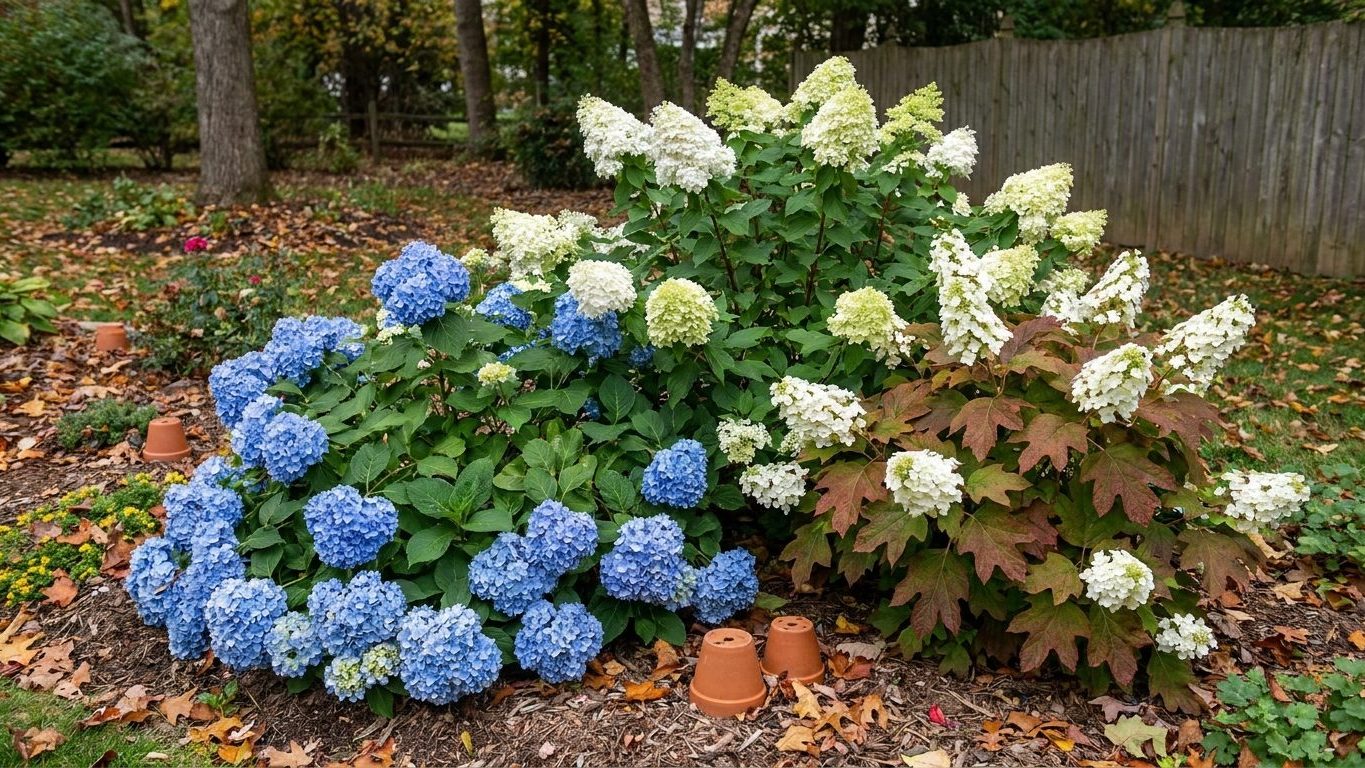
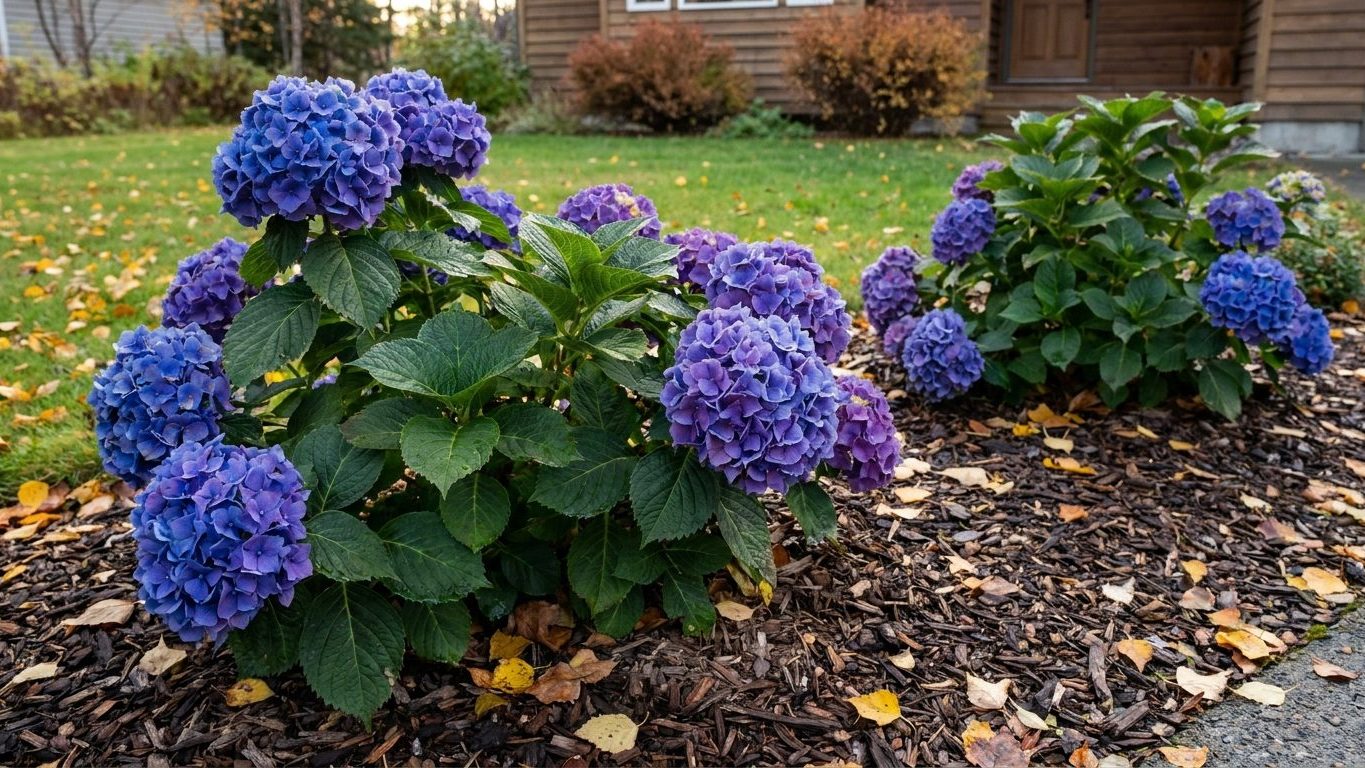
Panicle and smooth hydrangeas take Calgary’s winters without much fuss, blooming on wood that grows fresh each spring. Bigleaf, mountain, oakleaf and climbing types set their flower buds the summer before, and those buds rarely survive a Zone 4a winter intact. That single detail, old wood versus new wood, decides which hydrangeas make it in an Alberta yard and which just make leaves.

The Short Answer

The two-sentence answer starts in Calgary, the province’s reference station for these numbers. Natural Resources Canada’s Plant Hardiness Site places the area at zone 4a on the Canadian scale, a rating built from seven climate variables rather than the single minimum-temperature figure the USDA uses, and under that rating only hydrangeas that rebuild their flowering wood every spring bloom reliably year after year.

Panicle hydrangea

Panicle hydrangea — Hydrangeas That Grow Well in Alberta

Hydrangea paniculata blooms on new wood, so a hard Alberta winter that kills every stem down to the snowline still leaves a shrub full of flowers by August. It tolerates full sun and the province’s dry air better than any other type on this list.

Smooth hydrangea

Smooth hydrangea — Hydrangeas That Grow Well in Alberta

Hydrangea arborescens, the native woodland shrub bred into rounded garden forms, dies back hard some winters and does not care. New shoots from the roots carry that year’s flowers, so a plant that looks dead in April can be blooming by July.

Climbing hydrangea

Climbing hydrangea — Hydrangeas That Grow Well in Alberta

Hydrangea anomala subsp. petiolaris clings to brick and wood with aerial roots and survives Alberta cold once established, but it grows slowly, often taking several seasons before it flowers at all, and a young plant can still lose a year’s growth to an early fall frost.

Oakleaf hydrangea

Oakleaf hydrangea — Hydrangeas That Grow Well in Alberta

Hydrangea quercifolia carries showy cone-shaped flowers and fall color that beats everything else on this list, but it blooms on old wood, and its stems are rated for milder winters than Calgary usually delivers. Expect a shrub that lives but rarely flowers without a sheltered wall.

Mountain hydrangea

Mountain hydrangea — Hydrangeas That Grow Well in Alberta

Hydrangea serrata is a smaller, slightly tougher cousin of bigleaf hydrangea with the same old-wood habit and the same exposed flower buds. It survives an average Alberta winter more often than bigleaf does, but an average is not a guarantee.

Bigleaf hydrangea

Bigleaf hydrangea — Hydrangeas That Grow Well in Alberta

Hydrangea macrophylla is the shrub most people picture when they hear the word hydrangea, and it is the least suited to this province. Its flower buds form the summer before and rarely survive a Calgary winter unprotected, so most seasons deliver healthy leaves and no blooms.

How to Work Out the Dates for Your Own Yard

The two frost dates for Calgary set the boundaries, but the real work is matching a hydrangea’s bloom habit to what actually happens inside that boundary each winter.

  1. Mark the mean dates on your calendar: Environment and Climate Change Canada’s Canadian Climate Normals put the average last spring frost at May 21 and the average first fall frost at September 16, which frames a frost-free stretch of roughly 118 days.
  2. Treat May 21 as a midpoint, not a deadline: in half the years on record, frost lands after that date, so a hydrangea planted in early May is planted on a gamble.
  3. Ask what the shrub blooms on: a new-wood bloomer like panicle hydrangea only needs the roots to survive, while an old-wood bloomer needs the stems themselves to make it through winter.
  4. Check the shrub against zone 4a: Alberta’s reference zone comes from seven weather variables, not one, so a plant rated for a single USDA number can still fail here on wind or snow cover alone.
  5. Count backward from September 16 for the last feeding: fertilizer pushed after mid-August forces soft new growth that the first frost then kills outright.
  6. Pick the site before the shrub: a wall or fence that blocks the prevailing wind gives an old-wood bloomer a real chance, an open bed does not.

Run a panicle hydrangea through that checklist and every step passes, root hardy, new wood, no wind dependence. Run a bigleaf hydrangea through the same list and it fails at step three, the stems it needs for next year’s flowers rarely outlast a Calgary January.

Alberta North to South: How the Dates Shift

Alberta is not one climate, and the frost dates named above describe conditions around Calgary, not the whole province from the Rockies to the Saskatchewan border.

  • Peace Country and the north (Grande Prairie, Peace River): a shorter frost-free stretch than Calgary sees, so even a hardy panicle hydrangea gets less time each summer to build the wood it flowers on.
  • Edmonton and central Alberta (Edmonton, Red Deer): a similar gap between the last spring frost and the first one in fall.
  • Southern Alberta (Lethbridge, Medicine Hat): milder on average, but chinook winds can strip snow cover in the middle of winter, which hurts an old-wood bloomer’s buds more than steady cold ever does.
  • Foothills and mountain valleys (Canmore, Cochrane): elevation adds cold pockets that can run weeks behind Calgary’s calendar, leaving room only for the toughest new-wood types.

None of that changes the answer for panicle and smooth hydrangeas, it only changes how much margin the riskier old-wood types get, region by region, which is exactly what the Alberta state page works out in more detail.

Mistakes Alberta Punishes

Buying a bigleaf for the blue flowers

The photo on the tag was grown somewhere with a milder winter. Natural Resources Canada rates the Calgary area at zone 4a, and a bigleaf hydrangea’s flower buds rarely survive that cold unprotected, so most Alberta yards get healthy leaves and no blue flowers at all. Choose a panicle hydrangea instead.

Pruning an old-wood bloomer in fall

Cutting back an oakleaf or mountain hydrangea in October removes the exact stems that were going to carry next summer’s flowers. Wait until the buds show life in spring, and prune only the parts that stayed dead, not the whole shrub.

Planting on the exposed side of the yard

Chinook winds dry out stems faster than cold alone ever does, and an old-wood bloomer with no wall or fence to block that wind loses its buds by February. Site any hydrangea that keeps its flowering wood above ground on the sheltered side of a structure.

Alberta Extension Offices and County Contacts

The zone 4a reading named above is a province-wide starting point, not a promise for your particular yard, and county offices fill in what the map alone cannot.

  • Alberta hydrangea calendar: the month-by-month planting, watering and winter-protection dates built around Calgary’s frost window.
  • What goes wrong with Alberta hydrangeas: the pests and dieback patterns specific to this province, in the order they show up each season.
  • Alberta Agriculture and Irrigation: county-level contacts and local soil advice through the province’s agriculture ministry.

Call before planting anything old-wood, a local office usually knows what last winter actually did to established shrubs nearby.

Common questions

Can bigleaf hydrangeas survive winter in Alberta?

Most years, no. The flower buds form the summer before and rarely survive an Alberta winter without heavy protection, so treat bigleaf hydrangea as a foliage plant here unless you’re willing to bury it every fall.

What Canadian hardiness zone is Calgary for hydrangeas?

Natural Resources Canada rates the Calgary area at zone 4a on the Canadian system, which measures seven climate variables and does not convert directly to a USDA zone.

How long is Alberta’s frost-free season for planting hydrangeas?

Around 118 days on average, running from the mid-May last frost to the mid-September first frost recorded at Calgary Int’l A, though any single year can run shorter.

Hydrangea Pests and Diseases in Alaska

Hydrangea Pests and Diseases in Alaska

Hydrangea trouble in Alaska almost always traces back to the cold rather than a bug or fungus. Winter dieback dominates the list of problems gardeners run into from Anchorage to the Interior, with a short list of summer pests and fungal issues trailing well behind it. Knowing which one you’re looking at changes whether you reach for pruners, a hose, or nothing at all.

The Short Answer

In Anchorage, the coldest season of the year causes far more hydrangea damage than any insect or fungus does. The USDA Plant Hardiness Zone Map 2023 places the state across a 1a to 8a range, and Anchorage sits near the milder end of it, with about 143 frost-free days to grow, bloom, and heal from any wound.

That short window is the reason “pests and diseases” here mostly means winter damage first, and only then a short list of common summer problems. Here’s what actually shows up, roughly in the order a season brings it.

Winter dieback and bud kill

Winter dieback and bud kill — Hydrangea Pests and Diseases in Alaska

This is the one every Anchorage hydrangea grower meets sooner or later. Stems that snapped brittle instead of bending, buds that never swelled, whole branches bare while the base leafs out fine, all point to cold that got into unhardened wood. There’s no cure once it happens, only pruning back to live, green wood in spring and giving the rest of the plant time to recover.

Aphids

Small, soft-bodied, clustered on new growth and the underside of young leaves, aphids show up once the plant is actively pushing new shoots. They leave curled leaf tips and a sticky residue behind. A strong water spray every few days, or an insecticidal soap for a heavier cluster, knocks them back without hurting the plant.

Powdery mildew

A gray white dusting across the top of the leaves, worse in a stretch of warm days and cool, damp nights, this fungus rarely kills a hydrangea but it slows it down. Spacing plants for airflow and watering the soil instead of the foliage does more than any spray applied after symptoms show.

Botrytis blight

Gray, fuzzy mold on flowers and soft new growth after a stretch of cool, wet weather late in the season is botrytis. It spreads fast on crowded, wet foliage. Removing spent blooms and damaged growth promptly, and giving the plant room to dry between rains, is what actually works here.

How to Work Out the Dates for Your Own Yard

One quick method separates cold damage from an actual pest or disease before you treat anything.

  1. Check the calendar first: if symptoms appear before Anchorage’s last spring frost, which NOAA NCEI 1991-2020 Climate Normals puts at May 3 to May 12, cold is the likely cause, not a pathogen.
  2. Look at what’s damaged: bare stems with live buds lower down point to winter injury, while spotted or curled leaves on an otherwise normal plant point to a pest or fungus.
  3. Check the underside of new leaves: clusters of small soft insects mean aphids, and a strong rinse from the hose is the first move, not a spray.
  4. Watch for a dusty gray white film: on top of leaves in the warmest weeks of summer, that’s powdery mildew, and it calls for spacing and dry foliage, not fungicide alone.
  5. Watch for fuzzy gray mold: on flowers and soft growth once fall rains start, ahead of the first fall frost window of September 22 to October 1, that’s botrytis, and cleanup beats any spray.
  6. When in doubt, wait two weeks: past frost problems often resolve on their own once the plant pushes new growth, while pest and fungus symptoms tend to spread.

Most of what looks alarming in an Anchorage yard in April or May turns out to be cold, not disease. Patience and a clean pair of pruners solve more of it than any product does.

Alaska North to South: How the Dates Shift

Location within the state moves these dates more than anywhere else in the country, since Alaska spans arctic tundra to a temperate coastal rainforest.

  • Southcentral coast (Anchorage, Kenai Peninsula, Kodiak): the mildest, longest growing conditions in the state, with the shortest, gentlest winters a hydrangea here will face.
  • Interior (Fairbanks, Delta Junction): a much shorter season and far colder winter extremes, where dieback is heavier and more of the plant is lost each year.
  • Southeast panhandle (Juneau, Sitka, Ketchikan): wetter and milder than the coast further north, which raises the risk of botrytis and powdery mildew even as winter injury eases.
  • Far north and west (Utqiagvik, Nome, the arctic coast): conditions too short and cold for hydrangeas as garden shrubs in most yards.

None of this changes the order these problems show up in, only how hard winter hits and how much room fungal problems get. Check the state page for the frost window that matches where you actually garden.

Mistakes Alaska Punishes

Pruning in fall

Cutting stems back before the first fall frost window that NOAA NCEI 1991-2020 Climate Normals sets at September 22 to October 1 opens fresh wounds right as cold arrives, inviting dieback deeper than it would otherwise go. Prune in spring instead, once new growth shows what’s alive.

Planting too late in spring

Setting a hydrangea out after the last spring frost window of May 3 to May 12 sounds safe, but it leaves the plant too little of the roughly 143 frost-free days to root in before fall. Get it in the ground early in that window instead.

Watering the leaves, not the soil

Overhead watering late in the day keeps foliage wet through the cool nights that favor powdery mildew and botrytis, both of which spread fastest on damp leaves. Water at the base, in the morning, and let the foliage dry before evening.

Alaska Extension Offices and County Contacts

The state figures above are a starting point, not the full picture for your yard. Local wind, snow cover, and soil vary enough within Alaska that a call to a real office beats guessing.

  • Your state page: the frost dates and the pruning window for where you live.
  • Which ones hold up here: the hydrangea varieties bred to handle a short, cold Alaska season.
  • University of Alaska Fairbanks Cooperative Extension Service: local offices that can confirm what’s actually damaging your plant before you treat it.

Common questions

Do hydrangeas actually get diseases in Alaska, or is it just the cold?

Both, but cold dominates. Winter dieback outranks every fungus or insect on this list in frequency and severity, especially outside the mild Southcentral coast.

Should I spray preventively each spring?

Not as a first move. Cleanup, spacing, and watering the soil instead of the leaves prevent more powdery mildew and botrytis here than any routine spray applied on a calendar.

Can I tell winter injury from disease by looking at the leaves?

Mostly yes. Bare stems with buds alive lower down point to cold. Spotted, curled, or fuzzy-coated leaves on an otherwise normal plant point to a pest or fungus instead.

Hydrangeas That Grow Well in Alabama

Hydrangeas That Grow Well in Alabama

Oakleaf, panicle, and smooth hydrangeas grow reliably across Alabama, from the foothills near Huntsville to the Gulf Coast near Mobile. Bigleaf hydrangeas, the ones with the classic mophead blooms, work too, but Alabama’s swings between a mild fall and a stray hard freeze can cost you a season of flowers if you don’t plant the right kind for your yard.

The Short Answer

The USDA Plant Hardiness Zone Map puts Alabama at 7a to 9a, and Birmingham sits in the middle of that range. That single fact decides most of the list below: shrubs that bloom on new wood or set buds late shrug off Alabama’s mild-but-unpredictable winters, while shrubs that bloom on old wood risk losing a season of flowers to a stray freeze.

Oakleaf hydrangea

Oakleaf hydrangea — Hydrangeas That Grow Well in Alabama

Hydrangea quercifolia is native to Alabama’s woodlands, so it already knows the state’s heat, humidity, and clay soil. It blooms reliably even after a rough winter and turns deep red-bronze in fall, making it the safest pick on this list.

Panicle hydrangea

Panicle hydrangea — Hydrangeas That Grow Well in Alabama

Hydrangea paniculata blooms on new wood, so a late freeze can’t touch flower buds that haven’t formed yet. It tolerates more direct sun than most hydrangeas, which matters through Alabama’s long, bright summers.

Smooth hydrangea

Smooth hydrangea — Hydrangeas That Grow Well in Alabama

Hydrangea arborescens, the type behind the popular Annabelle cultivar, also flowers on new growth each year. It’s forgiving of Alabama’s clay soil and bounces back fast even after a hard pruning or a cold snap.

Bigleaf hydrangea

Bigleaf hydrangea — Hydrangeas That Grow Well in Alabama

Hydrangea macrophylla is the classic mophead most people picture, and it grows across Alabama, but it sets its flower buds on old wood the previous fall. A freeze that lands inside Birmingham’s spring frost window can knock out that year’s blooms even though the shrub itself survives.

Mountain hydrangea

Mountain hydrangea — Hydrangeas That Grow Well in Alabama

Hydrangea serrata behaves like a smaller, slightly tougher cousin of bigleaf hydrangea, with buds that hold up a little better through a cold snap. It still struggles with Alabama’s heavy summer humidity, which limits it mostly to the northern part of the state.

Climbing hydrangea

Climbing hydrangea — Hydrangeas That Grow Well in Alabama

Hydrangea anomala subsp. petiolaris prefers cooler summers than Alabama offers and can take years to establish before it flowers at all. It’s the riskiest name on this list south of the Tennessee Valley.

How to Work Out the Dates for Your Own Yard

Picking the right hydrangea for your own yard means matching its bud habit to Birmingham’s frost calendar, then adjusting for whatever makes your particular lot warmer or colder than the airport station.

  1. Find your last spring frost window: NOAA NCEI 1991-2020 Climate Normals puts Birmingham’s last spring freeze between March 19 and April 3, the stretch when a bigleaf hydrangea’s new growth is most exposed.
  2. Find your first fall frost window: the same station puts the first fall freeze between November 2 and November 16, marking when active growth stops for the year.
  3. Widen both windows for your own lot: a yard in a low spot or a shaded hollow often sees frost one to two weeks earlier or later than the airport figures, so treat these dates as a starting point.
  4. Check the bloom habit of the shrub you want: oakleaf hydrangea sets its buds late enough in the season to dodge most of that spring window, which is why it survives Alabama winters with almost no fuss.
  5. Weigh the shrub against Alabama’s summer, not just its winter: climbing hydrangea can survive the frost dates just fine but often fails anyway, because it dislikes the long stretch of heat and humidity that follows.

Once you know your own frost dates and your soil, matching a shrub’s bloom habit to that window matters more than its name on a nursery tag.

Alabama North to South: How the Dates Shift

Elevation, distance from the Gulf, and simple latitude all push Alabama’s frost dates and hardiness zone in different directions across the state.

  • North Alabama and the foothills (Huntsville, Fort Payne, Sand Mountain): higher elevation and cooler nights push the safe planting window later and favor cold-hardy oakleaf and mountain hydrangea over tender bigleaf buds.
  • Central Alabama (Birmingham, Montgomery, Tuscaloosa): sits closest to the reference-city numbers, with a moderate frost calendar and the state’s middle hardiness zones.
  • South Alabama and the Gulf Coast (Mobile, Dothan, Baldwin County): milder winters and a longer humid summer stretch the growing season but stress cool-loving types, favoring heat-tolerant panicle and oakleaf varieties instead.

The Alabama hydrangea guide breaks the state’s frost dates and hardiness zones down further for whichever part of Alabama you garden in.

Mistakes Alabama Punishes

Pruning bigleaf hydrangea in late fall

Alabama’s mild autumns tempt gardeners to tidy up hydrangeas after the first cool snap, but bigleaf and mountain hydrangea have already set next year’s flower buds by then. Prune bigleaf hydrangea right after it finishes blooming in summer instead, never in fall or winter.

Full afternoon sun on a mophead

A west-facing bed that looked fine in April turns brutal by July, and bigleaf hydrangea leaves scorch and wilt in Alabama’s humid heat. Give mopheads morning sun and afternoon shade, and save the sunniest spots for panicle hydrangea instead.

Heavy clay soil with no drainage

Alabama’s red clay holds water long after a summer thunderstorm, and hydrangea roots sitting in that water rot within a season. Work compost into the planting hole and raise the bed a few inches before you plant, not after the shrub starts wilting.

Alabama Extension Offices and County Contacts

The 7a to 9a range covers the whole state, but your county’s soil, rainfall, and pest pressure are what actually decide which hydrangea thrives in your yard.

  • Your state page: the frost dates and the pruning window where you live.
  • Which ones hold up here: the varieties ranked by risk.
  • What goes wrong here: the pests and problems specific to Alabama’s hydrangeas.

The Alabama Cooperative Extension System connects to local agents who can confirm what will actually grow in your county’s soil.

Common Questions

Can bigleaf hydrangeas survive Alabama winters?

Yes, the shrub itself is hardy across Alabama’s 7a to 9a range, but its flower buds form on old wood the previous fall. A hard freeze that lands close to Birmingham’s spring frost window can kill those buds even though the plant leafs out fine.

What is the best hydrangea for full sun in Alabama?

Panicle hydrangea tolerates more direct sun than any other type on this list and holds up well through Alabama’s long, humid summers. Oakleaf hydrangea also handles a half day of sun once established.

Do hydrangeas need special care in Alabama’s clay soil?

Most hydrangeas struggle in Alabama’s dense red clay unless the bed drains well, since standing water rots their roots faster than cold ever does. Working compost into the planting hole and slightly raising the bed solves most of the problem.

When to Plant Hydrangeas in Yukon: Dates and Varieties

When to Plant Hydrangeas in Yukon: Dates and Varieties

Hydrangeas in Yukon face a short, uncertain season. The average last spring frost falls June 5 and the first fall frost lands August 25, leaving roughly eleven frost-free weeks. Whitehorse sits in Canadian hardiness zone 1b, cold enough that every hydrangea here lives in a container, not the ground. Panicle and smooth types tolerate that routine best.

Hydrangeas Care Calendar for Yukon

Growing Hydrangeas in Yukon: Dates and Varieties

Environment and Climate Change Canada’s Canadian Climate Normals for station WHITEHORSE A put the average last frost at June 5, a mean that frost actually beats in roughly half of all years, which makes it a midpoint to plan around rather than a safe cutoff to plant by.

  • Dormancy: the safest stretch to repot, divide, or shift a hydrangea to a new container falls while it stands leafless and every root sits undisturbed by active growth.
  • Planting: hold off setting a young plant into its permanent pot until well past June 5, since frost still arrives after that average date in roughly half of all years on record.
  • Establishment: two to three weeks past the average last frost, check the newest leaves for cold burn before trusting that the season has actually turned toward summer.
  • Bloom window: with only about eleven frost-free weeks on the calendar, flower buds set and open in a hurry, so steady watering through July matters more here than any fertilizer schedule.
  • Pre-frost prep: in the weeks running up to the August 25 average first frost, start moving containers toward a south-facing wall, covered porch, or sheltered entry to buy a little extra warmth.
  • Winter shelter: once frost actually settles in, bring every container indoors or into an unheated garage right away, since Yukon winters kill anything left rooted outside through the cold months.

Nothing on this list assumes a textbook year, and up here the whole calendar bends around the container rather than the ground it sits on.

Best Hydrangeas for Yukon

Natural Resources Canada’s Plant Hardiness Zone map places Whitehorse in Canadian zone 1b, a rating built from seven climate variables rather than the single-variable USDA scale, and colder than any commonly sold hydrangea species is rated to survive while planted directly in open ground.

That reality turns every type into a container plant here, and the real differences between them show up less in cold tolerance and more in how each one handles a summer spent outdoors followed by a winter spent in a shed or a spare room.

Kind Flowers on Winter here Sun
Panicle New wood Container only, most forgiving of rough handling Full sun
Smooth New wood Container only, cut back hard each spring anyway Full sun to part shade
Bigleaf Mostly old wood Container only, rarely reblooms after an indoor winter Part shade
Oakleaf Old wood Container only, slow to recover from indoor storage Part shade

Climbing hydrangea and mountain hydrangea barely register at this latitude and don’t appear in the table above, the other kinds each get their own page, along with the fuller reasoning behind every verdict here.

When to Plant, Prune and Feed Hydrangeas in Yukon

Environment and Climate Change Canada’s Whitehorse normals put the average last frost at June 5 and the average first frost at August 25, a gap of roughly eleven weeks that every window listed below counts forward or backward from.

That gap is tight enough that planting, pruning, and feeding nearly overlap on the calendar, unlike in longer-season states where gardeners have whole months of daylight to spread the same three tasks across.

Task Window here Counted from
Planting into containers Early to mid June 0 to 10 days after the June 5 average last frost
Pruning after bloom Late July into early August Roughly 8 weeks after last frost, ahead of the August 25 average first frost
Feeding, once Mid to late June 2 to 3 weeks after last frost, once new leaves harden off

There is no fall feeding window worth naming in this territory. With first frost landing by late August on average, any nitrogen applied after early July only pushes soft new growth straight into the cold that follows it.

Hydrangeas Problems in Yukon and What Causes Them

No flowers most summers

Old-wood bloomers such as bigleaf set next year’s flower buds in the fall before winter, and a season spent half outdoors and half in a cold shed or garage kills those buds long before spring arrives. Switching to a type that flowers on new wood instead sidesteps the problem, and the which-ones page covers exactly that swap in more detail.

New growth killed by a late frost

Environment and Climate Change Canada’s Whitehorse normals put the average last frost at June 5, but a plant set outside right on that date can still lose its very first leaves in about half of all years. Holding containers under cover for another week or two past that average is the safer bet for tender new growth.

A shrub that never gets bigger

Roots confined to a pot, combined with a winter spent indoors that never lets the plant fully settle into dormancy, mean growth often resets each year instead of building steadily on the last. Repotting every second spring, during the dormancy window described above, gives roots room to spread without forcing new growth out too early.

Yukon North to South: How the Dates Shift

Whitehorse, the station behind Environment and Climate Change Canada’s June 5 and August 25 averages, anchors every figure here, but the territory itself runs from river valley floor to alpine tundra, and the frost calendar shifts with that terrain.

  • Southern river valleys (Whitehorse, Haines Junction, Watson Lake): closest to the June 5 and August 25 averages, and about the closest thing the territory has to a genuine, if short, growing season.
  • Northern and interior communities (Dawson City, Old Crow, the Dempster corridor): frost tends to linger later into spring and return earlier come fall, shrinking that already tight eleven-week window even further for anyone gardening up there.
  • Higher ground and exposed ridges (any spot noticeably above the valley floor): cold air settles and drains away slowly overnight, so a pot left outside can meet frost even inside what the averages call a safe window.

None of that changes the container-only verdict reached above, it just nudges the safe dates earlier or later, and the calendar page walks through the fuller month-by-month version built around Whitehorse itself.

Yukon Extension Offices and County Contacts

Natural Resources Canada’s Canadian zone 1b rating for Whitehorse is a starting point, not a guarantee for every yard in the territory. Agriculture and Agri-Food Canada’s federal site is the reliable contact point, since the territorial department’s site blocks automated checks.

  • The calendar page: the fuller month-by-month version of these same frost dates and the tasks tied to them for Yukon.
  • Which ones hold up here: a longer look at the species that actually tolerate a container winter in this climate.
  • What goes wrong here: the pests and problems that tend to show up in a short, cool northern summer.

This month, the one gesture worth making is checking the local forecast before anything currently under cover goes back outside.

Common questions

Can hydrangeas survive winter outdoors in Yukon?

Not reliably in most yards. Canadian hardiness zone 1b, the rating Natural Resources Canada assigns to Whitehorse, sits well below what any commonly sold hydrangea species tolerates while rooted in open ground through winter, so a container that comes indoors each year is the method that actually works here.

How short is the Yukon growing season for a hydrangea?

Roughly eleven weeks on average, running from the June 5 last frost to the August 25 first frost recorded at the Whitehorse station, and that already short gap runs even tighter farther north and on higher ground within the territory.

Which hydrangea type is easiest to grow in a Yukon container?

Panicle and smooth types tend to do best, since both flower on new wood each year and generally shrug off the rough handling that comes with being hauled indoors and back outside on a strict annual schedule.

When to Plant Hydrangeas in Wyoming: Dates and Varieties

When to Plant Hydrangeas in Wyoming: Dates and Varieties

Panicle and smooth hydrangeas are the safe bet in Wyoming, planted after the last spring frost clears and fed through a frost-free stretch that runs roughly four and a half months around Cheyenne. Bigleaf types need heavy winter shelter to survive here at all. Get the frost dates right, and everything else on the calendar follows from them.

Hydrangeas Care Calendar for Wyoming

Growing Hydrangeas in Wyoming: Dates and Varieties

NOAA NCEI 1991-2020 Climate Normals for station USW00024018 put Cheyenne’s last spring frost between May 7 and May 18, with the first fall frost landing September 24 to October 5, and that gap decides when a hydrangea can safely live outdoors here.

  • Dormancy: late winter, before buds swell, is the one window to move or divide a plant without disturbing its roots.
  • Planting: after May 18, once soil has warmed and frost risk has passed, is the safer date to set new hydrangeas in the ground.
  • Bud break: two to three weeks after the last frost, new leaves push out and need cover if a cold night sneaks back in.
  • Bloom watch: through midsummer, panicle and smooth types color up while bigleaf buds stay the most exposed to any leftover chill.
  • Midsummer feeding: six to eight weeks after planting, a first light feeding supports root growth before the heat of the season sets in.
  • Fall prep: three to four weeks before October 5, mulching deep protects roots and crowns ahead of the freeze.

Above 6,000 feet the frost-free season can shrink to roughly 130 days, and frost is possible in any month, so treat these windows as a starting point rather than a guarantee.

Best Hydrangeas for Wyoming

The USDA Plant Hardiness Zone Map puts Wyoming at 3a to 6a, one of the coldest ranges in the Lower 48, and that single fact rules out most of the hydrangeas stacked on big-box garden center carts.

Blooming on old wood is the deciding factor. A shrub that sets next year’s flower buds in fall loses them the moment a hard freeze arrives, while a shrub that blooms on new wood each spring simply starts over.

Kind Verdict here Why
Panicle hydrangea Reliable Blooms on new wood, tolerates the coldest pockets of the state’s range
Smooth hydrangea Reliable Native to cold climates, rebuilds its bloom on new wood each year
Bigleaf hydrangea Risky without shelter Blooms mostly on old wood, buds rarely survive winters this cold
Oakleaf hydrangea Borderline Needs a sheltered, south-facing spot to make it through winter
Climbing hydrangea Borderline Slow to establish, wants protection from wind and low winter sun

Mountain hydrangea and other niche types are less common in local nurseries, and the other kinds are on their own pages with the specifics on siting and winter cover.

When to Plant, Prune and Feed Hydrangeas in Wyoming

NOAA NCEI 1991-2020 Climate Normals place Cheyenne’s last spring frost between May 7 and May 18, and every planting, pruning, and feeding date here counts forward or back from that range.

The state’s 3a to 6a hardiness range also decides pruning strategy, since old-wood bloomers and new-wood bloomers face very different odds of winter bud kill and need to be cut on different schedules.

Task Window here Counted from
Planting May 18 through mid-June Two to four weeks after the last spring frost ends
Pruning, new-wood types Late March to mid-April Four to six weeks before the last frost window opens
Pruning, old-wood types Right after bloom fades, midsummer Before next year’s buds set, not tied to a frost date
Feeding Early June About three weeks after planting or bud break

Missing the spring pruning window on a new-wood bloomer usually just delays bloom by a few weeks, but cutting an old-wood type at the wrong time can erase the whole season.

Hydrangeas Problems in Wyoming and What Causes Them

Buds killed by a late frost

NOAA NCEI’s climate normals close the spring frost window around May 18, and a cold night after that date catches tender new growth off guard, with bigleaf types losing the whole season’s flowers. Cover plants overnight when frost threatens, and see the pest and disease page for what follows.

No blooms despite a healthy shrub

No blooms despite a healthy shrub — Growing Hydrangeas in Wyoming: Dates and Varieties

A shrub that leafs out fine but never flowers is usually winter kill, not disease. Zone 3a to 6a winters snap off the old-wood buds formed the previous fall, so growth restarts each spring from the base with nothing left to bloom. A new-wood type solves this for good.

Leaf edges browned by wind and cold

Dry winter wind at elevation pulls moisture out of stems faster than roots in frozen ground can replace it, leaving leaf margins scorched once growth resumes. A windbreak or a spot against a wall cuts the damage, and deep mulch keeps root zones from swinging as wide.

Wyoming North to South: How the Dates Shift

Elevation moves these dates more than latitude does in Wyoming, and it moves them in both directions depending on where a yard sits.

  • The high plains around Cheyenne (lower elevation, milder end of the state’s zone range): frost dates track closest to the May 7-18 and September 24-October 5 window, giving the longest safe stretch in the state.
  • Mountain valleys and the Jackson area (higher elevation, cold end of the zone range): frost can arrive weeks earlier in fall and linger weeks later in spring, shrinking the safe window well below the state’s average.
  • Basins and river valleys in between (mid elevation): dates fall somewhere between the two extremes, with cold air pooling overnight even in the middle of summer.

Check the state-by-state guide for how Wyoming’s range compares to neighboring states before picking a variety based on a national hardiness map alone.

Wyoming Extension Offices and County Contacts

University of Wyoming Extension is the state’s land-grant service, and a local county office can narrow these dates to your exact elevation and soil.

  • Your state page: the frost dates and zone range for Wyoming as a whole.
  • Which ones hold up here: a closer look at bigleaf, panicle, smooth, and oakleaf choices for this climate.
  • What goes wrong here: pests, disease, and winter damage specific to Wyoming hydrangeas.

With the fall frost window at Cheyenne closing between September 24 and October 5, this month’s job is mulching beds and bringing potted hydrangeas in before that first cold night arrives, and a call to University of Wyoming Extension can confirm what’s already happening in your county.

Common questions

Can hydrangeas survive Wyoming winters without protection?

Panicle and smooth types generally can, since they bloom on new wood and simply regrow after a hard freeze. Bigleaf types rarely survive Wyoming’s zone 3a to 6a winters without heavy mulch or a sheltered wall to cut wind and cold.

What is the best hydrangea for Wyoming’s short growing season?

Panicle hydrangea handles the state’s cold end of the zone range and the roughly four and a half month frost-free run around Cheyenne with the least fuss, since it blooms on new wood grown after the last frost passes.

When should I plant hydrangeas in Wyoming?

Plant after the last spring frost clears, which NOAA climate normals place between May 7 and May 18 near Cheyenne, and finish before early summer heat sets in so roots have time to establish.

When to Plant Hydrangeas in Wisconsin: Dates and Varieties

When to Plant Hydrangeas in Wisconsin: Dates and Varieties

Wisconsin homeowners can grow hydrangeas across the whole state, but the safe kind depends on which side of the frost you’re planting. Panicle and smooth hydrangeas flower on new wood and shrug off the state’s harsh winters, while bigleaf and mountain types set next year’s buds on old wood that a Wisconsin winter regularly kills. The right pick, and the right planting date, both trace back to two frost dates and one hardiness range.

Hydrangeas Care Calendar for Wisconsin

Growing Hydrangeas in Wisconsin: Dates and Varieties

NOAA NCEI 1991-2020 Climate Normals put Milwaukee’s last spring freeze at April 16 to April 29 and the first fall freeze at October 17 to October 29, and that gap, inside a state that spans USDA zone 3b to 6a, decides which hydrangeas even make it through a Wisconsin winter.

  • Dormancy: the one safe window to dig up or move a shrub, roots undisturbed, runs from leaf drop through late winter while the plant is fully asleep.
  • Planting: set new hydrangeas in the ground two to three weeks after the last spring freeze, once the soil has actually warmed underneath.
  • Feeding: give one balanced feeding as new growth starts and stop there, so soft new wood has the whole season to harden off.
  • Pruning new-wood kinds: cut panicle and smooth hydrangeas back hard while they’re still dormant, ahead of the last spring freeze.
  • Pruning old-wood kinds: trim bigleaf and mountain hydrangeas right after the flowers fade, never in fall and never in spring.
  • Winter cover: mound mulch or cage the crown as soon as the first fall freeze passes, before hard freezes settle in for good.

Every one of those jobs can shift by a week or two depending on exactly where you garden inside the state, but the frost dates above are the anchor for all of them.

Best Hydrangeas for Wisconsin

The safest choices here build flower buds on the current season’s growth, since a bud that forms in June can’t be undone by a January cold snap. That single trait separates a shrub that blooms every year from one that sulks.

Old-wood bloomers are the gamble. Their buds form the summer before and sit exposed all winter, and a state spanning USDA zone 3b to 6a claims a lot of them before spring ever shows up.

Kind Flowers on Verdict here Why
Panicle (Limelight, Tardiva) New wood Reliable statewide Blooms even after winterkill, from the far north to the state line
Smooth (Annabelle, Incrediball) New wood Reliable statewide Same new-wood habit, handles the coldest counties without a fuss
Oakleaf Old wood, mostly Better in the south Buds often die where winters run hardest
Bigleaf Old wood Needs shelter or a pot Old-wood buds rarely survive an open Wisconsin winter
Mountain Old and new wood Marginal Some rebloom on new wood, but stems still winterkill in hard years

Climbing hydrangea and a handful of reblooming bigleaf cultivars are on their own pages, since one table row can’t do them justice. The variety-by-variety page for this state sorts named cultivars county by county, which goes further than this overview needs to.

When to Plant, Prune and Feed Hydrangeas in Wisconsin

NOAA NCEI 1991-2020 Climate Normals anchor every date below, counted from Milwaukee’s last spring freeze of April 16 to April 29 and its first fall freeze of October 17 to October 29. Three windows matter more than the rest of the calendar combined.

Planting waits for the soil to warm, pruning waits for dormancy or for the last bloom to drop, and feeding stops early enough that new growth has time to toughen before fall arrives.

Task Window here Counted from
Planting Two to three weeks after the freeze risk drops Last spring freeze, April 16 to April 29
Pruning, new-wood kinds While still dormant, before buds swell Ahead of the last spring freeze
Pruning, old-wood kinds Right after flowers fade, by midsummer At least ten weeks before the first fall freeze
Feeding One application as growth starts, none after midsummer Six to eight weeks before first fall freeze, October 17 to October 29

Bigleaf and mountain hydrangeas follow the same feeding clock but a stricter pruning one, since cutting them at the wrong point removes next year’s flowers outright. The month-by-month calendar page for this state walks through the rest of the season in order.

Hydrangeas Problems in Wisconsin and What Causes Them

No flowers on an otherwise healthy shrub

This is almost always lost old-wood buds, not disease. A gardener who prunes a bigleaf or mountain hydrangea in fall, or who leaves buds exposed through a hard freeze inside the state’s zone 3b to 6a range, cuts off next year’s bloom before it starts.

Buds burned by a late spring freeze

Wisconsin’s last spring freeze lands anywhere from April 16 to April 29, late enough to catch buds that broke early after a warm stretch. Leaving winter mulch in place until that window passes protects the soft new growth underneath from a surprise cold night.

Leaves scorched by midsummer sun

Full afternoon sun paired with a dry stretch scorches leaf edges, especially on bigleaf types planted for morning shade alone. A part-shade spot and a deep, regular watering schedule fix most of this without any pruning or spraying involved.

Wisconsin North to South: How the Dates Shift

The ten-day spread in both frost dates hides real differences depending on where inside the state you garden, and the lake matters more than latitude alone.

  • The Lake Michigan shoreline (Milwaukee, Sheboygan, Green Bay): the lake holds its warmth into fall, so the first freeze here lands closer to the late end of the state’s October 17 to October 29 window.
  • Inland southern Wisconsin (Madison, Janesville, Beloit): without the lake’s buffer, this stretch typically freezes earlier, often by early October, even as spring arrives sooner here too.
  • The north (Rhinelander, Ashland, Superior): the shortest growing season in the state, closer to zone 3b, with the earliest freeze of anywhere in Wisconsin.

The county extension contacts below narrow any of this further than a statewide range ever can on its own.

Wisconsin Extension Offices and County Contacts

The USDA NIFA Land-Grant University Extension directory lists the University of Wisconsin-Madison Division of Extension as the state’s contact point, and a county office there fills in what a statewide zone 3b to 6a range can’t.

  • Your county extension office: part of University of Wisconsin-Madison Division of Extension, for soil tests and frost-date specifics where you actually live.
  • Which ones hold up here: the variety-by-variety page for Wisconsin, with named cultivars sorted by climate.
  • The month-by-month calendar: every task for the year, laid out in order from dormancy to bloom.

With the first fall freeze only weeks away, this is the month to stop feeding and start mounding mulch, not to wait on a phone call.

Common questions

Can I plant hydrangeas in Wisconsin in fall?

Fall planting works if the shrub goes in the ground well ahead of the first fall freeze, which runs October 17 to October 29 across the state, giving roots time to settle before the ground locks up for winter.

Do hydrangeas need winter protection in Wisconsin?

Bigleaf and mountain hydrangeas usually need mounded mulch or a cage over the crown, since their old-wood buds sit exposed through a winter that spans USDA zone 3b to 6a. Panicle and smooth types rarely need more than a normal mulch layer.

Why did my hydrangea survive but not bloom?

The shrub itself is hardy enough for the state’s coldest zones, but the flower buds it set the previous summer likely froze over winter or were pruned off by mistake in fall, a common mix-up with old-wood bloomers here.

When to Plant Hydrangeas in West Virginia: Dates and Varieties

When to Plant Hydrangeas in West Virginia: Dates and Varieties

Hydrangeas grow across most of West Virginia, but the state’s USDA zones stretch from 5a in the highlands to 7a along the river valleys, so bloom time and winter survival depend heavily on where you live. Panicle and smooth types shrug off the cold. Bigleaf varieties need a sheltered spot and a mild winter to set buds reliably.

Hydrangeas Care Calendar for West Virginia

Growing Hydrangeas in West Virginia: Dates and Varieties

In Charleston, the last spring frost falls between April 9 and April 23, and the first fall frost arrives between October 18 and November 1, according to NOAA NCEI’s 1991-2020 Climate Normals. That stretch sets the growing season, and the state’s USDA zones run from 5a to 7a, deciding which hydrangea wood survives winter.

  • Dormancy: from late fall through late winter, before the April 9 to April 23 thaw, is the one stretch to move or divide a hydrangea with roots undisturbed.
  • Planting: wait two to three weeks after the last frost window closes so new roots never meet a surprise freeze.
  • Bud break: right as the April 9 to April 23 window ends, watch bigleaf plants closely, since a late cold snap can kill buds already forming.
  • Summer growth: between the spring and fall frost windows, water deeply once a week instead of sprinkling daily.
  • Late pruning cutoff: stop cutting back panicle and smooth types by late summer, well ahead of the October window, so new growth hardens off.
  • Frost prep: as the October 18 to November 1 window nears, mulch the base of bigleaf plants to shield next year’s buds.
  • Winter rest: once frost settles in after November 1, let the plant go dormant and skip fertilizer until spring.

That rhythm repeats every year here, anchored to Charleston’s frost dates rather than the calendar on the wall.

Best Hydrangeas for West Virginia

West Virginia’s USDA zones run from 5a to 7a, according to the USDA Plant Hardiness Zone Map, with the higher, colder ground pulling toward 5a and the river valleys near 7a.

What matters more than the zone number is where a plant sets its flower buds. New-wood bloomers shrug off a hard winter. Old-wood bloomers can lose the whole season to one late freeze.

Kind Verdict here Why
Panicle hydrangea Reliable statewide Blooms on new wood, so a hard winter never costs a season of flowers
Smooth hydrangea Reliable statewide Also a new-wood bloomer, tolerant of the state’s coldest pockets
Bigleaf hydrangea Site-dependent Blooms on old wood, so buds set the prior fall can die back where zone 5a pockets run coldest
Oakleaf hydrangea Good in a sheltered spot Old-wood bloomer, wants a warm corner away from the coldest ridges

Reblooming cultivars and lacecap forms get their own page. What changes here is simple: how far a yard sits from Charleston’s mild valley toward a ridge two zones colder.

When to Plant, Prune and Feed Hydrangeas in West Virginia

Charleston’s last spring frost lands between April 9 and April 23, per NOAA NCEI’s Climate Normals, and that date anchors when it’s safe to plant a young hydrangea outdoors.

Pruning timing splits by bloom type. New-wood bloomers get cut back before growth starts, old-wood bloomers get cut right after the flowers fade.

Task Window here Counted from
Planting Two to three weeks after the thaw April 9 to April 23 last frost
Pruning new-wood types Late winter, before growth starts Before the April 9 to April 23 window
Last feeding of the year Stop by mid-August Six to ten weeks before October 18 to November 1

Old-wood bloomers like bigleaf and oakleaf get pruned right after the flowers drop, not on a frost-counted date. The month-by-month calendar page covers the rest of the year in full.

Hydrangeas Problems in West Virginia and What Causes Them

No flowers on a healthy shrub

No flowers on a healthy shrub — Growing Hydrangeas in West Virginia: Dates and Varieties

Bigleaf hydrangeas set next year’s buds the previous fall, so a spring freeze after the April 9 to April 23 window that NOAA NCEI’s Climate Normals mark for Charleston kills the flower buds while the leaves return fine. Move the plant to a sheltered wall, or switch to a reblooming cultivar covered on the “which ones hold up here” page.

Buds killed over a mild-looking winter

A single hard freeze in an otherwise mild stretch can still reach the buds on old-wood types, especially where the ground sits above the river valleys and runs closer to zone 5a. Mulch heavily by the October window and skip any fall pruning that strips protective growth.

Tender new growth burned by an early fall frost

Fertilizing or pruning too late in summer pushes soft new growth that has no time to harden before the first fall frost arrives, and that growth blackens overnight. Stop feeding by mid-August and let the plant slow down on its own.

West Virginia North to South: How the Dates Shift

West Virginia’s frost dates and zone range come from one Charleston station, but the terrain runs from river bottom to ridge in a few miles, and that changes when a hydrangea is safe to plant.

  • Eastern mountains and highlands (Pocahontas, Randolph, Tucker counties): the coldest ground in the state, pulling toward the 5a end of the range, with frost lingering later into spring and arriving earlier in fall than Charleston’s dates suggest.
  • Ohio River Valley and the Northern Panhandle (Wheeling, Parkersburg, Huntington): lower elevation keeps this stretch closer to the milder end of the state’s zone range, with a longer frost-free run than the mountains.
  • Kanawha Valley and south central corridor (Charleston, Beckley, the coalfields): this is the reference stretch the state’s dates describe, mild river-bottom pockets sitting close to colder ridgelines.
  • Eastern Panhandle (Martinsburg, Berkeley Springs, Harpers Ferry): a drier air pattern than the mountains just west, though frost still beats the river valleys to the ground.

Wherever home sits between ridge and river, treat Charleston’s dates as the middle of the range, not the whole of it.

West Virginia Extension Offices and County Contacts

Charleston’s frost dates are a starting point, not a guarantee for every yard, and county extension offices know their own hollows and ridgelines better than any statewide chart.

  • WVU Extension: the West Virginia University Extension Service connects to county offices with the state’s official planting and pruning advice.
  • Your county office: ask about frost patterns specific to your hollow, ridge, or valley before setting a planting date.
  • The month-by-month calendar: the state’s twelve-month page breaks each of these windows down further.

This month, ease off feeding and start letting hydrangeas drift toward dormancy before the first frost window opens.

Common questions

Can hydrangeas survive West Virginia winters?

Panicle and smooth types handle the state’s 5a to 7a zone range without much fuss. Bigleaf types survive too, but they need a sheltered spot and a mild winter to keep their old-wood flower buds intact.

When is the best time to plant hydrangeas in West Virginia?

Aim for two to three weeks after the last spring frost, once Charleston’s April 9 to April 23 window has passed, or in early fall well ahead of the October 18 to November 1 first frost.

Why didn’t my hydrangea bloom this year?

The most common cause is old-wood bud loss from a late spring freeze or a winter cold snap, especially at higher elevation. The problems page above covers the fix in more detail.

When to Plant Hydrangeas in Washington: Dates and Varieties

When to Plant Hydrangeas in Washington: Dates and Varieties

Hydrangeas thrive across most of Washington, but the timing depends on which side of the Cascades you garden and which type you plant. Bigleaf varieties want the mild, wet west side, while panicle and smooth types shrug off colder interior winters. Plant after the ground warms in spring, and match the variety to your zone before you pick a spot.

Hydrangeas Care Calendar for Washington

Growing Hydrangeas in Washington: Dates and Varieties

Western Washington runs mild and wet, and that shapes the whole hydrangea season. NOAA NCEI 1991-2020 Climate Normals put the last spring freeze at Seattle between February 27 and March 18, and the first fall freeze between November 13 and November 30. The state’s USDA hardiness zones span 4a to 9a, from the cold interior to the mild coast.

  • Dormancy: the one safe window to move a plant, roots undisturbed, runs through late winter while the shrub is still bare.
  • Planting: hold off until three to four weeks after the last spring freeze window closes, since cold, wet soil stalls new roots even after the air warms.
  • Leaf-out: growth resumes soon after, and a late frost within that February 27 to March 18 window can still nip tender new leaves.
  • Bud set: bigleaf types form next year’s flower buds on this season’s wood by midsummer, so late pruning costs you next year’s bloom.
  • Bloom: color runs from early summer well into fall on most kinds grown here.
  • Hardening off: as the first fall freeze window (November 13 to 30) approaches, stop feeding and let stems toughen.
  • Winter cover: mound mulch over the crown before that fall freeze window arrives, especially on the colder side of the state’s 4a to 9a range.

Every step above tracks back to those two freeze windows, not a fixed date, since the mild, maritime edge of this state can run two or three weeks ahead of the colder interior.

Best Hydrangeas for Washington

Not every hydrangea reads Washington’s climate the same way. The mild, wet Puget Sound side favors old-wood bloomers, while the state’s colder interior pockets, down toward zone 4a, favor types that flower on new growth instead.

Bigleaf types dominate garden centers here, but the ones that flower on new wood forgive a late freeze far better, since a damaged bud simply regrows and blooms the same year.

Kind Verdict here Why
Bigleaf Good near Puget Sound Needs the milder end of the state’s zone range and shelter from a late spring freeze
Panicle Fits nearly everywhere Tolerates the coldest pockets within the 4a to 9a range and blooms on new wood
Smooth (arborescens) Reliable statewide Also flowers on new wood, so a late freeze costs little
Oakleaf Borderline east of the Cascades Wants more summer heat than the maritime side reliably offers
Climbing Best on the coast Slow to establish, favors the milder, wetter west side

When to Plant, Prune and Feed Hydrangeas in Washington

Three dates matter more than the rest of the calendar, and all three trace back to the same two freeze windows. Get these right and the monthly details fall into place on their own.

Planting waits on warm soil, pruning depends on whether a variety blooms on old or new wood, and feeding has to stop before stems need to harden for winter.

Task Window here Counted from
Plant Mid to late spring through early fall Three to four weeks after the last spring freeze window closes on March 18
Prune (new-wood types) Late winter, before growth starts Four to six weeks before the last spring freeze window opens on February 27
Feed Early spring through midsummer Starts two to three weeks after the freeze window closes, stops about ten weeks before the first fall freeze window opens on November 13

Old-wood bloomers like most bigleaf types follow a different pruning rule entirely, right after they finish flowering, and that timing is covered on the state calendar page.

Hydrangeas Problems in Washington and What Causes Them

Buds killed by a late freeze

The spring freeze window here stretches into mid-March, and swelling buds on old-wood bigleaf types can die back before they open. Hold off pruning until new leaves confirm which wood survived.

Roots sitting in cold, wet soil

Maritime rain and low spring light keep soil cold and saturated well past the last freeze date. Raise the bed or work in coarse material before planting so roots aren’t standing in water.

No bloom despite healthy growth

No bloom despite healthy growth — Growing Hydrangeas in Washington: Dates and Varieties

A shrub that leafs out fine but skips flowering usually lost its buds to a late freeze or a mistimed cut. Check the pruning calendar for your variety before assuming disease or soil is to blame.

Washington North to South: How the Dates Shift

The state’s 4a to 9a zone range covers very different ground once you leave the mild, wet Puget Sound side.

  • Puget Sound lowlands (mildest zones, western Washington): frost lifts earliest here, close to the February 27 edge of the spring window, so planting can start sooner.
  • Cascade foothills and higher elevations (colder pockets near zone 4a): frost lingers longest, pushing both the safe planting date and the last pruning date later into the season.
  • Eastern Washington beyond the Cascades (warmer summer zones near 9a, high desert): summers run hotter and drier, so afternoon shade matters as much as the frost date.

The calendar page for Washington adjusts each step for where you actually garden.

Washington Extension Offices and County Contacts

Washington State University Extension keeps the county-level detail no statewide figure can carry, from soil pH to the exact week your yard clears its last freeze.

  • Your county extension office: local soil test results and site-specific frost advice.
  • Washington State University Extension: extension.wsu.edu for statewide publications and master gardener contacts.
  • This month’s task: check bud swell before pruning, and hold off feeding until new growth shows.

Common questions

When should I plant hydrangeas in Washington?

Plant three to four weeks after the last spring freeze window closes, which runs from February 27 to March 18 near Seattle. Cold, wet soil delays root growth even after the air feels warm enough.

Do hydrangeas need pruning every year in Washington?

Old-wood bloomers like most bigleaf types need pruning right after they flower, not in late winter. New-wood types tolerate a late winter cut and recover from a late freeze far more easily.

Why didn’t my hydrangea bloom this year in Washington?

The most common cause here is a late freeze inside the February 27 to March 18 window killing buds already set on old wood. A mistimed prune the previous season causes the same result.

When to Plant Hydrangeas in Virginia: Dates and Varieties

When to Plant Hydrangeas in Virginia: Dates and Varieties

Hydrangeas in Virginia bloom well from the mild coast to the cold Blue Ridge, but the shrub that thrives in Virginia Beach can struggle two hundred miles west. The state’s frost windows and its zone 5a to 8b range decide what to plant, when to prune, and which kind actually flowers here. The sections below walk through the year, the varieties, and the trouble spots.

Hydrangeas Care Calendar for Virginia

Growing Hydrangeas in Virginia: Dates and Varieties

In Virginia Beach, NOAA NCEI 1991-2020 Climate Normals for station USW00013769 place the last spring frost between March 20 and April 3, and the first fall frost between November 10 and November 24, across a state that runs USDA zones 5a to 8b. That decides one thing for a hydrangea: trust the freeze, not the calendar.

  • Dormancy: the stretch from the first fall frost window into the last spring frost window is the one safe time to dig up and move a shrub with its roots undisturbed.
  • Planting: wait two to three weeks past the last spring frost window before setting a new hydrangea in the ground, so a late cold snap can’t hit tender roots.
  • Mulching: lay two to three inches of mulch right after planting to hold moisture through the humid weeks that follow.
  • Bud watch: a freeze that lands inside the last spring frost window can still nip swelling buds on old-wood types, so cover the shrub on any cold night in that stretch.
  • Bloom check: old-wood bigleaf types typically show color six to eight weeks after the last spring frost window closes.
  • Feed cutoff: stop nitrogen feeding roughly six weeks ahead of the first fall frost window, so new growth has time to harden off.
  • Winter mulch: pile mulch heavier once the first fall frost window opens, from November 10 to November 24, to protect the base through winter.

Every one of those windows runs later in spring and earlier in fall west of Virginia Beach, so a homeowner in the Blue Ridge should read each range as later, not earlier.

Best Hydrangeas for Virginia

The USDA Plant Hardiness Zone Map places Virginia between 5a in the far southwest highlands and 8b along the coast, which means one shrub’s easy pick is another’s gamble. A hydrangea that flowers on old wood carries its buds through whatever winter that end of the state throws at it, or it doesn’t.

Heat and humidity matter as much as cold here. Coastal summers run wet and sticky, favoring kinds bred for part shade and airflow, while the drier mountain air treats the same shrub differently.

Kind Verdict here Why
Bigleaf Reliable near the coast, risky in the mountains Flowers on old wood, and a late freeze inside the spring window can erase the buds
Panicle Solid statewide, including the cold end Flowers on new wood, so a hard winter doesn’t erase the season’s blooms
Smooth Solid statewide Native to eastern uplands, tolerates the state’s coldest zone, blooms on new wood
Oakleaf Strong pick, especially inland Native to the Southeast, handles Virginia summer humidity well

Climbing hydrangea and mountain hydrangea also do fine in sheltered Virginia yards, but the other kinds are on their own pages.

When to Plant, Prune and Feed Hydrangeas in Virginia

Three dates decide most of the hydrangea year in Virginia, and all three count from the frost windows NOAA NCEI Climate Normals set for Virginia Beach, not from a fixed month.

Which one applies to a given shrub depends on whether it flowers on old wood or new, since that changes when it’s safe to cut.

Task Window here Counted from
Plant Two to three weeks after the window closes Last spring frost, March 20 to April 3
Prune old-wood types Right after bloom fades, before the window opens First fall frost, November 10 to November 24
Prune new-wood types, feed While dormant, before the window opens Last spring frost, March 20 to April 3

Get the wood type wrong and a well-timed cut still costs a season of flowers, which is worth checking before any blade touches the shrub.

Hydrangeas Problems in Virginia and What Causes Them

No flowers on an otherwise healthy shrub

A spring freeze inside the March 20 to April 3 window likely killed the swelling buds on an old-wood bigleaf or oakleaf. Plant a new-wood panicle or smooth type instead, or cover buds on cold nights near that window.

Leaves scorched on the sunny side

Coastal heat and humidity near the 8a to 8b end of the state push a bigleaf past its part-shade preference. Move it to afternoon shade, or swap in an oakleaf, which tolerates more sun.

Dieback to the ground after a hard winter

A shrub planted at the 5a to 6a mountain end lost its top growth over a cold winter. Choose panicle or smooth, since both push new wood and bloom regardless.

Virginia North to South: How the Dates Shift

Frost dates and bloom windows don’t move the same way across Virginia, and elevation matters more than distance.

  • Coastal Tidewater (Virginia Beach, Norfolk, the Eastern Shore): the mildest end of the state, the earliest last spring frost and the latest first fall frost, most forgiving for bigleaf.
  • The Piedmont (Richmond, Charlottesville, Lynchburg): a step colder and later to warm in spring, earlier to cool in fall than the coast.
  • Blue Ridge and Southwest (Roanoke, the highlands toward Bristol): the coldest end, the latest spring and the earliest fall, favors panicle and smooth over bigleaf.

The state page above uses the coastal reference station, so shift every date later in spring and earlier in fall the farther inland and uphill a yard sits.

Virginia Extension Offices and County Contacts

Virginia Cooperative Extension, reachable at ext.vt.edu, is the state’s land-grant service, and a county office there knows local soil and frost better than any statewide number.

  • Virginia Cooperative Extension: ext.vt.edu lists county offices for soil tests and a local frost read.
  • The month-by-month calendar: the sibling page here breaks the year into all twelve months, not just the three windows above.
  • Which ones hold up here: the sibling page ranks kinds and named varieties against Virginia’s zones in more depth.

Whatever the calendar says this week, the gesture that matters is checking the forecast before you prune or plant.

Common questions

When should I prune hydrangeas in Virginia?

It depends on the kind. Old-wood bigleaf and oakleaf get cut right after bloom fades and before the first fall frost window. New-wood panicle and smooth get cut while dormant, before the last spring frost window opens.

What hydrangea variety is best for Virginia’s climate?

Panicle and smooth hydrangeas handle the state’s full 5a to 8b spread, since both bloom on new wood and shrug off a hard winter. Bigleaf works well near the coast but risks losing its buds in the mountains.

Can hydrangeas survive Virginia winters without protection?

Panicle and smooth types generally do. Bigleaf and oakleaf, both old-wood bloomers, benefit from a heavier mulch layer once the first fall frost window opens, especially west of the coastal plain.

The almanac, state by state. Every date on this site comes from a state’s own frost facts and its extension service’s calendar — and says where it comes from.