Skip to content

Hydrangeas That Grow Well in Idaho

Hydrangeas That Grow Well in Idaho

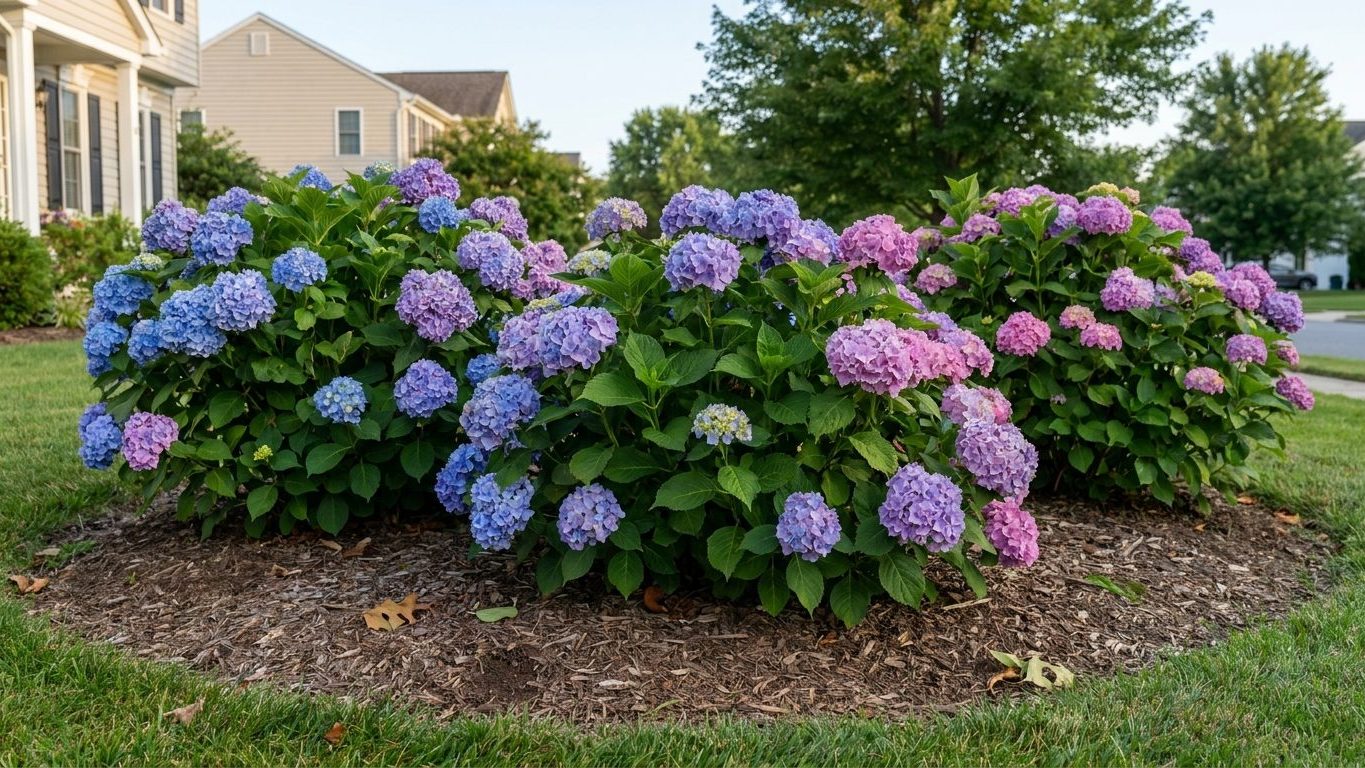
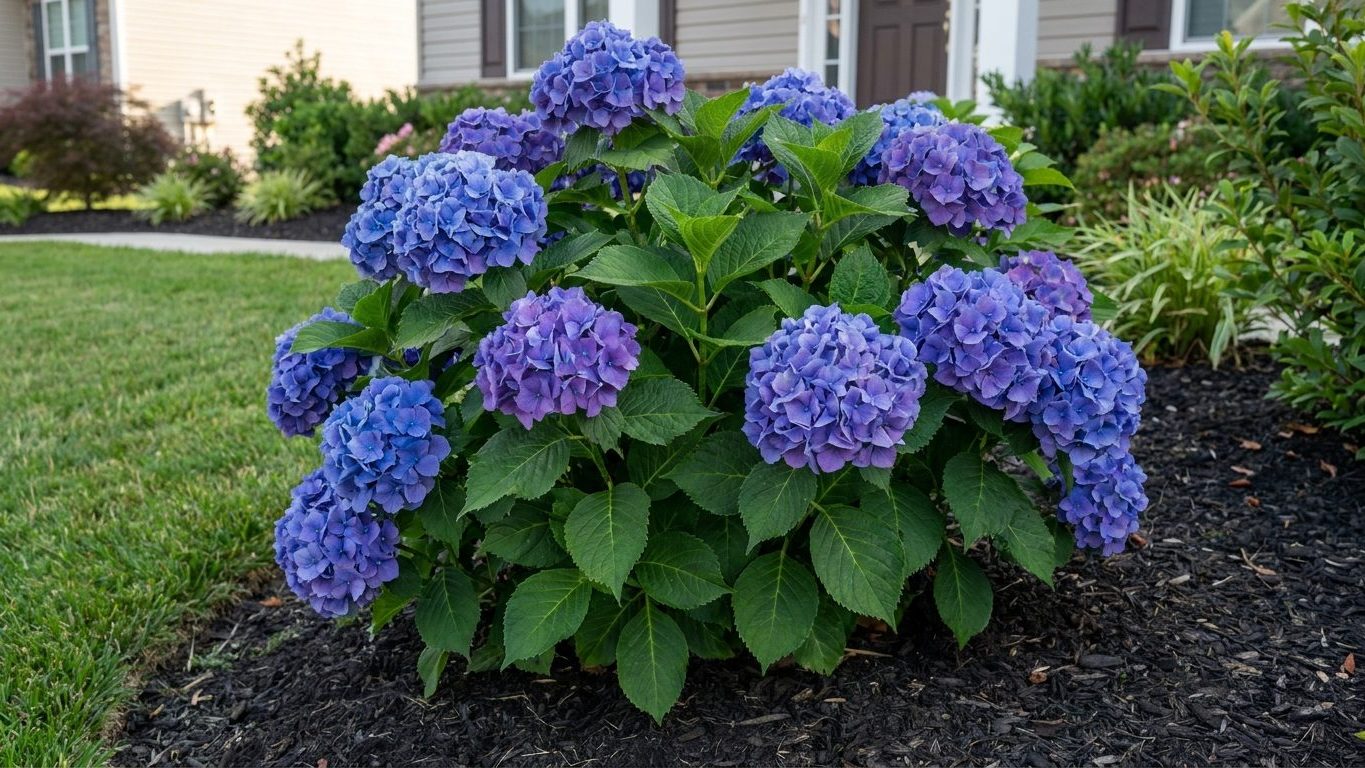
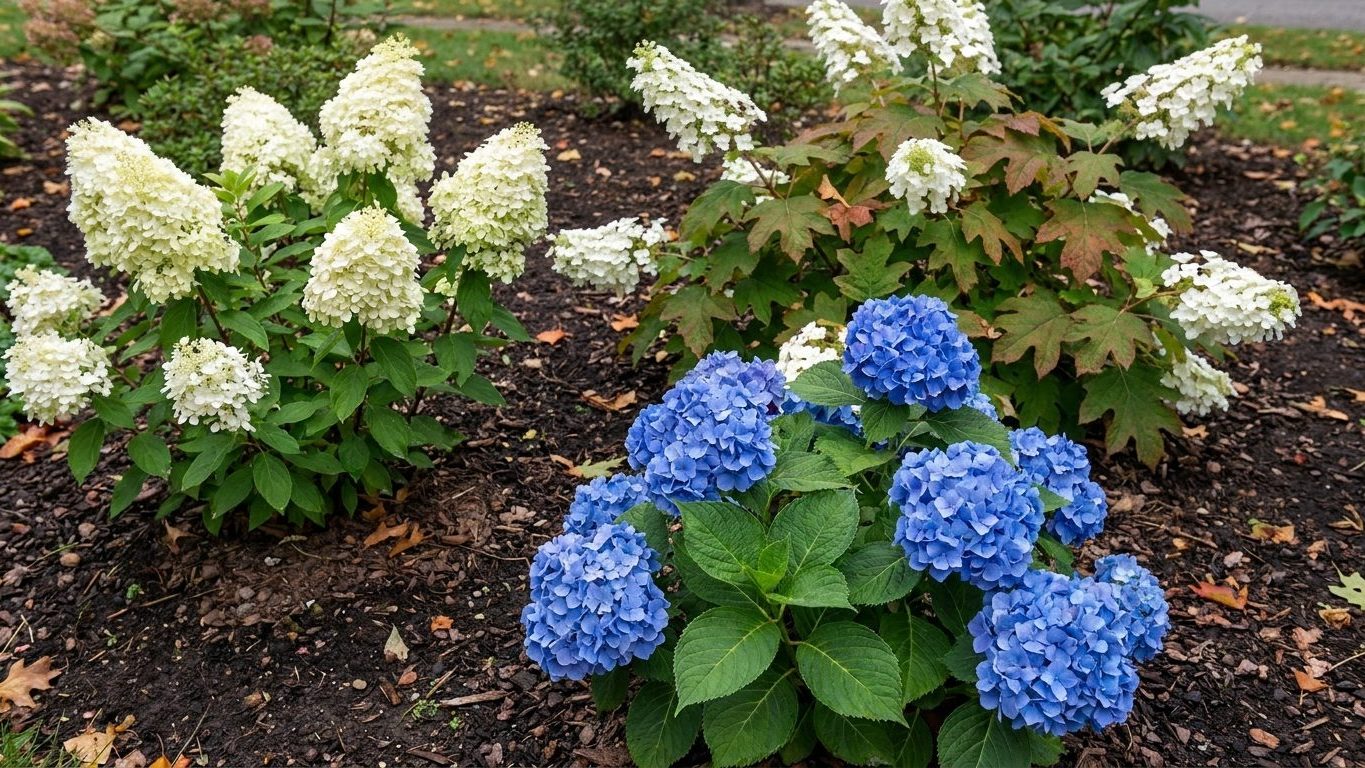
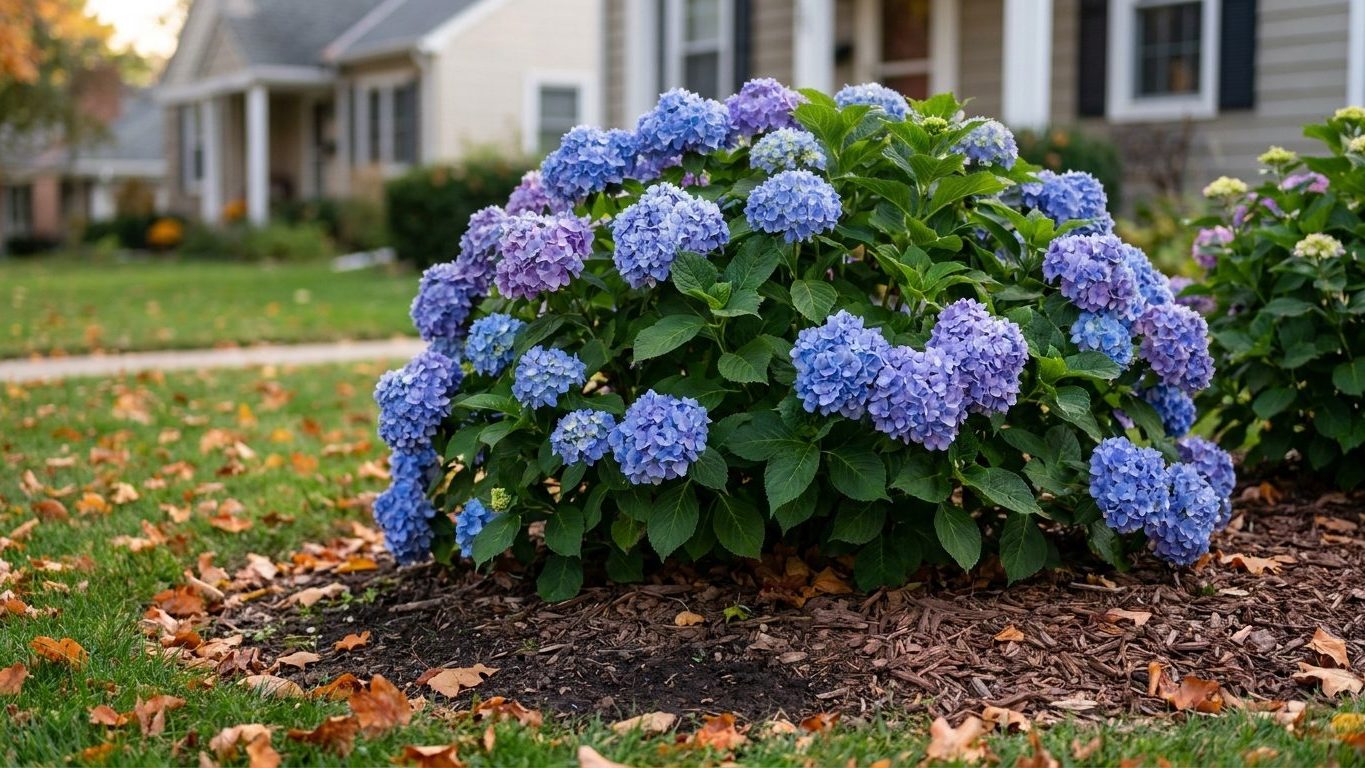
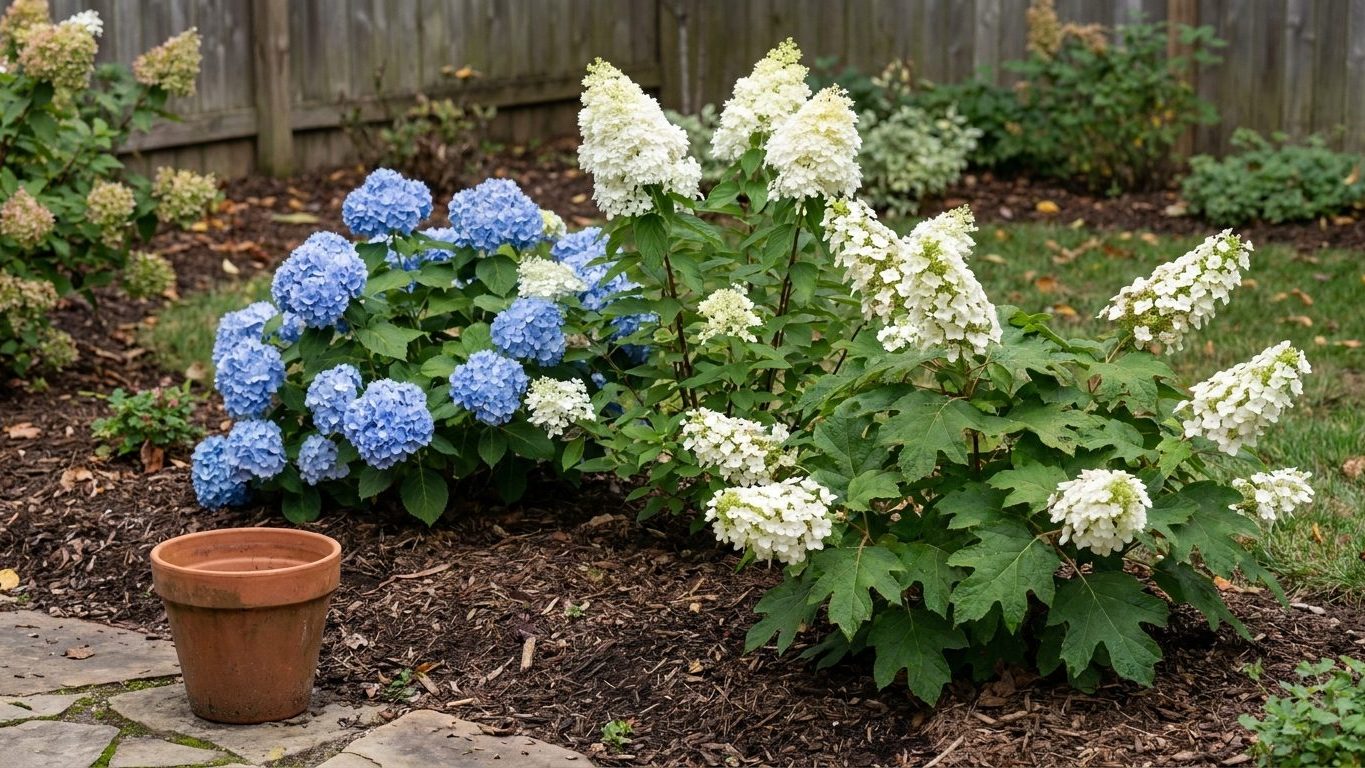
Panicle and smooth hydrangeas are the two safest bets for Idaho, since both flower on new wood and shrug off the hard freezes that come with USDA zones 3b to 7b. Boise’s frost-free stretch runs from late April to early October, plenty of time for a new-wood bloomer to set flowers. Bigleaf hydrangea, the variety most people picture, struggles almost everywhere except the mildest valley floors.

Hydrangeas that grow well in Idaho: The Short Answer

Idaho spans USDA zones 3b to 7b on the USDA Plant Hardiness Zone Map, and Boise sits near the mild end. A hydrangea’s bloom habit, new wood or old, matters more here than in milder states, since a spring freeze after bud break is common before Boise’s frost-free window opens.

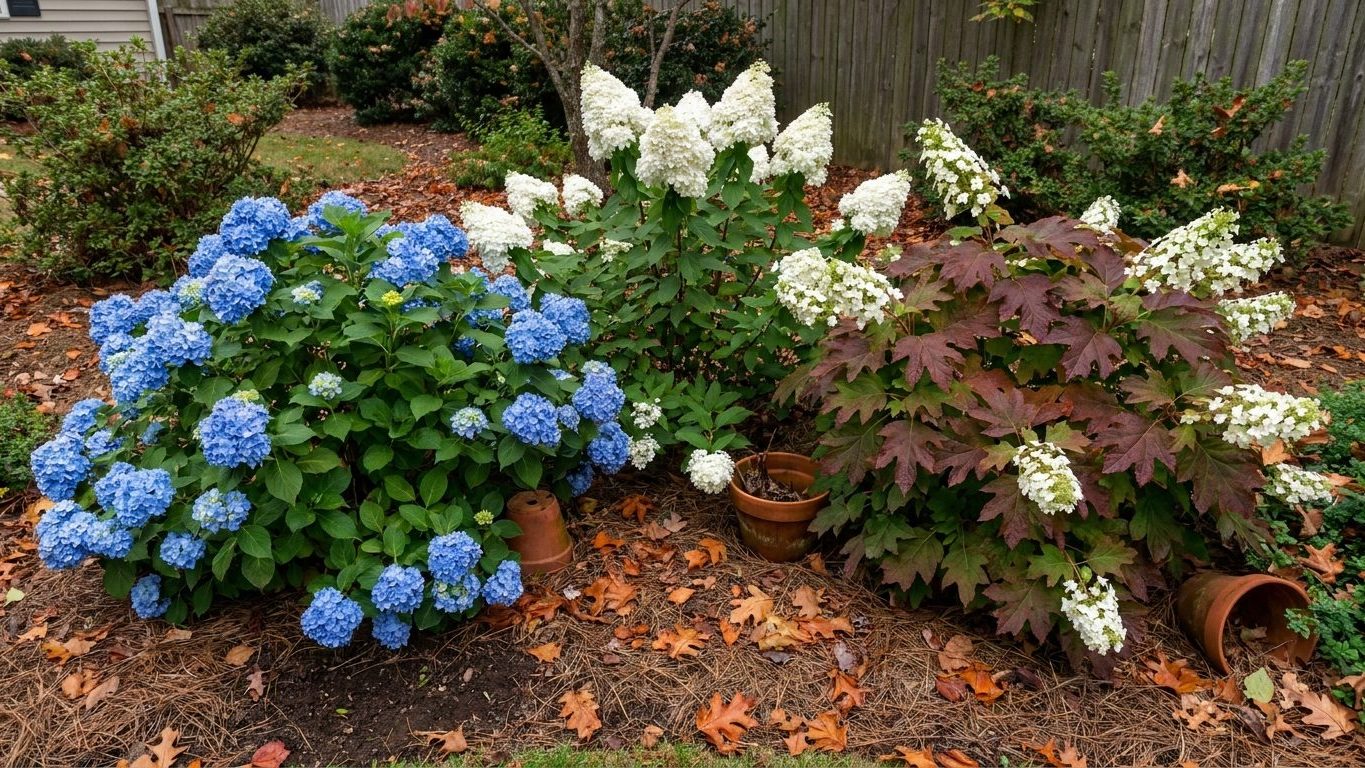
Panicle hydrangea (Hydrangea paniculata)

Panicle hydrangea (Hydrangea paniculata) — Hydrangeas That Grow Well in Idaho

Panicle hydrangea flowers on new wood, so a hard freeze that damages last year’s stems doesn’t cost a season of blooms. It tolerates cold across the state’s coldest zones, making it the safest choice from Boise’s benches up into the mountains. Full sun and dry summers, Idaho’s default weather, suit it well.

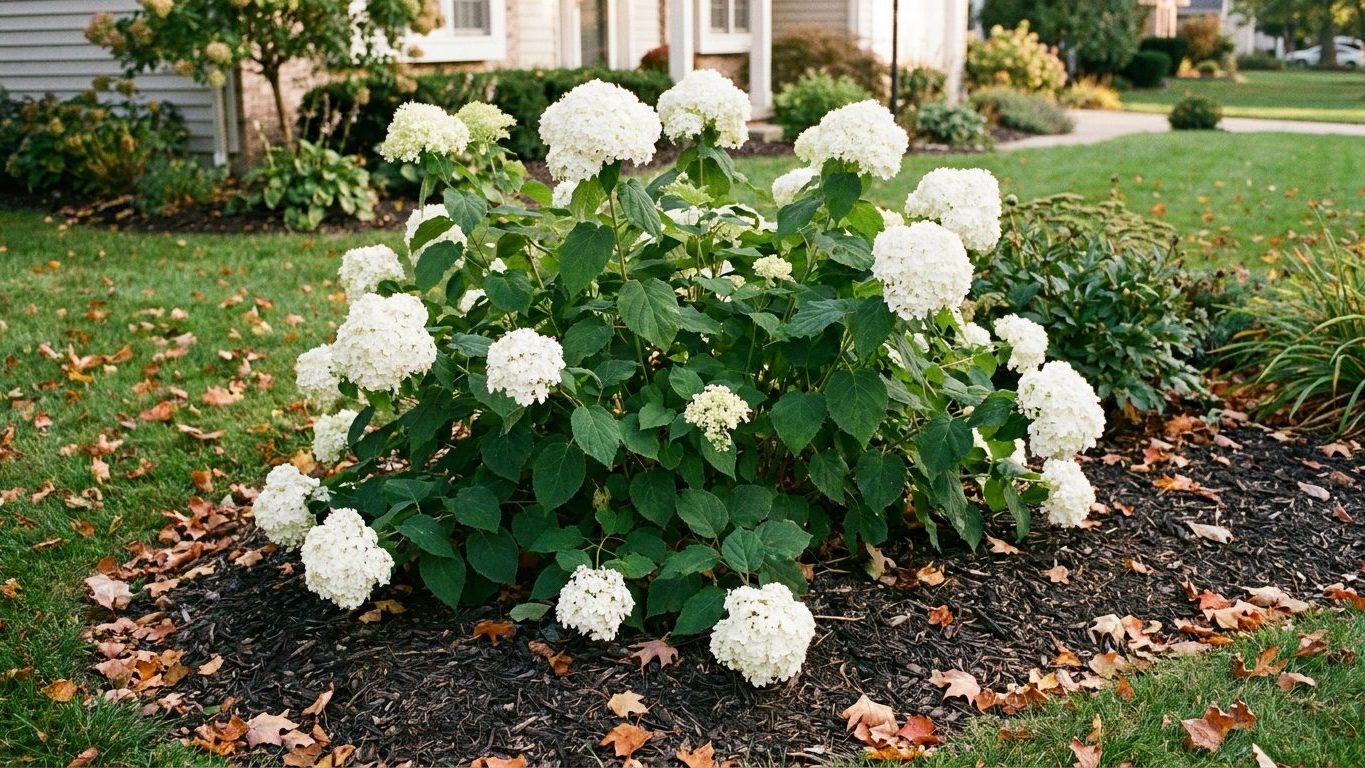
Smooth hydrangea (Hydrangea arborescens)

Smooth hydrangea (Hydrangea arborescens) — Hydrangeas That Grow Well in Idaho

Smooth hydrangea also blooms on new wood, so a late frost doesn’t erase the flowers. It handles the same cold as panicle types and tolerates part shade better, useful where afternoon sun turns harsh on the Snake River Plain. Heavy blooms can flop the stems without some support.

Mountain hydrangea (Hydrangea serrata)

Mountain hydrangea (Hydrangea serrata) — Hydrangeas That Grow Well in Idaho

Mountain hydrangea is a smaller, tougher relative of bigleaf, with thinner stems that handle a whiplash spring better. It still sets most buds on old wood, so a freeze after growth starts can erase a year’s flowers. It fits Boise’s lower elevation but not the state’s colder pockets.

Oakleaf hydrangea (Hydrangea quercifolia)

Oakleaf hydrangea (Hydrangea quercifolia) — Hydrangeas That Grow Well in Idaho

Oakleaf brings fall color and peeling bark, a genuine four-season shrub, but its cold tolerance runs out around zone 5, excluding much of Idaho above the valley floors. Where it fits, heavy mulch and shelter from north wind help it through winter.

Climbing hydrangea (Hydrangea anomala subsp. petiolaris)

Climbing hydrangea (Hydrangea anomala subsp. petiolaris) — Hydrangeas That Grow Well in Idaho

Climbing hydrangea needs several seasons just to establish before it starts flowering, and Idaho’s shorter frost-free window leaves less growing time than the vine wants. It can survive the cold in a sheltered spot but rarely rewards the wait with much bloom.

Bigleaf hydrangea (Hydrangea macrophylla)

Bigleaf hydrangea (Hydrangea macrophylla) — Hydrangeas That Grow Well in Idaho

Bigleaf is the variety most gardeners picture first, and the one Idaho punishes hardest. It sets flower buds on the previous year’s wood, and a spring freeze after bud break, common before Boise’s frost-free window fully opens, wipes out blooms even on a healthy shrub.

How to Work Out the Dates for Your Own Yard

Finding out what will actually survive in your yard starts with two dates, since Idaho’s growing season is really the gap between them.

  1. Find your last spring frost: Boise’s window runs April 23 to May 7, the range NOAA NCEI 1991-2020 Climate Normals for station USW00024131 gives as the 30 to 70 percent freeze probability band.
  2. Find your first fall frost: Boise sees this between October 7 and October 21, setting the far end of the season.
  3. Subtract time for elevation: every few hundred feet above Boise’s valley floor pushes both dates inward and shortens the season further.
  4. Check your zone: Idaho spans 3b to 7b, so a shrub rated for zone 6 may die where you live even though it thrives in Boise.
  5. Match bloom habit to the gap: a new-wood bloomer only needs the frost-free stretch to flower, while an old-wood bloomer needs last year’s stems to survive winter intact too.

Run panicle hydrangea through that checklist and it passes every point, cold-tolerant, new-wood blooming, comfortable with a shorter frost-free window than Boise’s. Bigleaf fails the zone check almost everywhere above the valley floor, since its rating leaves it exposed across most of the state’s higher ground.

Idaho North to South: How the Dates Shift

Elevation, not latitude, does most of the work shifting these dates from one Idaho yard to the next.

  • Treasure Valley (Boise, Nampa, Caldwell): the lowest, mildest ground in the state, closest to the April 23 to May 7 spring frost window and the longest stretch before fall frost returns.
  • Magic Valley and the Snake River Plain (Twin Falls, Burley): similar low elevation but drier air, so daytime heat and overnight cooling both run harder.
  • Panhandle (Coeur d’Alene, Sandpoint): nearby lakes soften the coldest nights somewhat, though the frost-free season still runs shorter than the Treasure Valley’s.
  • Central and eastern mountains (Sun Valley, Stanley, Idaho Falls): the state’s coldest ground, where the growing season can close weeks earlier than Boise’s.

Whichever region matches your yard, treat Boise’s dates as the mild end of Idaho’s range and adjust colder from there.

Mistakes Idaho Punishes

Planting bigleaf and expecting old-wood blooms

Bigleaf hydrangea sets flower buds on the previous year’s wood, and a freeze after growth starts, common before Boise’s frost-free window closes, kills those buds even on a healthy shrub. Plant a new-wood bloomer like panicle or smooth instead, or accept foliage without flowers most years.

Pruning bigleaf outside its window

Cutting back stems any time other than June or July removes next year’s flower buds before they even form, since bigleaf sets buds on the growth made right after that cut. Prune only in that window, never during fall or spring cleanup.

Feeding on a random schedule

Fertilizing whenever a bag happens to be on sale pushes soft new growth right before a fall or spring freeze, and that tender wood is what cold kills first. Idaho’s fertilizing window falls in March, May, and July, timed to avoid pushing growth into frost. Skip a September feeding no matter how the shrub looks.

Idaho Extension Offices and County Contacts

Boise’s frost dates and zone number are a starting point, not the final word for your yard. University of Idaho Extension keeps county-level guidance that adjusts for local elevation and soil.

  • Your state page: the frost dates and the pruning window where you live.
  • Which ones hold up here: the full list of hydrangea varieties suited to Idaho’s zones, ranked from safest to riskiest.
  • What goes wrong here: the pests and problems specific to Idaho’s hydrangeas, month by month.

Call your county extension office through University of Idaho Extension before planting anything rated below your local zone.

Common questions

Can bigleaf hydrangeas survive an Idaho winter?

Only in the mildest valley pockets near Boise, and even there a late spring freeze after bud break often erases the bloom for the year. Panicle and smooth hydrangeas handle the same cold with far less risk.

What is the best hydrangea for a cold Idaho yard?

Panicle hydrangea tolerates cold across the state’s coldest zones on the USDA Plant Hardiness Zone Map, covering most of Idaho’s mountain valleys, and it flowers reliably because it blooms on new wood every year.

Do hydrangeas need winter protection in Idaho?

New-wood bloomers like panicle and smooth rarely need it, since frozen stems just get replaced by spring growth. Old-wood types such as bigleaf benefit from a thick mulch layer and shelter from north wind, though protection only helps so much once a hard freeze hits open buds.
Hydrangea Pests and Diseases in Idaho

Hydrangea Pests and Diseases in Idaho

In Boise, the shrubs that struggle rarely lose a fight to an exotic invader. They lose it to timing: a late freeze catching open buds, dry heat scorching the west side of a leaf, or a stem pruned in the wrong month. Idaho’s USDA hardiness zone runs 3b to 7b, so what hits a shrub in the Panhandle looks nothing like what hits one in the Treasure Valley.

Hydrangea pests and diseases Idaho: The Short Answer

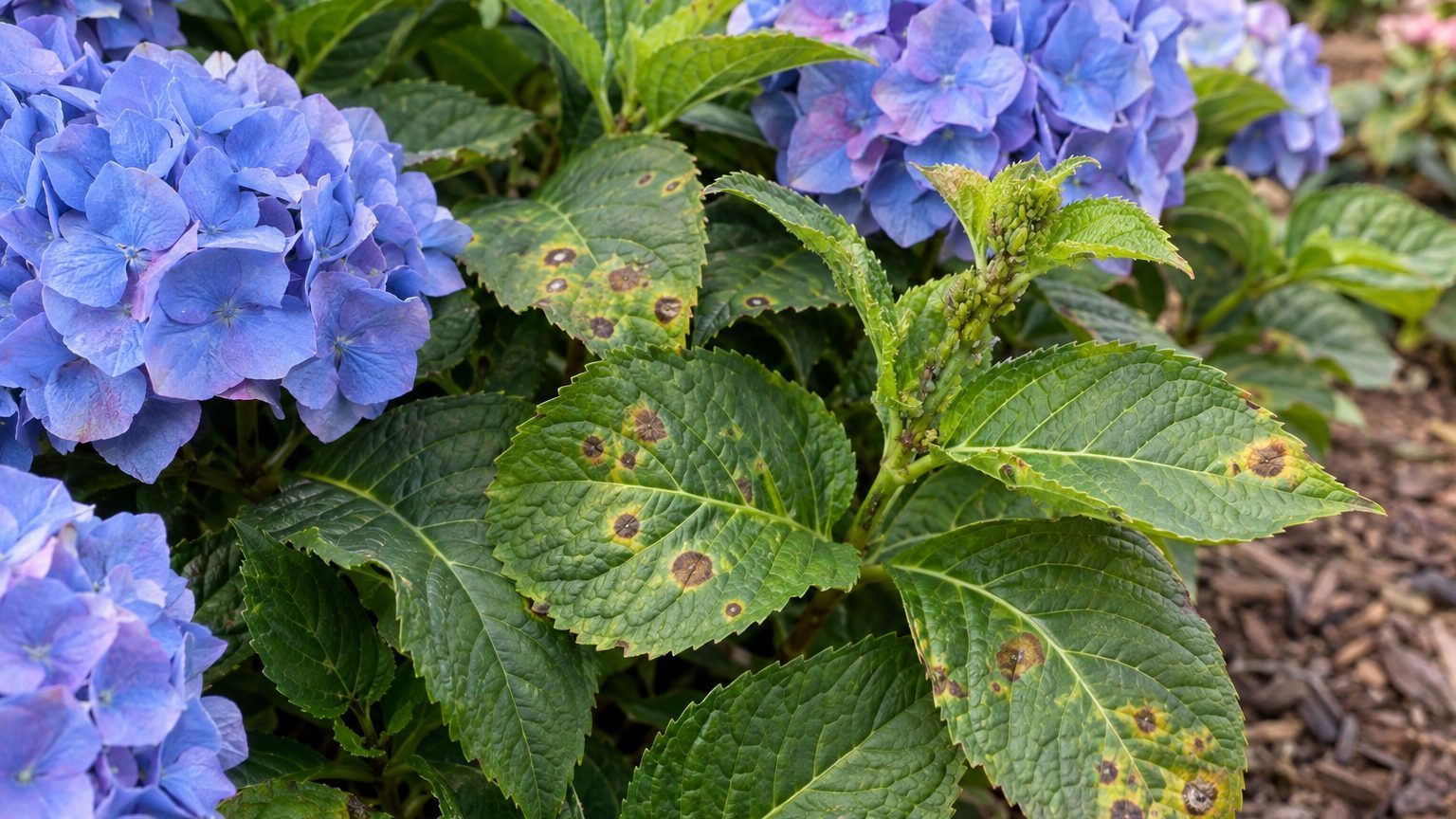
Boise’s shrubs face six recurring problems across the growing season, from bud blast right after the frost window closes to dieback once the first fall freeze lands. Each leaves a different signature on the leaf, bud, or stem, and catching it early keeps a bigleaf hydrangea blooming instead of just hanging on.

Bud blast after a late frost

Bud blast after a late frost — Hydrangea Pests and Diseases in Idaho

A freeze after growth starts blackens flower buds before they ever open. NOAA NCEI 1991-2020 Climate Normals puts Boise’s last spring frost at April 23 to May 7, so buds pushing out ahead of that window carry the risk. Cover the shrub on cold nights and check the calendar page for safer timing.

Aphids clustering on new growth

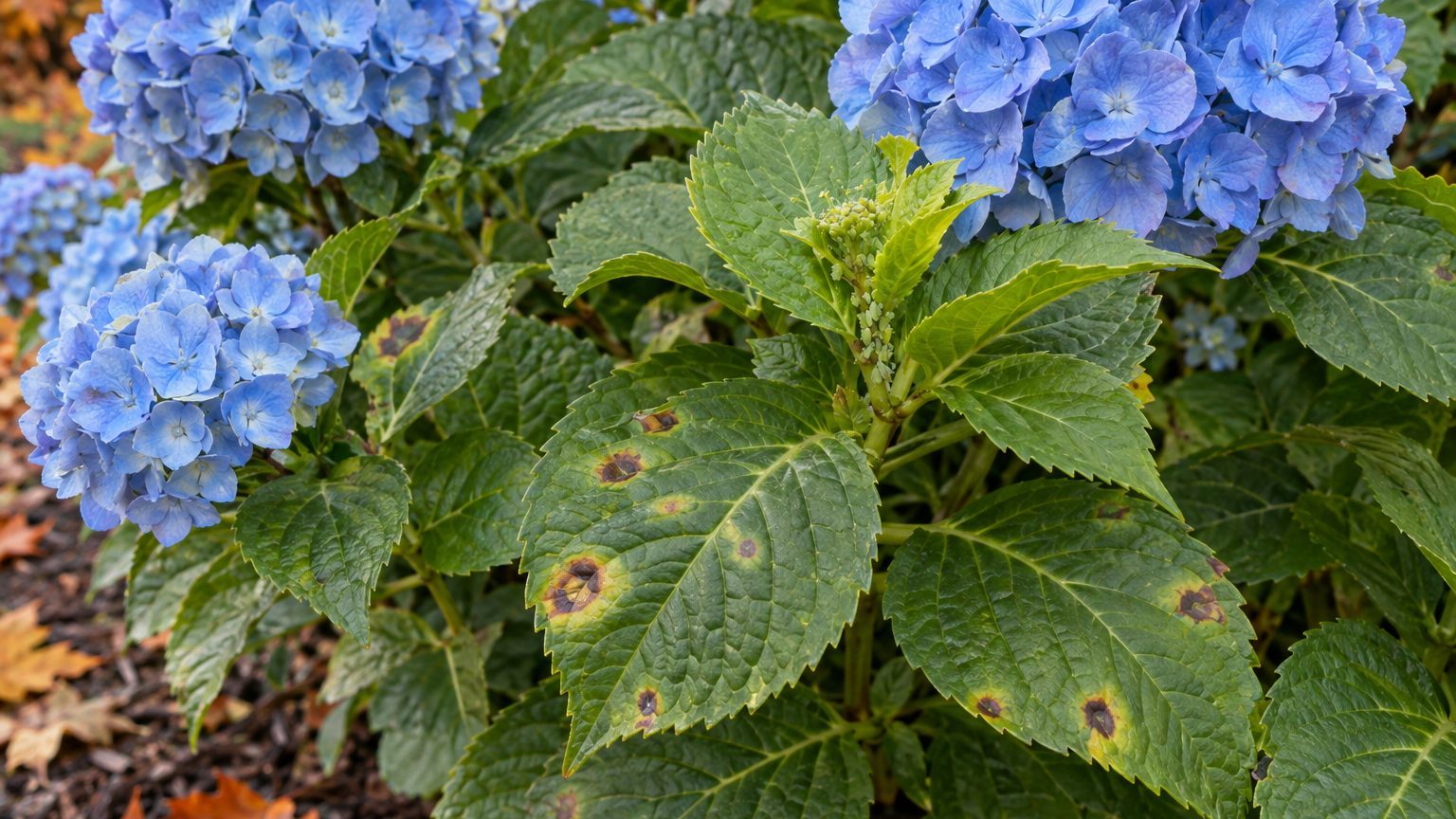
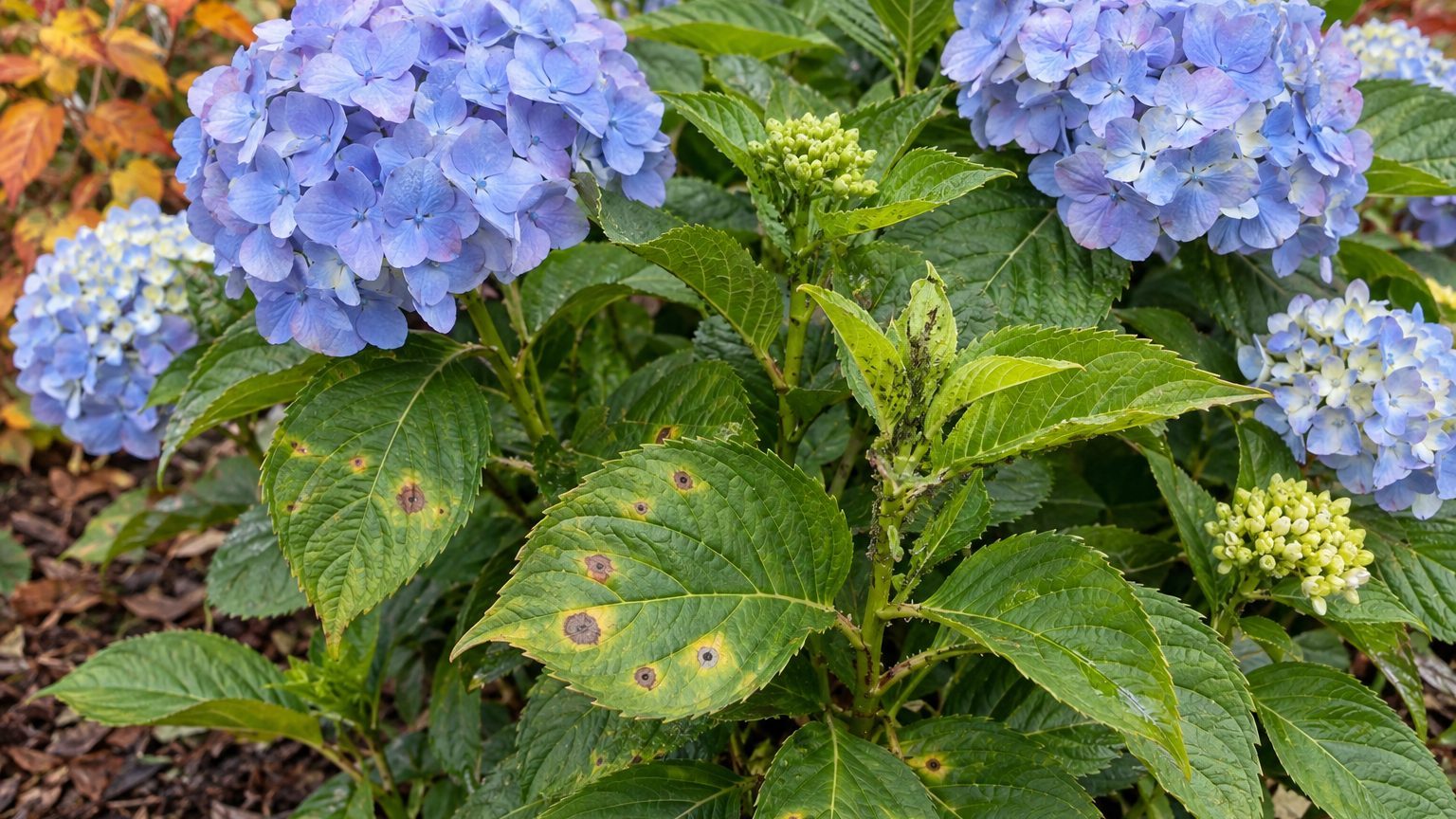
Aphids gather on soft new shoots right after the frost window closes, curling the leaf tips and leaving a sticky film behind. A strong morning spray of water knocks the colony back without chemicals. Fresh growth after a fertilizing round draws them in fastest, so check those shoots closely.

Leaves scorched on the sunny side

Idaho’s dry air and strong afternoon sun scorch the side of the leaf facing west, turning it brown and papery while the shaded side stays green. Move a stressed shrub to filtered light or add afternoon shade, and plant new stock during the cooler April, May, August, or September planting months.

Powdery mildew on the leaf surface

Powdery mildew on the leaf surface — Hydrangea Pests and Diseases in Idaho

A gray-white coating on top of the leaf follows a run of warm days and cool, damp nights, and it spreads fastest where sprinklers wet the foliage after dark. Water the soil at the base in the morning instead, and space plants apart for airflow between them.

Spider mites stippling the foliage

Spider mites stippling the foliage — Hydrangea Pests and Diseases in Idaho

Fine yellow speckling on top of the leaf, with faint webbing underneath, shows up during the driest stretch of summer, when mites multiply fastest. A forceful hose rinse under the leaves every few days breaks their cycle before it spreads to the rest of the shrub.

Winter dieback on the stem tips

Winter dieback on the stem tips — Hydrangea Pests and Diseases in Idaho

Stems that blacken from the tip downward trace back to the first fall frost, which arrives October 7 to October 21 here. Stop fertilizing after July, per the calendar above, so growth hardens off before that window and skips the dieback.

How to Work Out the Dates for Your Own Yard

Matching a symptom to its real cause starts with the calendar, not with the bug or the fungus itself.

  1. Mark the date the damage appeared: if it showed up before May 7, NOAA NCEI 1991-2020 Climate Normals gives that as Boise’s late end for the last frost, so a freeze is the likely cause, not a pest.
  2. Check what part is hit: blackened flower buds point straight to frost, while stippled or curling leaves point instead to mites or aphids.
  3. Line it up with the fertilize months: damage clustering right after March, May, or July often follows a feeding round that drew aphids to the soft new growth it produced.
  4. Watch the moisture pattern: a gray coating after warm days and wet nights signals powdery mildew, while stippling in the driest week of summer signals mites instead.
  5. Compare it to the prune window: dieback on stems cut outside June or July often means the wood was already stressed, not diseased.
  6. Note the zone you actually garden in: the USDA Plant Hardiness Zone Map puts the state at 3b to 7b, so a shrub thriving in Boise’s zone may struggle in a colder pocket nearby.

Once the date, the plant part, and the moisture pattern line up, you’re not guessing anymore. You’re matching a known Idaho pattern to your own yard.

Idaho North to South: How the Dates Shift

Elevation and lake effect move these dates around more than latitude does inside Idaho’s own borders.

  • Treasure Valley and the Snake River Plain (Boise, Nampa, Caldwell): the warmest end of the state’s range.
  • The Panhandle and northern lakes (Coeur d’Alene, Sandpoint, Priest Lake): the big lakes soften the coldest snaps, but the growing season still opens later than Boise’s.
  • Eastern high valleys and mountain towns (Idaho Falls, Rexburg, Driggs): elevation pushes these spots toward the coldest end of the zone range, with a shorter stretch between frosts.
  • The Magic Valley and south-central plateau (Twin Falls, Burley): elevation close to Boise’s, but more open to wind, adding stress on top of similar frost timing.

The Idaho hydrangea guide breaks these differences down further, but the short version holds everywhere: the problems above start later, and end earlier, the higher you climb.

Mistakes Idaho Punishes

Fertilizing past July

Idaho’s calendar allows fertilizing in March, May, and July only, and pushing a late feed in August forces soft growth that the October 7 to 21 frost window kills outright. Stop after July and let the shrub harden instead.

Pruning bigleaf outside June or July

Bigleaf hydrangeas set next year’s flower buds on old wood soon after bloom, so cutting stems outside the June to July window removes buds that would have opened the following spring. Prune only in that stretch.

Watering overhead in the evening

Wetting the leaves late in the day keeps them damp overnight in Idaho’s cool evenings, the exact condition that invites powdery mildew. Water the soil at the base in the morning instead.

Idaho Extension Offices and County Contacts

The zone range and frost windows above come from statewide averages, so the shrub in your own yard still needs a local check. University of Idaho Extension and your county office track pest and disease pressure block by block.

  • University of Idaho Extension: the statewide directory for pest alerts and county contacts.
  • Your county extension office: local staff who know whether mites or mildew are running heavy this season nearby.
  • The Idaho hydrangea guide: the full frost calendar and pruning window for your part of the state.

Common questions

Do hydrangeas need fungicide spray in Idaho every year?

Most Boise-area shrubs never need it. Powdery mildew shows up only after a run of warm days and damp nights, usually from overhead watering, so switching to soil-level watering in the morning prevents most cases before a spray is ever needed.

Why did my hydrangea leaves turn brown only on one side?

That’s leaf scorch, not disease. The side facing west takes the full brunt of Idaho’s dry afternoon sun and wind, while the shaded side stays green. Afternoon shade or a filtered spot solves it without any product.

Can I treat spider mites without chemicals?

Yes, and it’s usually the first thing worth trying. A forceful rinse under the leaves every few days during the driest week of summer breaks their reproduction cycle, since mites thrive on dust and dry, still air more than on the plant itself.

Hydrangea Pests and Diseases in Delaware

Hydrangea Pests and Diseases in Delaware

Six problems account for nearly every hydrangea complaint in Delaware, and they follow the calendar rather than showing up at random. Aphids and frost-blackened buds open the season, powdery mildew and leaf spot take over through the humid Mid-Atlantic summer, and deer pressure closes it out each fall. Here’s how to tell them apart and what actually works.

Hydrangea pests and diseases Delaware: The Short Answer

NOAA NCEI 1991-2020 Climate Normals puts Wilmington’s last spring frost between April 3 and April 14, and the first fall frost between October 26 and November 7, which brackets the growing season most Delaware pests and diseases work inside. Six problems tend to show up in a fairly predictable order between those two dates, and knowing which one you’re looking at saves a season of guessing.

Aphids on new growth

Aphids cluster on soft spring shoots as soon as leaves unfurl, curling them and leaving a sticky residue that draws ants across the whole shrub. A hard blast from the hose most mornings knocks the colony down before it spreads, and ladybugs usually finish the job by late spring.

Blackened buds after a late frost

Blackened buds after a late frost — Hydrangea Pests and Diseases in Delaware

A frost that lands after mid-April can blacken flower buds on bigleaf hydrangea overnight, since Wilmington’s frost window still runs into that stretch some years. There’s no fix once it happens: the shrub usually leafs out fine, it just skips bloom that year.

Powdery mildew

A gray-white film coats leaves by early summer once humidity settles in, more of a look than a real threat to the plant itself. Space shrubs for airflow and water the soil instead of the leaves, and it mostly stays cosmetic through the rest of the season.

Cercospora leaf spot

Small purple-brown spots appear on lower leaves first, then climb the shrub as humid weeks stack up, sometimes causing early leaf drop by late summer. Pulling and trashing (not composting) fallen leaves each fall cuts down the spores that overwinter and reinfect the shrub next year.

Botrytis blight

Gray fuzzy mold shows up on flower heads and stems after a stretch of wet, still weather, usually mid to late summer. Cutting out affected blooms and improving airflow around the base of the shrub keeps it from spreading into healthy wood nearby.

Deer browsing before frost

Deer browsing before frost — Hydrangea Pests and Diseases in Delaware

Deer strip buds and leaves hardest in fall as other browse thins out, right before Wilmington’s first frost shuts the season down. A repellent spray rotated every few weeks, or a simple fence panel, protects the shrub through its most vulnerable stretch.

How to Work Out the Dates for Your Own Yard

Delaware’s frost window sets the clock for the two problems people confuse the most, frost damage and disease, and walking through the same checks nails down which one you’re actually seeing.

  1. Check the calendar first: buds blackened within two weeks after Wilmington’s last spring frost window of April 3 to April 14 point to frost, not disease.
  2. Look for a pattern across the shrub: frost damage hits buds evenly on the exposed side, while disease spreads in patches that start low and climb.
  3. Check the underside of the leaf: sticky residue or clusters of small insects point to aphids rather than a fungal problem.
  4. Note the weather of the past two weeks: a stretch of wet, still days points to Botrytis or powdery mildew, since both need lingering moisture to take hold.
  5. Compare against the plant’s zone: the USDA Plant Hardiness Zone Map lists Delaware at 7a to 8a, and a shrub pushed a zone colder than its rating shows stress that mimics disease but isn’t.
  6. Photograph it and call the county office: a clear photo sent to the local extension office settles the harder cases in a day.

None of this replaces an actual diagnosis, but running through these six checks before reaching for a spray saves most yards an unnecessary treatment.

Delaware North to South: How the Dates Shift

Delaware is a small state, but it still splits into three growing conditions that change when these problems show up and how bad they get.

  • New Castle County (Wilmington, Newark): the coolest, most humid corner near the Piedmont, so powdery mildew and Cercospora tend to show up earliest and linger longest into fall.
  • Kent County (Dover, Camden): flatter and a touch warmer, buds break earlier in spring, which raises the odds of a late frost catching an early bloom.
  • Sussex County (Rehoboth Beach, Georgetown, Seaford): closest to the Atlantic and the bay, salt spray stresses leaves right along the coast, while inland pockets run the warmest summers in the state and see the worst mildew pressure.

Whichever county you’re in, start from the state guide’s frost window and adjust from there for your own yard.

Mistakes Delaware Punishes

Pruning bigleaf too early

Cutting back bigleaf hydrangea outside the June to July prune window removes next year’s flower buds along with this year’s dead wood, since the shrub sets buds on old growth. Wait for that window and cut only what’s clearly dead first.

Watering the leaves in humid weather

Overhead watering on a still, humid evening is exactly the setup powdery mildew and Botrytis need, since the leaves stay wet for hours after dark. Switch to a soaker hose or drip line at the base, watering in the morning instead.

Feeding a plant that’s already sick

Feeding a shrub fighting leaf spot or mildew, instead of sticking to the March, May, and July fertilize window, pushes soft new growth that disease moves into fastest. Treat the problem first, then feed on schedule once the plant recovers.

Delaware Extension Offices and County Contacts

Delaware’s zone and frost window are a starting point, not the final word for your yard. University of Delaware Cooperative Extension and your county office fill in the rest, from soil tests to a call-out for a stubborn leaf spot.

  • University of Delaware Cooperative Extension: the state’s land-grant extension service, with offices covering New Castle, Kent, and Sussex counties.
  • Your state page: the frost dates and hardiness zone for Delaware in one place.
  • Which ones hold up here: the hydrangea varieties suited to Delaware’s 7a to 8a range.

Call before you spray. Most county offices will look at a photo for free.

Common questions

Do hydrangeas in Delaware need spraying every year?

No, most yards only see one or two of these problems in a given season, and simple watering and airflow fixes handle most of them without a spray.

Can frost damage look like disease?

Yes, blackened buds after a late frost are often mistaken for blight, but frost damage shows up all at once across the shrub rather than spreading in patches over days.

When should I stop worrying about pests each year?

Once the first fall frost hits, between October 26 and November 7 in Wilmington, most insect activity and fungal spread stop for the season.

When to Prune Hydrangeas in Delaware

When to Prune Hydrangeas in Delaware

In Wilmington, the safest planting window runs April through May, once the last spring frost has passed, or again in August and September as the fall planting window opens. Pruning bigleaf hydrangeas belongs in June and July, right after bloom, never before. Everything else, soil prep, variety choice, county timing, depends on where in Delaware you garden.

When to prune hydrangeas in Delaware: The Short Answer

NOAA NCEI 1991-2020 Climate Normals put Wilmington’s last spring frost at April 3 to April 14, the hinge every month below turns on.

  • January: Hydrangeas sit fully dormant. Skip pruning and planting, and just check that mulch hasn’t washed away from the base.
  • February: Order bare-root or potted stock now. The frost window hasn’t closed, so April is still the earliest safe planting date.
  • March: This is the first fertilize month of the year. Feed established shrubs once new growth starts, but hold off planting until frost risk clears.
  • April: The planting window opens as the last frost passes. Get root balls in the ground early in the month once soil has warmed.
  • May: Fertilize and plant both apply this month. It’s the widest window for adding a new hydrangea and feeding older ones at once.
  • June: Prune bigleaf hydrangeas now, right after the first flush fades. Cut spent blooms back to the first healthy bud below the flower.
  • July: The pruning window closes at month’s end. This is also the second fertilize month, so a light feed can follow any late cuts.
  • August: A second planting window opens. New shrubs set roots before fall dormancy without fighting the hardest summer heat.
  • September: Planting continues through this month. It’s the last comfortable stretch to get shrubs settled before frost returns.
  • October: The first fall frost lands between October 26 and November 7 in Wilmington. Hold off on pruning and let the plant go dormant on its own.
  • November: Mulch over the root zone once the ground cools. This matters most for bigleaf varieties, which set next year’s buds on old wood.
  • December: Leave the shrub alone. Dormant hydrangeas need no fertilizer, no water beyond rain, and no pruning until next summer.

That’s the state-level rhythm. Your own yard, your soil, and which side of Delaware you’re on can shift these dates by a week or two, which is exactly what the next section works out.

How to Work Out the Dates for Your Own Yard

Frost windows are ranges, not single dates, so working out your own planting week means counting from the range that applies to your county.

  1. Start with the reference window: Wilmington’s last spring frost falls April 3 to April 14, per NOAA NCEI 1991-2020 Climate Normals, so treat mid-April as the safe line for planting in town.
  2. Add a week or two for outlying yards: suburban and rural gardens away from the airport station typically see frost linger later in spring and arrive earlier in fall, sometimes by one to two weeks.
  3. Check your USDA hardiness zone: the USDA Plant Hardiness Zone Map puts Delaware between 7a and 8a, and a shrub rated for a lower zone carries more cushion against a stray late freeze.
  4. Match the gesture to the calendar window: planting fits April, May, August, and September, fertilizing fits March, May, and July, and bigleaf pruning fits June and July only.
  5. Watch the extended forecast before you commit: a ten-day forecast with lows staying above 40°F is a better planting signal than the calendar date alone, especially in early April.
  6. Note your microclimate: a south-facing bed against a house wall warms earlier than an open lawn, which can push your personal window a few days ahead of the county average.

None of this replaces watching your own thermometer. The reference dates give you a starting range, and a week of mild nights or one hard freeze can move your actual planting day either direction.

Delaware North to South: How the Dates Shift

Delaware is small, but three counties don’t share one hydrangea calendar, and coastal air behaves differently than inland clay.

  • New Castle County and the north (Wilmington, Newark, Bear): closest to the reference station, so the frost dates above apply most directly here.
  • Kent County and the middle (Dover, Camden, Smyrna): more open farmland cools faster on clear nights, so treat the spring planting window as starting a few days later than Wilmington’s.
  • Sussex County and the coast (Rehoboth Beach, Lewes, Georgetown): ocean proximity moderates both ends of the season, often pushing the first fall frost later than inland counties see.

Whichever county you garden in, the state guide carries the frost-date table and hardiness zone context that these county notes build on.

Mistakes Delaware Punishes

Pruning bigleaf in fall or spring

Cutting back bigleaf hydrangeas outside June and July removes next year’s flower buds, since they set bloom on old wood. Stick to the prune window right after the first flush fades, and skip any cleanup pruning in October or November when the plant should just go dormant.

Planting during the first warm week of April

NOAA NCEI 1991-2020 Climate Normals put the last frost window at April 3 to April 14 in Wilmington, and a shrub planted the first mild weekend can still catch a hard freeze. Wait until the range has fully passed in your county, or hold the plant until May.

Skipping the second fertilize round

Feeding only in spring leaves shrubs short on nutrients through a long Delaware summer. The calendar sets fertilize months at March, May, and July, and missing July often shows up as weak fall color and thin buds the following spring.

Delaware Extension Offices and County Contacts

The frost dates and zone above are a starting point. University of Delaware Cooperative Extension and your county office add soil testing and pest identification specific to your yard.

  • Your state page: the frost dates and the pruning window where you live.
  • Which ones hold up here: bigleaf, panicle, and other varieties ranked from safest to riskiest for Delaware winters.
  • What’s going wrong: the pests and problems that show up on Delaware hydrangeas, season by season.

Common questions

Can I plant hydrangeas in Delaware in early spring?

Wait until Wilmington’s last frost window, April 3 to April 14, has passed. Planting before that risks a young root ball meeting a hard freeze it hasn’t hardened off against yet.

What month should I prune hydrangeas in Delaware?

For bigleaf hydrangeas, prune in June or July only, right after the first bloom fades. Pruning outside that window cuts off next year’s flower buds since they form on old wood.

Do hydrangeas survive Delaware winters without protection?

Most established shrubs handle Delaware’s 7a to 8a hardiness range fine once mulched. A layer of mulch over the root zone before the first fall frost, which lands October 26 to November 7 in Wilmington, protects the roots that carry the plant through winter.

Hydrangeas That Grow Well in Connecticut

Hydrangeas That Grow Well in Connecticut

Connecticut gardeners get good news here: several hydrangea species handle the state’s cold winters and humid summers without much fuss. Panicle and smooth hydrangeas are the safest bets from the shoreline to the northwest hills, blooming reliably every year. Bigleaf, the type most people picture, is riskier because a late spring freeze can wipe out the flower buds before they open.

Hydrangeas that grow well in Connecticut: The Short Answer

The USDA Plant Hardiness Zone Map places Connecticut between zone 6a and 7b, with Bridgeport on Long Island Sound anchoring the mildest, warmest end of that range. That single fact decides which hydrangeas thrive here, since shrubs that bloom on new wood shrug off a hard winter while the ones that set next year’s flowers on old wood gamble every year on whether the buds survive.

Panicle hydrangea (Hydrangea paniculata)

Panicle hydrangea (Hydrangea paniculata) — Hydrangeas That Grow Well in Connecticut

This is the hydrangea that never disappoints in Connecticut. It blooms on new wood, so even a brutal winter in the Northwest Hills can’t touch next summer’s flowers. It also tolerates full sun and the state’s heavy clay soils better than anything else on this list.

Smooth hydrangea (Hydrangea arborescens)

Smooth hydrangea (Hydrangea arborescens) — Hydrangeas That Grow Well in Connecticut

A Connecticut native relative, smooth hydrangea shrugs off freeze-thaw winters the same way panicle does, by flowering on new wood. It prefers a bit more shade and moisture, which suits the shadier yards common in the state’s older neighborhoods.

Oakleaf hydrangea (Hydrangea quercifolia)

Oakleaf hydrangea (Hydrangea quercifolia) — Hydrangeas That Grow Well in Connecticut

Oakleaf holds up well across most of Connecticut and adds fall color none of the others offer. Its main weakness is wind, since an exposed hilltop or a gust off the Sound can scorch the foliage, so a sheltered spot keeps it looking its best.

Mountain hydrangea (Hydrangea serrata)

Mountain hydrangea (Hydrangea serrata) — Hydrangeas That Grow Well in Connecticut

Mountain hydrangea is a smaller cousin of bigleaf with noticeably tougher flower buds. It still sets its blooms on old wood, so a late frost can nip a few, but it comes back with color far more often than true bigleaf in the state’s colder pockets.

Climbing hydrangea (Hydrangea anomala subsp. petiolaris)

Climbing hydrangea (Hydrangea anomala subsp. petiolaris) — Hydrangeas That Grow Well in Connecticut

Once established, climbing hydrangea handles Connecticut winters without complaint and can cover a wall or trellis for decades. The catch is patience, since it can take several seasons to root in, and a young plant stays more exposed to winter injury than an older one.

Bigleaf hydrangea (Hydrangea macrophylla)

Bigleaf hydrangea (Hydrangea macrophylla) — Hydrangeas That Grow Well in Connecticut

Bigleaf is the riskiest choice on this list, and the one most homeowners already own. It sets its flower buds on old wood the summer before, so a hard freeze anywhere in Connecticut’s 6a to 7b range can kill the buds while leaving the shrub itself alive but flowerless.

How to Work Out the Dates for Your Own Yard

Working out your own planting window starts with Bridgeport’s frost data and shifts earlier or later depending on where you garden in Connecticut.

  1. Start with the last spring frost: NOAA’s 1991-2020 Climate Normals for station USW00094702 put Bridgeport’s last spring freeze between April 2 and April 12, the earliest safe mark on the coast.
  2. Add two to three weeks before digging: soil stays cold into mid-April, so the state’s listed planting window runs April, May, August, or September rather than the frost date itself.
  3. Check the fall frost before pruning bigleaf: Bridgeport’s first fall freeze lands between October 28 and November 10, and pruning after midsummer risks cutting off next year’s buds before that cold arrives.
  4. Match the pruning window to the plant: bigleaf and mountain hydrangea only get pruned in June or July, right after their old-wood flowers fade, never in fall.
  5. Feed on the state’s three-pass schedule: fertilize in March, May, and July so the shrub isn’t pushing soft new growth right before the first fall frost.

Panicle hydrangea makes this easy, since it blooms on new wood and doesn’t care when it gets pruned or how early frost arrives. Bigleaf is the one that tests the calendar, because a warm March followed by an April freeze inside Bridgeport’s window can undo a whole year of buds before summer starts.

Connecticut North to South: How the Dates Shift

Connecticut is a small state, but its frost dates move by weeks depending on distance from the Sound and elevation inland.

  • The Shoreline (Bridgeport, New Haven, Stamford): the Sound moderates temperatures enough that this strip carries the mildest, latest fall frost and earliest spring thaw, favoring bigleaf and mountain hydrangea.
  • The Connecticut River Valley (Hartford, Middletown, Wethersfield): a few miles inland, cold air settles at night, pushing the safe planting window later and making bigleaf pruning riskier.
  • The Northwest Hills (Litchfield, Norfolk, Cornwall): the highest, coldest corner of the state, where panicle and smooth hydrangea outperform bigleaf almost every year.
  • The Quiet Corner (Putnam, Woodstock, Pomfret): eastern Connecticut’s rural northeast, with a similar cold lag to the hills, and oakleaf plantings that need shelter from open fields.

The state page carries the frost and hardiness numbers for wherever you garden, since Bridgeport’s dates don’t hold true once you’re thirty miles inland.

Mistakes Connecticut Punishes

Pruning bigleaf after midsummer

Cutting back bigleaf or mountain hydrangea after July removes next year’s flower buds before they’ve formed, since both bloom on old wood. Prune only in June or July, right after the flowers fade, matching the state’s calendar window.

Skipping winter protection on exposed bigleaf

A bigleaf planted against a windy, unsheltered wall in the Northwest Hills or the river valley loses its flower buds more often than one tucked near a foundation or hedge. Wrap the base, or plant mountain hydrangea there instead.

Fertilizing too close to the first frost

Feeding outside the state’s three-pass schedule pushes soft new growth right as the first fall freeze approaches, and NOAA’s Climate Normals put that date at Bridgeport between October 28 and November 10. Stick to March, May, and July, and let the plant harden off after that.

Connecticut Extension Offices and County Contacts

Bridgeport’s frost dates are a starting point, not the final word for your own yard. Local frost pockets, soil, and pest pressure vary enough that county advice fills in the rest.

  • Your state page: the frost dates and hardiness zone for wherever you live in Connecticut.
  • The month-by-month calendar: when to plant, prune, and fertilize hydrangeas, tied to the frost window.
  • What goes wrong here: the pests and problems Connecticut hydrangeas run into, season by season.

Reach out to UConn Extension before planting if your yard sits in a known frost pocket.

Common Questions

Do hydrangeas need winter protection in Connecticut?

Bigleaf and mountain hydrangea benefit from mulch or a wrap around the base in the Northwest Hills and river valley, done before the first fall freeze between October 28 and November 10. Panicle and smooth hydrangea need none.

Can I grow bigleaf hydrangea in Connecticut?

Yes, especially along the Shoreline where Bridgeport’s milder zone helps flower buds survive. Expect a bloomless year now and then in the Northwest Hills or the river valley, where winter cold reaches the old-wood buds.

What is the best time to plant hydrangeas in Connecticut?

The state’s calendar lists April, May, August, and September as planting months, spaced around the hottest stretch of summer and the coldest weeks near the frost dates.

Hydrangea Pests and Diseases in Connecticut

Hydrangea Pests and Diseases in Connecticut

The biggest problem on Connecticut hydrangeas isn’t a bug at all. It’s a bare shrub in June with plenty of green leaves and zero flowers, and the cause traces back to a bud that froze months earlier, not to anything crawling on the plant. Everything else, from aphids to powdery mildew, follows a fairly predictable seasonal order once that first mystery is solved.

Hydrangea Pests and Diseases Connecticut: The Short Answer

In Bridgeport and the rest of coastal Connecticut, the season’s problems arrive in a set order: winter bud loss shows up first in spring, insects and fungal spots follow through summer, and deer pressure closes out the year. Knowing which stage you’re in narrows the list fast.

No blooms after a mild-looking winter

USDA Plant Hardiness Zone Map puts most of Connecticut at 6a to 7b, and in the colder inland pockets an unprotected bigleaf hydrangea can lose every flower bud to a hard snap without a single leaf showing damage. Scratch a stem in April, green means it lived, brown means the buds are gone for the year.

Aphids clustering on new shoots

Small pale-green insects bunched on the newest growth tips, curling the leaf edges as they feed, show up as soon as tender spring growth appears. A firm spray of water knocks most colonies loose, and a repeat rinse a few days later usually finishes the job without spraying anything else.

Dark spots ringed in purple or yellow

Dark spots ringed in purple or yellow — Hydrangea Pests and Diseases in Connecticut

Bacterial leaf spot leaves irregular brown patches with a yellow halo, spreading fastest after a run of wet, warm days in late spring. Pull and bag the worst leaves, water at the base instead of overhead, and give the shrub room to breathe by spacing new plants further apart.

A white, dusty coating on the leaves

A white, dusty coating on the leaves — Hydrangea Pests and Diseases in Connecticut

Powdery mildew builds up through humid midsummer stretches, coating leaves in a gray-white film that rarely kills the plant but weakens it. Morning sun and afternoon air movement matter more here than any fungicide, so a spot with dappled shade and a breeze holds up noticeably better.

Leaves scorched on the sunny side

Crisp brown edges facing south or west, worse on shrubs planted in full sun with no afternoon relief, point to heat and drought rather than disease. Deep, infrequent watering and a few hours of afternoon shade fix most cases within a season.

Buds and stems chewed back in fall and winter

Deer browse hydrangea stems hardest once other forage thins out in late fall, and a single overnight visit can strip a young shrub of next year’s flower buds. Fencing or a repellent applied before the first hard frost protects more buds than anything used after the damage is done.

How to Work Out the Dates for Your Own Yard

Matching a symptom to its real cause starts with the frost calendar, not the pest.

  1. Note your last spring frost window: NOAA NCEI Climate Normals put Bridgeport’s window between April 2 and April 12, and an inland or northwest Connecticut yard should expect it a week or two later.
  2. Count back from that window: a bud that swelled before the cold cleared was likely caught by frost, not insects.
  3. Check stem color in April: green tissue under a light scratch means the shrub survived winter, brown means the buds are already lost.
  4. Watch new growth through May: this is the aphid window, distinct from any winter injury showing up at the same time.
  5. Track the first fall frost: Bridgeport’s runs October 28 to November 10, and deer pressure and browsing damage build steadily in the weeks before it.

Run through those five checkpoints in order and most Connecticut hydrangea mysteries sort themselves out before you ever reach for a spray bottle.

Connecticut North to South: How the Dates Shift

The same problem can show up weeks apart depending on which part of the state a shrub sits in.

  • The shoreline (Fairfield County, the Long Island Sound towns): the mildest ground in the state, where bud survival is highest and powdery mildew arrives earliest because humid air lingers off the water.
  • The central valley (Hartford, New Haven, the river corridor): more temperature swing between day and night, which tends to push leaf scorch later into summer than on the coast.
  • The northwest hills (Litchfield County, the higher elevations): the coldest ground in Connecticut, where winter bud loss is the most common complaint and deer pressure runs heaviest through a longer, harder winter.

Check the state guide for the zone and frost figures that apply to your own town before assuming any of these dates directly.

Mistakes Connecticut Punishes

Pruning bigleaf hydrangea in fall

Cutting back bigleaf stems after the growing season removes next year’s flower buds before they’ve even opened, which is why the state’s prune window sits in June and July instead. Wait until you can see which stems actually bloomed, then cut just after.

Watering overhead in the evening

Wetting the whole shrub late in the day leaves leaves damp overnight, which is exactly the setup bacterial leaf spot and powdery mildew need to spread. A soaker hose at the base, run earlier in the day, keeps foliage dry by dark.

Planting in full afternoon sun

A shrub facing due south or west with no relief after midday scorches reliably by midsummer, no matter how much water it gets. A spot with morning sun and afternoon shade avoids the problem entirely rather than treating it after the fact.

Connecticut Extension Offices and County Contacts

UConn Extension and your county’s office carry the specifics a statewide figure can’t, from soil test results to which pest is active in your town this week.

  • Your state guide: the frost windows and hardiness zone figures for where you live in Connecticut.
  • The Hydrangea Care Calendar for Connecticut: the month-by-month fertilizing, planting, and pruning dates for the state.
  • Which Hydrangeas Hold Up Here: the varieties bred to handle Connecticut winters with the fewest bud losses.

Start with UConn Extension if a problem doesn’t match anything on this list, and bring a photo of the affected leaf or stem when you call.

Common questions

Why didn’t my hydrangea bloom even though the leaves look healthy?
Healthy leaves and no flowers almost always point to winter bud damage rather than disease, especially on bigleaf varieties in the colder parts of the state.

Do I need to spray my hydrangea every spring as a preventive measure?
No. Most Connecticut problems, from aphids to leaf spot, respond to spacing, morning sun, and base watering long before a spray becomes necessary.

How do I tell deer damage from disease?
Deer leave torn, ragged stem ends and stripped buds, usually overnight, while disease shows as spots, coatings, or discoloration on leaves that stay otherwise intact.

When to Prune Hydrangeas in Iowa

When to Prune Hydrangeas in Iowa

The safest windows to plant hydrangeas in Iowa fall in spring after the last frost clears and in late summer before the ground cools, giving roots weeks to settle before winter arrives. Prune bigleaf varieties only once new growth confirms which stems survived, never on a set calendar date. Get the exact months right and your shrub blooms for years. Get them wrong and you spend seasons chasing dead wood.

When to prune hydrangeas in Iowa: The Short Answer

In Des Moines, NOAA NCEI 1991-2020 Climate Normals put the last spring frost between April 12 and April 24 and the first fall frost between October 14 and October 25, and every planting or pruning task below lines up against those two windows.

  • January: Hydrangeas sit fully dormant under whatever mulch you left in fall, so there’s nothing to plant or prune this early. Use the quiet weeks to sketch out bed locations for spring instead.
  • February: Frost still grips most of the state, so keep shovels away from the root zone entirely. Order bareroot or container stock now so it arrives ready the moment the spring window opens.
  • March: This is the first fertilizing month on the calendar, applied as soil warms but well before the last frost clears. Skip pruning here, since bigleaf wood is still sorting out which buds made it through winter.
  • April: Planting opens this month, though the last frost can land as late as April 24, so newly set shrubs still need frost cloth on cold nights. Container plants handle that risk far better than bareroot stock.
  • May: With frost behind most of the state, May carries both the second fertilizing pass and the safest planting stretch of spring. Roots set now go into soil that’s finally warm enough for fast establishment.
  • June: The first bigleaf pruning window opens once spent blooms make it obvious which stems flowered. Cut just above a healthy bud rather than removing whole canes down to the base.
  • July: July carries the last fertilizing round and the second bigleaf pruning window, so feed early and prune once new growth has hardened off. Wait past mid-month and you risk cutting off next year’s flower buds.
  • August: A second planting window opens as summer heat eases, giving roots close to two months to settle before the first fall frost. Water deeply through any dry spell that follows.
  • September: This closes out the planting calendar for the year, since shrubs set now still have weeks before frost risk returns. Hold off on any pruning, which only invites tender new growth frost will kill.
  • October: The first fall frost arrives anywhere from October 14 to October 25, so pile mulch around the base before that window passes. Cut back on watering as growth slows for the season.
  • November: Winter mulch matters most now for bigleaf types, since their flower buds sit exposed on old wood through the coldest months. A four-inch layer over the crown buys real protection.
  • December: The shrub is fully dormant, and nothing on the calendar, planting, fertilizing, or pruning, belongs in this month. Check that wind hasn’t stripped mulch away from the base.

Every one of those tasks bends around the same two anchor dates, and missing them by two weeks in either direction means fighting Iowa’s calendar instead of using it.

How to Work Out the Dates for Your Own Yard

Working out your own planting dates starts with the same two numbers as everyone else in the state, then narrows them down to your specific ground.

  1. Start from the airport window: NOAA NCEI 1991-2020 Climate Normals put spring’s last frost between April 12 and April 24 and fall’s first frost between October 14 and October 25 for the reference station near Des Moines.
  2. Shift for county ground: Iowa State Extension county figures, drawn from 1950 to 2021 records, run about four days later in spring and ten days earlier in fall than that station’s numbers, so rural yards get a shorter safe season than the airport figures suggest.
  3. Subtract two weeks for bareroot stock: push your earliest planting date back roughly two weeks past the adjusted last frost if you’re setting out bareroot rather than container plants.
  4. Place your zone: confirm whether your yard sits nearer 4b or nearer 6a on the state’s hardiness range, since that split decides whether bigleaf survives your winter at all or whether panicle and smooth types are the safer bet.
  5. Test the soil before the calendar: push a thermometer four inches into the bed and wait for a steady reading above 50 degrees before planting, fertilizing, or pruning.

None of this replaces watching your own yard for a season. A south-facing bed against brick warms weeks ahead of an open north slope, no matter what the regional average says.

Iowa North to South: How the Dates Shift

Iowa runs long enough north to south that the same frost calendar doesn’t apply evenly across the whole state.

  • Northern Iowa (bordering Minnesota and Wisconsin): sits at the cold end of the state’s hardiness range, so frost lingers later in spring and returns earlier in fall, tightening both the planting window and the last safe pruning date.
  • Central Iowa (around Des Moines): sits in the middle of that range, matching the frost dates already laid out above.
  • Southern Iowa (bordering Missouri): warms fastest in spring and holds heat longest into fall, stretching the safe planting window at both ends and often allowing a harder pruning cut without winter injury.

For the frost dates and hardiness zone that actually apply to your address, the state guide breaks that range down further by county.

Mistakes Iowa Punishes

Pruning bigleaf too late

Bigleaf hydrangeas set next year’s flower buds on the current season’s wood by late summer, so any cut made after the July window removes blooms before they ever open. Stick to the June or July pruning stretch above and skip the fall cleanup urge.

Planting bareroot right on the frost date

Setting bareroot hydrangeas out the moment the last frost supposedly clears ignores that April 24 is only the late end of the window, not a guarantee. Wait the extra two weeks described above, or start with a container plant instead.

Leaving bigleaf buds unmulched into winter

In the coldest pockets of the state’s hardiness range, exposed bigleaf flower buds simply don’t survive an open winter. Pile four inches of mulch over the crown before the first fall frost window closes, and pull it back only once new growth confirms spring has arrived.

Iowa Extension Offices and County Contacts

Des Moines’ frost dates are a starting point, not the last word for your yard. Iowa State University Extension and Outreach and your county office track the local soil and microclimate differences that shift the calendar block by block.

  • Your state page: the frost dates and the pruning window where you live.
  • Iowa State University Extension and Outreach: soil test results and county-specific planting advice.
  • Your county extension office: call ahead of planting day if your yard sits in a frost pocket the state map doesn’t catch.

Common questions

Can I plant hydrangeas in Iowa in October?

October is when the first fall frost arrives, anywhere from October 14 to October 25, so it falls past the safe planting window. September is the last month on the calendar for setting new hydrangeas outdoors.

Do bigleaf hydrangeas survive Iowa winters?

Bigleaf hydrangeas struggle across the colder end of the state’s hardiness range, where exposed flower buds often die back over an unmulched winter. Panicle and smooth types tolerate the cold with far less fuss.

What month should I fertilize my hydrangeas in Iowa?

The calendar lists three fertilizing months, March, May, and July, spaced roughly eight weeks apart so the shrub gets a boost at the start, middle, and tail end of active growth.

Hydrangeas That Grow Well in Indiana

Hydrangeas That Grow Well in Indiana

Panicle and smooth hydrangeas shrug off a Hoosier winter without any help, hardy across Indiana’s entire USDA range. Bigleaf hydrangea is the one that gambles, its flower buds can freeze out most years near Indianapolis and points north. This guide ranks six species from safest to riskiest for Indiana yards, then walks through the mistakes that cost bloom here and the dates that decide everything.

Hydrangeas that grow well in Indiana: The Short Answer

The USDA Plant Hardiness Zone Map puts Indiana at 5b to 7a, with Indianapolis sitting near the middle of that range. That spread decides which hydrangea species shrug off a Hoosier winter and which ones need a sheltered wall or a pile of leaves come November.

The six species below run from the safest bet to the biggest gamble.

Panicle hydrangea

Panicle hydrangea — Hydrangeas That Grow Well in Indiana

Hydrangea paniculata blooms on new wood every year, so even a brutal freeze that kills the top growth doesn’t cost you flowers. It tolerates the full 5b to 7a spread without protection and takes more sun than any other type on this list, which matters in Indiana’s open, windy farm-country yards.

Smooth hydrangea

Smooth hydrangea — Hydrangeas That Grow Well in Indiana

Hydrangea arborescens, the native often sold as ‘Annabelle’, is just as forgiving as panicle and blooms on new wood too. It’s the pick for shaded foundation beds and for gardeners in the far northern counties near the Michigan line where winters run coldest.

Climbing hydrangea

Climbing hydrangea — Hydrangeas That Grow Well in Indiana

Hydrangea anomala subsp. petiolaris is hardy through the whole state range but slow, often taking three seasons before it flowers at all. Give it a sturdy trellis or brick wall and patience, not a spot where you need color right away.

Oakleaf hydrangea

Oakleaf hydrangea — Hydrangeas That Grow Well in Indiana

Hydrangea quercifolia handles most of Indiana fine but blooms on old wood, so a late hard freeze after a warm spell can strip a season’s flowers even though the shrub survives. It does best south of Indianapolis, where the warmer end of the zone range gives buds a better shot.

Mountain hydrangea

Mountain hydrangea — Hydrangeas That Grow Well in Indiana

Hydrangea serrata is a step riskier again, rated for the warmer end of the state’s range. Northern Indiana gardeners who plant it should expect some winter dieback on the flower buds most years, even with a good mulch layer.

Bigleaf hydrangea

Bigleaf hydrangea — Hydrangeas That Grow Well in Indiana

Hydrangea macrophylla is the gamble on this list. Its old-wood flower buds routinely freeze out anywhere near Indianapolis and north of it, leaving a healthy green shrub that skips bloom for a year. It belongs in a protected courtyard or against a south-facing wall, not out in the open.

How to Work Out the Dates for Your Own Yard

Working out your own hydrangea calendar starts with the frost window, not a fixed date, because that window shifts across the length of the state.

  1. Start with the reference window: NOAA NCEI 1991-2020 Climate Normals puts the Indianapolis last spring frost at April 9 to April 21, and the first fall frost at October 21 to October 30.
  2. Shift for your county: south of Indianapolis, both windows move earlier in spring and later in fall by a fortnight or more, and north of the city they move the other way.
  3. Pick your planting window from the calendar: the month-by-month table above lists April, May, August, and September as plant months, giving new roots time to settle before summer heat or winter cold arrives.
  4. Match the variety to the risk you just calculated: panicle hydrangea tolerates the early edge of that window because a late freeze only nips new growth, not flower buds it hasn’t set yet.
  5. Hold bigleaf hydrangea for the safer half of the window: since its old-wood buds are already vulnerable, planting in May instead of early April spares a first-year shrub one extra stress.
  6. Set your pruning date last: the calendar’s prune bigleaf window falls in June and July, after bloom, so cutting back then never removes next year’s buds.

Panicle hydrangea passes this test because its flower buds form on wood the plant grows fresh each spring, so nothing exposed since October has anything to lose. Bigleaf hydrangea fails the same test in an average year, its buds already set by fall with nothing shielding them from a January cold snap.

Indiana North to South: How the Dates Shift

Indiana’s frost dates don’t hold still from one end of the state to the other, and the Indianapolis reference window only describes the middle stretch, not the shores of Lake Michigan or the Ohio River valley.

  • Northern Indiana (South Bend, Fort Wayne, Gary): lake-effect cold off Lake Michigan pushes the last spring frost later and the first fall frost earlier than NOAA NCEI’s Indianapolis reference window, and the growing season runs noticeably shorter, which is why bigleaf hydrangea faces its sharpest odds here.
  • Central Indiana (Indianapolis, Muncie, Lafayette): this is the reference band itself, the stretch the data actually describes, with the fewest surprises for panicle and smooth hydrangea, and the safest place in the state to try oakleaf hydrangea without extra winter protection.
  • Southern Indiana (Evansville, Bloomington, New Albany): the Ohio River valley moves both frost dates outward by a fortnight or more, the same shift, giving oakleaf and mountain hydrangea a real shot at keeping their old-wood buds through winter.

The state guide page carries the full month-by-month breakdown for wherever you garden, worth a look before committing a bigleaf hydrangea to a spot the Indianapolis window doesn’t quite describe.

Mistakes Indiana Punishes

Bigleaf hydrangea planted in the open

An exposed, windy yard strips the flower buds bigleaf hydrangea sets each fall, leaving a green shrub with no bloom the following June, especially north of Indianapolis where the zone range runs toward its colder end. Choose panicle or smooth hydrangea for open sites instead, or reserve bigleaf hydrangea for the sheltered wall described above.

Bigleaf hydrangea pruned in fall

Cutting bigleaf hydrangea back in October removes the very buds it set for next summer, since it blooms on old wood, not new growth like panicle or smooth hydrangea. The calendar’s prune bigleaf window sits in June and July, right after bloom, a mistake that costs an entire summer of color if missed.

Planting too early in a cold April

Setting a hydrangea out at the very start of the April to May planting window risks the roughly 10 percent chance of a freeze after the published spring date that Purdue Extension flags for this region, hard on a young root ball. Wait a week or two into the window before digging, especially for bigleaf hydrangea.

Indiana Extension Offices and County Contacts

The zone range and frost window above are a starting point, not the final word for your yard. Your county’s Purdue Extension office adjusts for local soil and microclimate, and it’s the surest way to confirm which hydrangea handles your exact address.

  • Purdue Extension: the statewide directory of county offices, soil test kits, and hydrangea fact sheets for Indiana growers.
  • Your state page: the frost dates and the pruning window where you live, laid out month by month.
  • What goes wrong here: the pests and diseases this state’s hydrangeas run into, and how to catch each one early.

Common questions

What is the easiest hydrangea to grow in Indiana?

Panicle hydrangea takes the least fuss statewide, since it blooms on new wood and tolerates the full 5b to 7a range without winter protection.

Do hydrangeas need winter protection in Indiana?

Panicle and smooth hydrangea don’t, but bigleaf and mountain hydrangea benefit from a thick mulch layer and a sheltered spot, especially anywhere at or north of Indianapolis.

What USDA zone is Indiana for hydrangeas?

The USDA Plant Hardiness Zone Map places the state between 5b and 7a, with the colder end running along the Michigan line and the warmer end along the Ohio River.

When to Prune Hydrangeas in Indiana

When to Prune Hydrangeas in Indiana

In Indiana, the safe window for planting hydrangeas runs in spring once Indianapolis clears its last frost, April 9 to April 21, and again in late summer through early fall, August into September. Pruning bigleaf types waits for June or July, after the spring bloom flush has faded on old wood.

When to prune hydrangeas in Indiana: The Short Answer

Here’s how those Indiana dates play out across a full year, keyed to the Indianapolis frost record and the pruning window Purdue recognizes for bigleaf hydrangeas.

  • January: hydrangeas sit fully dormant, and the only job is checking that mulch hasn’t blown off exposed roots.
  • February: still dormant here, this is a planning month, not a digging one, so hold off on any shovel work.
  • March: the first fertilizer round of the year goes down now, well before Indianapolis’s frost has cleared.
  • April: NOAA NCEI 1991-2020 Climate Normals puts Indianapolis’s last spring frost at April 9 to April 21, and this is when nursery stock goes into the ground.
  • May: a second fertilizer application and continued planting both belong here, once soil has fully warmed.
  • June: pruning of bigleaf varieties starts now, timed to the spring bloom fading on old wood.
  • July: bigleaf pruning continues alongside a third fertilizer round, the last feeding before shrubs harden off for fall.
  • August: planting resumes as the worst summer heat eases, giving roots time to settle before frost returns.
  • September: this closes out the planting calendar, with enough weeks left before fall frost to root in.
  • October: the first fall frost typically lands October 21 to October 30, so this is a watch-and-mulch month, not a planting one.
  • November: dormancy sets in, and a thick mulch layer over the root zone matters more than any pruning cut.
  • December: shrubs are fully shut down, and the only real task is keeping ice off bent branches.

Two windows carry the whole calendar: plant in April, May, August, or September, and prune bigleaf types only in June or July, never in fall.

How to Work Out the Dates for Your Own Yard

Working out your own dates starts with the Indianapolis reference window, then adjusts for where your own yard sits.

  1. Start from the Indianapolis frost window: NOAA NCEI 1991-2020 Climate Normals sets last spring frost at April 9 to April 21 and first fall frost at October 21 to October 30, so add or subtract roughly two weeks if your yard sits well north or south of that reference point.
  2. Check the USDA zone for your county: the USDA Plant Hardiness Zone Map puts Indiana between 5b and 7a, and a shrub rated hardy to 6a needs more winter protection in a 5b yard than in a 7a one.
  3. Hold planting to the four listed months: April, May, August, and September cover the state’s safe planting calendar, and pushing outside them risks either a late freeze or roots that never settle before frost.
  4. Time pruning to June or July only: bigleaf varieties set next year’s flower buds on current season’s growth soon after bloom, so a cut made in September or October removes buds that would have opened the following June.
  5. Watch the ten percent margin: there is still roughly a 10 percent chance of a 32 degree freeze after the published spring date, so keep row cover or a bucket on hand for anything planted at the early edge of April.

None of this replaces a look at your own yard. A slope that drains cold air, a south wall that holds heat, or a low spot that frosts first can all shift these dates by a week or more.

Indiana North to South: How the Dates Shift

Indiana runs roughly 270 miles from the Michigan line to the Ohio River, and that length shifts these dates more than any other factor in the state.

  • Lake Michigan’s shoreline (Lake, Porter, LaPorte counties): lake effect keeps spring cooler and delays the last frost, pushing safe planting toward the later edge of the window.
  • Central Indiana (around Indianapolis, Hamilton, Marion counties): this is the reference zone the state’s frost dates are built on, so the published windows apply closest to as written here.
  • Southern Indiana (Ohio River counties, Clark, Floyd, Harrison): frost clears earlier in spring and arrives later in fall, often by two weeks or more, opening a longer planting season.

Whichever part of the state you garden in, the Indiana hydrangea state guide lines up planting, fertilizing, and pruning against your own regional shift.

Mistakes Indiana Punishes

Pruning cuts made after summer

Bigleaf hydrangeas set their flower buds on the current season’s wood soon after the June to July window closes, so any cut made in September or later removes next year’s blooms before they form. Save pruning for June or July only, and mark it so a fall cleanup urge doesn’t undo a full season’s growth.

Shrubs set out before the ground warms

There is still roughly a 10 percent chance of a 32 degree freeze after the published spring date, so anything planted at the earliest edge of April without cover ready risks losing its first season. Wait for the window to fully open, or keep frost cloth on hand.

Bare roots left unmulched through winter

Indiana’s hardiness range runs from 5b in the coolest pockets to 7a along the Ohio River, and a shrub suited to the milder end of that range needs a real mulch layer anywhere colder. Skipping it in a 5b yard is the fastest way to lose a hydrangea to winter cold.

Indiana Extension Offices and County Contacts

The Indianapolis-based figures above are a starting point, not the final word for every county. Purdue Extension keeps county-level staff who know local frost pockets and soil conditions better than any statewide average.

  • Your state page: the frost dates and the pruning window for Indiana in one place.
  • Purdue Extension: county office contacts and local planting advice through extension.purdue.edu.
  • Which ones hold up here: the variety guide for Indiana’s zone range before you buy.

Common questions

Can I plant hydrangeas in Indiana in the fall?

September is the last month on Indiana’s planting calendar, giving roots a few weeks to settle before the first fall frost arrives October 21 to October 30. Planting past September risks roots that haven’t established before cold sets in.

What month should I prune hydrangeas in Indiana?

Bigleaf hydrangeas get pruned in June or July only, right after the spring bloom fades on old wood. Pruning outside those two months cuts off next year’s flower buds before they form.

Do hydrangeas survive Indiana winters?

Most do, within the state’s 5b to 7a hardiness range, but a shrub rated for the milder end of that range needs mulch over its roots in the coldest pockets of the state. Southern Indiana’s milder winters make survival easier than in the north.

Hydrangea Pests and Diseases in California

Hydrangea Pests and Diseases in California

California hydrangea trouble breaks along a line most gardeners never think to draw: coastal and southern yards fight heat and drought, while the Central Valley, the north and the Sierra foothills still deal with real winter freezes. Which pest or disease shows up first depends entirely on which side of that line the shrub sits.

Hydrangea pests and diseases California: The Short Answer

In Los Angeles and the frost-free stretches of coastal and southern California, NOAA climate normals show no measurable freeze in an average year, so hydrangeas here fight heat, drought and water restrictions rather than winter dieback. California’s own hardiness range still stretches from zone 5a to 11a, the widest spread of any state, which means a shrub in the Sierra foothills faces freeze pressure a coastal plant in Los Angeles never sees.

Aphids clustering on new growth

Aphids show up on tender spring growth soon after the March fertilizing window, leaving a sticky residue and curled leaves behind. A strong hose spray or insecticidal soap knocks them back before the colony spreads to nearby buds.

Powdery mildew on new leaves

Coastal fog and cool spring nights coat leaves in a white, floury film, usually right as buds set. Space plants for airflow and water the soil, not the foliage, to keep spores from moving across the bed.

Spider mites in the summer heat

Spider mites in the summer heat — Hydrangea Pests and Diseases in California

Fine webbing and stippled, bronzed leaves appear once daytime heat climbs and drought stress builds during the dry summer stretch. A forceful rinse under the leaves paired with steady deep watering breaks the cycle mites need to spread.

Leaf scorch along the western exposure

Leaf scorch along the western exposure — Hydrangea Pests and Diseases in California

Direct afternoon sun combined with water restrictions bakes leaf edges brown, especially in the Central Valley. Move containers or add partial shade, and shift deep watering to early morning to protect the roots underneath.

Root rot from summer overwatering

Root rot from summer overwatering — Hydrangea Pests and Diseases in California

Wilting despite moist soil signals root rot, common where clay holds water during compensatory summer irrigation. Let soil dry between waterings and improve drainage with a raised bed or amended planting hole.

Botrytis blight in fall fog

Botrytis blight in fall fog — Hydrangea Pests and Diseases in California

Brown, mushy blotches on petals and leaves spread when coastal fog keeps foliage damp for hours at a stretch. Remove spent blooms promptly and skip overhead watering as days shorten toward the October and November planting window.

Deer and snails after dark

Ragged, chewed leaves and slime trails point to deer browsing or snails, both active through mild California nights when other forage runs short. Fencing, copper tape and evening hand-picking keep either one from returning night after night.

How to Work Out the Dates for Your Own Yard

Working out which hydrangea problem you actually have starts with placing your yard on the state’s climate map, then matching the symptom to the month it appeared.

  1. Place your yard on the zone map: California’s USDA Plant Hardiness Zone Map runs from zone 5a to 11a, so decide first whether you garden in a freeze-prone pocket like the Sierra foothills or a frost-free spot like Los Angeles.
  2. Match the symptom to the month: aphids and mildew tend to appear near the March fertilizing window, while mites and scorch follow the July pruning window and the driest weeks of summer.
  3. Check the leaf texture: sticky residue points to aphids, a white film points to mildew, fine webbing points to mites, and crisp brown edges point to heat and drought stress instead.
  4. Review your watering log: soil that stays wet for days despite restrictions suggests root rot, while soil that dries out fast between waterings points toward mite pressure.
  5. Cross-check with your county extension: a local advisor confirms which of these is active in your zip code before you spray or treat anything.

Once the climate half of the yard and the calendar month agree, the diagnosis usually narrows to one or two candidates, and the fix listed above stops the spread before it reaches the next shrub over.

California North to South: How the Dates Shift

Pest and disease pressure shifts across California more by elevation and coastal fog than by simple latitude, and each region tends to favor a different problem from the list above.

  • North Coast and Sierra foothills (Redding, South Lake Tahoe, the Shasta area): winter freezes knock back overwintering aphids and mites, but the same cold plus wet springs favors powdery mildew and Botrytis blight.
  • Central Valley (Sacramento, Fresno, Bakersfield): summer heat well past what the coast sees drives spider mites and leaf scorch hardest, especially where irrigation lapses during restrictions.
  • Coastal strip (San Francisco, Santa Barbara, San Diego): year-round fog keeps foliage damp longer, favoring mildew and Botrytis over mites, and frost-free winters mean pests rarely fully pause.
  • Southern inland valleys and deserts (Riverside, Palm Springs, inland San Diego County): dry heat pushes mites and scorch to the front while fungal problems fade for lack of moisture.

Whichever part of the state applies, the state guide lines up the zone number with the region so the diagnosis above fits the yard, not just a statewide average.

Mistakes California Punishes

Watering on a fixed schedule through a drought order

Sticking to a normal irrigation calendar while a county water restriction is active leaves roots either parched or waterlogged once the schedule finally runs. Check soil moisture by hand before each watering and adjust between the drought and normal weeks.

Overhead watering during coastal fog season

Sprinklers that wet the foliage add to the moisture fog already leaves behind, exactly what mildew and Botrytis need to spread across a bed. Switch to soil-level drip irrigation, especially through the fall fog months near the coast.

Planting in July heat instead of the fall window

Setting new hydrangeas out during peak summer heat stresses roots before they establish, inviting scorch and rot at once. The calendar lists January, February, October and November as the planting months for good reason, so hold new stock until then.

California Extension Offices and County Contacts

The zone range above is a starting point, not a diagnosis, and county offices fill in the rest with soil tests and pest identification.

  • Your state page: the zone breakdown and calendar months for where you live.
  • Which ones hold up here: the varieties that shrug off heat, drought and coastal fog without extra spraying.
  • UC ANR: county-by-county contacts for confirming a pest or disease before treating it.

Common questions

Do hydrangeas get frost damage in California?

Only in the freezing zones, since coastal and southern California run frost-free in an average year while the Central Valley, the north and the Sierra foothills still see freezes that zones as low as 5a account for.

What is the most common hydrangea pest in California?

Aphids and spider mites lead the list statewide, though which one dominates depends on whether the yard sits in a cool coastal fog belt or a hot inland valley.

When should I stop worrying about fungal disease and start worrying about drought stress?

Once the calendar turns past the July pruning window into the driest weeks of summer, drought stress and mites typically replace mildew and Botrytis as the main concern.

The almanac, state by state. Every date on this site comes from a state’s own frost facts and its extension service’s calendar — and says where it comes from.