Skip to content

Hydrangeas That Grow Well in Colorado

Hydrangeas That Grow Well in Colorado

Panicle and smooth hydrangeas are the two types that shrug off a Colorado winter and the state’s dry, alkaline soil, with Denver serving as the reference city for the region’s climate data.

Bigleaf types, the mophead most people picture, rarely bloom here because a late spring frost erases the buds they set the previous fall, leaving healthy leaves but an empty summer.

Hydrangeas that grow well in Colorado: The Short Answer

The USDA Plant Hardiness Zone Map puts Colorado at 3b to 7b, and Denver, the state’s reference city for that scale, sits toward the milder end of the range on the high plains.

That number measures one thing, the average extreme minimum winter temperature, so the six varieties below are ranked by how well they handle that cold plus the state’s wind, altitude, and alkaline soil.

Mountain towns and the western slope run their own separate patterns, often colder and shorter than Denver’s, so a variety that thrives on the Front Range can still struggle at 9,000 feet.

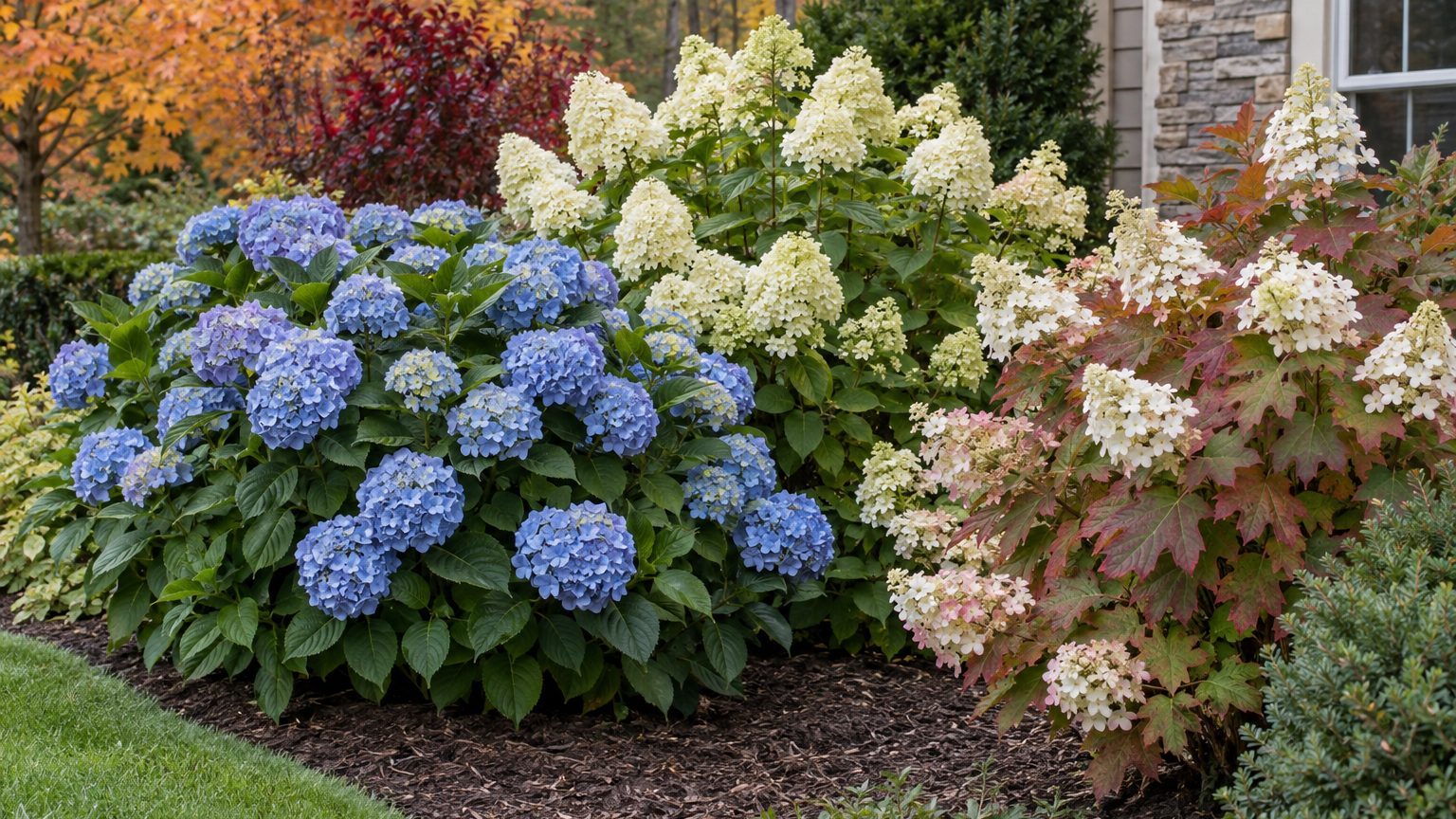
Panicle hydrangea (Hydrangea paniculata)

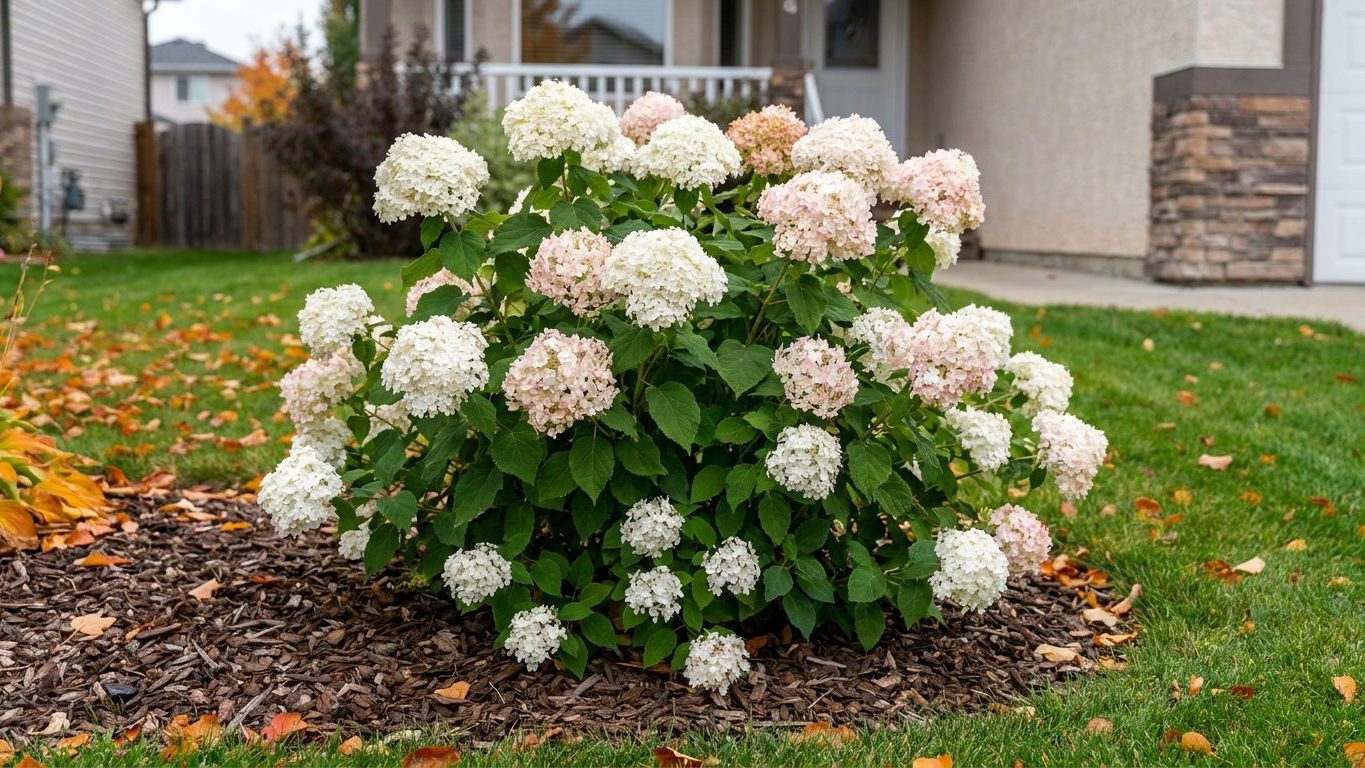
Panicle hydrangea (Hydrangea paniculata) — Hydrangeas That Grow Well in Colorado

This is the one variety nearly every Colorado gardener can grow. It flowers on new wood, so a hard freeze that kills last year’s buds does not cost a season of blooms, and it tolerates the dry, alkaline soil along the Front Range. Full sun leaves it blooming into fall.

Smooth hydrangea (Hydrangea arborescens)

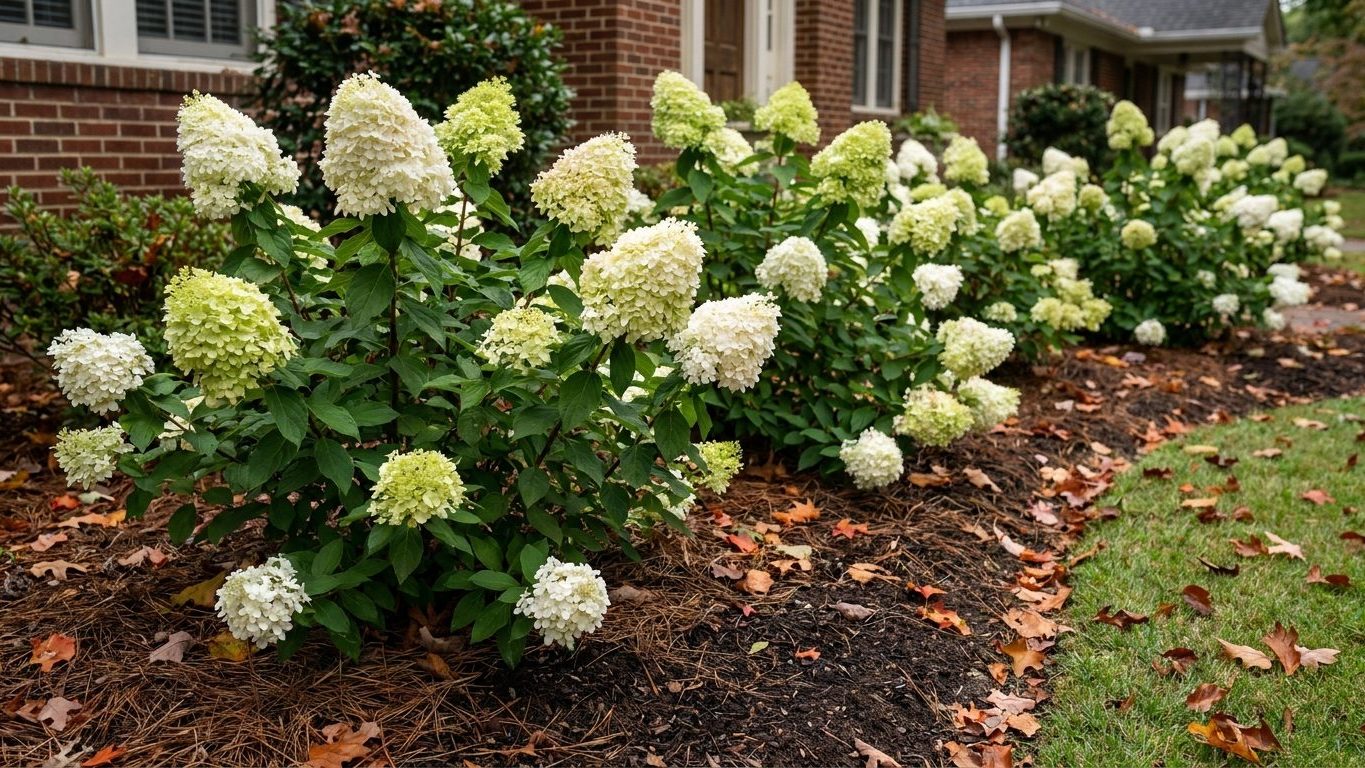
Smooth hydrangea (Hydrangea arborescens) — Hydrangeas That Grow Well in Colorado

Native to North America and bred for cold, arborescens cultivars push new stems and flower buds every spring no matter how late frost lingers into May. It handles clay and rocky soil better than most ornamental shrubs, though heavy wet spring snow can flatten its stems temporarily.

Oakleaf hydrangea (Hydrangea quercifolia)

Oakleaf hydrangea (Hydrangea quercifolia) — Hydrangeas That Grow Well in Colorado

This species holds up in the state’s milder pockets but wants shelter from wind and winter sun, so an east-facing wall works better than an open yard. Its oak-shaped leaves turn deep red in fall, a color none of the hardier varieties offer, though a hard late freeze can still nip its early buds.

Mountain hydrangea (Hydrangea serrata)

Mountain hydrangea (Hydrangea serrata) — Hydrangeas That Grow Well in Colorado

A close relative of bigleaf, serrata sets its flower buds on old wood too, but its stems tend to survive winter a bit better. In Colorado it still needs a sheltered spot, a layer of mulch, and a forgiving fall, since two bad years in a row wear the plant down.

Bigleaf hydrangea (Hydrangea macrophylla)

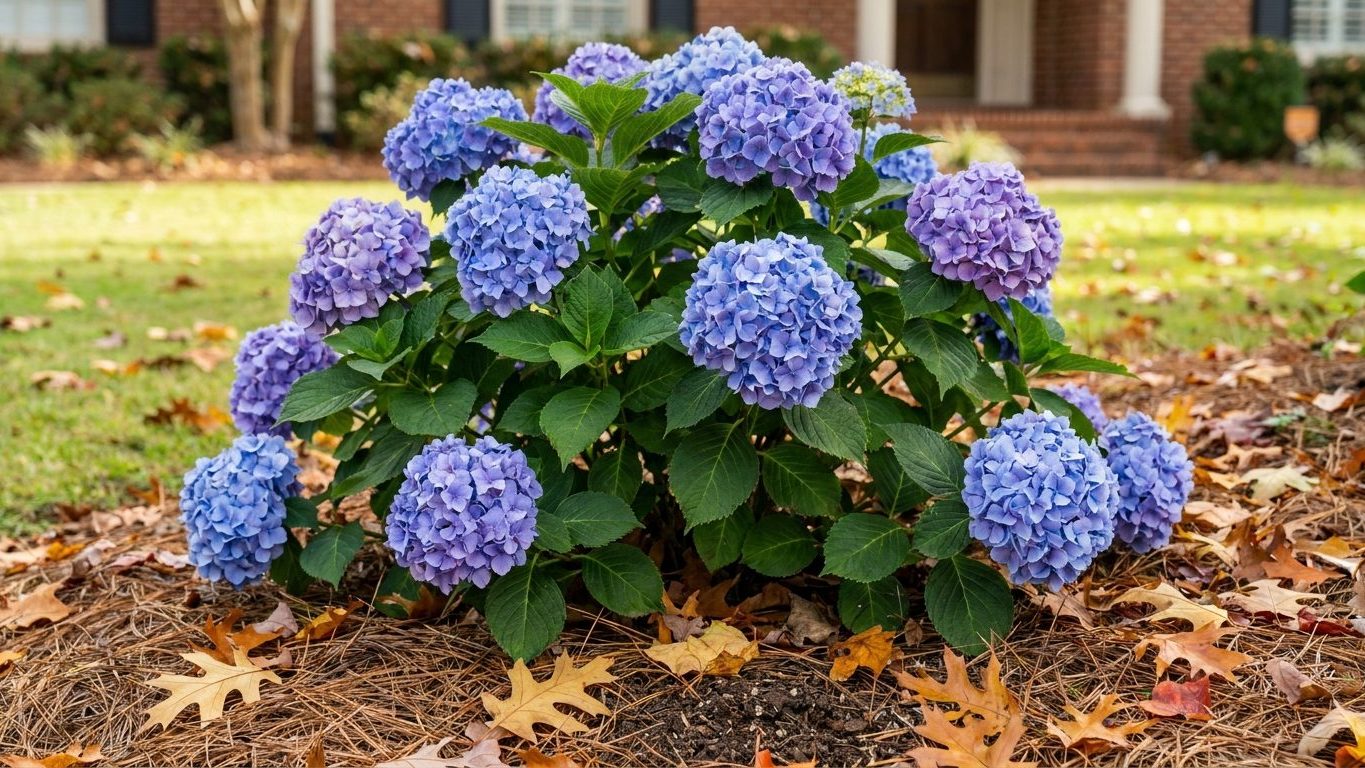
Bigleaf hydrangea (Hydrangea macrophylla) — Hydrangeas That Grow Well in Colorado

This is the classic mophead most people picture, and it disappoints most often here. It blooms on the previous year’s wood, so any freeze between fall and spring can erase the whole display, leaving green leaves and no flowers at all, a pattern that repeats almost every other year along the Front Range.

Climbing hydrangea (Hydrangea petiolaris)

Climbing hydrangea (Hydrangea petiolaris) — Hydrangeas That Grow Well in Colorado

The riskiest choice on this list, petiolaris wants steady moisture and years to establish before it climbs or blooms at all. Colorado’s low humidity and fast-draining soil work against it, so it belongs on a shaded, irrigated wall rather than a typical yard, and it can take seasons to flower.

How to Work Out the Dates for Your Own Yard

I work backward from Denver’s frost window rather than a fixed date, since NOAA NCEI’s 1991-2020 Climate Normals for station USW00003017 put the last spring freeze at May 1 to May 11 and the first fall freeze at September 30 to October 12.

Counting back from that fall window matters more than counting forward from spring, since bigleaf and mountain types need enough weeks of warmth to reset new buds before the first freeze arrives.

  1. Mark the frost window: treat May 1 to May 11 as your last freeze and September 30 to October 12 as your first, since planting inside that gap gives roots a full season before cold returns.
  2. Wait for the window to close: hold off setting a nursery hydrangea in the ground until after May 11 passes, since new growth planted into a lingering frost rarely recovers.
  3. Pick a month from the plant window: the state calendar keeps planting open in May, June, July, and August, so choose the earliest slot your yard’s exposure allows.
  4. Fertilize on the two set dates: feed in May and again in July, spacing the applications instead of relying on one heavy dose.
  5. Prune bigleaf only in June or July: since it sets next year’s buds on this year’s growth by late summer, pruning outside that window cuts off next year’s flowers.
  6. Recheck the fall window before frost: stop fertilizing and pruning once the calendar reaches September 30, giving the shrub time to harden off before October 12.

None of these dates are fixed, since a warm spring can pull the window earlier and an early mountain storm can close it just as fast.

If you garden above Denver’s elevation, especially in the foothills or mountains, push both windows later in spring and earlier in fall, since higher gardens can see frost even in summer.

Local microclimates, a south-facing wall, a low spot that pools cold air, can shift these windows by a week or more in either direction.

Colorado North to South: How the Dates Shift

Latitude barely matters across Colorado’s compact north-south span, but elevation changes by thousands of feet within a single afternoon’s drive, and that is what actually moves these windows.

Hail season overlaps with bloom time nearly everywhere in the state, adding another variable beyond frost alone.

  • The Front Range (Denver, Colorado Springs, Fort Collins): the mildest stretch of the state and the closest match to the frost window used for Denver.
  • The Eastern Plains (Sterling, Burlington, Lamar): open and windy, with hail that shreds broad hydrangea leaves even when frost isn’t the problem.
  • The Mountain Corridor (Vail, Breckenridge, Leadville): a far shorter season where a summer frost is possible, and panicle hydrangea is often the only type worth trying.
  • The Western Slope (Grand Junction, Durango, Montrose): drier and often milder in winter than the mountains just to the east, running its own separate frost pattern.

Whatever part of Colorado you garden in, use your own city’s frost dates on the state page rather than Denver’s, since elevation alone can shift bloom timing by weeks.

Mistakes Colorado Punishes

Colorado’s climate punishes a few specific habits more than others, and each one is easy enough to fix once you see it coming. None of them are exotic problems, just habits imported from a wetter, milder climate.

Planting bigleaf in an open bed

Bigleaf sets its flower buds on old wood, and an exposed spot leaves those buds open to the first hard frost of fall or a lingering one in spring, killing an entire season’s display in one night. Plant panicle or smooth hydrangea instead, or tuck bigleaf against a sheltered, wind-blocked wall.

Pruning outside the June-July window

Cutting bigleaf or mountain hydrangea in early spring or late fall removes the wood that already holds next year’s buds, since the state calendar keeps the prune window at June and July for good reason. Wait until then, and prune panicle types in late winter instead, well before new growth starts.

Ignoring the soil’s alkaline pH

Front Range soil often runs alkaline enough to lock a hydrangea’s color at pink even when a gardener wants blue, and it can stunt roots that are bred for more acidic ground back east. Work in sulfur or acidic compost at planting time, and test pH before blaming the water or the weather.

Colorado Extension Offices and County Contacts

The state’s hardiness range of 3b to 7b is only a starting point, and a county extension office fills in what a general guide never can, right down to the soil pH on your own block. Colorado State University Extension keeps that information organized county by county.

  • Colorado State University Extension: find your county office for soil testing, local frost advice, and answers specific to your elevation.
  • Your state hub: the Colorado hardiness zone and reference-city context that every date here is built from.
  • The Colorado hydrangea calendar: the month-by-month planting, fertilizing, and pruning windows laid out for your yard.

Common Questions

Can I grow a blue bigleaf hydrangea in Colorado?

Blue blooms need acidic soil and a mild winter, and Colorado offers neither along most of the Front Range. A few gardeners manage it in a sheltered, heavily amended bed, but panicle or smooth hydrangea gives a reliable bloom without fighting the soil every year.

Do hydrangeas need shade in Colorado?

Most need less sun here than the same variety would get in a humid state, since Colorado’s afternoon sun scorches leaves more than it might elsewhere. Afternoon shade still helps bigleaf and oakleaf types, while panicle and smooth hydrangeas tolerate full sun.

Why did my hydrangea survive winter but never flower?

This is almost always a bigleaf or mountain hydrangea that set its buds the previous fall, then lost them to a hard freeze or an ill-timed spring pruning. Switching to a variety that blooms on new wood solves the problem for good.
Hydrangeas That Grow Well in California

Hydrangeas That Grow Well in California

In Los Angeles and most of coastal California, hydrangeas run into heat and drought long before they ever see frost. The state’s USDA hardiness range stretches from 5a to 11a, and panicle and oakleaf varieties handle that spread better than classic mophead types. Los Angeles itself never records a hard freeze, so timing here is about summer sun, not spring frost.

Hydrangeas that grow well in California: The Short Answer

USDA’s Plant Hardiness Zone Map puts California anywhere from 5a to 11a, and Los Angeles sits at the frost-free end of that range, averaging zero days at or below 32°F in an average year. That spread means the safest hydrangea choices for most California yards lean toward heat and drought tolerance rather than cold hardiness.

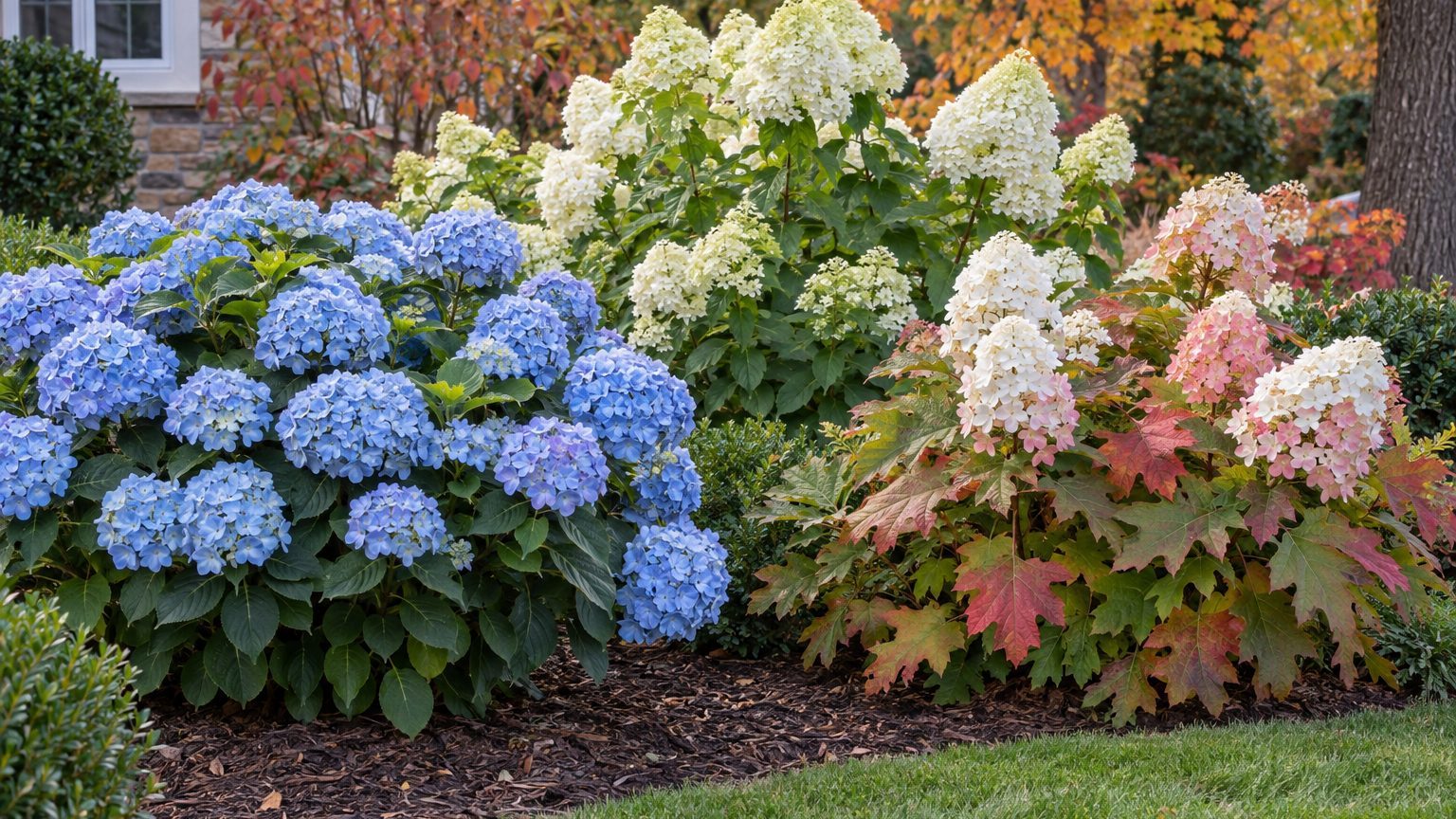
Panicle hydrangea

Panicle hydrangea — Hydrangeas That Grow Well in California

Hydrangea paniculata tolerates full sun and dry heat better than any other type sold here, which makes it the safest pick from the coast to the Central Valley. It blooms on new wood, so a hard freeze inland never costs a season’s flowers.

Oakleaf hydrangea

Oakleaf hydrangea — Hydrangeas That Grow Well in California

Hydrangea quercifolia handles part sun once its roots are established and shrugs off short dry spells better than the mophead types. Its fall foliage color is a bonus in a state where most shrubs stay green year round.

Mountain hydrangea

Mountain hydrangea — Hydrangeas That Grow Well in California

Hydrangea serrata is a smaller, tougher cousin of the classic bigleaf, with better tolerance for temperature swings between coastal fog and inland heat. It still wants afternoon shade south of the Bay Area, but it recovers from stress faster than macrophylla.

Bigleaf hydrangea

Bigleaf hydrangea — Hydrangeas That Grow Well in California

Hydrangea macrophylla is the shrub most people picture, and it grows well along the coast from San Diego to Mendocino where fog keeps afternoons cool. Inland, it needs consistent water and full afternoon shade or the flowers and leaves scorch by midsummer.

Smooth hydrangea

Smooth hydrangea — Hydrangeas That Grow Well in California

Hydrangea arborescens, sold as Annabelle types, wants steady moisture and part shade all season, conditions that are hard to hold through a dry California summer without daily attention. It survives here, but only with irrigation most other hydrangeas don’t need.

Climbing hydrangea

Climbing hydrangea — Hydrangeas That Grow Well in California

Hydrangea anomala subsp. petiolaris is the riskiest of the group in this state, since it takes years to establish and wants shade and moisture more consistent than most California soil holds onto. It rewards patience on a north-facing wall, but it punishes neglect fast.

How to Work Out the Dates for Your Own Yard

Working out real dates for your yard starts with the same frost record that sets Los Angeles apart from the rest of the state.

  1. Check your local freeze record: NOAA NCEI climate normals show zero days at or below 32°F in thirty years for Los Angeles, so a frost-safe planting date does not apply there the way it does inland.
  2. Find your USDA zone: the state runs from 5a to 11a, and a shrub rated for the warm end of that range in a coastal catalog can still freeze out in the Sierra foothills.
  3. Plant in the cool months: the calendar for this state lists January, February, October and November as planting months, avoiding the dry heat of summer establishment.
  4. Match the species to your summer: panicle hydrangea takes full sun through a Central Valley summer, while smooth hydrangea wants the kind of steady shade and moisture that dry heat rarely allows.
  5. Prune bigleaf on schedule: June and July are the pruning months here, timed after bloom so next year’s buds stay on the plant.
  6. Feed three times a season: March, May and July carry the fertilizing windows, spaced around the heat rather than the frost.

None of these steps depend on a frost date that Los Angeles simply doesn’t have. They depend on heat, water and the calendar above.

California North to South: How the Dates Shift

Elevation, fog and distance from the coast move these numbers more than latitude does inside one state this large.

  • Southern California coast (San Diego, Los Angeles, Santa Barbara): frost-free by NOAA’s record, so hydrangea care here runs on drought and shade management rather than any cold date.
  • Central Valley (Sacramento, Fresno, Bakersfield): summer heat arrives earlier and holds longer than on the coast, pushing hydrangea bloom forward and making afternoon shade close to mandatory for bigleaf types planted in full sun.
  • Sierra Nevada and mountain towns (South Lake Tahoe, Truckee, Mammoth Lakes): real winter freezes return here, so planting waits for the ground to thaw in spring rather than following the coastal calendar.
  • Bay Area and North Coast (San Francisco, Mendocino, Eureka): marine fog cools summer afternoons enough that classic bigleaf hydrangeas often need less shade than they would inland.
  • Inland deserts (Palm Springs, Palm Desert, Indio): extreme summer heat pushes most hydrangea species past their limit, so success here depends on heavy shade and irrigation most yards can’t sustain long term.

The state’s planting calendar assumes something closer to the coastal pattern, so gardeners in the mountains or the Valley should shift it toward their own frost and heat record.

Mistakes California Punishes

Full sun without afternoon shade

Bigleaf and smooth hydrangeas planted in a west-facing bed scorch by midsummer once inland heat sets in. Give them morning sun and afternoon shade, or swap in panicle hydrangea, which tolerates the exposure this state’s dry heat creates.

Watering on a fixed schedule, not the soil

A calendar reminder to water twice a week ignores how fast California soil dries between fog and heat waves. Check soil moisture with a finger before each watering, and adjust for the county water restrictions many California cities enforce.

Pruning bigleaf outside its window

Bigleaf hydrangea sets next year’s flower buds on this year’s wood, so cutting it back outside June and July removes the very buds meant to bloom. Prune right after flowering ends, inside the window the calendar above lists.

California Extension Offices and County Contacts

The 5a to 11a zone range is a starting point, not a promise. University of California Agriculture and Natural Resources runs county offices that track local soil, water rules and pest pressure closer than any statewide map.

  • UC ANR county offices: find your local office for soil tests and current water-use rules.
  • The planting calendar for California hydrangeas: month-by-month planting, feeding and pruning windows for this state.
  • What goes wrong with hydrangeas in California: the pests and problems specific to this climate, in the order they show up each season.

Call your county office before you plant if you’re not sure which zone your yard actually falls into.

Common questions

Do hydrangeas need winter protection in Los Angeles or San Diego?

No. NOAA’s climate record shows zero freeze days there in an average year, so bigleaf hydrangeas can stay in the ground year round without mulch or wrapping for cold.

Which hydrangea handles California drought best?

Panicle hydrangea and oakleaf hydrangea both tolerate short dry spells once established, needing far less supplemental water than bigleaf or smooth types through a California summer.

Can I grow hydrangeas in the Central Valley or inland deserts?

Yes, but only with afternoon shade and consistent irrigation. Panicle hydrangea handles the sun best inland, while deep desert heat pushes most species past what regular watering can offset.

When to Prune Hydrangeas in Alberta

When to Prune Hydrangeas in Alberta

Plant hydrangeas in Alberta between May and August, once the ground has warmed well past the region’s mean last spring frost. Calgary’s frost-free stretch runs from roughly May 21 to September 16 in an average year, and that four-month plant window sits right inside it. Bigleaf types get their pruning done in June and July, in the middle of that same stretch.

When to prune hydrangeas in Alberta: The Short Answer

Environment and Climate Change Canada’s Canadian Climate Normals put Calgary’s average last spring frost at May 21 and the average first fall frost at September 16, and the twelve months below run against that same, single frost line.

  • January: The shrubs sit dormant under mulch, with the mean last frost still four months off. There is nothing to plant or prune this month, just check that winter mulch hasn’t blown clear of the roots.
  • February: Frost is still roughly three months out, so hydrangeas stay wrapped and left alone. Use this quiet stretch to order stock for the May planting window instead of touching the plants.
  • March: With around eight weeks left before the mean frost date, soil is still too cold to dig planting holes. Start hardening off any greenhouse-grown plants on mild afternoons only.
  • April: About four weeks out from the average frost, prep beds and work in compost so May planting goes fast. Resist planting early, since a late frost can still hit well past this point.
  • May: Planting opens as the mean last frost of May 21 passes, and this is also the first of the two fertilize months. Get bigleaf types in the ground early in the window so roots settle before summer heat.
  • June: Planting continues, and this is the first of the two months set aside for pruning bigleaf hydrangeas. Cut back only spent or damaged wood, since bigleaf sets next year’s buds on old growth.
  • July: Both planting and bigleaf pruning stay open, alongside the second fertilize window. Water deeply through summer heat, since new transplants dry out fast in Alberta’s dry prairie air.
  • August: This is the last month in the four-month planting window, so anything going in now needs the rest of the season to root before frost returns. Hold off on further pruning past this point.
  • September: The average first fall frost lands September 16, so treat mid-month as the line for any exposed new growth. Stop feeding and pruning, and start planning winter protection.
  • October: With the mean frost date now behind, pile mulch deep over the root zone before the ground freezes hard. Leave faded flower heads on the stems for extra bud insulation.
  • November: Ground is freezing solid across most of the province, so wrap or cage exposed stems if last month’s mulch feels thin. A zone 4a winter tests any shrub left uncovered.
  • December: Everything stays dormant and buried until spring, with no gestures needed beyond a snow check. Brush heavy snow off cages so the weight doesn’t snap branches.

None of these twelve months are a hard rule, since a mean frost date means half of all years run later than that. Treat May and September as the pivot points, and let August close the planting window before the average fall frost arrives.

How to Work Out the Dates for Your Own Yard

Working from the mean frost dates turns one province wide guess into a window that actually fits your own yard, not just the airport station the numbers come from.

  1. Start from the mean last frost: Calgary’s average is May 21, and treat it as the middle of a window, not a guarantee, since frost lands later than that in half of all years.
  2. Push planting two to three weeks past that date: waiting into early June for potted bigleaf hydrangeas gives roots a buffer against the years when frost runs long.
  3. Count backward from the mean fall frost: September 16 is the average, so anything planted after early August has barely six weeks to root before cold weather returns.
  4. Check your own microclimate: a yard against a south facing wall or in a low frost pocket can run a week or two earlier or later than the Calgary station these dates are built from.
  5. Match pruning to bloom type: bigleaf hydrangeas only get cut back in June and July, since they set next year’s flower buds on the current season’s old wood.
  6. Watch soil temperature, not the calendar: cold, wet clay in early May can hold root growth back even after the air has warmed past frost risk.

None of this replaces walking the yard itself. A thermometer pushed a few inches into the soil where the shrub will go tells you more than any date on a page.

Alberta North to South: How the Dates Shift

Frost timing shifts across the province with elevation, latitude, and how close a spot sits to the Rockies.

  • Southern Alberta (Calgary, Lethbridge, Medicine Hat): sits closest to the dates above, with the mildest and longest stretch between spring and fall frost in the province.
  • Central Alberta (Red Deer, Camrose, Stettler): typically loses a week or two off each end of the growing season compared with Calgary, so treat the plant window as a touch narrower.
  • Northern Alberta and the Peace Country (Grande Prairie, Peace River, Fort McMurray): frost can linger deeper into spring and arrive noticeably earlier in fall, favoring hardier panicle and smooth types over bigleaf.
  • Foothills and higher elevation towns (Cochrane, Canmore, Bragg Creek): cold air pools at elevation, so gardeners here often see frost weeks outside the Calgary averages in both directions.

Whichever part of the province you garden in, check the Alberta guide for the province wide frost dates first, then adjust toward whichever end of this list your town sits closer to.

Mistakes Alberta Punishes

Planting Before the Mean Frost Passes

Getting a bigleaf hydrangea into the ground in early May, right after the soil finally thaws, invites a hit from the mean frost still sitting at May 21. Wait until the plant window truly opens and give the shrub the extra two weeks of buffer instead.

Pruning Bigleaf Outside June and July

Cutting bigleaf stems back in September or the following spring removes the very buds meant to open into next year’s flowers, since this species blooms on old wood. Keep pruning inside the June and July window and nowhere else on the calendar.

Leaving Roots Bare Into Winter

Skipping a thick mulch layer before the ground locks up exposes roots to a zone 4a winter that regularly kills stems back to the snow line. Pile mulch deep by October, right after the mean fall frost date passes, not after the first hard freeze.

Alberta Extension Offices and County Contacts

The province wide numbers above are a starting point, not the last word for your own yard. Alberta Agriculture and Irrigation and your local county office fill in what these dates can’t.

  • Your province page: the frost dates and pruning window for all of Alberta in one place.
  • Which ones hold up here: hydrangea varieties matched to Alberta’s zone 4a winters.
  • What goes wrong here: the pests and problems this province’s growing season brings on hydrangeas.

Common questions

Can I plant hydrangeas in Alberta in early spring?

Hold off until May at the earliest. The mean last frost falls May 21, and planting into cold, still-thawing soil before then sets roots back rather than ahead.

Do hydrangeas survive Alberta winters without protection?

Most need help. In a zone 4a winter, exposed bigleaf stems commonly die back to the snow line, so a deep mulch layer or a wrap by October matters more than the variety label on the tag.

When should I prune hydrangeas in Alberta?

Bigleaf types get pruned in June and July only, since they set next year’s buds on this year’s wood. Pruning outside that window removes flowers before they ever open.

Hydrangea Pests and Diseases in Alabama

Hydrangea Pests and Diseases in Alabama

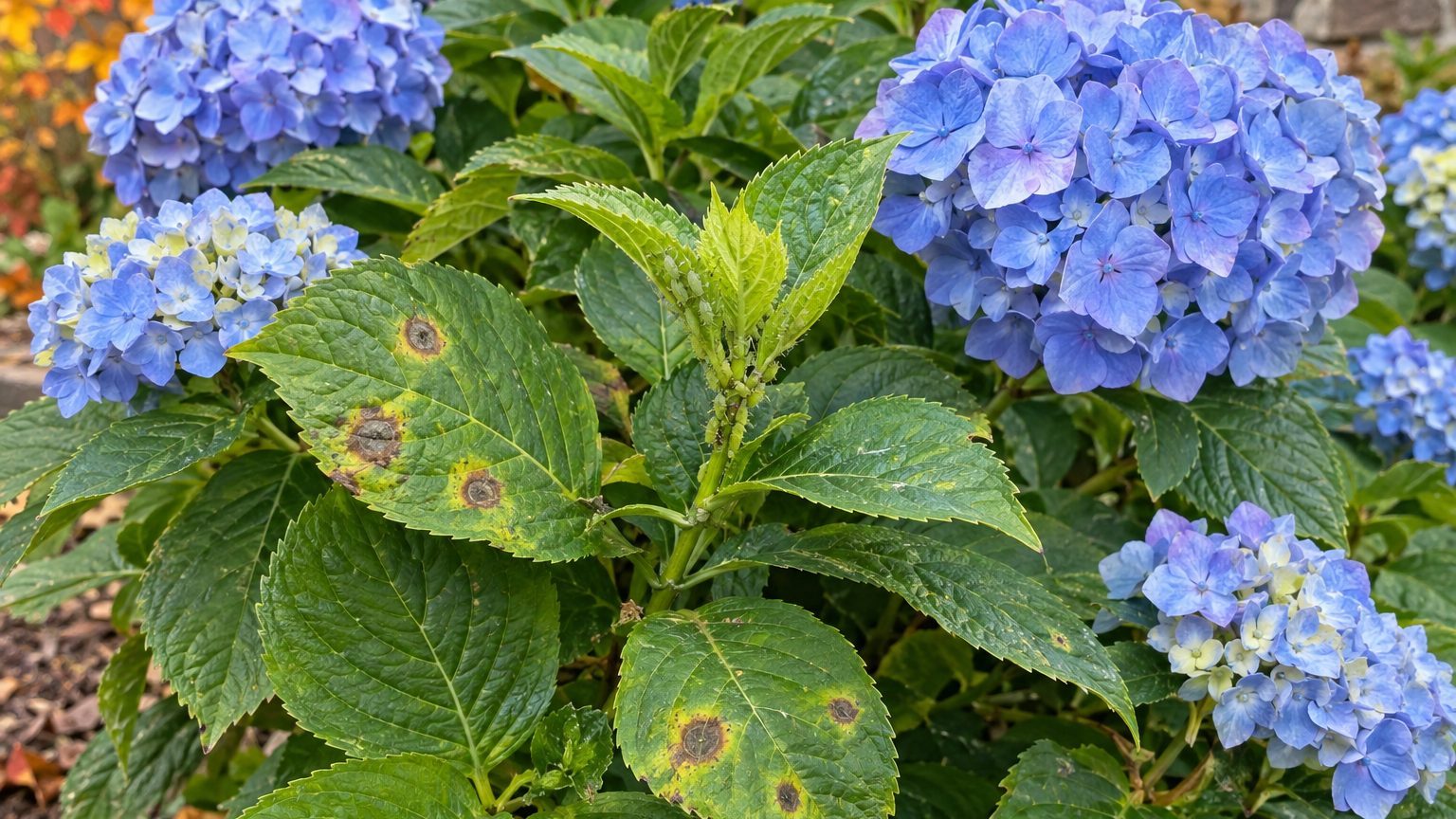
Alabama’s warm, humid summers hand hydrangeas a predictable lineup of problems: aphids on tender new growth, spider mites once July turns dry, powdery mildew and Cercospora leaf spot as humidity settles in, botrytis blight on spring buds, and root rot in soil that never drains. Humidity and timing decide which one shows up first in your yard.

Hydrangea pests and diseases Alabama: The Short Answer

Huntsville sits in USDA Hardiness Zone 7a-9a on the USDA Plant Hardiness Zone Map, and that stretch of mild winters and long humid summers is exactly what keeps six problems cycling through Alabama hydrangea beds year after year.

Alabama’s hydrangea trouble list runs from aphids and spider mites to powdery mildew, Cercospora leaf spot, botrytis blight, and root rot, with humidity deciding which shows up first.

Aphids

Clusters of small green or black insects crowd new stem tips in early spring, curling leaves and leaving a sticky residue that draws sooty mold. A strong hose spray every few days knocks most colonies down before ladybugs take over. Check new growth weekly through the spring planting window.

Botrytis blight

Gray, fuzzy patches appear on flower buds and stems during cool, wet spring stretches, turning petals brown and mushy almost overnight. Cutting out infected buds and spacing plants for airflow stops it from spreading to healthy wood. It hits hardest right after the last frost window closes in Huntsville.

Spider mites

Spider mites — Hydrangea Pests and Diseases in Alabama

Tiny stippled yellow speckling on leaf tops, with fine webbing underneath, shows up once July heat turns dry and dusty. A forceful water spray under the leaves every few days breaks their webs and washes most of them off. Mulch keeps roots cool so plants resist the stress that invites them.

Powdery mildew

A white, flour-like coating on leaves and stems spreads once August humidity sits heavy overnight but afternoons stay warm and dry. Pruning for airflow, watering the soil instead of the leaves, and morning watering all cut down the hours leaves stay damp. Bigleaf varieties show the most trouble.

Cercospora leaf spot

Small purple-brown spots ring older, lower leaves first, spreading upward and dropping foliage by late summer in wet years. Removing and disposing of fallen leaves each fall breaks the fungus’s cycle before next season’s new growth. Good spacing at planting time keeps this one from becoming an annual habit.

Root rot

Root rot — Hydrangea Pests and Diseases in Alabama

Wilting leaves on a plant sitting in soggy, poorly drained soil signal Phytophthora working through the roots, no matter how much water gets added. Pulling mulch back from the stem and improving drainage before the next planting window is the only fix that works. Once wilting starts, the fix is prevention next time, not rescue.

How to Work Out the Dates for Your Own Yard

Working out which problem you actually have starts with the calendar, not the leaf, since Huntsville’s last spring frost falls between March 19 and April 3 according to NOAA NCEI 1991-2020 Climate Normals, and every fungus or insect on this list waits for its own stretch of humidity or heat after that date.

  1. Mark the last frost window: count two to three weeks past the closing date before blaming cold damage for spotted or curled leaves, since bud-break stress shows up right at that window.
  2. Check the season first: aphids and botrytis blight cluster in the weeks right after the frost window closes, while spider mites and powdery mildew wait for July and August heat.
  3. Look at the leaf, not just the flower: a powdery white coating means mildew, purple-brown rings mean Cercospora, and sticky residue points to aphids.
  4. Test the soil around the roots: wilting despite regular watering points to root rot in soil that has stayed wet since spring rains.
  5. Match the fix to the calendar: fertilizing falls in March, May, and July, and bigleaf pruning falls in June and July, so timing treatments to those same months avoids stacking a second problem on a stressed plant.

Once the season and the symptom line up, the fix is almost automatic, and a call to the county extension office settles anything that still looks unclear after a week of watching it.

Alabama North to South: How the Dates Shift

Frost timing and humidity pressure shift across Alabama, and that shift changes which hydrangea problem shows up first and how long it sticks around.

  • North Alabama and the Tennessee Valley (Huntsville, Decatur, Florence): the coolest, driest stretch of the state, where spider mites and powdery mildew arrive later in the summer and root rot stays rare outside heavy clay pockets.
  • Central Alabama (Birmingham, Montgomery, Tuscaloosa): summer humidity settles in earlier here, pushing Cercospora leaf spot and powdery mildew ahead of the northern counties in most years.
  • The Gulf Coast and Wiregrass (Mobile, Baldwin County, Dothan): the mildest winters and heaviest summer humidity in the state keep botrytis blight and root rot active longest, since soil rarely dries out between storms.

Check how these regional differences line up with your own county before assuming the Huntsville figures apply exactly where you garden.

Mistakes Alabama Punishes

Watering leaves in the evening

Overhead watering after work keeps foliage wet through the night, exactly the window powdery mildew and Cercospora leaf spot need to take hold in Alabama’s humidity. Switching to a soaker hose at the base, watered in the morning, dries leaves by midday and cuts fungal spread noticeably within a season.

Skipping fall leaf cleanup

Leaving fallen leaves under the shrub through winter lets Cercospora and botrytis spores overwinter right where next spring’s new growth will emerge. Raking and disposing of dropped foliage each fall, rather than composting it nearby, breaks that cycle before the next fertilizing window in March.

Planting too close together

Crowded shrubs trap the humid air that spider mites, mildew, and leaf spot all depend on, especially along the Gulf Coast and Wiregrass. Spacing new plants for airflow at the September or October planting window matters more here than in drier states further north.

Alabama Extension Offices and County Contacts

The Huntsville figures above are a starting point, and Alabama Cooperative Extension System agents in your own county diagnose the specific pest or disease sitting in front of you, often for free with a photo or sample.

  • Alabama Extension (aces.edu): find your county office, submit a plant problem question, and get a same-week response from an agent.
  • Your state guide: the hardiness zone and frost windows that set the calendar for every hydrangea in the yard.
  • Which ones hold up here: the varieties that shrug off Alabama humidity instead of feeding it.

Bring a sample bag and a clear photo of both healthy and affected leaves when you call.

Common questions

What’s the most common hydrangea problem in Alabama?

Powdery mildew and Cercospora leaf spot show up most often, both fed by the same humid stretch that settles over the state from July through September.

Do healthy hydrangeas ever get pests without any care mistakes?

Yes, aphids and spider mites can find even a well-tended shrub, since they travel in from neighboring plants and weeds regardless of watering habits. Regular leaf checks catch them early, before populations build.

Should I treat for disease before I see symptoms?

Preventive spacing, morning watering, and fall cleanup do more good than any spray applied without a confirmed problem, and a county extension agent can confirm what’s actually present before you treat anything.

When to Prune Hydrangeas in Alabama

When to Prune Hydrangeas in Alabama

Plant hydrangeas in Alabama during one of two windows the calendar allows, March and April in spring or September and October in fall, timed around Birmingham’s frost dates. Skip the deep summer months entirely. Prune only bigleaf types, and only in June or July, right after the last blooms fade, since cutting later strips out next year’s flowers before they even form.

When to prune hydrangeas in Alabama: The Short Answer

Birmingham’s calendar splits hydrangea work into three separate jobs, planting, fertilizing, and pruning bigleaf types, and none of them share a month by accident.

  • January: The shrub is dormant and there’s nothing to plant or feed yet. Use the month to pick a planting site with morning sun and afternoon shade.
  • February: Still too early for the plant or fertilize windows. Wait for warmer, more stable soil before breaking ground.
  • March: The plant window opens, but NOAA NCEI 1991-2020 Climate Normals put Birmingham’s last spring frost between March 19 and April 3. Hold new hydrangeas until the tail end of that window if frost still threatens.
  • April: The safer half of the plant window, with soil warm enough for roots to establish before summer heat arrives.
  • May: The second fertilizing round of the year. Established shrubs are pushing new growth and can use the nutrients right away.
  • June: The pruning window for bigleaf hydrangeas opens once the last blooms fade. Cut spent flower stems to the first healthy bud pair, no lower.
  • July: The bigleaf pruning window closes, and the third fertilizing round begins. Prune later than this and the cuts remove next year’s flower buds along with this year’s spent wood.
  • August: No scheduled gesture this month. Deep, weekly watering matters more than any pruning or feeding right now.
  • September: The plant window reopens as the heat breaks. Fall-planted hydrangeas spend the cooler months building roots instead of fighting drought stress.
  • October: Often the better of the two fall planting weeks, with weeks still ahead before the ground cools toward frost.
  • November: Birmingham’s first fall frost lands somewhere between November 2 and November 16. Stop planting by mid-month and add mulch instead.
  • December: Fully dormant. Leave faded flower heads on bigleaf types alone, they help insulate next year’s buds through cold snaps.

Three jobs, three windows: plant in spring or fall, feed three times through the growing season, and prune bigleaf hydrangeas only right after they bloom.

How to Work Out the Dates for Your Own Yard

The state calendar is a starting point built on one weather station, and your yard likely needs a small adjustment in one direction or the other.

  1. Check your county’s frost window: Birmingham’s last spring frost runs March 19 to April 3, but a county further north or sitting higher often catches frost a week or two later.
  2. Push your planting date past the late end: if your yard has ever frosted after Birmingham’s own reported dates, treat early April as the real start rather than mid-March.
  3. Match the zone to the plant: the USDA Plant Hardiness Zone Map places Alabama across 7a to 9a, so a hydrangea rated for zone 6 winters coasts through anything Birmingham throws at it, while one rated only to zone 8 wants a warmer, more sheltered spot.
  4. Count backward from the fall frost: with Birmingham’s first fall frost between November 2 and November 16, give roots **at least six weeks** before that window closes for fall planting to settle in.
  5. Watch the bloom, not the date, before pruning: bigleaf types flower on old wood, so wait until the flowers fully fade, usually by June, before the first cut of the year.

None of these steps replace a local check. A county office ten miles from Birmingham’s airport gauge can read frost, soil, and bloom timing differently than the numbers above.

Alabama North to South: How the Dates Shift

Altitude, latitude, and distance from the Gulf all nudge these dates in Alabama, and knowing which way helps more than any single number.

  • North Alabama and the Tennessee Valley (Huntsville, Florence, Scottsboro): the coolest corner of the state, where spring lags behind Birmingham and the early edge of the plant window carries more risk.
  • Central Alabama (Birmingham, Tuscaloosa, Montgomery): the reference band the calendar above is built on, so most of it applies here without adjustment.
  • The Gulf Coast and South Alabama (Mobile, Baldwin County, Dothan): frost arrives later and leaves earlier here, stretching the season and making the later half of the fall plant window a safer, lower-risk choice.

Check the state guide for the full zone breakdown if your yard sits near either edge of Alabama.

Mistakes Alabama Punishes

No flowers after a fall pruning

Bigleaf hydrangeas bloom on old wood, so any cut made after July removes next year’s buds along with this year’s spent stems. Prune only in June or July, right after the blooms fade, and nowhere else on the calendar.

Shrub planted too early

A warm stretch in late February tempts a lot of planting, but Birmingham’s last frost can still land as late as April 3. New roots and tender growth don’t survive that swing. Hold planting for the true window in April, or shift to fall.

Wilting through August afternoons

Alabama’s summer heat and humidity stress shallow, newly planted roots fast, especially with no fertilizing scheduled that month. Water deeply once a week, keep mulch on, and save feeding for the March, May, or July rounds instead.

Alabama Extension Offices and County Contacts

Birmingham’s dates are a starting point, not a guarantee for every county. The Alabama Cooperative Extension System keeps local offices that read soil and frost differently than the airport gauge behind the numbers above.

  • Your state page: the frost dates and pruning window gathered for Alabama in one place.
  • Which ones hold up here: hydrangea varieties matched to Alabama’s zones.
  • What’s going wrong: the pests and problems local shrubs actually run into.

Common questions

Can I plant hydrangeas in Alabama in summer?

No. The calendar skips summer entirely because heat and humidity stress new roots before they can establish. Stick to the March-April spring window or the September-October fall window instead.

Do hydrangeas need full sun in Alabama?

Most do better with morning sun and afternoon shade here. Full, unbroken afternoon sun through an Alabama summer scorches leaves on most varieties, even well-watered ones.

When should I prune hydrangeas in Alabama if mine already look overgrown?

For bigleaf types, wait for the June or July window right after the blooms fade. Pruning outside that window, even to tidy up an overgrown shrub, cuts off next year’s flower buds.

Hydrangea Pests and Diseases in Arizona

Hydrangea Pests and Diseases in Arizona

In Phoenix and across the low desert, hydrangeas rarely die from cold. What actually shows up are heat and mineral related problems: iron chlorosis from alkaline soil, spider mites and aphids feeding in dry heat, sunscorched leaf margins, and occasional fungal spotting after monsoon humidity. Knowing which one you have decides whether you reach for shade cloth, chelated iron, or a hose.

Hydrangea pests and diseases Arizona: The Short Answer

USDA Plant Hardiness Zone Map lists Arizona at 4b to 10b, and Phoenix sits deep in the warm end, where hydrangeas answer to heat and soil chemistry, not winter cold. With 32°F showing up in only 6 of the last 30 Phoenix springs, everything on this list traces back to sun, dryness, and alkaline caliche.

Aphids on new growth

Aphids cluster on tender spring shoots as soon as new growth pushes, leaving curled leaves and a sticky residue that draws ants. A strong water spray knocks most of them off, and a soap spray handles the rest before the March fertilize round pushes even softer growth.

Iron chlorosis in alkaline soil

Yellow leaves with dark green veins show up on hydrangeas planted straight into alkaline caliche, since the plant cannot pull iron from high pH soil no matter how much fertilizer goes down. Chelated iron and lowering soil pH before the next October planting window fix it faster than more feeding.

Spider mites in summer heat

Spider mites in summer heat — Hydrangea Pests and Diseases in Arizona

Fine stippling and pale, dusty leaves with faint webbing on the underside point to spider mites, which multiply fastest in the hottest, driest weeks before the July prune. A forceful hose rinse every few days breaks their cycle better than any spray, since dust and drought are what feed them.

Leaf scorch on afternoon sun

Leaf scorch on afternoon sun — Hydrangea Pests and Diseases in Arizona

Crispy brown margins on the west side of the shrub trace straight back to Arizona’s intense afternoon sun, not disease, and they show up hardest in the peak summer weeks. Afternoon shade or a shift to morning-only exposure solves it, no spray needed.

Grasshoppers chewing leaf edges

Grasshoppers chewing leaf edges — Hydrangea Pests and Diseases in Arizona

Ragged, chewed leaf edges and holes appear in mid to late summer as desert grasshopper populations peak, especially near open lots or grassy edges. Row cover during the worst weeks and hand removal in the cool morning work better than most sprays once numbers build ahead of the July fertilize round.

Powdery mildew after monsoon

Powdery mildew after monsoon — Hydrangea Pests and Diseases in Arizona

A gray-white dusting on leaf tops and stems tends to appear once monsoon humidity arrives in late summer, after weeks of dry heat gave the shrub no reason to expect it. Better air movement between plants and watering the soil instead of the leaves keeps it from spreading.

Root rot in heavy soil

Wilting despite wet soil and a blackened base mean roots are drowning in dense, poorly draining ground, usually after a heavy monsoon storm sits in a low spot. Raised planting and a wider drainage hole beat any fungicide, and it is easier to fix at the next planting window than mid-season.

How to Work Out the Dates for Your Own Yard

Figuring out which problem you actually have starts with ruling out the calendar, not the bug.

  1. Rule out frost first: NOAA NCEI climate data for Phoenix show 32°F in only 6 of the last 30 springs, so blackened tips in January are almost always a cold snap, not disease.
  2. Check where your yard falls in the zone range: the statewide spread runs 4b to 10b, and whether your soil sits at the cold or hot end decides if a symptom is cold stress or heat stress.
  3. Match the timing to the fertilize window: symptoms that show up right after the March, May, or July feeding are more likely nutrient lockup from alkaline soil than pest damage.
  4. Match the timing to the prune window: stress or wilting that follows the June or July cut usually points to heat shock from over-thinning, not a new pathogen.
  5. Check the planting season: a shrub struggling with root problems that went in outside the January, February, October, or November window is often fighting transplant shock, not rot.
  6. Call before you spray: a county extension office can confirm which of the problems above is actually on the leaf before any product goes down.

Once frost, zone, and the calendar are eliminated, whatever is left on the leaf almost always matches one of the problems above.

Arizona North to South: How the Dates Shift

USDA Plant Hardiness Zone Map spans Arizona from 4b to 10b, and that range folds into a few hours of driving instead of a thousand miles. Elevation changes which pest or disease shows up first far more than the calendar does.

  • The Low Desert (Phoenix, Tucson, Yuma): heat and alkaline soil dominate, so spider mites, chlorosis, and sunscorch show up well before any fungal problem gets a foothold.
  • The Central Highlands (Prescott, Payson, Sedona): cooler nights and a bit more moisture bring aphids and occasional powdery mildew earlier in the season than the valley ever sees.
  • The High Country (Flagstaff, Show Low, Alpine): real winter cold shifts the whole conversation toward frost damage and slow spring growth rather than heat stress.

Whichever zone matches your yard, the state calendar page lines up the fertilize and prune windows for that spot.

Mistakes Arizona Punishes

Watering on autopilot

Setting sprinklers to run daily regardless of weather drowns roots in Arizona’s dense caliche long before the surface looks overwatered. Water deeply and less often, checking two knuckles down before the next round, and match soil moisture instead of the clock.

Planting into afternoon sun

A west or south-facing spot with no shade after noon guarantees scorched margins by midsummer no matter how well the shrub is watered. Morning sun with afternoon shade, or dappled light under a taller tree, keeps leaves intact through the hottest stretch between the June and July prune.

Skipping the soil pH fix

Feeding a chlorotic hydrangea more fertilizer without correcting alkaline soil wastes the product, since the plant still cannot absorb iron at high pH. Chelated iron and sulfur worked in before the next planting window fix the root cause instead of masking it season after season.

Pruning outside the June-July window

Bigleaf hydrangeas set next year’s flower buds soon after blooming, so pruning outside the June-July window cuts off next season’s flowers even on an otherwise healthy plant. Stick to that window for any real cutting, and treat pest damage separately with spot removal instead of a full prune.

Arizona Extension Offices and County Contacts

Arizona Cooperative Extension backs up everything above with county-level diagnosis, since caliche depth, elevation, and monsoon timing shift block by block. Treat the state-level facts here as a starting point, not the final word for your yard.

  • The Arizona hydrangea calendar: month by month fertilize, plant, and prune windows for the whole state.
  • Which hydrangeas hold up here: varieties ranked from most reliable to riskiest in Arizona heat and soil.
  • Arizona Cooperative Extension: county offices that confirm what is actually on the leaf before anything gets sprayed.

Common questions

Do Arizona hydrangeas get spider mites more than in other states?

Yes. The dry heat and dust of the low desert favor spider mites far more than humid climates do, so a hose rinse during the hottest weeks matters more here than any store-bought treatment.

Is powdery mildew common on Arizona hydrangeas?

It is less common than in humid regions, but it can appear briefly once monsoon humidity arrives in July and August, easing off again as soon as the air dries back out.

What is the most common hydrangea problem in the Phoenix area?

Iron chlorosis from alkaline caliche soil is the most persistent issue around Phoenix, showing up as yellow leaves with green veins no matter how much fertilizer goes down.

When to Prune Hydrangeas in British Columbia

When to Prune Hydrangeas in British Columbia

Vancouver’s calendar gives you the anchor for the whole province: plant hydrangeas in March, April, September or October, and hold pruning of bigleaf types to June and July, working around a mean last spring frost of March 18 and a mean first fall frost of November 10.

When to prune hydrangeas in British Columbia: The Short Answer

Vancouver’s growing season hangs off two mean dates from Environment and Climate Change Canada’s Canadian Climate Normals: a last spring frost of March 18 and a first fall frost of November 10, and the month-by-month calendar below builds off both.

  • January: The ground is usually still cold and wet, so hydrangeas stay fully dormant and there is nothing to plant or prune yet.
  • February: Roots are still asleep under any mulch, so this is a month for checking stakes and windbreaks rather than cutting anything back.
  • March: The planting window opens here, close to the March 18 average last frost, so container plants can go in toward the milder end of the month.
  • April: Planting continues, and shrubs set out this month get a full season of root growth before the next winter arrives.
  • May: The first fertilizing round of the year lands here, feeding roots while the plant pushes fresh leaves.
  • June: Bigleaf hydrangeas finish their spring flush, and the pruning window opens once the first blooms start to fade.
  • July: The bigleaf pruning window closes this month, alongside a second fertilizing round to support the next set of buds.
  • August: No pruning or fertilizing is scheduled, so this is a month for deadheading spent flowers and keeping soil evenly moist.
  • September: A second planting window opens, and cooler nights help new roots settle in before frost returns.
  • October: Fall planting continues, but anything going in this late needs weeks in the ground before the November 10 average first frost.
  • November: The first fall frost lands on average around November 10, so mulch goes down over root zones instead of any pruning.
  • December: The shrub sits fully dormant, and next year’s flower buds on bigleaf types are already set on old wood, waiting out the wet season.

None of these are guarantees. Frost arrives after March 18 in about half of all years at this station, so treat the early planting window as an outer edge, not a promise.

How to Work Out the Dates for Your Own Yard

Working out your own planting and pruning dates starts from the same two mean dates Vancouver uses, then bends them to fit your own yard.

  1. Start from the last spring frost: Environment and Climate Change Canada’s Canadian Climate Normals put the mean last spring frost at March 18, so treat any planting before that as a risk to new roots.
  2. Count backward two to three weeks for cold pockets: a yard at the base of a slope or shaded by a fence holds cold air longer, so push your own planting date toward early April instead of March.
  3. Count forward from the first fall frost: the mean first fall frost lands November 10, and fall-planted hydrangeas need roughly six weeks of open soil before that date to settle in.
  4. Match pruning to the bigleaf window: the June to July window assumes spring flowering has already finished, so wait for the first flush of blooms to fade before cutting anything.
  5. Watch the soil, not the calendar: cold, waterlogged soil in March slows root growth even when the air feels mild, so dig a test hole and check for standing water before planting.

None of this replaces watching your own yard through a season. A thermometer left in the shade and a look at how fast frost melts on your lawn tell you more than any regional average ever will.

British Columbia North to South: How the Dates Shift

British Columbia runs from mild coastal valleys to high interior plateaus, and each stretch pulls the Vancouver dates in a different direction.

  • The South Coast (Vancouver, Victoria, the Fraser Valley): the mildest winters in the province, closest to the dates above, and the first place bigleaf hydrangeas reliably survive without winter protection.
  • The Interior and Okanagan (Kelowna, Kamloops, Vernon): colder winter lows push the frost-free stretch shorter on both ends, narrowing the planting and pruning windows and favoring smooth or panicle types over bigleaf.
  • The North and higher elevations (Prince George, mountain valleys, higher districts): a much shorter frost-free season trims weeks off spring and fall alike, so fall planting especially needs to happen earlier to give roots time.
  • Vancouver Island’s outer coast (Tofino, Port Alberni, coastal inlets): ocean-moderated air keeps frost light and late-arriving, often stretching the fall planting window past what inland stations see.

The province page carries the zone-by-zone breakdown, worth checking before leaning too hard on one coastal average.

Mistakes British Columbia Punishes

Pruning bigleaf too early

Cutting back a bigleaf hydrangea in fall or winter removes the buds it already set for next year, since flowers form on old wood before the plant goes dormant. Hold pruning to the June and July window and cut only stems that already bloomed.

Planting into cold, wet March soil

Coastal clay holds water long after the March 18 average last frost, and roots sitting in saturated ground rot before they ever spread. Wait until soil drains freely after rain, even if that pushes planting into April.

Skipping fall root protection near the coast

Mild coastal winters lull gardeners into leaving root zones bare, but a sharp cold snap after the November 10 average first frost can still reach unprotected roots. A layer of mulch over the base costs little and buys real insurance.

British Columbia Extension Offices and County Contacts

The dates above come from a single Vancouver station, and the BC Ministry of Agriculture and Food fills in the rest for a specific district or region.

  • Your province page: the frost dates and pruning window for where you live in British Columbia.
  • Which ones hold up here: the hydrangea varieties suited to this province’s zones, ordered from safest to riskiest.
  • What’s going wrong here: the pests and problems this province’s growers actually report, in the order they show up through the season.

Common questions

Can I plant hydrangeas in British Columbia in fall?

Yes, within the September and October window listed in the calendar above, as long as roots get several weeks of open soil before the November 10 average first frost.

What hardiness zone is Vancouver for hydrangeas?

Natural Resources Canada places Vancouver in Canadian hardiness zone 9a, a rating built on seven climate variables that does not convert directly to the USDA zones.

When should I prune a bigleaf hydrangea in BC?

The calendar window for pruning bigleaf hydrangeas here runs June and July, after the spring bloom fades, since cutting earlier removes buds already set on old wood.

When to Prune Hydrangeas in Alaska

When to Prune Hydrangeas in Alaska

In Anchorage, the safest hydrangea planting window runs May through August, after the last spring frost (May 3 to May 12) has passed and before the first fall frost arrives between September 22 and October 1. Bigleaf varieties get pruned only in June and July, once new growth shows which stems survived winter.

When to prune hydrangeas in Alaska: The Short Answer

NOAA NCEI 1991-2020 Climate Normals put Anchorage’s last spring frost at May 3 to May 12 and its first fall frost at September 22 to October 1, a spread that anchors the plant window at May through August and narrows bigleaf pruning to June and July.

  • January: the ground is locked and no hydrangea goes into it. Use the quiet weeks to order bare-root stock for spring.
  • February: still solid dormancy across Southcentral Alaska. Check any stored pots in an unheated garage for dried-out roots.
  • March: soil stays frozen well past the calendar’s start of spring. Begin hardening off any greenhouse-grown starts near a bright window.
  • April: thaw is uneven and the last frost is still weeks away. Dig and amend planting holes as soon as a spot drains freely.
  • May: the plant window opens, and the last frost, May 3 to May 12, should be behind you before roots go in. This is also the first of two fertilizing months.
  • June: planting continues, and bigleaf pruning opens for the first time this year. Cut only stems that show no green under the bark.
  • July: the second fertilizing month and the last month for bigleaf pruning. Feed once and finish any shaping before growth hardens off.
  • August: the plant window closes at month’s end. Anything set in the ground now needs the rest of summer to root before cold returns.
  • September: the first fall frost lands somewhere between September 22 and October 1. Stop pruning and start mulching exposed crowns.
  • October: frost has typically already arrived by now. Pile mulch deeper over the root zone and stop watering once the ground stiffens.
  • November: full dormancy returns to Southcentral Alaska. Wrap marginal shrubs in burlap if wind exposure is a problem.
  • December: snow cover, where it falls consistently, becomes the best insulation a hydrangea root ball can get. Leave it in place.

Every one of these months moves later the farther north or inland you garden, since Anchorage sits at the mild end of a state that runs from USDA zone 1a to 8a. The four months on the plant list are not a suggestion, they are what the short season allows.

How to Work Out the Dates for Your Own Yard

Working out your own dates starts with the same station data behind the state numbers, then adjusts for what’s actually happening in your yard.

  1. Start from the frost range: NOAA NCEI 1991-2020 Climate Normals set Anchorage’s last spring frost at May 3 to May 12, so treat mid-May as the earliest safe date rather than a fixed line.
  2. Match it to the plant window: the four-month stretch from May through August is when soil and air both stay warm enough for roots to establish, so any of those months works once frost has cleared.
  3. Reserve the pruning weeks: bigleaf hydrangeas only get cut back in June and July, since cutting outside that stretch removes the buds already set for next year’s bloom.
  4. Count backward from fall frost: with the first fall frost due September 22 to October 1, late August becomes the practical cutoff for new plantings, giving roots a few weeks to settle before cold returns.
  5. Adjust for elevation and distance from the coast: gardens outside the Anchorage bowl, especially inland or at higher elevation, should shift every one of these windows earlier in fall and later in spring.

None of this replaces watching your own ground. A warm microclimate against a south-facing wall can beat these dates by a week or two, while a low frost pocket in the same yard can lag well behind them.

Alaska North to South: How the Dates Shift

Alaska’s frost dates and hardiness range shift hard across the state, and Anchorage’s numbers describe only the mild middle of that spread.

  • Southcentral coastal (Anchorage, Kenai Peninsula, Mat-Su Valley): closest to the reference dates, with marine air keeping both frost dates milder than inland spots at the same latitude.
  • The Interior (Fairbanks, Denali area): frost arrives weeks earlier in fall and lingers later in spring, cutting the already short plant window down further.
  • Southeast (Juneau, Sitka, Ketchikan): a wetter, more marine climate keeps winters milder than the Interior, sitting toward the warmer end of the state’s hardiness range.
  • The North (North Slope, Utqiagvik): growing seasons run so short that the plant and prune windows described here don’t reliably apply at all.

The state guide lays out how far these regional swings move the calendar for where you actually garden.

Mistakes Alaska Punishes

Planted before the ground actually thaws

Southcentral soil often looks bare weeks before it’s workable, and roots set into cold, wet ground rot instead of establishing. Wait until the last frost, May 3 to May 12, has passed and stick to the May through August plant window.

Bigleaf pruned outside June and July

Bigleaf pruned outside June and July — When to Plant and Prune Hydrangeas in Alaska

Cutting bigleaf stems in spring or fall removes the buds already formed for next year, since this species blooms on old wood. Save the pruners for the June and July window and skip any other month entirely.

Containers left outside all winter

A pot’s root ball freezes solid far faster than the same roots would in open ground, and Alaska’s winter minimums are severe enough to kill it outright. Move containers into an unheated garage or sink the pot into a garden bed before the first fall frost.

Alaska Extension Offices and County Contacts

Anchorage’s dates are a starting point, not a guarantee for every yard in the state. UAF Cooperative Extension Service agents adjust for your borough’s soil, wind exposure, and microclimate.

  • Your state page: the frost dates and the pruning window for where you live in Alaska.
  • Which ones hold up here: the hydrangea varieties worth planting in this climate, and which ones to skip.
  • What’s going wrong: the pests and problems this state’s growers actually report, and what fixes them.

Common questions

Can hydrangeas survive winter outdoors in Alaska?

In sheltered Southcentral yards, some do, particularly where snow builds up and stays over the root zone all winter. Farther inland or north, winters cut too far into the state’s hardiness range for most varieties to make it through unprotected.

What month should I fertilize hydrangeas in Alaska?

May and July are the two feeding months that fit Alaska’s short growing season, giving roots a boost right after planting and again mid-summer before growth slows for fall.

Why didn’t my bigleaf hydrangea bloom this year?

Pruning outside the June and July window is the most common cause, since bigleaf sets its buds on the previous year’s stems and cutting at the wrong time removes them before they ever open.

When to Prune Hydrangeas in Arkansas

When to Prune Hydrangeas in Arkansas

In Little Rock, the safest windows to plant hydrangeas fall in March and April as the soil warms, then again in September and October once the worst summer heat breaks. Prune bigleaf varieties in June and July, right after they finish blooming. Move north into the Ozarks or east into the Delta, and those dates shift by a week or two.

When to prune hydrangeas in Arkansas: The Short Answer

NOAA NCEI’s 1991-2020 Climate Normals put Little Rock’s 32°F freeze window at March 12 to March 28 in spring and November 7 to November 20 in fall, and those two windows anchor the planting and pruning calendar below.

  • January: Hydrangeas are bare and dormant, so this is not a planting month. Add a two to three inch mulch layer over the root zone to buffer sudden cold snaps.
  • February: Still ahead of the frost window, so hold off on setting new shrubs in the ground. Use the month to test soil pH and order bareroot stock instead.
  • March: Planting opens here, though an early-March shrub can still meet a late freeze inside that window. Fertilizing also starts this month, the first of three feeding windows.
  • April: With spring freeze risk fading, April is one of the two strongest spring planting months. Water new shrubs deeply, since spring rain across the state can be uneven.
  • May: This is the second fertilizing month on the state calendar. New foliage is flushing out, so check leaves for early aphid clusters.
  • June: Pruning of bigleaf hydrangeas begins now, right after the spring bloom fades. Cut only the spent flower stems, since next year’s buds are already forming lower on the plant.
  • July: The second pruning month lines up with the third fertilizing month. Arkansas heat is peaking too, so mulch and steady watering matter more than any feeding schedule.
  • August: Neither fertilizing nor pruning is on the calendar this month. Let the shrub coast through the hottest stretch and keep soil evenly moist rather than pushing new growth.
  • September: Fall planting reopens as the worst heat breaks. Roots get a stretch of mild soil temperatures to settle in before frost returns.
  • October: The second, and often safer, fall planting month, with warm soil still helping roots establish. Aim to finish new plantings before the month closes out.
  • November: The first fall frost window arrives between November 7 and November 20. Treat that as the planting cutoff and mulch anything installed late in the season.
  • December: Fully dormant, with no planting or pruning called for. Save any major moves for the spring windows that open back up in March.

Little Rock sits at the reference point for these dates, but Arkansas’ hardiness range runs 6b to 8a under the USDA Plant Hardiness Zone Map, so a yard in the Ozark highlands or the Delta lowlands can run a couple of weeks off this schedule.

How to Work Out the Dates for Your Own Yard

A statewide window is only a starting point, so working out your own dates takes a few extra steps.

  1. Find your county’s frost dates: NOAA NCEI’s Climate Normals put Little Rock’s spring window at March 12 to March 28 and its fall window at November 7 to November 20, and a county further north or east may run a week or so earlier or later.
  2. Check the light-frost threshold too: NWS Little Rock gives April 3 and October 31 for the 36°F mark, which is the number that matters for tender new growth rather than a hard freeze.
  3. Read the soil, not just the calendar: wait until the ground is workable and has warmed before digging, since a cold snap right after planting stresses roots more than it stresses top growth.
  4. Map your microclimate: a south-facing wall warms up early, while a low spot or a north slope holds cold longer, and either can move your effective planting date by a week.
  5. Match the state’s planting months to your check: March and April in spring, September and October in fall, whichever pair your own frost read lines up with best.
  6. Mark pruning separately: bigleaf pruning falls in June and July here, tied to when the shrub finishes blooming rather than a fixed date on the wall calendar.

None of this replaces the statewide window, it just narrows it down to the patch of ground you actually garden in.

Arkansas North to South: How the Dates Shift

The state’s frost windows apply cleanly around the reference station, but elevation, water, and latitude bend them elsewhere.

  • Ozark Highlands (northwest Arkansas, the Boston Mountains): higher elevation cools things down, so plan on the later end of the spring planting window and the earlier end of the fall frost window.
  • Arkansas River Valley (Fort Smith, Little Rock, Conway): sits close to the reference station itself, so the statewide windows apply about as written here.
  • Delta and eastern lowlands (Jonesboro, West Memphis, Helena): flat, humid ground often warms earlier in spring and holds heat longer into fall, nudging both planting windows a bit earlier.
  • Southern Arkansas and the coastal plain (El Dorado, Texarkana, the southern Ouachitas): the mildest corner of the state, with fall frost arriving latest and the growing season stretching longest.

For the exact week that applies to a specific address, the state guide’s frost table is the place to check before the trowel comes out.

Mistakes Arkansas Punishes

Pruning bigleaf at the wrong time

Bigleaf hydrangeas bloom on old wood, so cutting them back in fall or early spring removes next year’s flowers before they ever open. Stick to the June and July window, right after bloom, and skip the fall cleanup urge entirely.

Planting into the July heat gap

There’s a reason the state calendar skips straight from April to September for planting. New roots set in July fight peak heat with no head start, so hold new shrubs until either the spring or fall window instead.

Skipping mulch before the fall frost window

Arkansas often runs a mild stretch right up until the November 7 to November 20 freeze window, which tempts gardeners to leave roots bare. A hard freeze after a warm spell can still damage exposed roots, so mulch before that window closes.

Arkansas Extension Offices and County Contacts

Frost windows only get a gardener started. County offices know local soil and pest pressure better than any statewide range can.

  • Your county extension office: the University of Arkansas Cooperative Extension Service can confirm soil test results and local pest activity.
  • Which hydrangeas hold up here: a rundown of varieties matched to Arkansas winters and summers.
  • What’s going wrong in your yard: how to read the state’s most common hydrangea problems by season.

Common questions

Can I plant hydrangeas in Arkansas in the middle of summer?

It’s not the safest bet. The state calendar skips July and August for planting on purpose, since new roots struggle against peak heat with no chance to establish first.

What month should I prune hydrangeas in Arkansas?

For bigleaf varieties, June and July are the calendar months, timed to right after the spring bloom fades so next year’s buds aren’t cut off by mistake.

Do Arkansas hydrangeas need winter protection?

A mulch layer over the root zone through the coldest months covers most yards, especially anything planted late into the November frost window before it had time to establish.

When to Prune Hydrangeas in Arizona

When to Prune Hydrangeas in Arizona

In Phoenix and across the rest of the low desert, hydrangeas go in the ground in January, February, October, or November, when heat backs off enough for new roots to establish without scorching. Frost barely factors into the decision here. Bigleaf varieties get pruned in June and July, right after bloom, before the worst of summer arrives. Higher, cooler parts of the state run on a different clock entirely.

When to prune hydrangeas in Arizona: The Short Answer

Phoenix hydrangea planting comes down to two windows carved out by heat rather than cold, January, February, October, and November, according to the state’s planting calendar. The USDA Plant Hardiness Zone Map puts Arizona at a sprawling 4b to 10b, a range wide enough that no single date applies statewide, only to the low-desert reference city of Phoenix.

  • January: One of the two low-desert planting windows opens, and cool soil lets roots establish before summer heat becomes the limiting factor. The rare 32F snap this month is not a serious threat.
  • February: The planting window continues, and this is the last easy month to set new hydrangeas before spring warmth accelerates toward the heat that actually decides this crop’s fate.
  • March: The first of three yearly fertilizer feedings goes down, giving roots a boost before active spring growth takes over.
  • April: No planting or pruning is scheduled. Deep, regular watering matters more as afternoon highs climb past what hydrangea roots comfortably tolerate.
  • May: Second fertilizer feeding of the year. Watch morning-shade beds and containers for early wilting on the first genuinely hot afternoons.
  • June: Bigleaf pruning begins, right after the spring bloom fades and before the hottest stretch of summer sets in.
  • July: The third and final fertilizer feeding lands alongside the tail end of pruning. Finish cuts before triple-digit heat stalls new growth for the season.
  • August: Nothing is scheduled. This is the month to protect existing plants with afternoon shade and steady moisture rather than start anything new.
  • September: Still no planting or pruning. Use the month to prep beds and containers for the fall window just ahead.
  • October: The second planting window opens as summer heat finally breaks, the better of the two dates since roots get a full cool season to spread.
  • November: Planting window continues. Get anything new in the ground before December’s outside chance of a freeze.
  • December: A rare cold snap can bring 32F, though it has shown up in only 6 of the last 30 springs. Established plants go dormant and need little attention.

Notice what’s missing here: a spring frost date. Phoenix is listed as frost-free for 365 days in most years, so this calendar runs on heat, not cold. Higher, cooler pockets of Arizona, covered below, freeze hard and follow a different clock entirely.

How to Work Out the Dates for Your Own Yard

Every yard sits a little differently even within the same metro, and working out your own dates starts with the same handful of checks the state calendar is built on.

  1. Check your microclimate first: A west-facing wall or a low spot that traps heat pushes your safe planting window earlier into January rather than February, because that corner hits damaging heat sooner than an open, shaded yard.
  2. Count from the plant window, not a frost date: NOAA NCEI 1991-2020 Climate Normals shows Phoenix reaching 32F in only 6 of 30 springs, so aim to have hydrangeas in the ground by the end of the January-February window or the October-November window rather than waiting on a frost warning that rarely comes.
  3. Mark the bigleaf pruning deadline: Plan cuts for June or July, right after bloom fades, and finish before the hottest weeks arrive so wounds have time to callus in mild air.
  4. Match fertilizer timing to the three feedings: March, May, and July line up with spring growth, early summer stress, and the push needed before triple-digit heat slows the plant down.
  5. Watch for the rare freeze anyway: A cold snap between late December and mid-January can still bring 32F in an unlucky year, so keep frost cloth on hand for young plants even though it isn’t the deciding factor.

None of these steps replaces watching your own yard for a season. A hydrangea in full afternoon sun behaves nothing like one tucked against a shaded, east-facing wall, even on the same street.

Arizona North to South: How the Dates Shift

Elevation moves these dates more than latitude does in a state built on desert floors and mountain rims, and the USDA Plant Hardiness Zone Map’s 4b to 10b range for Arizona is the clearest sign of how far apart those pockets sit.

  • High Country (Flagstaff, the Mogollon Rim, the White Mountains): true hard freezes here put growing conditions closer to the cold end of the state’s zone range, and hydrangeas need real winter protection on a schedule that looks nothing like Phoenix’s.
  • Southern Arizona desert (Tucson, Yuma): a similarly heat-driven calendar to Phoenix, with slightly milder summer nights in a few higher pockets, but still well within the frost-free bulk of the state’s zone range.

For the zone-by-zone specifics behind these shifts, the state hydrangea guide breaks down each pocket in more detail.

Mistakes Arizona Punishes

Planting Into the Summer Heat

Going into the ground outside the January-February or October-November windows means young roots meet triple-digit heat before they’ve spread, and most bigleaf hydrangeas planted in May or June stall or scorch within weeks. Stick to the state’s plant months and treat summer as a waiting season.

Pruning Outside the June-July Window

Bigleaf hydrangeas set next year’s buds on old wood soon after this year’s bloom fades, so pruning in August or later removes flowers before they even form. Keep cuts inside June and July, and skip pruning entirely in a year when bloom was already thin.

Full Afternoon Sun With No Cover

A hydrangea planted with unblocked west or south afternoon exposure scorches by midsummer even with regular watering, since desert light intensity outruns what the leaves can handle. East-facing walls or filtered high shade matter more here than in milder states.

Arizona Extension Offices and County Contacts

The state’s hardiness range and the Phoenix calendar above are starting points, but a county office knows local soil, water hardness, and pest pressure better than any statewide chart, through the University of Arizona Cooperative Extension network.

  • Your state page: the frost dates and the pruning window where you live.
  • Which ones hold up here: variety-by-variety notes for Arizona conditions.
  • What goes wrong here: the pests and problems specific to this state’s growing season.

Common questions

Can hydrangeas survive a Phoenix summer?

Most established plants make it through with consistent deep watering and afternoon shade, but the summer months are the reason planting is scheduled for January, February, October, or November instead of spring or midsummer.

Do hydrangeas need winter protection in Arizona?

In the low desert, rarely. A 32F snap has shown up in only 6 of the last 30 springs, so the risk is small, though a light frost cloth on young plants during a cold snap between late December and mid-January is cheap insurance.

What’s the best month to prune hydrangeas in Arizona?

June or July, right after bigleaf bloom fades and before the harshest summer heat sets in, since cuts made later remove next year’s flower buds along with this year’s spent blooms.

The almanac, state by state. Every date on this site comes from a state’s own frost facts and its extension service’s calendar — and says where it comes from.