Skip to content
  1. Jan
  2. Feb
  3. Mar
  4. Apr
  5. May
  6. Jun
  7. Jul
  8. Aug
  9. Sep
  10. Oct
  11. Nov
  12. Dec
State
Hawaii
USDA zones
9a-13a
Frost
none in an average year
Annual rain
16 in
Lawn zone
warm-season
Source
NOAA NCEI 1991-2020 Climate Normals: not-computable flag for every freeze percentile at 32F and 36F, zero days per year at or below 32F, station USW00022521 — https://www.ncei.noaa.gov/access/services/data/v1?dataset=normals-annualseasonal&stations=USW00022521 · Honolulu

The year in Hawaii, from the calendar

  1. JanPlant hydrangeas · Feed roses · Plant roses · Prune roses · Mow
  2. FebPlant hydrangeas · Feed roses · Plant roses · Mow · Lay sod
  3. MarFeed hydrangeas · Feed roses · Plant roses · Fertilize the lawn · Mow
  4. AprFeed roses · Plant roses · Fertilize the lawn · Mow · Lay sod
  5. MayFeed hydrangeas · Feed roses · Plant roses · Fertilize the lawn · Mow
  6. JunPrune bigleaf hydrangeas · Feed roses · Plant roses · Fertilize the lawn · Mow
  7. JulFeed hydrangeas · Prune bigleaf hydrangeas · Feed roses · Plant roses · Fertilize the lawn
  8. AugFeed roses · Plant roses · Fertilize the lawn · Mow · Lay sod
  9. SepFeed roses · Plant roses · Fertilize the lawn · Mow · Lay sod
  10. OctPlant hydrangeas · Feed roses · Plant roses · Fertilize the lawn · Mow
  11. NovPlant hydrangeas · Feed roses · Plant roses · Mow · Plant trees
  12. DecFeed roses · Plant roses · Mow · Plant trees · Lay sod

From the state frost facts and extension calendars: Clemson HGIC factsheet — Hydrangea · University of Hawaii CTAHR — Common Lawn Grasses for Hawaii (TM-12) · University of Hawaii CTAHR · Clemson HGIC factsheet — Planting Trees Correctly.

When Do Tulips and Daffodils Bloom in Hawaii?

When Do Tulips and Daffodils Bloom in Hawaii?

Spring bulbs in Hawaii are a different project from the same bulbs on the mainland, because the islands have no winter frost in the places where people garden. Tulips and hyacinths still flower here, but only when you give them the cold they miss.

When Do Tulips and Daffodils Bloom in Hawaii?

When Do Tulips and Daffodils Bloom in Hawaii?

Tulips and daffodils bloom as the weather warms in spring, and the timing is set by when the bulb finishes its cold rest, not by a calendar month. Lowland Hawaii has no freeze, so a bulb gets no natural chill in the ground.

Most spring-flowering bulbs need about 12 to 16 weeks of cold to flower. Where winters are too mild to give it, tulips and hyacinths are chilled in the refrigerator before planting, and that chilling decides when the bloom can start.

Bulb When it blooms in Hawaii What sets the timing
Daffodils (narcissus) Follows the warming of spring once the bulb has had its cold Cold rest first, and mild winters make the true daffodil a harder crop
Tulips Follows the warming of spring after chilling Refrigerator chilling before planting, since the ground never gives it
Hyacinths Follows the warming of spring after chilling Refrigerator chilling before planting
Alliums Blooms after a winter chill Needs winter chill before blooming

Crocus and the early, mid-season and late tulip groups have no separate timing here, so treat them like any other chilled bulb. The USDA hardiness system, which rates only the average annual extreme minimum temperature, places the islands in zones 9a to 13a, and the upper slopes differ from the coast. Frost reaches only the high summits of Mauna Kea, Mauna Loa and Haleakala, never the gardens below. Rainfall, elevation and windward or leeward exposure govern growing here.

How to Tell Your Bulbs Are About to Bloom

Bulbs announce themselves in stages, and each stage tells you something about what to do next.

  • Green tips pushing through the soil mean the bulb has rooted and woken, so keep the bed lightly moist and leave the planting site alone.
  • Flat, strap-like leaves opening wider tell you the bulb is feeding itself, so do not trim them even if they look untidy.
  • A flower stalk rising from the center of the leaves means the buds were formed, which is proof the chilling worked.
  • Buds swelling and starting to show color mean the bloom is close, so move potted bulbs to a spot where you will see them.
  • Leaves that stay short with no stalk in the middle point to a bulb that missed its cold, and that matters for next year’s chilling.

Rain and strong wind can flatten a stalk just before it opens, so a sheltered corner helps tall tulips.

What to Do After Tulips and Daffodils Bloom in Hawaii

Snip off the faded flowers and leave everything else. The leaves keep working after the petals drop, feeding the bulb for next year, so they stay on the plant until they turn brown. Do not tie them in knots or cut them while they are green.

Expect tulips to be short-lived in the garden, and plan on fresh chilled bulbs rather than a repeat show. Daffodils last longer and are the more reliable perennial bulb, so they are the ones worth leaving in place.

Voles, squirrels, rabbits and deer eat tulips and crocus, while daffodils are left alone. If animals visit your yard, that is one more reason to lean on daffodils.

How Bloom Time Shifts Across Hawaii

Bloom timing moves with elevation, rainfall and which side of an island you garden on, since the lowlands never see frost.

  • Hilo side of the Big Island: The windward coast is wet, so bulbs sit in damp soil that can rot them, and drainage matters more than anything else.
  • Kona side of the Big Island: The leeward coast is drier and warmer, so bulbs depend on your watering and on the chilling you give them.
  • Upcountry Maui on the slopes of Haleakala: Higher ground is cooler than the coast, so bulbs there are more likely to behave like their mainland relatives, though frost belongs only to the summit.

Go up in elevation and the cool arrives sooner, so bloom comes into reach where the air is cooler.

Where to Get Bulb Advice in Hawaii

Bulb growing in the islands is local knowledge, and the people who know your valley or slope are close by.

Common Questions

Can You Plant a Tulip Bulb Straight from the Bag in Hawaii?

A bulb still in the bag is better planted than stored. For tulips and hyacinths, though, chill them in the refrigerator first, because the islands will not do it for them.

Do Alliums Need Chilling to Bloom Here?

No, which makes them an easy choice for a first try. Plant them as you would any bulb and let them flower as the weather warms.

Which Spring Bulbs Do Animals Leave Alone?

Daffodils. Tulips and crocus are the ones that voles, squirrels, rabbits and deer go after, so if animals visit your yard, plant daffodils where they roam.
When to Plant Tulips and Daffodils in Hawaii

When to Plant Tulips and Daffodils in Hawaii

A paper bag of bulbs from the garden center promises daffodils and tulips, but Hawaii has no fall cold snap to wake them up. Lowland gardens here never see a freeze, so spring bulbs follow different rules than they do on the mainland. What matters is how much cold you can supply, and which bulbs can bloom without it.

When to Plant Tulips and Daffodils in Hawaii

When to Plant Tulips and Daffodils in Hawaii

Plant them in fall, once the soil has cooled, and give tulips and hyacinths a stint in the refrigerator first, because Hawaii’s winters are too mild to chill them for you. No freeze occurs where people live, so a frost date gives you nothing to count from, and the USDA hardiness zones across the islands run from 9a to 13a. A bulb’s year here looks like this:

  • In early fall, buy firm, plump bulbs and check each one for soft spots or mold before it goes in your cart.
  • Right after purchase, put tulips and hyacinths in the refrigerator, away from ripening fruit, since most spring bulbs need about 12 to 16 weeks of cold to flower.
  • Once the soil has cooled below about 60°F (higher elevations get there first), plant the chilled bulbs so the roots can form before the shoots start.
  • Right after planting, water the bed well and add a thin layer of mulch to hold moisture in dry spells and keep heavy rain from packing the surface.
  • When green shoots break the surface, keep the soil lightly moist and let the leaves grow undisturbed.

Daffodils of the paper white type skip the refrigerator step entirely, but according to Iowa State University Extension, alliums need the cold of winter to bloom.

Which Spring Bulbs Do Best in Hawaii?

Bulbs that need a long cold rest struggle here. Tulips need a period of cool dormancy that Hawaii’s winters rarely supply, so they only flower well after a refrigerator chill, and even then they tend to be short-lived.

Bulbs that bloom without chilling are the dependable choice. Paper white narcissi and alliums head the list, and the true daffodil is less certain in warm winters.

Bulb type How it does in Hawaii Why
Tulips Struggle, short-lived Winters are too warm for the cool dormancy they need
True daffodils Little success expected They want more winter cold than the islands give
Paper white narcissi (polyanthus type) Do well They bloom without a chill period
Hyacinths Possible with refrigerator chilling They need cold before planting where winters are mild
Alliums Reliable They need the cold of winter to bloom

Other polyanthus narcissi, such as Grand soleil d’or, also have a good track record in warm-winter gardens, as do Chinese sacred lily and Pearl White lily. Crocus is better left to cooler climates, since like most spring bulbs it wants real winter cold.

When to Plant, Chill and Care for Spring Bulbs in Hawaii

Because no month is a safe marker in a frost-free climate, the timing signs below rely on the soil and the plant. The refrigerator does the work of winter, and you set the schedule.

Task Best timing in Hawaii Why then
Plant In fall, once the soil has cooled below about 60°F Roots form first, and the bulbs do not sprout too early
Chill tulips and hyacinths In the refrigerator, right after buying and before planting Warm winters cannot give the cold they need to flower
Skip chilling For paper whites, plant straight from the bag; for alliums, plant in fall for winter chill. Alliums need the cold of winter to bloom
Leave the foliage For as long as the leaves are green The leaves feed the bulb for next year
Remove faded flowers After bloom, taking only the spent flowers The plant keeps its energy for the bulb, not for seed

Leaves come off only after they have turned brown. Cutting or tying them while green starves the bulb, and the next year’s flowers will show it.

How Bulb Planting Time Changes Across Hawaii

Rainfall, elevation and exposure to the trade winds shape how a bulb bed behaves from island to island, and they matter more than any date.

  • Windward coasts: Frequent rain keeps the soil wet, so raised beds or well-drained soil protect bulbs from rot. Bulbs here rarely need extra watering.
  • Leeward coasts: Drier ground means regular watering after planting. Mulch helps hold the moisture bulbs need while they root.
  • Higher slopes: Cooler air at elevation gives bulbs a better chance of the chill they want, and soil cools below the planting threshold sooner than at the shore. Frost itself is limited to the high volcanic summits of Mauna Kea, Mauna Loa and Haleakala, far above any garden.

Fall planting works the same way everywhere, but higher gardens can start sooner and lowland gardens should wait for the soil to cool.

Where to Get Bulb Advice in Hawaii

Hawaii’s climate varies from one valley to the next, and what thrives in one yard may fail a few miles away. A local expert can tell you how bulbs behave in your conditions and test your soil.

  • The University of Hawaii Extension offers guides on growing bulbs and flowers in island conditions, so check there before you shop.
  • Your county extension office can look at a sick plant or arrange a soil test, ideally before you plant.

Common Questions

Will Tulips Come Back Year After Year in Hawaii?

Rarely. Tulips are often short-lived in the garden even where winters suit them, and warm winters make that worse. Treat them as a seasonal planting and start with fresh, chilled bulbs.

Is It Too Late to Plant Bulbs That Have Been Sitting in the Bag?

No. A bulb still in the bag does better planted late than stored, so put it in the ground as soon as you can. Chill tulips and hyacinths first.

Will Animals Eat Daffodil Bulbs?

Daffodils are left alone. Voles, squirrels, rabbits and deer go after tulips and crocus, so daffodils and alliums are a safer choice if wildlife visits your yard.

Best Grass Seed for Hawaii

Best Grass Seed for Hawaii

Walk a Hawaii lawn in any month and the grass may still be green and growing, because frost does not stop it. Frost never reaches the places where people live, so the real question is which warm-season grass suits your rain, sun and salt. Only one of them comes as seed.

Which Grass Grows Best in Hawaii?

Best Grass Seed for Hawaii

Warm-season grasses win here, because the islands have no frost season in the lowlands and the grass never goes dormant from cold. Five warm-season grasses are used in Hawaii, and each suits a different mix of light, moisture and maintenance. Only one is sold as seed, so seed shopping is a short list.

Common Bermudagrass

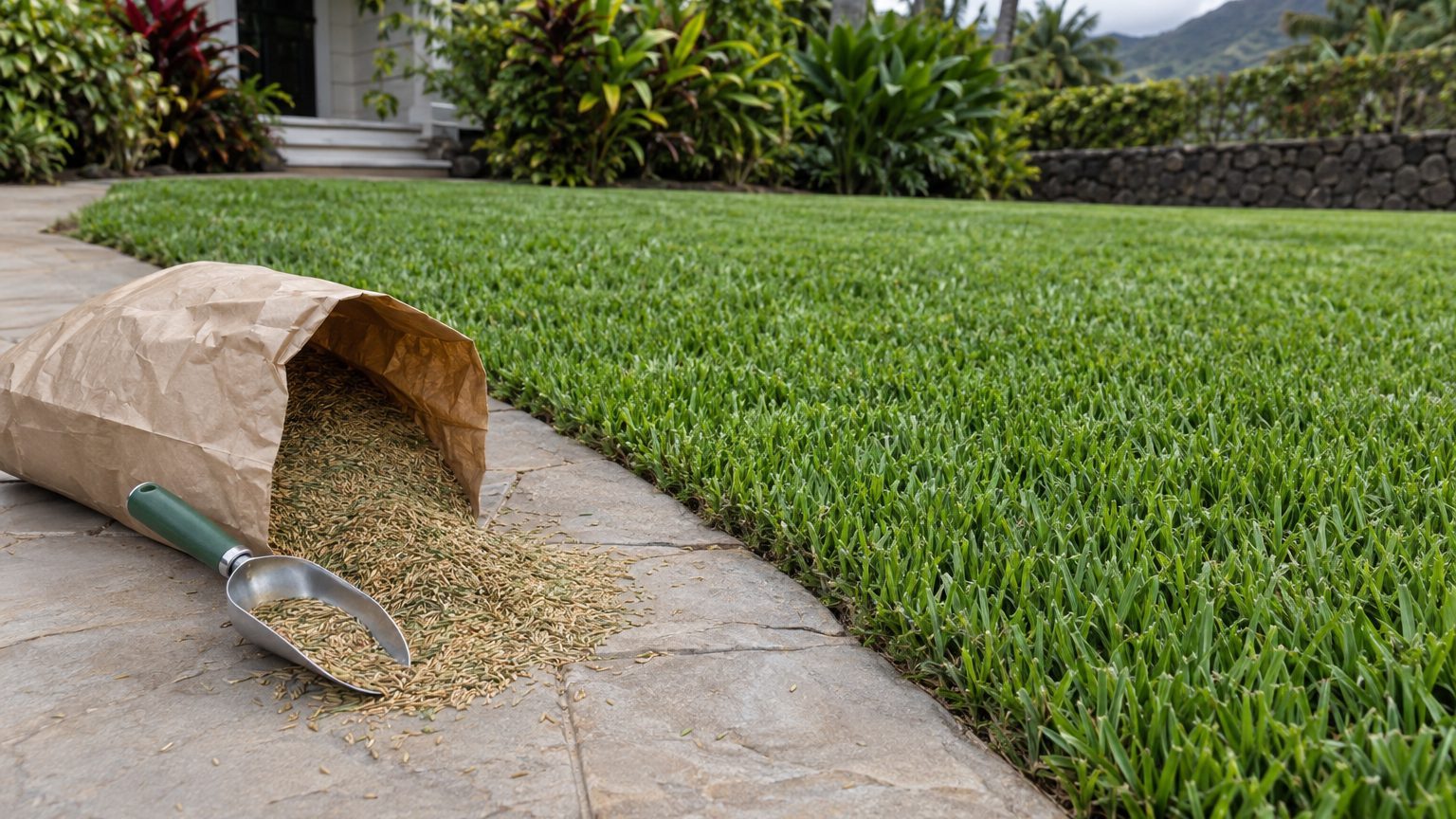
This is the one lawn grass sold as seed in Hawaii, so it is the answer for anyone who wants to sow rather than plant. It loves full sun, spreads fast and recovers quickly from foot traffic.

You can sow common bermudagrass seed in any month in Hawaii if you can keep it moist while it establishes. Cover it with no more than 0.25 inch of soil and press it firmly so every seed touches the ground.

Seashore Paspalum

Seashore paspalum tolerates salt spray and salty water better than most turf, which makes it a natural fit for oceanfront yards. It is planted from sprigs, plugs or sod, not seed.

Zoysiagrass

Zoysia forms a dense, fine-textured carpet that crowds out weeds once established. The types grown in Hawaii include Manila and Mascarene. Both are planted vegetatively, so you will buy sod or plugs, not a bag of seed.

Centipedegrass

Centipedegrass suits homeowners who want a lawn that asks little. It grows slowly, so it needs less mowing than bermudagrass, and it is also started from plugs, sprigs or sod.

St. Augustinegrass

St. Augustine is a common choice for shadier, moister yards because it tolerates partial shade better than bermudagrass. It is never sold as seed. Expect to lay sod or plant plugs, which can go in any month as long as you keep them watered.

How to Choose Grass Seed for a Hawaii Yard

Start with the light your yard gets and how much work you want to do. Then decide whether seed is realistic at all. If you want to sow from a bag, common bermudagrass is the answer. Every other species means sod, plugs or sprigs.

Mowing runs all twelve months here, so a slower-growing grass can save real effort over a year.

Situation Grass Why it fits
Full sun, want to sow seed Common bermudagrass The only one sold as seed
Oceanfront or salty water Seashore paspalum Handles salt well
Dense lawn, fewer weeds Zoysiagrass Thick turf, planted as sod or plugs
Partial shade St. Augustinegrass Tolerates shade, planted vegetatively
Less mowing Centipedegrass Slow growth, planted as plugs or sod

Heavy foot traffic from kids and pets favors bermudagrass, which repairs itself quickly. Whatever you choose, plan on regular watering through the establishment period, since that is how new turf roots in any month of the year.

Which Grasses Grow Where in Hawaii

With no frost at lowland elevations, the differences inside the state come from rainfall, elevation and whether a spot faces the wind or sits in its shelter.

  • Windward sides of the islands: Rain is frequent and the soil stays moist, which suits St. Augustine and zoysia. Fertilizer is best reduced or skipped in the winter months there.
  • Leeward coasts: Sunnier and drier, they favor bermudagrass and seashore paspalum, and the lawn depends more on your irrigation.
  • Higher elevations: Cooler air slows growth, so mowing and feeding need less of your time than at sea level.

Frost matters only near the high volcanic summits of Mauna Kea, Mauna Loa and Haleakala, far from any yard.

Grass Seed Mistakes to Avoid in Hawaii

Buying Seed for the Wrong Grass

Bags labeled for zoysia or St. Augustine do not make sense here, because St. Augustine is never sold as seed and zoysia is planted vegetatively. Check the species on the label. If it is not common bermudagrass, switch to sod, plugs or sprigs.

Waiting for the Right Season

Mainland advice about spring and fall windows does not apply. With no frost, seeding and sod work in any month, so do not postpone a project for a calendar that was written for colder places. Pick a time when you can keep the soil moist.

Burying or Scattering Seed Carelessly

Thick covering smothers the tiny seed, while seed left on bare hard ground washes away in a heavy rain or dries out in the sun. Rake lightly, then press firmly, and keep the surface damp until the grass is up.

Where to Get Lawn Advice in Hawaii

Soil, rainfall and salt can change from one neighborhood to the next, so local advice is worth a quick call or visit before you buy.

  • The University of Hawaii CTAHR extension offers lawn grass publications you can read before choosing a species.
  • Your county extension office can help with local soil and rainfall questions, so contact it before planting.

Common Questions

Can You Grow Kentucky Bluegrass or Fescue in Hawaii?

Those cool-season grasses are not among the lawn grasses used in the state. The warm-season species above are the ones that suit the climate.

Is Sod or Seed Better in Hawaii?

Seed works only for common bermudagrass. For zoysia, St. Augustine, centipede or paspalum, sod, plugs or sprigs are the way to go, and they can be planted in any month with water.

How Often Should You Fertilize a Hawaii Lawn?

Feed monthly from March through October. November through February also works, and on windward sides you can cut back on it or skip it in the winter months.

Lawn Problems and Solutions in Hawaii

Lawn Problems and Solutions in Hawaii

Yellow patches, ragged blades and sponge-like turf show up in Hawaii lawns in every month, because the islands have no frost season to reset anything. Lawn problems here come from rain, heat, shade and a mild climate that never shuts pests or weeds down. Recognizing the pattern helps narrow down the cause and choose a sensible next step.

Lawn Pests and Diseases in Hawaii

Fungal Spots in Wet Weather

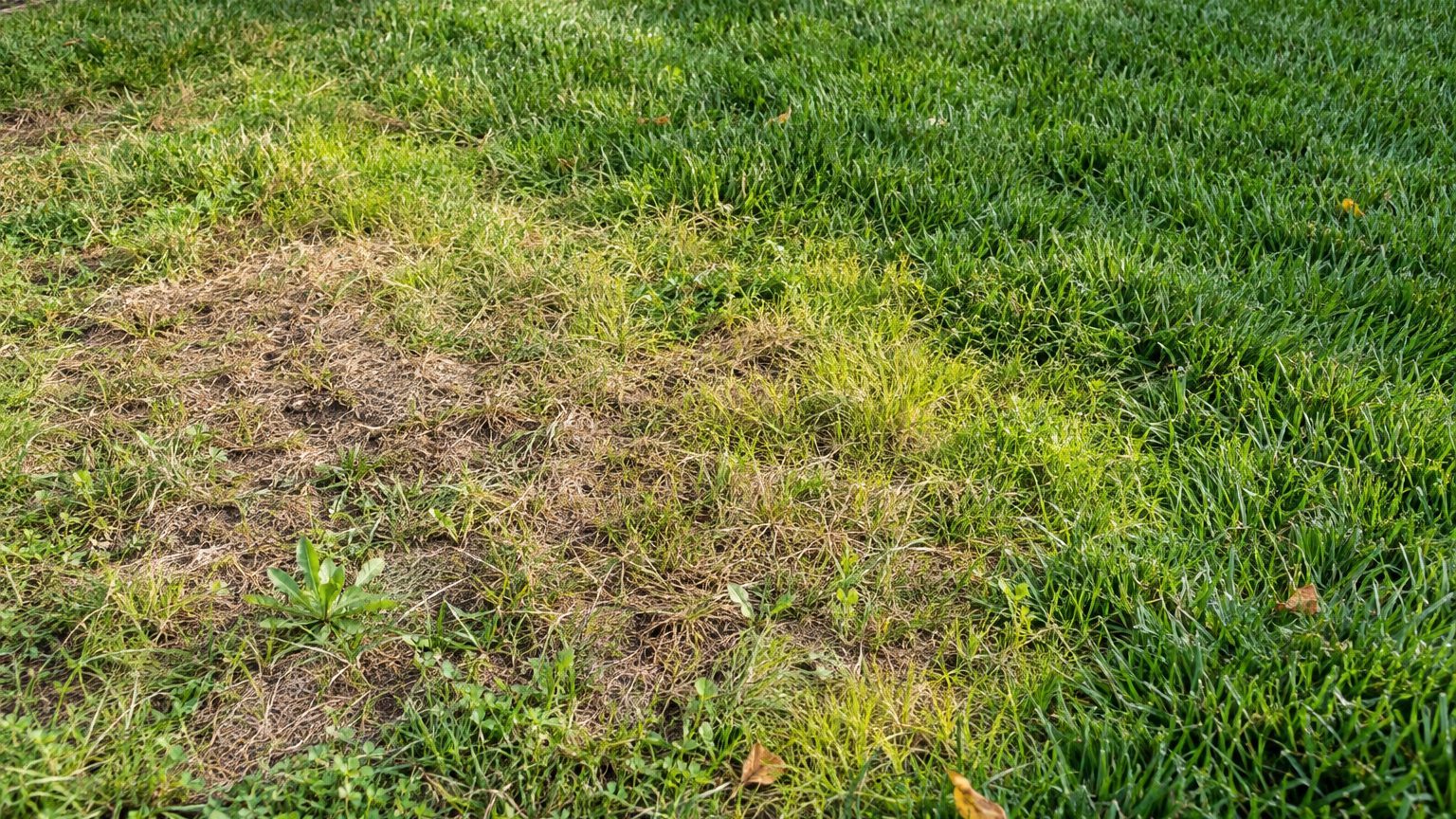
Tan or gray spots on the blades, sometimes growing into thin, discolored patches, tend to follow long wet spells and humid, still air. Windward slopes are especially vulnerable because the grass stays damp. Mow regularly so air moves through the turf, and water in the morning so the blades dry quickly.

Shaded corners tend to stay wet, so check them carefully.

Chewed Blades and Ragged Patches

Caterpillars such as armyworms chew leaves down, leaving ragged, thinned areas that can resemble drought damage. Part the grass at the edge of a damaged spot and look for green or brown larvae near the soil surface, especially at dusk. Catching them early keeps a small patch from spreading across the yard.

Grass That Pulls Up Like a Carpet

When brown turf lifts easily and the roots are gone, grubs feeding underneath are a likely cause. Birds or other animals digging at the lawn point the same way. Test the grass across the damaged area with a gentle tug. If it rolls back, look for pale, curled larvae in the soil, then water the area well and recover it with new plugs or sod once the damage is treated.

Nutsedge Among the Grass

Nutsedge stands out as lighter green, faster-growing shoots with a triangular stem, poking above the rest of the lawn soon after mowing. It thrives where water collects, so poor drainage invites it. Hand-pulling can help only if the underground nutlets come out too; improving drainage makes the site less favorable.

Broadleaf Weeds in Thin Turf

Weeds move into any gap in the turf, and warm weather all year gives them plenty of chances. A thick, regularly mown lawn leaves them little room. Where bare spots keep appearing, the underlying cause is usually shade, compaction or a grass that is stressed, so deal with that before pulling weeds again.

Thatch Building Up

Thatch is the spongy mat of stems and roots between the green blades and the soil. A layer up to 1/2 inch thick is healthy; beyond that, dethatch or core aerate. A thick layer sheds water and shelters pests, so it often sits behind the other problems.

How to Tell Which Lawn Problem You Have

A clue rarely tells the whole story, so combine what you see. Note what the damage looks like, then where it sits, whether the grass pulls up, and how wet or shaded the spot is. Together, those signs usually point to a likely cause.

A walk across the yard with a trowel, looking at the soil and the grass edge, can reveal useful clues.

What you see Where it shows up Likely problem
Tan spots on blades, damp turf Windward or shaded areas Fungal disease
Ragged, chewed patch with larvae at the edge Sunny areas, often near evening Caterpillars
Turf lifts like carpet, roots missing Irregular dead patches Grubs
Spongy, springy feel underfoot Whole lawn, mature turf Thatch
Pale, fast shoots with triangular stems Soggy low spots Nutsedge

Thin grass under trees is usually a light problem, not a pest problem. Once you know the cause, repairs go in any month: plugs, sprigs or sod root with regular water, and zoysia and St. Augustine are planted this way. Only common bermudagrass is sold as seed.

Where Lawn Problems Are Worst in Hawaii

Lawns here are shaped by rainfall, elevation and which side of an island they sit on, not by frost, since none reaches the places where people live.

  • Hilo side of Hawaii Island: Frequent rain and humidity keep turf wet, so fungal disease, nutsedge and thatch can build up.
  • Kona and other leeward coasts: Sun and dry spells stress the grass, so drought damage and weeds in thinned turf matter more than disease, and irrigation carries more of the load.
  • Upcountry Maui: Higher ground is cooler and often misty, which slows growth a little and favors damp-loving fungus in shaded spots.

Conditions can change quickly within the same island, shifting the problems a lawn faces.

Lawn Care Mistakes That Invite Problems in Hawaii

Scalping the Grass

Cutting too low strips the leaf the grass needs to feed itself and lets weeds in. Mowing is a task for every month here, so skipping weeks and then cutting hard is a common trap. Mow regularly, never remove too much at once, and keep blades sharp for clean cuts.

Watering by Habit

Watering is a year-round task, but the same schedule does not fit every yard. Daily light sprinkling keeps the surface wet, feeds fungus and encourages shallow roots. Water deeply when the grass needs it, in the morning, and in rainy windward spots let the weather do the work.

Feeding on Autopilot

Fertilizing works well from March through October. In January, February, November and December it is a lighter job, and in windward locations you should reduce it or skip it in the winter months. Too much nitrogen gives soft growth that disease and caterpillars favor, so feed regularly but modestly.

Where to Get Lawn Advice in Hawaii

Local help matters here because conditions change from valley to valley and coast to coast. The state’s land-grant university runs extension offices across the islands, and they know your area’s soils and pests.

  • The University of Hawaii CTAHR extension publishes lawn grass guides, so check it before choosing a grass or a fix.
  • The extension office serving your island can identify a pest or disease, so bring a sample of damaged turf with roots and soil.
  • Visit as soon as patches spread, since quick identification keeps small problems small.

Common Questions

Can You Seed a Lawn in Hawaii?

Seed is an option only for common bermudagrass, the only lawn grass sold that way. Zoysia and St. Augustine are planted as plugs, sprigs or sod, and those go in at any time of year as long as you keep them watered.

Does a Hawaii Lawn Go Dormant in Winter?

Lowland lawns do not go dormant from cold because freezing never occurs where people live. Growth slows somewhat in cooler, cloudier months, but mowing and watering continue all year, with less feeding in wet windward areas.

Why Does Grass Thin Out Under Trees?

Thin grass under trees usually means too little light, often with roots competing for water. Check whether the patch stays shaded and whether the soil is dry or compacted. If so, trim branches for more light or switch that area to a shade-tolerant groundcover.

Hawaii Lawn Care Schedule, Month by Month

Hawaii Lawn Care Schedule, Month by Month

In Hawaii the mower comes out in January and again in July, because the grass never really stops. A Hawaii lawn care schedule runs on rainfall, elevation and which side of the island you live on, not on frost. Most tasks stay open all year, while feeding simply asks for a little restraint in the wetter, cooler months.

What to Do Each Month in a Hawaii Lawn

Mowing and watering stay on the calendar every month. Feeding is the task that speeds up and slows down, and seeding is limited by what the market sells.

Month In the lawn
January Mow as the grass grows and water when rain falls short. A light feeding works now, but on the windward side skip it because the ground is already wet.
February Keep mowing and watering. If the lawn looks pale, a light feeding still works, except on rainy windward lots where nutrients wash away.
March Feeding begins in earnest as days lengthen and growth picks up. Mow regularly and water dry spells. Sod, plugs or sprigs settle in well.
April Feed monthly and keep the mower on a steady rhythm. Laying sod or planting plugs works fine as long as you water them in.
May Warm soil keeps the grass pushing, so feed monthly and mow often. Water leeward lawns deeply when the trade winds dry the surface.
June Growth is strong. Keep feeding and mowing, and water deeply on dry leeward lawns rather than lightly every day.
July Peak growing weather. Feed, mow and water, and plant plugs or sprigs if you want to fill a bare patch.
August Heat and dry spells on leeward coasts call for deeper watering. Feeding continues monthly, and mowing stays frequent.
September Keep feeding and mowing. Sod and plugs root quickly in the warm ground, so this is a good time to repair thin areas.
October The last month of the main feeding stretch. If you missed a bare spot in September, October still works for patching it.
November Slow the feeding to a light touch, and skip it on wet windward lawns. Mowing continues, and rain often covers the watering.
December Mow when the grass needs it and water only if rain stays away. A light feeding is optional, and windward lawns can go without.

Only common bermudagrass is sold as seed in Hawaii, so seeding is an option in any month but covers just that one grass. Zoysia and St. Augustine are planted as plugs, sprigs or sod.

When Does the Lawn Season Start and End in Hawaii?

It does not start or end. Lowland Hawaii has no freeze in the places where people live, so there is no frost date to wait for and no spring wake-up. Frost shows up only on the high volcanic summits of Mauna Kea, Mauna Loa and Haleakala, far from any yard.

What changes through the year is the pace. Warm, long summer days push growth hard, while the cooler, wetter winter months slow it without stopping it. Grass germinates best when soil sits at 65 to 70 °F and rising, and in the lowlands that condition is met nearly all year, which is why planting windows are so wide.

The USDA hardiness zones across the islands run from 9a to 13a, a reminder that the highest elevations get genuinely cool. For a lawn at sea level, though, rainfall and exposure decide the calendar, not cold.

How the Lawn Calendar Shifts Across Hawaii

The same month asks for different care depending on which part of an island you stand on.

  • Windward coasts, such as Hilo or Kaneohe: Frequent rain keeps the grass growing and washes nutrients out of the soil, so cut back or skip winter feeding and expect to water less.
  • Leeward coasts, such as Kona or the Waianae side of Oahu: Sunnier and drier, so watering matters more, especially in summer, and the full feeding schedule suits these lawns well.
  • Upcountry and higher elevations, such as Kula on Maui: Cooler air slows growth, so mowing and feeding run at a gentler pace than at the shore.

Check your own spot against these patterns, because a lawn farther inland can behave like a different climate.

Lawn Care Timing Mistakes to Avoid in Hawaii

Feeding Through Winter Rain

Monthly feeding is right for March through October, but on windward lawns the same habit in winter sends fertilizer into runoff. Reduce it or skip it from November to February, and feed lightly on leeward lawns if the grass looks pale.

Shallow Daily Watering

Sprinkling a little every day is easy to fall into during dry leeward summers. It keeps roots near the surface, so the lawn browns fast in the next dry spell. Water deeply when the soil dries out, and let the rain do the rest on wetter days.

Waiting for the Right Season

Holding off on sod or plugs until some imagined planting season costs you months of growth. Vegetative planting works in any month as long as you can water, so fix bare patches when you notice them. For seed, remember that only common bermudagrass is sold that way.

Where to Get Lawn Advice in Hawaii

Island conditions vary enough that local advice is worth a call. Local extension offices can help with questions about grass choice, soil and pests.

  • The University of Hawaii CTAHR Extension offers publications on lawn grasses and can point you to an agent on your island, so start there before choosing a grass.
  • Your county extension or agriculture office can speak to local rainfall, soil and pest issues, and it is the right stop when a patch looks wrong and you cannot tell why.

Common Questions

Can You Grow a Lawn from Seed in Hawaii?

Yes, but only with common bermudagrass, the one lawn grass sold as seed here. Zoysia and St. Augustine come as plugs, sprigs or sod, and those can go in during any month with water.

Does a Hawaii Lawn Go Dormant in Winter?

Not in the lowlands. Growth slows in the cooler, wetter months but keeps going, so mowing stays on the list all year. Higher elevations grow more slowly still.

Is Fertilizer Needed All Year in Hawaii?

Monthly feeding fits March through October. From November to February, a light feeding is optional, and windward lawns can skip it because heavy rain washes it away.

Hawaii Lawn Care: What to Do and When

Hawaii Lawn Care: What to Do and When

A Hawaii lawn has no frost-driven dormancy, so mowing and watering can continue in every season. What changes from one yard to the next is rainfall, elevation and whether your house sits on the wet windward side or the dry leeward side of its island.

Frost Dates and Growing Season in Hawaii

Where people live in Hawaii, no freeze occurs, so there is no last spring frost or first fall frost to plan around. Frost shows up only on the high volcanic summits of Mauna Kea, Mauna Loa and Haleakala. The USDA hardiness system, which rates the average coldest night of the year, puts the state at zone 9a to 13a, so cold never ends a season for a young seedling. Grass growth follows rain and sun instead, and the year splits into these moments:

  • In winter, from January through February, grass keeps growing, so mowing and watering carry on all twelve months, and windward yards can ease off fertilizer because cool, wet weather slows the turf.
  • In early spring, around March and April, fertilizing picks up on a monthly rhythm as days lengthen and the lawn thickens.
  • Through late spring and summer, from May to August, growth peaks, so the mower runs often and leeward lawns need regular irrigation to stay green.
  • In early fall, in September and October, feeding continues while the heat eases, which makes it a comfortable time to patch bare spots with sod or plugs.
  • In late fall, in November and December, fertilizing becomes optional, and windward lawns can skip it while mowing and watering go on as usual.

Because no cold season interrupts planting, a bare patch can be filled whenever you can keep the new grass watered.

Cool-Season or Warm-Season Grass in Hawaii?

Warm-season grass is the answer here. Hawaii has no hard winter to make a cool-season lawn worth the trouble, and the steady warmth and sun suit grasses that thrive in heat. Rainfall then decides which warm-season type fits your yard.

Salt spray, dry leeward slopes and soggy windward soil each favor different choices. Hawaii lawns use five warm-season grasses.

Grass How it does in Hawaii Why
Common bermudagrass Widely grown, and the only one sold as seed Grows from seed, so it is the easy choice for starting from scratch
Zoysiagrass (Manila, Mascarene) Established by sod, plugs or sprigs Planted vegetatively, never from seed
St. Augustinegrass Grown across island yards Planted vegetatively, because it is never sold as seed
Centipedegrass Listed as a lawn option Also spreads from plugs or sprigs rather than seed
Seashore paspalum Listed as a lawn option Suited to coastal conditions, planted vegetatively

Since only common bermudagrass comes as seed, most other lawns here start from sod, plugs or sprigs, which is a different job than scattering seed over bare soil.

When to Seed, Fertilize and Aerate a Lawn in Hawaii

Hawaii has few hard deadlines. Most tasks run all year, and the real choice is which months give the best results for feeding and planting.

Only common bermudagrass can be seeded, so every other grass goes in as sod, plugs or sprigs. Aeration has no dated window for the islands, so base it on how compacted your soil feels underfoot.

Task Best months in Hawaii Why then
Fertilizing March through October Warm, active growth uses the nutrients; it also works in January, February, November and December
Mowing January through December Grass grows in every month
Laying sod, plugs or sprigs January through December Any month works as long as the new grass gets water
Seeding common bermudagrass It works in any month, January through December No cold season to threaten seedlings
Watering January through December Leeward lawns especially need steady moisture

Fertilize monthly during the active months. In windward locations, reduce or skip feeding in the winter months, since cool, wet weather there slows the grass and wastes the product.

Lawn Problems to Watch for in Hawaii

Thin, Pale Grass in Wet Windward Yards

Constant rain on the windward sides leaches nutrients out of the soil, so grass turns pale and thins even though it never stops growing. Pale blades plus soil that stays soggy point to feeding and drainage trouble. Keep up monthly fertilizing in the active months, then reduce it in winter, and avoid watering on top of rain.

Brown Patches on Dry Leeward Lawns

On the leeward coasts, sun and little rain dry the turf fast. Straw-colored areas that spring back after a good soaking are thirsty, not dead. Water deeply and regularly, and mow often enough that the grass stays healthy instead of stressed, since mowing continues all year.

Bare Spots That Never Fill In

A spot that stays bare in a warm, mild place usually has compacted soil or too much shade. Check by pushing a screwdriver into the ground, since it should slide in easily. If it resists, loosen the soil, then fill the gap with sod, plugs or sprigs of the same grass, which can go in any month.

How Lawn Care Dates Change Across Hawaii

The islands share a mild climate, but local weather shifts quickly over short distances, and the calendar bends with it.

  • Windward Hilo and the Hamakua coast: Steady rain keeps soil wet and nutrients washing away, so winter feeding can be skipped or reduced while mowing continues.
  • Leeward Kona and Kihei: Dry, sunny conditions make irrigation the main task, and lawns here keep taking fertilizer through winter more readily.
  • Upcountry Maui and the higher slopes of Hawaii Island: Cooler air at elevation slows growth, so these lawns grow more slowly and need less frequent mowing than those at sea level.

Use your own rainfall and elevation as your guide rather than the island you live on.

Where to Get Lawn Advice in Hawaii

The University of Hawaii extension service, run through CTAHR, offers grass guides written for island conditions. Your county extension office can also help with soil tests and lawn diagnosis.

  • The extension service publishes grass guides, so look there before choosing between bermudagrass, zoysia or St. Augustine.
  • Your county office can help with soil testing, which is worth doing before you fertilize a pale, thinning lawn.

Common Questions

Do Lawns in Hawaii Go Dormant in Winter?

No freeze reaches inhabited areas, so grass keeps growing in winter. Growth slows on cool, wet windward sides and at higher elevations, but mowing and watering still apply in every month.

Can You Grow St. Augustinegrass from Seed in Hawaii?

No. St. Augustinegrass is never sold as seed, so it goes in as sod, plugs or sprigs. Zoysiagrass is planted the same way, and only common bermudagrass comes as seed.

Is There a Wrong Month to Lay Sod in Hawaii?

Not for the calendar. Sod, plugs or sprigs can go in during any month, provided the new grass gets water while it roots, which matters most on dry leeward sides.

Hydrangeas That Grow Well in Hawaii

Hydrangeas That Grow Well in Hawaii

Bigleaf hydrangea (Hydrangea macrophylla) and mountain hydrangea (Hydrangea serrata) grow the most reliably across Hawaii, especially above roughly 2,000 feet where nights stay cool enough for buds to set. Near sea level in Hilo, heat and constant humidity work against the classic mophead types, and panicle or smooth varieties struggle even more without any real winter chill.

Hydrangeas that grow well in Hawaii: The Short Answer

The USDA Plant Hardiness Zone Map puts Hawaii at 9a to 13a, a range wide enough to cover both the humid lowlands around Hilo and the cool uplands above 3,000 feet. Bigleaf hydrangea and mountain hydrangea handle that spread better than any other type, which is why nurseries on the Big Island and in Kula sell them almost exclusively.

Bigleaf hydrangea (Hydrangea macrophylla)

Bigleaf hydrangea (Hydrangea macrophylla) — Hydrangeas That Grow Well in Hawaii

This is the safest pick for most Hawaii yards, mophead and lacecap forms both do well in filtered light at elevation. Soil pH decides the color, acidic soil pulls toward blue and alkaline soil toward pink, and near Hilo it still needs part shade to avoid leaf scorch.

Mountain hydrangea (Hydrangea serrata)

Mountain hydrangea (Hydrangea serrata) — Hydrangeas That Grow Well in Hawaii

Closely related to bigleaf but with smaller leaves and a lower profile, it tolerates humidity and wind better than its cousin. Exposed upland gardens around Volcano lean on it where bigleaf would get shredded by trade wind gusts.

Oakleaf hydrangea (Hydrangea quercifolia)

Oakleaf hydrangea (Hydrangea quercifolia) — Hydrangeas That Grow Well in Hawaii

A moderate bet, it tolerates heat better than bigleaf but dislikes the constant wet feet common on windward slopes. Sharp drainage matters more here than shade, and it rewards a raised bed on rainy sites.

Panicle hydrangea (Hydrangea paniculata)

Panicle hydrangea (Hydrangea paniculata) — Hydrangeas That Grow Well in Hawaii

This one needs measurable winter chill to set flower buds, something lowland Hawaii rarely delivers. Bloom is sparse below the cooler upcountry pockets, so it makes more sense as a Kula or Waimea planting than a coastal one.

Smooth hydrangea (Hydrangea arborescens)

Smooth hydrangea (Hydrangea arborescens) — Hydrangeas That Grow Well in Hawaii

Native to temperate woodlands on the mainland, it struggles with Hawaii’s mild nights and weak stems that flop further under near-daily rain. It survives in upland gardens but rarely matches the bloom it produces back east.

Climbing hydrangea (Hydrangea anomala subsp. petiolaris)

Climbing hydrangea (Hydrangea anomala subsp. petiolaris) — Hydrangeas That Grow Well in Hawaii

The riskiest choice on this list, the vine needs a real dormant season that almost nowhere in the state provides. It shows up occasionally in experimental gardens but rarely thrives long term.

How to Work Out the Dates for Your Own Yard

Because lowland Hawaii never sees measurable frost, the planning method here starts with rainfall and elevation instead of a freeze date.

  1. Pick the elevation band first: gardens above roughly 2,000 feet get closer to the cool nights bigleaf hydrangea needs to set buds, while anything near sea level runs warmer year round.
  2. Plant in the cooler, wetter window: set new shrubs out in January, February, October or November, when rainfall is steadier and roots establish without heat stress.
  3. Fertilize on the growth window: feed in March, May and July, spacing applications so roots take up nutrients while the plant is actively pushing leaves.
  4. Prune bigleaf only in its window: cut back bigleaf hydrangea in June or July, right after bloom, since next year’s flowers form on the wood left behind.
  5. Watch the leaves for the real signal: scorched margins on the sunny side mean the site runs hotter than the variety tolerates, a cue to move it or add shade.

Bigleaf hydrangea passes this test almost everywhere above the coastal strip because its buds open before the driest stretch of summer. Climbing hydrangea fails it nearly everywhere in the state, since the vine needs a dormant season that lowland and upland Hawaii rarely deliver.

Hawaii North to South: How the Dates Shift

Hawaii’s own geography, not latitude, decides how these windows shift from one yard to the next.

  • Windward coasts and valleys (Hilo, Hamakua, Hana): near-constant rainfall and cooler nights favor bigleaf and mountain hydrangea, though root rot becomes the bigger risk than heat.
  • Leeward and dry coastal belts (Kona, Kihei, Waianae): lower rainfall and stronger sun push bloom later and demand afternoon shade, since panicle and smooth types struggle without supplemental water.
  • Upcountry and high-elevation pockets (Volcano, Kula, Waimea): cooler nights closest to what bigleaf hydrangea evolved with make this the safest ground in the state for a full range of varieties.

None of this changes the calendar windows themselves, only which variety holds up long enough to reach them, a distinction the state guide walks through yard by yard.

Mistakes Hawaii Punishes

Full sun at low elevation

Near sea level, bigleaf hydrangea planted in full sun scorches leaf margins by early afternoon as heat outpaces what the roots can take up. Give it filtered light or afternoon shade below the cooler upcountry belt, and match the site to one of the varieties listed above.

Waterlogged roots in constant rain

Windward gardens near Hilo see rain nearly every week, and hydrangeas set in heavy clay or a low spot sit with wet roots long enough to rot. Raise the bed or mix in cinder for drainage, and pick oakleaf or mountain hydrangea over the thirstier smooth type.

Wrong variety for the elevation

Panicle and climbing hydrangea rarely bloom well below the coolest upcountry pockets, since both need a real chill that lowland Hawaii never provides. Check elevation against the ordered list above before buying, and lean toward bigleaf or mountain hydrangea anywhere near the coast.

Hawaii Extension Offices and County Contacts

The zone range above is a starting point, not the whole picture, and county extension staff can confirm what holds up on your exact slope. USDA NIFA’s Land-Grant University Extension directory lists the University of Hawaii’s CTAHR extension service as the state’s contact point.

  • Your state page: the elevation bands and pruning window where you live.
  • Which ones hold up here: the ordered list of varieties from safest to riskiest for Hawaii.
  • CTAHR extension: county office contacts for soil tests and variety questions specific to your island.

Common questions

Do hydrangeas need cold winters to bloom in Hawaii?

Bigleaf and mountain hydrangea set buds without a true winter, which is why they dominate island nurseries. Panicle, smooth and climbing types need more chill than most of the state provides, so they bloom thin or not at all outside the coolest upcountry pockets.

Why do hydrangea leaves scorch even with regular watering?

Scorch on the sunny side usually means wind and sun exposure outpace what the roots can pull up, not a lack of water at the roots. Moving the plant to filtered light or afternoon shade fixes it faster than adding more irrigation.

Where in Hawaii do hydrangeas grow best overall?

Upcountry pockets above roughly 2,000 feet, places like Volcano, Kula and Waimea, come closest to the cool nights hydrangeas evolved with. Lowland coastal yards can still grow bigleaf or mountain hydrangea, but they need more shade and better drainage to get there.

Hydrangea Pests and Diseases in Hawaii

Hydrangea Pests and Diseases in Hawaii

Hydrangeas in Hawaii rarely die from cold. The trouble here is moisture: constant humidity on windward coasts feeds fungal disease, while a handful of insects, most the Chinese rose beetle, chew fresh growth after dark. Knowing which one you’re looking at saves the plant.

Hydrangea pests and diseases Hawaii: The Short Answer

The USDA Plant Hardiness Zone Map places the islands across a 9a-13a range, with Honolulu as the low-elevation reference point most gardeners compare against. Most of what damages hydrangeas here is fungal, tied to rainfall and shade, rather than the insect pressure mainland gardeners describe.

Slugs and snails on new leaves

Slugs and snails on new leaves — Hydrangea Pests and Diseases in Hawaii

Wet soil left over from the January and February planting window draws slugs to tender seedlings at night. Ragged holes with a silvery trail are the tell. Handpick after dark or set a shallow beer trap, and check the state calendar page for the full planting window.

Chinese rose beetle at dusk

Chinese rose beetle at dusk — Hydrangea Pests and Diseases in Hawaii

This beetle skeletonizes leaf edges into a lacy pattern and feeds almost exclusively after sunset, vanishing by morning. It favors soft new growth pushed by the March, May and July fertilize schedule. Row cover over young plants at dusk blocks it without spraying.

Aphids clustered on buds

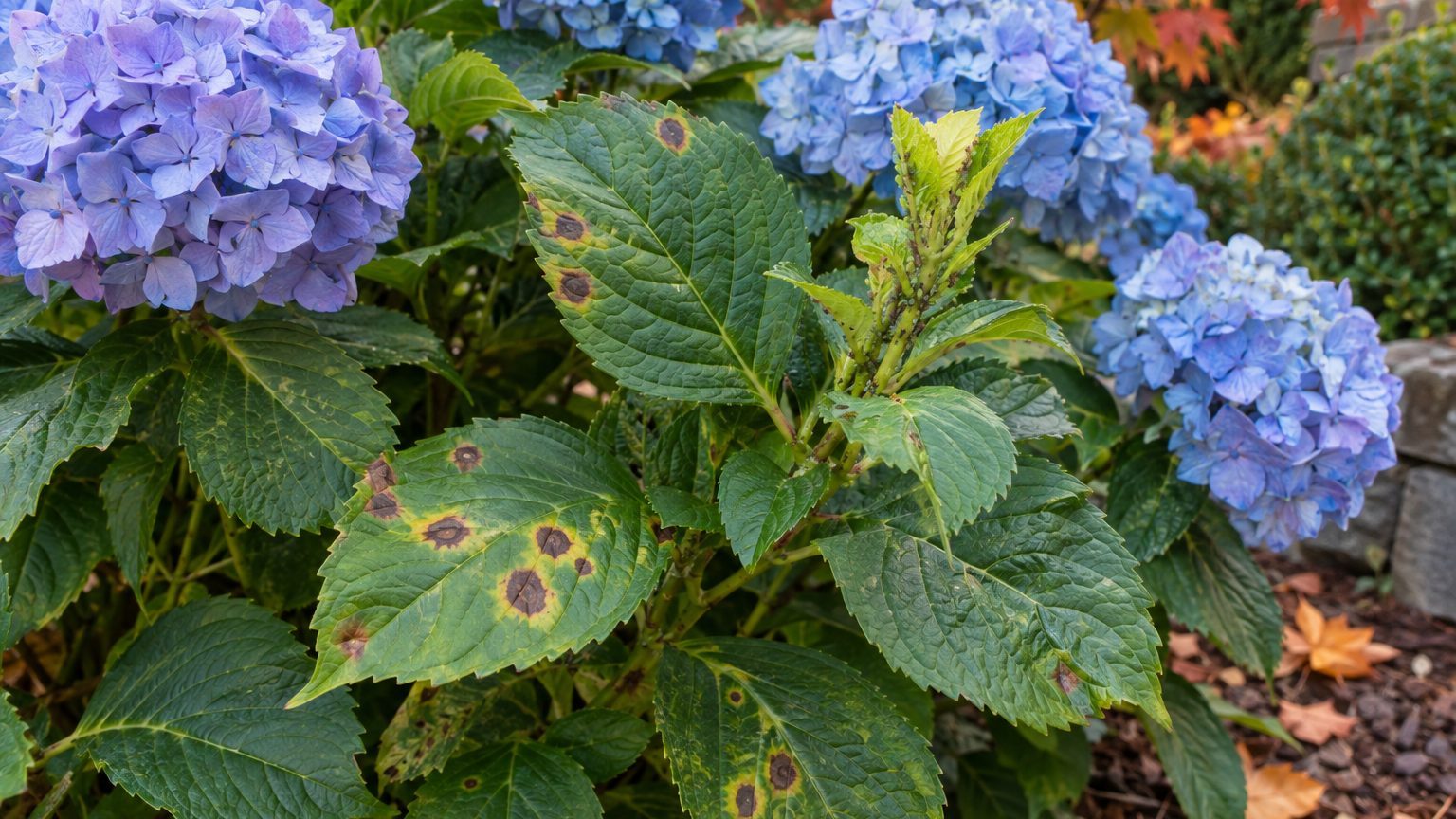
Small, soft-bodied clusters gather on flower buds right when fertilizer pushes new growth. Sticky residue and curled leaf tips follow. A strong water spray every few days knocks populations down before buds open, cheaper than any treatment.

Powdery mildew in humid shade

Powdery mildew in humid shade — Hydrangea Pests and Diseases in Hawaii

A gray-white dusting spreads across leaves wherever airflow is poor, worse on the humid windward side of an island. It rarely kills the shrub but weakens bloom. Space plants wider and prune out crowded interior stems during the June or July bigleaf pruning window.

Botrytis blight on wet blooms

Botrytis blight on wet blooms — Hydrangea Pests and Diseases in Hawaii

Brown, mushy spots appear on petals and buds right after a heavy rain event, spreading fast in still air. Remove and discard affected blooms rather than composting them. Better spacing and morning watering, not evening, keep this from returning.

Root rot after standing water

Root rot after standing water — Hydrangea Pests and Diseases in Hawaii

Yellowing lower leaves and a soft, blackened base signal Phytophthora root rot, almost always from soil that never drains between rains. Raised beds or amended, gritty soil fix this faster than any fungicide. See the state guide page for a full site-prep checklist.

How to Work Out the Dates for Your Own Yard

NOAA NCEI’s 1991-2020 Climate Normals record zero days at or below 32°F at station USW00022521, so there’s no frost countdown to run here. The method instead starts from the calendar windows and works backward through rainfall and airflow at your own site.

  1. Check the month against the planting window: wilting in a shrub set out during January or February usually points to transplant stress, not pest damage.
  2. Walk the yard after dark: chewed leaf edges with no insect visible by morning almost always mean Chinese rose beetle, active at night only.
  3. Match new growth to the fertilize schedule: aphid clusters and mildew both spike around the March, May and July feeding, since both feed on soft tissue.
  4. Check drainage after the next heavy rain: yellowing that starts low on the plant after standing water points to root rot, not a leaf disease.
  5. Note what happens after the bigleaf pruning window: buds that fail to open following June or July pruning suggest disease carried over on old wood, not a new pest.

Run through these five checks in order before treating anything. Most misdiagnoses in Hawaii come from spraying for insects when the real problem is standing water.

Hawaii North to South: How the Dates Shift

Hawaii doesn’t run north to south so much as windward to leeward, and elevation matters as much as either.

  • Windward coasts (Hilo, Hamakua, Puna): humidity stays high year-round, so fungal pressure from mildew and botrytis runs higher than anywhere else in the state.
  • Leeward and dry coasts (Kona, Waianae, Kihei): drier air cuts fungal risk sharply, but spider mites become the more likely complaint on stressed foliage.
  • Upcountry and high elevation (Waimea, Volcano, Kula): cooler nights slow both insects and fungal spread, the closest match to a mainland-style growing season.
  • Outer islands and exposed shores (Kauai’s north shore, Molokai): wind and salt spray add stress that opens the door to root and stem disease.

Check the state guide page for the planting and pruning windows that apply to your part of the island chain.

Mistakes Hawaii Punishes

Watering on top of standing rain

Adding irrigation right after a downpour keeps roots sitting wet and invites Phytophthora root rot within weeks. Let soil drain and dry slightly at the surface before watering again, and confirm the bed drains at all before replanting there.

Pruning outside the bigleaf window

Cutting bigleaf hydrangeas outside June or July removes the buds that were already set for next season’s bloom. Wait for that window, and mark it on next year’s calendar so it doesn’t get skipped again.

Ignoring airflow in windward shade

Crowding shrubs together on the humid windward side traps moisture against the leaves and feeds both mildew and botrytis. Space plants wider than feels necessary and prune the interior open during the bigleaf window to let air move through.

Hawaii Extension Offices and County Contacts

The zone range and calendar windows above are a starting point. The CTAHR Extension office for your county carries the rest, from soil testing to confirming a pest identification in person.

  • Your state page: the planting, fertilizing and pruning windows for where you live.
  • Which ones hold up here: the varieties that tolerate Hawaii’s humidity and elevation spread.
  • County extension office: soil testing, pest samples and a local answer when a diagnosis isn’t clear.

Common questions

Do hydrangeas need winter protection in Hawaii?
No. NOAA records zero freeze days for the islands, so cold protection isn’t part of the calendar here.

Why do my hydrangea leaves have holes but no bugs in sight?
Check after dark. Chinese rose beetle feeds at night and disappears well before daylight, leaving damage but no visible insect.

Is powdery mildew dangerous to the plant?
It weakens bloom but rarely kills the shrub. Wider spacing and pruning during the June or July window control it better than repeated spraying.

When to Prune Hydrangeas in Hawaii

When to Prune Hydrangeas in Hawaii

In Hawaii, the safe planting windows fall in January, February, October, and November, with bigleaf hydrangeas pruned in June and July after bloom fade. There’s no frost date to count from here. Elevation and rainfall set the rhythm instead, and a yard in Honolulu runs on a different clock than one on Kula’s slopes or Hilo’s wet coast.

When to prune hydrangeas in Hawaii: The Short Answer

Honolulu anchors the state’s growing calendar, and USDA Plant Hardiness Zone Map puts Hawaii at zone 9a to 13a, a spread wide enough that a hydrangea planted near the coast behaves nothing like one set into cooler upcountry soil.

  • January: the plant window opens, and new hydrangeas go into the ground while air stays cool and moist. Give the root ball a full month before the driest weeks arrive.
  • February: this is the second month of the same plant window, still a safe bet island-wide. Water deeply at planting since roots haven’t spread far yet.
  • March: the first fertilize date lands here, feeding shrubs as they push new leaves. Skip fertilizer on anything planted within the last six weeks.
  • April: no plant, fertilize, or prune date falls this month, so this is a watch-and-mulch stretch. Check that drainage still runs clear after any heavy rain.
  • May: the second fertilize date arrives, right as buds start forming on older wood. Keep the feeding light on shrubs still building their first-year roots.
  • June: pruning bigleaf hydrangeas begins, the only stretch of the year set aside for it. Cut spent flower heads back to the first strong pair of leaf buds.
  • July: the prune window closes here, and the third fertilize date lands in the same month. Finish any cutting before mid-month so new buds have time to set.
  • August: no scheduled task falls here, and this is usually the driest stretch of the year. Watch leaf edges for the curl that signals a shrub needs deeper watering.
  • September: still an off-calendar month, good for scouting a planting site ahead of fall. Clear weeds from the spot so roots meet no competition in October.
  • October: the plant window reopens, the first of two fall months for setting new hydrangeas. Cooler nights let roots establish before winter’s calmer growth.
  • November: the plant window closes at month’s end, the last safe stretch until January. Mulch new plantings well since this closes out the fall push.
  • December: no task is scheduled, and shrubs mostly rest through this slower month. Use the quiet stretch to plan where January’s new plantings will go.

These dates hold for lowland Hawaii, where the frost that shapes mainland calendars never arrives. Rainfall and elevation do that work instead, and the next section walks through adjusting them for your own yard.

How to Work Out the Dates for Your Own Yard

Working out your own dates means starting from the state’s zone range and narrowing it down to your yard’s elevation and exposure.

  1. Pick your plant window first: the state calendar sets planting at January, February, October, and November, so choose the window closest to now.
  2. Place your yard on the zone range: USDA Plant Hardiness Zone Map lists Hawaii from 9a to 13a, so a garden near sea level in Honolulu behaves differently than one on a cooler upcountry slope.
  3. Match elevation to expectation: the higher the yard sits, the closer it behaves to the 9a end, meaning slower growth and a shorter bloom push.
  4. Set your feeding dates: fertilize in March, May, and July, spacing the three feedings evenly through the growing stretch.
  5. Reserve pruning for June and July: cut spent bigleaf blooms only inside that window, never earlier.
  6. Confirm with your island’s extension office: local staff can tell you where your yard actually falls inside that broad zone range.

None of these steps replace a look at your own soil, but together they turn a wide zone range into a date that fits your particular yard.

Hawaii North to South: How the Dates Shift

Hawaii’s islands don’t share one calendar, and elevation shifts these dates more than any coastline does.

  • Windward and wet coasts (Hilo, Hana, Kaneohe): rain stays frequent enough that plantings often root faster here than anywhere else in the state.
  • Leeward and dry coasts (Kona, Waikiki, Lahaina): heat and dry air mean afternoon shade and steady watering matter more than the calendar date itself.
  • Upcountry and high elevation (Kula, Volcano, Waimea): cooler air lets bloom color hold longer and pushes the whole season slightly later.

Check the Hawaii hydrangea guide for the numbers that apply to your specific island and elevation.

Mistakes Hawaii Punishes

No bloom despite lush green growth

No bloom despite lush green growth — When to Plant and Prune Hydrangeas in Hawaii

Bigleaf hydrangeas set their flower buds on old wood, and cutting them at any time outside the June and July window strips away next year’s blooms before they even form. Prune only inside that window, and otherwise leave the shrub alone through the rest of the year.

Leaves crisped along the sunny edge

Full lowland sun near the dry, leeward coast scorches leaf margins fast, turning edges brown within days during the hottest stretch of the year. Plant in afternoon shade instead, especially below the cooler upcountry elevations, and check which named varieties actually tolerate this heat before choosing a spot.

Soft, leggy growth and no flowers

Feeding outside the March, May, and July fertilize dates pushes soft, leggy new growth that never has time to harden into flower buds before the season moves on. Stick to those three feeding months, and skip fertilizer entirely on anything planted within the past six weeks.

Hawaii Extension Offices and County Contacts

The state’s zone range is a starting point, not a final answer, and the county extension office fills in what the map can’t show.

  • CTAHR Extension: the University of Hawaii’s extension service, with island-specific staff who know your slope and soil.
  • Which ones hold up here: the variety guide names the hydrangeas suited to Hawaii’s zone range, from most reliable to most fragile.
  • What goes wrong here: the trouble guide covers the pests and stress signs particular to this state’s climate.

Common questions

Can I plant hydrangeas in Hawaii during summer?

The state calendar reserves planting for January, February, October, and November, so summer planting works only with heavy shade and constant water, and even then roots may not establish before the driest weeks of the year arrive.

Do hydrangeas need chill hours in Hawaii?

No. Lowland Hawaii never sees freezing temperatures, so hydrangeas here rely on rainfall and elevation rather than a winter chill period to set their bloom.

Should I prune hydrangeas right after planting?

No. Wait until the shrub is established, and reserve any bigleaf pruning for the June and July window regardless of when it first went into the ground.

When to Plant Hydrangeas in Hawaii: Dates and Varieties

When to Plant Hydrangeas in Hawaii: Dates and Varieties

In lowland Hawaii, hydrangeas never meet a frost date because none exists here, so the state’s growing calendar runs on rainfall and elevation instead. USDA places the islands in zones 9a through 13a. Plant in January, February, October or November, feed in March, May and July, and prune bigleaf types in June and July.

Hydrangeas Care Calendar for Hawaii

Growing Hydrangeas in Hawaii: Dates and Varieties

NOAA NCEI 1991-2020 Climate Normals list zero days at or below 32°F for the Hilo station behind these numbers, and every freeze percentile comes back not-computable because frost simply never reaches the gardens people plant.

  • January and February planting: the first of two windows in the state’s calendar, timed to steady lowland rain rather than any thaw.
  • March feeding: the first of three fertilizing months, feeding new spring growth before the heat builds.
  • May feeding: a second round, feeding while flower buds are forming for the first summer bloom.
  • June and July pruning: the one cut bigleaf types get all year, done right after the earliest flowers fade.
  • July feeding: the last of the three feeding months, closing out the summer push.
  • October and November planting: the second planting window, set ahead of the wetter winter months.

Elevation and rainfall drive more of this than the calendar does, so treat these months as a starting point and watch your own slope and rain.

Best Hydrangeas for Hawaii

USDA Plant Hardiness Zone Map puts the islands at zone 9a through 13a, one of the widest ranges of any state, which matters more for hydrangeas than any frost date since frost never factors in here.

Most hydrangea types were bred for a cold winter they’ll never get in lowland Hawaii, so the real question isn’t cold hardiness but how much winter chill a variety needs to set flower buds.

Kind Verdict here Why
Bigleaf Common but uneven bloomer Needs some winter chill for buds, which lowland gardens barely get
Panicle Better at higher elevation Flowers on new wood, less dependent on a cold winter to bloom
Smooth (Annabelle type) Reliable low-elevation choice Also blooms on new wood each year, so a mild winter doesn’t skip a season
Climbing Good on shaded, wet walls Tolerates the humidity and rain of windward sites well

Oakleaf and mountain hydrangeas are the other kinds, and they lean on a seasonal cold snap lowland Hawaii doesn’t supply, so they stay niche choices reserved for high-elevation gardens.

When to Plant, Prune and Feed Hydrangeas in Hawaii

There’s no frost to count backward or forward from here, so the state’s three key windows follow rainfall and the growing season instead of any thaw date.

Plant twice a year, feed three times, and give bigleaf types a single pruning pass once their first flowers are spent.

Task Window here Counted from
Plant January-February and October-November The two steadier rain windows in the state’s calendar, not a frost date
Fertilize March, May, July Roughly two months apart through the active growing season
Prune bigleaf June-July Right after the first flush of bloom fades

Smooth and panicle types skip the pruning debate entirely since they bloom on new wood and can be cut back hard in late winter without losing a season of flowers.

Hydrangeas Problems in Hawaii and What Causes Them

No flowers on an otherwise healthy bigleaf

No flowers on an otherwise healthy bigleaf — Growing Hydrangeas in Hawaii: Dates and Varieties

Lowland Hawaii rarely delivers the stretch of cool nights bigleaf hydrangeas use to set next year’s buds, so a shrub can leaf out fine and still skip bloom. Switch to a panicle or smooth type instead, or move the plant upslope where nights run cooler.

Leaves scorched on the dry, leeward side

Kona, Waianae and similar leeward coasts get intense sun and far less rain than the windward side of the same island, and hydrangea leaves burn fast in that combination. Afternoon shade and deep, regular watering fix most of it.

Roots sitting wet on windward slopes

Windward valleys can see rain on most days of the year, and hydrangea roots left in soggy, poorly drained soil will rot before they ever wilt from thirst. Raised beds or a slope that sheds water solve this before it starts.

Hawaii North to South: How the Dates Shift

Hawaii doesn’t run north to south so much as low to high and wet to dry, and that split matters more here than in almost any other state.

  • Windward coasts and valleys (Hilo, Hamakua, windward Oahu): rain falls most days of the year, so drainage matters more than watering.
  • Leeward and dry coasts (Kona, Waianae, Kihei): strong sun and light rainfall call for afternoon shade and a regular hose.
  • Upland and high-elevation gardens (Volcano, Kula, Waimea): cooler nights come closest to the winter chill bigleaf types were bred for.

Your county office and your own hillside will tell you more than any statewide date, and the Hawaii page lays out the full zone range, while the Manitoba hydrangea guide shows what a true frost calendar looks like by contrast.

Hawaii Extension Offices and County Contacts

USDA NIFA lists CTAHR as the land-grant extension service for the islands, and its county offices know your soil and your slope better than any statewide zone number can.

Common questions

Do hydrangeas need a winter freeze to bloom in Hawaii?

Bigleaf types bloom best after some winter chill, which lowland Hawaii rarely provides, so panicle and smooth types that flower on new wood are the more reliable bloomers at low elevation.

What USDA zone is Hawaii for hydrangeas?

The USDA Plant Hardiness Zone Map places the islands from zone 9a up to zone 13a, one of the widest ranges in the country, so a plant that struggles on the coast can thrive a few thousand feet up the same mountain.

When should I plant hydrangeas in Hawaii?

The state’s calendar sets two windows, January and February, then October and November, both timed to steadier rainfall rather than any thaw since frost never factors into the islands’ growing season.

The almanac, state by state. Every date on this site comes from a state’s own frost facts and its extension service’s calendar — and says where it comes from.