Skip to content
  1. Jan
  2. Feb
  3. Mar
  4. Apr
  5. May
  6. Jun
  7. Jul
  8. Aug
  9. Sep
  10. Oct
  11. Nov
  12. Dec
State
Colorado
USDA zones
3b-7b
Last spring frost
May 1 to May 11
First fall frost
September 30 to October 12
Annual rain
15 in
Lawn zone
transition-season
Source
NOAA NCEI 1991-2020 Climate Normals, 32F freeze probabilities · Denver

The year in Colorado, from the calendar

  1. Jan—
  2. FebPrune fruit trees
  3. MarRenew an overgrown lilac · Prune fruit trees
  4. AprRenew an overgrown lilac · Plant roses · Prune roses · Uncover roses in spring · Plant trees
  5. MayFeed hydrangeas · Plant hydrangeas · Lilacs bloom · Feed roses · Plant roses
  6. JunPlant hydrangeas · Prune bigleaf hydrangeas · Lilacs bloom · Prune lilacs · Peonies bloom
  7. JulFeed hydrangeas · Plant hydrangeas · Prune bigleaf hydrangeas · Feed roses · Mow
  8. AugPlant hydrangeas · Seed the lawn · Dethatch · Mow · Plant trees
  9. SepPlant spring bulbs · Seed the lawn · Plant peonies · Aerate · Dethatch
  10. OctPlant spring bulbs · Cut back peonies · Plant peonies · Mow
  11. NovCut back peonies · Protect roses for winter · Fertilize the lawn · Mow
  12. Dec—

From the state frost facts and extension calendars: Colorado State University Extension · Clemson HGIC factsheet — Hydrangea · Purdue Extension — AY-13 Lawn Improvement Programs · Montana State University Extension ; Iowa State University Extension.

When to Plant Roses in Colorado: Dates and Varieties

When to Plant Roses in Colorado: Dates and Varieties

A bundle of bare-root roses is ready for the ground as soon as the soil can be worked in spring. Roses in Colorado follow a short list of dependable dates: planting and pruning in April, feeding through summer, and a soil mound over the crown in November. Those dates, and the types that cope with Front Range winters, make up the rest of the year.

When to Plant Roses in Colorado

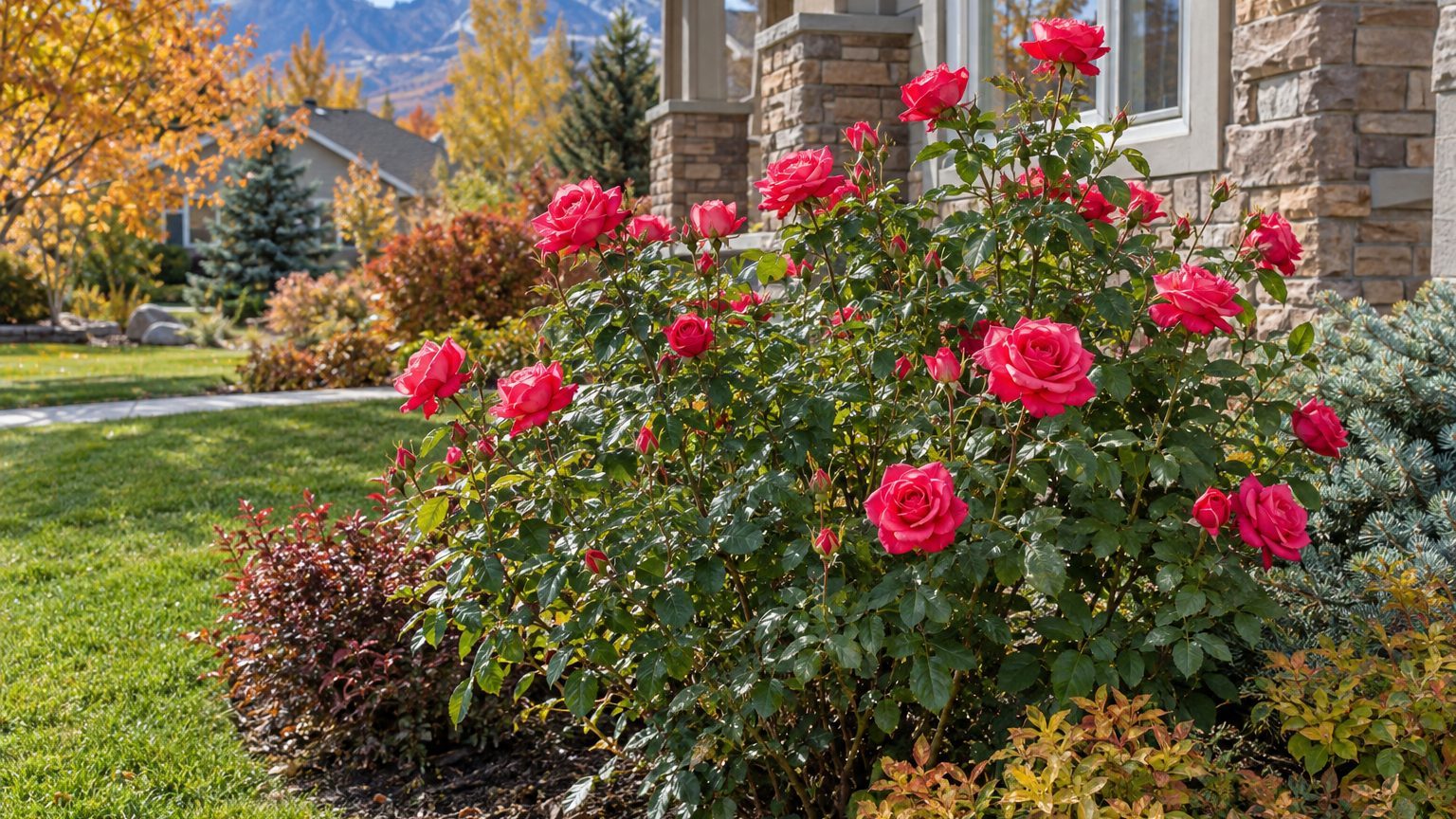
A rose bush in bloom in a home garden

Bare-root roses go in first, in April and May while they are still dormant, and potted roses follow later in spring. Around Denver the last spring frost falls between May 1 and May 11, which is why a young rose that has already leafed out needs a cover on a cold night.

  • In April, bare-root roses are planted dormant as soon as the ground can be worked, repeat-blooming roses are pruned, and winter protection starts coming off gradually.
  • In May, bare-root planting can carry on, and potted roses can go in later in the season.
  • From May through July, established roses are fed, which keeps growth steady through the main flowering stretch.
  • By mid-August, feeding stops, so new soft growth has time to firm up before cold arrives.
  • In November, soil is mounded over the crown, usually around Thanksgiving, to carry the canes through the hard freezes.

The first fall frost around Denver arrives between September 30 and October 12, and soft growth from late feeding is vulnerable when cold arrives. Across the state, USDA hardiness zones run from 3b to 7b, so a yard in the mountains or on the Western Slope will not match these dates exactly.

Which Roses Grow Best in Colorado?

The roses that last here are the ones that shrug off winter. Cold winters decide which types need extra work, and hybrid teas, floribundas and grandifloras need added winter protection.

Hardy shrub roses sit at the other end, because they carry fewer demands into the cold months.

Rose type How it does in Colorado Why
Hybrid teas, floribundas and grandifloras Need extra protection in cold winters Extra winter protection is often recommended for them in Colorado
Hardy shrub roses such as Knock Out or the Explorer series Perform well without extra protection They are hardy enough to skip the winter mound
Old garden roses, ramblers and many climbers Bloom once a year They flower on last year’s wood

That last row changes the pruning. Once-blooming roses are cut right after they bloom, never in early spring, because spring pruning removes the wood that carries the flowers. Floribundas and modern shrub roses repeat bloom and follow the April schedule instead.

When to Prune, Feed and Protect Roses in Colorado

Rose care follows a clear seasonal rhythm. Pruning waits for spring, feeding runs through the growing months, and the winter mound goes on late and comes off gradually.

Wait until spring for the real shaping, when swelling buds help show which canes survived winter. Here the focus is on the key dates.

Task Best months in Colorado Why then
Pruning repeat-blooming roses (hybrid teas, floribundas, modern shrub roses) April, or May if it slips Pruning just ahead of the last hard frost avoids new growth caught by a killing frost
Feeding roses May, June and July, with April and August also fine Regular feeding fuels the growing season, and it stops by mid-August to avoid tender late growth
Putting on winter protection November, or October and December if needed Mound the soil once nights drop to 20°F for several days
Taking winter protection off April, or May if cold lingers Remove it gradually, once the danger of hard frost has passed

Planting bare-root roses fits in April and May, as covered above. The soil mound helps protect tender roses through winter.

How Rose Care Dates Change Across Colorado

Altitude and the mountains shape the rose season more than anything else in the state, and the dates above are anchored to Denver.

  • Denver and the Front Range plains: These dates fit the plains best, where spring pruning lands in April and the winter mound goes on in November.
  • The mountain towns: Seasons run far shorter and frost can show up in July, so planting waits later in spring and the winter mound goes on sooner.
  • The Western Slope: The season differs again from Denver, so local dates are worth checking before the first planting or pruning.

Higher ground pushes every task later in spring and earlier in fall, and hardy shrub roses make more sense there than tender hybrid teas.

Where to Get Rose Advice in Colorado

Local help is available for diagnosing problems and testing soil before planting. Colorado State University Extension publishes rose guidance for the state, and each county has its own office.

  • The extension website has seasonal rose care guides, useful before pruning in spring or mounding in fall.
  • The county extension office can test your soil, which is worth doing before planting bare-root roses in April.
  • A photo or sample of a troubled rose can go to the county office, and the earlier in the season it arrives, the more can be done about it.

Common Questions

What Fertilizer Works for Roses in Colorado?

Colorado guidance calls for an all-purpose fertilizer such as 8-10-8, applied every four to six weeks during the growing season.

How Deep Should the Soil Mound Be Over a Rose?

In Colorado, the recommendation is to mound soil over the crown eight to ten inches deep once nights fall to 20°F for several days.

Should You Cut Back Tall Roses Before Winter?

If roses have grown very tall over summer, they are more likely to suffer snow and wind damage. In Colorado, the guidance is to prune tall plants by one-third of their height in November, and otherwise to wait for mid-April.
Best Spring Bulbs for Colorado

Best Spring Bulbs for Colorado

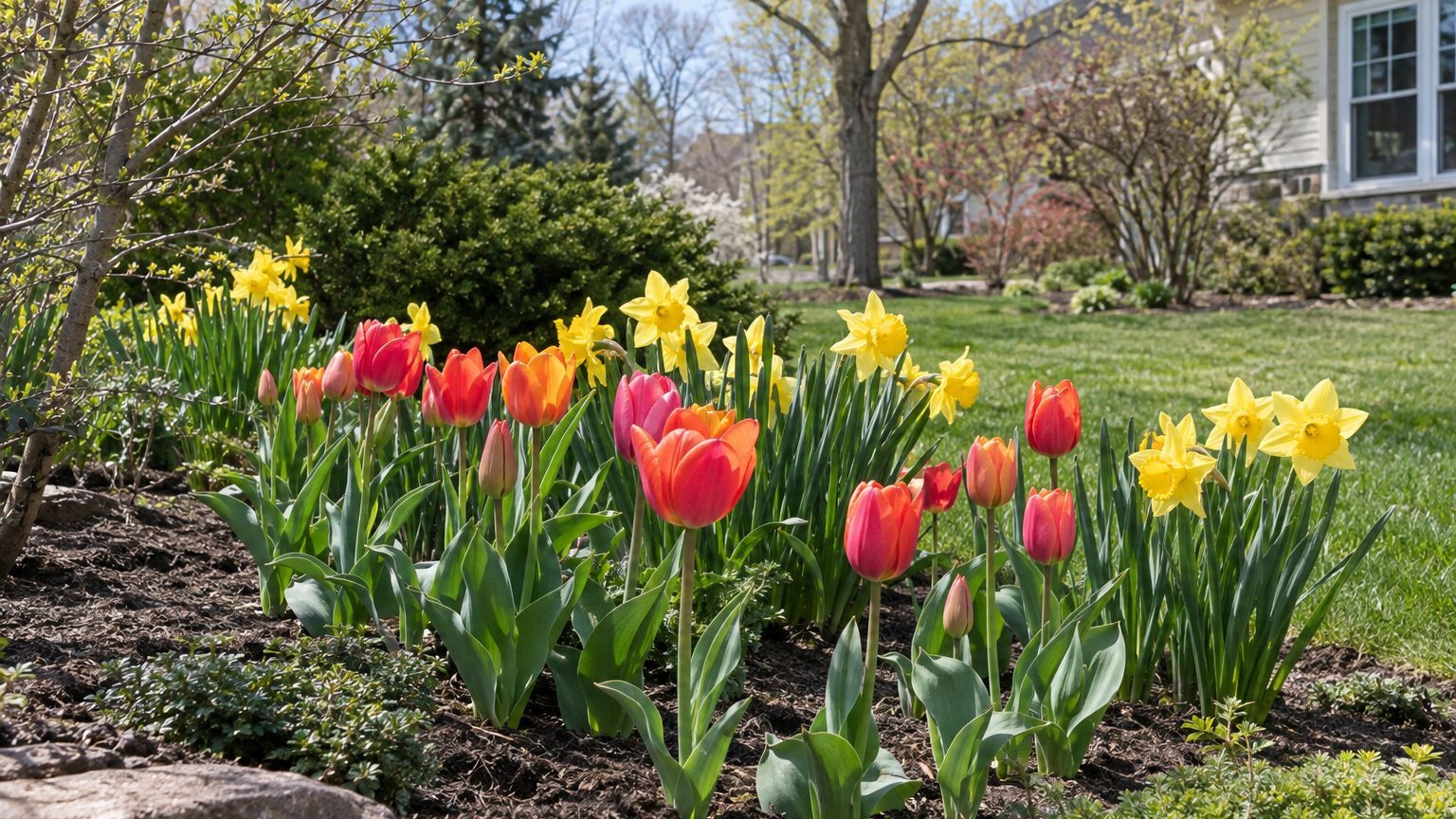
Daffodils pushing through cold soil and species tulips opening in a dry bed are common sights in Colorado yards each spring, and they are the right place to start. Bulbs that handle dry ground, cold winters and hungry wildlife do the best work here.

Best Spring Bulbs to Grow in Colorado

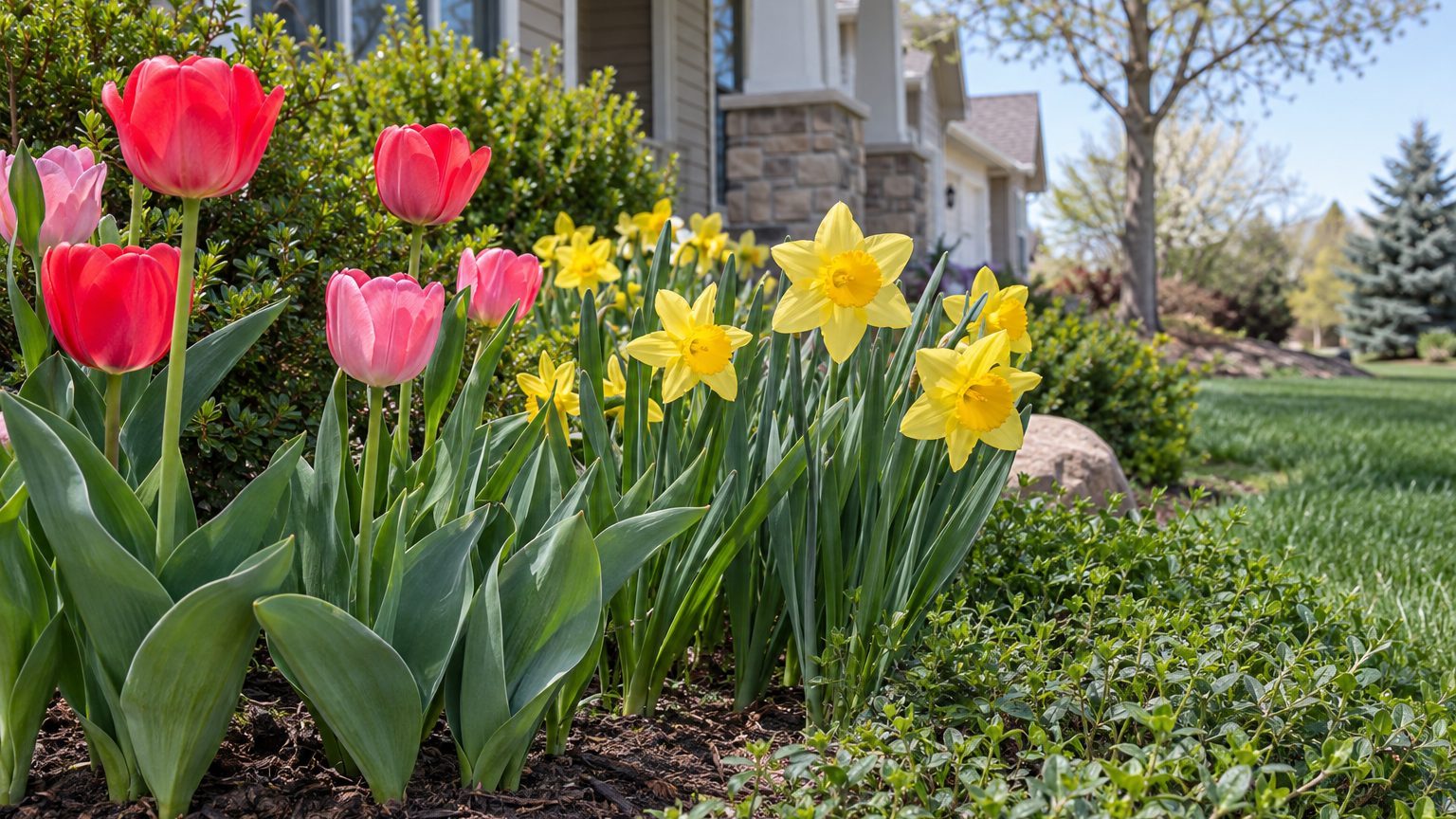
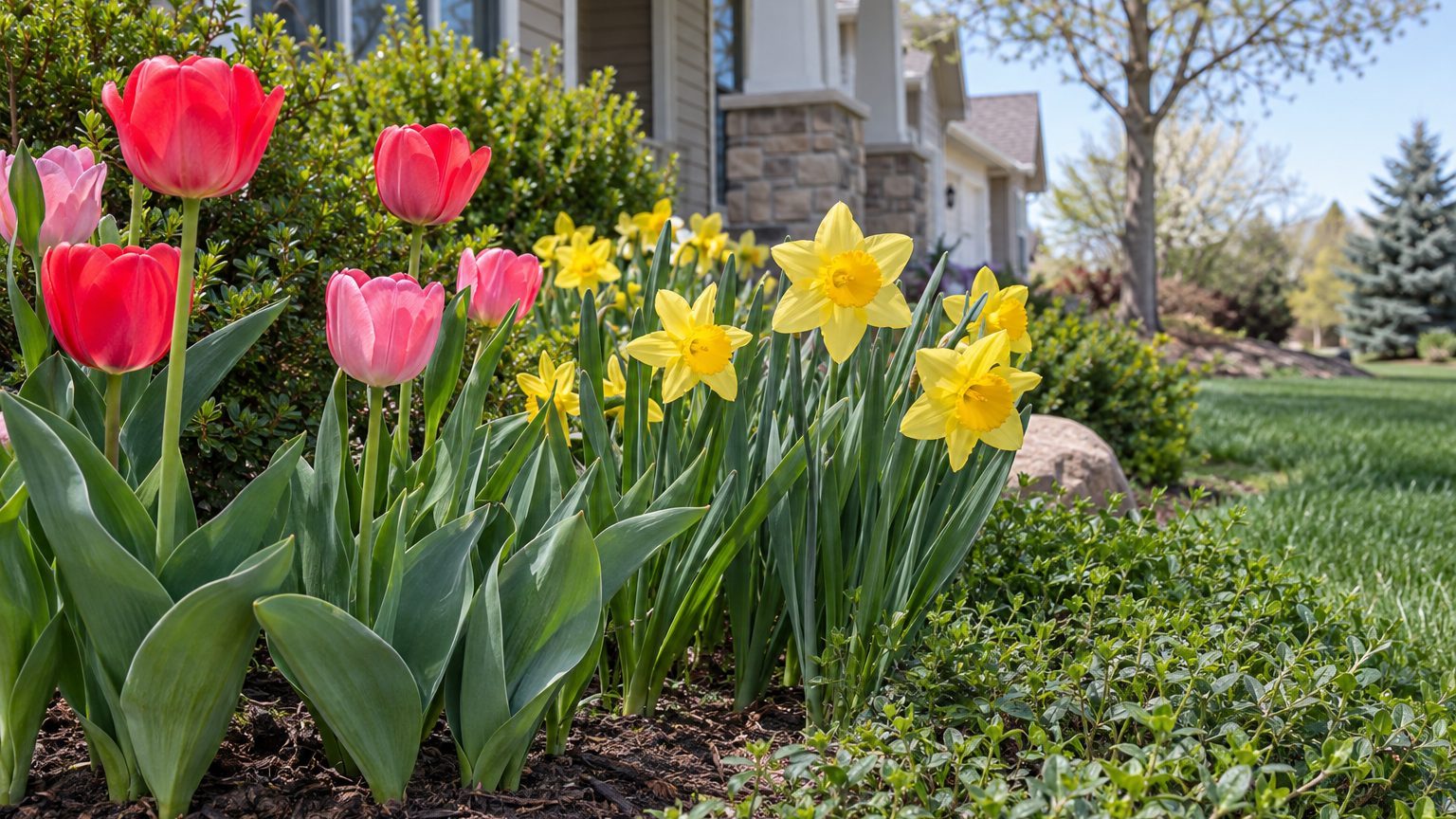
Healthy spring bulbs in bloom

Species tulips, snow iris, crocus, Darwin hybrid and Emperor tulips, daffodils and alliums all suit Colorado. Winters here deliver the cold that spring bulbs need, so they can be planted without chilling them in advance. Dry conditions favor the small, tough types. Plant them in September and October so roots form before the ground freezes.

Species Tulips

Species tulips are among the bulbs best adapted to droughty conditions, which describes much of Colorado. They are smaller and wilder looking than the big hybrids sold in spring displays. Tuck them into a sunny, well-drained bed where summer watering stays light.

Snow Iris

Snow iris handles dry ground as well. It is a small bulb, so plant it in drifts near a walk or a front step where the early blooms are easy to see. Leave it undisturbed once it settles in.

Crocus

Crocus is another bulb that copes with dry conditions, and it fits where larger bulbs would look out of place, such as lawn edges and rock gardens. Plant it in groups rather than single bulbs so the display reads from the street.

Darwin Hybrid and Emperor Tulips

Tulips have a reputation for fading after a season or two, but Darwin hybrids and Emperor tulips are bred to return for several years. If you want the large, classic tulip look in a formal bed, choose these two groups over mixed bags of unnamed tulips.

Daffodils

Daffodils, also sold as narcissus, come in a wide range of heights, colors, flower types and blooming periods. They also last longer than tulips, which makes them the more reliable perennial bulb. A mixed planting of several kinds stretches color across the season.

Alliums

According to Iowa State University Extension, alliums, the ornamental onions, need the cold of winter to bloom. Their round purple or white heads stand tall above other plantings. Set them behind lower bulbs so the leaves of earlier bloomers do not crowd them.

How to Choose Spring Bulbs for Your Colorado Garden

Colorado spans a wide range of winters. The USDA hardiness system, which rates a place by its average coldest night of the year, runs from zone 3b to zone 7b across the state. Pick bulbs by what your own yard throws at them.

Start with the problem you actually have, whether dry soil, hungry animals or limited time, then match the bulb.

Your situation What suits it in Colorado Why
Very cold winter Daffodils, crocus, snow iris Spring bulbs need winter cold to flower, and these do well in a cold, dry climate
Dry, droughty soil Species tulips, snow iris, crocus Well adapted to dry conditions
Little time to fuss Daffodils More reliable as a perennial bulb than tulips
Want tulips back year after year Darwin hybrids and Emperor tulips Bred to return for several years
Deer, voles, squirrels or rabbits visit Daffodils Animals leave them alone, while tulips and crocus get eaten

Alliums fit nearly any of these situations, and they add height at the back of a bed, and they need the cold of winter to bloom.

Which Spring Bulbs Suit Different Parts of Colorado

Elevation changes the season more than anything else in the state, so the right bulb mix shifts from the plains to the high country.

  • Denver and the Front Range: Denver sits at 5,280 feet on the plains, where most of the bulbs above do well, including the larger tulips and a mixed daffodil planting.
  • Mountain towns: Seasons here run far shorter, and frost can arrive in July, so plant in September while the ground is easy to dig.
  • The Western Slope: Conditions differ again from both the plains and the mountains, so ask a local garden center or the county office which bulbs hold up in your valley.

Wherever you garden, the same fall planting months apply, and the leaves should be left to die back naturally.

Spring Bulb Buying Mistakes to Avoid in Colorado

Expecting Every Tulip to Last

Tulips are often short-lived in the garden, and a bed of unnamed mixed tulips may thin out after a season. That costs you a repeat of the bloom you paid for. Choose Darwin hybrids or Emperor tulips for return performance, and add daffodils for dependable perennial color.

Planting While the Soil Is Warm

Bulbs set into warm ground sprout too soon and lose their cold-weather start. Wait until the soil has cooled below about 60°F, which leaves roots enough time to form before the ground freezes yet keeps the bulbs from sprouting in the fall.

Ignoring Hungry Visitors

Voles, squirrels, rabbits and deer eat tulips and crocus, and a bed can vanish before it ever blooms. Daffodils are left alone, so plant them wherever wildlife passes through, and keep tulips and crocus closer to the house or in protected spots.

Where to Get Spring Bulb Advice in Colorado

Colorado State University Extension publishes fall-planted bulb guidance written for the state, and your county office knows how elevation affects planting in your own valley or town.

  • The state extension site has fact sheets on fall-planted bulbs and corms, so read them before ordering in late summer.
  • Your county extension office can answer questions about local soil and wildlife, and it is worth a call in early fall before planting begins.

Common Questions

When Can You Cut Back the Leaves on Spring Bulbs in Colorado?

Wait until the leaves turn brown, because they feed the bulb for next year. Remove only the faded flowers. Cutting or tying green leaves shortens the bulb’s life and weakens next spring’s bloom.

Do Tulips Need to Be Chilled Before Planting in Colorado?

Most spring bulbs need about 12 to 16 weeks of cold to flower, and Colorado winters supply it in the ground. Refrigerator chilling is a workaround for places with mild winters. Alliums need the cold of winter to bloom.

Can You Still Plant Bulbs That Stayed in the Bag?

Yes. A bulb still in the bag is better planted late than stored over the winter, so plant as long as the ground can be dug. Water the bed after planting so the roots can start.

When Do Tulips and Daffodils Bloom in Colorado?

When Do Tulips and Daffodils Bloom in Colorado?

Green spears push through cold Colorado soil and then wait, because the bulbs you set in the ground the previous fall bloom when spring warmth arrives, not on a fixed date. Tulips and daffodils flower on that schedule every year, and the timing shifts from the Front Range plains to the high country.

When Do Tulips and Daffodils Bloom in Colorado?

When Do Tulips and Daffodils Bloom in Colorado?

Tulips and daffodils bloom when spring warms the soil and air, and that happens on a different date in each yard, so no single month applies statewide. What stays steady is the order of the season. Spring bulbs flower in a long succession, with alliums arriving at the end.

Bulb When it blooms in Colorado What sets the timing
Daffodils Across a spread of blooming periods The variety you plant and how fast spring warms
Tulips After the ground warms in spring A winter chill of about 12 to 16 weeks, then spring warmth
Alliums Near the end of the spring bulb season Needs the cold of winter, then spring warmth

Daffodils, also sold as narcissus, come in many heights, colors and flower types, which is why their blooming periods vary so much between varieties. Crocus, hyacinths and the different groups of tulips follow the same rule: warmth decides the day. Bulbs planted in September and October have time to root before the ground freezes, and that early root growth is what lets them respond when spring arrives.

How to Tell Your Bulbs Are About to Bloom

The bulbs announce themselves in stages, and each stage tells you something you can act on.

  • Green tips breaking the soil mean the bulb has had its winter chill and is responding to warmth, so leave the bed alone.
  • Leaves that lengthen and open out are feeding the bulb for next year, which is why they must never be cut or tied while green.
  • A bud that rises from the center of the leaves means flowers are close, and it is a good moment to check that nothing is crushing the stem.
  • Buds that begin to show color mean bloom is near, so you can plan to cut a few stems or enjoy the display at its start.
  • Pale or chewed tips on tulips and crocus point to voles, squirrels, rabbits or deer, which is when a barrier or repellent is worth putting out.

Alliums rise a little differently, and according to Iowa State University Extension, alliums need the cold of winter to bloom; the same watching applies to their leaves and buds.

What to Do After Tulips and Daffodils Bloom in Colorado

Snip off the faded flowers and leave everything else standing. Removing only the spent blooms keeps the plant from wasting energy on seed, while the leaves stay on to feed the bulb underground.

Leave the foliage in place until it turns yellow and then brown. It looks untidy for a while, but those leaves are storing the energy for next spring’s flowers. Do not braid, knot or tie them, and do not mow them off while they are green.

Plan for some turnover. Tulips are often short-lived in the garden, so expect to replant them, while daffodils last longer and are the more reliable perennial bulb. Daffodils are also left alone by voles, squirrels, rabbits and deer, which makes them the safer choice for beds that animals visit. For tulips, species types and Darwin hybrids bred to return for several years are worth looking for.

How Bloom Time Shifts Across Colorado

Colorado spans USDA hardiness zones 3b to 7b, so bloom time moves with where you live, and the differences are real.

  • Denver and the Front Range plains: Spring warms earlier here than in the mountains, so bulbs generally wake first on the lower ground.
  • Mountain towns such as Breckenridge: Seasons run far shorter and frost can return into summer, so bulbs come up later and flower into a short window.
  • The Western Slope around Grand Junction: The climate differs again from both the plains and the high country, so local timing is worth checking with neighbors who grow bulbs.

Planting months stay the same across these places, but the bloom shifts with elevation and exposure, and a sunny south wall will flower ahead of a shaded bed.

Where to Get Bulb Advice in Colorado

Colorado State University Extension publishes guidance on fall-planted bulbs for the state’s different climates, and county offices can answer questions about your own elevation and soil.

  • The Colorado State University Extension website carries bulb and corm guides, and fall is the time to read them, before you plant.
  • Your county extension office can tell you which varieties suit your elevation, so call or visit before ordering bulbs.
  • Your local county extension office can help you identify any bulb that looks off.

Common Questions

When Should You Plant Tulips and Daffodils in Colorado?

September and October give the bulbs time to root before the ground freezes. Wait until the soil has cooled below about 60°F, so the bulbs root without sprouting in the fall.

Can You Still Plant Bulbs That Stayed in the Bag?

Yes. A bulb still in the bag does better planted late than stored over the winter, so plant as long as the ground can be dug.

Which Bulbs Handle Colorado’s Dry Conditions?

Species tulips, snow iris and crocus are named among the best-adapted bulbs for droughty conditions, and that guidance suits dry Colorado yards well. Daffodils are a sturdy partner for them.

When to Plant Tulips and Daffodils in Colorado

When to Plant Tulips and Daffodils in Colorado

Spring color in a Colorado yard begins with a trowel and a bag of bulbs the autumn before. Tulips and daffodils go in the ground once the soil cools, and winter does the rest. The timing varies from the Front Range plains to the high country, so the details of when and where matter.

When to Plant Tulips and Daffodils in Colorado

When to Plant Tulips and Daffodils in Colorado

Plant tulips and daffodils in September and October, which gives the bulbs time to root before the ground freezes. A bulb’s year in a Colorado yard runs roughly like this.

  • In late summer, shop while the selection is wide, and choose bulbs that feel firm and heavy for their size.
  • In September, begin planting once the soil has cooled below about 60°F, which is early enough for roots to form and late enough that the bulbs do not send up leaves in fall.
  • Through October, keep planting. Around Denver, the first fall frost arrives between September 30 and October 12, and bulbs already in the ground are busy rooting below it.
  • In late fall, once the ground starts to freeze, spread a layer of mulch to keep the soil evenly cold through winter thaws.
  • In early spring, the first green shoots break the surface, and the leaves should be left alone from that point on.

These months fit the Front Range plains around Denver. Across the whole state, USDA hardiness zones run from 3b to 7b, so a garden at high elevation plays by somewhat different rules.

Which Spring Bulbs Do Best in Colorado?

Daffodils, tulips, crocus, hyacinths and alliums all grow here, because Colorado winters supply the cold they need. The real difference between them is what happens after planting: some are left alone by wildlife, and some are treated as a snack.

Daffodils, also called narcissus, offer a wide variety of height, color, flower type and blooming period, which makes them an easy place to start.

Bulb type How it does in Colorado Why
Daffodils Dependable and long lived Voles, squirrels, rabbits and deer leave them alone
Tulips Lovely but often short-lived Voles, squirrels, rabbits and deer eat them
Crocus Pretty, but at risk where animals roam Voles, squirrels, rabbits and deer eat them too
Alliums Easy and carefree They need the cold of winter to bloom and flower at the end of the spring succession

Hyacinths are planted on the same fall schedule as the rest and need the same winter cold. Where deer or squirrels visit often, plant daffodils in the open and keep tulips closer to the house, or accept that some will be eaten.

When to Plant, Chill and Care for Spring Bulbs in Colorado

The bulb year has only a few jobs, and each one has a clear moment. Planting follows the calendar, while the leaf care that comes later follows what the plant itself is doing.

Task Best timing in Colorado Why then
Plant tulips, daffodils, crocus, hyacinths and alliums September and October Roots become well established before the ground freezes
Remove faded flowers As soon as the petals fade The plant stops spending energy on seed
Leave the leaves in place As long as they are green, until they turn brown They feed the bulb for next year’s flowers

Chilling in the refrigerator before planting is not part of the routine here, since a Colorado winter provides the cold on its own. Only the spent flowers come off after bloom. The foliage stays and is left to fade naturally.

How Bulb Planting Time Changes Across Colorado

Elevation does most of the sorting in Colorado, and it sets the planting moment within the window rather than moving the window itself.

  • Denver and the Front Range plains: At about 5,280 feet, September and October fit the plains well. Wait for the soil to cool before planting, and then finish before the ground hardens.
  • Mountain towns such as Breckenridge and Leadville: Seasons are much shorter and frost can show up even in July, so the soil cools sooner. Plant toward the early part of the window so roots have time to settle.
  • Grand Junction and the Western Slope: Conditions differ again from the plains, and the local pattern of soil temperature matters more than a date on a calendar.

If the soil still feels warm in September, hold off a little rather than rushing, wherever you garden.

Where to Get Bulb Advice in Colorado

Bulb problems usually trace back to soil, drainage or timing, and local experts can sort out which one. Colorado State University Extension publishes guidance for fall-planted bulbs and corms, and the county office reaches your particular yard.

  • The university’s extension pages cover planting depth, bulb choices and common problems, and they are worth reading before the September shopping trip.
  • Your county extension office can help diagnose a bulb that failed to come up and can explain how to have your soil tested before planting.

Common Questions

Do Tulips Come Back Every Year in Colorado?

Often they fade after a season or two, so many gardeners replant them regularly. Daffodils last longer and are the more reliable perennial bulb.

Do You Need to Chill Tulips in the Refrigerator in Colorado?

Most spring-flowering bulbs need about 12 to 16 weeks of cold to flower. Where winters are too mild to give it, tulips and hyacinths are chilled in the refrigerator first. A Colorado winter gives the bulbs that cold, so fall planting in the ground is enough.

What If Bulbs Are Still in the Bag After October?

Plant them anyway. A bulb in the ground late has a better chance than one stored over the winter, so keep planting as long as the soil can be dug.

Best Grass Seed for Colorado

Best Grass Seed for Colorado

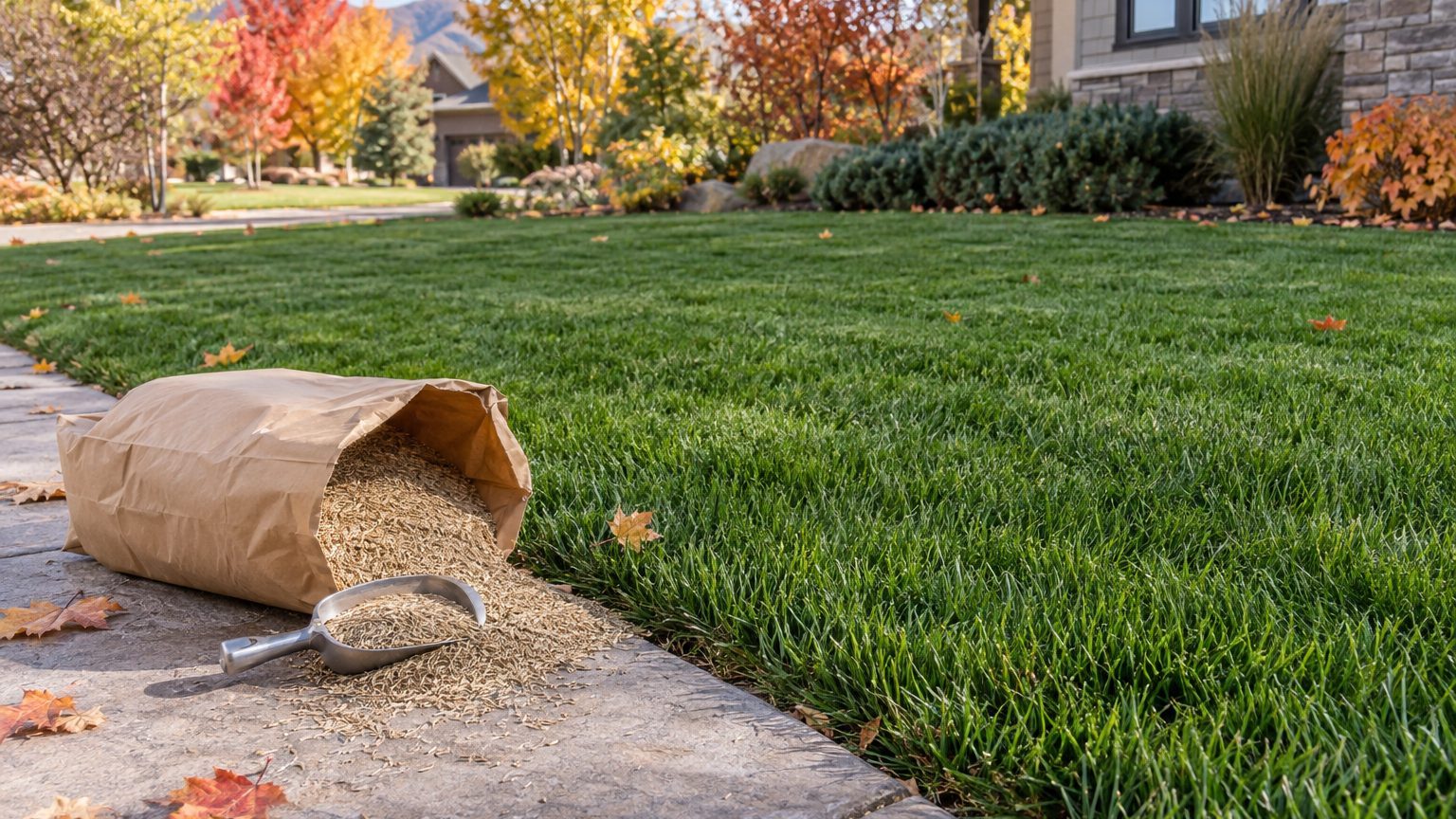
A Colorado lawn in July shows how well its grass fits the site: bluegrass and fescue can stay green with regular water, while thin, tan patches call for a closer look at irrigation and turf health. For Colorado yards, choose a cool-season grass such as Kentucky bluegrass, tall fescue, fine fescue or perennial ryegrass, and sow it in late summer.

Which Grass Grows Best in Colorado?

Cool-season grasses suit Colorado, because winters are cold across the state (hardiness zones run 3b-7b in the USDA system) and the growing season on the Front Range is short enough that warm-season turf spends much of the year dormant and brown. These grasses grow hardest in spring and fall, when soil is cool, and they take the winters in stride. Here are the main choices and the tradeoffs each brings.

Kentucky Bluegrass

This is the classic Colorado lawn. It handles hard winters, spreads by underground stems to knit together thin spots, and makes a dense, soft turf in full sun.

It wants regular water through summer, and it fills in slowly from seed, so give it patience after sowing.

Tall Fescue

Tall fescue sends roots deep, which helps it ride out dry spells better than bluegrass does. It grows in clumps, so it looks a bit coarser, but it holds up well on busy lawns.

Sow it thickly enough to fill in, because it does not spread much to patch bare spots on its own.

Fine Fescues

Creeping red, chewings and hard fescue make a fine, soft lawn and handle shade and poorer soil better than bluegrass. They also get by on less water and fertilizer.

They dislike heavy foot traffic, so they suit quiet corners and low-maintenance yards more than a play area.

Perennial Ryegrass

Ryegrass sprouts fast, which makes it useful for quick cover and for mixing with slower grasses. On its own it is the least dependable of these in Colorado’s coldest winters, since it is less tolerant of deep cold than the others.

Use it as a partner in a mix rather than the whole lawn, especially at higher, colder elevations.

How to Choose Grass Seed for a Colorado Yard

Start with how the yard is used. Sun, shade, kids, a sprinkler system and your appetite for mowing all point toward a different grass, and a blend of species often covers a wider range of conditions.

Seed labels list the species by name, so read them. A bag that names the grasses you want beats a vague bag with a pretty photo on the front.

Your yard Grass to look for Why it fits
Full sun, regular watering Kentucky bluegrass Dense turf that repairs itself
Full sun, limited watering Tall fescue Deep roots handle dry spells
Shade or poor soil Fine fescues Tolerate low light and little feeding
Heavy foot traffic Tall fescue or bluegrass Tough blades, strong recovery
Quick cover on bare soil Perennial ryegrass in a mix Sprouts fast while slower grasses catch up
Less mowing Fine fescues Grow slowly and stay low

Few yards fit a table row exactly. A sunny front lawn with a shady side can take a bluegrass and fescue blend, with the fine fescues carrying the dim spots.

Which Grasses Grow Where in Colorado

Growing conditions vary widely across Colorado. Altitude and the mountains reshape the season, and the same seed bag can perform very differently across the state.

  • Denver: Bluegrass, tall fescue and fine fescue blends are cool-season options for yards on the plains at 5,280 feet. Late summer is the dependable window for new seed, with frost holding off until the end of September or into October.
  • Mountain towns such as Breckenridge and Vail: Seasons are far shorter and frost can show up in July, so cold-hardy bluegrass and fine fescues get the nod. New seed has little time to establish, so plan early.
  • Grand Junction and the western slope: Conditions differ again, with a hotter, drier climate that favors drought-tolerant tall fescue and careful irrigation.

If you live between these places, ask neighbors with healthy lawns what they grow, and lean toward the hardier option when in doubt.

Grass Seed Mistakes to Avoid in Colorado

Planting the Wrong Grass

Warm-season turf looks tempting in the summer heat, but it turns straw-colored for much of the year here. Stick to cool-season species, and choose among them by sun, shade and water.

Seeding at the Wrong Time

Seed does best when sown in August or September, while soil is still warm and cold nights are not far off. If you miss that, April and May also work, though summer heat and weeds will test young grass.

Spring-sown lawns need steady water as summer arrives.

Burying or Skimping on Seed

Cover seed with no more than 0.25 inch of soil and press it down so it touches the ground firmly. Buried seed struggles to sprout, and seed left on top dries out or washes away.

Follow the rate printed on the bag. Thin sowing invites weeds, and heavy sowing crowds seedlings into weak, patchy turf.

Where to Get Lawn Advice in Colorado

Local experts can sort out soil, elevation and watering questions that a seed bag cannot. Start with these.

  • Colorado State University Extension has research-backed lawn and turf guidance for the state, useful before you buy seed in late summer.
  • Your county extension office can speak to local soil and elevation, so call before you plan an overseed.

Common Questions

Can You Grow Bermuda or Zoysia Grass in Colorado?

You can on warmer, lower-elevation sites, but these warm-season grasses go dormant and turn brown for much of the year. A cool-season lawn generally stays green longer.

Is It Better to Overseed or Start Over?

If grass still covers much of the yard, overseeding thin areas is usually enough. Core aeration in September opens the soil so seed reaches the ground, and fertilizing in September or November feeds new growth.

Do You Need to Dethatch Before Seeding?

A thick thatch layer blocks seed from the soil, so dethatching in August or September helps if the lawn feels spongy underfoot. If the lawn is thin and the thatch is slight, skip it.

Lawn Problems and Solutions in Colorado

Lawn Problems and Solutions in Colorado

Dandelions in May, straw-colored patches by July, a lawn that feels spongy underfoot: Colorado turf shows trouble in familiar ways. Dry air, strong sun, and regional differences set the pattern, while weeds, grubs, disease, and stress from watering or mowing can all cause trouble. Knowing which one you have decides the fix.

Lawn Pests and Diseases in Colorado

Dandelions and Broadleaf Weeds

Dandelions and Broadleaf Weeds — Lawn Problems and Solutions in Colorado

Yellow flowers on a rosette of toothed leaves, or low mats of clover, often show up in spring. They fill gaps where grass is thin, so the weeds are usually a symptom of an open lawn.

Dig out young plants with the taproot, then seed bare spots in August or September so grass closes the space. April and May also work if you missed fall.

Crabgrass

Coarse, light green blades that spread outward from a central point like a star, mostly along driveways and hot edges. It sprouts as the soil warms and thrives in thin turf.

A pre-emergence preventer goes down in April, and May still catches it. Once crabgrass is up, mow high and pull young plants before they set seed.

Necrotic Ring Spot

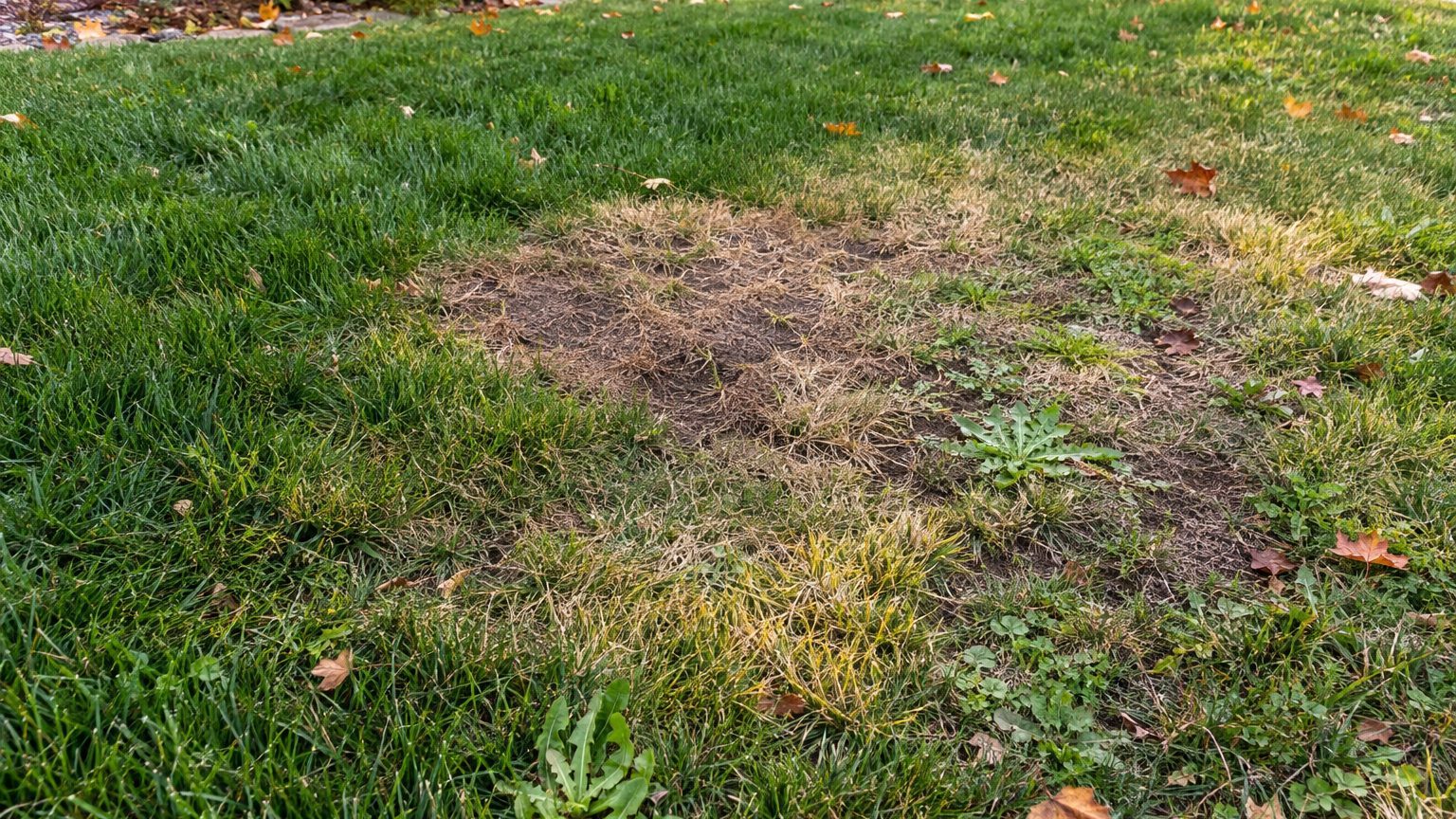
Rings or crescents of dead, straw-colored grass, often with a green tuft in the middle, usually on Kentucky bluegrass in summer heat. The grass in these patches fails because roots are damaged, so extra water alone will not green it up.

Water deeply, skip heavy summer feeding, and reseed damaged areas in late summer with a mix that includes other grass types.

White Grubs

Irregular brown patches that feel loose, where turf peels back like a loose carpet because roots have been chewed. Look for plump, C-shaped white larvae in the top layer of soil.

A few grubs are normal. If damage is spreading, roll back a square of sod to confirm before treating, and keep the lawn well watered so roots can regrow.

How to Tell Which Lawn Problem You Have

A clue rarely tells the whole story. Pair what the grass looks like with where it grows and when it started, then run a simple test: tug the turf, and press a screwdriver into the soil.

Shape matters. Rings can suggest disease, star-shaped clumps can suggest crabgrass, and ragged blocks can suggest grubs or dry stress.

What you see Where or when Likely problem
Turf lifts like carpet, few roots Irregular patches, late summer White grubs
Rings or crescents of straw-colored grass Bluegrass lawns in summer heat Necrotic ring spot
Coarse, star-shaped clumps Hot edges near pavement, summer Crabgrass
Yellow-flowered rosettes with deep roots Thin spots, spring Dandelions
Spongy feel, thatch layer thicker than 1/2 inch Dense, heavily fed turf Thatch buildup

If the spongy layer is thicker than that, dethatch in August or September, or core aerate in September. April works for either one too. Brown grass that springs back after watering, with the screwdriver sliding in easily, may have been thirsty, though this does not rule out disease.

Where Lawn Problems Are Worst in Colorado

Colorado’s climate varies sharply across the state, so lawn problems can look different from place to place.

  • Front Range (Denver, Colorado Springs, Fort Collins): Dry weather and strong sun can stress lawns, while hail or wind may thin the turf and leave room for weeds.
  • Mountain towns (Breckenridge, Vail, Steamboat Springs): Short seasons and frost that can arrive in July slow recovery, so thin spots stay open longer and weeds fill them.
  • Grand Junction and the Western Slope: Lower valleys run hotter and drier, so heat stress and irrigation problems matter more than cold damage.
  • Eastern Plains (Sterling, Lamar): Steady wind and open sun dry the turf quickly, which makes shallow watering especially costly.

Check what your own neighborhood does before copying a Denver schedule.

Lawn Care Mistakes That Invite Problems in Colorado

Mowing Too Short

Scalped grass has little leaf to shade the soil, so roots bake and weeds like crabgrass germinate in the light. Short turf also stresses the plant in dry, windy weather.

Raise the mower deck and cut regularly from April through November, removing only a little at a time.

Light Daily Sprinkling

Brief sprinkles wet only the surface, so roots stay shallow and the lawn crashes in a heat wave. Shallow watering also feeds weeds and some diseases.

In June, July, and August, soak the lawn slowly and deeply, then let the soil surface begin to dry before the next round. A screwdriver pushed into the soil tells you how far the water went.

Feeding in the Heat

A heavy dose of fertilizer in midsummer pushes soft top growth and can worsen disease on bluegrass, while roots lag behind.

Feed in September and November instead, when cool weather lets the lawn store energy. May is the fallback if you missed fall.

Where to Get Lawn Advice in Colorado

Local help matters because elevation, soil, and irrigation change the answer from one town to the next. Local resources are worth knowing.

  • Colorado State University Extension offers fact sheets on weeds, insects, and watering, and it is a useful place to turn when a patch looks unfamiliar.
  • Your county extension office may help identify a sample of the damaged turf, so bring a small cutout with roots as soon as the problem appears.

Common Questions

Does Colorado Grass Die Over Winter?

Cool-season lawns turn tan and go dormant in cold weather, then green up as the soil warms. If the crown still feels firm and roots are white, the lawn is alive.

Is the Frost Timing the Same Across Colorado?

In the Denver area, the last spring frost usually falls between May 1 and May 11. The first fall frost typically arrives between September 30 and October 12. Mountain towns run far shorter seasons, and the Western Slope differs again.

How Do You Know When the Lawn Needs Water in Summer?

Walk across the grass. If footprints stay pressed down and the blades look dull blue-gray instead of bright green, the lawn is thirsty. Water deeply at that point instead of sprinkling lightly.

Colorado Lawn Care Schedule, Month by Month

Colorado Lawn Care Schedule, Month by Month

A Colorado lawn spends the winter tan and quiet, then greens up slowly once April sunshine warms the ground. The work that matters clusters in spring for crabgrass control and early fall for seeding, aerating and feeding.

What to Do Each Month in a Colorado Lawn

Lawn in Colorado

Cool-season grass such as Kentucky bluegrass does most of its growing in spring and fall, so the busiest months are April and September. Summer is for mowing and watering, and winter is for leaving the lawn alone.

Month In the lawn
January Rest. The grass is dormant, so keep foot traffic light on frozen turf and watch for dry, windy stretches.
February Rest. Dormant grass still dries out in a dry winter, so note any bare or thin patches to fix later.
March Rest, mostly. The grass is waking slowly, so clear debris and hold off on heavy work until the soil warms.
April Apply crabgrass preventer before the weeds sprout, and start mowing as growth picks up. Core aeration and dethatching also work now, and bare spots can be seeded if you want a head start.
May Keep mowing as the lawn thickens. If you missed April, preventer still works now, and so do aeration, seeding and a light feeding.
June Mow regularly and begin deep, regular watering as the heat and dry air build.
July Water deeply through periods of summer heat and keep mowing. Brown, crunchy patches may point to drought stress.
August Dethatch if the thatch layer is thick, then start seeding thin areas. Keep watering and mowing.
September The big month: aerate, seed, dethatch and feed. Seed has warm soil and cooler nights to root before winter.
October Keep mowing until growth stops. If you missed September, seeding and aeration are behind you, so focus on mowing and leaf removal.
November Give the lawn a final feeding and a last mow as growth slows. Rake leaves so they do not smother the grass.
December Rest. The grass is dormant, so put the mower away and keep an eye on dry, open stretches.

Skipping a task is rarely a disaster, but the order matters. Aerate before you seed, and seed before the first hard freeze, so new grass has time to settle in.

When Does the Lawn Season Start and End in Colorado?

Grass wakes up when the soil warms, not on a calendar date. Cool-season seed germinates when the soil sits at 50 to 65 °F, which is why April and early fall suit it, while warm-season grasses such as buffalograss want 65 to 70 °F. Cool-season lawns on the Front Range green up early and slow down as cold arrives.

Frost dates matter mostly for young grass. In the Denver area, the last spring freeze usually falls between May 1 and May 11, and tender seedlings from an April sowing can get nipped if they sprout just before it. The first fall freeze usually arrives between September 30 and October 12, which is why seed needs to go down in August or September to be established first.

Mowing runs from April through November, following active growth. Once growth stops, put the mower away.

How the Lawn Calendar Shifts Across Colorado

Colorado’s hardiness zones run from 3b to 7b on the USDA system, so a Denver schedule needs adjusting elsewhere. Elevation strongly affects the timing.

  • Denver and the nearby Front Range: Use the months above as a starting point for this plains area.
  • Colorado Springs and Pueblo: Conditions differ with elevation and location, so check local timing before starting spring work.
  • Summit County and Vail: Frost can arrive in July, so the season is far shorter. Seeding belongs in summer, and fall tasks shift earlier.
  • Grand Junction and the western slope: Hotter and drier than the Front Range, with a different rhythm, so lean on local timing.

When in doubt, follow local conditions and keep the work safely ahead of the first frost.

Lawn Care Timing Mistakes to Avoid in Colorado

Applying Preventer Too Late

Crabgrass preventer works only before weed seeds sprout. Applied after crabgrass is up, it does little. April is the right time in Colorado, and May still works if spring was late.

Seeding in Late Fall

Seed sown too close to the first freeze may fail to establish enough roots. In the Denver area, the cold arrives from late September into October, so seed in August or September. April and May also work for thin areas, though summer heat is harder on seedlings.

Watering at the Wrong Time

Light, frequent sprinkling in spring wastes water and encourages shallow roots. Save deep watering for June through August, when the lawn really needs it. In cooler months, the grass takes what it needs from the soil, so let it be.

Where to Get Lawn Advice in Colorado

Colorado’s climate changes quickly with elevation, so local advice beats general rules. Local resources can answer many lawn-care questions.

  • Colorado State University Extension offers grass choices, watering guidance and fact sheets, which are useful before you plan the season.
  • Your county extension office can answer questions about soil, pests and local timing, so call before the spring and fall work.

Common Questions

Should You Rake Leaves Off a Colorado Lawn in Fall?

Yes, remove heavy layers of leaves. A thick mat blocks light and traps moisture, which weakens the grass going into winter. A light scattering can be mowed into small pieces and left in place.

Can You Water a Dormant Lawn in Winter?

Colorado winters are often dry, and a dormant lawn can dry out between snowfalls. Wait until the growing season resumes before watering.

Why Does a Lawn Look Brown in Summer Even When It Is Watered?

Brown can come from heat stress or from uneven coverage, and the clues are different. If the brown patches are crisp and the soil below feels dry, the lawn may need deeper watering. If the patches follow the sprinkler pattern or sit near pavement, the cause is likely uneven watering or reflected heat.

Colorado Lawn Care: What to Do and When

Colorado Lawn Care: What to Do and When

Colorado lawns go dormant and straw-colored for months, then green up fast when the soil warms in spring. Most of the work happens from late summer into fall, with a lighter push in spring, and the grass that suits the state is the cool-season kind.

Frost Dates and Growing Season in Colorado

On the Front Range plains around Denver (USDA zones in Colorado run from 3b to 7b across the whole state), the last spring freeze usually lands between May 1 and May 11. Young seedlings can be killed by a freeze, so a late seeding needs that margin. The first fall freeze arrives between September 30 and October 12, which ends the useful seeding season because new grass needs time to root first. Grass growth itself follows soil warmth, not the calendar date of a frost.

  • In early spring, the lawn is still dormant or just waking, so this is the time to rake off winter debris and plan crabgrass control before the soil warms.
  • Once the soil warms in April and May, mowing begins and the grass thickens, and a spring fertilizer or a light overseed can go down if the lawn needs it.
  • From June through August, heat and dry air set the pace, and watering matters most in these months.
  • In late summer, August and September suit seeding and dethatching, while September is the time for core aeration.
  • In October and November, mowing continues while the grass slows down, and a final feeding in November helps the roots store energy for winter.

Mountain towns have far shorter seasons and can see frost even in July, so treat these dates as a guide for the Denver area only.

Cool-Season or Warm-Season Grass in Colorado?

Cool-season grasses are the sensible choice for most Colorado yards. They handle cold winters and bounce back after dormancy, and they grow hardest in spring and fall when the weather is mild.

Summer heat and dry air are the real tests, so water use and drought tolerance matter as much as winter hardiness.

Grass How it does in Colorado Why
Kentucky bluegrass Dense, classic lawn that needs regular water in summer Spreads by rhizomes and repairs itself after dormancy
Tall fescue Holds up better in heat and dry spells Deep roots reach moisture lower in the soil
Perennial ryegrass Sprouts quickly, often mixed with other grasses Fast germination fills in bare spots
Fine fescues Suited to lighter, lower-input lawns and some shade Fine blades manage on less feeding and water

Creeping red, chewings and hard fescue are the fine fescues you will see in seed mixes. Which one fits your yard depends on sun, shade and how much you want to water.

When to Seed, Fertilize and Aerate a Lawn in Colorado

Late summer into fall carries most of the big jobs, because warm soil and cooler air help seed and roots settle in. Spring works for lighter tasks, and a missed window usually has a fallback.

If you miss the fall window for seeding, April and May still work, though young grass will face summer heat sooner.

Task Best months in Colorado Why then
Seeding August, September Warm soil speeds germination and roots form before winter
Core aeration September Grass is actively growing and recovers quickly
Dethatching August, September The lawn can fill in the thinned areas right away
Fertilizing September, November Feeds roots before and after top growth slows
Crabgrass preventer April Goes down before weed seeds sprout in warming soil
Watering June, July, August Summer heat and dry air demand the most moisture

Aeration also works in April and May, dethatching in April, fertilizing in May, and crabgrass preventer in May. Mowing runs from April through November.

Lawn Problems to Watch for in Colorado

Winter Dryness and Straw-Colored Patches

Colorado winters are dry and often sunny, so grass can lose moisture while the ground stays frozen or the air stays windy. In spring you may see tan, crispy areas, usually along south-facing slopes or near pavement where the soil dries fastest.

Water the lawn during dry winter spells when the ground is not frozen. Wait for spring growth before deciding whether a patch is dead or only dormant.

Brown Grass in Summer Heat

Brown Grass in Summer Heat — Colorado Lawn Care: What to Do and When

When summer sun and dry air push hard, grass turns dull and stiff underfoot, and footprints stay visible after you walk across. Water deeply and regularly during June through August instead of sprinkling lightly, so roots grow down rather than staying shallow.

Compacted, Thin Turf

Much Colorado soil is heavy or packed, and water runs off instead of soaking in. Thin turf plus puddling after irrigation points to compaction. Core aeration in September opens the soil, and seeding right afterward helps the lawn thicken.

How Lawn Care Dates Change Across Colorado

Elevation does most of the shifting here, with Denver as the reference point for the frost dates above.

  • Denver: The frost dates above apply to the reference location; elsewhere on the Front Range, follow local conditions.
  • Mountain towns such as Breckenridge and Leadville: Seasons run far shorter, spring tasks start later, and seeding needs to happen earlier in late summer so roots set before frost.
  • Grand Junction and the Western Slope: The climate differs again from the Front Range, with warmer, drier conditions that call for close attention to watering.

The higher you live, the more you should lean toward the earliest part of each fall window.

Where to Get Lawn Advice in Colorado

Colorado State University Extension offers research-based lawn guidance for the state’s soils and climate, and your county office can help with local questions.

  • Check the extension website for guidance on grass choice, watering and soil before you buy seed or fertilizer.
  • Contact your county extension office for a soil test or to get help diagnosing a patchy area.

Common Questions

Is Colorado Soil Good for Growing Grass?

It can be, but many yards have heavy or compacted soil that sheds water. A soil test through your county extension office shows what yours needs, and aeration helps with compaction.

Should You Rake or Leave Grass Clippings on a Colorado Lawn?

Leaving short clippings in place returns nutrients to the soil. Rake or bag them if they clump and smother the grass underneath.

Can a Brown Lawn in Colorado Come Back?

Often yes. If the crowns are still alive, a dormant lawn greens up when conditions improve. Tug a handful of grass, and if it pulls out easily with no roots holding, that patch is likely dead and needs reseeding.

Hydrangeas That Grow Well in Colorado

Hydrangeas That Grow Well in Colorado

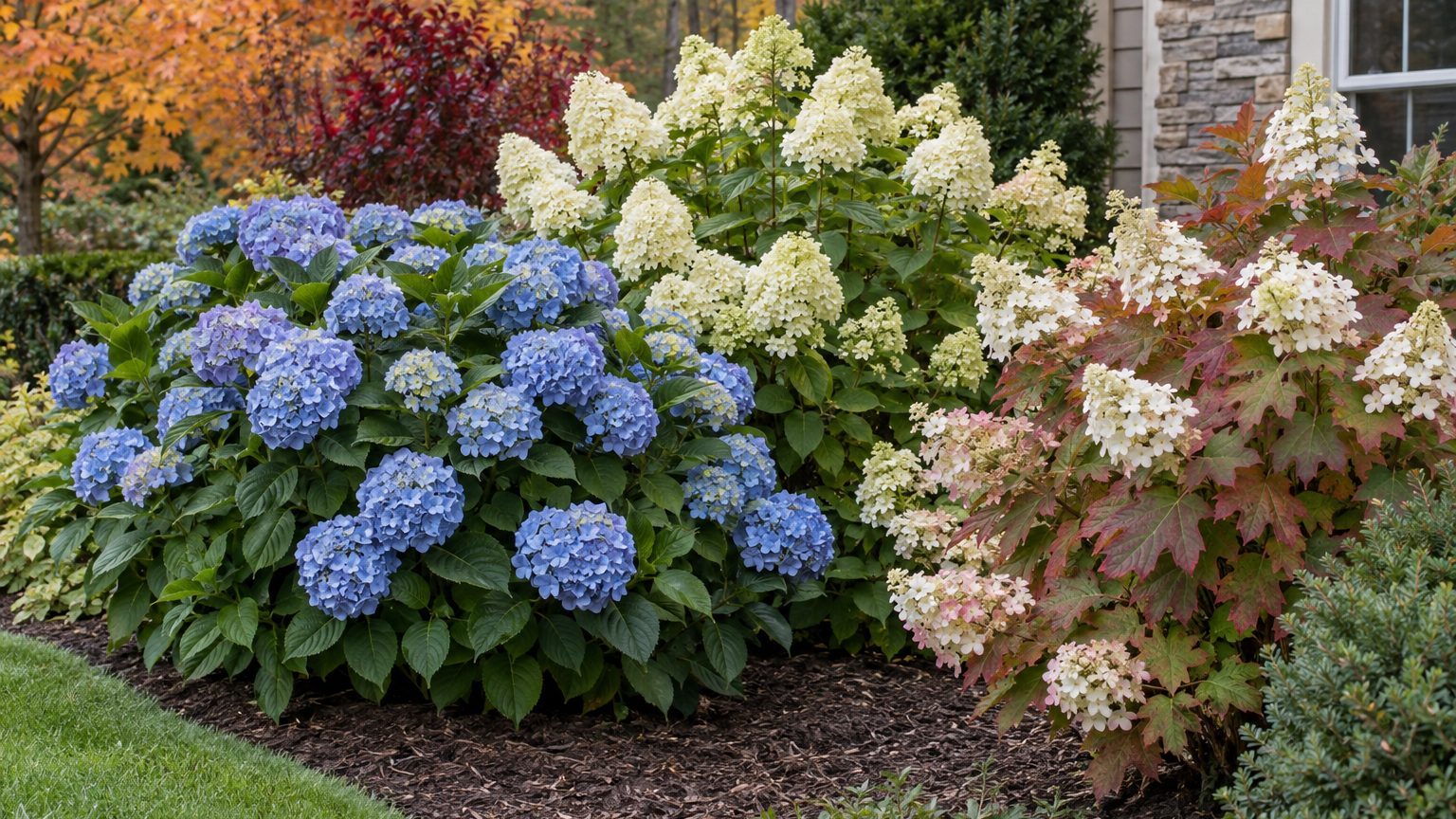
Panicle and smooth hydrangeas are the two types that shrug off a Colorado winter and the state’s dry, alkaline soil, with Denver serving as the reference city for the region’s climate data.

Bigleaf types, the mophead most people picture, rarely bloom here because a late spring frost erases the buds they set the previous fall, leaving healthy leaves but an empty summer.

Hydrangeas that grow well in Colorado: The Short Answer

The USDA Plant Hardiness Zone Map puts Colorado at 3b to 7b, and Denver, the state’s reference city for that scale, sits toward the milder end of the range on the high plains.

That number measures one thing, the average extreme minimum winter temperature, so the six varieties below are ranked by how well they handle that cold plus the state’s wind, altitude, and alkaline soil.

Mountain towns and the western slope run their own separate patterns, often colder and shorter than Denver’s, so a variety that thrives on the Front Range can still struggle at 9,000 feet.

Panicle hydrangea (Hydrangea paniculata)

Panicle hydrangea (Hydrangea paniculata) — Hydrangeas That Grow Well in Colorado

This is the one variety nearly every Colorado gardener can grow. It flowers on new wood, so a hard freeze that kills last year’s buds does not cost a season of blooms, and it tolerates the dry, alkaline soil along the Front Range. Full sun leaves it blooming into fall.

Smooth hydrangea (Hydrangea arborescens)

Smooth hydrangea (Hydrangea arborescens) — Hydrangeas That Grow Well in Colorado

Native to North America and bred for cold, arborescens cultivars push new stems and flower buds every spring no matter how late frost lingers into May. It handles clay and rocky soil better than most ornamental shrubs, though heavy wet spring snow can flatten its stems temporarily.

Oakleaf hydrangea (Hydrangea quercifolia)

Oakleaf hydrangea (Hydrangea quercifolia) — Hydrangeas That Grow Well in Colorado

This species holds up in the state’s milder pockets but wants shelter from wind and winter sun, so an east-facing wall works better than an open yard. Its oak-shaped leaves turn deep red in fall, a color none of the hardier varieties offer, though a hard late freeze can still nip its early buds.

Mountain hydrangea (Hydrangea serrata)

Mountain hydrangea (Hydrangea serrata) — Hydrangeas That Grow Well in Colorado

A close relative of bigleaf, serrata sets its flower buds on old wood too, but its stems tend to survive winter a bit better. In Colorado it still needs a sheltered spot, a layer of mulch, and a forgiving fall, since two bad years in a row wear the plant down.

Bigleaf hydrangea (Hydrangea macrophylla)

Bigleaf hydrangea (Hydrangea macrophylla) — Hydrangeas That Grow Well in Colorado

This is the classic mophead most people picture, and it disappoints most often here. It blooms on the previous year’s wood, so any freeze between fall and spring can erase the whole display, leaving green leaves and no flowers at all, a pattern that repeats almost every other year along the Front Range.

Climbing hydrangea (Hydrangea petiolaris)

Climbing hydrangea (Hydrangea petiolaris) — Hydrangeas That Grow Well in Colorado

The riskiest choice on this list, petiolaris wants steady moisture and years to establish before it climbs or blooms at all. Colorado’s low humidity and fast-draining soil work against it, so it belongs on a shaded, irrigated wall rather than a typical yard, and it can take seasons to flower.

How to Work Out the Dates for Your Own Yard

I work backward from Denver’s frost window rather than a fixed date, since NOAA NCEI’s 1991-2020 Climate Normals for station USW00003017 put the last spring freeze at May 1 to May 11 and the first fall freeze at September 30 to October 12.

Counting back from that fall window matters more than counting forward from spring, since bigleaf and mountain types need enough weeks of warmth to reset new buds before the first freeze arrives.

  1. Mark the frost window: treat May 1 to May 11 as your last freeze and September 30 to October 12 as your first, since planting inside that gap gives roots a full season before cold returns.
  2. Wait for the window to close: hold off setting a nursery hydrangea in the ground until after May 11 passes, since new growth planted into a lingering frost rarely recovers.
  3. Pick a month from the plant window: the state calendar keeps planting open in May, June, July, and August, so choose the earliest slot your yard’s exposure allows.
  4. Fertilize on the two set dates: feed in May and again in July, spacing the applications instead of relying on one heavy dose.
  5. Prune bigleaf only in June or July: since it sets next year’s buds on this year’s growth by late summer, pruning outside that window cuts off next year’s flowers.
  6. Recheck the fall window before frost: stop fertilizing and pruning once the calendar reaches September 30, giving the shrub time to harden off before October 12.

None of these dates are fixed, since a warm spring can pull the window earlier and an early mountain storm can close it just as fast.

If you garden above Denver’s elevation, especially in the foothills or mountains, push both windows later in spring and earlier in fall, since higher gardens can see frost even in summer.

Local microclimates, a south-facing wall, a low spot that pools cold air, can shift these windows by a week or more in either direction.

Colorado North to South: How the Dates Shift

Latitude barely matters across Colorado’s compact north-south span, but elevation changes by thousands of feet within a single afternoon’s drive, and that is what actually moves these windows.

Hail season overlaps with bloom time nearly everywhere in the state, adding another variable beyond frost alone.

  • The Front Range (Denver, Colorado Springs, Fort Collins): the mildest stretch of the state and the closest match to the frost window used for Denver.
  • The Eastern Plains (Sterling, Burlington, Lamar): open and windy, with hail that shreds broad hydrangea leaves even when frost isn’t the problem.
  • The Mountain Corridor (Vail, Breckenridge, Leadville): a far shorter season where a summer frost is possible, and panicle hydrangea is often the only type worth trying.
  • The Western Slope (Grand Junction, Durango, Montrose): drier and often milder in winter than the mountains just to the east, running its own separate frost pattern.

Whatever part of Colorado you garden in, use your own city’s frost dates on the state page rather than Denver’s, since elevation alone can shift bloom timing by weeks.

Mistakes Colorado Punishes

Colorado’s climate punishes a few specific habits more than others, and each one is easy enough to fix once you see it coming. None of them are exotic problems, just habits imported from a wetter, milder climate.

Planting bigleaf in an open bed

Bigleaf sets its flower buds on old wood, and an exposed spot leaves those buds open to the first hard frost of fall or a lingering one in spring, killing an entire season’s display in one night. Plant panicle or smooth hydrangea instead, or tuck bigleaf against a sheltered, wind-blocked wall.

Pruning outside the June-July window

Cutting bigleaf or mountain hydrangea in early spring or late fall removes the wood that already holds next year’s buds, since the state calendar keeps the prune window at June and July for good reason. Wait until then, and prune panicle types in late winter instead, well before new growth starts.

Ignoring the soil’s alkaline pH

Front Range soil often runs alkaline enough to lock a hydrangea’s color at pink even when a gardener wants blue, and it can stunt roots that are bred for more acidic ground back east. Work in sulfur or acidic compost at planting time, and test pH before blaming the water or the weather.

Colorado Extension Offices and County Contacts

The state’s hardiness range of 3b to 7b is only a starting point, and a county extension office fills in what a general guide never can, right down to the soil pH on your own block. Colorado State University Extension keeps that information organized county by county.

  • Colorado State University Extension: find your county office for soil testing, local frost advice, and answers specific to your elevation.
  • Your state hub: the Colorado hardiness zone and reference-city context that every date here is built from.
  • The Colorado hydrangea calendar: the month-by-month planting, fertilizing, and pruning windows laid out for your yard.

Common Questions

Can I grow a blue bigleaf hydrangea in Colorado?

Blue blooms need acidic soil and a mild winter, and Colorado offers neither along most of the Front Range. A few gardeners manage it in a sheltered, heavily amended bed, but panicle or smooth hydrangea gives a reliable bloom without fighting the soil every year.

Do hydrangeas need shade in Colorado?

Most need less sun here than the same variety would get in a humid state, since Colorado’s afternoon sun scorches leaves more than it might elsewhere. Afternoon shade still helps bigleaf and oakleaf types, while panicle and smooth hydrangeas tolerate full sun.

Why did my hydrangea survive winter but never flower?

This is almost always a bigleaf or mountain hydrangea that set its buds the previous fall, then lost them to a hard freeze or an ill-timed spring pruning. Switching to a variety that blooms on new wood solves the problem for good.

Hydrangea Pests and Diseases in Colorado

Hydrangea Pests and Diseases in Colorado

Around Denver, hydrangea trouble in Colorado is less about six-legged pests and more about the ground and the air underneath them. Alkaline soil, thin humidity, and a last spring frost that can land anywhere between May 1 and May 11 cause iron chlorosis, scorched leaves, and frost-nipped buds far more often than aphids or fungus. Check the soil and the frost calendar first.

Hydrangea pests and diseases Colorado: The Short Answer

Here’s what actually shows up on hydrangeas in the Denver area, roughly in the order it appears across a growing season, worth checking against before treating for the wrong thing.

Iron chlorosis (yellow leaves, green veins)

Colorado’s soil runs alkaline almost everywhere the USDA Plant Hardiness Zone Map counts from 3b to 7b, and hydrangeas planted in it can’t pull iron from that chemistry. New leaves turn pale yellow while the veins stay dark green. Feed with chelated iron in spring, work sulfur into the soil, and recheck by midsummer.

Winter dieback on stem tips

Winter dieback on stem tips — Hydrangea Pests and Diseases in Colorado

Denver’s last spring frost can land as late as May 11, long after buds have started swelling, and a cold snap that week kills flower buds outright. Stems survive but stay bare. Delay pruning until new growth confirms which wood is alive.

Aphids on new growth

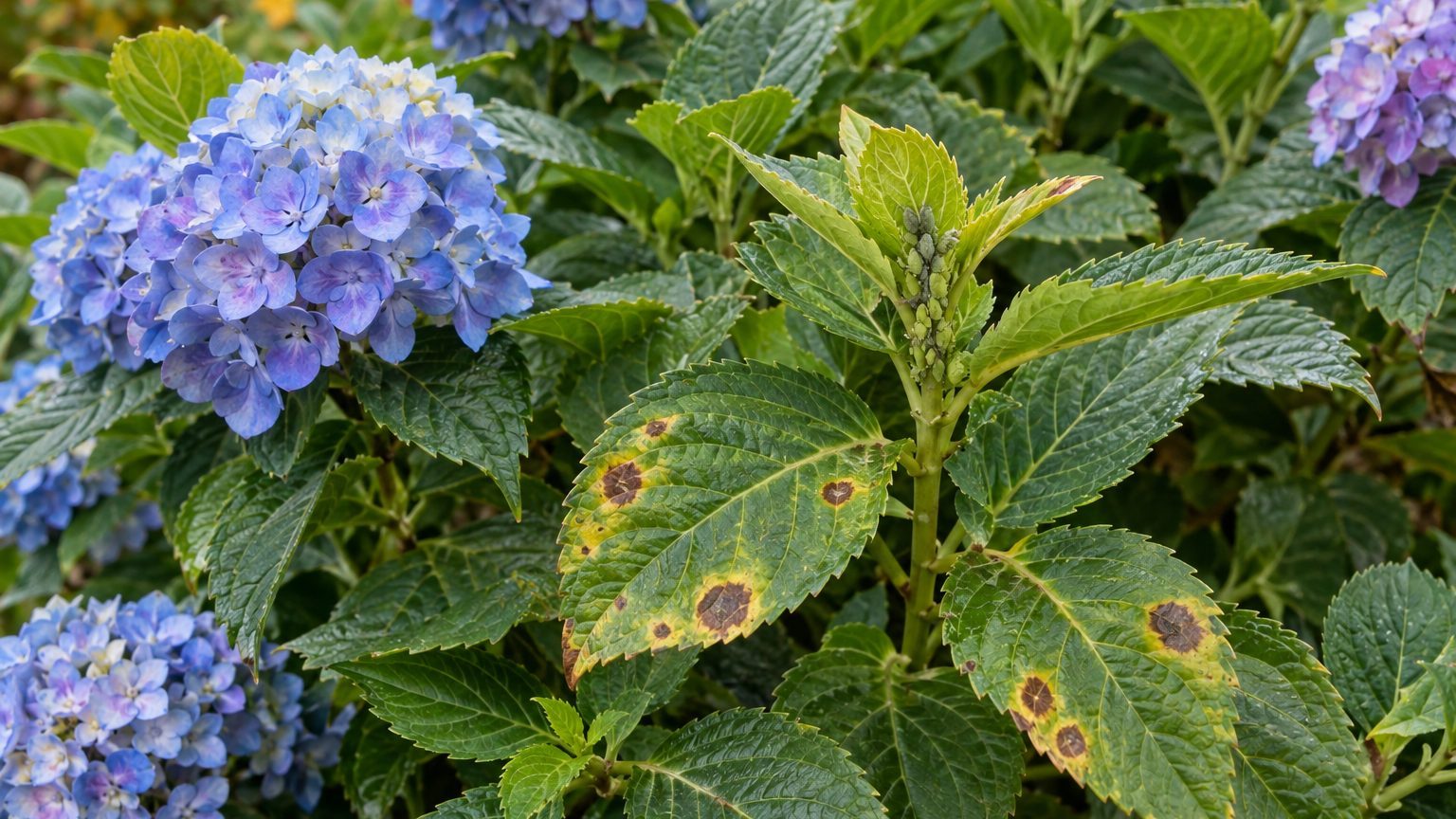
Aphids show up on tender spring shoots once nights warm, clustering under leaves and along stem tips. They leave a sticky residue and curled foliage behind. A strong water spray knocks most colonies off, and insecticidal soap handles the rest before ants start farming them for honeydew.

Powdery mildew on leaves

Powdery mildew appears by midsummer as a white, flour-like coating across leaf surfaces, thriving in the humid spells between Colorado’s dry stretches. It rarely kills the shrub but weakens it. Space plants for airflow, water at the soil line instead of overhead, and remove badly coated leaves.

Spider mites in hot, dry weather

Spider mites in hot, dry weather — Hydrangea Pests and Diseases in Colorado

Spider mites multiply fast once summer heat and low humidity settle in, leaving leaves stippled and dusty with fine webbing on the undersides. They favor stressed, drought-thirsty shrubs. Hose down foliage regularly, keep the root zone consistently moist, and reserve miticide for infestations that persist past a week.

Botrytis blight on flowers

Botrytis blight on flowers — Hydrangea Pests and Diseases in Colorado

Botrytis blight settles into flower clusters during cool, wet fall weather, turning petals brown and fuzzy gray at the base. Overcrowded plantings with poor air movement invite it fastest. Deadhead spent blooms promptly, clear fallen debris each fall, and avoid watering late in the day.

Leaf scorch from wind and sun

Front Range wind and intense high-altitude sun scorch leaf edges brown and papery, especially on shrubs facing west without afternoon shade. It’s a moisture problem, not a disease. Water deeply twice a week during hot spells, and site new plants where afternoon light is filtered.

How to Work Out the Dates for Your Own Yard

Start from Denver’s frost window and count backward or forward depending on the task, since every treatment date hangs off that same range.

  1. Mark your last spring frost: NOAA NCEI 1991-2020 Climate Normals puts it between May 1 and May 11 for the Denver station, so treat early May as a buffer zone, not planting day.
  2. Check for iron chlorosis before you fertilize: if new leaves are already yellowing, skip the May feeding until soil pH is corrected, since fertilizer won’t fix a nutrient lockout.
  3. Watch for aphids once shoots reach two inches: that’s usually a few weeks past the frost window, when tender growth attracts them most.
  4. Scout for powdery mildew through July: humidity spikes during muggy stretches are the trigger, so check leaf undersides after any run of sticky days.
  5. Prune bigleaf types only in June or July: cutting earlier risks removing wood that survived the frost window and would have bloomed.
  6. Count back from October: the first fall frost lands between September 30 and October 12, so stop fertilizing well before then to avoid pushing tender growth into the cold.

Your own yard might run earlier or later than the Denver reference station, especially at higher elevation or in a low frost pocket, so treat these dates as a starting range, not a guarantee.

Colorado North to South: How the Dates Shift

Denver’s frost window sits at one elevation and one climate pattern, but Colorado’s terrain scrambles those dates fast within a few hours’ drive.

  • Front Range and Denver metro (5,280 feet on the plains): the closest match to the reference station, so the May 1 to May 11 window applies most directly here.
  • Western Slope valleys (Grand Junction and similar low basins): milder overall, but cold air still pools overnight, so don’t assume an earlier planting date without checking your own low spots.
  • High mountain towns (Leadville, Breckenridge, and similar elevations): frost can arrive even in July, shrinking the safe window far below what Denver sees.
  • Eastern Plains: wind exposure without the foothills as a buffer scorches hydrangea leaves earlier and harder than in sheltered Denver yards.

Mistakes Colorado Punishes

Planting before the frost window closes

Setting out hydrangeas in April, before Denver’s last frost clears between May 1 and May 11, invites bud kill on the first cold snap. Wait until the planting months open in May, and check a week of forecasts first.

Fertilizing on the wrong schedule

Feeding hydrangeas outside Colorado’s May and July fertilizing window pushes soft new growth into a cold snap or a dry August stretch. Stick to those two months only, and skip fertilizer entirely in a drought year until soil moisture recovers.

Pruning bigleaf too early

Cutting back bigleaf hydrangeas before June or July removes wood that survived winter and was about to bloom. Wait for new leaves to confirm which stems are alive, then prune only in the window the calendar allows.

Colorado Extension Offices and County Contacts

Denver’s frost window is a solid starting point, but county offices and the state extension service fill in what your specific soil, elevation, and microclimate actually need.

  • Colorado State University Extension: extension.colostate.edu lists county offices, soil testing, and plant clinics across the state.
  • Your county extension office: local agents know the frost pockets and soil pH quirks a statewide map can’t capture.
  • Your state page: the frost dates and the calendar months for fertilizing, planting, and pruning where you live.

Call before treating anything for a suspected disease, a quick soil test often changes the diagnosis entirely.

Common Questions

Are hydrangeas prone to disease in Colorado’s dry climate?

Less than in humid states, but not immune. Powdery mildew and botrytis blight still appear during Colorado’s occasional wet or humid stretches, especially on crowded plantings with poor airflow.

Why do my hydrangea leaves turn yellow every summer?

That pattern almost always points to iron chlorosis from alkaline soil, not a pest or a virus. Chelated iron and a lower soil pH usually clear it within one growing season.

Do I need to spray for pests every year?

Most Colorado yards don’t. Aphids and spider mites show up in uneven years tied to weather, so scout first and treat only when you find an actual infestation rather than spraying on a fixed schedule.

The almanac, state by state. Every date on this site comes from a state’s own frost facts and its extension service’s calendar — and says where it comes from.