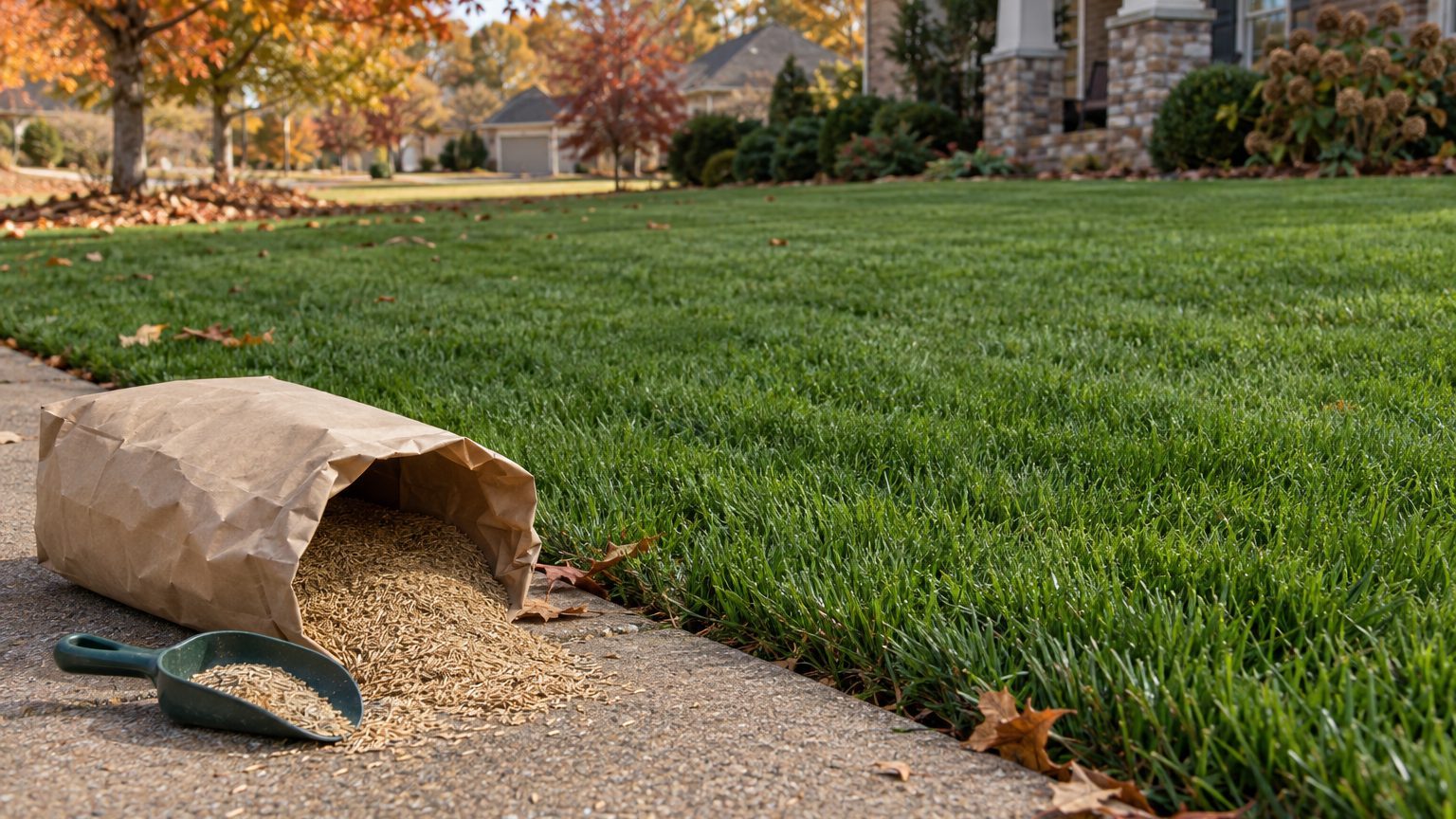
Walk across an Arkansas lawn in July and you can see the contrast: bermudagrass may be thick and vigorous while fescue may look thin and stressed. Arkansas sits in the transition zone, so both cool-season and warm-season grasses can live here. Each has a different season, a different weak point and a different seeding window.
Which Grass Grows Best in Arkansas?
Arkansas is transition country: warm-season grass suits sunny sites, while tall fescue is the cool-season option where shade or winter color matters. Arkansas spans USDA hardiness zones 6b to 8a, a range based on average annual extreme minimum temperatures rather than summer heat.
Tall Fescue
Tall fescue is a cool-season option for Arkansas lawns. It stays green through winter, tolerates some shade, and roots deeply enough to ride out dry spells. Plan to aerate and overseed in late summer, because the seedlings need the cooler months to establish.
Bermudagrass
Bermudagrass can be grown from seed or laid as sod, and it loves full sun and heat. It turns tan after the first hard frost and greens up again in spring. In shade it thins out quickly, so keep it to open yards.
Zoysiagrass
Zoysiagrass is usually sold as sod or plugs rather than seed, which makes it a bigger upfront job. It forms a dense, soft turf and handles light shade better than bermudagrass. It grows slowly, so it fills in gradually after planting.
Kentucky Bluegrass
Kentucky bluegrass is better suited to cooler, higher parts of the state than to the lowlands. It does best on cooler, higher ground and struggles in lowland summer heat. Use it only where elevation helps, and expect to water it regularly through the hottest months.
Arkansas — the year and the numbers
- State
- Arkansas
- USDA zones
- 6b-8a
- Last spring frost
- March 12 to March 28
- First fall frost
- November 7 to November 20
- Annual rain
- 50 in
- Lawn type
- cool- and warm-season
- Source
- NOAA NCEI 1991-2020 Climate Normals, 32F freeze probabilities · Little Rock
How to Choose Grass Seed for a Arkansas Yard
Start with how much sun the yard gets, then think about foot traffic and how much watering and mowing you want to take on. Sun-baked, busy lawns lean warm-season. Shady, quieter ones lean tall fescue.
Timing follows the grass. Warm-season seed goes down in May, with June as a fallback. Tall fescue goes down in August, and September still works if August slips by.
| Your yard | Grass | Why it fits |
|---|---|---|
| Full sun, heavy traffic | Bermudagrass | Spreads fast and repairs wear |
| Partial shade | Tall fescue | Tolerates shade better than bermudagrass |
| Light shade, dense look | Zoysiagrass | Thick turf, planted as sod or plugs |
| Limited watering | Bermudagrass | Handles heat and goes dormant in drought |
| Green in winter | Tall fescue | Cool-season, stays green |
If you would rather mow less, zoysiagrass grows more slowly than bermudagrass, though it costs more to establish. Kentucky bluegrass makes sense only on cooler, higher ground.
Which Grasses Grow Where in Arkansas
Elevation and latitude shift the balance from one corner of the state to another, mostly in how well cool-season grass survives summer.
- Ozarks: Higher ground and cooler summers give tall fescue and Kentucky bluegrass their best odds in Arkansas.
- Little Rock and the Arkansas River Valley: Summer heat favors bermudagrass and zoysiagrass in sunny yards, while tall fescue is better suited to shadier spots.
- Delta and southern Arkansas: Long hot seasons favor bermudagrass, and cool-season grass needs more care to get through summer.
A yard on a hilltop near Fayetteville and one near Pine Bluff may call for different grasses even though both are in the same state.
Grass Seed Mistakes to Avoid in Arkansas
Planting the Wrong Grass for the Site
Tall fescue in a hot, sunny lowland lawn often thins out by midsummer, and bermudagrass under heavy trees fades just as fast. Match the species to the light and the part of the state first, then buy seed.
Seeding at the Wrong Time
Cool-season seed sown in spring runs into summer heat before it has rooted. Sow tall fescue in August, with September as the fallback. Warm-season seed needs warm soil, so wait for May, or June if spring gets away from you.
Burying or Skimping on Seed
Seed buried too deep may never reach the surface. Cover it with no more than 0.25 inch of soil or mulch, and press it down so it touches the soil. Follow the rate on the bag, because thin seeding invites weeds and heavy seeding crowds the seedlings.
Where to Get Lawn Advice in Arkansas
Local help fits Arkansas’s mix of climates, and the state’s extension service runs county offices that know your soil and conditions.
- The University of Arkansas Cooperative Extension Service publishes turfgrass guidance you can read before you buy seed.
- Your county extension office can advise on grass choice for your part of the state, so call before the seeding window opens.
- A soil test from the county office tells you what the lawn needs before you fertilize in March, September or October.
Common Questions
Can You Plant Bermudagrass Seed in the Fall in Arkansas?
Fall is the wrong season for it. Bermudagrass needs warm soil to sprout and root, so plant in May, with June as a fallback.
Is Zoysiagrass Sold as Seed?
Mostly it is sold as sod or plugs. Laying sod works best in May, and June or July still work.
When Should You Fertilize New Tall Fescue?
Fertilize tall fescue in early spring and fall, never in summer. March, September and October are the best months.