Skip to content
  1. Jan
  2. Feb
  3. Mar
  4. Apr
  5. May
  6. Jun
  7. Jul
  8. Aug
  9. Sep
  10. Oct
  11. Nov
  12. Dec
State
Arizona
USDA zones
4b-10b
Frost
none in an average year
Annual rain
7 in
Lawn zone
warm-season
Source
NOAA NCEI 1991-2020 Climate Normals + NOAA RCC ACIS daily records, station USW00023183 — https://www.ncei.noaa.gov/access/services/data/v1?dataset=normals-annualseasonal&stations=USW00023183 · Phoenix

The year in Arizona, from the calendar

  1. JanSpring bulbs bloom · Plant hydrangeas · Plant roses · Prune roses · Prune fruit trees
  2. FebSpring bulbs bloom · Plant hydrangeas · Feed roses · Plant roses · Prune roses
  3. MarSpring bulbs bloom · Feed hydrangeas · Feed roses · Plant fruit trees · Mow
  4. AprSpring bulbs bloom · Seed the lawn · Feed roses · Mow · Water
  5. MaySpring bulbs bloom · Feed hydrangeas · Seed the lawn · Feed roses · Dethatch
  6. JunPrune bigleaf hydrangeas · Feed roses · Dethatch · Fertilize the lawn · Mow
  7. JulFeed hydrangeas · Prune bigleaf hydrangeas · Mow · Water
  8. AugMow · Water
  9. SepPlant spring bulbs · Feed roses · Fertilize the lawn · Mow · Water
  10. OctPlant spring bulbs · Plant hydrangeas · Feed roses · Plant trees · Fertilize the lawn
  11. NovPlant hydrangeas · Plant trees · Mow
  12. DecPlant trees

From the state frost facts and extension calendars: University of Arizona Cooperative Extension · University of Arizona Cooperative Extension ; eXtension Ask an Expert · Clemson HGIC factsheet — Hydrangea · UC Statewide IPM Program — UC Guide to Healthy Lawns (seeding times; fertilization by zone).

When to Plant Roses in Arizona: Dates and Varieties

When to Plant Roses in Arizona: Dates and Varieties

A rose in the low desert of Arizona wakes up in winter, while the same rose in the high country is still asleep under frost. That split decides everything here, from the month you set a bare-root plant in the ground to the week you stop feeding.

When to Plant Roses in Arizona

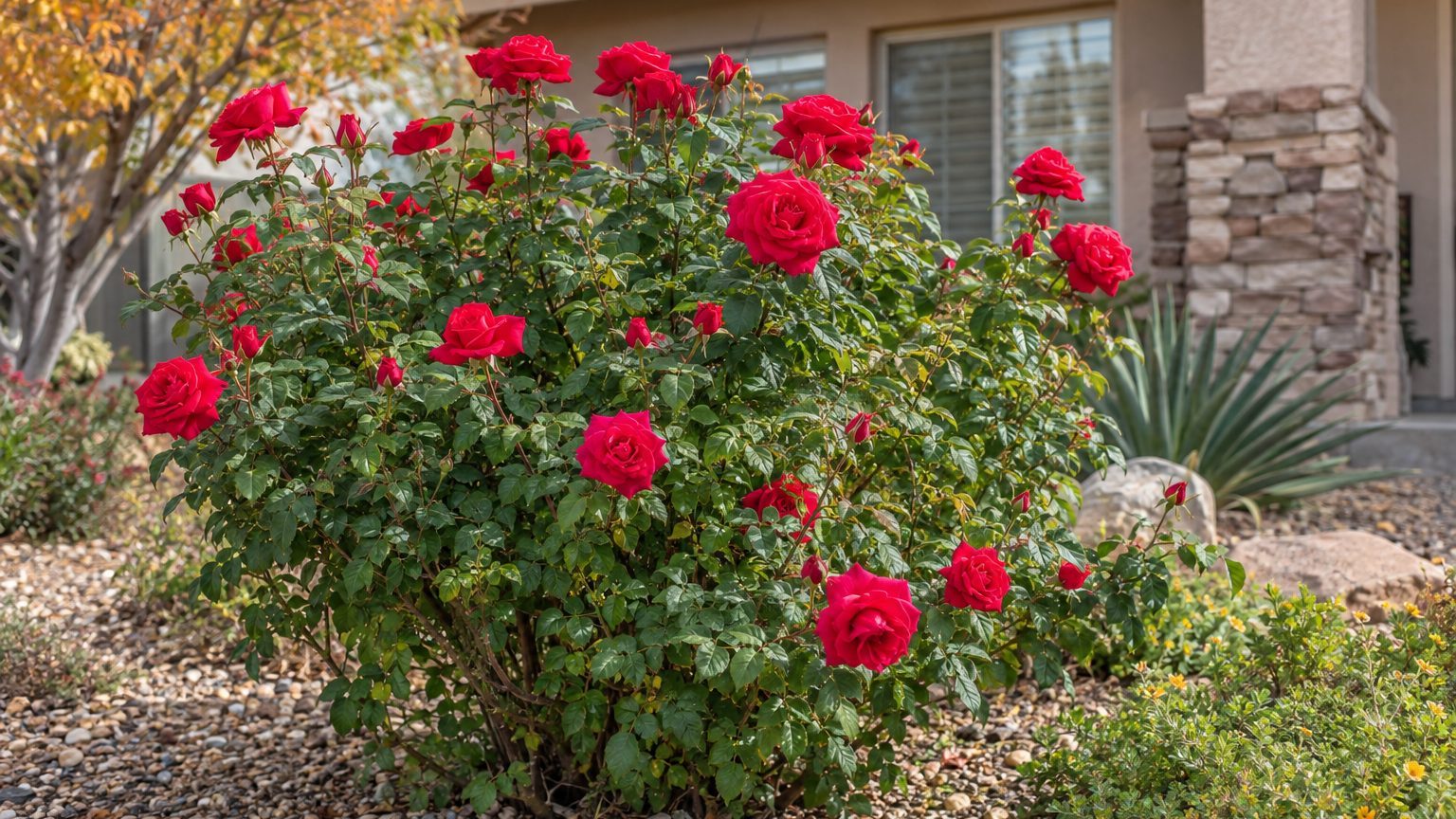
A rose bush in bloom in a home garden

Bare-root roses go in first, in January and February, with March as a fallback if the winter slips by. Container roses can be set out from January as well, which gives them a longer stretch of mild weather to settle in.

Frost barely enters the low desert picture. Around Phoenix, a freeze is rare, and a cold snap that touches 32F, when it happens, falls between late December and mid January. Summer heat, not cold, is the limit there, so planting is timed to give roots cool weather before the heat arrives. Flagstaff and the high country freeze hard and belong to a different climate. Across the state, USDA hardiness zones run from 4b to 10b, so a dated plan has to start from your own town.

A bare-root rose is sold dormant and should be planted while it still is. A young potted rose has leaves and tender growth, which is the part a rare cold night can damage. The year then runs like this:

  • In January and February, bare-root roses are planted in the low desert, and repeat-blooming roses are pruned at the same time.
  • In February, container and bare-root roses can go in around Prescott, Prescott Valley and Chino Valley, where winter lasts longer.
  • In March, the fallback month for planting, pruning at Prescott altitude happens, and feeding is already under way.
  • From April through June, feeding continues after pruning, while the bushes put out their spring flush.
  • In midsummer, feeding stops, then picks up again in September and ends around mid-October.

Planting in the cool months is the whole idea. A rose that goes in during January or February has time to build roots before the heat arrives.

Which Roses Grow Best in Arizona?

Repeat-blooming roses suit the low desert, where winter is mild. Hybrid teas and floribundas are repeat bloomers, and the Arizona pruning and feeding calendar covers them.

Heat is the stress to plan around, since a long hot summer pauses blooming. Cold matters mainly in the high country, where winters are harsher than in the desert valleys.

Rose type How it does in Arizona Why
Hybrid teas Pruned in January or February in the low desert They repeat bloom on new wood
Floribundas Follow the same winter pruning schedule They repeat bloom on new wood
Modern shrub roses Pruned January or February, fed in spring and fall They repeat bloom, so they follow the same schedule
Old garden roses Pruned only after they bloom, fed from January or February They flower once, on last year’s wood

Climbers and miniatures are options too. Many climbers bloom once on last year’s wood, so they are pruned right after flowering, never in early spring.

When to Prune, Feed and Protect Roses in Arizona

Winter work comes early here. Pruning and bare-root planting share the same cool-weather window. Feeding then runs across a long season and pauses during midsummer.

Old garden roses are the exception. They are pruned after blooming, though feeding them in January or February still helps their flowers.

Task Best months in Arizona Why then
Pruning repeat-blooming roses January, February (March at Prescott altitude) Cool weather in the low desert, later winter at altitude
Planting bare-root roses January, February (March as a fallback) Plants are dormant, roots settle before heat
Feeding, spring round February through June Starts after pruning, repeated regularly until June
Feeding, fall round September to mid-October Feeding restarts after a midsummer break

Skip feeding in midsummer. Roses slow down in the heat, and a pause then keeps growth from being pushed when the plant is stressed. A slow-release fertilizer suits the September restart, with the last round around mid-October.

How Rose Care Dates Change Across Arizona

Elevation moves the calendar more than distance does. The low desert gets going in midwinter, and higher towns follow later.

  • Phoenix and the low desert: Pruning falls in January or February, and bare-root roses are planted in the same months. Container roses can go in from January.
  • Prescott, Prescott Valley and Chino Valley: Winter lasts longer at this altitude, so pruning waits until March. Planting container and bare-root roses is a February job.
  • Flagstaff and the high country: Winters freeze hard, so the desert dates above do not carry over; ask the local county office for timing at your elevation.

Whichever town you garden in, let the buds guide you within the month: pruning follows swelling buds, not a fixed day on the calendar.

Where to Get Rose Advice in Arizona

Local conditions vary enough that a nearby expert is worth a call. University of Arizona Cooperative Extension publishes rose care guides for the low desert and for the Yavapai region, and each county has its own office.

  • The state extension site has rose care guides, so read the one for your region before you buy bare-root plants in winter.
  • Your county extension office can diagnose a sick plant from a sample and arrange a soil test, which is worth doing before planting.
  • Master gardener volunteers through the county office answer questions about local timing, so ask before January arrives.

Common Questions

Can You Plant a Rose in Summer in Arizona?

Summer heat is the main obstacle in the low desert, and the planting months in the calendar are the cool ones. A rose bought in a container can be planted from January, so waiting for winter gives the roots a cool-weather start.

Do Roses Need Winter Protection in Arizona?

In the low desert, frost is rare, so protection is seldom needed. In the high country, winters freeze hard, and young plants there need more care than they would in Phoenix.

Should You Feed Roses in the Middle of Summer in Arizona?

No. Feeding pauses in midsummer, then starts again in September with the last application around mid-October.
Best Spring Bulbs for Arizona

Best Spring Bulbs for Arizona

A tidy handful of bulbs pushed into the ground in autumn can turn a bare bed into color by midwinter in Arizona. Desert winters rarely freeze, though, and that changes which bulbs are worth planting and how you prepare them. Daffodils and alliums are the dependable choices, while tulips and hyacinths need a little help from the refrigerator.

Best Spring Bulbs to Grow in Arizona

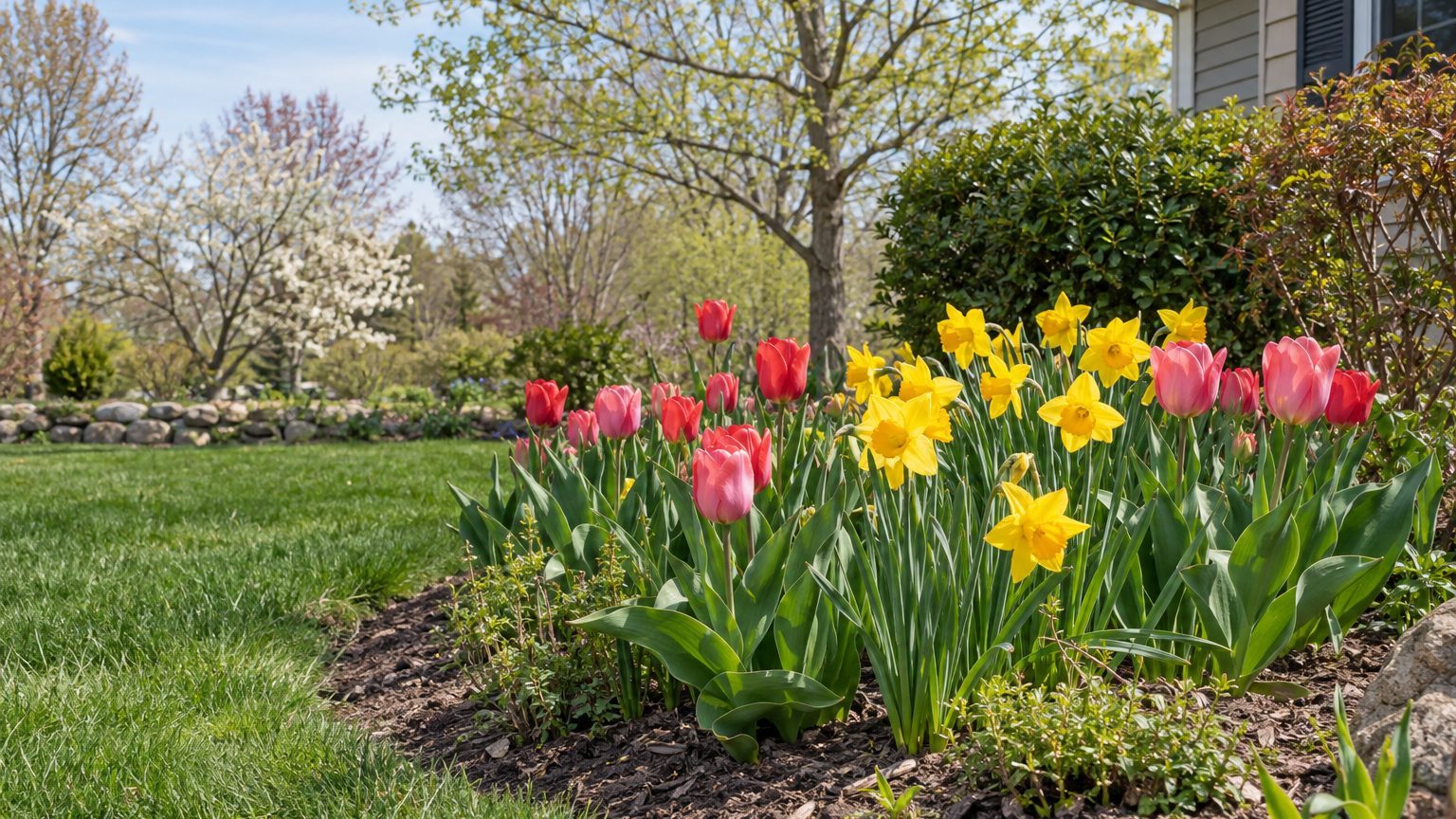
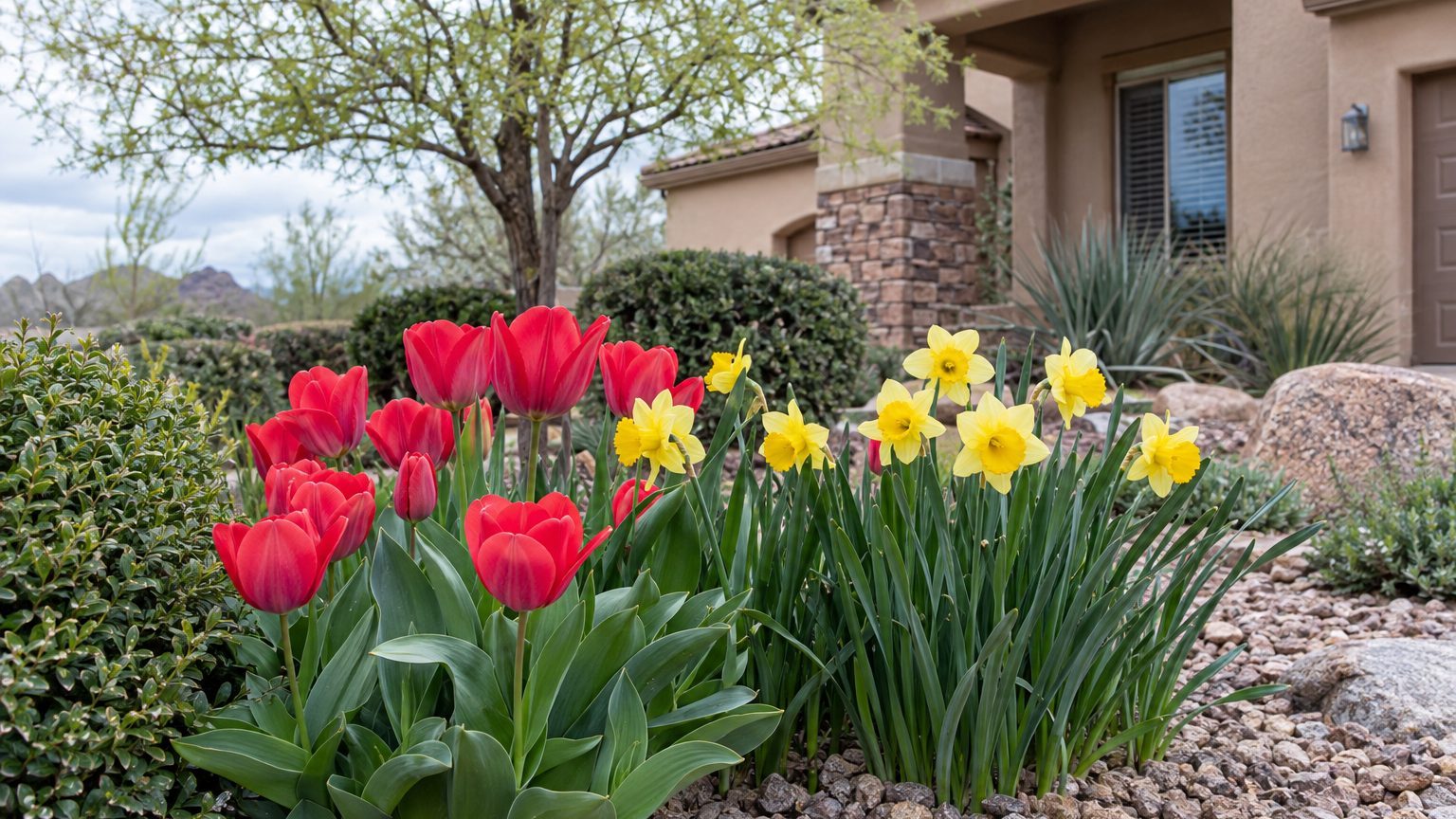
Healthy spring bulbs in bloom

Daffodils, alliums, tulips, hyacinths and crocus all grow in Arizona, but they ask different things of a desert winter. In Phoenix, a freeze is a rare event, so many bulbs never get the cold they expect, and alliums and daffodils are the easiest to please. Plant them in September and October.

Daffodils

Daffodils are the more reliable perennial bulb and they last longer in the garden than tulips. They are also left alone by voles, squirrels, rabbits and deer, which matters in a yard where wildlife wanders through.

Plant them in a spot with full sun and expect flowers to come between January and May.

Alliums

According to Iowa State University Extension, alliums need the cold of winter to bloom. Ornamental onions finish the spring bulb season, so they carry color late into the bloom window.

Tulips

Tulips are fairly adaptable, but they want a long stretch of cold to flower. Most spring bulbs need about 12 to 16 weeks of it, and a mild desert winter does not supply that.

The fix is to chill tulip bulbs in the refrigerator before planting them. Tulips are often short-lived, so treat them as a seasonal treat.

Hyacinths

Hyacinths follow the same rule as tulips. Where winters are too mild to give them cold, chill the bulbs in the refrigerator first, then plant them in September or October.

Crocus

Crocus are planted in the same autumn window as the other hardy bulbs. Voles, squirrels and rabbits eat them, so plant them where you can watch for damage, or lean on daffodils if critters visit often.

How to Choose Spring Bulbs for Your Arizona Garden

Start with the winter your yard actually gets. A low-desert bed and a mountain yard want different bulbs, and a few simple questions about time, wildlife and chilling narrow the list quickly.

Soil temperature matters as much as the calendar, so match the bulb to the yard first and the shopping list second.

Your situation What suits it in Arizona Why
Mild low-desert winter Alliums They need the cold of winter to bloom
Want tulips or hyacinths anyway Chill the bulbs in the refrigerator, then plant Winters are too mild to give them the cold they need
Want bulbs that come back Daffodils They last longer than tulips and are the more reliable perennial
Voles, squirrels, rabbits or deer visit Daffodils Animals leave them alone, but they do eat tulips and crocus
Hard winter freezes in the high country Hardy bulbs planted in September and October Roots form before the ground freezes

Crocus fit best in yards where you can protect them from nibbling animals, and hyacinths are a good partner to tulips when you are already chilling bulbs.

Which Spring Bulbs Suit Different Parts of Arizona

Arizona runs from USDA hardiness zone 4b to 10b, so the right bulb changes as much with where the yard sits as with what you like.

  • Phoenix and the low desert: Freezes are rare, so alliums need the cold of winter to bloom, and chill tulips and hyacinths in the refrigerator before planting.
  • Flagstaff and the high country: Winters freeze hard here, so hardy bulbs get the cold they need without any help from the refrigerator.

Low-desert yards work around the missing cold, while high-country yards plant much as a cold-winter garden would.

Spring Bulb Buying Mistakes to Avoid in Arizona

Planting into Warm Soil

Autumn days can stay warm in the desert, and bulbs set into hot ground may sprout too early. Plant once the soil has cooled below about 60°F. That gives roots time to form without pushing top growth too soon.

Skipping the Chill

Tulips and hyacinths planted straight from the bag in a low-desert bed often disappoint, because the winter never gives them the cold they want. Chill them in the refrigerator first, or choose alliums and daffodils instead and skip the extra step.

Cutting Leaves Early

After bloom, the leaves feed the bulb for next year. Remove only the faded flowers and leave the foliage until it turns brown. Cutting or tying green leaves shortens the life of the bulb and weakens next season’s show.

Where to Get Spring Bulb Advice in Arizona

University of Arizona Cooperative Extension publishes bulb guidance written for Arizona gardens, and the University of Arizona Cooperative Extension network reaches into each county.

  • The extension website has a bulbs publication you can read before you buy, so check it in late summer.
  • Your county extension office can speak to local conditions, from low-desert beds to mountain yards.

Common Questions

When Do Spring Bulbs Bloom in Arizona?

Hardy spring bulbs bloom between January and May, depending on the type and how much cold the yard gets.

Can You Plant Bulbs That Are Still in the Bag?

Yes. A bulb still unplanted goes into the ground as soon as the soil can be dug, since late planting beats leaving it in the bag.

How Should You Prepare the Planting Spot for Tulips and Daffodils?

Choose a spot with full sun that does not stay wet, and mix compost into the planting hole to loosen the soil and help drainage. A low-lying area that holds water in spring is a poor home for bulbs.

When Do Tulips and Daffodils Bloom in Arizona?

When Do Tulips and Daffodils Bloom in Arizona?

Green spears pushing through cool soil in a winter bed are the first hint that spring bulbs are on their way. In Arizona that rhythm runs on its own schedule, shaped by mild winters in the low desert and real cold in the high country.

When Do Tulips and Daffodils Bloom in Arizona?

When Do Tulips and Daffodils Bloom in Arizona?

Tulips and daffodils bloom in Arizona between January and May. Bulbs planted in September and October have the whole cool season to root and build flower buds, so blooms arrive during the cooler months rather than all at once.

Bulb When it blooms in Arizona What sets the timing
Daffodils and crocus January to May Planted in September and October, then left to settle in cool soil
Tulips January to May Planted in September and October, with enough winter cold to flower
Hyacinths January to May Planted in September and October, chilled first when winters run mild
Alliums January to May Planted in September and October, with enough winter cold to flower

Most spring bulbs need about 12 to 16 weeks of cold to flower. Where winters are too mild to give it, tulips and hyacinths are chilled in the refrigerator before planting. Alliums skip that step, which makes them the easygoing choice for warm yards.

How to Tell Your Bulbs Are About to Bloom

Bulbs give plenty of notice, and each stage tells you something different about what the bed needs.

  • Green tips breaking the soil surface mean roots have formed and the bulb is awake, so the planting spot is working.
  • Leaves that stand up straight and gray-green or deep green show the bulb is drawing on its stored energy, which is a good sign even before any flower appears.
  • A fat bud rising from the center of the leaves means a flower is only a short wait away, so keep the bed clear of weeds and debris.
  • A bud that starts to show color at the tip is close to opening, and a cut stem brought indoors at that stage will finish opening in a vase.
  • Leaves that come up but never produce a bud usually point to too little sun or a bulb that has used up its reserves, which is common with tulips.

If the bed sits in shade for part of the day, the buds will lag behind those in full sun.

What to Do After Tulips and Daffodils Bloom in Arizona

Snip off the faded flowers once the petals drop, and stop there. The leaves stay in place and are never tied, braided or cut while green, because they are feeding the bulb for next year’s bloom.

Wait until the foliage turns brown, then clear it away. The bed may look untidy for a while, but planting annuals or low perennials in front of the fading leaves hides them without disturbing the bulbs.

Expect the two to age differently. Tulips are often short-lived in the garden, and a bed may thin out after a season or two. Daffodils last longer and are the more reliable perennial bulb, so they are the ones to count on for repeat color. Compost worked into the soil when bulbs go in keeps the ground loose and drains well, which helps every bulb in the bed.

How Bloom Time Shifts Across Arizona

Arizona spans a huge range of climates, and USDA hardiness zones run from 4b to 10b across the state, so the timing of a bed depends on where it sits.

  • Phoenix and the low desert: Winters are mild, and most years pass without a freeze. A rare cold snap can bring 32F between late December and mid January, but bulbs in the ground handle it. The mild winter is why chilling tulips and hyacinths ahead of planting matters here.
  • Flagstaff and the high country: This is a different climate entirely, with hard freezes through the cold months. Bulbs sit through real winter cold, and flowers open later than in the desert, as they do wherever spring warms up slowly.

If your yard falls between these two, expect bloom to land somewhere in the middle.

Where to Get Bulb Advice in Arizona

Local conditions change a lot from one Arizona town to the next, so a quick question to a nearby expert can save a season. Two places are worth knowing before the bulbs go in.

  • University of Arizona Cooperative Extension publishes bulb guidance written for Arizona gardens, and it is worth reading before September planting.
  • Your county extension office can speak to your own elevation and soil, so call or stop in before you order bulbs.

Common Questions

Can You Still Plant Bulbs After October in Arizona?

A bulb that is still in the bag goes in as soon as the ground can be dug, since it fares better in soil than in storage. For a fresh planting, wait until the soil has cooled below about 60°F. That gives roots time to form without tempting the bulb to sprout in fall.

Do Animals Eat Tulips and Daffodils?

Voles, squirrels, rabbits and deer eat tulips and crocus. Daffodils are left alone, so they suit beds that wildlife visits often.

What Kind of Spot Do Tulips and Daffodils Want in Arizona?

Pick a place with full sun, and avoid low spots where water sits, especially in spring. Both bulbs are fairly adaptable, but loosened soil with compost mixed in gives them the drainage they like.

When to Plant Tulips and Daffodils in Arizona

When to Plant Tulips and Daffodils in Arizona

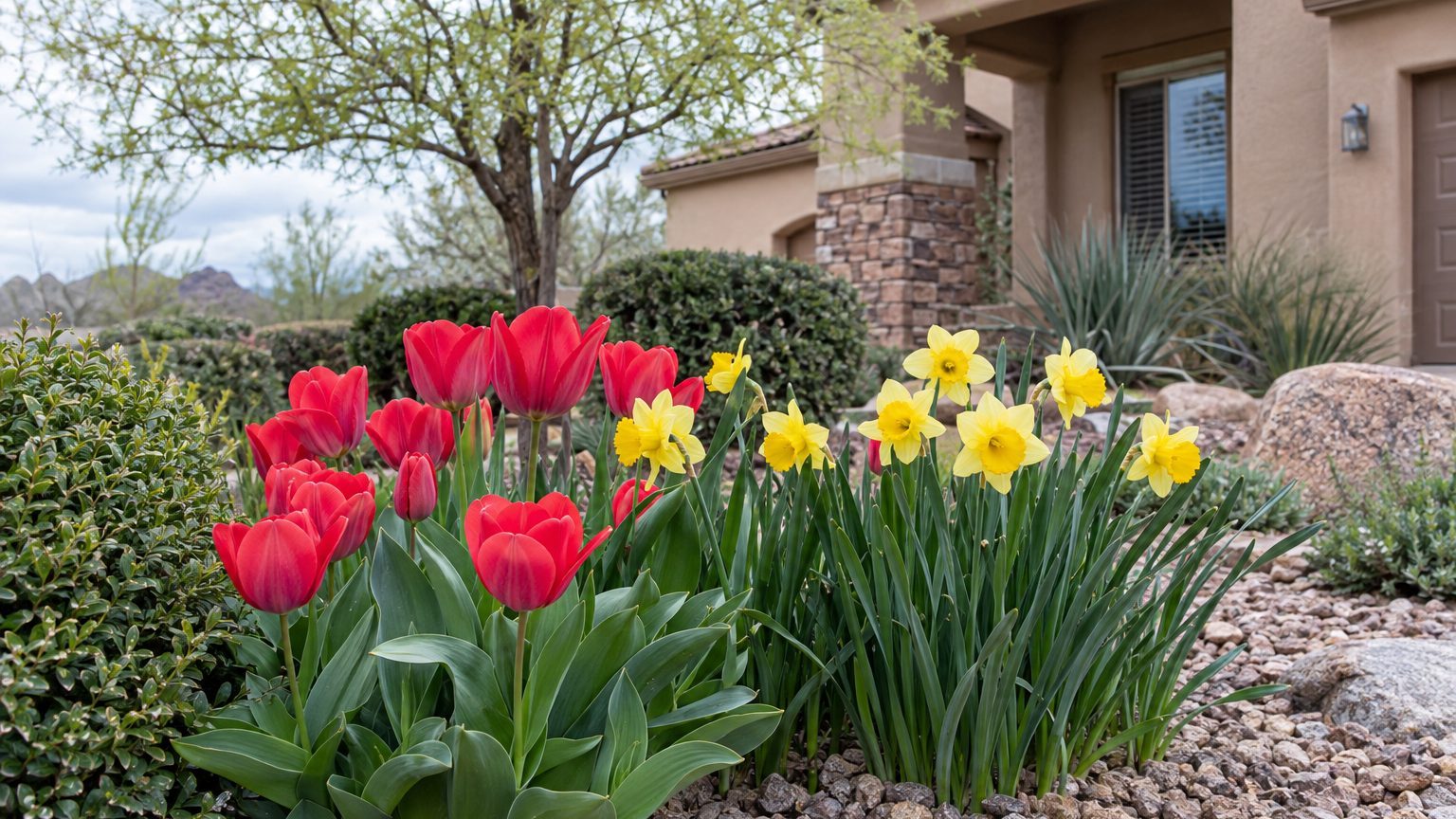
Daffodils pushing up in a Phoenix front bed while the rest of the country is under snow is a normal Arizona winter sight, and it starts with a bulb set in the ground months earlier. Arizona gardeners can grow spring bulbs, but the timing and the choice of bulb differ from the rest of the country.

When to Plant Tulips and Daffodils in Arizona

When to Plant Tulips and Daffodils in Arizona

Plant tulips and daffodils in Arizona in September and October. A bulb’s year here runs in this order.

  • In late summer, buy firm, heavy bulbs while the garden center selection is still full, and keep them somewhere cool and dry until planting day.
  • Through late summer and early fall, tulips and hyacinths wait in the refrigerator, because most spring bulbs need about 12 to 16 weeks of cold to flower and low-desert winters are too mild to supply it. Alliums skip this step.
  • In September and October, the bulbs go into the ground. A common guide is to wait until the soil has cooled below about 60°F, so roots form without the bulbs sprouting too soon.
  • Right after planting, water the bed well and spread a layer of mulch to hold moisture around the bulbs.
  • From winter into spring, green shoots rise and the flowers open, with hardy spring bulbs blooming between January and May.

In Phoenix, most winters never reach freezing, so the planting window follows the calendar rather than a frost date. USDA hardiness zones across the state run from 4b to 10b, which is why the high country plays by different rules.

Which Spring Bulbs Do Best in Arizona?

Daffodils and alliums suit Arizona best. Tulips and hyacinths can flower here, but only after a stretch in the refrigerator, because the winters in the low desert do not give them enough cold.

Crocus are a gamble where animals roam, since the local wildlife treats them as a snack.

Bulb type How it does in Arizona Why
Daffodils Steady performer, no refrigerator step Animals leave the bulbs alone
Alliums Needs winter chill to flower They need a cold winter to flower
Tulips Flower only after a refrigerator chill Mild winters fall short of the 12 to 16 weeks of cold they want
Hyacinths Same chill-first routine as tulips Low-desert winters are too mild to chill them
Crocus Pretty, but often eaten Voles, squirrels and rabbits go after them

Deer also eat tulips and crocus, which matters more in the high country than in a walled Phoenix backyard. For a first Arizona bulb bed, daffodils and alliums give the surest return.

When to Plant, Chill and Care for Spring Bulbs in Arizona

Three jobs fill the bulb year, and each has its own timing. Planting sits in the early fall window, chilling comes before it, and the leaves are left alone for as long as they stay green.

Task Best timing in Arizona Why then
Plant September and October Roots settle in before winter growth starts
Chill tulips and hyacinths In the refrigerator, before they go in the ground The winters in the low desert are too mild to chill them
Leave the foliage As long as the leaves are green, until they turn brown The leaves feed the bulb for next year

Take off only the faded flowers after bloom and let the leaves yellow on their own, never tied or cut while green. Bulbs set out in the cooler months bloom between January and May, and that stretch of the year has its own page for what to do after the flowers fade.

How Bulb Planting Time Changes Across Arizona

Arizona holds some of the widest climate gaps in the country, and bulbs respond to them directly.

  • Phoenix and the low desert: Winters are mild and a freeze is rare, so the question is less whether the cold will hurt the bulbs than whether there will be enough of it. That is why tulips and hyacinths need the refrigerator and daffodils and alliums are the easier picks.
  • Flagstaff and the high country: Winters here freeze hard, so bulbs go in early enough for roots to form before the ground locks up. The natural cold does the chilling work, which makes the refrigerator step less of a concern than it is in the desert.

Gardeners between these two climates should lean toward whichever description their winters resemble.

Where to Get Bulb Advice in Arizona

Arizona’s gardening conditions vary so much from town to town that local advice beats general rules. A short call or visit can sort out a puzzling bed.

  • University of Arizona Cooperative Extension publishes a bulb guide that covers planting time and bloom season, and it is worth reading before the September and October window opens.
  • Your county extension office can run a soil test or look at a failing bed, so a visit before planting saves a season of guessing.
  • Bring a few bulbs and a note about the planting spot, then set them in the ground as soon as the soil is ready.

Common Questions

Is It Too Late to Plant Bulbs in November?

No. A bulb that is still unplanted goes in as soon as the ground can be dug, and planting late is better than storing the bulb through winter. The flowers may come a little behind schedule, but the bulb still has time to root.

What Kind of Spot Suits Spring Bulbs?

Full sun and a spot that drains well, never a low area that stays wet in spring. Mixing compost into the planting hole loosens the soil, adds organic matter and helps drainage.

Will Tulips Come Back Every Year?

Tulips are often short-lived in the garden, so many gardeners treat them as a seasonal treat. Daffodils last longer and are the more dependable perennial bulb.

Best Grass Seed for Arizona

Best Grass Seed for Arizona

Walk a Phoenix lawn in July and the bermudagrass is the green one, while the ryegrass that looked so lush in February is long gone. Arizona yards run on two grasses, and they take turns. Bermudagrass carries the lawn through the hot months, and perennial ryegrass fills in during winter overseeding.

Which Grass Grows Best in Arizona?

A warm-season grass fits the low desert, because summer heat is what limits a lawn here, not winter cold. Phoenix stays above 32F in most years, so choose grass for the long, brutal summers rather than for winter cold. Seeding is best in April and May, when soil is warm enough for germination.

Bermudagrass

Bermudagrass is the dependable choice across the low desert. It thrives in full sun, tolerates heat that would flatten cool-season turf, and recovers well from traffic. It does go tan and dormant when winter turns cool.

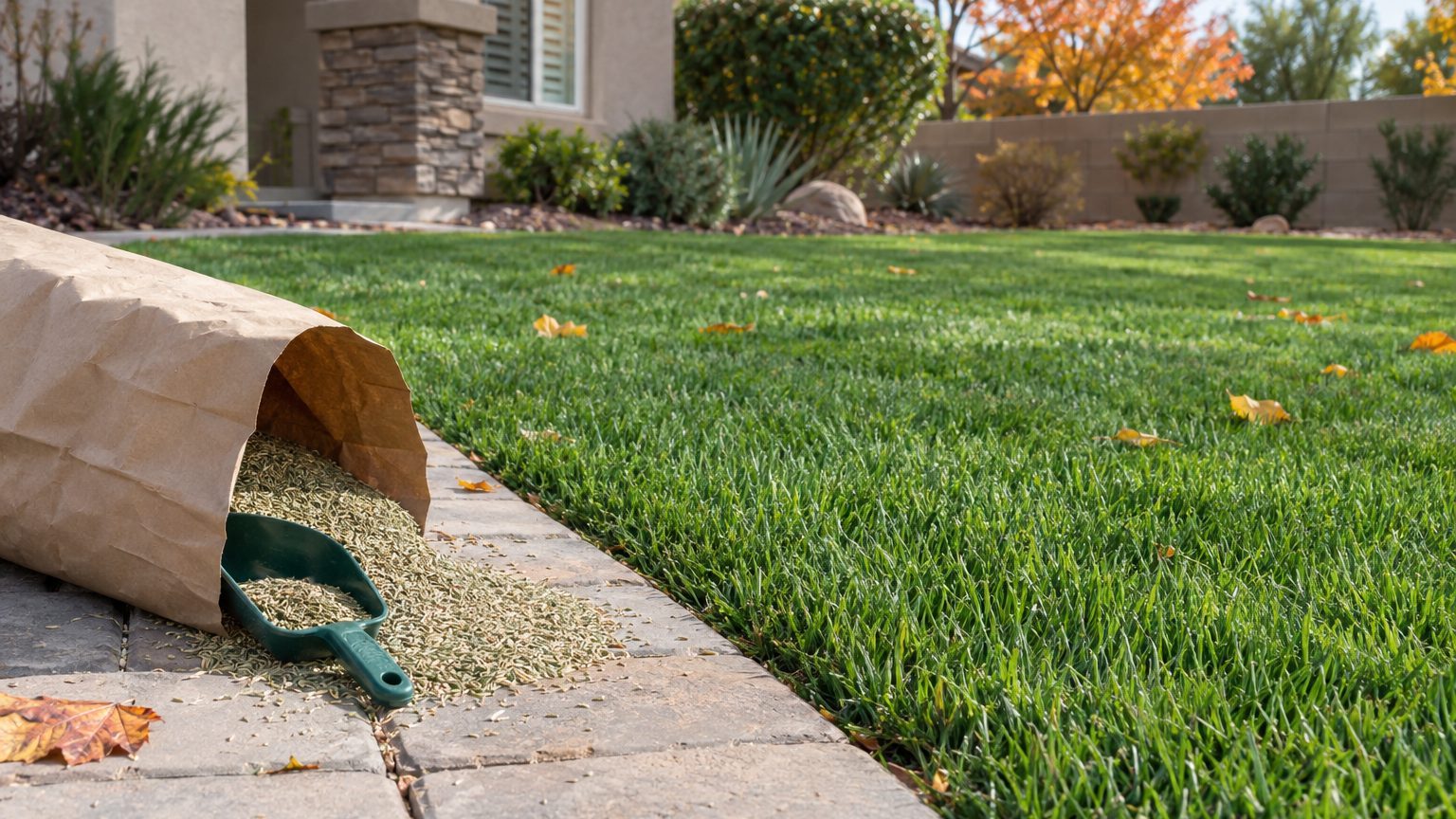
Seed it in April or May so it has the warm months ahead to fill in. Sow on loosened soil and cover the seed with no more than 0.25 inch of soil, then press it down for good contact.

Perennial Ryegrass

Perennial Ryegrass — Best Grass Seed for Arizona

Perennial ryegrass is a winter guest, not a permanent lawn. Sown over dormant bermudagrass, it keeps the yard green through the cool season, then fades as summer heat arrives.

Treat it as an annual job. Expect to reseed whenever you want winter color, and skip it if a tan winter lawn does not bother you.

Cool-Season Grasses in the High Country

Tall fescue and Kentucky bluegrass are cool-season grasses, and they struggle in the low desert, where summer heat stresses them for months. They belong in colder places like Flagstaff, where hard freezes are normal. In the low desert, leave them off the shopping list.

How to Choose Grass Seed for a Arizona Yard

Start with what your yard actually does. Sun, foot traffic, and how much water you can spare matter more than any label on the bag.

Mowing habits count too. Bermudagrass grows fast in the hot months, so plan on regular mowing from March through November.

Grass Season How it does here
Bermudagrass Warm Full sun, heavy traffic, and summer heat. Seed in April or May. Tan in winter.
Perennial ryegrass Cool Winter overseeding only. Green through the cool months, then fades in summer.

Shady yards are the hard case, since bermudagrass wants full sun and thins out under trees or beside tall walls. If shade covers most of the lawn, consider groundcover or mulch in those spots instead of forcing turf. Regular watering from April through October helps a bermudagrass lawn stay in good shape. If water is limited, keep the lawn area small.

Which Grasses Grow Where in Arizona

Arizona spans desert floors and mountain towns, so the right seed changes with elevation.

  • Phoenix and the Salt River Valley: Bermudagrass is the standard summer lawn, with ryegrass overseeded for winter color. In Phoenix, frost is rare, so heat is the planning problem.
  • Tucson and the southern desert: The same pairing applies. Bermudagrass handles the long hot season, and winter overseeding is optional.
  • Flagstaff and the high country: This is a different climate, with hard freezes and cool summers. Cool-season grasses suit it far better than bermudagrass, which struggles in the cold.

Before you buy, check which of these climates your yard really lives in, because a town at middle elevation may sit between the two.

Grass Seed Mistakes to Avoid in Arizona

Planting Cool-Season Grass in the Low Desert

Tall fescue or bluegrass may look fine in cool weather, then brown out once the heat settles in. Match the grass to the summer, not the spring. Choose bermudagrass for a permanent lawn.

Seeding at the Wrong Time

Bermudagrass seed sown in cold soil sits and rots or germinates unevenly. Wait for April or May, when the ground is warm and the grass has a full growing season ahead.

Fertilizing fits May, June, September, and October, so do not feed a new lawn in the dead of winter.

Burying the Seed Too Deep

Tiny grass seed has little energy to push through heavy cover. Rake lightly, keep the covering shallow, and water regularly so the surface never fully dries while seedlings emerge. Too thin a spread leaves bare patches where weeds move in, so sow evenly across the whole area.

Where to Get Lawn Advice in Arizona

Local help is close by. University of Arizona Cooperative Extension publishes lawn guidance for desert conditions, and your county office can speak to your own soil and elevation.

  • The state extension site covers grass selection, overseeding, and watering for desert yards, and it is worth reading before you buy seed in spring.
  • Your county extension office can answer questions about local soil and pests, so call it when a patch looks wrong.

Common Questions

Can You Grow a Green Lawn in Arizona All Year?

Yes, with overseeding. Bermudagrass goes tan in winter, and perennial ryegrass sown over it keeps the yard green until summer heat returns.

Is St. Augustinegrass Available as Seed?

No. St. Augustinegrass is never sold as seed, so it is installed from sod or plugs instead. For a seeded lawn, bermudagrass is the practical option.

When Should You Dethatch a Bermudagrass Lawn in Arizona?

May and June suit it, while the grass is growing strongly and recovers quickly. Dethatching in cool weather leaves the lawn open and slow to fill back in.

Lawn Problems and Solutions in Arizona

Lawn Problems and Solutions in Arizona

Tan patches that spread in July, weeds that crowd a dormant lawn in winter, and a spongy feel underfoot are the usual signs that an Arizona lawn needs help. Most trace back to summer heat, irrigation habits, or the season a weed prefers. Knowing which problem you have makes the fix simple.

Lawn Pests and Diseases in Arizona

Around Phoenix, lawns rarely freeze, so problems follow heat, water, and the calendar instead of frost. The pests and weeds below appear roughly in the order a low-desert lawn meets them.

Winter Weeds in Dormant Grass

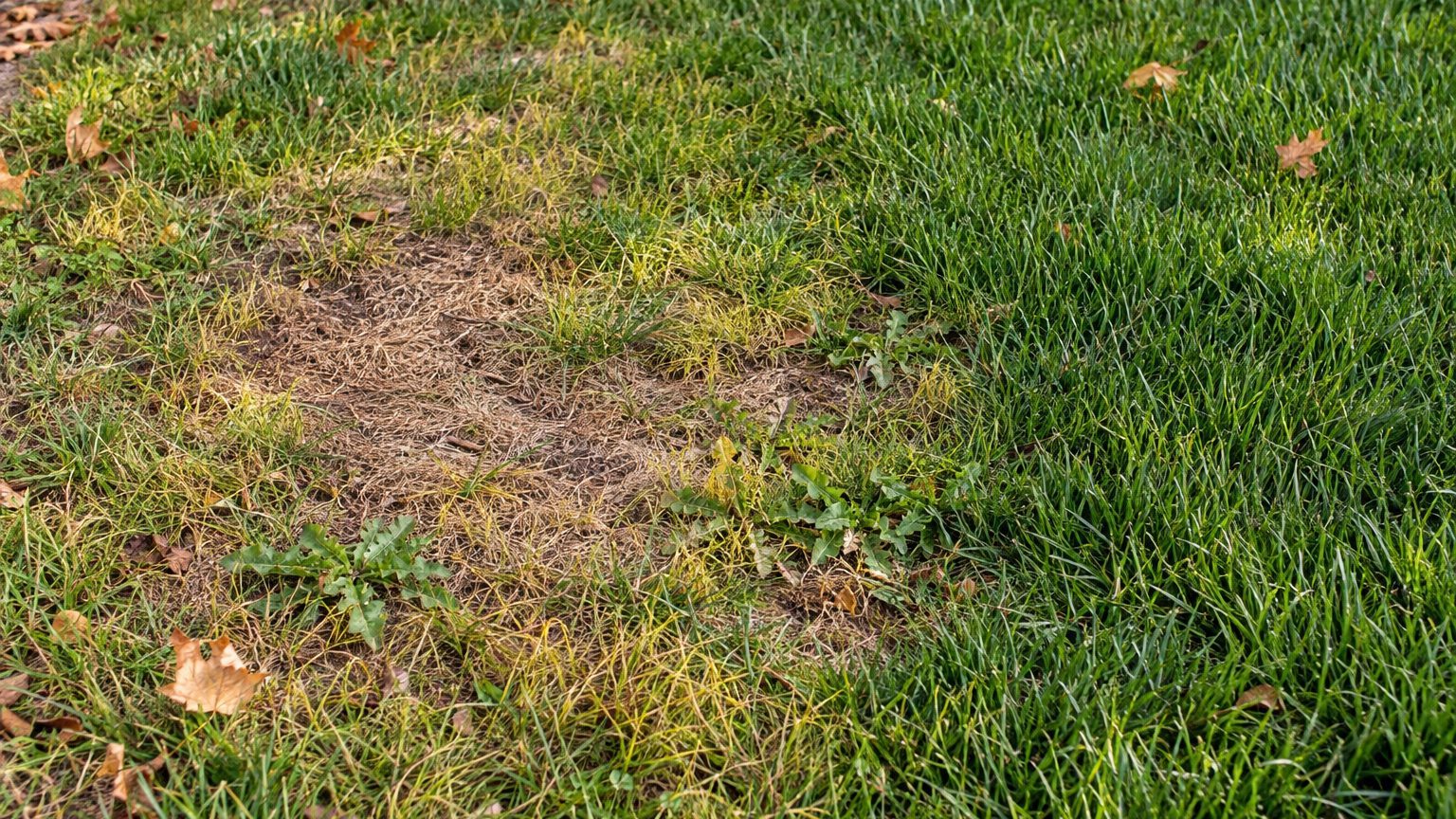
When bermudagrass turns tan in the cool months, bright green weeds such as annual bluegrass and small broadleaf plants move into the gaps. They look like a patch of lawn that never went dormant. Pull them by hand while they are small, before they can set seed.

Crabgrass in Thin Spots

Crabgrass in Thin Spots — Lawn Problems and Solutions in Arizona

Crabgrass shows up as coarse, light green clumps that spread flat along the ground and pop up wherever the lawn is thin. Bare soil in spring gives it room to start. Dense turf helps crowd out crabgrass, so reseed bald areas in April or May and mow from March through November.

Spongy Thatch Buildup

If the lawn feels springy and your fingers meet a mat of brown stems before reaching soil, thatch has built up. A layer up to 1/2 inch thick is healthy. Above that, dethatch or core aerate, and May and June are the months to do it, while bermudagrass is growing fast enough to recover.

Nutsedge in Wet Spots

Nutsedge looks like grass but grows taller, with stiff, glossy, yellow-green blades and a triangular stem you can feel by rolling it between your fingers. It tends to take over low spots and areas near leaking sprinklers. Fix the drainage first, then pull the plants out, tubers included.

Armyworms in Late Summer

Armyworms chew grass blades down to stubs and leave irregular brown patches that look like drought damage. The giveaway is that the patch keeps growing while the watering stays the same. Part the grass at the edge of the damage in the morning or evening and look for green or tan caterpillars feeding.

Fungal Patches on Overseeded Lawns

Lawns overseeded with ryegrass for winter color can develop slimy, dark or yellowing patches when the soil stays wet and the nights are still warm. Overseeded ryegrass is the concern in this situation. Water earlier in the day so blades dry out, and avoid sowing the ryegrass too thickly.

How to Tell Which Lawn Problem You Have

A symptom by itself is rarely enough. Look at the shape of the patch, whether the grass lifts away from the soil, the time of year, and whether the spot sits in sun or shade. Combining clues points to a cause more reliably.

Tug on the grass at the edge of a brown area. Roots that hold firm suggest drought stress or heat. Grass that lifts away easily can indicate damaged roots or rot.

What you see Where and when Likely cause
Irregular tan patches that keep growing, blades chewed short Late summer into fall, sunny areas Armyworms
Coarse light green clumps spreading flat Thin or bare spots, spring into summer Crabgrass
Tall, glossy, triangular-stemmed blades Low or soggy spots, summer Nutsedge
Bright green weeds among tan turf Cool months, whole lawn Winter weeds
Spongy feel, brown stems under green blades Anywhere Thatch buildup
Slimy, dark or yellow patches Overseeded lawn, damp soil, warm nights Fungal disease
Dry, crisp grass that roots hold tight Edges, slopes, near pavement, summer Heat and water stress

Shade still matters in the desert. If the thin area sits under a canopy and the grass is not chewed or slimy, think competition before pests.

Where Lawn Problems Are Worst in Arizona

Arizona spans USDA hardiness zones 4b-10b, so what threatens a lawn depends heavily on elevation and which part of the state you live in.

  • Phoenix and Tucson: Summer heat is the main stress, and shallow irrigation, dormant-season weeds and thatch in bermudagrass are the usual complaints. Cold risk varies by location, so use local guidance before ruling it out.
  • Yuma and the Colorado River valley: Heat and drying wind push water stress higher, and sandy soils drain fast, so uneven irrigation shows up quickly as dry streaks.
  • Flagstaff and Prescott: Winters bring hard freezes, the growing season is shorter, and cool-season grasses take over from bermudagrass. Weeds and slow spring recovery matter more than summer heat.

If you live between these, your problems will be a blend, so watch which season produces the damage.

Lawn Care Mistakes That Invite Problems in Arizona

Mowing Too Short or Too Rarely

Scalped grass leaves bare soil, and bare soil is where crabgrass and winter weeds take hold. Skipping mowing lets stems pile up into thatch. Mow regularly from March through November and keep the grass taller during summer heat.

Shallow, Frequent Watering

Short sprinkler cycles keep roots near the surface, which suits nutsedge and fungus but leaves the lawn fragile in July. Water April through October with longer, deeper cycles so moisture reaches the root zone, and adjust for rain.

Feeding at the Wrong Time

Fertilizer pushes soft growth that wilts in the heat of midsummer and feeds weeds as much as turf. Apply it in May and June, then again in September and October, when bermudagrass can use it. Skip the dead-center of summer and the dormant months.

Where to Get Lawn Advice in Arizona

Arizona’s climate varies enough that local advice beats general tips. Local extension resources can answer a wide range of questions.

  • University of Arizona Extension publishes lawn guidance written for desert and high-country conditions, useful when a symptom does not match anything you recognize.
  • Your county extension office can identify weeds or insects from a sample, so bring a clipping before treating anything.

Common Questions

Why Does Bermudagrass Turn Tan in Winter in Arizona?

Cool soil sends warm-season grass into dormancy. The roots are alive, and the lawn greens up again as the soil warms. Overseeding with ryegrass is how some homeowners keep color through the cool months.

When Should You Seed a Lawn in Arizona?

For bermudagrass, April and May suit the low desert, when warming soil helps seed sprout and gives the new turf time to establish before peak summer heat.

Do You Need to Worry About Frost on an Arizona Lawn?

Around Phoenix, rarely. A cold snap that reaches 32F can occur between late December and mid January, and it matters mostly for overseeded or newly seeded turf. In Flagstaff and the high country, freezes are routine.

Arizona Lawn Care Schedule, Month by Month

Arizona Lawn Care Schedule, Month by Month

Brown, crunchy turf in July is not always dead turf, and a green carpet in January is not always a healthy one. Arizona lawns follow heat more than cold, so the work lands in different months than in most of the country.

What to Do Each Month in a Arizona Lawn

Lawn in Arizona

Phoenix and the low desert set the rhythm here, where warm-season grass grows vigorously in summer and rests in winter. Overseeded winter rye changes the picture, so the notes below address dormant warm-season turf and winter overseeding.

Month In the lawn
January Rest. Warm-season grass is dormant, so skip mowing, feeding, and routine watering.
February Rest. Growth has not started, and feeding now would only push weeds.
March Start mowing as the first green shows. Keep the blade up and the cuts light while the grass wakes.
April Seed bare spots and begin regular watering as soil warms. Mow in step with growth.
May Seeding still works, so finish any patching. Fertilize now, and dethatch if the thatch feels spongy underfoot.
June Fertilize and dethatch if you missed May. Water deeply, since heat is rising and roots need depth.
July Mow and water, but hold off on feeding and heavy work. Watch for scorched patches during summer heat.
August Keep mowing and watering through the heat. Look for dry spots and sprinkler gaps rather than starting new projects.
September Fertilize as heat eases, and keep watering and mowing. The grass uses the cooler nights to recover.
October Fertilize if September slipped by. Watering and mowing carry on while growth slows.
November Make the last mowings of the year. Watering tapers off as the grass heads toward dormancy.
December Rest. The grass is dormant, and the main thing to watch is a rare cold snap over young overseeding.

Dethatching belongs to May and June because the grass is growing fast enough to heal. Doing it in cool months leaves open ground with no growth to fill it.

When Does the Lawn Season Start and End in Arizona?

In the low desert, seed when the soil sits at 65 to 70 °F and rising, which usually means spring; the lawn season fades as the soil cools in late fall. Frost has little to do with it. Phoenix sees a freeze only in some years, and a rare cold snap can bring freezing temperatures between late December and mid January.

That freeze matters mostly for young seedlings or fresh overseeding, which are tender. Established warm-season grass simply sleeps through winter.

The real limit in the low desert is summer heat. Grass grows, but it needs steady water and careful mowing to stay in shape through summer and into early fall.

How the Lawn Calendar Shifts Across Arizona

Elevation moves the calendar more than distance does, and lawn climates vary across the state.

  • Phoenix and Tucson: The schedule above is written for Phoenix and the low desert. Warm-season grass wakes in spring and rests through a mild winter.
  • Yuma and the Colorado River valley: Heat arrives early and lingers, so spring work leans toward the start of the windows and fall feeding toward the end.
  • Flagstaff and the high country: Winters freeze hard and the soil warms late, so everything shifts later. Cool-season grasses suit this climate, and growth stops earlier in fall.

Plan by your own elevation, not by the state as a whole.

Lawn Care Timing Mistakes to Avoid in Arizona

Seeding Too Early or Too Late

Seed sown before the soil warms sits idle, and seed sown after May meets summer heat before roots are established. Aim for April and May, when seed sprouts and has time to root.

Fertilizing in Peak Summer

Feeding in July or August pushes soft growth during summer heat and can leave the lawn stressed. Stick to May, June, September and October, when the grass can use the nutrients.

Shallow Watering at the Wrong Hours

Short, frequent sprinkling keeps roots near the surface, where summer heat bakes them. Water deeply and less often from April through October, and keep to the early morning so less is lost to evaporation.

Where to Get Lawn Advice in Arizona

University of Arizona Cooperative Extension offers guidance suited to desert conditions, and your county office knows local soil and water.

  • The state extension site has turf guides and grass choices, useful before you pick seed or plan overseeding.
  • Your county extension office can answer questions about local water quality and soil, so call before a big renovation.
  • Your county extension office can help diagnose problem patches.

Common Questions

Should You Overseed a Bermuda Lawn in Arizona?

Many homeowners overseed with winter rye for green color through the cool months. It is optional, adds water and mowing needs, and the grass beneath rests either way.

Why Does the Lawn Turn Brown in Winter?

Warm-season grass goes dormant when the soil cools. Brown blades together with firm, living roots mean a normal rest, and green returns as spring warms the soil.

Is the High Country Schedule Different?

Yes. Places such as Flagstaff have hard freezes and later spring warming, so the windows move later and the lawn is usually a cool-season mix.

Arizona Lawn Care: What to Do and When

Arizona Lawn Care: What to Do and When

Brown, crunchy grass in July signals summer stress across the Arizona desert, while a green lawn in January often comes from winter overseeding. Lawns in Arizona follow heat more than cold, so the care schedule runs on soil warmth and summer stress rather than on frost dates.

Frost Dates and Growing Season in Arizona

In Phoenix, the low desert reference point, a freeze is rare, with a cold snap reaching 32F only between late December and mid January in some years. Those cold snaps matter little for an established lawn but can nip a young seedling. There is no dependable fall freeze, so the seeding season is not cut short by cold. Growth follows soil warmth, and the zone range of 4b to 10b on the USDA system means Flagstaff and the high country live in another climate entirely.

  • In winter, bermudagrass goes dormant and tan, and a perennial ryegrass overseeding keeps the yard green through the cool months.
  • In March and April, mowing begins as the grass wakes up, and watering starts in April once growth picks up.
  • In April and May, soil is warm enough for seed to sprout quickly, which makes these the months to seed.
  • In May and June, the lawn is growing hard, so this is the window for dethatching and feeding.
  • From July through August, heat is the main stress, so you keep mowing and watering and hold off on heavy work.
  • In September and October, cooling nights bring a fall feeding window.

Because the low desert has almost no frost season, the limiting factor is summer heat rather than a last-frost date.

Cool-Season or Warm-Season Grass in Arizona?

Warm-season grass is what holds up in the low desert. Summer heat and dry air punish cool-season types, while mild winters let warm-season grass go dormant without damage.

Many homeowners add a cool-season grass on top in fall so the yard stays green through winter, then let it fade as heat returns.

Grass Season How it does here
Bermudagrass Warm Thrives through summer heat, then turns tan in winter
Perennial ryegrass Cool Used only for winter overseeding, since it fades in summer heat

St. Augustinegrass is also grown in warm climates, but it is never sold as seed, so it goes in as sod or plugs. In the high country around Flagstaff, where winters freeze hard, the choice looks very different.

When to Seed, Fertilize and Aerate a Lawn in Arizona

The key dates cluster in late spring and early fall. Seed when the soil is warm enough for fast germination but before intense summer heat arrives.

Ask your county extension office about aeration timing, since the available guidance does not provide a window.

Task Best months in Arizona Why then
Seeding April, May Warm soil sprouts seed fast and roots build before peak heat
Fertilizing May, June, September, October Grass is actively growing and can use the nutrients
Dethatching May, June The lawn is growing strongly and recovers quickly
Watering April through October Growth and heat demand regular moisture
Mowing March through November The lawn is growing for most of the year

If you miss the spring seeding window, wait for the next season rather than seeding into peak summer heat.

Lawn Problems to Watch for in Arizona

Brown Patches in Midsummer

Brown Patches in Midsummer — Arizona Lawn Care: What to Do and When

Heat and dry air stress turf even when it is watered. Look for dull, bluish grass that stays footprinted after you walk across it, especially along hot driveways and sidewalks.

Water regularly through summer and keep mowing, since the lawn is still growing and needs moisture to hold up.

Thick Thatch and Spongy Turf

Bermudagrass builds a layer of dead stems and roots at the soil surface. If the lawn feels springy underfoot and water runs off instead of soaking in, thatch is the likely cause.

Dethatch in May or June, when the grass grows fast enough to recover.

Winter Dormancy That Looks Like Death

Straw-colored bermudagrass in winter alarms many homeowners. If the turf is tan across the whole lawn and the stolons still look firm and pale rather than brittle, it is simply dormant. It greens up again as the soil warms.

How Lawn Care Dates Change Across Arizona

Elevation shapes the season more than distance. The desert floor and the mountains run on different clocks.

  • Phoenix and the low desert: Frost is rare, so summer heat sets the pace, and the schedule here follows the calendar above.
  • Flagstaff and the high country: Winters freeze hard and the growing season starts later, so spring work comes later and cool-season grass makes more sense.
  • Southern valleys and foothills: Conditions vary, so local advice is more reliable than a statewide climate shortcut.

If you live outside Phoenix, treat these dates as a starting point and shift them toward your own local warmth.

Where to Get Lawn Advice in Arizona

Local conditions vary a great deal across the state, so local advice pays off, especially for soil and diagnosis.

  • University of Arizona Cooperative Extension offers lawn guidance written for desert and high country conditions, useful before you plan a seeding.
  • Your county extension office can help with a soil test or a diagnosis of problem patches, and a visit before spring work helps you plan.

Common Questions

Can You Keep a Lawn Green All Year in Arizona?

Yes, in the low desert. Bermudagrass goes tan in winter, so many homeowners overseed with perennial ryegrass to keep the yard green until warm weather returns.

Is Summer Too Hot to Seed a Lawn in Arizona?

Yes. Seeding works best in April and May, when soil is warm but peak heat has not set in.

Does Frost Matter for Lawns in Phoenix?

Rarely. A freeze happens only in some years, and the biggest risk is to young seedlings rather than established grass.

Hydrangea Pests and Diseases in Arizona

Hydrangea Pests and Diseases in Arizona

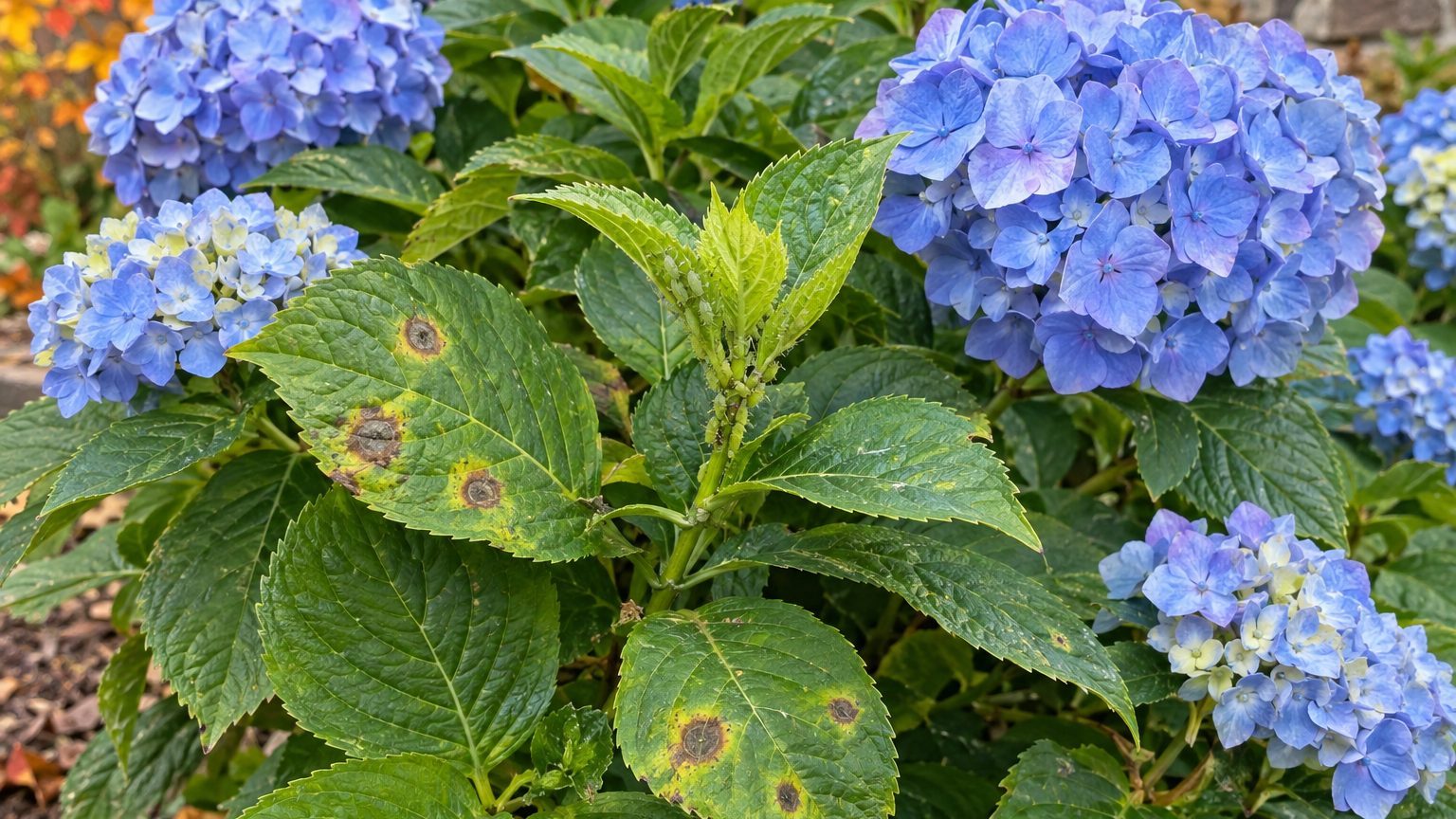
In Phoenix and across the low desert, hydrangeas rarely die from cold. What actually shows up are heat and mineral related problems: iron chlorosis from alkaline soil, spider mites and aphids feeding in dry heat, sunscorched leaf margins, and occasional fungal spotting after monsoon humidity. Knowing which one you have decides whether you reach for shade cloth, chelated iron, or a hose.

Hydrangea pests and diseases Arizona: The Short Answer

USDA Plant Hardiness Zone Map lists Arizona at 4b to 10b, and Phoenix sits deep in the warm end, where hydrangeas answer to heat and soil chemistry, not winter cold. With 32°F showing up in only 6 of the last 30 Phoenix springs, everything on this list traces back to sun, dryness, and alkaline caliche.

Aphids on new growth

Aphids cluster on tender spring shoots as soon as new growth pushes, leaving curled leaves and a sticky residue that draws ants. A strong water spray knocks most of them off, and a soap spray handles the rest before the March fertilize round pushes even softer growth.

Iron chlorosis in alkaline soil

Yellow leaves with dark green veins show up on hydrangeas planted straight into alkaline caliche, since the plant cannot pull iron from high pH soil no matter how much fertilizer goes down. Chelated iron and lowering soil pH before the next October planting window fix it faster than more feeding.

Spider mites in summer heat

Spider mites in summer heat — Hydrangea Pests and Diseases in Arizona

Fine stippling and pale, dusty leaves with faint webbing on the underside point to spider mites, which multiply fastest in the hottest, driest weeks before the July prune. A forceful hose rinse every few days breaks their cycle better than any spray, since dust and drought are what feed them.

Leaf scorch on afternoon sun

Leaf scorch on afternoon sun — Hydrangea Pests and Diseases in Arizona

Crispy brown margins on the west side of the shrub trace straight back to Arizona’s intense afternoon sun, not disease, and they show up hardest in the peak summer weeks. Afternoon shade or a shift to morning-only exposure solves it, no spray needed.

Grasshoppers chewing leaf edges

Grasshoppers chewing leaf edges — Hydrangea Pests and Diseases in Arizona

Ragged, chewed leaf edges and holes appear in mid to late summer as desert grasshopper populations peak, especially near open lots or grassy edges. Row cover during the worst weeks and hand removal in the cool morning work better than most sprays once numbers build ahead of the July fertilize round.

Powdery mildew after monsoon

Powdery mildew after monsoon — Hydrangea Pests and Diseases in Arizona

A gray-white dusting on leaf tops and stems tends to appear once monsoon humidity arrives in late summer, after weeks of dry heat gave the shrub no reason to expect it. Better air movement between plants and watering the soil instead of the leaves keeps it from spreading.

Root rot in heavy soil

Wilting despite wet soil and a blackened base mean roots are drowning in dense, poorly draining ground, usually after a heavy monsoon storm sits in a low spot. Raised planting and a wider drainage hole beat any fungicide, and it is easier to fix at the next planting window than mid-season.

How to Work Out the Dates for Your Own Yard

Figuring out which problem you actually have starts with ruling out the calendar, not the bug.

  1. Rule out frost first: NOAA NCEI climate data for Phoenix show 32°F in only 6 of the last 30 springs, so blackened tips in January are almost always a cold snap, not disease.
  2. Check where your yard falls in the zone range: the statewide spread runs 4b to 10b, and whether your soil sits at the cold or hot end decides if a symptom is cold stress or heat stress.
  3. Match the timing to the fertilize window: symptoms that show up right after the March, May, or July feeding are more likely nutrient lockup from alkaline soil than pest damage.
  4. Match the timing to the prune window: stress or wilting that follows the June or July cut usually points to heat shock from over-thinning, not a new pathogen.
  5. Check the planting season: a shrub struggling with root problems that went in outside the January, February, October, or November window is often fighting transplant shock, not rot.
  6. Call before you spray: a county extension office can confirm which of the problems above is actually on the leaf before any product goes down.

Once frost, zone, and the calendar are eliminated, whatever is left on the leaf almost always matches one of the problems above.

Arizona North to South: How the Dates Shift

USDA Plant Hardiness Zone Map spans Arizona from 4b to 10b, and that range folds into a few hours of driving instead of a thousand miles. Elevation changes which pest or disease shows up first far more than the calendar does.

  • The Low Desert (Phoenix, Tucson, Yuma): heat and alkaline soil dominate, so spider mites, chlorosis, and sunscorch show up well before any fungal problem gets a foothold.
  • The Central Highlands (Prescott, Payson, Sedona): cooler nights and a bit more moisture bring aphids and occasional powdery mildew earlier in the season than the valley ever sees.
  • The High Country (Flagstaff, Show Low, Alpine): real winter cold shifts the whole conversation toward frost damage and slow spring growth rather than heat stress.

Whichever zone matches your yard, the state calendar page lines up the fertilize and prune windows for that spot.

Mistakes Arizona Punishes

Watering on autopilot

Setting sprinklers to run daily regardless of weather drowns roots in Arizona’s dense caliche long before the surface looks overwatered. Water deeply and less often, checking two knuckles down before the next round, and match soil moisture instead of the clock.

Planting into afternoon sun

A west or south-facing spot with no shade after noon guarantees scorched margins by midsummer no matter how well the shrub is watered. Morning sun with afternoon shade, or dappled light under a taller tree, keeps leaves intact through the hottest stretch between the June and July prune.

Skipping the soil pH fix

Feeding a chlorotic hydrangea more fertilizer without correcting alkaline soil wastes the product, since the plant still cannot absorb iron at high pH. Chelated iron and sulfur worked in before the next planting window fix the root cause instead of masking it season after season.

Pruning outside the June-July window

Bigleaf hydrangeas set next year’s flower buds soon after blooming, so pruning outside the June-July window cuts off next season’s flowers even on an otherwise healthy plant. Stick to that window for any real cutting, and treat pest damage separately with spot removal instead of a full prune.

Arizona Extension Offices and County Contacts

Arizona Cooperative Extension backs up everything above with county-level diagnosis, since caliche depth, elevation, and monsoon timing shift block by block. Treat the state-level facts here as a starting point, not the final word for your yard.

  • The Arizona hydrangea calendar: month by month fertilize, plant, and prune windows for the whole state.
  • Which hydrangeas hold up here: varieties ranked from most reliable to riskiest in Arizona heat and soil.
  • Arizona Cooperative Extension: county offices that confirm what is actually on the leaf before anything gets sprayed.

Common questions

Do Arizona hydrangeas get spider mites more than in other states?

Yes. The dry heat and dust of the low desert favor spider mites far more than humid climates do, so a hose rinse during the hottest weeks matters more here than any store-bought treatment.

Is powdery mildew common on Arizona hydrangeas?

It is less common than in humid regions, but it can appear briefly once monsoon humidity arrives in July and August, easing off again as soon as the air dries back out.

What is the most common hydrangea problem in the Phoenix area?

Iron chlorosis from alkaline caliche soil is the most persistent issue around Phoenix, showing up as yellow leaves with green veins no matter how much fertilizer goes down.

When to Prune Hydrangeas in Arizona

When to Prune Hydrangeas in Arizona

In Phoenix and across the rest of the low desert, hydrangeas go in the ground in January, February, October, or November, when heat backs off enough for new roots to establish without scorching. Frost barely factors into the decision here. Bigleaf varieties get pruned in June and July, right after bloom, before the worst of summer arrives. Higher, cooler parts of the state run on a different clock entirely.

When to prune hydrangeas in Arizona: The Short Answer

Phoenix hydrangea planting comes down to two windows carved out by heat rather than cold, January, February, October, and November, according to the state’s planting calendar. The USDA Plant Hardiness Zone Map puts Arizona at a sprawling 4b to 10b, a range wide enough that no single date applies statewide, only to the low-desert reference city of Phoenix.

  • January: One of the two low-desert planting windows opens, and cool soil lets roots establish before summer heat becomes the limiting factor. The rare 32F snap this month is not a serious threat.
  • February: The planting window continues, and this is the last easy month to set new hydrangeas before spring warmth accelerates toward the heat that actually decides this crop’s fate.
  • March: The first of three yearly fertilizer feedings goes down, giving roots a boost before active spring growth takes over.
  • April: No planting or pruning is scheduled. Deep, regular watering matters more as afternoon highs climb past what hydrangea roots comfortably tolerate.
  • May: Second fertilizer feeding of the year. Watch morning-shade beds and containers for early wilting on the first genuinely hot afternoons.
  • June: Bigleaf pruning begins, right after the spring bloom fades and before the hottest stretch of summer sets in.
  • July: The third and final fertilizer feeding lands alongside the tail end of pruning. Finish cuts before triple-digit heat stalls new growth for the season.
  • August: Nothing is scheduled. This is the month to protect existing plants with afternoon shade and steady moisture rather than start anything new.
  • September: Still no planting or pruning. Use the month to prep beds and containers for the fall window just ahead.
  • October: The second planting window opens as summer heat finally breaks, the better of the two dates since roots get a full cool season to spread.
  • November: Planting window continues. Get anything new in the ground before December’s outside chance of a freeze.
  • December: A rare cold snap can bring 32F, though it has shown up in only 6 of the last 30 springs. Established plants go dormant and need little attention.

Notice what’s missing here: a spring frost date. Phoenix is listed as frost-free for 365 days in most years, so this calendar runs on heat, not cold. Higher, cooler pockets of Arizona, covered below, freeze hard and follow a different clock entirely.

How to Work Out the Dates for Your Own Yard

Every yard sits a little differently even within the same metro, and working out your own dates starts with the same handful of checks the state calendar is built on.

  1. Check your microclimate first: A west-facing wall or a low spot that traps heat pushes your safe planting window earlier into January rather than February, because that corner hits damaging heat sooner than an open, shaded yard.
  2. Count from the plant window, not a frost date: NOAA NCEI 1991-2020 Climate Normals shows Phoenix reaching 32F in only 6 of 30 springs, so aim to have hydrangeas in the ground by the end of the January-February window or the October-November window rather than waiting on a frost warning that rarely comes.
  3. Mark the bigleaf pruning deadline: Plan cuts for June or July, right after bloom fades, and finish before the hottest weeks arrive so wounds have time to callus in mild air.
  4. Match fertilizer timing to the three feedings: March, May, and July line up with spring growth, early summer stress, and the push needed before triple-digit heat slows the plant down.
  5. Watch for the rare freeze anyway: A cold snap between late December and mid-January can still bring 32F in an unlucky year, so keep frost cloth on hand for young plants even though it isn’t the deciding factor.

None of these steps replaces watching your own yard for a season. A hydrangea in full afternoon sun behaves nothing like one tucked against a shaded, east-facing wall, even on the same street.

Arizona North to South: How the Dates Shift

Elevation moves these dates more than latitude does in a state built on desert floors and mountain rims, and the USDA Plant Hardiness Zone Map’s 4b to 10b range for Arizona is the clearest sign of how far apart those pockets sit.

  • High Country (Flagstaff, the Mogollon Rim, the White Mountains): true hard freezes here put growing conditions closer to the cold end of the state’s zone range, and hydrangeas need real winter protection on a schedule that looks nothing like Phoenix’s.
  • Southern Arizona desert (Tucson, Yuma): a similarly heat-driven calendar to Phoenix, with slightly milder summer nights in a few higher pockets, but still well within the frost-free bulk of the state’s zone range.

For the zone-by-zone specifics behind these shifts, the state hydrangea guide breaks down each pocket in more detail.

Mistakes Arizona Punishes

Planting Into the Summer Heat

Going into the ground outside the January-February or October-November windows means young roots meet triple-digit heat before they’ve spread, and most bigleaf hydrangeas planted in May or June stall or scorch within weeks. Stick to the state’s plant months and treat summer as a waiting season.

Pruning Outside the June-July Window

Bigleaf hydrangeas set next year’s buds on old wood soon after this year’s bloom fades, so pruning in August or later removes flowers before they even form. Keep cuts inside June and July, and skip pruning entirely in a year when bloom was already thin.

Full Afternoon Sun With No Cover

A hydrangea planted with unblocked west or south afternoon exposure scorches by midsummer even with regular watering, since desert light intensity outruns what the leaves can handle. East-facing walls or filtered high shade matter more here than in milder states.

Arizona Extension Offices and County Contacts

The state’s hardiness range and the Phoenix calendar above are starting points, but a county office knows local soil, water hardness, and pest pressure better than any statewide chart, through the University of Arizona Cooperative Extension network.

  • Your state page: the frost dates and the pruning window where you live.
  • Which ones hold up here: variety-by-variety notes for Arizona conditions.
  • What goes wrong here: the pests and problems specific to this state’s growing season.

Common questions

Can hydrangeas survive a Phoenix summer?

Most established plants make it through with consistent deep watering and afternoon shade, but the summer months are the reason planting is scheduled for January, February, October, or November instead of spring or midsummer.

Do hydrangeas need winter protection in Arizona?

In the low desert, rarely. A 32F snap has shown up in only 6 of the last 30 springs, so the risk is small, though a light frost cloth on young plants during a cold snap between late December and mid-January is cheap insurance.

What’s the best month to prune hydrangeas in Arizona?

June or July, right after bigleaf bloom fades and before the harshest summer heat sets in, since cuts made later remove next year’s flower buds along with this year’s spent blooms.

The almanac, state by state. Every date on this site comes from a state’s own frost facts and its extension service’s calendar — and says where it comes from.