Skip to content
  1. Jan
  2. Feb
  3. Mar
  4. Apr
  5. May
  6. Jun
  7. Jul
  8. Aug
  9. Sep
  10. Oct
  11. Nov
  12. Dec
State
Arizona
USDA zones
4b-10b
Frost
none in an average year
Annual rain
7 in
Lawn zone
warm-season
Source
NOAA NCEI 1991-2020 Climate Normals + NOAA RCC ACIS daily records, station USW00023183 — https://www.ncei.noaa.gov/access/services/data/v1?dataset=normals-annualseasonal&stations=USW00023183 · Phoenix

The year in Arizona, from the calendar

  1. JanSpring bulbs bloom · Plant hydrangeas · Plant roses · Prune roses · Prune fruit trees
  2. FebSpring bulbs bloom · Plant hydrangeas · Feed roses · Plant roses · Prune roses
  3. MarSpring bulbs bloom · Feed hydrangeas · Feed roses · Plant fruit trees · Mow
  4. AprSpring bulbs bloom · Seed the lawn · Feed roses · Mow · Water
  5. MaySpring bulbs bloom · Feed hydrangeas · Seed the lawn · Feed roses · Dethatch
  6. JunPrune bigleaf hydrangeas · Feed roses · Dethatch · Fertilize the lawn · Mow
  7. JulFeed hydrangeas · Prune bigleaf hydrangeas · Mow · Water
  8. AugMow · Water
  9. SepPlant spring bulbs · Feed roses · Fertilize the lawn · Mow · Water
  10. OctPlant spring bulbs · Plant hydrangeas · Feed roses · Plant trees · Fertilize the lawn
  11. NovPlant hydrangeas · Plant trees · Mow
  12. DecPlant trees

From the state frost facts and extension calendars: University of Arizona Cooperative Extension · University of Arizona Cooperative Extension ; eXtension Ask an Expert · Clemson HGIC factsheet — Hydrangea · UC Statewide IPM Program — UC Guide to Healthy Lawns (seeding times; fertilization by zone).

Hydrangeas That Grow Well in Arizona

Hydrangeas That Grow Well in Arizona

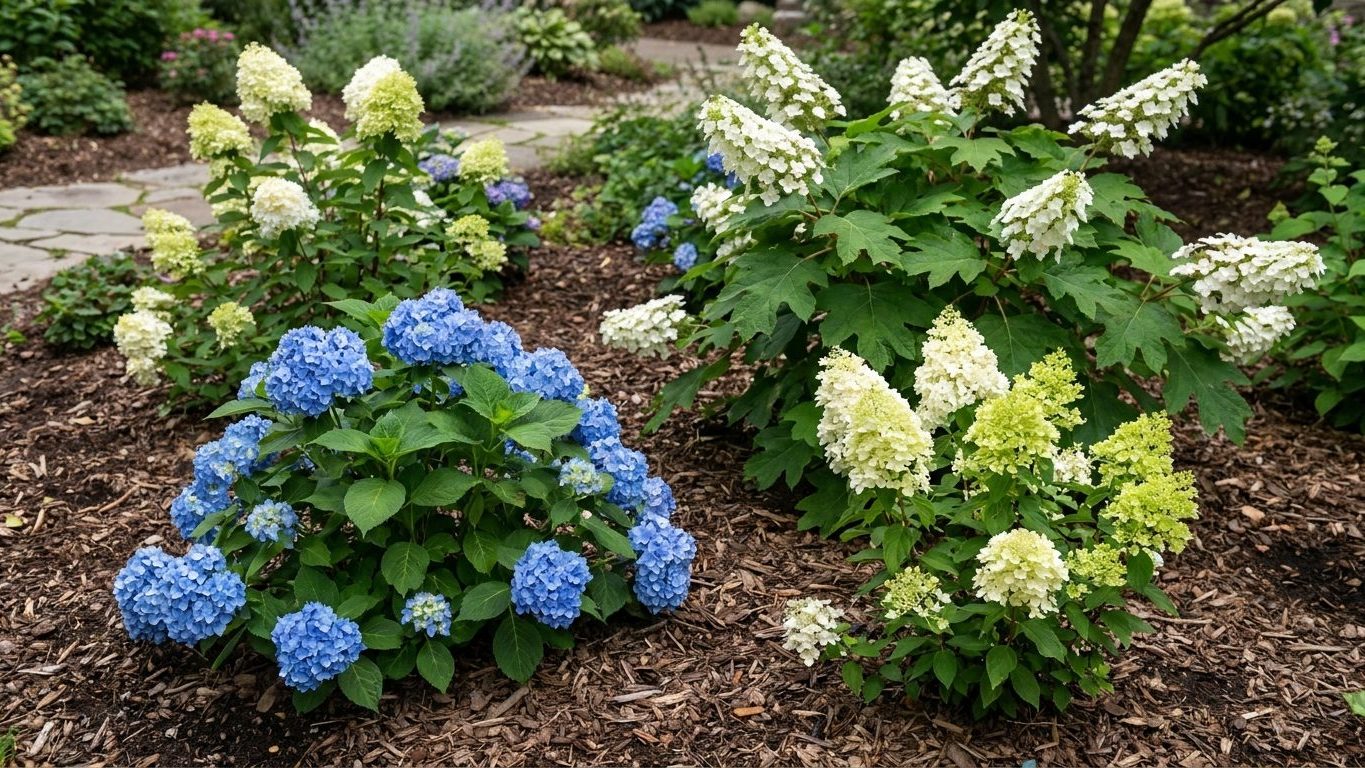
Panicle hydrangea and oakleaf hydrangea are the two safest bets for an Arizona yard, tolerating the reflected heat and alkaline soil that define the low desert around Phoenix. Bigleaf hydrangea, the variety most people picture, struggles here without heavy shade and constant water. The right pick depends less on frost, which barely touches Phoenix, and more on how much afternoon sun your bed actually gets.

The Short Answer

The USDA Plant Hardiness Zone Map puts Arizona’s growing range at 4b to 10b, and Phoenix, the state’s low-desert reference city, sits at the hot end of that scale with a frost-free season that stretches through nearly the entire year. That combination of intense heat and alkaline soil, more than cold, decides which hydrangea makes it through summer here.

Panicle Hydrangea

Panicle Hydrangea — Hydrangeas That Grow Well in Arizona

Panicle hydrangea is the safest choice for Arizona because it blooms on new wood and tolerates full sun better than any other type, even in alkaline soil that yellows other hydrangeas. It handles low-desert heat with deep, regular watering and holds up at higher elevation too.

Oakleaf Hydrangea

Oakleaf Hydrangea — Hydrangeas That Grow Well in Arizona

Oakleaf hydrangea comes from the humid Southeast, but it copes with Arizona’s dry heat once its roots are established. It wants morning sun and afternoon shade in the low desert, and rewards that placement with fall color few other hydrangeas offer here.

Smooth Hydrangea

Smooth Hydrangea — Hydrangeas That Grow Well in Arizona

Smooth hydrangea, the type behind old-fashioned ‘Annabelle’, tolerates more cold than heat, which makes it a better fit for Flagstaff and the high country than for Phoenix. In the low desert it needs a shaded courtyard and steady moisture to avoid wilting by early afternoon.

Mountain Hydrangea

Mountain Hydrangea — Hydrangeas That Grow Well in Arizona

Mountain hydrangea is a smaller relative of bigleaf hydrangea and shares its dislike of reflected heat and alkaline soil. It can work in a shaded, irrigated bed at higher elevation, but the low desert around Phoenix pushes it past its limit most summers.

Bigleaf Hydrangea

Bigleaf Hydrangea — Hydrangeas That Grow Well in Arizona

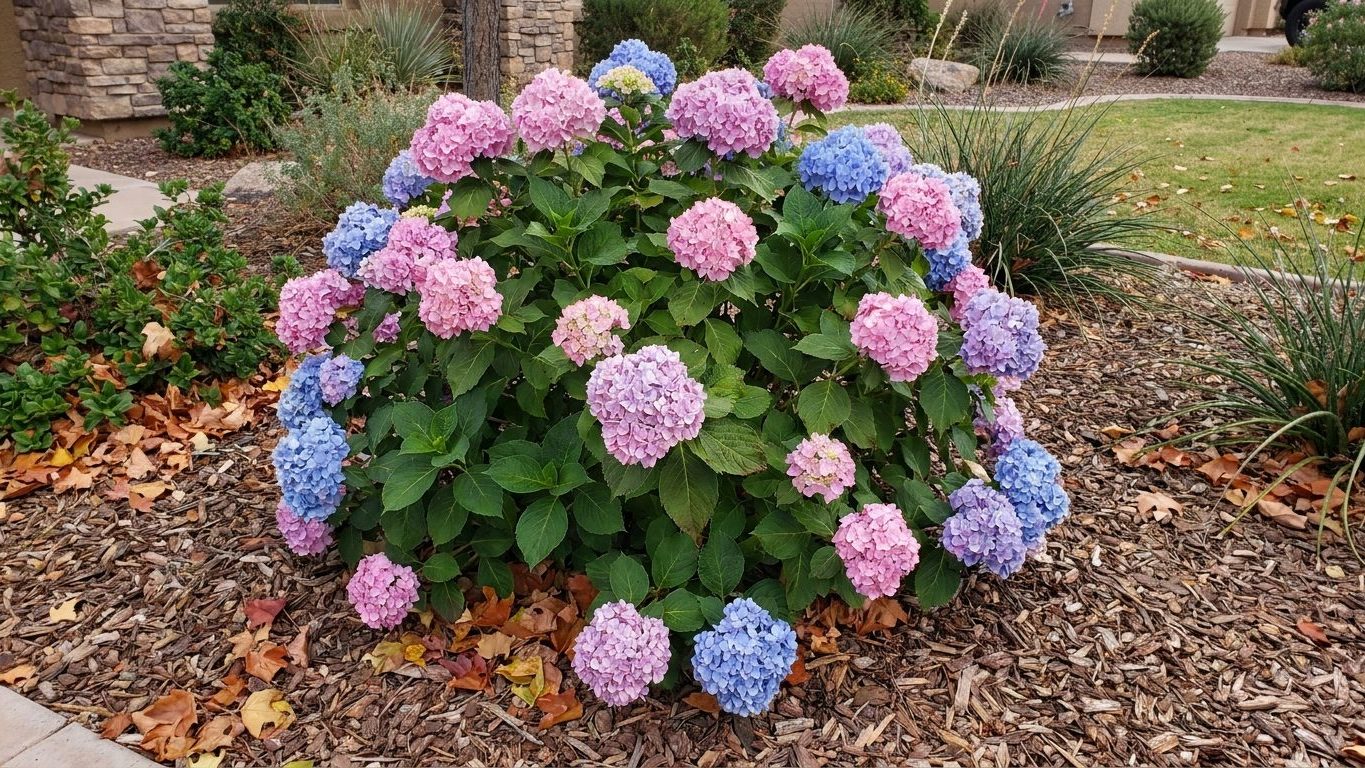
Bigleaf hydrangea is the variety most people picture when they hear the word hydrangea, and it’s the hardest to keep alive in Arizona. Its shallow roots and broad, thin leaves scorch in reflected heat, and alkaline desert soil locks up the iron it needs, turning leaves yellow between the veins.

Climbing Hydrangea

Climbing Hydrangea — Hydrangeas That Grow Well in Arizona

Climbing hydrangea needs steady moisture and a cool root run to establish, conditions that are hard to offer anywhere below the high country. It’s the riskiest of the six for Arizona, and it usually fails before it ever climbs anything.

How to Work Out the Dates for Your Own Yard

Matching a hydrangea to an Arizona yard starts with three questions, not one date on a calendar.

  1. Find your zone on the map: the USDA Plant Hardiness Zone Map puts Arizona anywhere from 4b in the high country to 10b in the low desert around Phoenix.
  2. Count your hours of afternoon sun: past four hours of direct west sun in the low desert pushes bigleaf and mountain hydrangea past what they can handle.
  3. Test your soil pH: desert soil runs alkaline, and a hydrangea that needs acid soil to hold iron will yellow between the veins within a season.
  4. Plan the water: panicle and oakleaf tolerate a missed watering, smooth and bigleaf wilt by afternoon and rarely bounce back the same day.
  5. Pick the exposure: north or east-facing beds, or afternoon shade from a wall or tree, are where any hydrangea has a real chance below the high country.

Panicle hydrangea survives an Arizona summer because it flowers on new wood and shrugs off heat once its roots are established. Bigleaf hydrangea rarely survives the same yard, since its shallow roots and thin leaves scorch before the first bloom opens.

Arizona North to South: How the Dates Shift

Elevation changes the entire hydrangea conversation in Arizona, shifting the limiting factor from heat back toward real cold the higher you go.

  • High Country (Flagstaff, the Mogollon Rim, the White Mountains): far above the desert floor, elevation brings genuine winter freezes back into play, which favors panicle and smooth hydrangea over anything more heat-adapted but cold-tender.
  • Central Highlands (Prescott, Payson, Sedona): mid-elevation towns split the difference, cooler than Phoenix through summer without the hard freeze of the high country, which widens the choice to oakleaf and panicle both.
  • Low Desert (Phoenix, Tucson, Yuma): the reference part of the state for the hardiness range, where summer heat rather than any frost date decides which hydrangea makes it through July.

The state guide breaks down exactly where a given yard falls between these three, and how that shifts the pruning and watering routine.

Mistakes Arizona Punishes

Bigleaf hydrangea in full afternoon sun

Bigleaf hydrangea’s broad, thin leaves scorch fast under reflected desert heat, especially against a west-facing wall or fence. The fix is exposure, not variety loyalty: move it to morning sun with afternoon shade, or replace it with panicle hydrangea, which tolerates the same spot without scorching.

Yellow leaves with green veins

Desert soil runs alkaline, and alkaline soil locks up the iron a hydrangea needs, showing up as yellow leaves with the veins still green. Sulfur or chelated iron treats the symptom for a season, but choosing panicle or oakleaf hydrangea, both far more tolerant of alkaline soil, solves it for good.

Wilting every afternoon on autopilot

An irrigation timer set once in spring rarely keeps up with July heat, and a hydrangea that wilts every afternoon on the same schedule is asking for more water, not a different spot. Check the timer monthly through summer, and add a second cycle before assuming the plant itself is failing.

Arizona Extension Offices and County Contacts

The USDA Plant Hardiness Zone Map’s 4b to 10b range for Arizona is a starting point, not a yard-specific plan. County offices of the University of Arizona Cooperative Extension fill in the rest, from soil test results to local pest alerts.

  • Your state page: the frost dates and the full growing guide for Arizona hydrangeas.
  • What goes wrong here: the pests and disorders that show up on Arizona hydrangeas, in season order, and what actually works.
  • University of Arizona Cooperative Extension: county-by-county contacts, soil testing, and local planting advice.

Common questions

Do hydrangeas need afternoon shade in Arizona?

In the low desert around Phoenix, yes, for most types. Panicle hydrangea is the exception that tolerates more direct sun, but even it appreciates relief once temperatures peak in summer.

Can hydrangeas grow in Phoenix without a real frost?

Phoenix rarely freezes, so frost isn’t the obstacle it is for most of the country. The obstacle is a frost-free season so long and so hot that summer heat, not winter cold, sets the limit on which hydrangea survives.

Which hydrangea handles Arizona’s dry heat best?

Panicle hydrangea and oakleaf hydrangea both tolerate the low desert with less fuss than bigleaf, mountain, smooth, or climbing hydrangea, especially once their roots are established and they’re given some relief from the most intense afternoon sun.
When to Plant Hydrangeas in Arizona: Dates and Varieties

When to Plant Hydrangeas in Arizona: Dates and Varieties

Hydrangeas can grow in Arizona, but only where shade and elevation soften the state’s real limiting factor: heat, not frost. In the low desert around Phoenix, freezing weather barely registers, so the growing calendar answers to summer highs rather than spring thaw. Higher ground near Flagstaff behaves like a true four-season garden instead.

Hydrangeas Care Calendar for Arizona

Growing Hydrangeas in Arizona: Dates and Varieties

NOAA’s 1991-2020 climate normals for Phoenix show a 32-degree freeze in only 6 of the last 30 springs, always in the late-December-to-mid-January window, with a frost-free season listed at 365 days, inside the USDA Plant Hardiness Zone Map’s statewide range of 4b to 10b, so summer heat runs this calendar, not frost.

  • Root check: with no true dormancy to force, buy and move plants in nearly any month once shade and water are ready.
  • Planting: set new hydrangeas out once the late-December-to-mid-January cold-snap window has passed for good.
  • Shade rig: build permanent afternoon shade before the year’s hottest stretch arrives, the single decision that keeps leaves from scorching.
  • Peak heat: water deeply each morning through the hottest months and expect wilting by early afternoon regardless.
  • Fall reset: once triple-digit days fade, resume feeding and trim stems that flowered on new wood.
  • Winter coast: through the late-December-to-mid-January snap, hold off on fertilizer and let roots rest.

None of these steps chase a frost date, because in the low desert there is barely one to chase, so shade decides more than any date on the calendar for a hydrangea in Arizona.

Best Hydrangeas for Arizona

Not every hydrangea sold at a nursery belongs in this state. The USDA Plant Hardiness Zone Map puts Arizona’s range at 4b to 10b, and Phoenix sits at the hot end, which rules out kinds bred for cooler, wetter summers.

Panicle and smooth types shrug off heat better than bigleaf ever will, since they bloom on new wood and can be cut back hard without losing a season. Bigleaf and oakleaf need real shade and steady moisture to survive past June.

Kind Flowers on Verdict in Arizona Why
Panicle New wood Best statewide fit Tolerates heat, reblooms even after dieback
Smooth New wood Workable in shaded low desert Forgives hard pruning and stress
Bigleaf Last year’s wood High country or deep shade only Struggles at the zone’s hot end near Phoenix
Oakleaf Last year’s wood Milder microclimates only Wants part shade the low desert rarely offers

Climbing and mountain hydrangeas exist too, but the other kinds are on their own pages, since this state’s heat leaves little room for the ones that need cool, humid summers to set buds.

When to Plant, Prune and Feed Hydrangeas in Arizona

Three windows matter more than the other nine months combined. Each one counts from the same fact: Phoenix’s frost season is functionally absent, while the high country still freezes hard.

Planting waits for the cold-snap window to clear, pruning depends on whether a kind blooms on old or new wood, and feeding stops once summer heat shuts growth down.

Task Window here Counted from
Plant Once nights hold above freezing for good After the late-December-to-mid-January cold-snap window
Prune new-wood kinds Late winter, before spring growth starts Weeks before the cold-snap window closes
Feed Resume once the hottest stretch breaks Counted from the fall easing of summer heat

Old-wood kinds like bigleaf and oakleaf get pruned right after their flowers fade instead, never in late winter, or next year’s buds go with the cut.

Hydrangeas Problems in Arizona and What Causes Them

Leaves scorched on the sunny side

The desert sun, not drought, causes crisped, papery leaf edges, since these plants evolved for filtered light and humidity Arizona rarely offers. Move containers to morning-only sun or build shade cloth over in-ground plants. See the state’s what-goes-wrong page for pest-driven damage that looks similar.

Buds lost to a rare cold snap

When the late-December-to-mid-January window does bring a 32-degree night, unprotected buds on old-wood kinds can blacken overnight. Cover plants with frost cloth on the nights a freeze is forecast. High country gardens face this far more often than the low desert does.

No flowers despite healthy leaves

No flowers despite healthy leaves — Growing Hydrangeas in Arizona: Dates and Varieties

Old-wood kinds pruned in late winter or fall lose the buds they already set, leaving a green, flowerless shrub by summer. Prune bigleaf and oakleaf right after bloom instead. New-wood kinds like panicle rarely run into this problem.

Arizona North to South: How the Dates Shift

Elevation moves the calendar here more than latitude does, since climbing out of the low desert changes the climate more than driving from the southern border to the Utah line ever would.

  • The low desert (Phoenix, Tucson, Yuma): the state’s hottest, driest stretch, where shade and heat rule every decision and frost barely enters the picture.
  • The high country (Flagstaff, the White Mountains): real winters and real dormancy, closer to the climate hydrangeas actually evolved for.
  • The central highlands (Prescott, Sedona, Payson): a milder middle ground, cooler nights than Phoenix but nowhere near the freezes up north.

Check the state’s monthly calendar page for the dates that match your part of Arizona instead of relying on a statewide average.

Arizona Extension Offices and County Contacts

Arizona’s zone range of 4b to 10b is a starting point, not a verdict on your yard, and the University of Arizona Cooperative Extension, listed in USDA NIFA’s land-grant directory, is where a local county office can confirm what works next door.

  • The monthly calendar: month-by-month planting, pruning and feeding windows for your part of the state.
  • Which ones hold up here: the deeper case for and against each kind of hydrangea in Arizona’s heat.
  • What goes wrong here: pests and disease pressure specific to desert and high-country gardens.

Call before you dig. County staff know this month’s heat better than any almanac does.

Common questions

Can hydrangeas survive Phoenix summers?

Only with heavy afternoon shade and daily watering, since Phoenix’s frost-free season runs nearly all year and NOAA’s climate normals for the city point to heat, not cold, as the real threat.

Do hydrangeas need a freeze to bloom in Arizona?

No. Old-wood kinds set their buds the previous season regardless of a hard freeze, and most of the state, aside from the high country, sees a freeze in only a handful of winters.

What’s the easiest hydrangea for a desert yard?

Panicle hydrangeas tend to handle Arizona’s low-desert heat and alkaline soil better than bigleaf or oakleaf types, since they bloom on new wood and tolerate a harder cutback each year.

The almanac, state by state. Every date on this site comes from a state’s own frost facts and its extension service’s calendar — and says where it comes from.