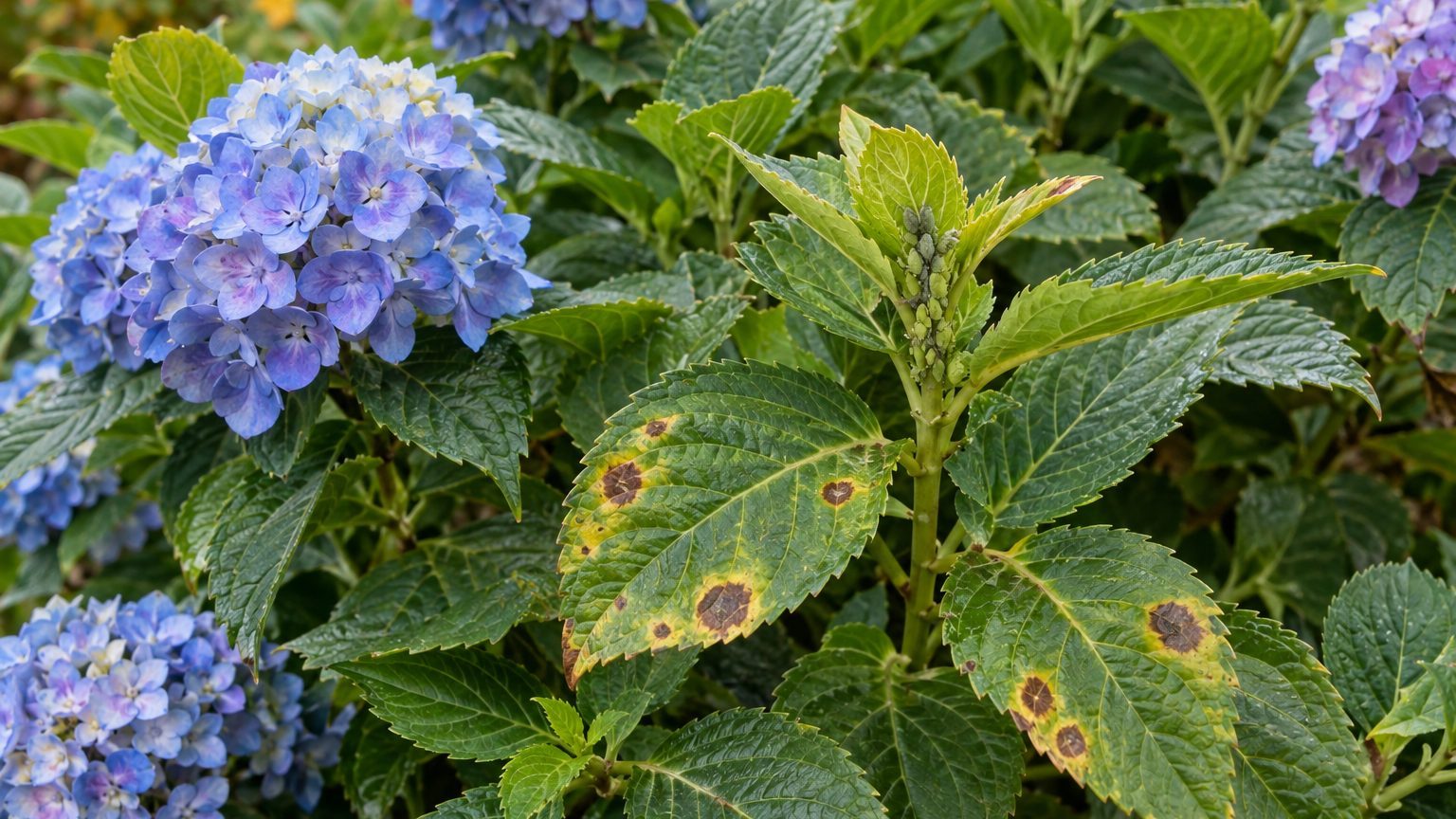
Around Denver, hydrangea trouble in Colorado is less about six-legged pests and more about the ground and the air underneath them. Alkaline soil, thin humidity, and a last spring frost that can land anywhere between May 1 and May 11 cause iron chlorosis, scorched leaves, and frost-nipped buds far more often than aphids or fungus. Check the soil and the frost calendar first.
Hydrangea pests and diseases Colorado: The Short Answer
Here’s what actually shows up on hydrangeas in the Denver area, roughly in the order it appears across a growing season, worth checking against before treating for the wrong thing.
Iron chlorosis (yellow leaves, green veins)
Colorado’s soil runs alkaline almost everywhere the USDA Plant Hardiness Zone Map counts from 3b to 7b, and hydrangeas planted in it can’t pull iron from that chemistry. New leaves turn pale yellow while the veins stay dark green. Feed with chelated iron in spring, work sulfur into the soil, and recheck by midsummer.
Winter dieback on stem tips

Denver’s last spring frost can land as late as May 11, long after buds have started swelling, and a cold snap that week kills flower buds outright. Stems survive but stay bare. Delay pruning until new growth confirms which wood is alive.
Aphids on new growth
Aphids show up on tender spring shoots once nights warm, clustering under leaves and along stem tips. They leave a sticky residue and curled foliage behind. A strong water spray knocks most colonies off, and insecticidal soap handles the rest before ants start farming them for honeydew.
Powdery mildew on leaves
Powdery mildew appears by midsummer as a white, flour-like coating across leaf surfaces, thriving in the humid spells between Colorado’s dry stretches. It rarely kills the shrub but weakens it. Space plants for airflow, water at the soil line instead of overhead, and remove badly coated leaves.
Spider mites in hot, dry weather

Spider mites multiply fast once summer heat and low humidity settle in, leaving leaves stippled and dusty with fine webbing on the undersides. They favor stressed, drought-thirsty shrubs. Hose down foliage regularly, keep the root zone consistently moist, and reserve miticide for infestations that persist past a week.
Botrytis blight on flowers

Botrytis blight settles into flower clusters during cool, wet fall weather, turning petals brown and fuzzy gray at the base. Overcrowded plantings with poor air movement invite it fastest. Deadhead spent blooms promptly, clear fallen debris each fall, and avoid watering late in the day.
Leaf scorch from wind and sun
Front Range wind and intense high-altitude sun scorch leaf edges brown and papery, especially on shrubs facing west without afternoon shade. It’s a moisture problem, not a disease. Water deeply twice a week during hot spells, and site new plants where afternoon light is filtered.
Colorado — the year and the numbers
- State
- Colorado
- USDA zones
- 3b-7b
- Last spring frost
- May 1 to May 11
- First fall frost
- September 30 to October 12
- Annual rain
- 15 in
- Lawn zone
- transition-season
- Source
- NOAA NCEI 1991-2020 Climate Normals, 32F freeze probabilities · Denver
How to Work Out the Dates for Your Own Yard
Start from Denver’s frost window and count backward or forward depending on the task, since every treatment date in this guide hangs off that same range.
- Mark your last spring frost: NOAA NCEI 1991-2020 Climate Normals puts it between May 1 and May 11 for the Denver station, so treat early May as a buffer zone, not planting day.
- Check for iron chlorosis before you fertilize: if new leaves are already yellowing, skip the May feeding until soil pH is corrected, since fertilizer won’t fix a nutrient lockout.
- Watch for aphids once shoots reach two inches: that’s usually a few weeks past the frost window, when tender growth attracts them most.
- Scout for powdery mildew through July: humidity spikes during muggy stretches are the trigger, so check leaf undersides after any run of sticky days.
- Prune bigleaf types only in June or July: cutting earlier risks removing wood that survived the frost window and would have bloomed.
- Count back from October: the first fall frost lands between September 30 and October 12, so stop fertilizing well before then to avoid pushing tender growth into the cold.
Your own yard might run earlier or later than the Denver reference station, especially at higher elevation or in a low frost pocket, so treat these dates as a starting range, not a guarantee.
Colorado North to South: How the Dates Shift
Denver’s frost window sits at one elevation and one climate pattern, but Colorado’s terrain scrambles those dates fast within a few hours’ drive.
- Front Range and Denver metro (5,280 feet on the plains): the closest match to the reference station, so the May 1 to May 11 window applies most directly here.
- Western Slope valleys (Grand Junction and similar low basins): milder overall, but cold air still pools overnight, so don’t assume an earlier planting date without checking your own low spots.
- High mountain towns (Leadville, Breckenridge, and similar elevations): frost can arrive even in July, shrinking the safe window far below what Denver sees.
- Eastern Plains: wind exposure without the foothills as a buffer scorches hydrangea leaves earlier and harder than in sheltered Denver yards.
Check the state guide for Colorado’s frost dates before assuming your yard matches the Denver reference exactly.
Mistakes Colorado Punishes
Planting before the frost window closes
Setting out hydrangeas in April, before Denver’s last frost clears between May 1 and May 11, invites bud kill on the first cold snap. Wait until the planting months open in May, and check a week of forecasts first.
Fertilizing on the wrong schedule
Feeding hydrangeas outside Colorado’s May and July fertilizing window pushes soft new growth into a cold snap or a dry August stretch. Stick to those two months only, and skip fertilizer entirely in a drought year until soil moisture recovers.
Pruning bigleaf too early
Cutting back bigleaf hydrangeas before June or July removes wood that survived winter and was about to bloom. Wait for new leaves to confirm which stems are alive, then prune only in the window the calendar allows.
Colorado Extension Offices and County Contacts
Denver’s frost window is a solid starting point, but county offices and the state extension service fill in what your specific soil, elevation, and microclimate actually need.
- Colorado State University Extension: extension.colostate.edu lists county offices, soil testing, and plant clinics across the state.
- Your county extension office: local agents know the frost pockets and soil pH quirks a statewide map can’t capture.
- Your state page: the frost dates and the calendar months for fertilizing, planting, and pruning where you live.
Call before treating anything for a suspected disease, a quick soil test often changes the diagnosis entirely.
Common Questions
Are hydrangeas prone to disease in Colorado’s dry climate?
Less than in humid states, but not immune. Powdery mildew and botrytis blight still appear during Colorado’s occasional wet or humid stretches, especially on crowded plantings with poor airflow.
Why do my hydrangea leaves turn yellow every summer?
That pattern almost always points to iron chlorosis from alkaline soil, not a pest or a virus. Chelated iron and a lower soil pH usually clear it within one growing season.
Do I need to spray for pests every year?
Most Colorado yards don’t. Aphids and spider mites show up in uneven years tied to weather, so scout first and treat only when you find an actual infestation rather than spraying on a fixed schedule.