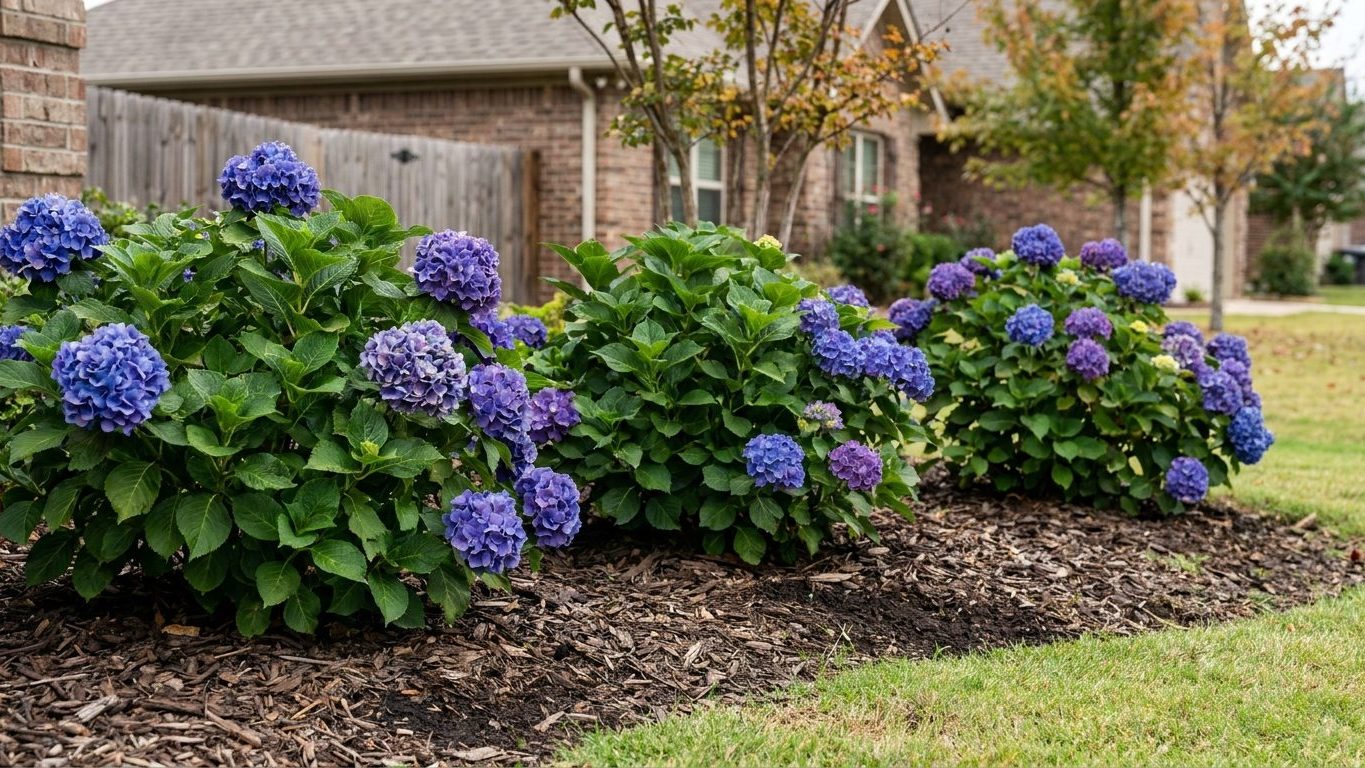
In Little Rock, the reference city for the state, USDA’s Plant Hardiness Zone Map puts the metro at 6b to 8a, and that same humid, warm stretch between frost dates drives most of what actually goes wrong on a hydrangea here. Six problems account for nearly everything a homeowner runs into, and each one shows up on its own predictable point in the season.
The Short Answer
NOAA NCEI’s 1991-2020 Climate Normals set Little Rock’s frost-free window at roughly March 12 to March 28 in spring and November 7 to November 20 in fall, and every problem below tends to land at a particular point inside that stretch.
Aphids
Aphids show first, usually as new growth pushes out after the last frost. Look for clusters of small green or black insects on tender stem tips and the undersides of young leaves, plus a sticky residue that draws ants. A strong spray of water every few days, repeated through the flush, knocks populations down without reaching for a spray bottle.
Four-lined plant bug
This one shows up a few weeks later, once nights stay consistently warm. It leaves round, sunken, dark spots scattered across the leaf, sometimes mistaken for disease. The insect itself moves fast and is hard to catch, so the damage pattern, evenly spaced round lesions rather than irregular blotches, is the real tell. It stays cosmetic on an otherwise healthy shrub.
Powdery mildew
By midsummer, humid air turns leaf surfaces chalky white, starting on the top side of older leaves near the base of the plant. It rarely kills a hydrangea outright but weakens it season after season. Spacing plants for airflow and watering the soil rather than the foliage does more than any product applied after the fact.
Cercospora leaf spot
Small purple-brown spots with tan centers appear on lower, older leaves through late summer, then climb upward and drop the leaf early. It thrives in the same humidity that feeds powdery mildew, and the two often show up on the same plant together. Raking and removing fallen leaves at season’s end starves next year’s spores.
Botrytis blight
Cool, damp stretches in fall or early spring bring a gray, fuzzy mold onto flower buds and soft stem tissue. It moves fast on crowded plants after several overcast, wet days in a row. Pruning out affected buds as soon as they turn mushy keeps it from spreading into healthy wood.
Root rot

Not a season so much as a soil condition. Wherever clay holds water for more than a day after rain, roots suffocate and the whole shrub wilts despite moist soil. Wilting that doesn’t recover after watering, on a plant sitting in heavy, slow-draining ground, is the giveaway. Raised planting and amended soil at planting time prevent it far more reliably than any treatment after the fact.
Arkansas — the year and the numbers
- State
- Arkansas
- USDA zones
- 6b-8a
- Last spring frost
- March 12 to March 28
- First fall frost
- November 7 to November 20
- Annual rain
- 50 in
- Lawn zone
- warm-season
- Source
- NOAA NCEI 1991-2020 Climate Normals, 32F freeze probabilities · Little Rock
How to Work Out the Dates for Your Own Yard
Matching a symptom to a cause starts with the calendar, not the plant.
- Mark the last frost: NOAA NCEI’s 1991-2020 Climate Normals set Little Rock’s spring frost-free start between March 12 and March 28, so anything chewing on new growth before that window closes is almost always aphids.
- Watch the six weeks after: round, sunken leaf spots that appear through April and May point to four-lined plant bug rather than disease.
- Track the humidity, not the thermometer: a chalky white coating on top leaf surfaces in July and August is powdery mildew, and it needs still air more than heat to take hold.
- Check the lower leaves first: purple-brown spots that start near the base of the plant and climb upward late in summer are Cercospora leaf spot.
- Note the weather before symptoms appear: gray mold on buds after several overcast, rainy days in a row is botrytis, and it rarely shows up during a dry spell.
- Dig a little before the first frost: a shrub that wilts even in wet soil, checked against the November 7 to November 20 fall frost window, usually has root rot rather than seasonal dieback.
None of this replaces a look at the actual plant, but the calendar narrows the guesswork fast. A problem that shows up out of season, say, powdery mildew symptoms in March, is worth a second look before treating it as textbook.
Arkansas North to South: How the Dates Shift
Arkansas’s own geography moves these dates around more than a single state figure suggests.
- The Ozark highlands (northwest Arkansas, higher elevation): cooler nights slow every one of these problems down, aphids and mildew included.
- The River Valley (central Arkansas, around Little Rock): this is the reference point the rest of the state gets compared against.
- The Delta (eastern Arkansas, Mississippi lowlands): heavier, slower-draining soil and thicker summer humidity push root rot and leaf spot ahead of schedule.
- The Gulf Coastal Plain (southern Arkansas): a longer warm season gives aphids and four-lined plant bugs time for an extra generation before frost.
Whichever part of the state you garden in, check the state page for the frost window that actually applies to your yard before assuming Little Rock’s dates are yours.
Mistakes Arkansas Punishes
Watering the leaves at night
Overhead watering after work hours leaves foliage wet through the warm, humid night, exactly the condition powdery mildew and Cercospora leaf spot need to spread. Water the soil directly, early in the day, so leaves dry before evening. See the pruning and care calendar for the state’s watering rhythm through the growing season.
Skipping the fall cleanup
Leaving fallen, spotted leaves under the shrub through winter hands next year’s leaf spot and botrytis spores a place to overwinter close to fresh growth. Rake and remove them once leaves drop, rather than leaving debris as mulch. This single habit does more than most treatments applied the following summer.
Planting straight into heavy clay
Arkansas clay holds water long after rain stops draining, and a root ball set straight into it without amendment sits wet for days. Work in compost and raise the bed a few inches before planting. That step prevents most of the root rot cases that follow.
Arkansas Extension Offices and County Contacts
The state’s hardiness zone and frost windows are a starting point, not a diagnosis. Your county extension office, through the University of Arkansas System Division of Agriculture, identifies a specific leaf spot or insect for free, usually from a photo or a sample dropped off at the office.
- Your state page: the frost dates and pruning window for wherever you live in Arkansas.
- Which ones hold up here: the varieties that tolerate Little Rock’s summers and the state’s winter lows without a fight.
- uaex.uada.edu: county office contacts and the extension service behind all of it.
Call before you spray. A ten-minute conversation saves a season of guessing.
Common questions
Do I need to spray hydrangeas every year in Arkansas?
Not as routine. Most of what shows up, aphids, four-lined plant bug damage, mild powdery mildew, stays cosmetic on an otherwise healthy shrub and clears on its own once the weather shifts. Reach for a spray only after you’ve confirmed what you’re looking at.
Can root rot be fixed once it starts?
Rarely, once wilting shows up despite wet soil. The better move is prevention at planting, raised beds and amended clay, since a hydrangea already sitting in saturated ground for a full season has usually lost too much root mass to recover fully.
Why do my hydrangeas get leaf spot every August?
Because Arkansas’s summer humidity and warm nights give Cercospora exactly what it needs, and the problem builds on itself if fallen leaves stay under the plant through winter. Cleaning up debris each fall breaks that cycle more reliably than treating leaves once spots appear.