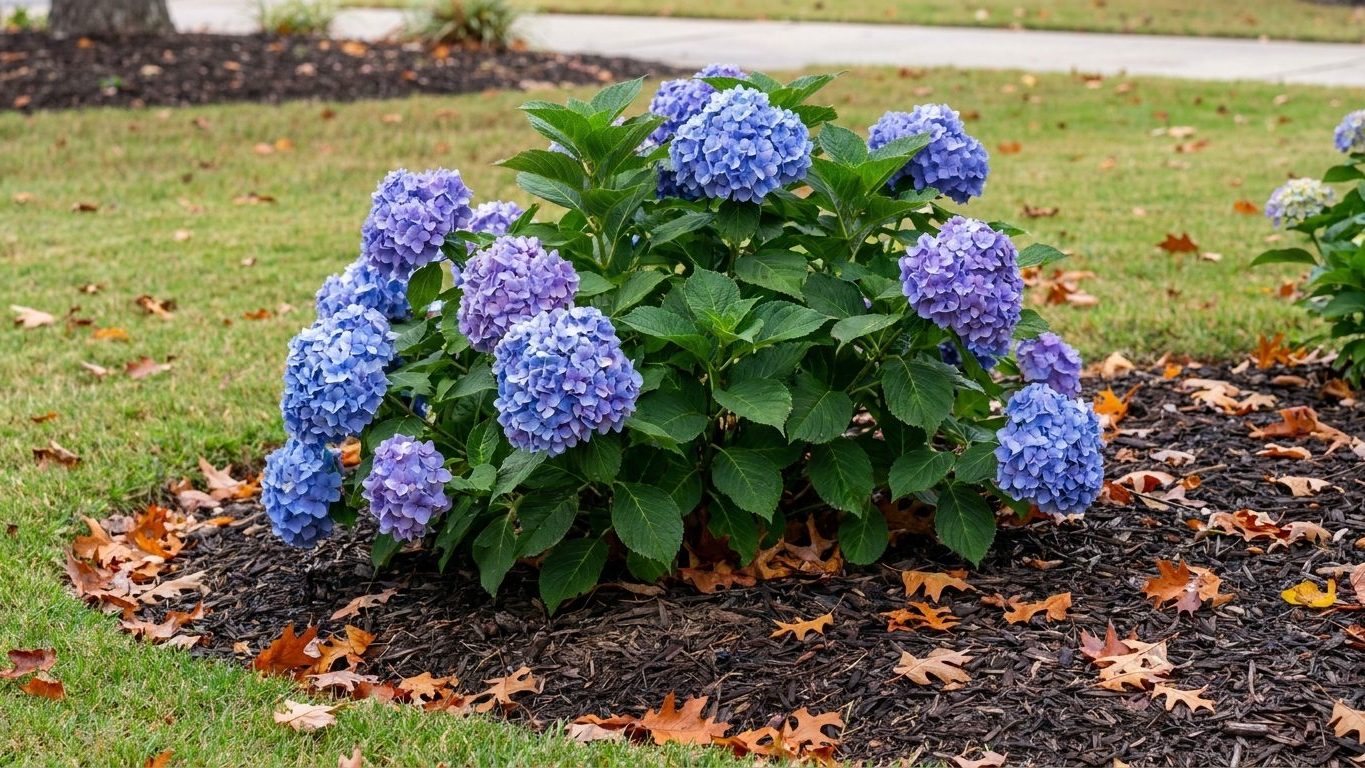
In Little Rock, the safest windows to plant hydrangeas fall in March and April as the soil warms, then again in September and October once the worst summer heat breaks. Prune bigleaf varieties in June and July, right after they finish blooming. Move north into the Ozarks or east into the Delta, and those dates shift by a week or two.
When to prune hydrangeas in Arkansas: The Short Answer
NOAA NCEI’s 1991-2020 Climate Normals put Little Rock’s 32°F freeze window at March 12 to March 28 in spring and November 7 to November 20 in fall, and those two windows anchor the planting and pruning calendar below.
- January: Hydrangeas are bare and dormant, so this is not a planting month. Add a two to three inch mulch layer over the root zone to buffer sudden cold snaps.
- February: Still ahead of the frost window, so hold off on setting new shrubs in the ground. Use the month to test soil pH and order bareroot stock instead.
- March: Planting opens here, though an early-March shrub can still meet a late freeze inside that window. Fertilizing also starts this month, the first of three feeding windows.
- April: With spring freeze risk fading, April is one of the two strongest spring planting months. Water new shrubs deeply, since spring rain across the state can be uneven.
- May: This is the second fertilizing month on the state calendar. New foliage is flushing out, so check leaves for early aphid clusters.
- June: Pruning of bigleaf hydrangeas begins now, right after the spring bloom fades. Cut only the spent flower stems, since next year’s buds are already forming lower on the plant.
- July: The second pruning month lines up with the third fertilizing month. Arkansas heat is peaking too, so mulch and steady watering matter more than any feeding schedule.
- August: Neither fertilizing nor pruning is on the calendar this month. Let the shrub coast through the hottest stretch and keep soil evenly moist rather than pushing new growth.
- September: Fall planting reopens as the worst heat breaks. Roots get a stretch of mild soil temperatures to settle in before frost returns.
- October: The second, and often safer, fall planting month, with warm soil still helping roots establish. Aim to finish new plantings before the month closes out.
- November: The first fall frost window arrives between November 7 and November 20. Treat that as the planting cutoff and mulch anything installed late in the season.
- December: Fully dormant, with no planting or pruning called for. Save any major moves for the spring windows that open back up in March.
Little Rock sits at the reference point for these dates, but Arkansas’ hardiness range runs 6b to 8a under the USDA Plant Hardiness Zone Map, so a yard in the Ozark highlands or the Delta lowlands can run a couple of weeks off this schedule.
Arkansas — the year and the numbers
- State
- Arkansas
- USDA zones
- 6b-8a
- Last spring frost
- March 12 to March 28
- First fall frost
- November 7 to November 20
- Annual rain
- 50 in
- Lawn zone
- warm-season
- Source
- NOAA NCEI 1991-2020 Climate Normals, 32F freeze probabilities · Little Rock
How to Work Out the Dates for Your Own Yard
A statewide window is only a starting point, so working out your own dates takes a few extra steps.
- Find your county’s frost dates: NOAA NCEI’s Climate Normals put Little Rock’s spring window at March 12 to March 28 and its fall window at November 7 to November 20, and a county further north or east may run a week or so earlier or later.
- Check the light-frost threshold too: NWS Little Rock gives April 3 and October 31 for the 36°F mark, which is the number that matters for tender new growth rather than a hard freeze.
- Read the soil, not just the calendar: wait until the ground is workable and has warmed before digging, since a cold snap right after planting stresses roots more than it stresses top growth.
- Map your microclimate: a south-facing wall warms up early, while a low spot or a north slope holds cold longer, and either can move your effective planting date by a week.
- Match the state’s planting months to your check: March and April in spring, September and October in fall, whichever pair your own frost read lines up with best.
- Mark pruning separately: bigleaf pruning falls in June and July here, tied to when the shrub finishes blooming rather than a fixed date on the wall calendar.
None of this replaces the statewide window, it just narrows it down to the patch of ground you actually garden in.
Arkansas North to South: How the Dates Shift
The state’s frost windows apply cleanly around the reference station, but elevation, water, and latitude bend them elsewhere.
- Ozark Highlands (northwest Arkansas, the Boston Mountains): higher elevation cools things down, so plan on the later end of the spring planting window and the earlier end of the fall frost window.
- Arkansas River Valley (Fort Smith, Little Rock, Conway): sits close to the reference station itself, so the statewide windows apply about as written here.
- Delta and eastern lowlands (Jonesboro, West Memphis, Helena): flat, humid ground often warms earlier in spring and holds heat longer into fall, nudging both planting windows a bit earlier.
- Southern Arkansas and the coastal plain (El Dorado, Texarkana, the southern Ouachitas): the mildest corner of the state, with fall frost arriving latest and the growing season stretching longest.
For the exact week that applies to a specific address, the state guide’s frost table is the place to check before the trowel comes out.
Mistakes Arkansas Punishes
Pruning bigleaf at the wrong time
Bigleaf hydrangeas bloom on old wood, so cutting them back in fall or early spring removes next year’s flowers before they ever open. Stick to the June and July window, right after bloom, and skip the fall cleanup urge entirely.
Planting into the July heat gap
There’s a reason the state calendar skips straight from April to September for planting. New roots set in July fight peak heat with no head start, so hold new shrubs until either the spring or fall window instead.
Skipping mulch before the fall frost window
Arkansas often runs a mild stretch right up until the November 7 to November 20 freeze window, which tempts gardeners to leave roots bare. A hard freeze after a warm spell can still damage exposed roots, so mulch before that window closes.
Arkansas Extension Offices and County Contacts
Frost windows only get a gardener started. County offices know local soil and pest pressure better than any statewide range can.
- Your county extension office: the University of Arkansas Cooperative Extension Service can confirm soil test results and local pest activity.
- Which hydrangeas hold up here: a rundown of varieties matched to Arkansas winters and summers.
- What’s going wrong in your yard: how to read the state’s most common hydrangea problems by season.
Common questions
Can I plant hydrangeas in Arkansas in the middle of summer?
It’s not the safest bet. The state calendar skips July and August for planting on purpose, since new roots struggle against peak heat with no chance to establish first.
What month should I prune hydrangeas in Arkansas?
For bigleaf varieties, June and July are the calendar months, timed to right after the spring bloom fades so next year’s buds aren’t cut off by mistake.
Do Arkansas hydrangeas need winter protection?
A mulch layer over the root zone through the coldest months covers most yards, especially anything planted late into the November frost window before it had time to establish.