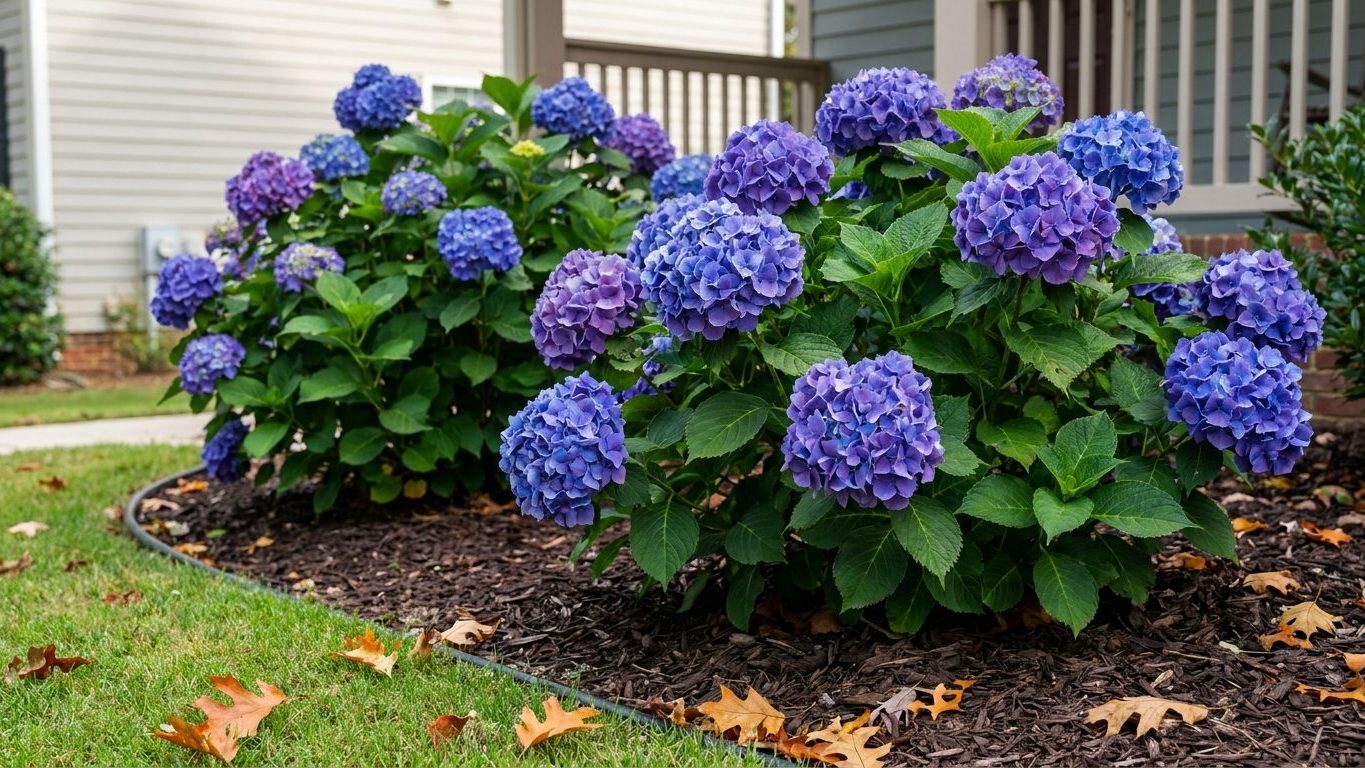
Hydrangeas grow well across most of North Carolina, from the mountain counties in USDA zone 5b to the coastal plain in zone 8b, as long as the type matches the cold. Charlotte’s frost calendar, roughly March 23 to April 5 in spring and October 30 to November 8 in fall, sets the planting and pruning windows. The hydrangea growing guide covers what applies everywhere.
Hydrangeas Care Calendar for North Carolina

Charlotte’s last spring frost lands between March 23 and April 5, and NOAA NCEI’s U.S. Climate Normals (1991-2020) push the first fall frost out to October 30 through November 8, framing a long season for hydrangeas to root, leaf and set next year’s buds.
- Dormancy: from late fall through midwinter is the safe window to move or divide a hydrangea, before new growth starts.
- Planting: two to three weeks after the last frost, once soil has warmed, is the safest time to set a new hydrangea in the ground.
- First flush: bigleaf and oakleaf types push new leaves within a month of the last frost date, provided the old wood came through winter intact.
- Bloom window: color usually runs from late spring through midsummer, six to ten weeks after the last frost depending on the type.
- Pruning: right after bloom fades for mophead and oakleaf hydrangeas, since both set next year’s buds on the current season’s wood by late summer.
- Feeding: once in spring after new growth shows, and again in early summer, never past eight weeks before the first fall frost.
- Frost prep: mulch heavier as nights near the October 30 to November 8 window, protecting buds already set for next spring.
Every one of those windows shifts west toward the mountains and east toward the coast, covered further down. The full month-by-month version lives on the calendar page for this state.
North Carolina — the year and the numbers
- State
- North Carolina
- USDA zones
- 5b-8b
- Last spring frost
- March 23 to April 5
- First fall frost
- October 30 to November 8
- Annual rain
- 44 in
- Lawn zone
- transition-season
- Source
- NOAA NCEI U.S. Climate Normals 1991-2020, 32F freeze probabilities · Charlotte
Best Hydrangeas for North Carolina
USDA’s Plant Hardiness Zone Map (2023, based on 1991-2020 normals) spreads North Carolina from 5b in the high peaks to 8b near the coast, with Charlotte’s frost dates above marking the milder middle of that range.
That spread is why a shrub built to bloom on old wood struggles in the mountains but thrives on the coastal plain, while a new-wood bloomer shrugs off a late frost almost anywhere in the state.
| Kind | Verdict here | Why |
|---|---|---|
| Bigleaf (mophead/lacecap) | Reliable in the Piedmont and east | Zone 6a-8b covers Charlotte and the coastal plain, but old-wood buds can lose flowers to a late frost |
| Oakleaf | Strong statewide | Native to the Southeast, tolerates the humidity and clay soils common across the state |
| Panicle | Best in the mountains | Blooms on new wood, so a late freeze in the Blue Ridge can’t touch the flower set |
| Smooth (Annabelle type) | Solid backup everywhere | Also blooms on new wood and tolerates the zone 5b cold pockets in the high mountains |
Climbing hydrangea and mountain hydrangea (Hydrangea serrata) are on their own pages, since neither is common enough here to rate a full row. Full rankings, with more types and more detail, live on the which ones hold up here page.
When to Plant, Prune and Feed Hydrangeas in North Carolina
NOAA NCEI’s Climate Normals put Charlotte’s last frost between March 23 and April 5, and that single window is the anchor every date in this table counts from.
Planting, pruning and feeding don’t share one calendar. Each task answers to a different part of the plant’s year, and pushing any of them late costs flowers or hardiness.
| Task | Window here | Counted from |
|---|---|---|
| Plant | Early to late April | Two to three weeks after the last frost (March 23-April 5) |
| Prune | Mid to late summer, right after bloom | Before next year’s buds set on old wood |
| Feed | Mid-April through early July | From two weeks after last frost to eight weeks before first fall frost (October 30-November 8) |
Push that fall feeding later than early July and the new growth it triggers won’t harden before frost returns.
Hydrangeas Problems in North Carolina and What Causes Them
No flowers on an otherwise healthy shrub
Old-wood bloomers lose their buds when a freeze lands after growth has already started, and Charlotte’s last frost can arrive as late as April 5. Hold off uncovering mulch until that window passes. Pest-driven bud loss is covered on the what goes wrong here page.
Buds killed at the cold edge of the range
In the higher mountains, where the zone drops to 5b, winter lows below what bigleaf tolerates kill flower buds outright even while the shrub itself survives. Panicle or smooth types sidestep the problem entirely at that elevation.
Bloom season ending abruptly
Once nights start hitting the October 30 to November 8 range, color that was still holding can brown overnight. Cutting flowers for drying before that window closes keeps the display from ending on a frozen stem.
North Carolina North to South: How the Dates Shift
Charlotte’s numbers above describe the Piedmont, the wide middle band where most of the state’s hydrangeas grow, but North Carolina climbs to 5b in the west and drops to 8b at the coast within the same afternoon’s drive.
- The Blue Ridge west (zones 5b-6b): last frost lands weeks later than Charlotte’s March 23-April 5 window, so bigleaf planted here needs extra frost cover into late spring.
- The Piedmont (zones 7a-7b): Charlotte’s dates above apply almost directly, the mildest reliable middle for both old-wood and new-wood types.
- The coastal plain and Outer Banks (zones 8a-8b): frost breaks earlier and holds off later, stretching the bloom season by several weeks over the mountains.
For a colder comparison, Maine’s hydrangea page covers zones two full steps colder than Charlotte. For county-level detail inside this state, the North Carolina hub goes further.
North Carolina Extension Offices and County Contacts
NC State Extension answers hydrangea questions by county, and every county in the state has an office reachable through the main directory below.
- Extension Master Gardener helpline: NC State Extension can confirm your county’s frost dates before you plant.
- Soil testing: your county office can check pH before you decide whether to push blooms toward blue or pink.
- This month’s task: call ahead before you plant this week, since a follow-up frost can still reach the Piedmont into early April.
Common questions
Can I grow bigleaf hydrangeas in the North Carolina mountains?
It’s risky above the Piedmont. Winter lows in the zone 5b pockets of the Blue Ridge can kill flower buds even when the shrub survives, so panicle or smooth types are the safer pick at that elevation.
What is the last safe frost date to plant hydrangeas in North Carolina?
Around Charlotte, the last frost falls between March 23 and April 5, so planting two to three weeks after that gives roots time to settle before summer heat arrives. Mountain gardens should add extra weeks.
Do hydrangeas need pruning every year in North Carolina?
Old-wood types like mophead and oakleaf need a yearly cut right after bloom, timed before next year’s buds set. New-wood types like panicle and smooth tolerate a late winter cut instead and skip that risk entirely.