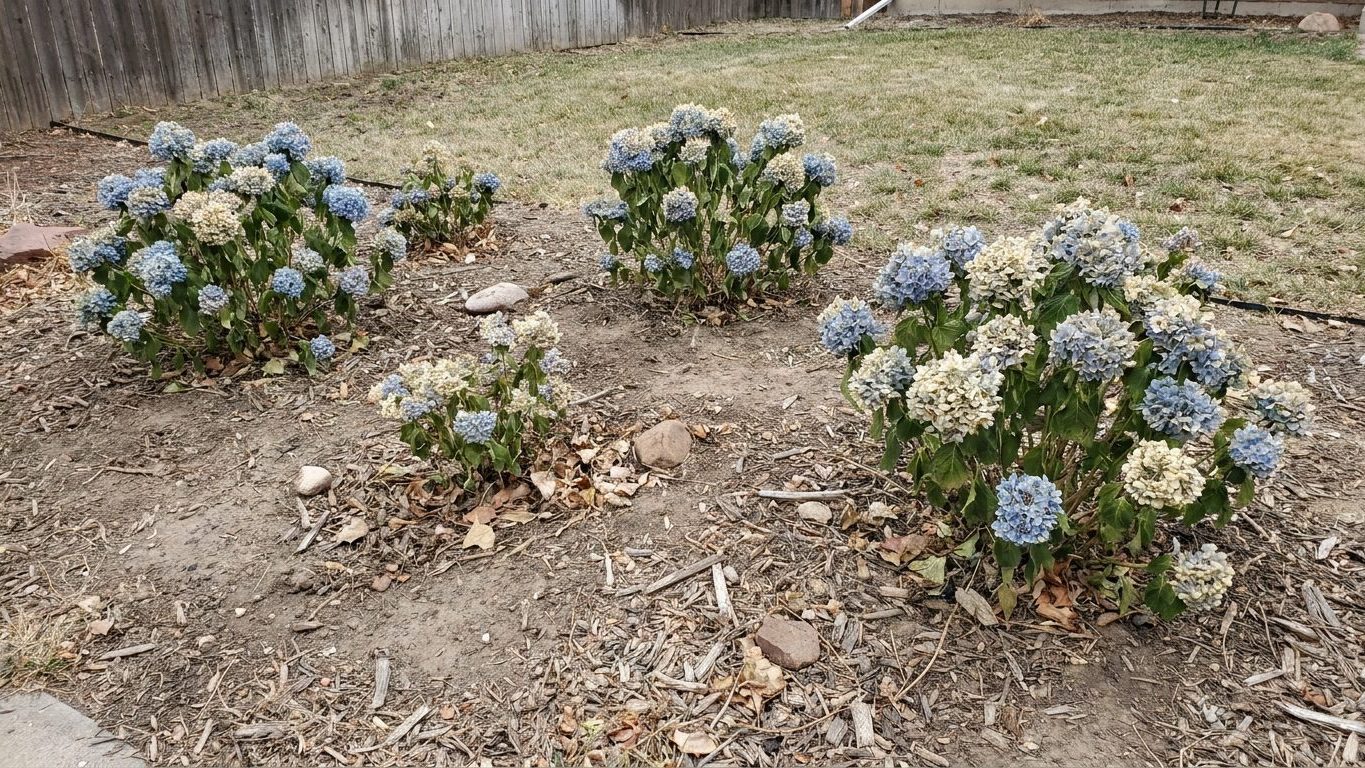
Vancouver’s growing season, the benchmark for most of coastal British Columbia, runs on a mean last spring frost of March 18 and a mean first fall frost of November 10, inside Canadian hardiness zone 9a. That window decides which hydrangea types set flower buds safely here and which lose them to a late cold snap. Panicle and smooth types shrug off the risk; bigleaf and oakleaf need a sheltered spot and a grower who watches the calendar rather than the month.
Hydrangeas Care Calendar for British Columbia

Environment and Climate Change Canada’s Canadian Climate Normals put Vancouver’s mean last spring frost at March 18 and mean first fall frost at November 10, framing Canadian hardiness zone 9a for the region. That mean is a midpoint, not a safe bet, since frost lands later than either date in roughly half the years on record.
- Dormancy: from the November 10 mean frost through late February is the one stretch to move or divide a hydrangea without disturbing live roots.
- Planting: set new shrubs in the ground three to four weeks after the March 18 mean, once soil has warmed and the sharpest frost risk has passed.
- Leaf out: buds break within two to three weeks of planting, and a late cold snap this early can still nip tender new leaves.
- Bud set for next year: bigleaf and oakleaf hydrangeas form next season’s flower buds by mid to late summer, so a late prune now costs next year’s blooms.
- Bloom: panicle and smooth types flower on new wood through summer, while bigleaf blooms depend entirely on buds that survived the winter before.
- Fall prep: mulch the base heavily in the weeks leading up to the November 10 mean frost to buffer roots and any unopened buds.
That mulch matters more here than the date on the calendar. Coastal winters rarely freeze the ground hard, but a sharp cold spell after a mild stretch catches unprotected buds off guard, and bud damage, not the shrub itself, is what costs most bigleaf hydrangeas their flowers.
British Columbia — the year and the numbers
- State
- British Columbia
- Hardiness zones
- 9a
- Last spring frost
- March 18
- First fall frost
- November 10
- Annual rain
- 47 in
- Lawn zone
- transition-season
- Source
- Environment and Climate Change Canada — Canadian Climate Normals 1981-2010, station VANCOUVER INT'L A · Vancouver
Best Hydrangeas for British Columbia
Vancouver sits in Canadian hardiness zone 9a, a system Natural Resources Canada builds from seven climate variables rather than the single measure behind USDA zones used on this site’s US state pages. That difference matters for anyone comparing British Columbia to a US state.
Bigleaf hydrangeas are the shrub most gardeners picture here, but their flower buds are the least winter hardy of the common types, and a single lost bud means a bare-flowered summer.
| Kind | Flowers on | Fits zone 9a | Verdict here |
|---|---|---|---|
| Bigleaf | Last year’s wood | Marginal | Common but buds risk winter kill |
| Panicle | New wood | Comfortable | Reliable bloom nearly every year |
| Smooth (Annabelle types) | New wood | Comfortable | Cold hardy and dependable |
| Oakleaf | Last year’s wood | Marginal | Needs a sheltered, warm wall |
| Climbing hydrangea | Old wood | Comfortable | Slow to establish, then hardy |
Mountain and silver-leaf hydrangeas also turn up in coastal gardens here, but they deserve their own space, covered on this site’s hydrangea guide rather than this state page.
When to Plant, Prune and Feed Hydrangeas in British Columbia
Environment and Climate Change Canada’s mean frost dates for Vancouver, March 18 for the last spring frost and November 10 for the first fall frost, set the three practical windows below.
Each window is counted from one of those means, not from a fixed month, because coastal frost timing drifts from year to year.
| Task | Window here | Counted from |
|---|---|---|
| Plant | Three to four weeks after the mean last frost | March 18 |
| Prune panicle and smooth | Six to eight weeks before the mean last frost, while still dormant | March 18 |
| Prune bigleaf and oakleaf | Right after flowers fade, on bloom timing rather than frost | Bloom timing |
| Feed | Split feeding, last application no later than six weeks before the mean first frost | November 10 |
Bigleaf and oakleaf run on their own clock because they set next year’s buds on this year’s growth, so pruning them by frost date alone risks cutting off next summer’s flowers. Panicle and smooth types forgive a later prune since they bloom on wood grown that same spring.
Hydrangeas Problems in British Columbia and What Causes Them
No blooms after a mild winter

A warm stretch in January can coax bigleaf buds out of dormancy early, and a swing back to freezing before the March 18 mean last frost kills them outright. Leave winter mulch in place until past that mean date rather than clearing it on the first warm weekend.
Buds and stems rot in wet soil

Coastal rainfall keeps clay soil saturated through much of the wet season, and hydrangea roots sitting in standing water fail before they ever reach bloom. Raise the planting hole or work coarse grit into the soil, since drainage matters more here than the frost date does.
Leaf spot in a wet, mild summer

Humidity that lingers after coastal rain gives fungal leaf spot an easy foothold on crowded shrubs. Space plants for airflow and water at the base rather than overhead, a habit that pays off more in this climate than in drier interior gardens.
British Columbia North to South: How the Dates Shift
British Columbia is not one climate, and the Vancouver dates above only hold close to the coast.
- The South Coast and Vancouver Island (Victoria, Nanaimo, the Fraser Valley): winters stay closest to Vancouver’s mild pattern, and bigleaf hydrangeas hold their buds most reliably here.
- The Okanagan and Southern Interior (Kelowna, Penticton, Vernon): colder nights and drier air push the spring frost later and the fall frost earlier than the coast sees.
- The Kootenays and mountain valleys (Nelson, Cranbrook, Revelstoke): elevation adds extra weeks of risk on both ends of the season, favoring panicle and smooth types over bigleaf.
- The North and Peace regions (Prince George, Fort St. John): winters run harshest in the province, and only the hardiest smooth and panicle hydrangeas make practical sense there.
The province page for British Columbia gardening lays out how those interior and northern differences play out season by season.
British Columbia Extension Offices and County Contacts
British Columbia’s Ministry of Agriculture and Food is the province-level starting point, but soil, wind, and rainfall shift block by block, so a local nursery or extension contact fills in what the province page cannot.
- BC Agriculture and Food: the provincial agriculture and seafood portal for growing conditions and advisories across the province.
- Your local nursery or garden club: the fastest read on how this spring’s frost is actually behaving in your neighborhood.
- California’s hydrangea page: a useful comparison for gardeners moving from a warmer, drier zone into coastal British Columbia’s wetter, milder pattern, on the California hydrangea guide.
This month, check the mulch at the base of any bigleaf hydrangea and leave it in place until the risk of a hard snap has genuinely passed.
Common questions
Do hydrangeas survive winter in British Columbia?
Most types do, especially along the coast where Vancouver’s zone 9a keeps winters mild. Bigleaf and oakleaf survive the cold itself but can still lose their flower buds to a sharp swing back to freezing after a mild stretch.
Which hydrangea blooms every year on the BC coast?
Panicle and smooth hydrangeas bloom on new wood grown the same spring, so they flower reliably even after a rough winter. Bigleaf and oakleaf depend on buds that made it through the cold season intact.
When should I stop feeding hydrangeas before frost?
Stop roughly six weeks before the November 10 mean first fall frost. Feeding later pushes soft new growth that has no time to harden off before the cold arrives.