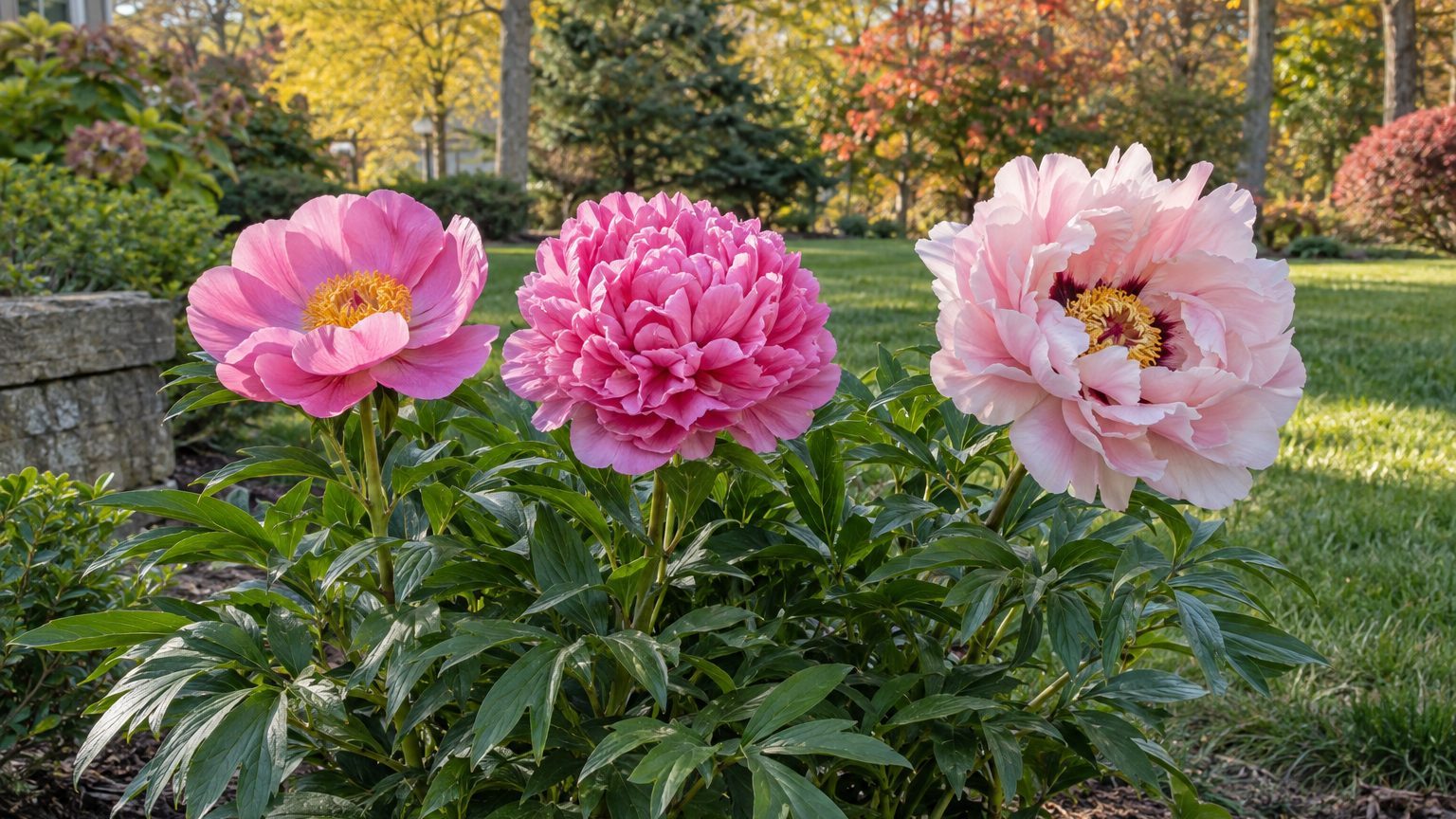
Peony clumps can bloom generously in a cold-winter garden yet sulk in a mild one, and British Columbia includes cold-winter gardens as well as mild ones. Where winters give the roots a real rest, peonies thrive. On the mild coast, the choice of spot and plant matters more.
Best Peonies to Grow in British Columbia

Peonies reward gardens with a cold winter, so the Interior suits them far better than the coast, where Vancouver sits in Canadian hardiness zone 9a (a Canadian rating that does not convert to a USDA zone). A peony needs a winter rest to flower, and in mild-winter climates it may flower poorly. For that reason, think of an inland garden first and a coastal garden as a place to test.
Gardens East of the Mountains

Peonies do particularly well where winters provide significant chill. In British Columbia that points to the Interior side of the coastal ranges, where winters are colder than on the coast. If your garden has a real winter, plant here with confidence.
Herbaceous Peonies

The classic garden peony dies back to the ground each year and returns from its roots in spring. Plant or divide it in September to October so the roots settle before the ground freezes. Because British Columbia has no local extension page on peony timing, these dates follow the nearest comparable climate; confirm them with a local garden centre, a garden society or a provincial gardening group.
Tree Peonies
A tree peony keeps its woody stems instead of dying back. That makes it a shrub in the border, with a permanent frame rather than a clump that vanishes each winter. It still wants the same winter rest, so the same inland advantage applies.
Peonies on the Mild Coast
Around Vancouver, winters may not give peonies enough chill, and the plants can leaf out well yet flower poorly. If you garden on the coast and love peonies, try a peony in a cool, open spot before committing more garden space. Foliage without flowers can point to a winter rest that was too short, though planting depth can also be the cause.
British Columbia — the year and the numbers
- State
- British Columbia
- Hardiness zones
- 9a
- Last spring frost
- March 18
- First fall frost
- November 10
- Annual rain
- 47 in
- Lawn zone
- transition-season
- Source
- Environment and Climate Change Canada — Canadian Climate Normals 1981-2010, station VANCOUVER INT'L A · Vancouver
How to Choose a Peony for a British Columbia Garden
Winter cold is the deciding factor here. It decides whether a peony blooms heavily, lightly or barely, so match the plant to the winter your garden really has, not to the one on the plant tag.
Plant form matters too. Some gardeners want a clump that disappears and returns, others want a shrub that holds its shape.
| Your situation | What suits it in British Columbia | Why |
|---|---|---|
| Cold winters inland | Herbaceous peonies | Significant winter chill gives the best bloom |
| Mild coastal winters | A trial planting in a cool, open spot | Peonies may flower poorly where winters are mild |
| You prefer a woody shrub look | Tree peony | It keeps its woody stems through winter |
A garden with cool winters but no deep cold is worth discussing at a local garden centre before you buy. Nearby peonies can offer useful clues, though conditions in your yard may differ.
Which Peonies Suit Different Parts of British Columbia
Winter cold changes across the province, and that shifts how confidently you can plant peonies from region to region.
- Okanagan: Winters are colder than on the coast, so herbaceous peonies get the rest they need and tree peonies are worth trying too.
- Kootenays: Inland winters give peonies a clear dormant season, which favors heavy bloom from established clumps.
- Vancouver and the Lower Mainland: Mild winters are the weak point, so treat peonies as an experiment and choose your spot with care.
Wherever you garden, a neighbor’s thriving peony offers a useful local clue.
Peony Buying Mistakes to Avoid in British Columbia
Expecting Bloom on a Mild Coast
A plant bought on impulse and set into a mild-winter garden may produce leaves and few flowers, which wastes the season and the money. Choose a cool, open spot and start with a trial planting before you commit more garden space.
Planting Too Deep
A peony set too deep may bloom poorly or not come up at all. Keep the eyes, the pink buds on the root, near the soil surface. Check this when planting in September to October, because fixing it later means lifting the clump.
Buying Without Knowing Adult Size
A small potted peony grows into a large clump. Read the label for mature height and spread, then leave that much room. Crowding it against a path or a shrub means moving it later, and a transplanted peony may not bloom the first spring.
Where to Get Peony Advice in British Columbia
The province’s agriculture ministry and local gardeners can help you judge what your climate allows.
- The provincial agriculture ministry offers background on growing in the province, which is useful before you shop.
- A local master gardener group or garden society knows which peonies bloom in your district, and spring meetings are a good time to ask.
- A local garden centre can show what grows nearby, so visit before fall planting to choose a plant.
Common Questions
When Do Peonies Bloom in British Columbia?
Peony varieties bloom from mid-May to late June, with the exact weeks depending on the variety and how warm your garden is.
When Should You Cut Back Peonies?
A herbaceous peony is cut back after frost, once the leaves have died down in fall. A tree peony is never cut back to the ground, because its woody stems carry next year’s growth.
Will a New Peony Bloom the First Spring?
A newly planted or transplanted peony may not bloom the first spring. Give it time to settle before judging whether the spot works.