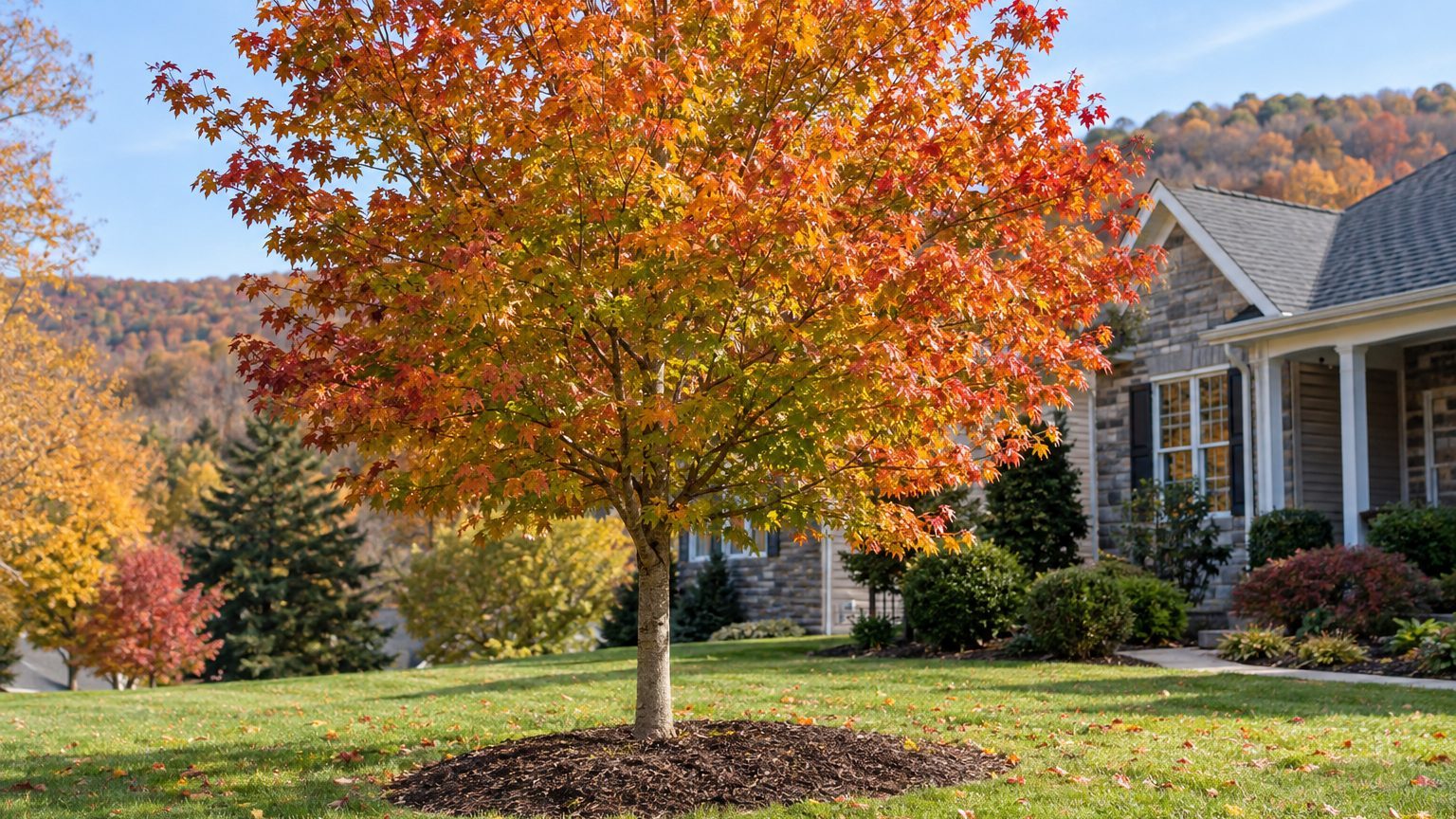
Newly planted trees do their best work in cool, damp soil, when roots can grow and leaves are not yet asking for water. In West Virginia that means early spring and fall, with a long stretch of dormant-season planting in between.
When Is the Best Time to Plant Trees in West Virginia?

Shade and ornamental trees, whether container-grown or balled and burlapped, go in the ground from March to April and again from October to November. Planting can also be done in February and December whenever the soil is not frozen.
- In late winter, February plantings are possible on days when the soil is workable and not frozen, and the tree is still fully dormant.
- In March and April, the ground is cool and moist, which gives roots time to settle before summer heat arrives.
- Through summer, planting is the hardest on a new tree, because heat and dry soil stress young roots.
- In October and November, the soil still holds warmth, so roots keep growing even after the leaves drop.
- In December, a planting is still possible while the soil stays unfrozen, though the tree gets less time to root before hard cold.
Container trees can go in most of the year if you water them, but they settle best in the dormant season. Magnolia, dogwood, tuliptree, sweet gum, red maple, birch, hawthorn, poplars, cherries, plums and many oaks do better planted in spring than in fall. In Charleston, the last spring freeze falls between April 9 and April 23, and the first fall freeze arrives between October 18 and November 1. Higher elevations freeze noticeably earlier in fall, so mountain yards have a shorter fall window. USDA hardiness zones across the state run from 5a to 7a.
West Virginia — the year and the numbers
- State
- West Virginia
- USDA zones
- 5a-7a
- Last spring frost
- April 9 to April 23
- First fall frost
- October 18 to November 1
- Annual rain
- 46 in
- Lawn zone
- cool-season
- Source
- NOAA NCEI 1991-2020 Climate Normals, 32F freeze probabilities · Charleston
When to Plant Fruit Trees in West Virginia
Fruit trees are best planted in March and April. Bare-root trees must go in while they are dormant, before the buds open, so plant them in early spring.
Fall planting also works, and November is the month for it. A container tree gives you more flexibility, though it still settles best when planted in the dormant season.
| Kind of fruit tree | When to plant in West Virginia | Why then |
|---|---|---|
| Bare-root | March to April | The tree is dormant and the buds have not opened |
| Container | March to April, or November | Roots establish in cool soil, and the tree settles best while dormant |
Pears, plums and sweet cherries do better with at least two recommended varieties planted together, so leave room for a pair. Pruning waits until the tree is in the ground and growing, and the details are on the page about when to prune fruit trees.
Best Trees to Plant in West Virginia
Match the tree to the site first. Where the yard already has tree cover, shade-tolerant choices such as eastern hemlock, blackgum, red spruce and sugar maple fit better. Tough, adaptable shade trees handle poor conditions in town lots. Mixing conifers such as white pine with hardwoods also works well on larger sites.
| Tree | How it does in West Virginia | Why |
|---|---|---|
| Ginkgo | A large shade tree for open yards | Tolerates adverse growing conditions and turns bright yellow in fall |
| London planetree | A medium to large tree for tough sites | Very tolerant of adverse conditions |
| Thornless honeylocust | A large tree for wet or dry ground | Tolerates both wet and dry soils |
| Sugar maple | Suits yards that already have tree cover | Shade-tolerant |
| American holly | Brings green to the winter yard | Evergreen foliage in the cold months |
Eastern hemlock, blackgum and red spruce also suit shaded sites. Aspen, black cherry, larch, red pine and black walnut need full sun, so keep them out of shade. Check your site’s sun, space and hardiness zone before choosing.
When to Plant, Water and Prune Trees in West Virginia
The year for a tree runs on a few simple rhythms: plant while it rests, water through the first growing season, and prune fruit trees before the buds swell. Each job has its own moment.
| Task | Best timing in West Virginia | Why then |
|---|---|---|
| Plant shade and ornamental trees | March to April, or October to November | Cool soil lets roots grow before heat or hard cold |
| Plant fruit trees | March to April, or November | Bare-root trees must go in dormant, before buds open |
| Water a young tree | Regularly through the first summer, and while the soil is not frozen in fall | Heat and dry soil stress new roots |
| Prune fruit trees | February to March, and April if needed | The tree is dormant, just before growth begins |
Young, nonbearing apple trees and stone fruits wait until February, which lowers the chance of winter injury. Peaches are pruned last, closest to bloom, because their flower buds are easily hurt by cold, while apples go first. Avoid pruning fruit trees in fall or early winter, since new growth may not harden before the cold.
Where to Get Tree Advice in West Virginia
For a question about which species fits your yard or how your soil tests, West Virginia University Extension and your county extension office are the places to ask.
- The university extension site carries planting guides for trees and shrubs, handy before you buy.
- Your county office can walk you through a soil test and species choice, so call before planting day.
Common Questions
Can You Plant a Tree in Summer in West Virginia?
A container tree can survive a summer planting if it gets steady water, but it faces more stress than one planted in the cooler months. Wait for fall if you can.
Should You Remove the Burlap from a Balled-and-Burlapped Tree?
Set the tree in its hole, then cut away the wire basket and fold back or remove the burlap from the top of the ball so nothing girdles the roots later.
How Deep Should You Plant a Tree?
Set the root flare at ground level, never buried. Keep mulch back from the trunk so bark stays dry.