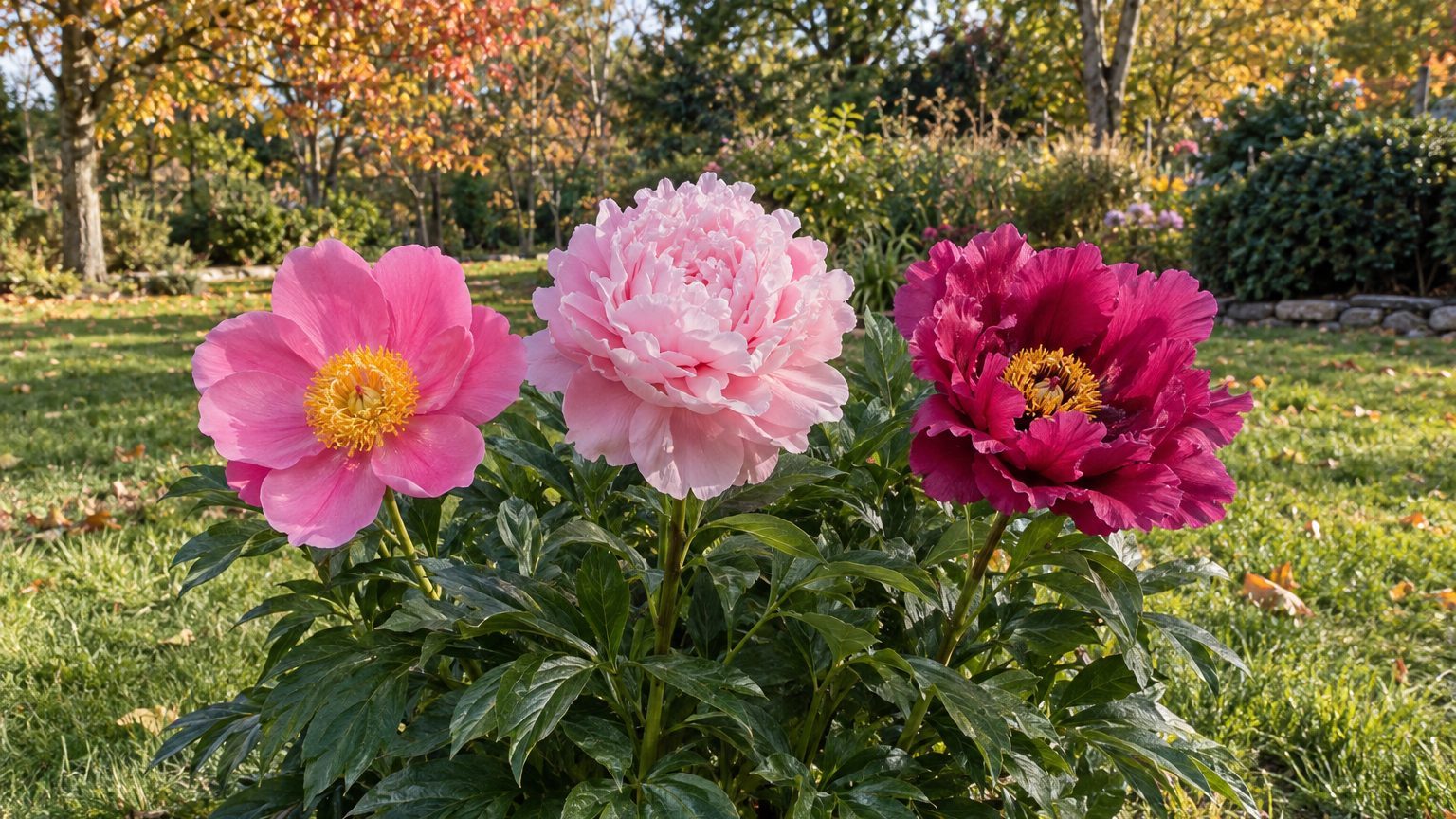
Peonies that stand heavy with flowers in a Washington garden each June are the ones that got a proper winter. These plants need cold to bloom, so the type you pick and the side of the Cascades you garden on matter more than the photo on the tag. Herbaceous, tree, Itoh and species peonies each fit the state a little differently.
Best Peonies to Grow in Washington

Peonies do especially well east of the mountains in Washington, because they need significant winter chill for best bloom. West of the Cascades the winters are mild and maritime, and flowering can be thinner there. These types can suit the state, and each has a different strength.
Herbaceous Peonies

Herbaceous peonies, Paeonia lactiflora and its hybrids, can live for decades and become fixtures in the garden. The flowers open from mid-May to late June, depending on the variety.
The plant dies back to the ground each year. Cut the stems back after frost, once the foliage has collapsed.
Tree Peonies

Tree peonies keep their woody stems through winter, so never cut them to the ground. The flowers are very large and full, and they come in shades herbaceous types do not offer.
Lutea hybrids such as Satin Rouge and Silver Sails are named choices, as are Japanese types such as Shintenchi and Yachyo tsubaki. Varieties differ, so ask the nursery which group a plant belongs to.
Itoh Peonies
Itoh peonies, also called intersectional peonies, are a cross between the herbaceous and tree types. They share the tree peony’s very large, full flowers and sturdy stems.
That sturdiness is the practical gain. Itoh plants hold their blooms up without staking, which saves a job in a wet early summer.
Species Peonies
Species peonies earn their place after the flowers are gone. They produce stalks of seedpods that dry well and add interest to a winter garden.
The same pods work in dried arrangements. Leave them standing on the plant through fall instead of tidying them away.
Washington — the year and the numbers
- State
- Washington
- USDA zones
- 4a-9a
- Last spring frost
- February 27 to March 18
- First fall frost
- November 13 to November 30
- Annual rain
- 39 in
- Lawn zone
- transition-season
- Source
- NOAA NCEI 1991-2020 Climate Normals, 32F freeze probabilities · Seattle
How to Choose a Peony for a Washington Garden
Start with where you garden, because winter chill decides how well any peony flowers. Then think about how much upkeep you want to give in June, when the heavy blooms arrive.
Each situation below points to the type that handles it.
| Your situation | What suits it in Washington | Why |
|---|---|---|
| Cold winters east of the Cascades | Herbaceous peonies | They need significant winter chill for best bloom, and they live for decades. |
| Little time for staking | Itoh or tree peonies | Itoh and tree peonies have sturdy stems, so the flowers stay upright without support. |
| Want flowers in a color herbaceous types lack | Tree or Itoh peonies | Tree and Itoh peonies come in shades not available in herbaceous ones. |
| Want interest after bloom | Species peonies | Their seedpods dry well and last into winter. |
West of the Cascades, where winters are mild, any peony may flower less than it would in a colder spot. Plant there knowing the bloom may be modest, and choose the type for its habit rather than counting on a big show.
Which Peonies Suit Different Parts of Washington
The Cascades divide the state into distinct peony climates: more winter cold generally means better flowers.
- Eastern Washington, including the Yakima Valley and the Spokane area: Winters are cold enough to give peonies the rest they need, so flowering can be strong here.
- Puget Sound and the Seattle area: Mild maritime winters give less chill, so flowering can fall short. Itoh and tree peonies are still worth growing for their stems and flower form, but expect a lighter bloom.
Elevation inside either region leans the same way, since higher and colder sites give peonies more of the winter cold they want.
Peony Buying Mistakes to Avoid in Washington
Ignoring Winter Chill
A peony planted where winters are mild may flower poorly. The result can be healthy foliage without flowers to cut.
On the west side, treat the bloom as a bonus and favor types grown for their form. East of the mountains, winter chill is generally favorable to peonies.
Planting Too Deep
A peony set too deep may bloom poorly or not come up at all. Keep the eyes, the small buds on the root, near the soil surface.
If you buy tubers, plant them in September to October so they settle before the ground freezes. A shallow planting in fall beats a deep one at any time of year.
Expecting Flowers the First Spring
A newly planted or transplanted peony may not bloom the first spring. Buyers sometimes decide the plant has failed and dig it up.
Leave it in place. Give it time to settle before judging it.
Where to Get Peony Advice in Washington
Washington State University Extension publishes peony guidance written for the state, and your county office can speak to the conditions on your side of the Cascades.
- The state extension site has peony and perennial guides, worth reading in summer before you shop for fall planting.
- Your county extension office can discuss local winter conditions, which may help you pick a type.
- Local master gardeners may know which peonies thrive nearby, and visiting during bloom season lets you see the flowers.
Common Questions
What Flower Forms Do Herbaceous Peonies Come In?
Herbaceous peonies come in many forms, including single, semi-double, bomb and Japanese. Japanese forms are a favorite of some growers.
What Blooms with Peonies in a Washington Garden?
A full-sun border can bloom in sequence from April narcissus, through May peonies, late May German iris, June Siberian iris and late June daylilies, to true lilies in July and August.
How Long Does a Peony Bloom Last?
Some peonies have a short bloom period of less than one week. Mixing varieties that open at different times within the mid-May to late June season keeps flowers coming for longer.