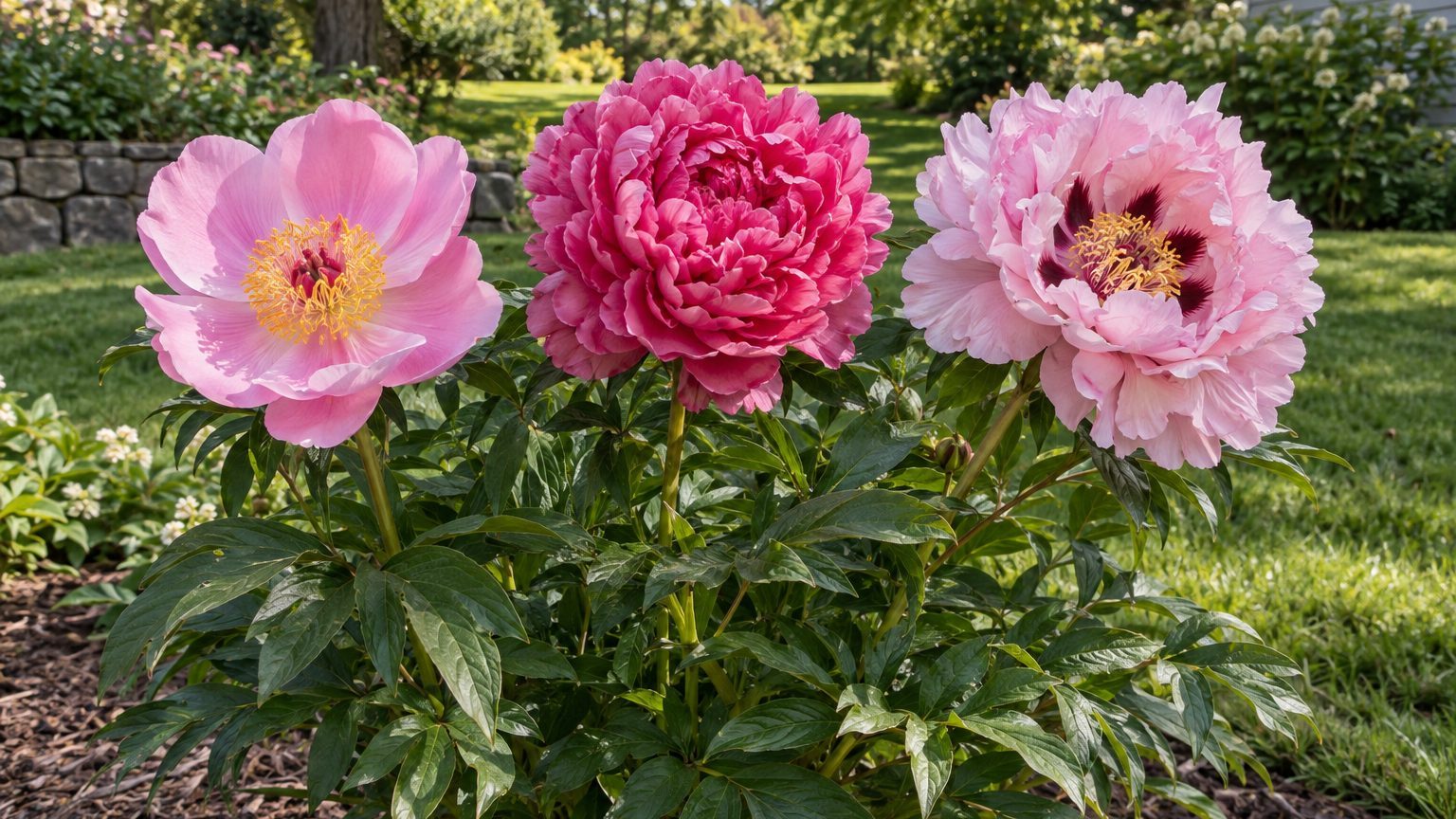
A peony in full bloom, heavy with ruffled petals, is a late-spring sight in Virginia yards, and peonies are long-lived perennials. Which kind you plant matters, because peonies are picky about winter cold and Virginia runs from mild coast to chilly mountains.
Best Peonies to Grow in Virginia

Herbaceous and intersectional peonies are the easiest to grow here; they die back each fall and return in spring. Peonies need cold winter climates to grow well. The mild coast is the exception, so the cold-hungry choices below suit inland yards best.
Herbaceous Peonies

The herbaceous peony, often called the garden peony, is the standard form in home gardens and comes in single, Japanese, anemone, semi-double, double and bomb-double flowers. Each fall it dies back to the ground, and new growth emerges in spring. It is among the easiest to grow and lives for many years.
Intersectional Peonies

Intersectional peonies share the same culture as herbaceous ones: they die back in fall and re-sprout in spring. If you want a peony that behaves like the classic garden type but offers a different look, this is an easy step sideways. Treat them the same way and they ask for nothing extra.
Sarah Bernhardt
Virginia growers know this one well. It is a widely grown cultivar for cut peonies and accounts for more than half of cut peony production. It also appears on the list of popular landscape cultivars in Virginia, so it works in a border as well as in a vase.
Karl Rosenfeld
Karl Rosenfeld shows up both among popular cut peonies and among the landscape cultivars popular in Virginia. It is grown for cutting and in Virginia landscapes. Pair it with a paler cultivar for contrast.
Festiva Maxima
Festiva Maxima is another name on the popular Virginia landscape list and among the well-known cut peony cultivars. It is an old, reliable pick if you want a long-lived plant that returns every year without fuss. Plant it where it can stay put for years.
Woodland Peonies
Woodland peonies, such as Paeonia japonica and P. obovata, suit shade gardeners. If your yard has more shade than sun, they are the group to look at before settling for a sun-loving type that will sulk. They are a different plant from the garden peony, so expect a quieter, more natural look.
Virginia — the year and the numbers
- State
- Virginia
- USDA zones
- 5a-8b
- Last spring frost
- March 20 to April 3
- First fall frost
- November 10 to November 24
- Annual rain
- 47 in
- Lawn zone
- transition-season
- Source
- NOAA NCEI 1991-2020 Climate Normals, 32F freeze probabilities · Virginia Beach
How to Choose a Peony for a Virginia Garden
Start with how cold your winter gets and how much light your bed receives. Winter cold and available light narrow the field fast. Virginia spans hardiness zones 5a to 8b in the USDA system, so a yard in the mountains and one near the water are working with very different winters.
| Your situation | What suits it in Virginia | Why |
|---|---|---|
| Cold winter, mountains or inland | Herbaceous or intersectional peonies | They die back each fall and re-sprout in spring, and they rest well in real winter cold |
| Mild winter near the coast | Choose carefully and expect fewer flowers | Peonies may flower poorly in mild-winter climates |
| Little time to spare | Herbaceous or intersectional peonies | They are the easiest to grow and share the same culture |
| Shady bed | Woodland peonies | They are best suited for shade gardeners |
| Cut flowers for the house | Sarah Bernhardt, Karl Rosenfeld, Festiva Maxima | They are popular cut cultivars with a record in Virginia |
| Fine foliage, red flowers | Fernleaf peony | It is noted for finely cut, fern-like foliage and crimson red flowers |
Red-flowered species such as P. officinalis and P. peregrina are also grown for their color. They come from Europe, so give them the same cold-winter conditions as the others and keep the expectations modest in a warm spot.
Which Peonies Suit Different Parts of Virginia
Virginia sits across a wide USDA hardiness range, from 5a to 8b, but that range reflects only average annual extreme minimum temperatures.
- Virginia Beach and the coast: This is the mild end of the state, so peonies get less winter rest and may bloom poorly. Lean toward the herbaceous and intersectional types and keep expectations realistic.
- Blue Ridge and southwest Virginia: Spring arrives weeks later and fall comes earlier than on the coast. The longer, colder winters give peonies the rest they need and generally favor the herbaceous cultivars on the list.
Inland and mountain gardens generally offer more winter cold, but local conditions still matter.
Peony Buying Mistakes to Avoid in Virginia
Choosing for a Mild Spot Without Planning
Peonies need a cold winter rest to flower, so a plant set in a mild, sheltered corner of a coastal yard may give you leaves and few blooms. Choose a spot away from warm walls and paving. Cooler ground gives the plant the rest it wants.
Planting Too Deep
A peony set too deep may bloom poorly or fail to come up. When you bring home a bare-root division or a potted plant, keep the eyes near the soil surface. Use the eyes, rather than the pot’s soil line, to judge depth, and keep them near the soil surface.
Expecting Flowers Right Away
A newly planted or transplanted peony may not bloom the first spring. That is normal and no reason to dig it up or move it. Leave it in place, water in dry spells, and give the roots time to settle. The payoff is a plant that grows reliably year after year.
Where to Get Peony Advice in Virginia
Local advice beats general advice when your yard sits in a different zone from your neighbor’s. Virginia Cooperative Extension answers garden questions and publishes plant guides written for the state.
- The extension website carries peony and perennial guides you can read before you buy, so check it when you are choosing a cultivar.
- Your county extension office can tell you how cold your area runs, so call it before you plant a bed.
- Local master gardeners often know which peonies have thrived in your neighborhood, so ask them in spring when plants are in bloom.
Common Questions
When Should You Plant Peonies in Virginia?
September through October is the planting and dividing window. The roots have time to settle before winter, which sets the plant up to grow the next spring.
When Do Peonies Bloom in Virginia?
May is the main bloom month. In the warmer parts of the state, flowering can start from mid-April, and it can run into June in cooler spots.
Should You Cut Back Peonies in Fall?
A herbaceous peony is cut back after frost has killed the foliage, which usually means November through December, though early spring (March or April) also works. A tree peony keeps its woody stems and is never cut back to the ground.