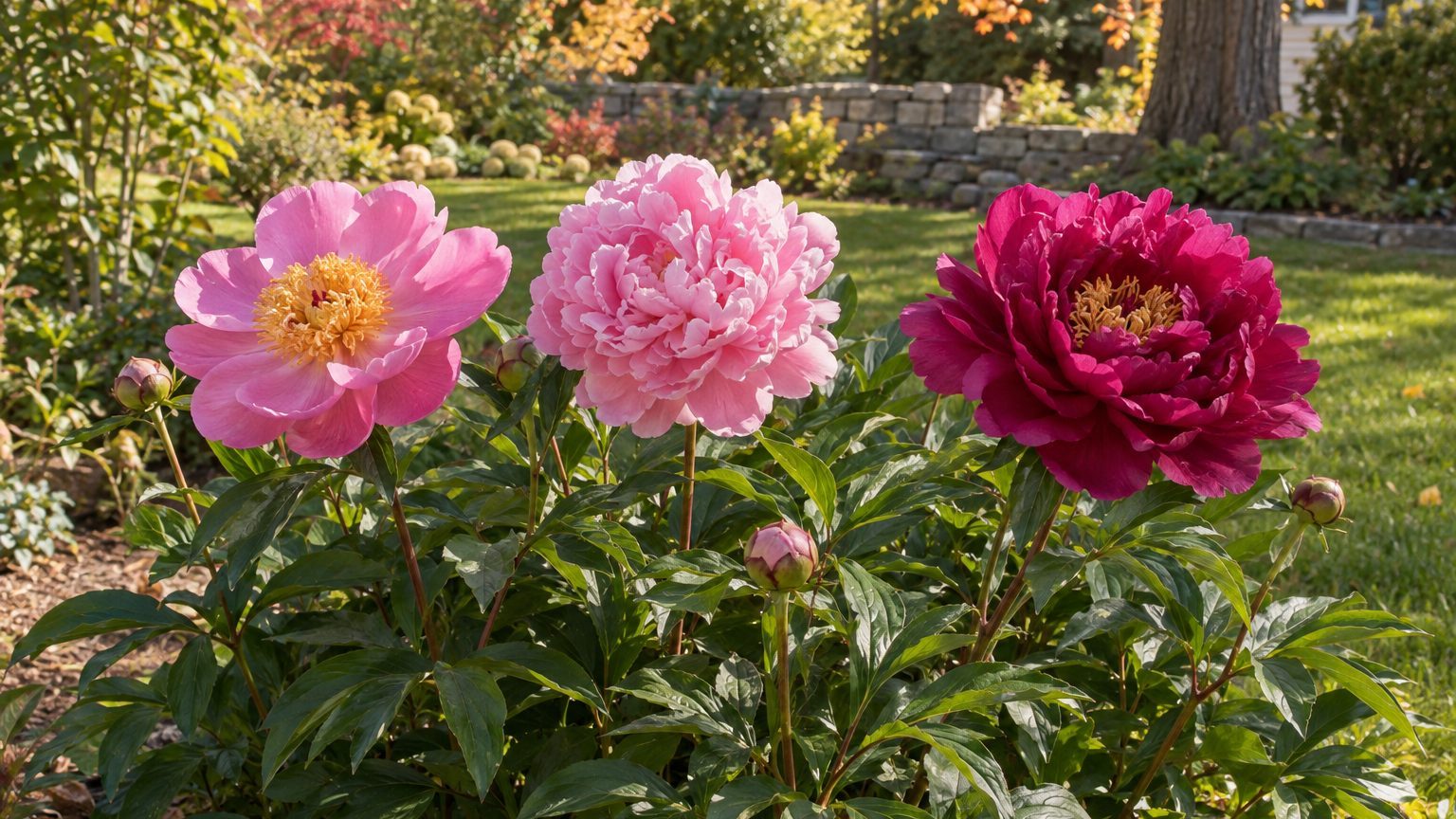
Peonies come back in Vermont yards year after year, and the first flush of buds in late spring is worth the wait. Vermont’s cold winters provide the winter rest peonies need, while type, site and fall care still shape the choice. Garden, tree, intersectional and woodland peonies differ in bloom order and winter habit.
Best Peonies to Grow in Vermont

Vermont is cold enough for peonies, which need a winter rest to flower. Peonies need a cold winter rest to flower, and Vermont provides it. The main peony types grown in home landscapes each fill a different slot in the bloom calendar.
Garden Peony

The garden, or herbaceous, peony is a familiar Paeonia hybrid that fits well in many Vermont yards. It dies back to the ground each year, so winter has little to damage above the soil.
Its bloom falls within Vermont’s May and June season. Cut the foliage back once it has died down.
Tree Peony

Tree peonies, including Paeonia suffruticosa, are woody shrubs that keep their stems through winter. Choose a spot out of the sharpest wind, especially on higher ground, since those stems stand above the snow.
Tree peonies bloom after woodland peonies and before herbaceous types, which can help stretch the season.
Intersectional Peony
The intersectional peony, also called the Itoh, is a hybrid of the garden and tree peonies. It borrows traits from both parents, which makes it a good pick if you want something a little different from the standard garden peony.
Intersectional peonies open after the other types, carrying the show toward June in Vermont.
Woodland Peony
The woodland peony, Paeonia japonica, has white flowers and opens before the other types. That early start gives a Vermont garden something in flower before the other peonies catch up.
It suits a partly shaded border better than the sun-loving garden types.
Vermont — the year and the numbers
- State
- Vermont
- USDA zones
- 3b-5b
- Last spring frost
- April 30 to May 10
- First fall frost
- October 3 to October 13
- Annual rain
- 38 in
- Lawn zone
- cool-season
- Source
- NOAA NCEI 1991-2020 Climate Normals, 32F freeze probabilities · Burlington
How to Choose a Peony for a Vermont Garden
Most of the choice comes down to how cold your yard gets and how much fall cleanup you want. Vermont’s cold winters give peonies the winter rest they need, but each type handles an exposed site differently.
The table pairs common situations with the type that fits.
| Your situation | What suits it in Vermont | Why |
|---|---|---|
| Very cold winter on higher ground | Garden peony | It dies back to the ground each year, so nothing is left above the soil to take the cold |
| Little time for fall cleanup | Tree peony | It keeps its woody stems and is never cut back |
| Worry about getting enough cold | Any peony type | Peonies need a cold winter rest to flower, which Vermont winters supply |
| Wish for a long bloom season | Woodland, tree, garden and intersectional peonies together | The types open in sequence from late spring into June |
A mixed planting can extend the show, while a garden peony still blooms in the usual May and June window.
Which Peonies Suit Different Parts of Vermont
Winter cold and season length shift a lot between the lake lowlands and the mountains, which changes how much risk you take with woody stems.
- Burlington and the Champlain Valley: Lake Champlain keeps this area milder than much of the state, with a last spring frost around April 30 to May 10. Tree peonies need a sheltered site because their woody stems stay above ground through winter.
- Green Mountains: Elevation shortens the growing season substantially compared with the lake. Garden peonies die back to the ground, and blooms may arrive later than in the valley.
- Northeast Kingdom: The season here also runs substantially shorter, and herbaceous peonies die back to the ground each year. Plant a woody tree peony only where it is sheltered from wind.
Tree peonies keep their woody stems above ground, so choose a protected site for them.
Peony Buying Mistakes to Avoid in Vermont
Choosing Woody Stems for an Exposed Spot
A tree peony carries its stems through the whole winter, so a windswept hillside asks more of it than of a garden peony that retreats underground. An exposed site can leave the woody stems vulnerable.
In colder parts of the state, choose a protected site for a tree peony or switch to a garden peony.
Shopping for Mild-Winter Plants
Peonies may flower poorly where winters are mild, and Vermont has the opposite problem, so cold is not what you should shop around.
Look at bloom season and flower form instead, and let the winter do its work.
Buying a Pot Without Knowing Its Size
A small potted peony grows into a plant that takes up far more room, and a woody tree peony makes a shrub. Planted too close to a path or a neighbor, it ends up crowded and needs moving.
Check the adult size on the tag and give it room. Set the eyes near the soil surface, because a peony planted too deep may bloom poorly or not come up. A newly planted peony may also skip its first spring, so a quiet first year is normal.
Where to Get Peony Advice in Vermont
Local gardening guidance can help you compare peony types for your site.
- The University of Vermont Extension site has gardening guidance, useful before you order plants for August or September planting.
- A local garden center or gardening group can help you think through an exposed site before you plan the border.
Common Questions
When Should You Plant Peonies in Vermont?
August and September are the months to plant or divide peonies, and October also works. Spring planting is possible, but it may delay flowers a year.
When Do Peonies Bloom in Vermont?
Peonies bloom in May and June, with the exact time depending on the type, from late spring into June.
When Should You Cut Back Peonies in Vermont?
Cut herbaceous peonies back in November or December, after the foliage has died back. Early spring, March or April, is the other window.