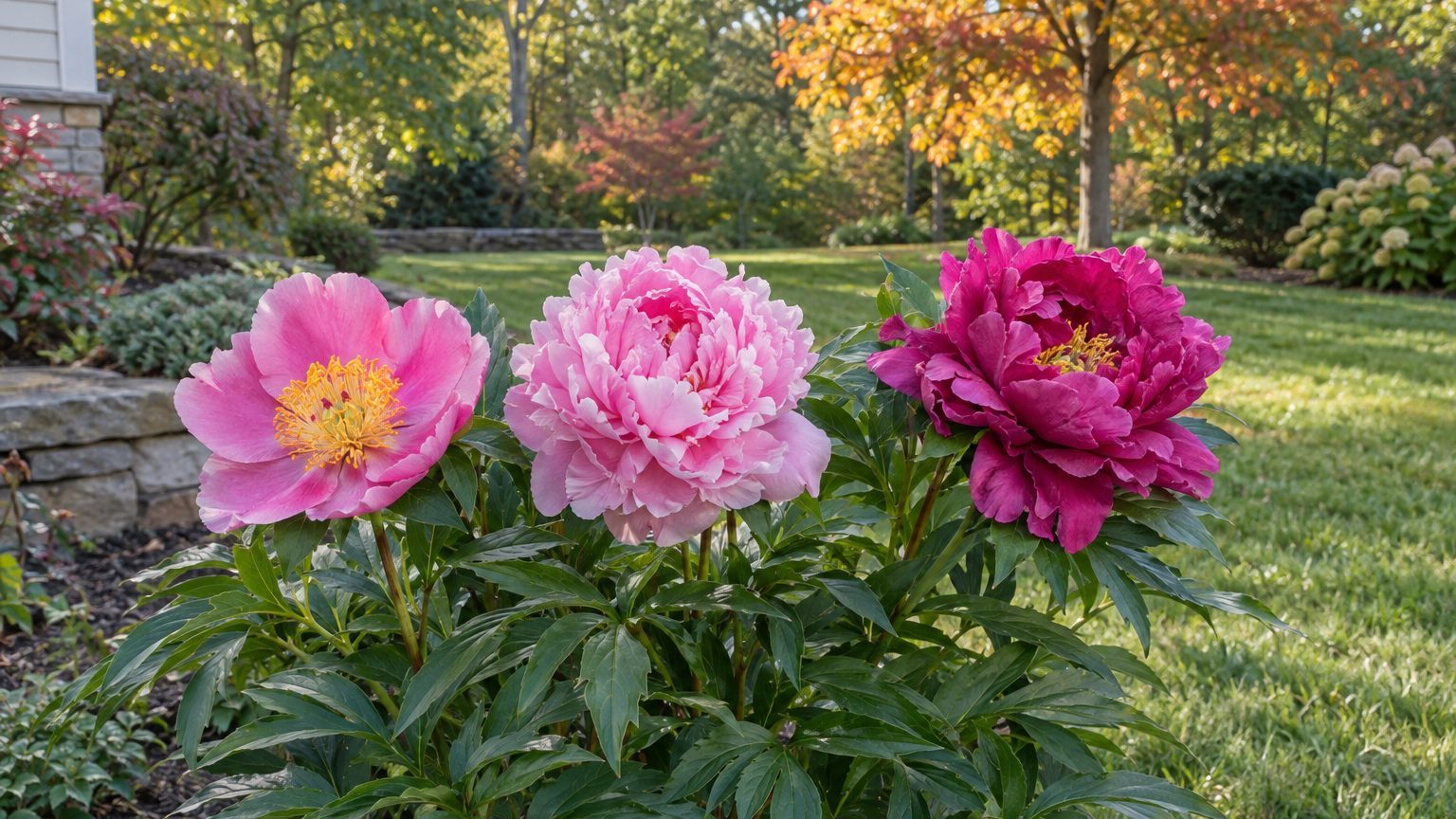
Peony buds push up through cool spring ground, and a good clump becomes the plant neighbors slow down to look at. In Tennessee, herbaceous, intersectional and tree peonies all earn a place. Single and Japanese flower forms handle Southern conditions more reliably than heavy doubles. Matching the type to the yard before you buy settles most of the outcome.
Best Peonies to Grow in Tennessee

Herbaceous and intersectional peonies are the easiest to grow here, while tree peonies can also suit Tennessee gardens and single or Japanese bloom types lead among the flower forms. Peonies need a cold winter rest to flower, and Tennessee spans USDA hardiness zones 5b to 8a. They do best where winters are cold and may flower poorly in the mildest spots.
Herbaceous Peonies

These are the classic garden peonies. Each fall they die back to the ground, and new growth emerges in the spring, which makes the routine easy to learn. They grow better in full sun, so give them the brightest bed in the yard.
Intersectional Peonies

Intersectionals share the same culture as herbaceous types, so the care calendar is identical. They also die back each fall and return in spring. If you already know how to handle a classic peony, you already know how to grow one.
Tree Peonies
Tree peonies are deciduous shrubs with woody branches. Those branches carry large flowers without staking once the plant is mature. They bloom earlier than herbaceous types and tolerate full sun to partial shade, which helps in a bed that loses sun to a big oak.
Single and Japanese Bloom Types
Single and Japanese flowers usually perform much better in the South than doubles do. Their open, lighter blooms hold up better as the season warms. When a Tennessee garden has hot, humid summers, these forms are the safer pick.
Early-Blooming Cultivars
Early-blooming, single or Japanese cultivars are known for reliable flowering in Southern gardens. They open before the heat settles in. To stretch the show, mix early and late bloomers in the same bed.
Tennessee — the year and the numbers
- State
- Tennessee
- USDA zones
- 5b-8a
- Last spring frost
- March 31 to April 12
- First fall frost
- October 28 to November 8
- Annual rain
- 51 in
- Lawn zone
- transition-season
- Source
- NOAA NCEI 1991-2020 Climate Normals, 32F freeze probabilities · Nashville
How to Choose a Peony for a Tennessee Garden
Start with the situation your yard puts you in, then match the type. Planting or dividing is done from September through October, which gives roots time to settle before winter, whichever type you choose.
Whatever the situation, buy named cultivars when you can. Plants sold only as “double pink” or “single white” may perform well, but a recognized name gives more assurance of hardiness and quality.
| Your situation | What suits it in Tennessee | Why |
|---|---|---|
| Cold winters in the hills | Herbaceous peonies | They die back each fall and regrow in spring, and they get the winter chill they need |
| Hot, humid summers | Single or Japanese early bloomers | These forms usually outperform doubles in Southern conditions |
| Little time for upkeep | Herbaceous or intersectional peonies | They are the easiest to grow and share the same culture |
| Dislike staking | Tree peonies | Woody branches support the large flowers once mature |
| Mild-winter spot | Choose carefully or expect fewer flowers | Peonies need a cold winter rest to flower |
| Partly shaded bed | Tree peonies | They tolerate full sun to partial shade, while herbaceous types want full sun |
Long bloom season matters too. Pairing early and late cultivars can extend the flowering season.
Which Peonies Suit Different Parts of Tennessee
Spring arrives at different times across the state, and that shifts which peonies suit each area.
- East Tennessee and the Cumberland Plateau: Cooler and slower to warm in spring than Nashville. Herbaceous and tree peonies get the winter chill they need, and bloom runs later in the season.
- Nashville and Middle Tennessee: Bloom generally centers on May here. Single, Japanese and early-blooming cultivars cope with the rising heat better than doubles.
Across Tennessee, bloom centers on May, with some flowers in April or June.
Peony Buying Mistakes to Avoid in Tennessee
Choosing Doubles for Heat
Heavy double flowers tend to struggle in Southern summers, while singles and Japanese forms do much better. If you want a double, pick one with a reputation for early, reliable flowering rather than a random bargain. Otherwise stay with the lighter forms.
Buying Unnamed Plants
Plants sold only by color and flower form, such as “double pink,” are a gamble on hardiness and quality. Named cultivars cost more attention but give more assurance. Check the tag for a variety name before you buy.
Planting Too Deep
A peony planted too deep may bloom poorly or not come up at all. Keep the eyes near the soil surface when you plant in September through October. A newly planted or transplanted peony may also skip bloom its first spring, which is normal.
Where to Get Peony Advice in Tennessee
Local help is easy to reach through University of Tennessee Extension, which serves every county. The county office can match a type to the soil and sun in your own yard.
- The state extension site has plant guidance written for Tennessee gardeners, and it is worth reading before the September through October planting window.
- Your county extension office can answer questions about drainage, sun and cultivar choice, so call or visit before you order plants.
Common Questions
When Should You Cut Back Peonies in Tennessee?
Cut herbaceous peonies back in November through December, after the foliage has died back. Early spring, in March or April, is the other window. Tree peonies keep their woody stems and are never cut to the ground.
Will a New Peony Bloom the First Spring?
Not always. A newly planted or transplanted peony may not bloom the first spring, so wait a season before judging it.
Do Peonies Need Full Sun in Tennessee?
Herbaceous peonies grow better in full sun. Tree peonies can thrive in full sun to partial shade, which makes them the better fit for a bed that gets some shade.