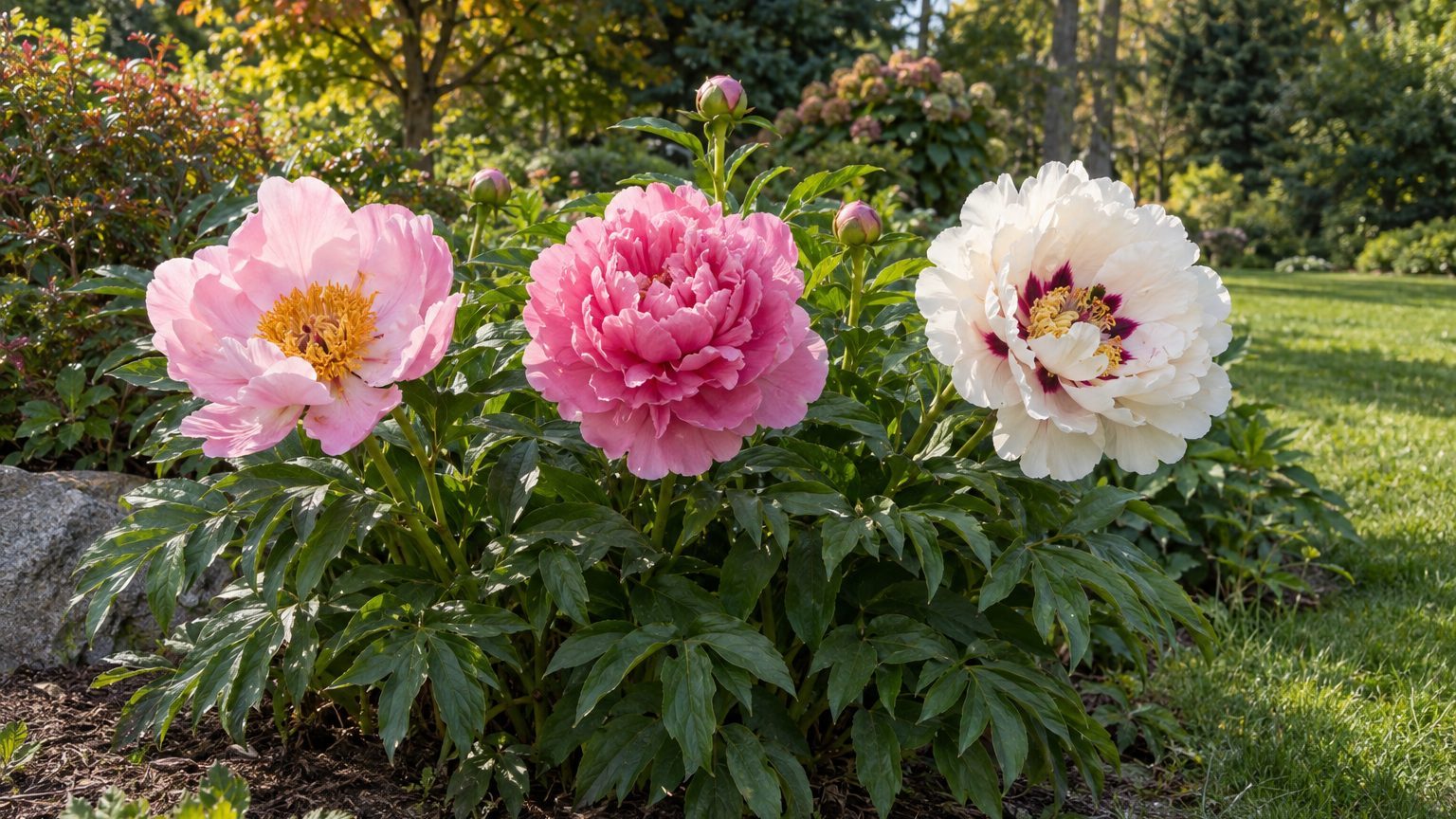
Peonies are perennials that need a cold winter rest to flower, and South Dakota supplies it. Herbaceous garden peonies are the familiar choice here, with intersectional hybrids close behind and tree peonies for a sheltered corner.
Best Peonies to Grow in South Dakota

Herbaceous and intersectional peonies are the types that settle in most easily here, while tree peonies need a protected spot. Across USDA hardiness zones 3b to 5b, the long cold winters give peonies the winter rest they need to set flower buds, and they may flower poorly where winters are mild.
Herbaceous Peonies

Most South Dakota gardeners already know these. They descend from the Chinese peony (Paeonia lactiflora) and the common peony (P. officinalis), and hundreds of cultivars came from those two species. Each fall the plant dies back to the ground, and new growth returns in spring.
Flowering runs from early June into early July. Plant or divide in September to early October so the roots settle before the ground freezes, and keep the eyes near the soil surface.
Intersectional Peonies
Also called Itoh peonies, these are hybrids of the garden peony and the tree peony. They are among the easiest peonies to grow and share the same culture as herbaceous types, so you can treat them alike. They die back to the ground each fall.
If you like the look of a tree peony but not the winter worry, this is the type to try.
Tree Peonies
These woody peonies were mostly derived from P. suffruticosa, and some South Dakota gardeners have discovered them. They are generally not as hardy as the other types, so they need a protected site or a mulch over winter.
The woody stems stay through winter, which is where the extra risk comes from. Choose a spot out of the harshest wind.
South Dakota — the year and the numbers
- State
- South Dakota
- USDA zones
- 3b-5b
- Last spring frost
- April 29 to May 9
- First fall frost
- September 24 to October 4
- Annual rain
- 28 in
- Lawn zone
- cool-season
- Source
- NOAA NCEI 1991-2020 Climate Normals, 32F freeze probabilities · Sioux Falls
How to Choose a Peony for a South Dakota Garden
Start with the winter and the amount of care you want to give. Cold winter rest suits peonies here, but tree peonies still need more protection and watchfulness than the other types.
Variety matters as well, because cultivars differ somewhat in how easily they catch disease.
| Your situation | What suits it in South Dakota | Why |
|---|---|---|
| Very cold winter | Herbaceous or intersectional peony | They die back to the ground each fall, so nothing woody has to survive the freeze. |
| Little time for care | Herbaceous or intersectional peony | They are the easiest to grow and share the same routine. |
| Need for winter cold | Herbaceous peony | It does best where winters are cold and flowers poorly in mild ones. |
| Sheltered corner with a wall or windbreak | Tree peony | It is less hardy, so a protected site or winter mulch makes it workable. |
| Worry about disease | Less susceptible planting stock | Cultivars differ in susceptibility, so selecting carefully may reduce problems. |
Disease susceptibility is another thing to plan around. Ask the nursery which cultivars hold up to leaf and bud diseases before you buy.
Which Peonies Suit Different Parts of South Dakota
The state is large and its winters vary, so the choice shifts a little from one region to the next.
- Aberdeen and the northeast: Herbaceous and intersectional peonies are dependable choices here. Give a tree peony a sheltered site and a winter mulch if you try one.
- Sioux Falls and the southeast: Choose a protected spot even so.
- The Black Hills: Elevation brings colder nights and later springs, so lean on herbaceous types and shelter anything woody from wind.
Peony Buying Mistakes to Avoid in South Dakota
Tree Peony in the Open
A tree peony set in an exposed bed loses ground to winter because it is not as hardy as herbaceous types. You may be left with damaged wood and a weakened plant.
Plant it in a protected site and mulch it over winter instead.
Ignoring Disease Susceptibility
Cultivars differ in how easily they take disease, and the cost shows up as blighted stems and ruined buds. Ask the nursery about the variety before you buy.
Look for less susceptible planting stock, and remember that Phytophthora is less likely to develop in light, sandy soils.
Planting Too Deep
A peony set too deep may bloom poorly or not come up at all, which is an expensive way to lose a plant. Whether you buy a potted peony in spring or bare roots in fall, set the eyes near the soil surface.
Where to Get Peony Advice in South Dakota
Local advice beats general advice, because soil, elevation and winter wind change from county to county. Local resources can answer questions specific to your yard.
- South Dakota State University Extension publishes peony guidance written for the state, which helps when comparing types and cultivars before you order.
- Your county extension office can look at a struggling plant or soil question, and a visit in late summer fits well ahead of fall planting.
Common Questions
Will a New Peony Bloom the First Spring?
A newly planted or transplanted peony may not bloom the first spring. Give it time to establish.
When Should You Cut Back Peonies in South Dakota?
Cut back herbaceous peonies in October to November, once a hard freeze has killed the foliage, leaving the stems a couple of inches above the ground. A tree peony keeps its woody stems and is never cut back.
Can You Plant a Peony in Spring?
Potted peonies are sold at garden centers in spring, but September to early October is the planting window. Bare root plants arrive in fall, which is the usual season for planting or dividing.