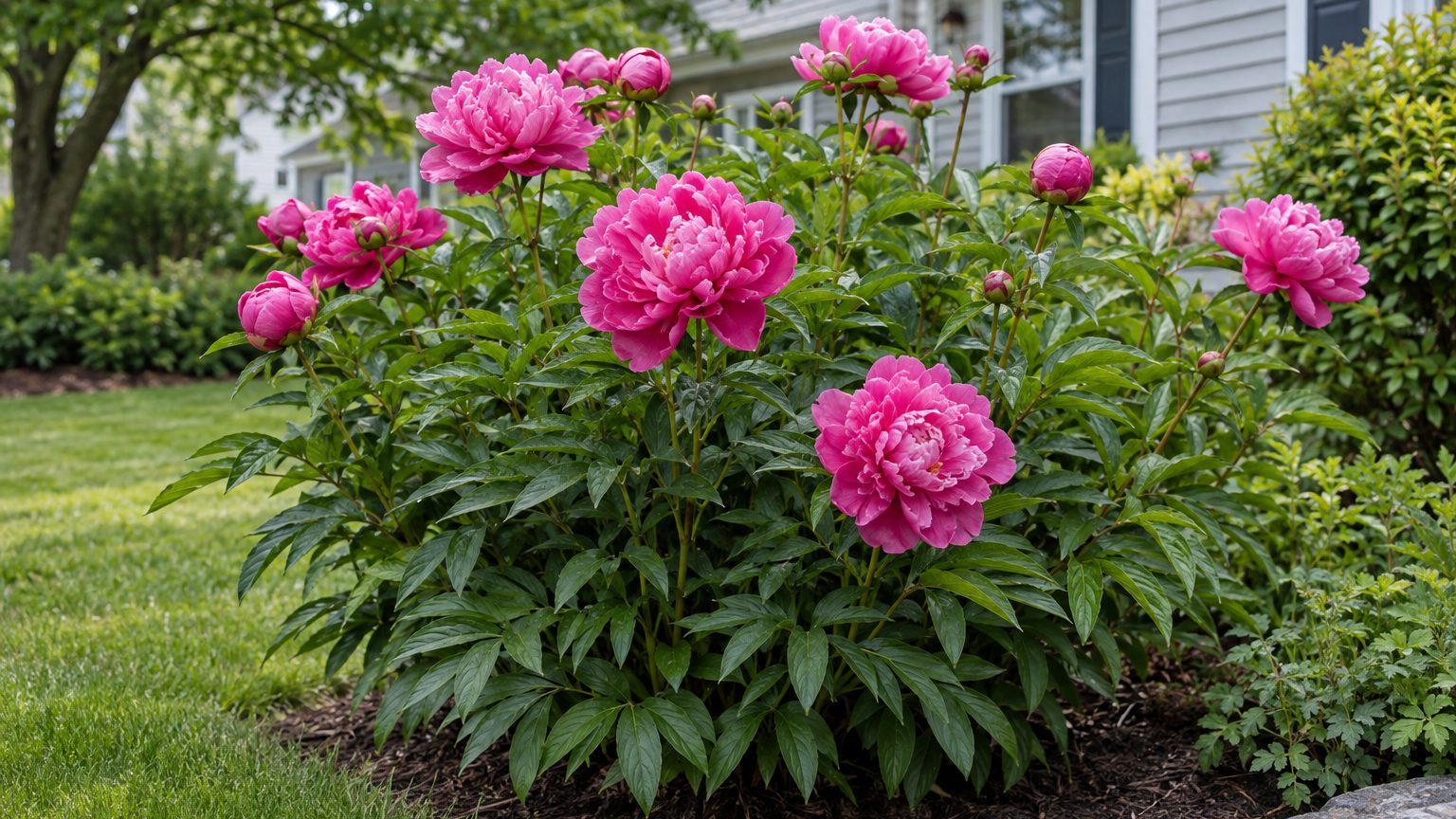
Peony stems poke up red and stubby through cold Nova Scotia soil in spring, and by early summer the garden fills with peony blooms. The plant asks for little, but the planting date matters more than most gardeners expect.
When to Plant Peonies in Nova Scotia

Plant or divide peonies in August and September, and October still works if the season got away from you. Autumn planting gives the roots time to settle before winter, and the year that follows runs like this, based on a Canadian hardiness zone of 6b at Halifax.
- In early spring, red shoots push up as the soil thaws, and in Halifax the last spring frost arrives on average around May 7, so a late cold snap can still nip tender tips.
- In May and June, buds open, with the timing depending on the type, from late spring into June.
- In late summer, from August through September, planting and dividing is at its best, and the roots grow while the soil is still warm.
- In October, planting can still be done, and in Halifax the first fall frost falls on average around October 18.
- In November and December, once the foliage has died back, herbaceous peonies can be cut to the ground.
Those frost dates are averages for Halifax, so half of all years bring frost later than each date. Northern and upland districts run weeks behind the coast. Spring planting is possible too, though flowers may be delayed a year. The dates here follow the nearest comparable climate in northern New England, so confirm local timing with a garden centre, a garden society or the provincial gardening groups.
Nova Scotia — the year and the numbers
- State
- Nova Scotia
- Hardiness zones
- 6b
- Last spring frost
- May 7
- First fall frost
- October 18
- Annual rain
- 55 in
- Lawn zone
- cool-season
- Source
- Environment and Climate Change Canada — Canadian Climate Normals 1981-2010, station HALIFAX STANFIELD INT'L A · Halifax
Which Peonies Grow Best in Nova Scotia?
Peonies suit Nova Scotia well. They need a cold winter rest to flower and may flower poorly in mild-winter climates.
Four types are generally grown in home landscapes, and the cold requirement applies to all of them. These plants need a sustained period of cold winter weather to flower well.
| Peony type | How it does in Nova Scotia | Why |
|---|---|---|
| Herbaceous (garden) peony | Reliable in a cold-winter climate | Dies back each year and rests through cold winters |
| Tree peony | Grows well in a sheltered spot | Keeps woody stems and blooms before the herbaceous types |
| Itoh (intersectional) peony | Suits Halifax’s Canadian zone 6b climate | Hybrid of garden and tree peonies, blooming last of the four |
The woodland peony (Paeonia japonica) is the fourth type and opens first in late spring, though it is less common in home gardens. Whatever the type, keep the eyes near the soil surface when planting. A peony set too deep may bloom poorly or not come up at all.
When to Plant, Cut Back and Feed Peonies in Nova Scotia
Planting and cutting back have clear windows here, and both follow the plant’s own rhythm. Feeding has no month attached, so let the plant’s growth guide it.
A newly planted or transplanted peony may not bloom the first spring, so patience is part of the job. A herbaceous peony is cut back after frost, while a tree peony keeps its woody stems and is never cut back.
| Task | Best timing in Nova Scotia | Why then |
|---|---|---|
| Plant or divide | August to September, or October | Roots settle before the ground freezes |
| Plant in spring | As soon as the soil is workable | Works, but flowers may be delayed a year |
| Cut back herbaceous peonies | November to December, or March to April | Foliage has died back, and early spring is the other window |
| Enjoy the blooms | May to June | Late spring into June, depending on the type |
For feeding, work compost into the soil at planting time and keep fertilizer away from the eyes. A soil test tells you whether the bed needs anything more.
How Peony Planting Dates Change Across Nova Scotia
Nova Scotia is a long, narrow province with ocean on nearly every side, so the season shifts from one district to the next. The Halifax figures are a midpoint, not a rule for every yard.
- Halifax and the Atlantic coast: The sea slows spring warming and softens the first fall frosts, so planting in September fits comfortably.
- Annapolis Valley: Sheltered from the coast, the valley tends to warm earlier in spring, which suits an early start on planting.
- Cape Breton Highlands: Higher ground runs weeks behind Halifax, so frost arrives sooner and planting in August gives roots a head start.
In a cooler district, lean toward the early end of the planting window. Roots then have time to anchor before the soil turns cold.
Where to Get Peony Advice in Nova Scotia
Nova Scotia has no county extension offices, so advice comes from the province and from local gardeners. A soil test or a photo of a struggling plant can make the advice more useful.
- The Nova Scotia Department of Agriculture offers provincial guidance on soil testing and plant health.
- Local garden centres and garden societies know which peony types do well in your district.
- Master gardener groups can help diagnose a plant that fails to bloom.
Common Questions
Why Did My Peony Not Bloom After Planting?
A newly planted peony often skips its first spring. If the plant still does not bloom after its first spring, check whether the eyes sit near the surface rather than buried.
Can You Move a Peony in Spring?
Yes, as soon as the soil can be worked. Flowers may be delayed a year, so late summer remains the more rewarding time to move one.
Should You Cut Back a Tree Peony?
No. A tree peony keeps its woody stems through winter, so leave them in place and remove only dead or damaged wood.