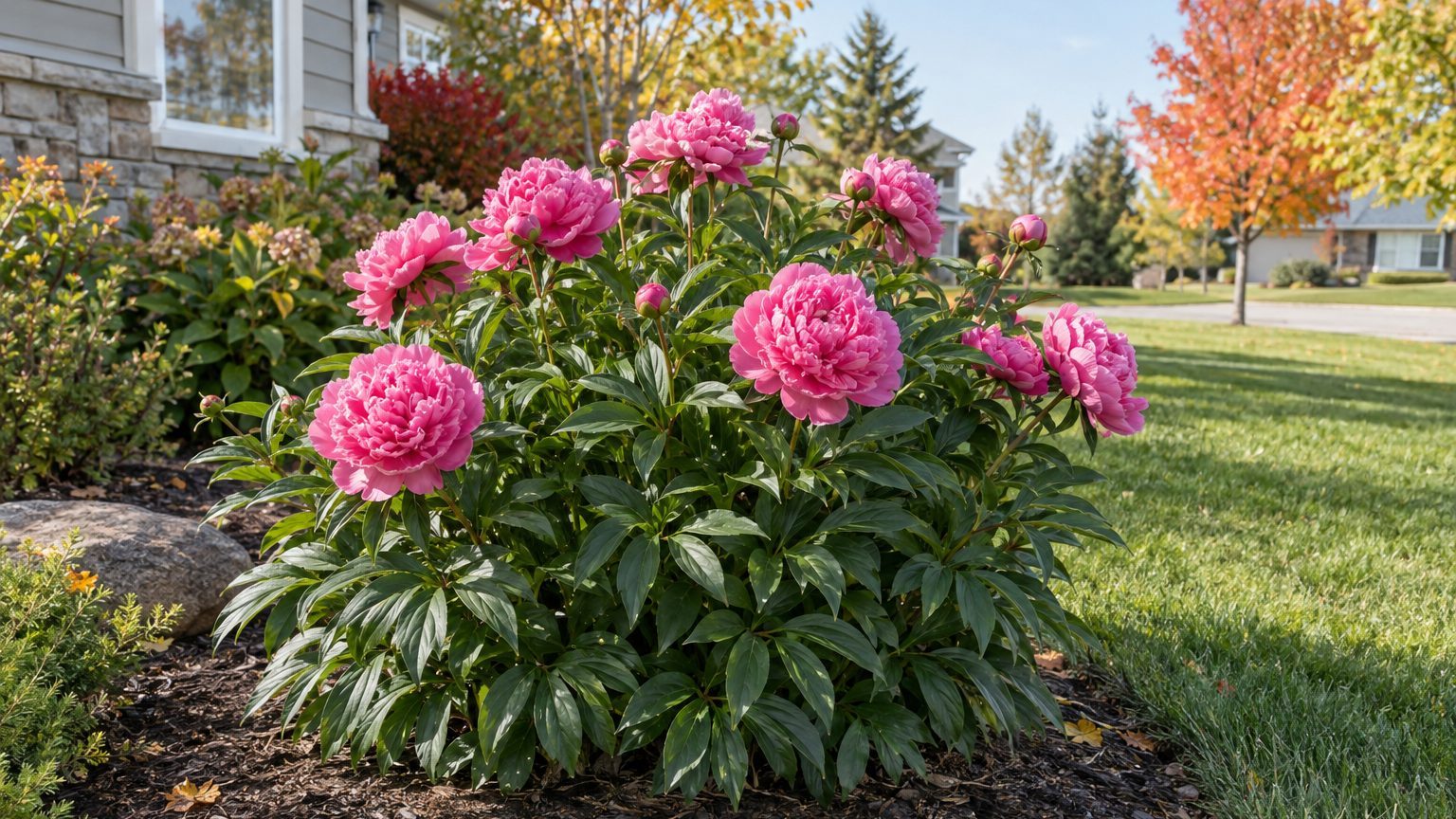
A well-established peony clump is a common sight on North Dakota farmsteads, and the plant earns its place by shrugging off winters that flatten fussier perennials. Getting a new one started comes down to the planting window and a few habits at the root.
When to Plant Peonies in North Dakota

Plant or divide peonies in September to early October, so the roots settle in before the ground freezes. Here is how a peony’s year runs in North Dakota, in the order you will meet it.
- In early spring, the red shoots push up through cold soil, and a peony planted the previous fall sends up growth without any help from you.
- In June, the buds open, and bloom can stretch into early July depending on the variety and the weather.
- Through summer, the foliage builds the plant’s stored energy for next year, which is why the leaves stay until fall.
- In September to early October, the planting and dividing window opens, giving roots time to anchor before winter.
- In October and November, after a hard freeze has killed the foliage, the stems come down for the year.
Frost dates give the backdrop. At the reference city, Fargo, the last spring frost falls between May 4 and May 15, and the first fall frost arrives between September 25 and October 5. Country and suburban yards usually frost later in spring and earlier in fall, often by one to two weeks, so check your own county. Hardiness zones run from 3a to 4b on the USDA system, and other parts of the state differ from Fargo.
North Dakota — the year and the numbers
- State
- North Dakota
- USDA zones
- 3a-4b
- Last spring frost
- May 4 to May 15
- First fall frost
- September 25 to October 5
- Annual rain
- 24 in
- Lawn zone
- cool-season
- Source
- NOAA NCEI U.S. Climate Normals 1991-2020, 32F freeze probabilities · Fargo
Which Peonies Grow Best in North Dakota?
Peonies suit North Dakota well, because they need a cold winter rest to flower and this state delivers one. The mild-winter trouble that gardeners farther south face, with sparse blooms, does not apply here. Herbaceous peonies and Itoh hybrids are the easy ones to grow.
| Peony type | How it does in North Dakota | Why |
|---|---|---|
| Herbaceous (garden) | Reliable and long-lived | Dies back to the ground each fall and regrows in spring |
| Itoh (intersectional) | Good choice for a home bed | Same yearly dieback and care as herbaceous types |
| Tree (woody) | Needs protection | Generally less hardy, so it wants a sheltered site or winter mulch |
Woodland peony (Paeonia japonica) is another type grown in home landscapes. For a new planting, a herbaceous peony is an easy choice, and a tree peony is worth trying only where you can give it a protected corner.
When to Plant, Cut Back and Feed Peonies in North Dakota
Peony work clusters in fall. Planting and cutback happen in fall, while spring and summer ask for little beyond watching the plant leaf out and bloom.
| Task | Best timing in North Dakota | Why then |
|---|---|---|
| Plant or divide | September to early October | Roots settle before the ground freezes |
| Cut back herbaceous types | October to November, after a hard freeze | The frost has killed the foliage, and removing it lowers disease risk |
| Deadhead | Right after bloom | Spent flowers come off before they set seed |
Set the eyes near the soil surface when planting, because a peony set too deep may bloom poorly or not come up at all. Expect a quiet first spring too, since a newly planted or transplanted peony may not bloom. Cut herbaceous stems down to within a couple of inches of the ground and discard the debris rather than composting it. Tree peonies keep their woody stems and are never cut back. A soil test through your county office is the sensible way to decide whether and when to feed your peonies.
How Peony Planting Dates Change Across North Dakota
The planting window holds statewide, but local conditions slide it earlier or later in practice.
- Red River Valley: Local conditions determine where a yard falls within the September-to-early-October planting window, and a hard freeze signals when to cut back herbaceous peonies.
- Northern border counties around Minot and Williston: Use local conditions to choose a date within the September-to-early-October planting window, and finish before the ground freezes.
- Missouri River country around Bismarck: Winter protection matters more for a tree peony in open, windy sites, and a mulch layer helps.
Bloom follows the same pattern, with warmer yards opening in early June and cooler ones closer to July.
Where to Get Peony Advice in North Dakota
NDSU Extension offers local garden guidance, and staff can help with a struggling clump or a soil test.
- Your county extension office can explain how to take a soil sample and what the results mean before you plant.
- Staff can identify disease or poor bloom if you bring a stem or photo, ideally in June when symptoms show.
- The extension website carries garden publications you can read ahead of the September planting window.
Common Questions
Can You Plant a Peony in Spring in North Dakota?
Plan to plant or divide peonies in September to early October. Bare-root plants are usually sold for fall planting, which fits the September-to-early-October planting window.
Why Won’t a Peony Bloom After Planting?
The most common reasons are a new planting that has not yet settled or roots set too deep. Check that the eyes sit near the surface, and give the plant time.
Should You Mulch Peonies for Winter in North Dakota?
Herbaceous peonies are hardy and generally do fine without it. Tree peonies are the ones that benefit from mulch or a protected site.