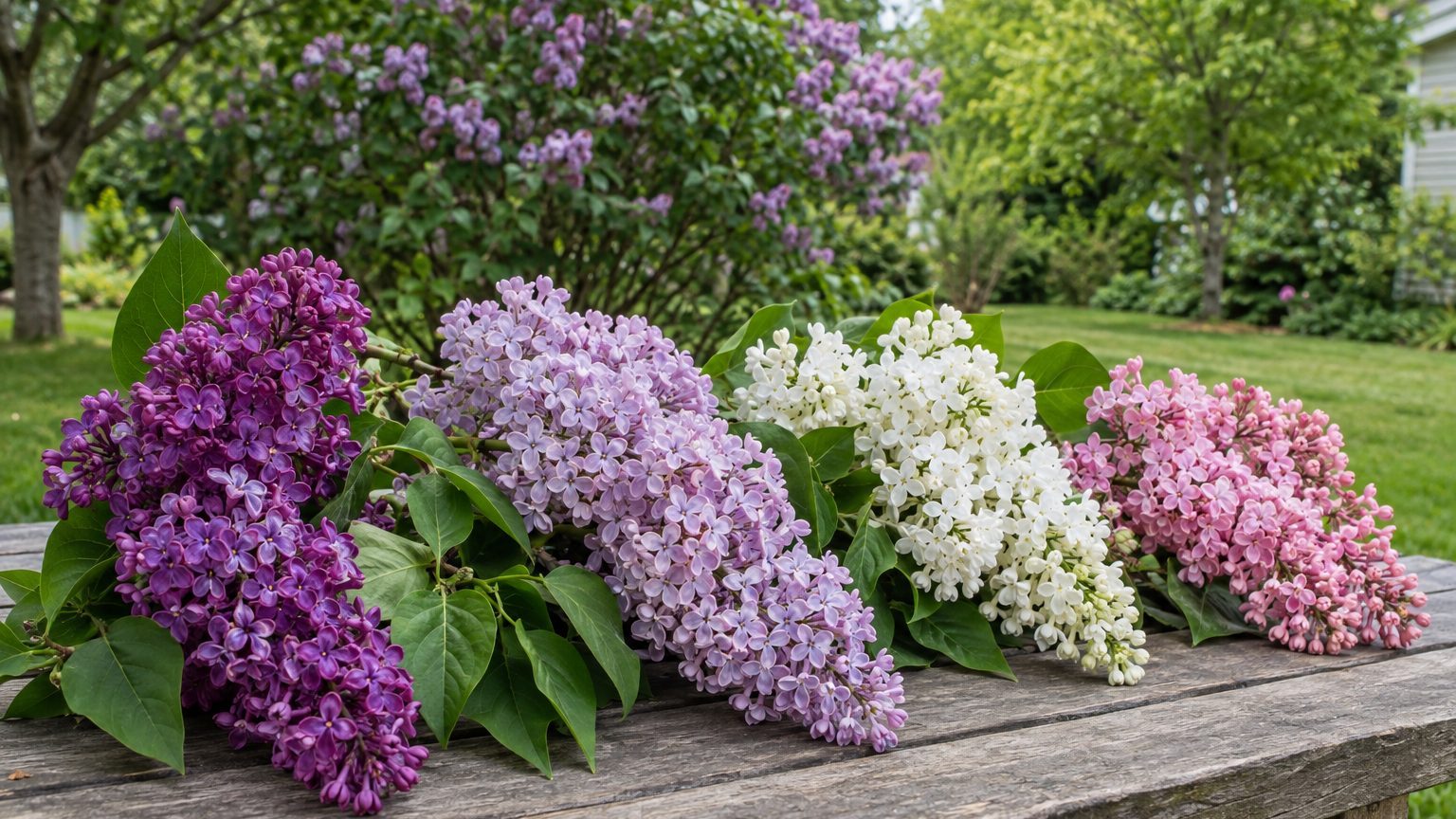
Lilac season in Utah means the scent of common lilacs drifting over fences from late spring into June. A lilac that blooms well here wants a cold winter rest, sun and pruning at the right moment.
Best Lilacs to Grow in Utah

Common lilac, early-flowering hybrids and tree lilac all suit Utah, because lilacs thrive where winters are properly cold and Utah supplies that across most of the state. USDA hardiness zones here run from 4a to 9a, so the choice depends on where you garden, and the warm southern end is the stretch where a lilac has the hardest time.
Common Lilac

Syringa vulgaris is the classic: it is a hardy shrub that adapts to almost any soil and watering condition. It has also been heavily hybridized, with hundreds of cultivars from white to deep purple, wine red and light pink.
Give it a sunny site with good air circulation. Give it plenty of room, because common lilac grows into a large, spreading shrub.
French Hybrid Lilacs

The French hybrids are Syringa vulgaris selections, most noted for bloom size and fragrance. They are the ones to pick when you want heavy, scented clusters beside a patio or under a window.
Look for plants growing on their own roots. Lilacs on their own roots are far more hardy than grafted lilacs, which matters in the colder parts of Utah.
Early Flowering Lilac
Syringa × hyacinthiflora looks much like a French hybrid but blooms earlier. The shrubs themselves are very hardy, though an early bloom is exposed to late spring frost.
Plant it only where late spring frosts are less frequent. Mixing it with later bloomers keeps the show going longer.
Tree Lilac
Syringa reticulata is a water-wise choice for yards that are trying to cut irrigation. It also brings the lilac season to a close, since the later lilacs bloom into June.
Choose it when you want a small tree rather than a suckering shrub, and when you would like flowers after the common lilacs have faded.
Utah — the year and the numbers
- State
- Utah
- USDA zones
- 4a-9a
- Last spring frost
- April 12 to April 29
- First fall frost
- October 18 to October 29
- Annual rain
- 16 in
- Lawn zone
- transition-season
- Source
- NOAA NCEI 1991-2020 Climate Normals, 32F freeze probabilities · Salt Lake City
How to Choose a Lilac for a Utah Garden
Start with the coldest and hottest your yard gets, then think about how much time you want to spend. Lilacs need a cold winter rest to mature their flower buds, so they do best where winters bite and struggle in hot, humid summers.
Size matters as much as climate. A common lilac fills a corner quickly, while a tree form fits a narrower spot.
| Your situation | What suits it in Utah | Why |
|---|---|---|
| Very cold winter | Common lilac on its own roots | Own-root lilacs are far more hardy than grafted ones |
| Yard where lower water use matters | Tree lilac | It is a water-wise choice |
| Little time for upkeep | Common lilac | It adapts to almost any soil and watering condition |
| Small space | Tree lilac | Its tree form fits more neatly than a broad common lilac |
| Cold winter rest needed | Common lilac or French hybrid | Buds mature only after a cold winter, so colder sites bloom well |
An early flowering lilac fits best in a protected spot, since late spring frost can damage its blooms.
Which Lilacs Suit Different Parts of Utah
Utah ranges from cold mountain valleys to a warm southern corner, and the lilac choice shifts with it.
- Salt Lake Valley: A mild valley setting, so common and French hybrid lilacs do well, and early flowering types can be planted in a sheltered spot where late frosts are less frequent.
- Higher, colder ground: Winters are harder here, so choose common lilacs on their own roots, which are far more hardy than grafted plants.
- Southern Utah: Warmer winters give lilacs less of the cold rest they need, so treat any lilac as a trial and give it a spot with relief from the heat.
Wherever you garden, a sunny site with good air circulation keeps the shrub healthy.
Lilac Buying Mistakes to Avoid in Utah
Buying a Grafted Plant for a Cold Site
A grafted lilac is less hardy than one on its own roots, and a hard winter can set it back. Ask whether a plant is grown on its own roots before you buy, especially for colder ground.
Planting an Early Bloomer in an Open Spot
Early flowering lilacs can open before late spring frosts are done, and a frost can cost you the flowers that year. Put them where late spring frosts are less frequent, or pick a later common lilac instead.
Ignoring Adult Size
A small pot can hide a shrub that will become large and spreading. Crowded against a wall or walkway, it needs constant cutting, and pruning in late summer, fall or winter removes next spring’s flowers. Leave room, and prune in June, right after the flowers fade, with July as a fallback.
If a lilac is already overgrown, a hard cut in March or April renews it, though it will not flower for a few years afterward.
Where to Get Lilac Advice in Utah
Local help starts with Utah State University Extension, which publishes plant guidance written for Utah yards. Your county extension office can answer questions tied to your own elevation and soil.
- The state extension service has plant lists and articles you can read before shopping, so check them in winter.
- Your county office can advise on what grows at your elevation, which is useful in May and June when lilacs are in bloom.
Common Questions
When Do Lilacs Bloom in Utah?
Lilacs bloom in May and June, with late spring running into June. Early flowering types open first and tree lilac closes the season.
How Tall Do Common Lilacs Get?
Mature size varies by cultivar, so check the plant label and give the shrub room to spread. Keeping flowers at about nose height by pruning regularly puts the scent within reach.
Can You Grow More than One Kind of Lilac?
Yes. Planting lilac species with different bloom times can keep the garden in flower longer.