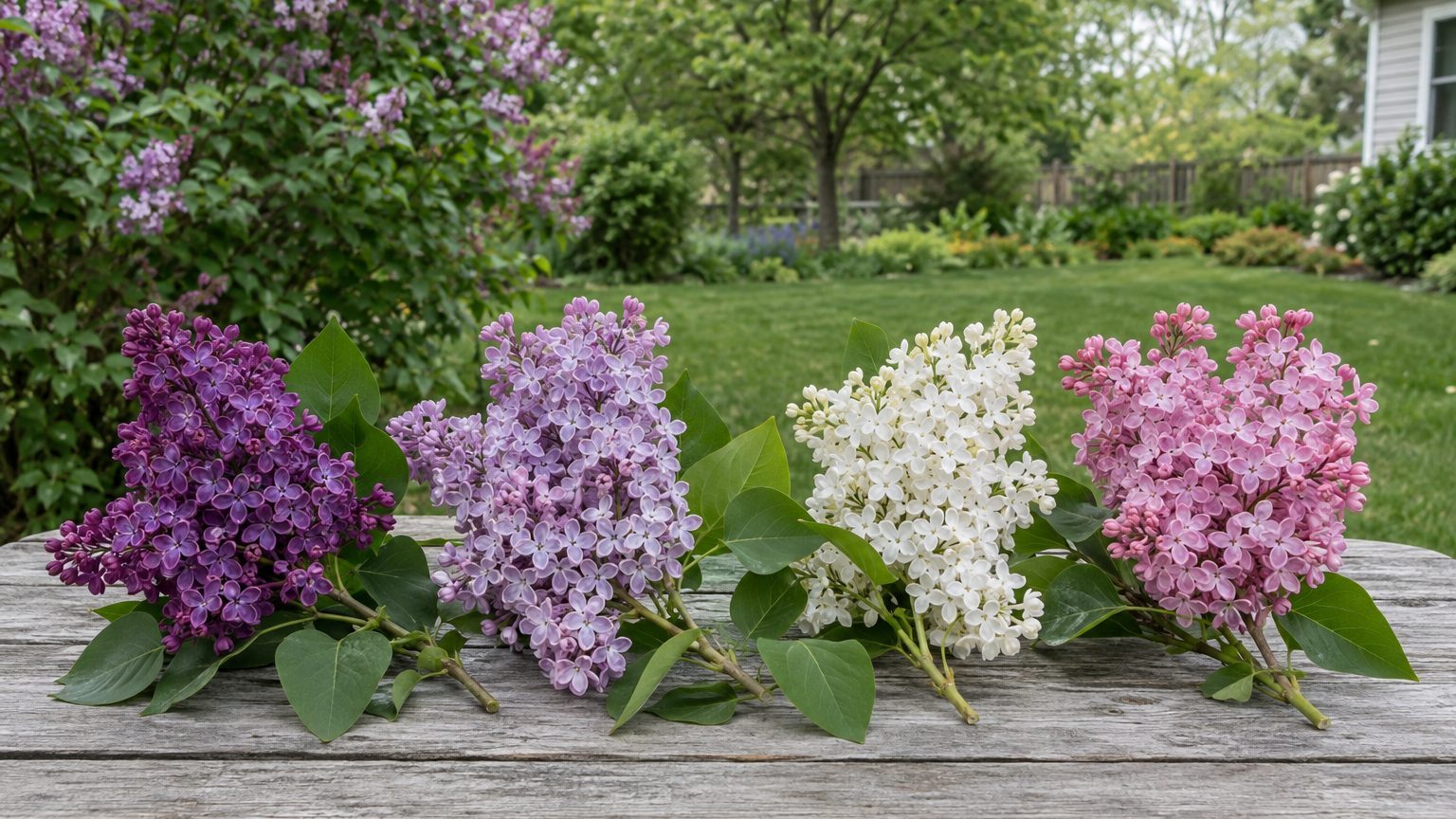
A lilac in full bloom at the corner of a Saskatchewan yard is a familiar sight for good reason: the plant wants a hard winter. Common French lilacs, the compact Dwarf Korean, and hardy early hybrids all earn a place here. Which one suits your yard depends on space, spring frost and how much care you want to give.
Best Lilacs to Grow in Saskatchewan

Lilacs belong in Saskatchewan because the plant needs a cold winter rest to mature its flower buds. Saskatoon sits in Canadian hardiness zone 3a (a Canadian rating that does not convert to a USDA zone), and lilacs do best in climates like it. Heat and humidity are what trouble them, not cold, so your choices are about size, bloom timing and disease.
French Lilacs

French lilacs are selections of the common lilac, Syringa vulgaris, and they are the best known group. Hundreds of cultivars give you a wide range of colors and floret shapes. The flowers are extremely fragrant, and the shrub handles Saskatchewan winters without fuss.
Sensation
Sensation is a French lilac with purple flowers edged in white, a good pick if you want something that looks different from the usual solid purple. It was also among the varieties reported as resistant to a bacterial disease of lilacs. Give it a sunny spot with good air movement around it.
Dwarf Korean Lilac
Syringa meyeri, the dwarf Korean or little-leaf lilac, is the one to pick for a smaller yard. It usually reaches about 5 ft. tall and just as wide. Occasionally it grows to 8 ft. in both directions. It blooms profusely with small, elegant violet flowers.
Breeders have used it often because it is reasonably small and compact. It was also among the varieties reported as resistant to a bacterial disease.
Hyacinthiflora Lilacs
These very vigorous hybrids look like French lilacs but bloom earlier. The shrubs themselves are very hardy, so winter is not the worry. Early flowers are the risk, which means they belong only where May frosts are less frequent. Choose a sunny site in your yard where late spring frosts are less frequent.
Cold-Climate Hybrids
Crosses between Syringa oblata and Syringa vulgaris are well suited to cold climates. They give you the look of a classic lilac with a track record in cold country. As with Hyacinthiflora types, early flowering means you should watch your spring frost pattern before choosing a site.
Saskatchewan — the year and the numbers
- State
- Saskatchewan
- Hardiness zones
- 3a
- Last spring frost
- May 18
- First fall frost
- September 18
- Annual rain
- 14 in
- Lawn zone
- cool-season
- Source
- Environment and Climate Change Canada — Canadian Climate Normals 1981-2010, station SASKATOON SRC · Saskatoon
How to Choose a Lilac for a Saskatchewan Garden
Start with the space you have and the care you want to give. Winter cold is rarely the limit for a lilac on the prairies, so the choice comes down to frost timing in spring, size at maturity and how the shrub handles a humid stretch in summer.
Plant in full sun with room for air to move through the branches. Crowded shrubs in still air are the ones that develop trouble.
| Your situation | What suits it in Saskatchewan | Why |
|---|---|---|
| Very cold winter | Common French lilacs | Lilacs need a cold winter rest to mature their flower buds |
| Hot, humid summer spell | A mildew-resistant type such as the Bloomerang series | Lilacs struggle in hot, humid summers, and this series is described as powdery mildew resistant and reblooming |
| Little time for care | Resistant varieties such as Miss Kim, Royalty or Superba | Resistant varieties are the best protection against a bacterial disease of lilacs |
| Small space | Dwarf Korean lilac | It usually stays about 5 ft. tall and wide |
| Late spring frosts | Common lilac rather than Hyacinthiflora | Hyacinthiflora types bloom earlier and need places with fewer May frosts |
Tree lilacs fit a yard where you want late color, since they bloom in June after the common lilac has finished. The table does not cover every yard, so a shaded corner or a wet spot calls for a conversation with a garden centre.
Which Lilacs Suit Different Parts of Saskatchewan
Spring frost is the main thing that changes from one part of the province to another, and it matters most for the early bloomers. Frost timing swings from district to district.
- Saskatoon area: the last spring frost falls on average around May 18, which means frost can still arrive later in about half of all years. Common lilacs flower later than early hybrids, so they reduce the risk of frost-damaged flowers. Hyacinthiflora types need a sheltered site here.
- Northern districts: frost runs weeks later than in Saskatoon. Choose common lilacs and avoid early bloomers.
- Uplands such as the Cypress Hills: spring comes later on higher ground, so the same advice applies. Pick a site out of the wind where air still moves.
Where you live in the province decides how much to trust an early bloomer, while hardiness is rarely the question.
Lilac Buying Mistakes to Avoid in Saskatchewan
Planting Early Bloomers in the Open
A Hyacinthiflora lilac in an exposed, frost-prone corner can lose its flowers to a May freeze. The shrub survives, but the show is gone for the year. Put early hybrids in a sheltered spot, or choose a common lilac that flowers later and avoids the risk.
Skipping Disease Resistance
Buying a lilac only for flower color can leave you with a shrub that struggles in a hot, humid summer. Using resistant varieties is the best way to protect against bacterial disease. Look for Miss Kim, Royalty, Superba, Dwarf Korean or Sensation, which were reported as resistant.
Ignoring Adult Size
A lilac in a pot at the garden centre does not show what it will become. A common lilac grows far larger than a Dwarf Korean, and a shrub that outgrows its spot gets cut back hard. Check the mature size on the tag before you buy.
If an old lilac has already outgrown its place, cut it back hard in March or April while it is dormant. It will not flower for a few years afterward. Routine pruning is better done in June, right after the flowers fade, because lilacs set next year’s buds soon after flowering. Pruning in late summer, fall or winter removes next spring’s flowers.
Where to Get Lilac Advice in Saskatchewan
Saskatchewan has no local extension page on lilac timing, so local advice comes from the province and nearby gardeners. Confirm local timing with people who garden near you.
- The Saskatchewan Ministry of Agriculture is the place to start for provincial plant and pest guidance.
- A local garden centre can tell you which lilacs it sells have held up in your district, so visit in spring when the shrubs are in leaf.
- A garden society or provincial gardening group can tell you what grows well in your neighbourhood, so go along to a spring meeting.
Common Questions
When Do Lilacs Bloom in Saskatchewan?
Lilacs bloom in late spring, in May and into June. The common lilac flowers first, while the late lilacs and tree lilacs bloom in June.
What Colors Do Lilacs Come In?
Named cultivars of common lilac cover a wide range of colors, including lilac, purple, white, pink and a reddish hue. The flowers are extremely fragrant.
Where Should You Plant a Lilac?
Choose a sunny site with good air circulation. Shade and still air invite trouble, and a lilac planted in the open is easier to keep healthy than one pressed against a wall.