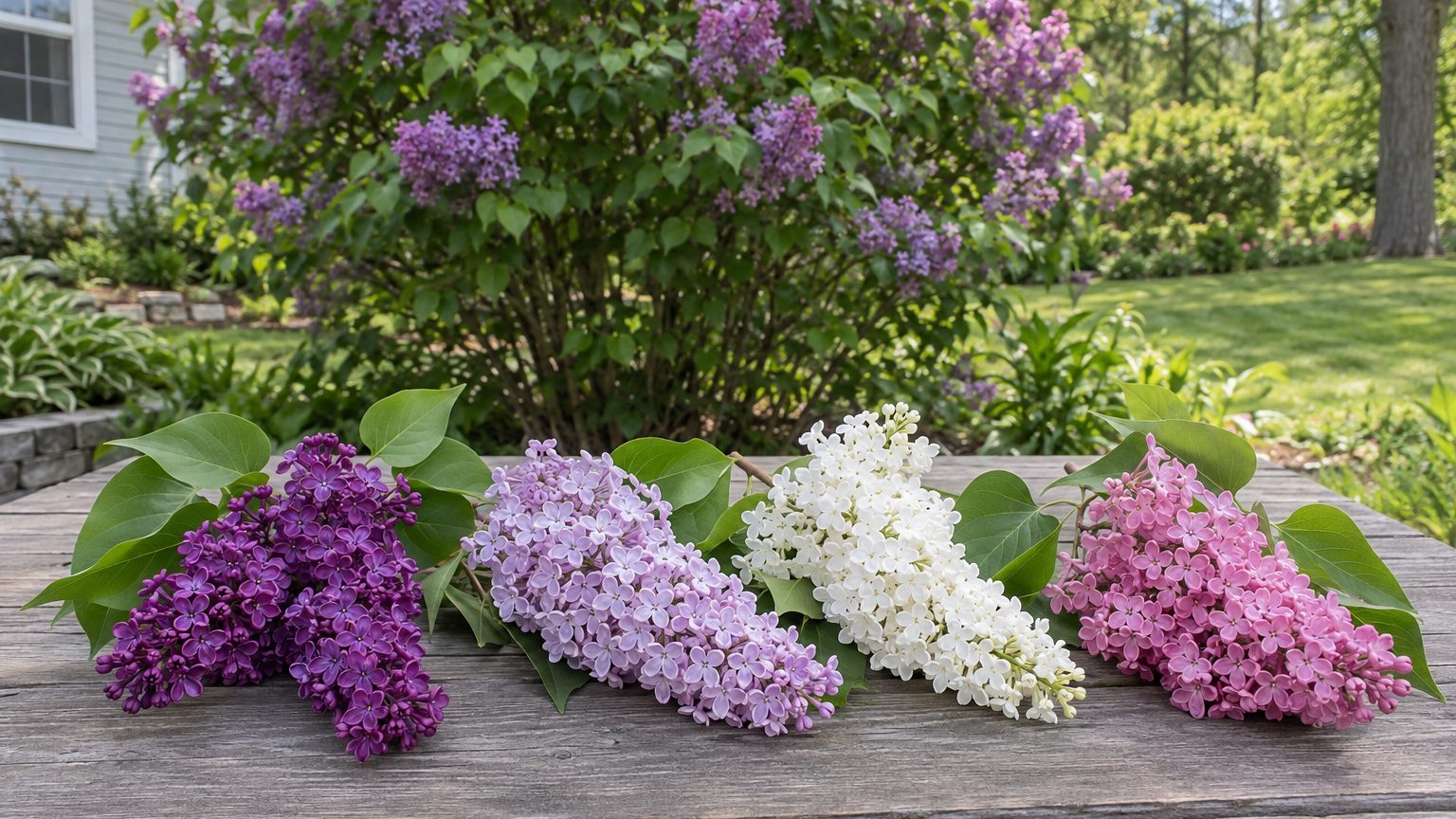
Each spring, lilac clusters open along Nova Scotia fences, farmhouse corners and front walks, and their scent carries across the yard. The shrub is not hard to grow here, but the variety you choose decides how well it flowers and how tidy it stays.
Best Lilacs to Grow in Nova Scotia

French lilacs and the dwarf Korean lilac are the types to look for, because lilacs need a cold winter rest to mature their flower buds. Halifax sits in Canadian hardiness zone 6b, a rating that does not convert to a USDA zone. Lilacs struggle in hot, humid summers, so a resistant variety gives you an edge.
French Lilacs

French lilacs are selections of the common lilac, Syringa vulgaris, and they are the familiar lilac most people picture. Hundreds of cultivars exist, in many colors and floret shapes, from lilac and purple to white, pink and a reddish hue.
They suit Nova Scotia because the winter chill is what ripens their buds. Plant them in a sunny spot with good air circulation.
Sensation
Sensation has purple flowers edged with white, which makes it an easy one to spot in a garden centre. It is a French lilac cultivar that also turned up among the varieties found resistant to a bacterial disease.
That resistance is a practical reason to pick it over an unnamed seedling.
Dwarf Korean Lilac
Syringa meyeri, also called the little-leaf lilac, usually grows about 5 ft. tall and just as wide. Occasionally it reaches 8 ft. in both directions.
It blooms profusely, with small violet flowers, and breeders have leaned on it because it is small and compact. That makes it a good fit for a front yard where a full-size lilac would crowd the walk.
Bloomerang Series
The Bloomerang series is resistant to powdery mildew and reblooms. Mildew is the trouble a damp, warm summer invites, so resistance matters in a lilac that has to sit through those weeks.
Look for the series name on the plant tag before you buy.
Disease-Resistant Varieties
A trial found these resistant to a bacterial disease: Miss Kim, Superba, Royalty, Donald Wyman, Edmund Boisier, Victor Lemoine and Michael Buchner. Resistant varieties are the best protection against that disease.
If your garden centre carries any of them, choose one over an unnamed lilac.
Nova Scotia — the year and the numbers
- State
- Nova Scotia
- Hardiness zones
- 6b
- Last spring frost
- May 7
- First fall frost
- October 18
- Annual rain
- 55 in
- Lawn zone
- cool-season
- Source
- Environment and Climate Change Canada — Canadian Climate Normals 1981-2010, station HALIFAX STANFIELD INT'L A · Halifax
How to Choose a Lilac for a Nova Scotia Garden
Start with what your yard asks of the plant. A lilac that matches your space, your summers and your free time will flower with little fuss.
Lilacs are well suited to cold climates, so the cold season is on your side. What varies from yard to yard is the summer and the room you can give.
| Your situation | What suits it in Nova Scotia | Why |
|---|---|---|
| Very cold winter | French lilacs | The winter chill is needed to mature the flower buds |
| Hot, humid summer | Bloomerang series | Resistant to powdery mildew, and lilacs struggle in that kind of heat |
| Concern about bacterial disease | Miss Kim or Superba | Resistant varieties are the protection against a bacterial disease |
| Small space | Dwarf Korean lilac | Usually about 5 ft. tall and as wide |
| Want flowers again later | Bloomerang series | It reblooms |
Colour is the easy part. Named cultivars cover lilac, purple, white, pink and reddish tones, so choose the shade you like among the varieties that fit your situation.
Which Lilacs Suit Different Parts of Nova Scotia
Nova Scotia is not one climate, and the choice of lilac shifts a little with where your yard sits.
- Halifax: the average last spring frost falls on May 7, which is a midpoint, so frost still comes later in about half of all years. French lilacs and the dwarf Korean lilac fit here.
- Cape Breton Highlands and other upland or northern districts: frost runs later than in Halifax, and bloom follows later too. Bloom generally runs later in these districts, so ask locally which late-blooming lilacs have proved hardy.
Lilacs bloom from April into May, and later species stretch into June. No local extension page covers lilac timing here, so the dates follow the nearest comparable climate; confirm them with a local garden centre, a garden society or a provincial gardening group.
Lilac Buying Mistakes to Avoid in Nova Scotia
Skipping Disease Resistance
An unnamed lilac may come with no information about resistance to bacterial disease, leaving you unsure how it will respond.
Check the tag for a named variety, such as Miss Kim, Superba or Sensation, that did well in trials.
Expecting Flowers from a Warm Spot
Lilacs need the winter rest to set their flower buds, and they struggle where summers run hot and humid. A plant crowded against a wall in a stuffy corner will sulk.
Give it a sunny site with good air circulation, and choose mildew-resistant types like the Bloomerang series for damp stretches.
Ignoring Adult Size
A lilac in a pot looks small, but the adult shrub can fill a bed. The dwarf Korean lilac usually reaches about 5 ft. tall and wide, and occasionally up to 8 ft., so check each French lilac’s tag rather than assuming it will stay compact.
Read the tag for mature height and width, then measure your space before you dig.
Where to Get Lilac Advice in Nova Scotia
For advice, start with the province and with people who garden near you. Provincial guidance is a place to start, and local growers know which varieties handle your yard.
- The Nova Scotia Department of Agriculture offers provincial guidance on growing, so check there before planting.
- A local garden centre can tell you which lilac varieties are in stock and when they bloom, and spring is a good time to ask.
- A local garden society often knows which lilacs have done well in your district, and its members can help once your shrub is in the ground.
Common Questions
When Do Lilacs Bloom in Nova Scotia?
Flowers open from April into May, and later species carry on into June. A yard in an upland district will bloom a little later than one near Halifax.
When Should You Prune Lilacs in Nova Scotia?
For a reblooming lilac, prune after the flowers fade; for a once-blooming lilac, prune right after the flowers fade, usually in May or June. A once-blooming lilac sets next year’s flower buds in summer, soon after it blooms, so pruning in late summer, fall or winter cuts off the next spring’s flowers.
Can You Cut Back an Overgrown Lilac?
Yes. March and April, while the shrub is still dormant, is the time for a hard cut. The shrub will not flower for a few years afterward, so plan to wait.