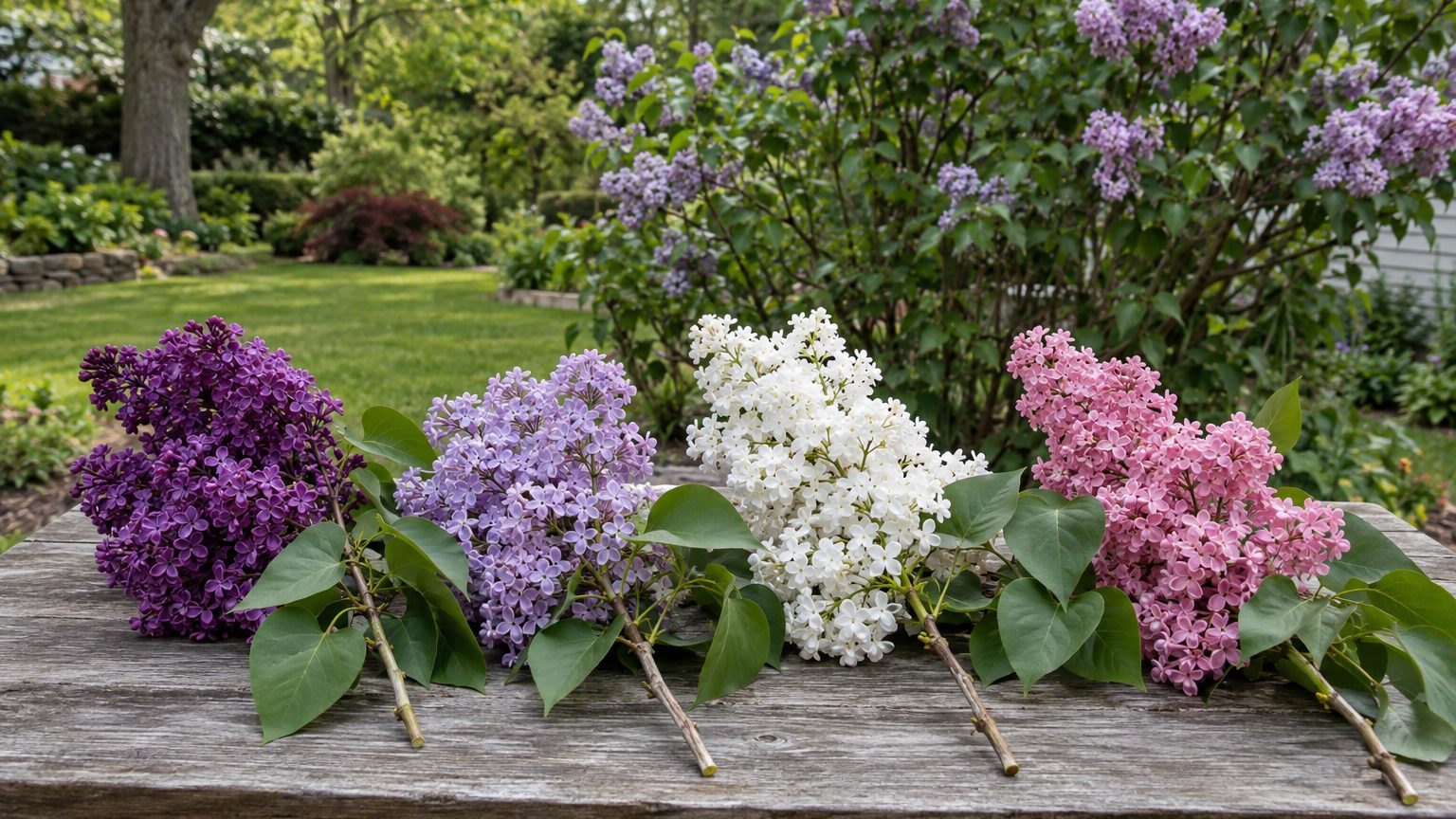
Lilac fragrance drifting over a Connecticut fence in May is a yearly reward, and the shrub behind it asks little once it suits the place. Common lilac and a few hybrids handle the state’s cold winters well. Resistant and compact types help with the humid summers and with small yards.
Best Lilacs to Grow in Connecticut

Common lilac and its hybrids do well here, because lilacs are well suited to cold climates and the winter chill is what ripens their flower buds. Connecticut sits in USDA hardiness zones 6a to 7b, so the winter rest is there. Hot, humid summers are the strain, which makes disease resistance worth choosing for.
Common Lilac

Syringa vulgaris is the lilac most people picture, with fragrant masses of purple, lavender and white flowers in May. It also catches powdery mildew, bacterial blight, scale and borers. Plant it in a sunny spot with good air circulation, which keeps leaves dry after humid summer rain.
Less Susceptible Species and Hybrids

More than 20 species of lilac exist, and some resistant cultivars, species and hybrids stand up to disease better than the common lilac. If mildew has marked the leaves of an older shrub in your yard, this group is the place to look for a replacement. Ask the nursery which ones resist it.
Bloomerang Series
This dwarf hybrid series resists powdery mildew and reblooms, which suits a humid Connecticut summer. Like many dwarf hybrid lilacs, it is more disease-resistant than typical common lilac and matures shorter, so it fits a foundation bed or a front walk without constant trimming.
Hyacinthiflora Hybrids
These vigorous hybrids look like French hybrids but bloom earlier. The shrubs are very hardy, but early flowers are exposed to late spring frost. Plant them only where such frosts are less frequent, such as a sheltered, warmer spot near the coast.
Connecticut — the year and the numbers
- State
- Connecticut
- USDA zones
- 6a-7b
- Last spring frost
- April 2 to April 12
- First fall frost
- October 28 to November 10
- Annual rain
- 44 in
- Lawn zone
- cool-season
- Source
- NOAA NCEI 1991-2020 Climate Normals, 32F freeze probabilities · Bridgeport
How to Choose a Lilac for a Connecticut Garden
Start with the problem your yard actually has. A lilac that suits a cold hillside is not always the one for a humid, crowded suburban lot.
Most choices come down to winter chill, summer humidity, the space you have and how much care you want to give.
| Your situation | What suits it in Connecticut | Why |
|---|---|---|
| Very cold winter | Common lilac or hardy hybrids | Lilacs are well suited to cold climates, and winter chill develops the buds |
| Hot, humid summer | Bloomerang series or other resistant hybrids | Lilacs struggle in humid heat, and these resist powdery mildew |
| Little time to spare | Resistant dwarf hybrids | Less disease to watch for and treat than with common lilac |
| Small space | Dwarf hybrids such as the Bloomerang series | They mature shorter than typical common lilac |
| Wondering if winters are cold enough | Any lilac in a sunny, airy site | The cold winter rest matures the flower buds |
Hyacinthiflora hybrids suit gardens where late frosts are rare, since their early bloom is the part that gets hurt. Choose Bloomerang if you want flowers to return later in the season.
Which Lilacs Suit Different Parts of Connecticut
Winters and spring frosts differ across the state, and that shifts the choice mostly between early bloomers and tougher, later ones.
- Litchfield Hills and the northwest: Inland and northwest Connecticut freeze later in spring than the shoreline. Skip early-blooming Hyacinthiflora hybrids unless the spot is sheltered, and lean on common lilac, which gets the strong winter rest it wants.
- Long Island Sound shoreline: This area is milder than the northern parts of the state, and in Bridgeport the last spring frost falls around April 2 to April 12. Early bloomers are safer here, while mildew-resistant hybrids earn their place in the humid summers.
Between the hills and the coast, judge your own yard by how late frost lingers in it and how much air moves through it.
Lilac Buying Mistakes to Avoid in Connecticut
Early Bloomers in Frost Pockets
An early-blooming hybrid planted in a low, cold corner can lose its flowers to a late frost. Check where cold air settles in your yard before buying. If frost pockets are the norm, choose a later-blooming common lilac or move the early type to a warmer, higher spot.
Susceptible Types in Humid Spots
A common lilac squeezed into a damp, still corner is especially vulnerable to powdery mildew and blight. Plant it where the sun is full and air moves freely. If the site cannot change, buy a mildew-resistant hybrid instead of fighting disease every summer.
Pot Size Without Adult Size
A small potted lilac says nothing about how big it will become. A dwarf hybrid matures shorter, while a common lilac can crowd a window or walkway. Check the adult height on the tag before you buy.
If an overgrown lilac has already outgrown its spot, cut it back hard in March or April, accepting that it will not flower for a few years. Afterward, prune a once-blooming lilac right after the flowers fade, usually in May or June, because next year’s buds form in summer and later cutting removes them.
Where to Get Lilac Advice in Connecticut
Local help matches a variety to your soil, slope and frost pocket. UConn Extension is the state’s source for gardening questions, and the extension office serving your county can offer local advice.
- The extension service has lilac guidance for Connecticut yards, and spring is a good time to ask about shrubs in bloom.
- Your county extension office can advise you when mildew or blight shows up.
Common Questions
When Do Lilacs Bloom in Connecticut?
Most lilacs flower from April into May, and later-blooming species can carry into June. Early hybrids open sooner than common lilac, which is why frost-prone spots call for later types.
Do Lilacs Need Full Sun?
Yes, lilacs thrive in sunny sites with good air circulation. Open exposure helps flowering and helps leaves dry after rain, which matters in humid Connecticut summers.
What Colors Do Lilacs Come In?
Beyond classic purple, lilacs come in red, blue, pink, white, mauve and yellow. Named cultivars cover a wide range of flower colors, so check the tag for the shade you want.