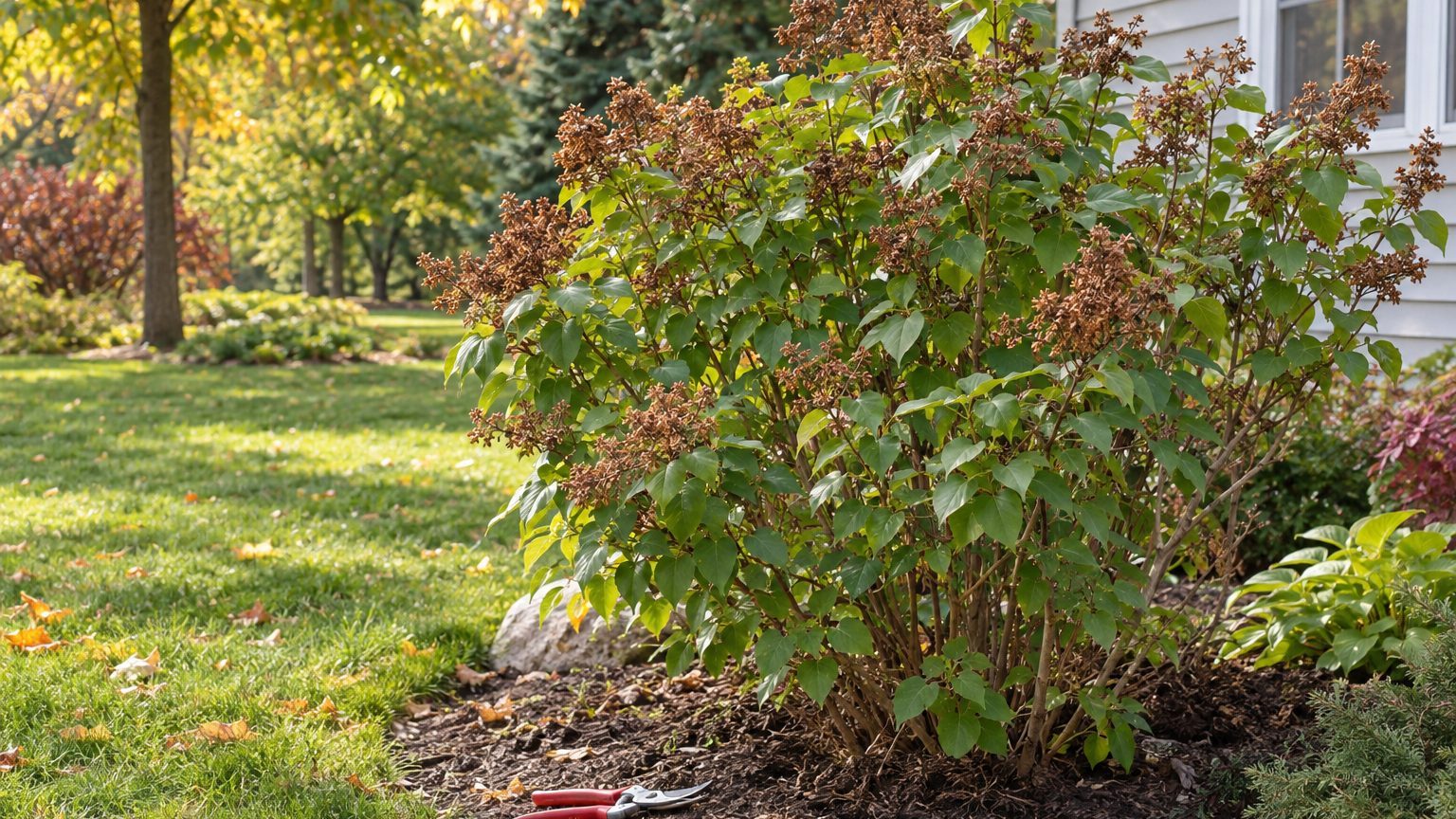
A lilac in full flower smells like spring, and soon afterward it is a plain green shrub with brown clusters hanging on. That brown stage is when the pruning shears come out. In West Virginia, timing follows the bloom, while hard renovation belongs in late winter.
When to Prune Lilacs in West Virginia

Prune lilacs in West Virginia right after the flowers fade, which usually means May and June. The shrub starts building next spring’s buds soon after it blooms, so the shears should get there first.
| Type of pruning | When in West Virginia | Why |
|---|---|---|
| Routine shaping and removing spent flowers | May, June, right after the flowers fade | Next year’s buds form on new growth soon after bloom, so later cuts remove them |
| Hard cut-back of an overgrown lilac | March, April, while the plant is still dormant | It renews a crowded shrub but costs the next flowers |
Lilacs open in April and May, and some species carry on into June. The pruning window moves with them, so a late bloomer gets its cuts later than an early one. A lilac that has been cut hard in March or April will not flower for a few years afterward, so save that cut for shrubs that are already blooming poorly.
West Virginia — the year and the numbers
- State
- West Virginia
- USDA zones
- 5a-7a
- Last spring frost
- April 9 to April 23
- First fall frost
- October 18 to November 1
- Annual rain
- 46 in
- Lawn zone
- cool-season
- Source
- NOAA NCEI 1991-2020 Climate Normals, 32F freeze probabilities · Charleston
How to Tell When Your Lilacs Are Ready to Prune
The shrub gives clear signals, and they matter more than the date on the calendar.
- Petals turn brown and papery, which tells you the show is over and the shears can come out.
- Flower clusters droop and lose their color, so you can cut them off just below the cluster without touching next year’s growth.
- Fresh green shoots push out below the old flowers, a sign the plant has shifted its energy to the wood that will carry next spring’s blooms.
- The whole shrub looks crowded, with old, thick stems and tangled branches in the middle, which marks it for thinning once the bloom is done.
- Different lilacs in the same yard fade at different times, so check each shrub instead of relying on the calendar alone.
If you can still see fresh color in the clusters, wait.
Should You Prune Lilacs in Fall or Winter in West Virginia?
No, not for routine pruning. A lilac blooms on last year’s wood and sets next year’s flower buds in summer, soon after it flowers. Cutting in late summer, fall or winter takes off the buds that were waiting for spring, so the shrub loses the next spring’s flowers.
Late winter is reserved for hard renovation. An overgrown lilac can be cut back hard in March or April while it is dormant, a way to rebuild a shrub that has become a tangle of old, thick stems. The cost is flowers: the shrub will not bloom for a few years afterward. Think of it as a reset for a plant that was blooming poorly anyway, not as routine care.
Remove dead, broken or diseased wood during the May or June pruning window.
How Lilac Pruning Time Shifts Across West Virginia
The calendar months stay the same statewide, but where your yard sits changes when the flowers fade, and that sets your cut dates.
- Charleston and the Kanawha Valley: Charleston is the river-valley reference point for the page’s frost information. Let the flowers on each shrub set the pruning date; May is a statewide pruning month, not a local forecast.
- Allegheny Highlands (Canaan Valley, Snowshoe): Higher ground freezes noticeably earlier in fall. Let fading flowers set the pruning date here.
- Eastern Panhandle and the ridges between: Let the fading flowers in your own yard set the date. The USDA hardiness zone system runs from 5a to 7a across West Virginia, but that range measures winter cold, not bloom timing.
Watch your own shrub first, and use the county as a loose guide.
Where to Get Lilac Advice in West Virginia
When a lilac is not behaving, local help is close. West Virginia University Extension runs the state’s gardening programs, and county offices know how bloom and weather run in your valley or on your ridge.
- Use the extension website to find local contact information.
- Ask your county extension office about a shrub that has stopped flowering.
- Ask for local advice before making a hard renovation cut in March or April.
Common Questions
Do Lilacs Grow Well in West Virginia?
They can where winters provide the cold rest their buds need. Lilacs need a cold winter rest to mature their flower buds, so they do best in cold-winter climates and struggle in hot, humid summers. Warmer winters can mean fewer flowers on common lilac.
Can You Thin an Overgrown Lilac Without Losing Flowers?
Yes, if you go gradually. Right after bloom in May or June, remove old, thick stems at the base and thin crowded growth. This gradual approach avoids the flowerless spell that follows a hard renovation cut.
Do All Lilacs Bloom at the Same Time?
No. Lilac species flower at different times from April into June, which can extend the bloom season in a mixed planting. Prune each shrub after its own flowers fade rather than pruning them all by the calendar.