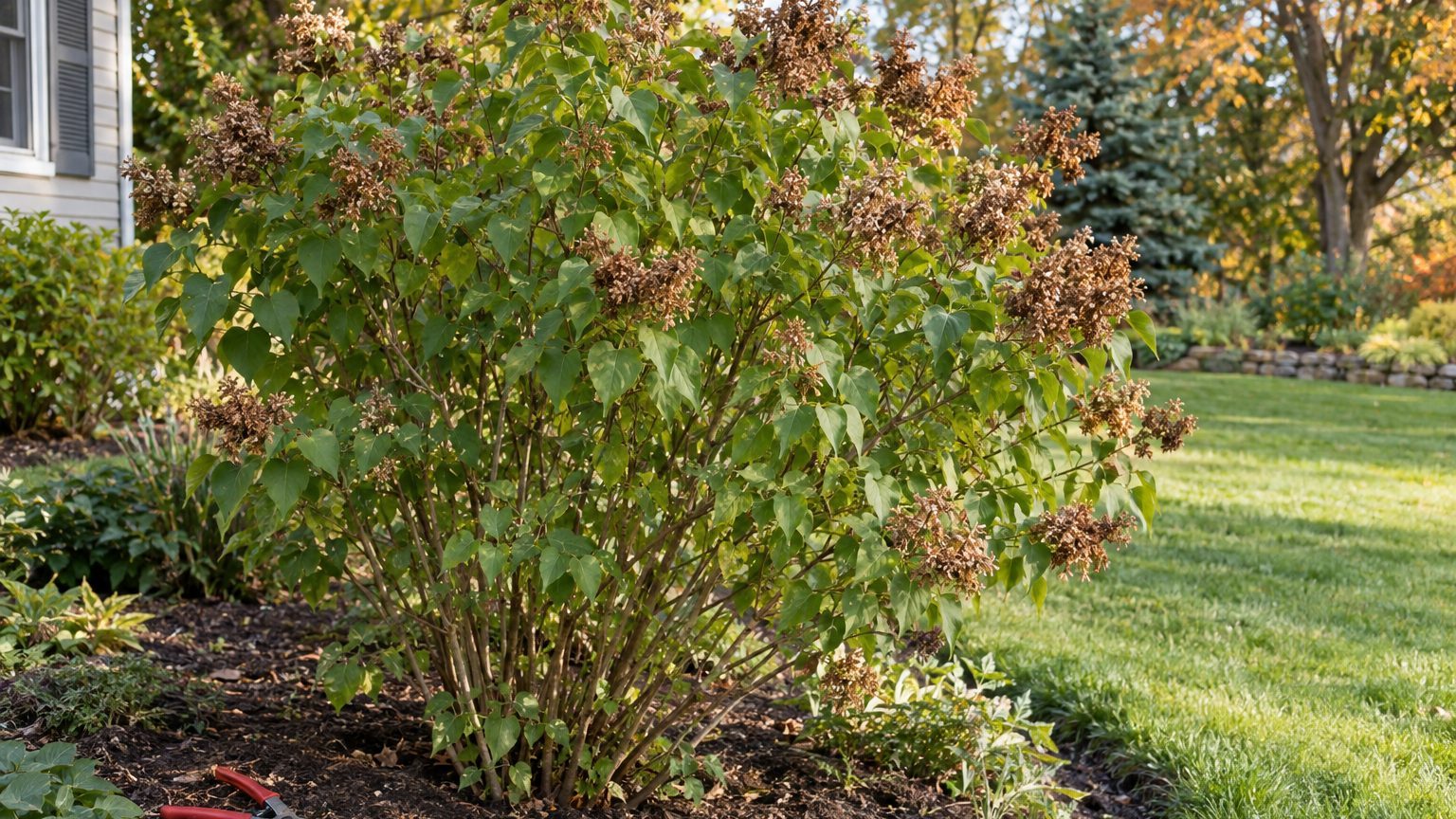
Lilac blooms fade to brown, and that is the cue to pick up the pruners. In Virginia, the window opens as the last flowers drop and closes before summer is far along.
When to Prune Lilacs in Virginia

Prune lilacs in Virginia in May and June, right after the flowers fade. A lilac sets next year’s flower buds in summer, soon after it blooms, so a cut made after mid-summer removes the coming spring’s flowers.
| Type of pruning | When in Virginia | Why |
|---|---|---|
| Routine maintenance and shaping | May to June, right after the flowers fade | Flower buds for next spring form soon after bloom, so early cuts keep them |
| Thinning an old lilac | After bloom in May to June, or hard renovation in March to April | Oldest, thickest stems bloom poorly, but a hard cut costs the next flowers |
Lilacs flower in April and May, and some species carry on into June, so the pruning window follows the bloom of your particular shrub. A hard cut on an overgrown plant means no flowers for a few years afterward.
Virginia — the year and the numbers
- State
- Virginia
- USDA zones
- 5a-8b
- Last spring frost
- March 20 to April 3
- First fall frost
- November 10 to November 24
- Annual rain
- 47 in
- Lawn zone
- transition-season
- Source
- NOAA NCEI 1991-2020 Climate Normals, 32F freeze probabilities · Virginia Beach
How to Tell When Your Lilacs Are Ready to Prune
The plant gives better timing cues than the calendar, and a quick walk around the shrub is enough to read them.
- Flower clusters turn brown and dry on the stem, which tells you the show is over and pruning can begin.
- Petals drop and the panicles look ragged, a sign that the plant is moving its energy toward next year’s buds.
- New green growth pushes out below the spent clusters, so you can see where to cut without losing young wood.
- Crowded, crossing or very thick old stems stand out once the flowers no longer distract you from the shrub’s shape.
Once those signs show up, make your cuts soon, because waiting too long into summer risks trimming off the buds for next spring.
Should You Prune Lilacs in Fall or Winter in Virginia?
No, not for routine pruning. Cutting in fall or winter takes off the buds that will open next spring, and you end up with a green shrub and no flowers. Lilacs bloom on last year’s wood, so anything trimmed after summer’s buds are set costs you blooms.
Hard renovation of an overgrown lilac is the winter exception, done in March or April while the plant is still dormant. It brings an old, leggy shrub back to a manageable size, but it comes at a price: the plant will not flower for a few years afterward. Many gardeners prefer the gentler route of removing some of the oldest stems after bloom.
Lilacs also need a cold winter rest to mature their flower buds, so they do best in cold-winter climates and struggle in hot, humid summers. That is worth remembering in Virginia, where a mild winter or a muggy summer can weaken bloom regardless of when you prune.
How Lilac Pruning Time Shifts Across Virginia
Virginia stretches from the coast to the mountains, and the pruning window moves with the bloom, which comes earlier in warm places and later in cool ones.
- Virginia Beach and Hampton Roads: spring arrives here before it does elsewhere in the state, so lilacs flower early and the pruning window opens earlier. Coastal gardens are on the mild end, and lilacs may bloom less reliably in the warmth.
- Blue Ridge and southwest Virginia: spring runs weeks later in the mountains, so bloom and pruning both come later. The winters are colder, which suits lilacs well.
Whatever your location, wait for the flowers to fade rather than going by the date alone.
Where to Get Lilac Advice in Virginia
Local conditions vary a lot across the state, so a nearby expert can fill in what a general guide cannot. Virginia Cooperative Extension, part of Virginia Tech, publishes lilac guidance, and your county office can answer questions about your own soil and shrub.
- The state extension site has publications on lilac varieties and care, which are handy to read before the shrub finishes blooming in May.
- Your county extension office can look at a struggling shrub and suggest fixes, so call in spring when the symptoms are visible.
Common Questions
Can You Cut Lilacs Back to the Ground?
Yes, an overgrown lilac can be cut back hard in March or April, while it is still dormant. Expect no flowers for a few years afterward as the shrub regrows.
Why Is My Lilac Not Blooming in Virginia?
Pruning at the wrong time is a common cause, since late cuts remove the buds. Another is the climate: lilacs need winter chill to bloom fully, and hot, humid summers stress them. Check when you last pruned and how the plant has fared through mild winters.
Do Lilacs Bloom for a Long Season in Virginia?
Different lilac species flower from April through June, so planting a mix of them stretches the season. Common lilac blooms in April and May.