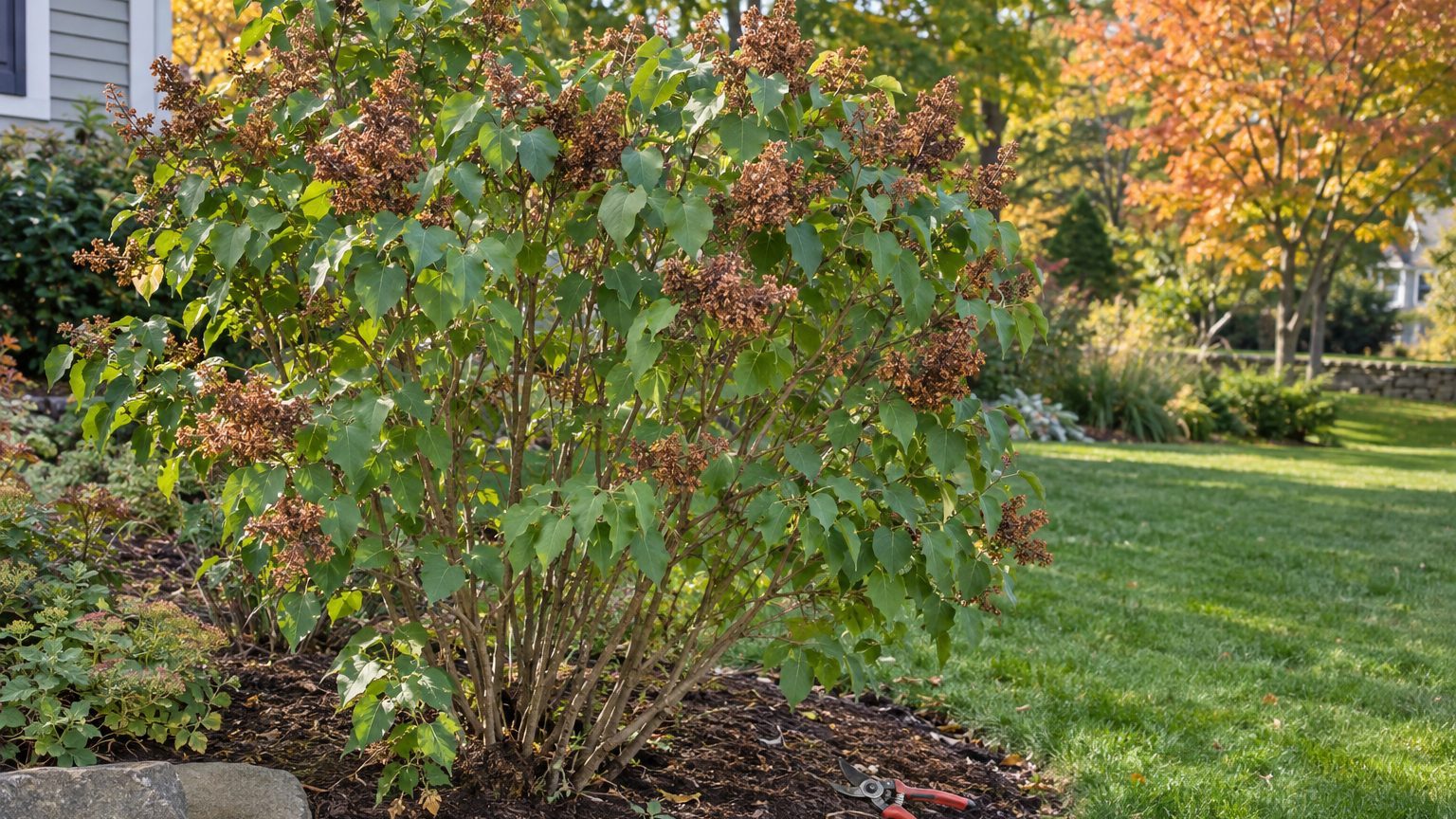
A lilac that blooms in a St. John’s yard in late spring is already setting its flower buds for the following year as the petals brown. That short stretch decides next spring’s show.
When to Prune Lilacs in Newfoundland and Labrador

Prune lilacs right after the flowers fade, which in Newfoundland and Labrador means May into June. No local lilac timing page exists for the province, so these months follow the nearest comparable climate in northern New England. Confirm local timing with a garden centre, a garden society or a provincial gardening group.
The reason is simple. A lilac blooms on last year’s wood and sets next year’s flower buds in summer, soon after it flowers.
| Type of pruning | When in Newfoundland and Labrador | Why |
|---|---|---|
| Routine upkeep: spent blooms, dead wood, crowded stems | May to June, right after the flowers fade | The next buds form soon after bloom, so cutting early keeps them |
| Hard renovation of an overgrown lilac | March to April, in late winter | The shrub is dormant, but the cut costs the next flowers |
Blooms open from April into May here, with later species stretching into June, so the pruning window moves with your shrub rather than with a fixed date. Cut when the flowers have browned, not before.
Newfoundland and Labrador — the year and the numbers
- State
- Newfoundland and Labrador
- Hardiness zones
- 6a
- Last spring frost
- May 30
- First fall frost
- October 17
- Annual rain
- 60 in
- Lawn zone
- cool-season
- Source
- Environment and Climate Change Canada — Canadian Climate Normals 1981-2010, station ST JOHN'S A · St. John's
How to Tell When Your Lilacs Are Ready to Prune
The shrub gives clear signals, and they matter more than any calendar square because bloom time shifts from yard to yard and species to species.
- The flower clusters have faded and turned brown, which tells you the show is over and cutting will not remove any blooms.
- Petals are dropping and the heads look tired, a sign the plant is moving on to forming next year’s buds.
- Fresh green growth is pushing out below the old flower heads, which means you can see exactly where to make a clean cut.
- Later varieties are still in flower, so a neighbor’s lilac may be ready while yours is not, and yours should wait until its own petals fade.
- Dead, gray, brittle stems stand out against leafy ones, and they can be removed at the base once the leaves are fully out.
Once the heads have browned, work soon, because delaying the job increases the risk of cutting away new buds.
Should You Prune Lilacs in Fall or Winter in Newfoundland and Labrador?
No. Cutting in late summer, fall or winter removes the flower buds already set for next spring, so you get a tidier shrub and a bare one.
Hard renovation of an overgrown lilac is the winter exception. That cut is made in late winter, March to April, while the plant is dormant, and it brings the shrub back close to the ground. The price is steep: the lilac will not flower for a few years afterward. Choose it only when a tall, leggy, thinning shrub is not worth keeping as it is.
How Lilac Pruning Time Shifts Across Newfoundland and Labrador
The province is not one climate, so pruning time follows local bloom. Follow the shrub, not the date.
- St. John’s and the Avalon Peninsula: Spring arrives slowly in the cool, foggy air off the Atlantic, so lilacs bloom later and pruning follows later within the May to June window.
- Central Newfoundland: Inland yards warm faster than the exposed coast, so blooms may fade sooner and pruning can start a little earlier.
- Labrador: Spring comes later and winters are harsher, so expect flowers to fade well after those on the island, and prune only once they have.
In every case, the browning flower head is your starting signal.
Where to Get Lilac Advice in Newfoundland and Labrador
Canada has no county extension office, so local help comes from provincial and community sources. The province’s Department of Fisheries, Forestry and Agriculture is the starting point for general gardening guidance.
- A local garden centre can tell you when lilacs in your area bloom, so visit in early spring when staff are watching local conditions.
- A garden society or provincial gardening group can confirm timing for your part of the province, and its members often grow lilacs themselves.
Common Questions
Can You Cut Lilacs for Bouquets Without Hurting Next Year’s Flowers?
Yes, if you cut the flowering stems while they bloom. Taking a few stems while the clusters are fresh works like an early prune, since the next buds form on growth below the cut after flowering.
Why Is My Lilac Leafy but Not Flowering?
Watch for a combination of a shrub pruned in late summer, fall or winter and shade or poor air circulation. Pruning at the wrong time removes buds, and lilacs also do best in sunny sites with good air circulation.
Do Lilacs Handle Newfoundland and Labrador Winters?
Yes. Lilacs suit cold climates, and winter chill helps their buds develop and mature. The reference city of St. John’s sits in Canadian hardiness zone 6a, a Canadian system that does not convert to a USDA zone.