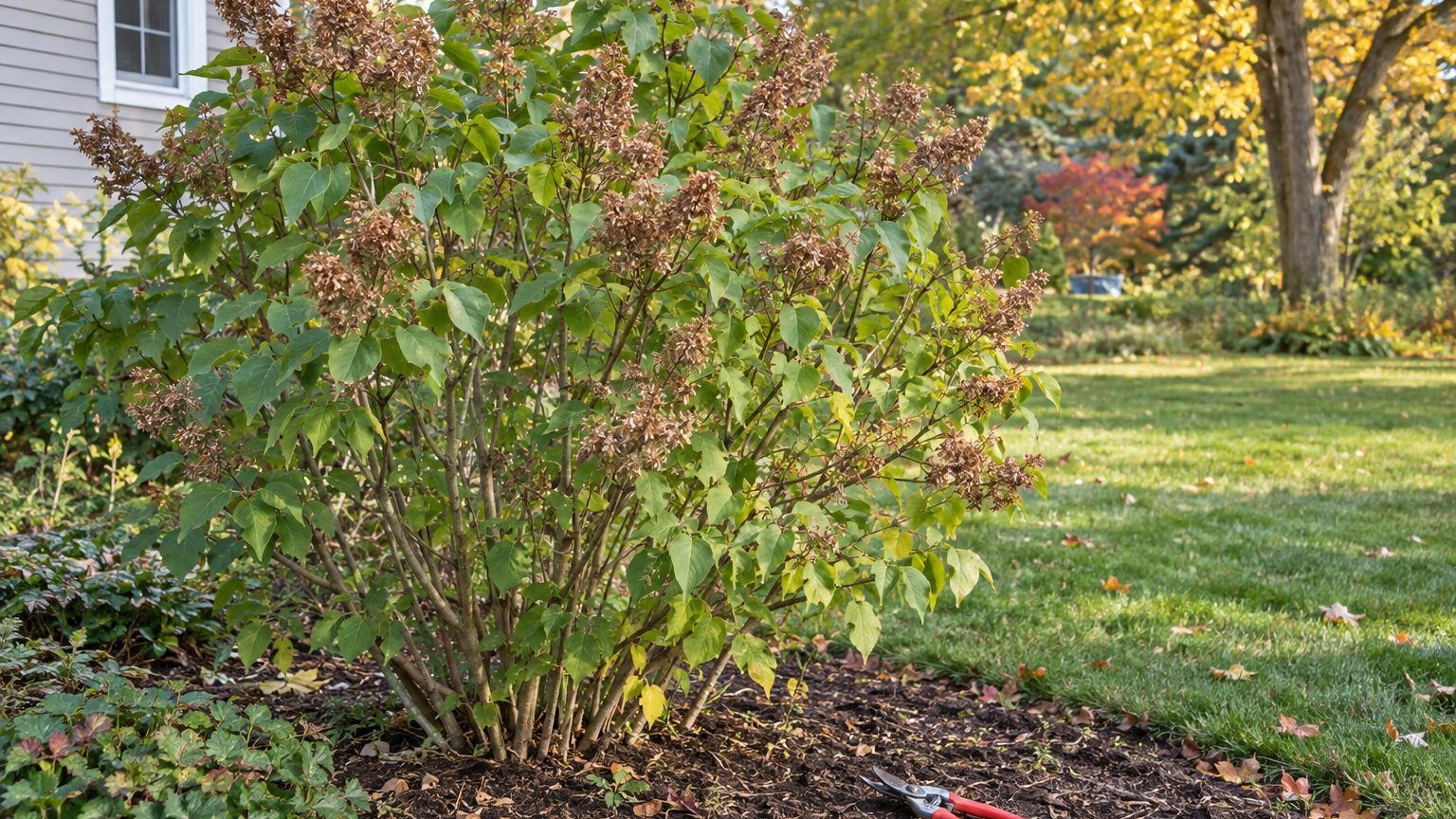
A lilac that has dropped its last purple or white clusters is telling you the pruning window has opened. In Arizona the common lilac is a stretch, since it wants a cold winter rest the low desert rarely gives. The rule still holds wherever one grows: cut right after the bloom fades.
When to Prune Lilacs in Arizona

Prune lilacs in Arizona right after the last flowers fade, whatever month the local spring brings them. Lilacs set next year’s flower buds in summer, soon after blooming, so a cut made late costs you the next show. Phoenix reaches 32F in only 6 of 30 springs, so frost does not set the schedule.
| Type of pruning | When in Arizona | Why |
|---|---|---|
| Routine maintenance (spent blooms, crossing or weak stems) | Right after the flowers fade | Next year’s buds form in summer on this season’s growth, so an early cut keeps them |
| Thinning an old, crowded shrub | Right after bloom, a little at a time | Removing old stems lets light in, but heavy cuts remove flowering wood |
| Reblooming lilacs | In spring | Reblooming lilacs follow a different pruning rule |
Cuts made in late summer, fall or winter remove the buds already set for spring. Lilacs also need a cold winter rest to mature those buds, and in a hot desert yard they may flower poorly no matter how well you prune. Low-chill types, such as the Descanso hybrids, are worth trying in Arizona because some varieties bloom with little chilling.
Arizona — the year and the numbers
- State
- Arizona
- USDA zones
- 4b-10b
- Frost
- none in an average year
- Annual rain
- 7 in
- Lawn zone
- warm-season
- Source
- NOAA NCEI 1991-2020 Climate Normals + NOAA RCC ACIS daily records, station USW00023183 — https://www.ncei.noaa.gov/access/services/data/v1?dataset=normals-annualseasonal&stations=USW00023183 · Phoenix
How to Tell When Your Lilacs Are Ready to Prune
Watch the shrub rather than the calendar, because the bloom follows the local spring and shifts from yard to yard.
- The flower clusters turn from fresh color to brown and dry, which means the bloom is over and the cutting can start.
- Petals drop and the cluster looks ragged, which tells you the plant is already moving its energy toward next year’s growth.
- New leafy shoots push from below the old flower heads, helping you see where fresh growth begins.
- Dead stems stand out against the new leaves and can come out first; thin or crossing stems may still carry flowers.
If the shrub never bloomed at all, consider the winter cold as well as the timing of past pruning.
Should You Prune Lilacs in Fall or Winter in Arizona?
No. Cutting in fall or winter takes off the flower buds that formed over summer, so the shrub leaves out spring with few or no blooms. Dormant-season cuts are fine for a plant you grow only for its leaves, but they defeat the point of a flowering lilac.
Rejuvenating an overgrown shrub in late winter is a common recommendation elsewhere, and it works for renewing the plant. The trade is a season without flowers, because those cuts remove the wood that carries the buds. Treat heavy renewal as a deliberate trade for flowers, and make the cuts gradually rather than all at once.
How Lilac Pruning Time Shifts Across Arizona
Arizona spans USDA zones 4b to 10b, so lilac prospects and timing differ sharply by region. The sign (fading flowers) stays the same, but whether the shrub blooms at all changes.
- Flagstaff: The high country freezes hard, gives lilacs the cold winter rest they want, and is the place in the state where they behave most like they do in colder climates. Prune soon after the flowers fade.
- Phoenix: The low desert rarely freezes, and summer heat is the limit. Common lilacs may flower poorly, so low-chill selections are a better bet, pruned right after what bloom they give.
Between those areas, yards at middling elevations fall somewhere in the middle, and the amount of winter chill your yard gets is the best guide to how well a lilac will do.
Where to Get Lilac Advice in Arizona
Local conditions vary so much across the state that nearby advice beats general advice. University of Arizona Extension publishes guidance for desert and high-country yards alike.
- Your county extension office can tell you which shrubs hold up at your elevation, so ask before you buy a lilac.
- Local master gardener volunteers often answer questions about bloom failure, and when your lilac should be flowering is a good time to ask.
Common Questions
Will a Lilac Bloom in the Arizona Low Desert?
It may bloom poorly or not at all. Lilacs need a cold winter rest to mature their flower buds, and they struggle in hot summers. Selections sold as southern or low-chill lilacs give you better odds.
Which Lilacs Are Worth Trying in a Warm Climate?
Early-blooming types labeled southern lilacs and Descanso hybrids such as Angel White and Blue Boy are worth trying in warm climates. Southern lilacs usually grow and bloom, though they are less fragrant than the lilacs of colder places.
Does Heavy Pruning Kill a Lilac?
Rarely, but it can cost you flowers. An old shrub cut hard loses much of the wood that carries buds, so renewal is best done gradually, removing a few of the oldest stems after each bloom.