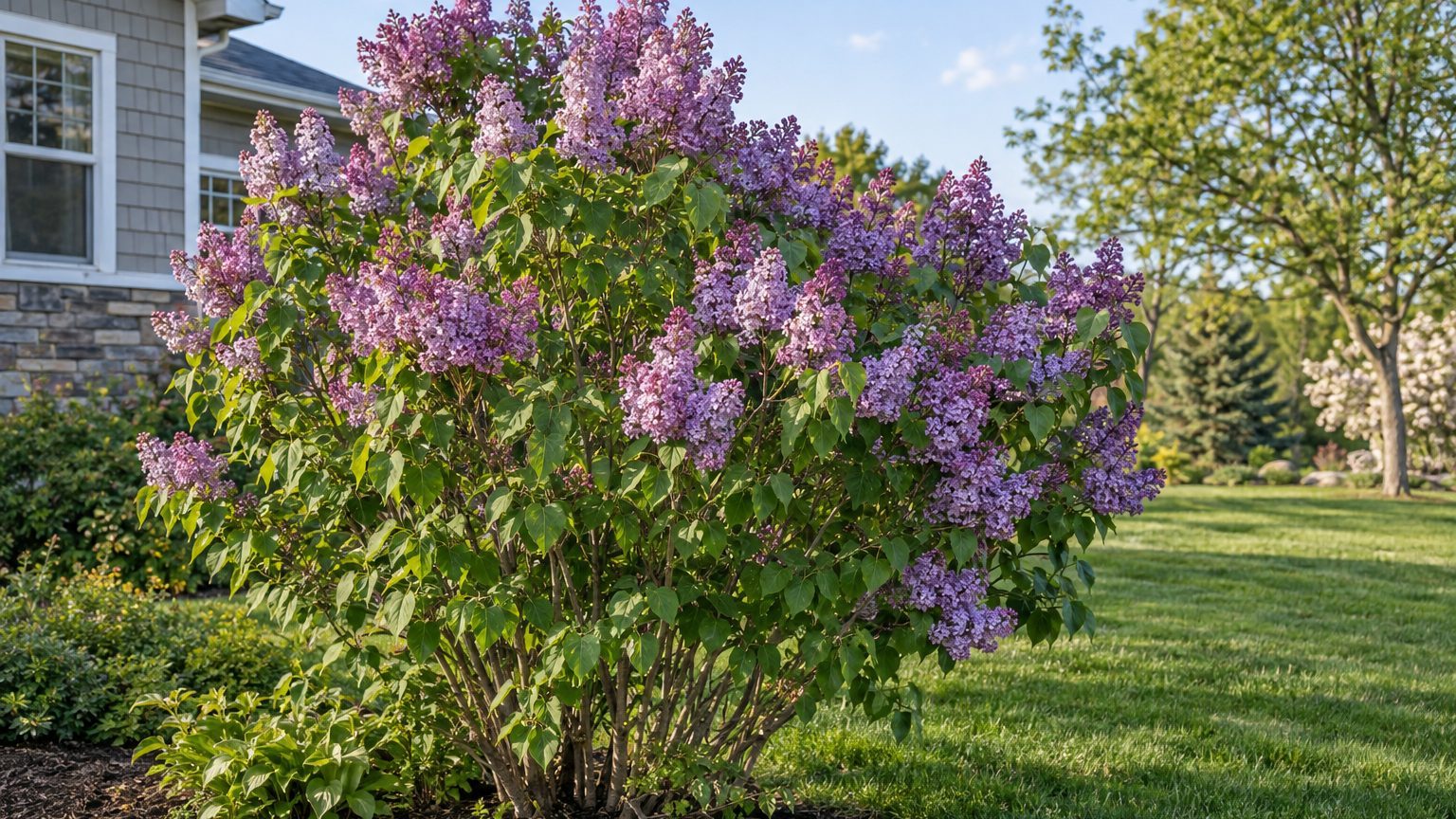
A lilac in bloom can turn a yard fragrant almost overnight, and in the North that moment comes later than in the south and passes quickly. In Nunavut it belongs to early summer, once the ground has thawed and the days run long.
When Do Lilacs Bloom in Nunavut?

Lilacs in Nunavut flower in June, and in a mild spring the first blooms can open in May. The year of a lilac here runs like this.
- In late spring, usually May in a mild year, the earliest buds open on shrubs that have come through the winter in good shape.
- In June, the main bloom arrives, and late-flowering types open after the common lilac has finished.
- Right after the flowers fade, in June and July, is the time to prune, because the shrub is already forming next year’s flower buds.
- Through the rest of summer, the buds for the following spring keep developing on the new wood, so they should be left alone.
- In winter, the shrub rests in the cold, which is what it needs to mature those buds.
The reference city for these dates is Rankin Inlet, in Canadian hardiness zone 0a. There, the last spring frost falls around June 19 on average, which means frost can still arrive after that date in about half of all years. The first fall frost comes around September 13 on average, so treat that date as the middle of a window rather than a safe deadline. Communities farther north run later still. Nunavut has no local lilac timing page, so these months follow the nearest comparable northern climate; confirm local timing with a local garden centre, a garden society or the territorial gardening groups.
Nunavut — the year and the numbers
- State
- Nunavut
- Hardiness zones
- 0a
- Last spring frost
- June 19
- First fall frost
- September 13
- Annual rain
- 12 in
- Lawn zone
- cool-season
- Source
- Environment and Climate Change Canada — Canadian Climate Normals 1981-2010, station RANKIN INLET A · Rankin Inlet
Which Lilacs Grow Best in Nunavut?
Lilacs are a stretch in Nunavut, though not because of cold itself. They need a cold winter rest to set their flower buds, and they struggle in hot, humid summers. Their success also depends on whether the type you choose can survive the local winter.
Choose hardy, late-blooming kinds and give them a sheltered spot in the yard.
| Lilac type | How it does in Nunavut | Why |
|---|---|---|
| Common lilac cultivars such as Sensation | Marginal at best | It is not hardy enough for colder northern districts |
| Late-blooming, very hardy lilac | The better bet | Known for winter hardiness and for flowering later than the common lilac |
A later bloom can reduce the flowers’ exposure to lingering spring frost. Pick a sheltered corner, such as the lee side of a south-facing wall, to give a young shrub a better chance to flower.
When to Plant, Prune and Feed Lilacs in Nunavut
Lilac work here is concentrated in the short stretch between the thaw and the first fall frost. Pruning has a hard deadline because the shrub sets next year’s flowers on last year’s wood soon after it blooms.
| Task | Best timing in Nunavut | Why then |
|---|---|---|
| Planting | As soon as the ground has thawed in spring | Roots get the whole short season to settle before winter |
| Routine pruning | June to July, right after the flowers fade | Next year’s buds form in summer, so cutting later removes them |
| Hard cut on an overgrown shrub | Late winter | The shrub regrows from old wood, though it will not flower for a few years |
Pruning in late summer, fall or winter cuts off the next spring’s flowers, so a hard renewal cut in late winter is a trade you make knowingly. Ask a local garden centre whether the soil calls for fertilizer before feeding a lilac.
How Lilac Bloom Time Changes Across Nunavut
The territory is large, and lilacs in different communities do not keep the same calendar. Water, latitude and shelter all push the bloom earlier or later.
- Rankin Inlet: On the west coast of Hudson Bay, this is the town the frost dates above come from, so bloom here follows the June window.
- Iqaluit: On Baffin Island, cold water and sea ice hold spring back, so flowers open later and the season ends sooner.
- Cambridge Bay: Farther north on Victoria Island, spring arrives later still, and a lilac there depends on a very sheltered spot to bloom at all.
In every community, a south-facing wall or a windbreak can move a lilac’s bloom a little earlier than an open yard would.
Where to Get Lilac Advice in Nunavut
A plant that is struggling or a soil question is best put to someone who knows local conditions.
- Agriculture and Agri-Food Canada, at Agriculture and Agri-Food Canada, is where to start for general plant and soil guidance, any time before planting.
- A local garden society or garden centre can tell you which shrubs have actually come through winters in your community, and spring is a good time to ask.
Common Questions
Can You Use the Frost Date as a Planting Day?
No. The June date is an average, so frost still comes later in about half of all years. Treat it as the middle of a window and wait for settled weather before setting out a young shrub.
Why Choose a Late-Blooming Lilac?
A late bloomer opens after the common lilac, so its flowers meet less spring frost. In a place with a short season, that later opening can mean the difference between a good bloom and frozen buds.
What Does Zone 0a Mean for a Lilac?
Zone 0a belongs to the Canadian hardiness system, which uses seven climate variables, not the single one behind USDA zones. The systems do not convert directly, so a plant tag showing only a USDA zone does not provide a Canadian-zone match for Nunavut.