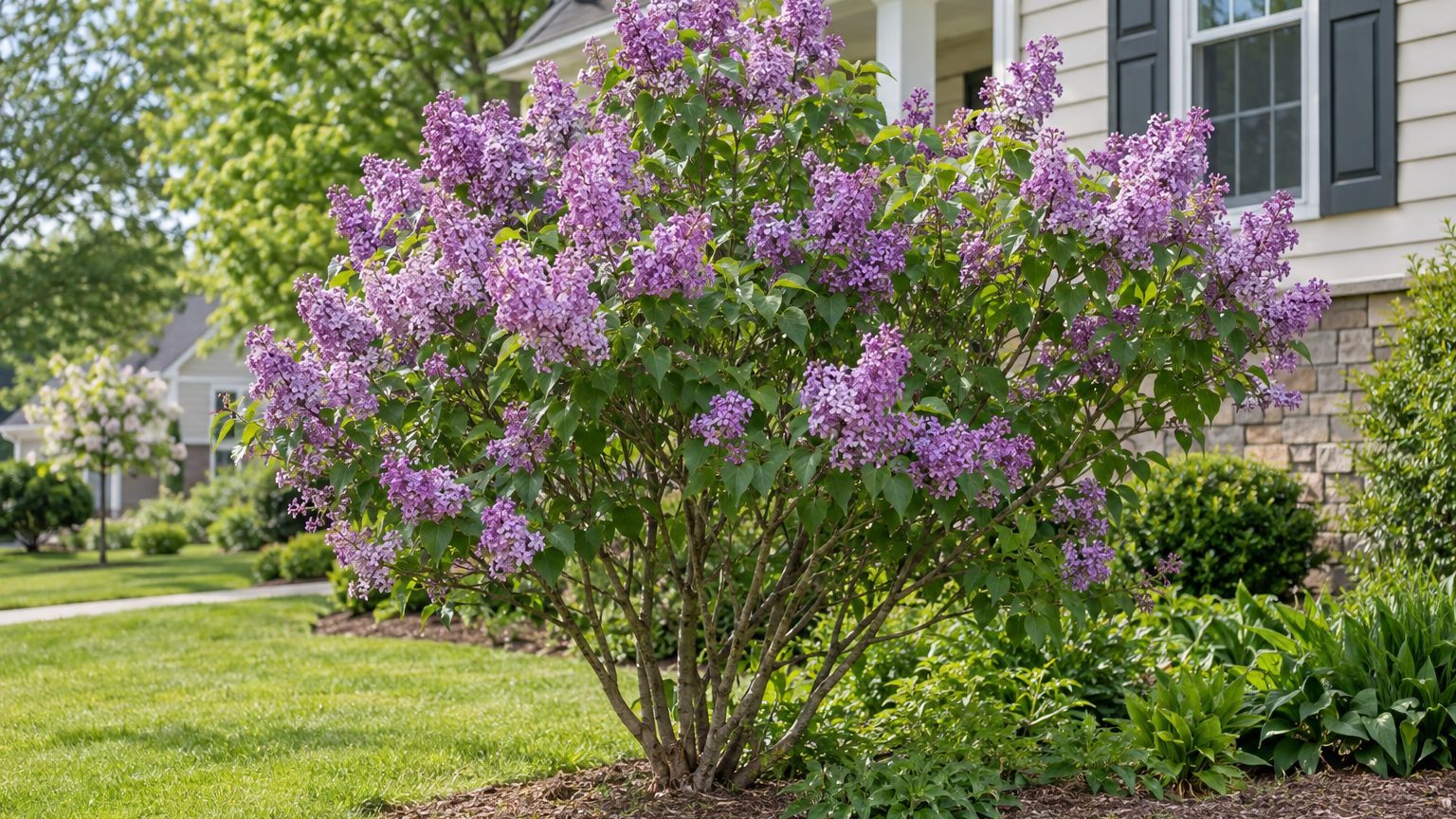
Lilac blooms signal that spring has settled into a North Carolina yard, with fragrant purple, lavender or white clusters opening on bare-looking branches. Where you live in the state decides how well they do. Bloom time, the yearly rhythm of the shrub and the type you choose all matter.
When Do Lilacs Bloom in North Carolina?

Lilacs bloom in April and May in North Carolina, and the rest of their year follows from that flowering.
- In April and May, the flower clusters open and scent the garden.
- Right after the flowers fade, usually in May and June, is the time to prune, and it can still be done in July if needed, but never after July 10.
- Through summer, the shrub sets next spring’s flower buds on the new growth, so late pruning removes next year’s blooms.
- In fall, the leaves drop and the buds are already formed, so the plant needs only to be left alone.
- Through winter, the shrub rests, and the cold it gets in these months is what matures the buds for spring.
Frost risk helps you read the seasons. In Charlotte, in the Piedmont, the last spring freeze usually comes between March 23 and April 5, and the first fall freeze between October 30 and November 8. North Carolina spans USDA hardiness zones 5b to 8b, so mountain and coastal yards differ a good deal from Charlotte.
North Carolina — the year and the numbers
- State
- North Carolina
- USDA zones
- 5b-8b
- Last spring frost
- March 23 to April 5
- First fall frost
- October 30 to November 8
- Annual rain
- 44 in
- Lawn zone
- transition-season
- Source
- NOAA NCEI U.S. Climate Normals 1991-2020, 32F freeze probabilities · Charlotte
Which Lilacs Grow Best in North Carolina?
Lilacs can grow in North Carolina, but they are working against the climate. They do best where winters are cold, because the buds need a long chill to mature, and they struggle in hot, humid summers.
That means the cooler mountain yards give the most dependable results, while the warmer parts of the state ask more of the plant. Choosing a type that needs less chill is the practical way to improve your odds.
| Lilac type | How it does in North Carolina | Why |
|---|---|---|
| Common lilac (Syringa vulgaris) | Blooms best in cold-winter parts of the state | Needs a long winter chill to mature its buds |
| Low-chill cultivars | A better bet in milder yards | Bred to need less cold, though they still prefer a cold rest |
| Bloomerang group | Grown here, blooms well only with real cold | Like nearly all lilacs, requires a period of cold weather |
Heat-tolerance claims on plant tags deserve some caution. Common lilacs often suffer through long stretches of high heat and humidity, and that weather invites powdery mildew on the leaves.
When to Plant, Prune and Feed Lilacs in North Carolina
Pruning has a firm deadline. The buds for next spring form in summer, so the shrub needs your attention right after the flowers fade and not later.
Planting and feeding follow the plant’s own signs. The pruning page for North Carolina goes into cuts and renewal in more detail.
| Task | Best timing in North Carolina | Why then |
|---|---|---|
| Enjoy the bloom | April and May | This is when the flowers open |
| Prune | May and June, right after the flowers fade | Next year’s buds form soon after bloom |
| Last chance to prune | July, but not after July 10 | Later cuts remove the coming spring’s flowers |
| Prune only as needed | Never in late summer, fall or winter | The flower buds are already on the branches |
Planting and feeding are not tied to a month here, so go by the plant. Set a new lilac in the ground when the soil is workable and the weather is mild, and feed lightly after the flowers fade.
How Lilac Bloom Time Changes Across North Carolina
North Carolina stretches from mountains to coast, and the gap shows in the lilac bed as much as in anything else.
- Blue Ridge Mountains: spring arrives several weeks later here, so lilacs open later than in the Piedmont. The colder winters also give the buds the long chill they want.
- Charlotte and the Piedmont: bloom follows the April and May window, with enough winter cold for decent flowering in many years.
- Coastal plain: spring comes earlier, so flowers can open sooner, but the mild winters and warm, humid summers make lilacs harder to keep happy.
If you garden in the mountains, expect the best flowering. In the east, expect to give the shrub more care for less show.
Where to Get Lilac Advice in North Carolina
When a lilac refuses to bloom or its leaves turn powdery, local advice saves guesswork. NC State Extension serves every county through a local office.
- Your county extension office can look at a leaf or branch sample and help identify what is wrong with the shrub.
- The same office can guide you on a soil test.
- Visit when the shrub is in leaf or in flower and you can show the problem clearly.
Common Questions
Why Is My Lilac Not Blooming?
In North Carolina, the usual reasons are too little winter chill and pruning at the wrong time. Check whether the shrub was cut in late summer, fall or winter. Weak flowering with healthy leaves in a mild-winter yard points to a chill problem.
Do Lilacs Smell as Strong in Warm Climates?
The fragrance is there whenever the flowers open. Shrubs that had a cold winter usually provide more fragrance.
What Is the Best Spot for a Lilac in a North Carolina Yard?
Choose a place with good airflow and plenty of sun. Because common lilacs struggle with heat and humidity, a spot where the leaves dry quickly helps limit powdery mildew.