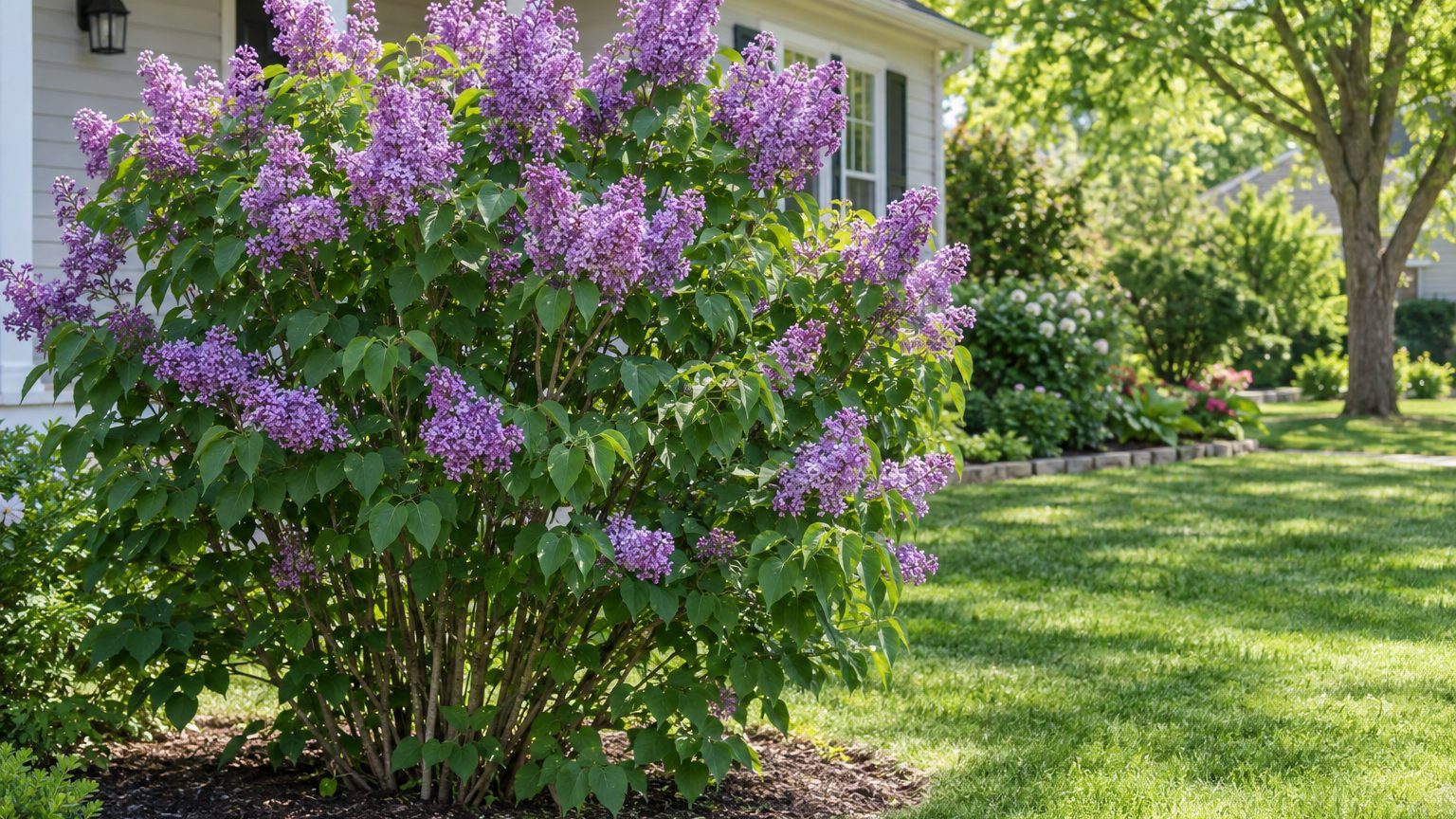
A lilac in a Louisiana yard often leafs out early and then sits there, healthy-looking and flowerless. Common lilacs are built for hard northern winters, and the Gulf South gives them neither the cold nor the cool summers they expect.
When Do Lilacs Bloom in Louisiana?

No month can be pinned down for lilac bloom in Louisiana, because the flowers follow the local spring, and in much of the state that spring is too mild to give the plant what it needs. Where a lilac does flower, the year runs like this.
- In spring, a lilac that has had enough winter chill opens its flowers as the local weather warms, and a plant that missed its chill may bloom thinly or skip the show.
- Right after the last flowers fade, prune, because the shrub starts setting next year’s flower buds soon afterward.
- Through summer, the new flower buds form on the fresh growth, and long hot, humid stretches here invite powdery mildew on the leaves.
- In fall, leave the shrub alone, since pruning now cuts off the buds that would open the following spring.
- In winter, the plant needs a cold rest to mature those buds, and Louisiana gives it a short one.
In New Orleans, the last spring freeze usually falls between January 18 and February 8, and the first fall freeze between December 17 and January 8. Winters are mild enough that some years pass with no freeze at all, which is exactly why bloom is unreliable. USDA hardiness zones across Louisiana run from 8a to 10a, and that system only measures the coldest night, not the chilling hours a lilac wants.
Louisiana — the year and the numbers
- State
- Louisiana
- USDA zones
- 8a-10a
- Last spring frost
- January 18 to February 8
- First fall frost
- December 17 to January 8
- Annual rain
- 63 in
- Lawn zone
- warm-season
- Source
- NOAA NCEI 1991-2020 Climate Normals, 32F freeze probabilities · New Orleans
Which Lilacs Grow Best in Louisiana?
Common lilacs struggle here. They need a pronounced cold winter rest, and Louisiana summers bring the heat and humidity that encourage powdery mildew. Cultivars advertised as heat tolerant can still struggle in high heat and humidity, which also encourage powdery mildew.
The better bets are lilacs bred for mild winters. Look for early-blooming types sold as Southern lilacs, and consider Descanso hybrids as a trial.
| Lilac type | How it does in Louisiana | Why |
|---|---|---|
| Common lilac (Syringa vulgaris) | Struggles, often flowers poorly | Needs a long cold rest and cool summers |
| Heat-tolerance claimed cultivars | Often still disappoint | High heat and humidity bring mildew |
| Southern lilacs (early-blooming) | Usually grow and bloom | Need less winter chill, though less fragrant |
| Descanso hybrids | Worth a trial | Bred for mild winters |
| Low-chill cultivars | Better odds of flowers | Still prefer a cold winter rest |
Among the Descanso hybrids, the white ‘Angel White’, the blue ‘Blue Boy’ and the pink ‘California Rose‘ are the named ones to look for. Expect lighter fragrance from Southern types than from the old-fashioned lilacs of northern gardens.
When to Plant, Prune and Feed Lilacs in Louisiana
In Louisiana, the plant’s own signals set the timing. Pruning has a firm rule because the shrub blooms on last year’s wood and sets its next buds in summer.
| Task | Best timing in Louisiana | Why then |
|---|---|---|
| Prune | Right after the last flowers fade | Buds for next spring form soon after bloom |
| Skip pruning | Late summer, fall and winter | Cuts off next spring’s flowers |
| Plant | Before the summer heat arrives | Roots settle before summer heat arrives |
| Feed | After flowering, lightly | Supports the growth that carries next year’s buds |
Plant where the shrub gets sun and air moving through the branches, which helps leaves dry and eases mildew pressure in humid weather. Detailed pruning steps live on the Louisiana page about when to prune lilacs.
How Lilac Bloom Time Changes Across Louisiana
Louisiana is mostly low and warm, so the differences between regions come down to winter chill and summer heat rather than elevation.
- North Louisiana: Freezes arrive far more reliably here, so a lilac gets a better winter rest and a stronger chance of flowering.
- Baton Rouge and the Florida Parishes: Winters are milder, so chill is thinner and bloom is less dependable, with Southern types a safer choice.
- New Orleans: Some winters bring no freeze at all, so a lilac may flower poorly.
Wherever you garden, the pattern is the same: more winter cold means a better chance of flowers.
Where to Get Lilac Advice in Louisiana
For a plant that sulks, the state’s land-grant extension service is the place to start. LSU AgCenter runs offices in each parish that can look at a struggling shrub and test your soil.
- The parish extension office can diagnose mildew or poor flowering when you bring a leaf or branch sample.
- A soil test through the office shows pH and nutrients before you plant a new shrub.
- Ask about lilac types suited to your parish before you buy, then prune right after the next flowers fade.
Common Questions
Can You Grow Lilacs in New Orleans?
It is a long shot. In New Orleans, some winters bring no freeze, so a lilac may not get the cold rest its buds need. Southern or low-chill types are worth trying, though even they may bloom lightly.
Why Is a Lilac Leafy but Not Flowering in Louisiana?
Check these together. If the shrub is healthy and leafy but the winter was mild, it probably lacked chill. If it was pruned in summer, fall or winter, the buds were likely cut off.
Does Powdery Mildew Kill a Lilac?
Mildew shows as a white, dusty coating on leaves, usually in humid, still air. It looks bad but rarely kills a shrub. Open the canopy and plant in sun with good airflow to reduce it.